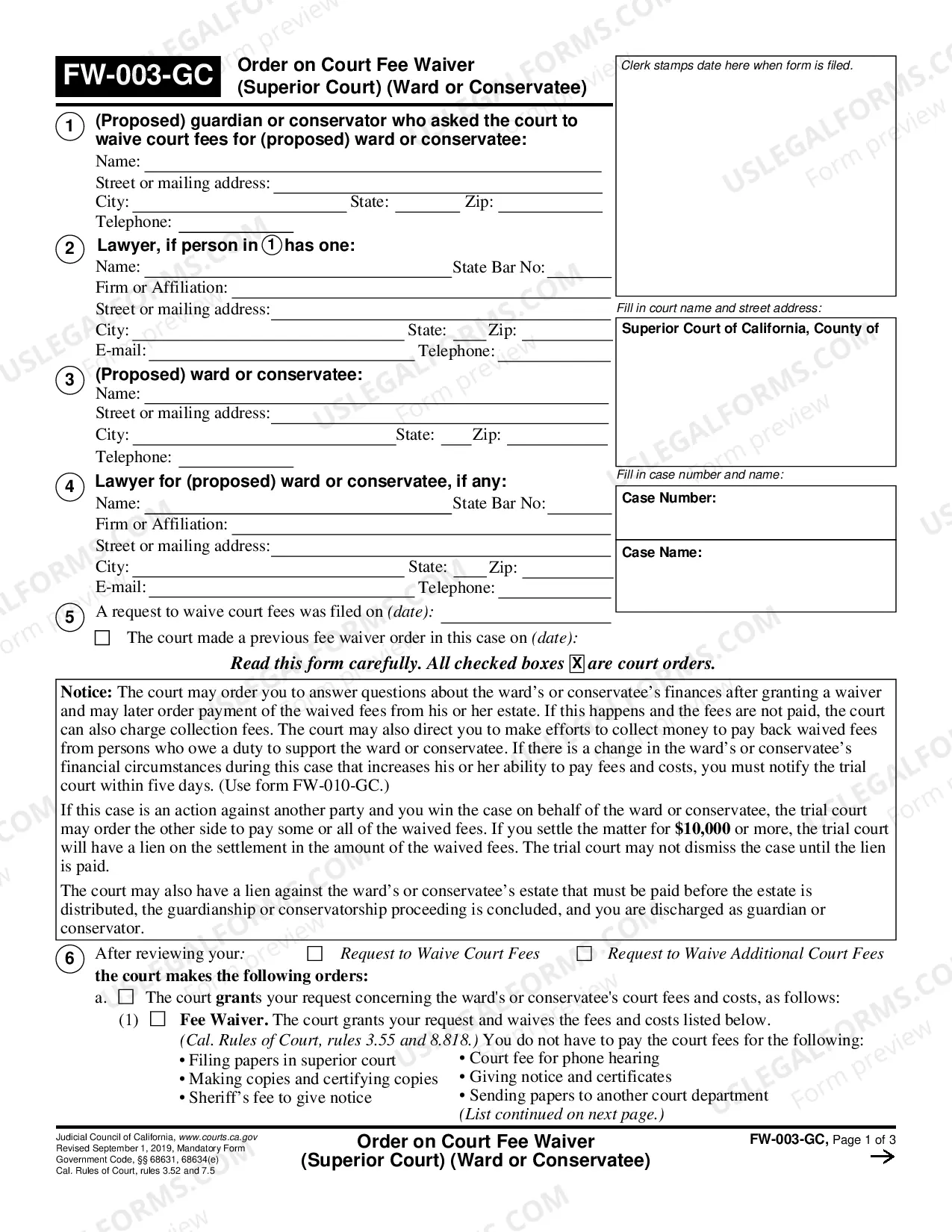
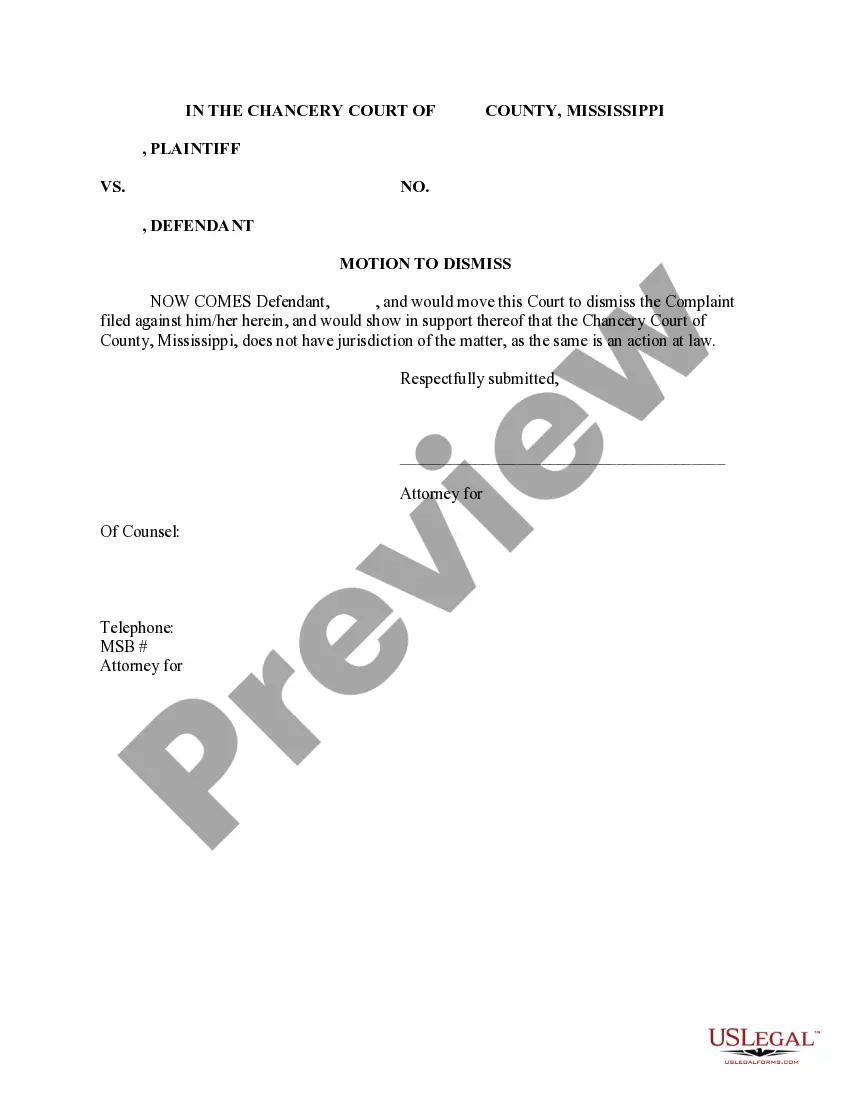
Mississippi Motion to Dismiss
Understanding this form
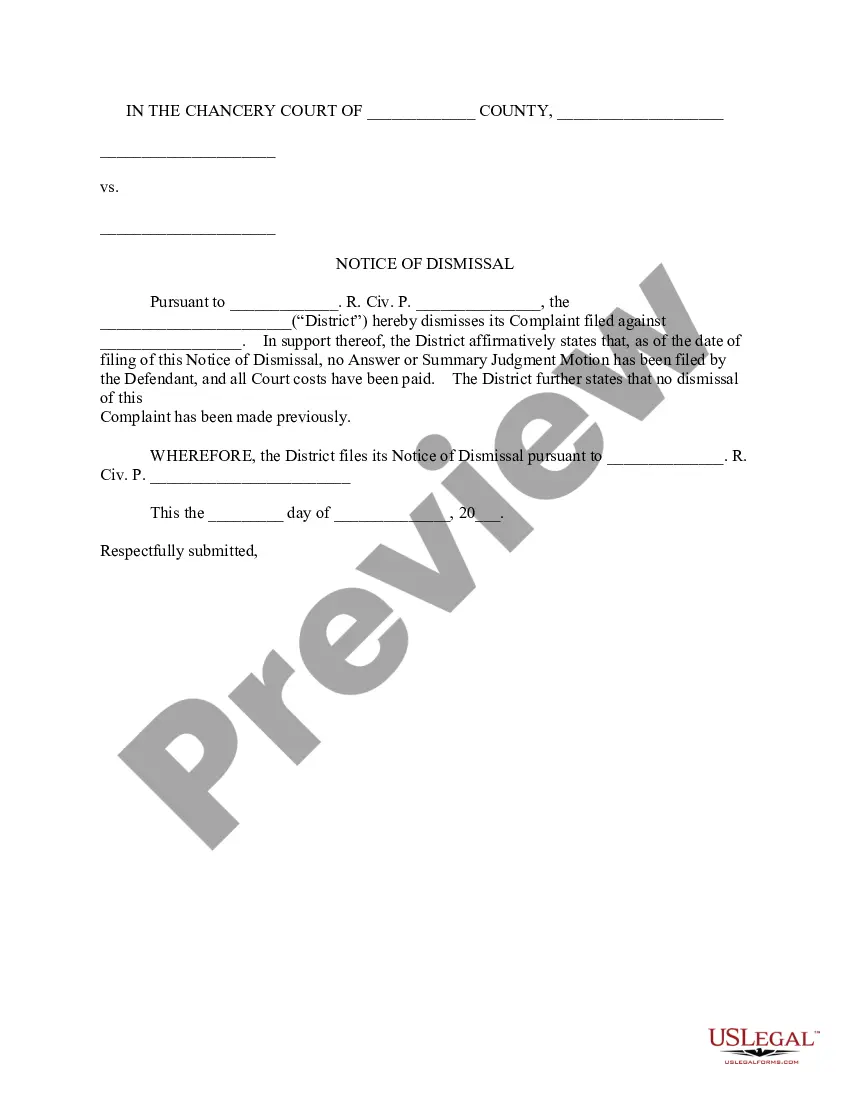
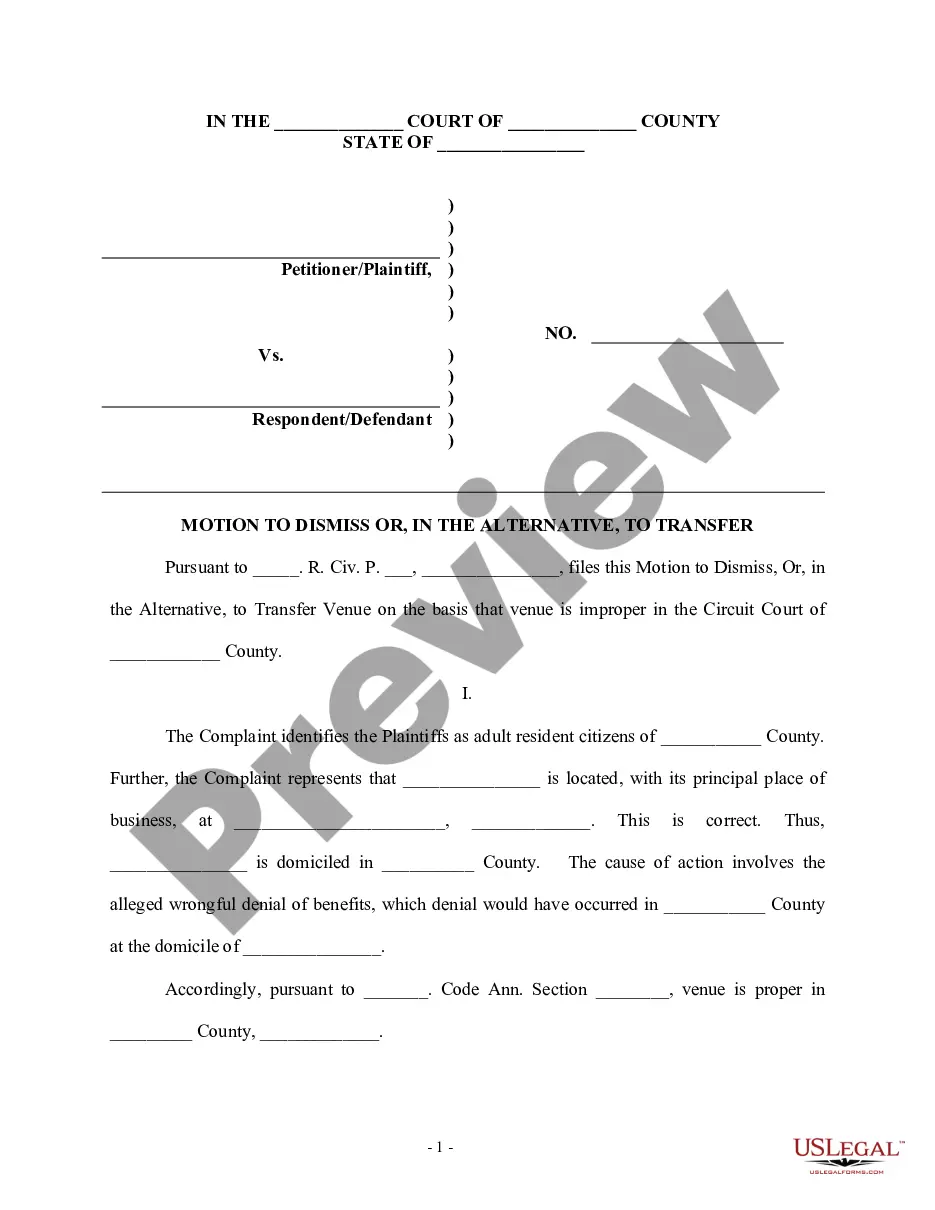
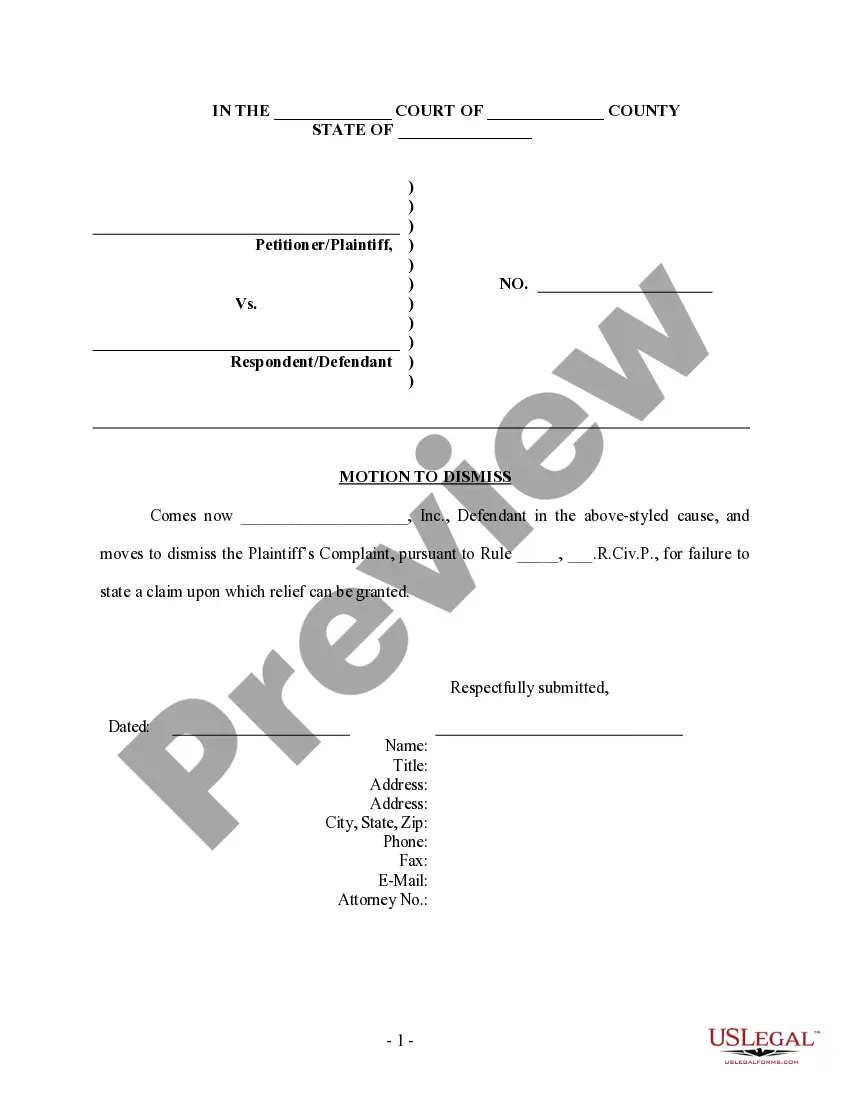
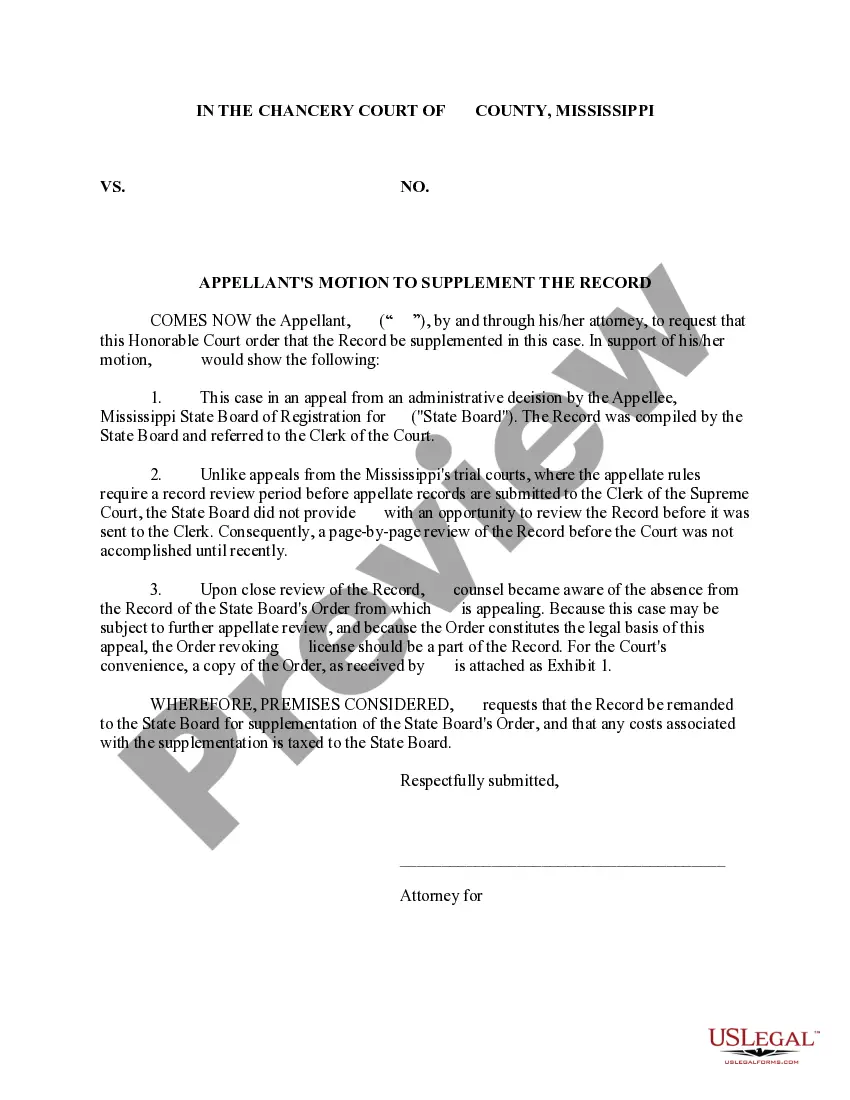
A Motion to Dismiss is a legal document requesting the court to terminate a case without further proceedings. This motion may be filed by a defendant to argue that the plaintiff's case lacks merit or legal foundation. The Motion to Dismiss serves as a preliminary measure and differs from other motions, as it specifically addresses the sufficiency of the claims made against the defendant.
Key components of this form
- Caption: Identifies the court, case number, and parties involved.
- Introduction: States the purpose of the motion and the request being made to the court.
- Arguments: Outlines the legal basis for dismissing the case, including relevant laws and precedents.
- Conclusion: Requests the court to grant the motion and dismiss the case.
- Signature block: Space for the attorney or party filing the motion to sign and date.
Situations where this form applies
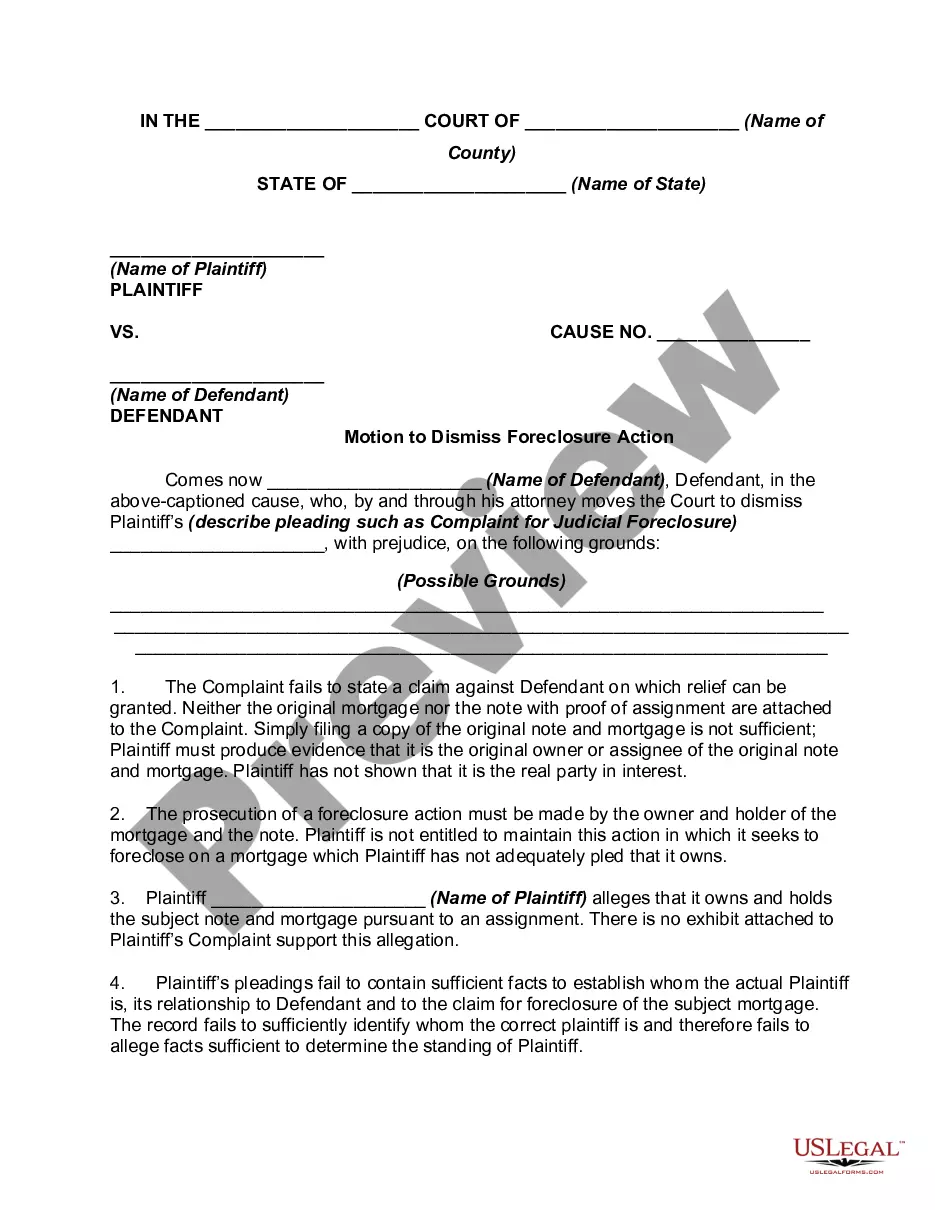
This form is typically used when a defendant believes that the plaintiff's claims are legally insufficient. You might consider filing a Motion to Dismiss in scenarios such as: the claims are barred by statute of limitations, the court lacks jurisdiction, or the complaint fails to state a valid cause of action. Filing this motion can potentially save time and resources if the court agrees with the arguments presented.
Who can use this document
- Defendants involved in civil litigation who wish to challenge the sufficiency of the plaintiff's claims.
- Individuals or businesses that have received a complaint and want to seek an early dismissal.
- Legal representatives filing on behalf of a defendant in a lawsuit.
Steps to complete this form
- Identify the parties involved and ensure correct court information is filled in the caption.
- State the specific request for dismissal and the reasons supporting the motion.
- Include relevant legal references, citations, or precedents that justify the dismissal.
- Sign and date the motion, confirming that the information provided is accurate.
- File the motion with the court and provide a copy to all parties involved in the case.
Is notarization required?
Notarization is not commonly needed for this form. However, certain documents or local rules may make it necessary. Our notarization service, powered by Notarize, allows you to finalize it securely online anytime, day or night.
Get your form ready online
Our built-in tools help you complete, sign, share, and store your documents in one place.
Make edits, fill in missing information, and update formatting in US Legal Forms—just like you would in MS Word.
Download a copy, print it, send it by email, or mail it via USPS—whatever works best for your next step.
Sign and collect signatures with our SignNow integration. Send to multiple recipients, set reminders, and more. Go Premium to unlock E-Sign.
If this form requires notarization, complete it online through a secure video call—no need to meet a notary in person or wait for an appointment.
We protect your documents and personal data by following strict security and privacy standards.

Make edits, fill in missing information, and update formatting in US Legal Forms—just like you would in MS Word.

Download a copy, print it, send it by email, or mail it via USPS—whatever works best for your next step.

Sign and collect signatures with our SignNow integration. Send to multiple recipients, set reminders, and more. Go Premium to unlock E-Sign.

If this form requires notarization, complete it online through a secure video call—no need to meet a notary in person or wait for an appointment.

We protect your documents and personal data by following strict security and privacy standards.
Mistakes to watch out for
- Failing to properly format the motion according to court requirements.
- Not including all necessary information or supporting documentation.
- Missing deadlines for filing the motion after receiving the complaint.
- Relying on unsupported legal arguments without referencing relevant statutes or case law.
Benefits of using this form online
- Convenience of downloading and completing the form at your own pace.
- Editable templates that allow customization to meet specific case needs.
- Access to forms drafted by licensed attorneys, ensuring legal accuracy.
- Easy access to updates in legal standards and requirements.
Legal use & context
- A Motion to Dismiss is a preliminary legal challenge that can lead to the early resolution of litigation.
- The effectiveness of this motion depends on the specific grounds raised and the applicable laws in the jurisdiction.
- Understanding the legal standards for dismissal is crucial to ensure a successful filing.
Key takeaways
- A Motion to Dismiss requests the court to terminate a case based on legal insufficiency.
- It is used primarily by defendants in civil litigation to challenge claims before engaging in extensive legal proceedings.
- Understanding your state's legal requirements is critical for proper filing and effectiveness.
Looking for another form?

Form popularity
FAQ
A motion to dismiss is filed when a party believes that the complaint is legally invalid, which can be based on a variety of grounds.
If you file an lawsuit and you decide you do not want to move forward, you can ask the court to dismiss the case. The person you sued paid you the money he or she owed you.
A discharge of an individual or corporation from employment. The disposition of a civil or criminal proceeding or a claim or charge made therein by a court order without a trial or prior to its completion which, in effect, is a denial of the relief sought by the commencement of the action.
When a defendant files a motion to dismiss, he asks the Court to throw out all or part of the plaintiff's case.The parties (well, their lawyers) will come to court, explain their positions on the motion to dismiss, and answer any questions posed by the judge. Finally, the judge will decide to grant or deny the motion.
N. application by a defendant in a lawsuit or criminal prosecution asking the judge to rule that the plaintiff (the party who filed the lawsuit) or the prosecution has not and cannot prove its case.
Defendants may move to dismiss some or all claims but can only make one motion to dismiss, asserting all defenses (other than those in FRCP 8(c)) that were available when the motion was made (FRCP 12(g)).
To survive a motion to dismiss, a lawsuit must contain sufficient factual matter to state a claim to relief that is plausible on its face. Ashcroft v. Iqbal, 556 U.S. 662, 678 (2009).
Check that the statute of limitations hasn't expired. Find what you forgot to allege in your original complaint.
You do not have to file a response. However, you would be wise to do so as a motion to dsmiss , if granted, could end your suit. Motions to dimiss for failure to state a claim are rarely granted.