North Dakota Amendment to Prenuptial or Premarital Agreement
What this document covers
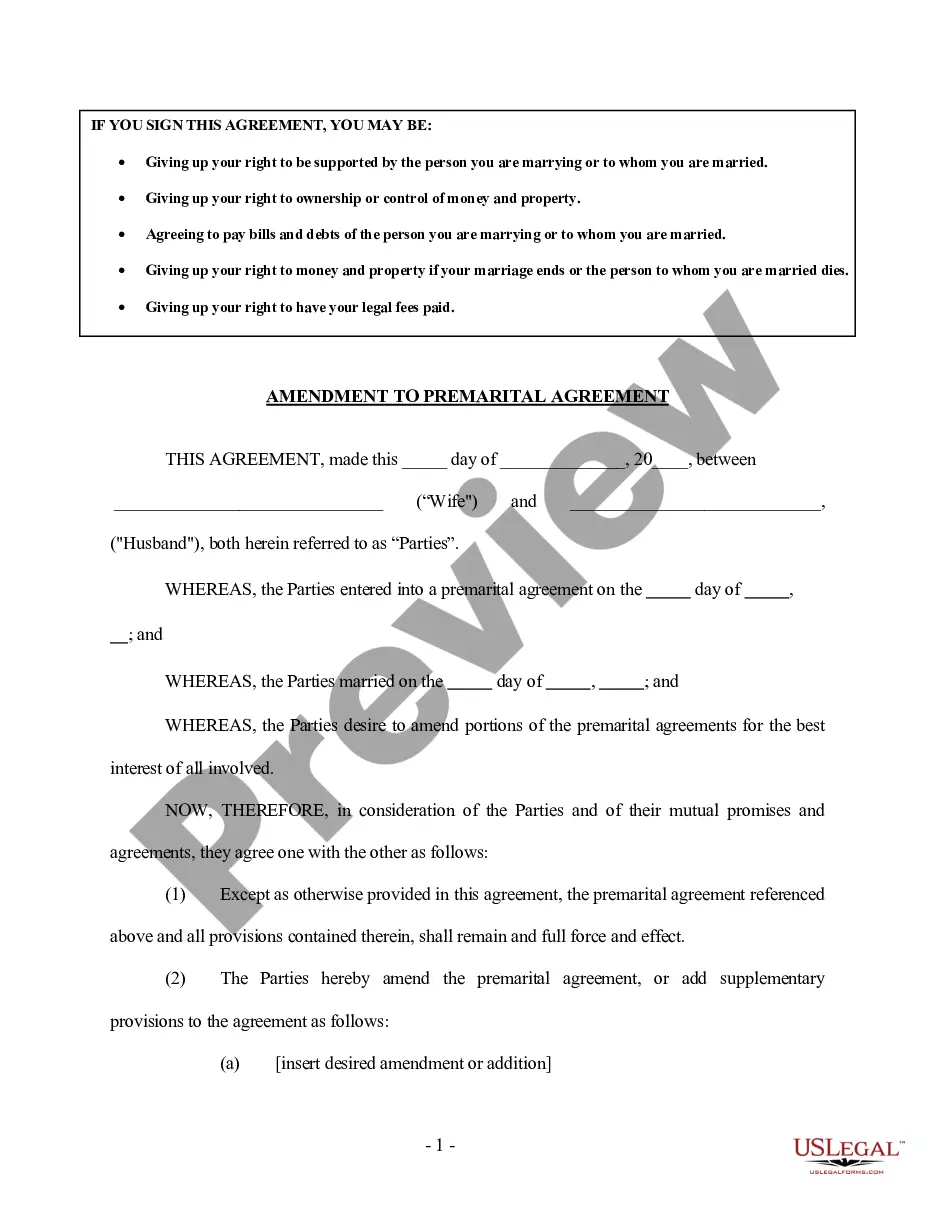
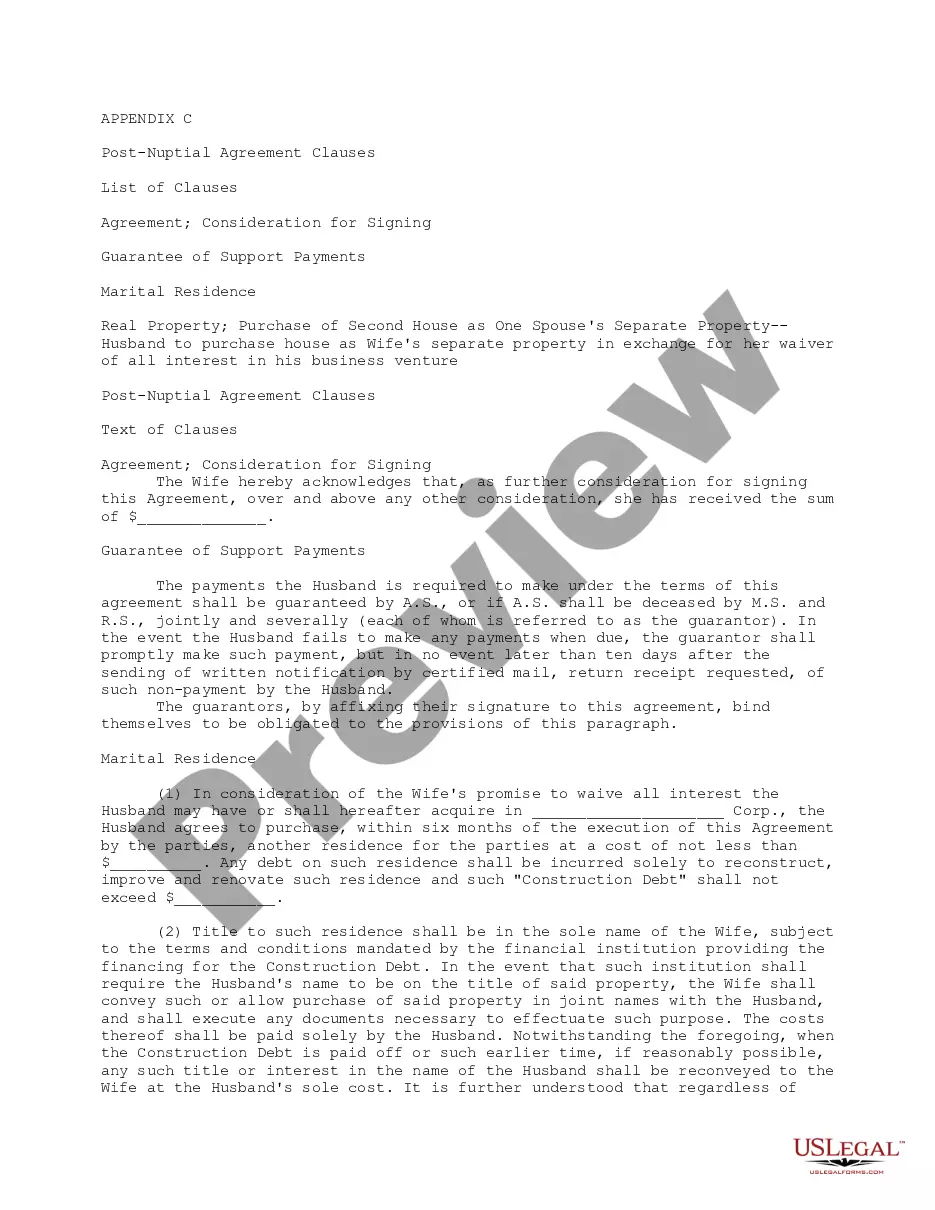
The Amendment to Prenuptial or Premarital Agreement is a legal document that allows couples to make changes or additions to their existing premarital agreement. This form is specifically designed for use in North Dakota and ensures that any amendments are made in compliance with state laws. Unlike a standard premarital agreement, this amendment focuses on modifying existing terms rather than establishing new provisions from scratch.
Main sections of this form
- Identification of the parties involved â names of the husband and wife.
- Specification of the amendments or additional provisions to the original premarital agreement.
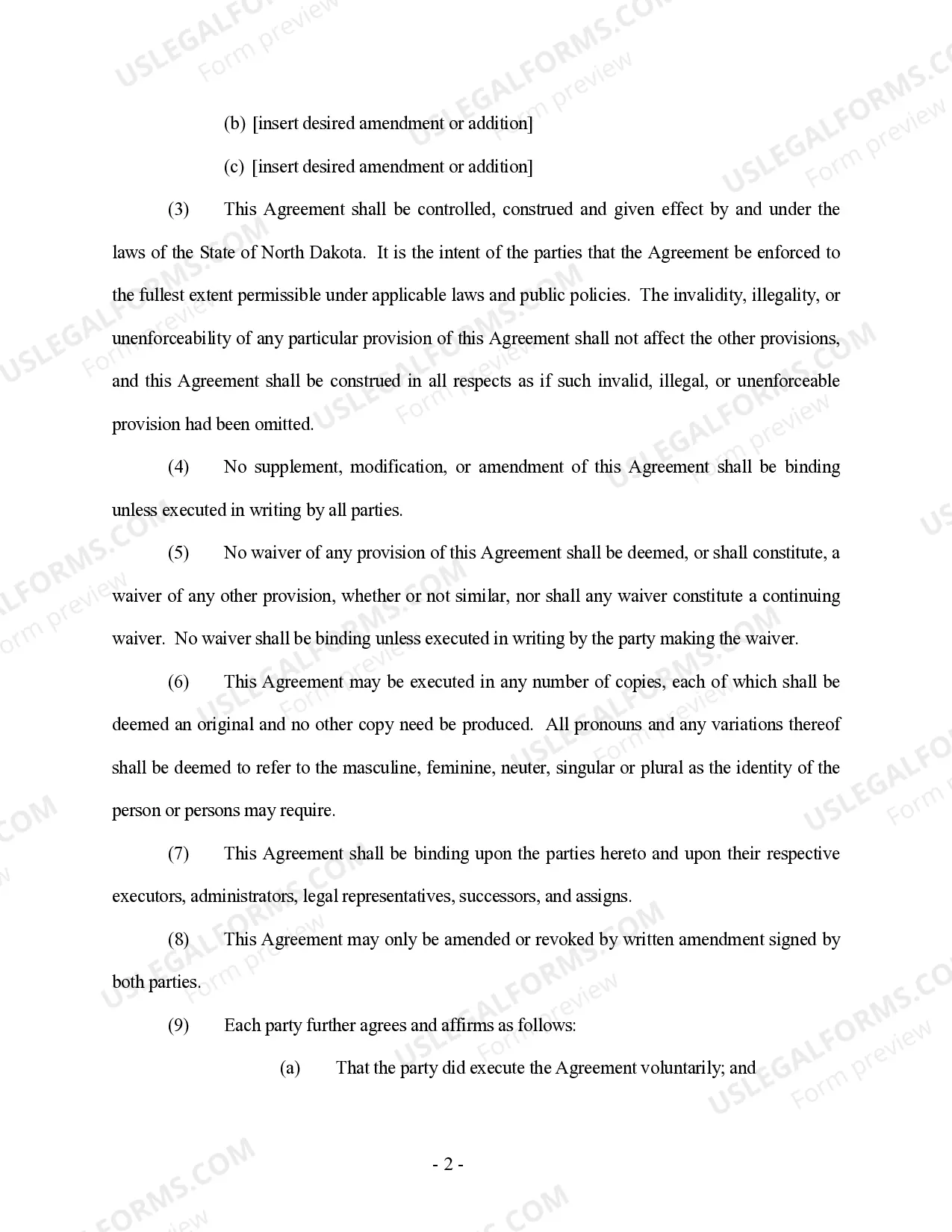
- Stipulations regarding the laws of North Dakota governing the agreement.
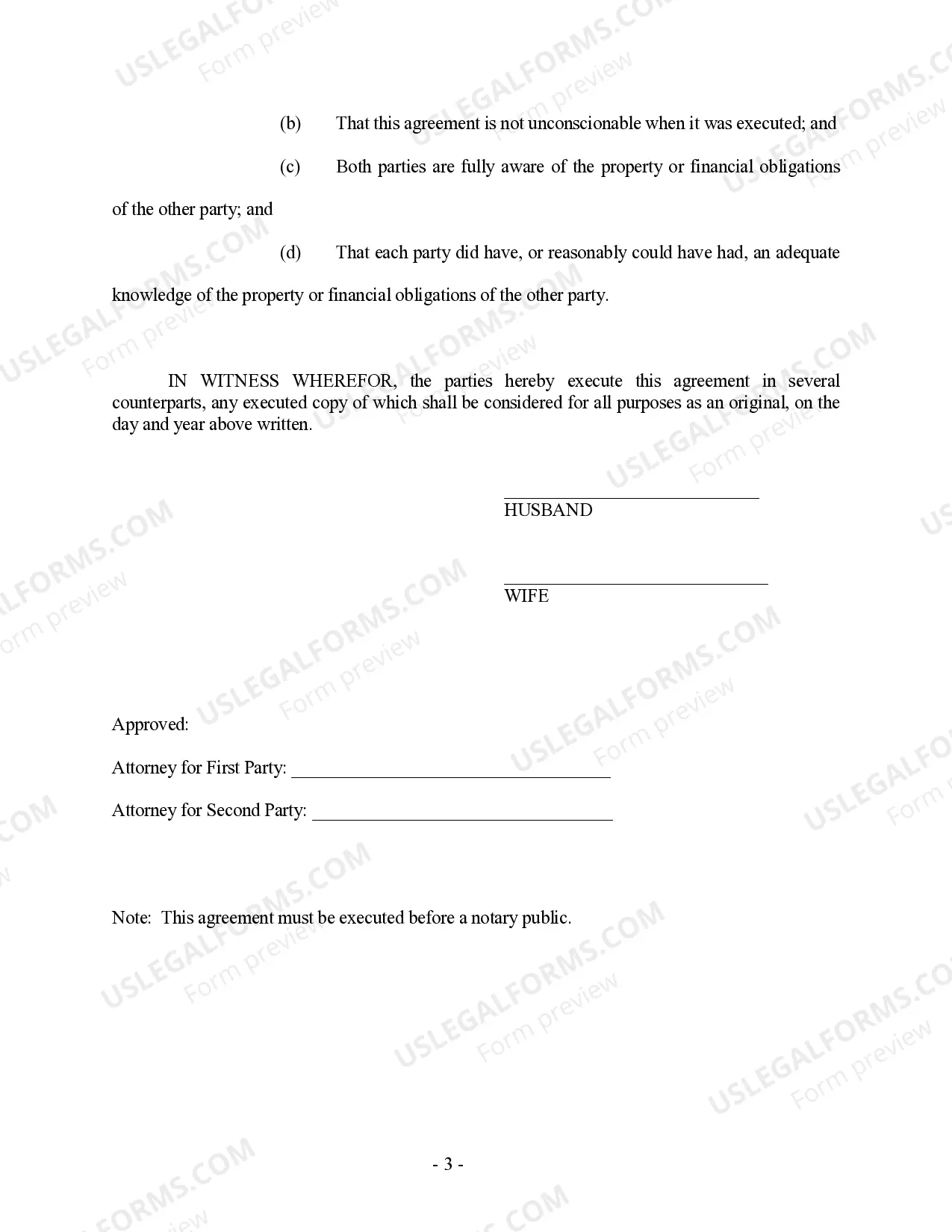
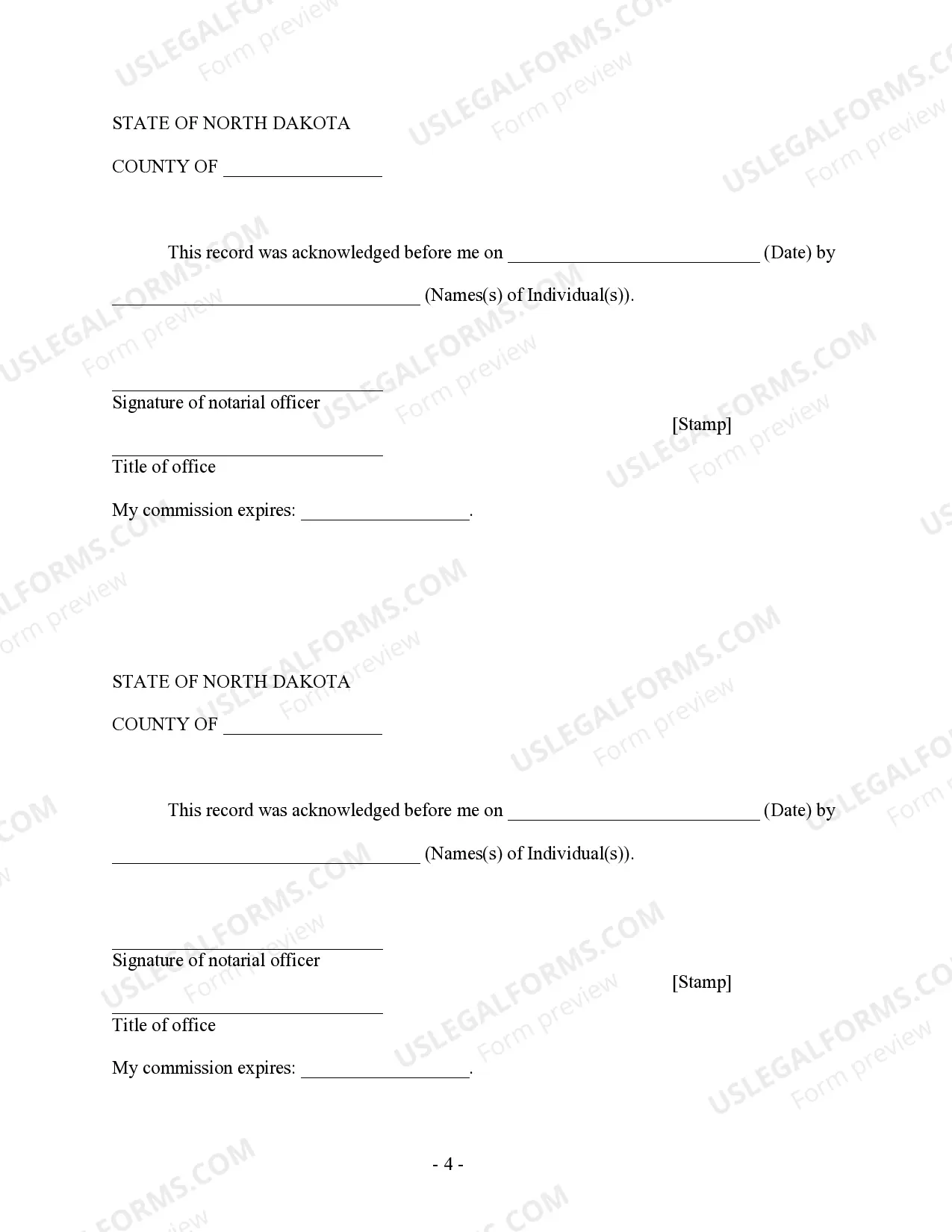
- Provisions for binding signatures by both parties, with notary requirement.
- Clauses discussing the enforceability and amendment processes of the agreement.
When this form is needed
This form should be used when either party wishes to modify terms of an existing prenuptial or premarital agreement. Common scenarios may include changes in financial circumstances, alterations in property ownership, or the addition of new clauses to reflect the evolving nature of the couple's relationship or financial situation.
Who can use this document
- Couples who have an existing prenuptial agreement that requires updates.
- Individuals entering into a marriage in North Dakota.
- Those who want to ensure their financial agreements are current and legally enforceable.
How to prepare this document
- Identify and write the names of both parties at the beginning of the agreement.
- Clearly specify the amendments or additions you wish to incorporate into the existing premarital agreement.
- Each party must sign the amendment in the presence of a notary public.
- Ensure mutual consent by verifying both parties understand the implications of the amendments.
- Keep a copy of the signed and notarized amendment for each party's records.
Does this document require notarization?
Yes, this form must be notarized to be legally valid. Both parties are required to sign the amendment in the presence of a notary public, ensuring that their identities are verified and that they are signing willingly.
Get your form ready online
Our built-in tools help you complete, sign, share, and store your documents in one place.
Make edits, fill in missing information, and update formatting in US Legal Forms—just like you would in MS Word.
Download a copy, print it, send it by email, or mail it via USPS—whatever works best for your next step.
Sign and collect signatures with our SignNow integration. Send to multiple recipients, set reminders, and more. Go Premium to unlock E-Sign.
If this form requires notarization, complete it online through a secure video call—no need to meet a notary in person or wait for an appointment.
We protect your documents and personal data by following strict security and privacy standards.

Make edits, fill in missing information, and update formatting in US Legal Forms—just like you would in MS Word.

Download a copy, print it, send it by email, or mail it via USPS—whatever works best for your next step.

Sign and collect signatures with our SignNow integration. Send to multiple recipients, set reminders, and more. Go Premium to unlock E-Sign.

If this form requires notarization, complete it online through a secure video call—no need to meet a notary in person or wait for an appointment.

We protect your documents and personal data by following strict security and privacy standards.
Mistakes to watch out for
- Failing to have the agreement notarized, which is essential for its validity.
- Not specifying the amendments clearly, which can lead to disputes later.
- Overlooking the requirement for both parties to sign the amendment.
Why use this form online
- Convenience: The form can be downloaded and completed at your convenience.
- Editability: Users can modify the form as necessary to meet their specific needs.
- Reliability: Forms are drafted by licensed attorneys, ensuring legal validity.
Main things to remember
- This form allows couples to make necessary changes to their premarital agreements.
- Both parties must sign and notarize the amendment for it to be valid.
- Careful documentation and clarity in the amendment are crucial to avoid future disputes.
Looking for another form?
Form popularity
FAQ
Prenups last, usually by their terms, for the entire length of the marriage. However, prenups sometimes include provisions that expire. The most common one might be an agreement that there's going to be no spousal support unless they are married for at least 10 years.
You should sign a prenuptial agreement prior to the marriage, because by definition a premarital agreement is one that is entered into before marriage. If you are considering marriage, consider entering into a prenuptial agreement early, since there are legal consequences for signing a prenup too close to your wedding.
Any indication of coercion or lack of willingness can give way for a divorce judge to overturn the agreement. A written agreement should be reviewed by an experienced family law attorney prior to completion of the agreement. Premarital agreements must be signed in front of witnesses and must be notarized.
When should we sign our prenuptial agreement? You should sign your prenuptial agreement well in advance of your marriage ceremony (it's recommended not less than 30 days before the wedding).
Prenuptial agreements do not expire, unless they have a specific clause in them stating the agreement expires after a certain length of marriage (very uncommon).
If a spouse is able to prove non-disclosure of all previous assets or property, then the prenuptial agreement can be considered void. Second, if a spouse is able to prove that he or she was compelled to sign the prenuptial agreement under stressful circumstances, then the prenup can be invalidated.
As long as you and your spouse agree, your prenuptial agreement can be changed. To create an amendment to a prenup, you can either add to the original contract or sign a separate contract that modifies the terms of the initial agreement.
What Could Invalidate a Prenup? Failing to fulfill any of California's prenuptial agreement requirements could result in a prenup the courts will not enforce. Examples include having a verbal contract, forcing one spouse to sign involuntarily, skipping legal requirements and including unfair terms in the agreement.
Prenuptial agreements may be nullified or declared void in some situations. Certain clauses could also be voided if they are unconscionable or forbidden by law. For example, a prenup can't decide issues of child support or child custody.