Delaware Unconditional Waiver and Release Upon Final Payment
What is this form?
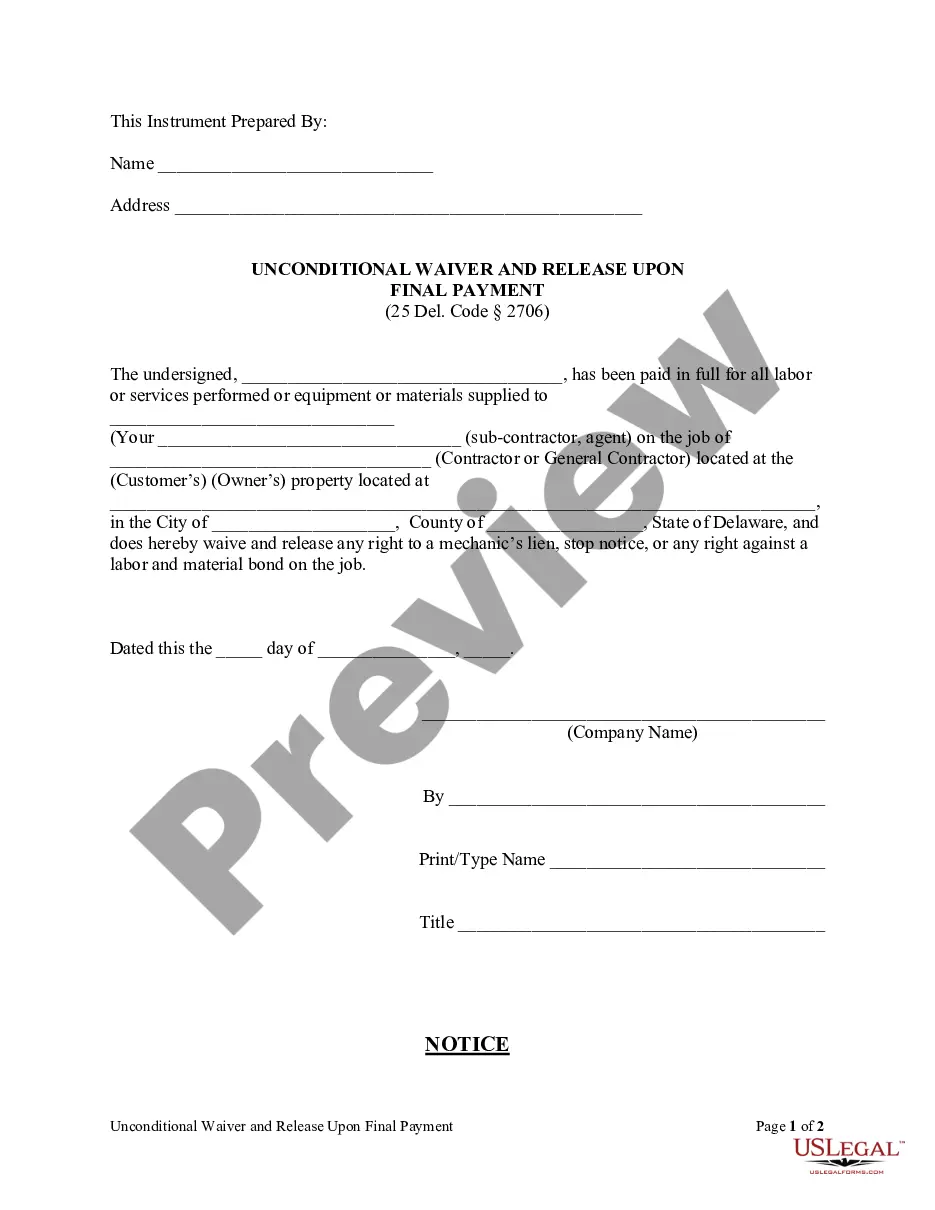
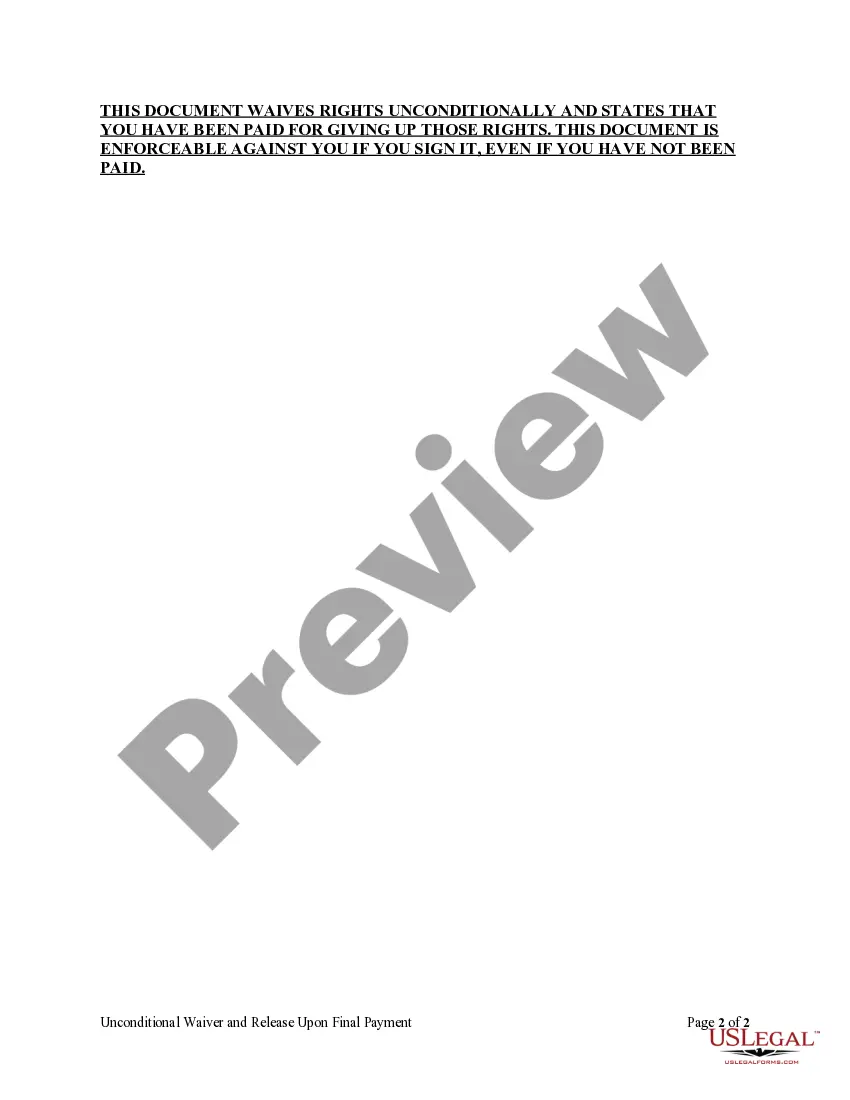
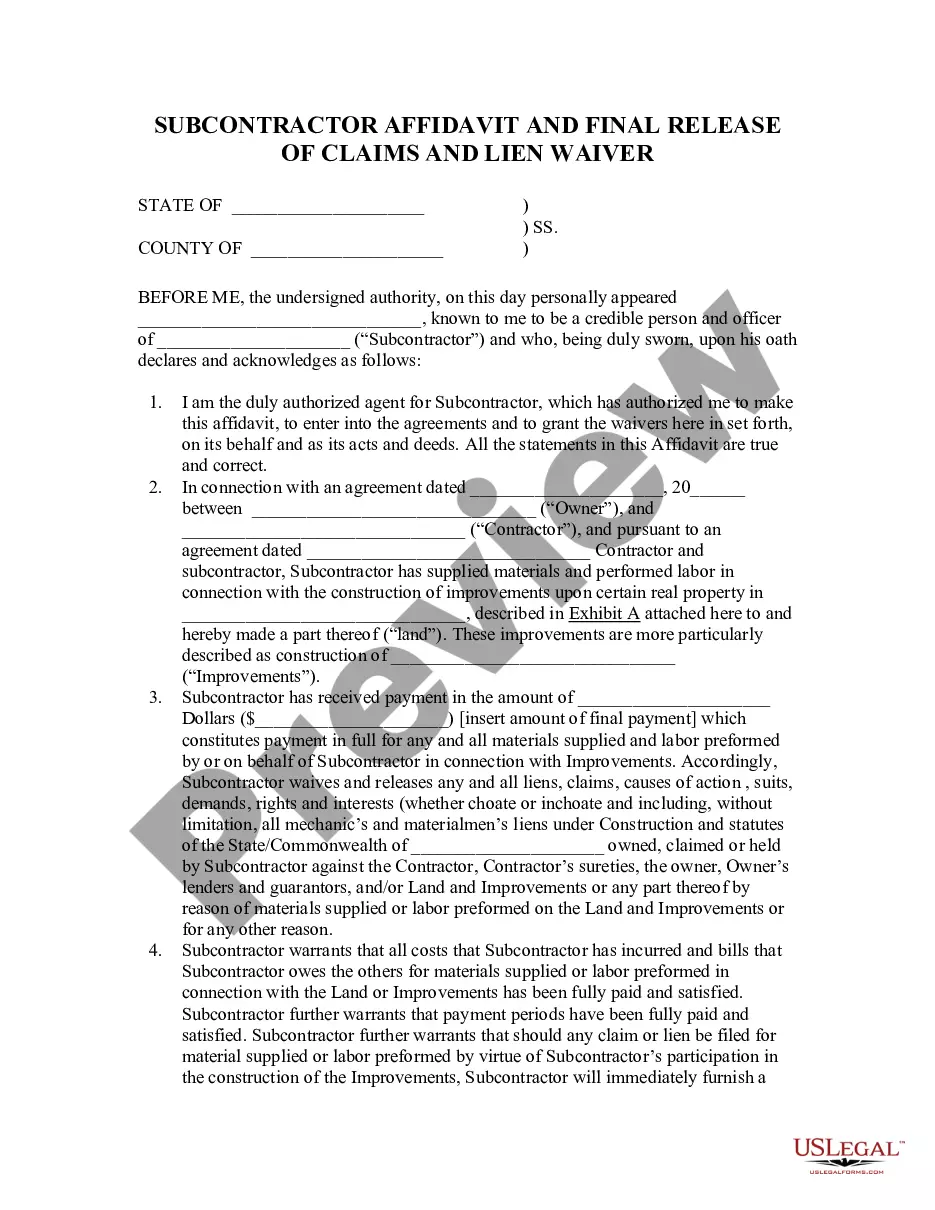
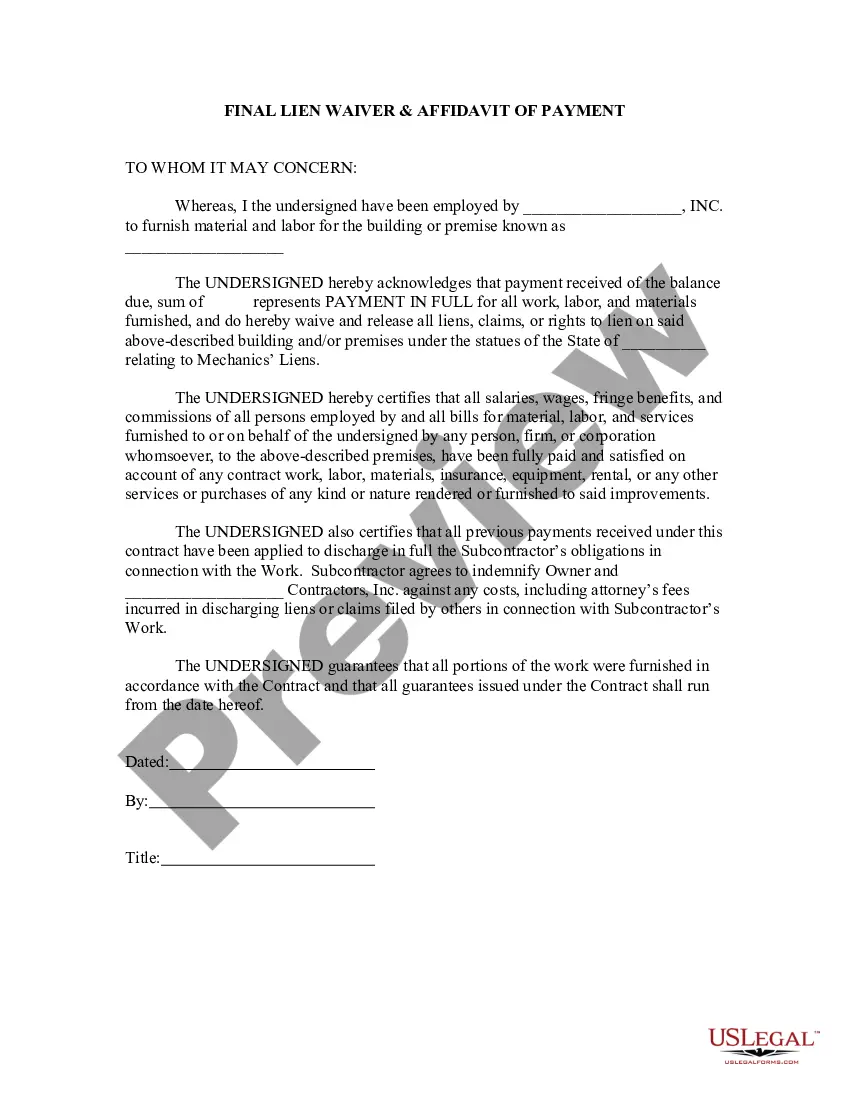
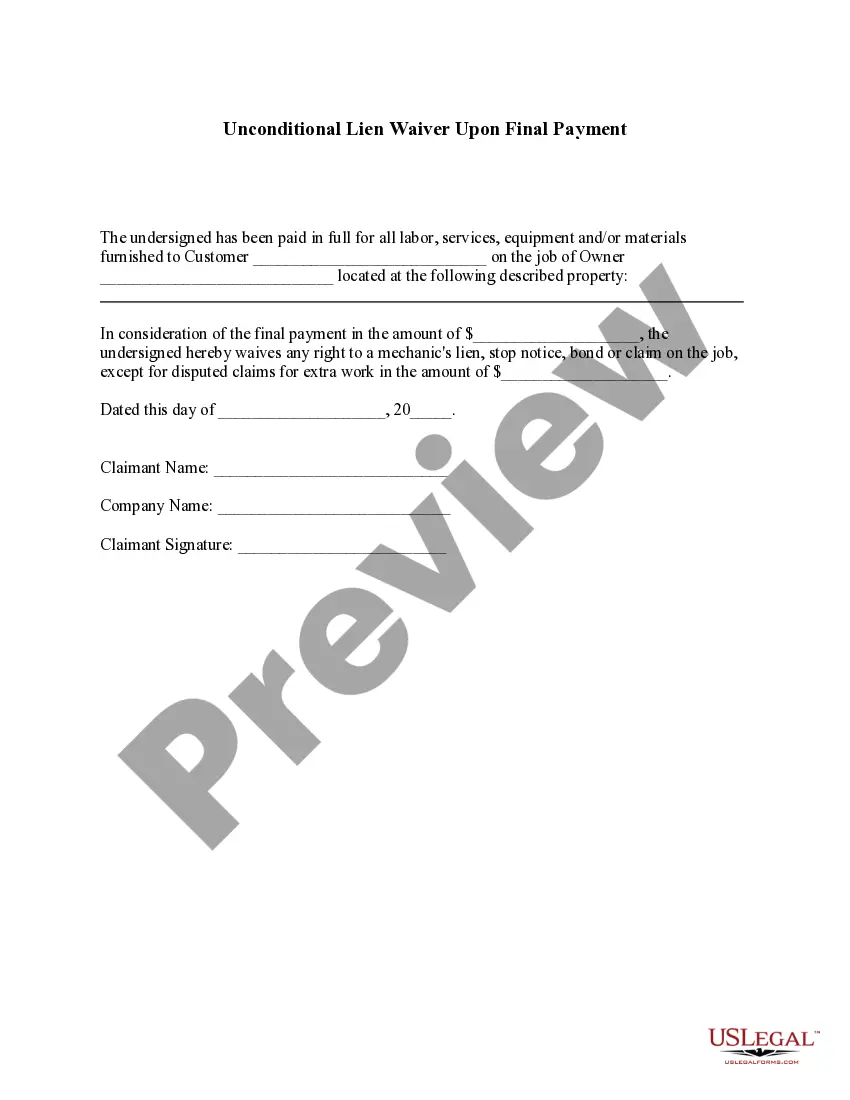
The Unconditional Waiver and Release Upon Final Payment form is a legal document that confirms that payment has been made in full for all labor, materials, or services provided by a subcontractor or agent on a job. This form functions as a waiver of the right to file a mechanic's lien or make a stop notice against the property owner, ensuring that all parties have settled their financial obligations. Unlike conditional waivers, this unconditional waiver asserts that any rights to claim against the property are permanently relinquished if signed, regardless of payment receipt.
Key parts of this document
- Name and address of the party waiving rights.
- Identification of the contractor or general contractor.
- Specific property address where work was performed.
- Statement of full payment for services or materials rendered.
- Signature and title of the person executing the waiver.
- Date of the waiver's execution.
Situations where this form applies
This form is typically used in construction and contracting situations when a subcontractor or supplier has completed their work and received payment. It is essential to use this waiver when the contractor needs to formally acknowledge receipt of payment and to document that they are relinquishing any future claims for payment related to the completed work. By acquiring this waiver, contractors protect themselves from unpaid claims and ensure that all financial obligations have been met.
Who should use this form
- Subcontractors or suppliers who have been paid in full for their services.
- General contractors needing to confirm that all payments are settled.
- Property owners wishing to eliminate future lien claims against their property.
How to prepare this document
- Enter the name and address of the party waiving their rights.
- Specify the name of the contractor or general contractor.
- Provide the complete property address where the services were performed.
- Sign and date the document with the appropriate title.
- Ensure that a copy of the signed waiver is provided to all relevant parties.
Does this form need to be notarized?
In most cases, this form does not require notarization. However, some jurisdictions or signing circumstances might. US Legal Forms offers online notarization powered by Notarize, accessible 24/7 for a quick, remote process.
Get your form ready online
Our built-in tools help you complete, sign, share, and store your documents in one place.
Make edits, fill in missing information, and update formatting in US Legal Forms—just like you would in MS Word.
Download a copy, print it, send it by email, or mail it via USPS—whatever works best for your next step.
Sign and collect signatures with our SignNow integration. Send to multiple recipients, set reminders, and more. Go Premium to unlock E-Sign.
If this form requires notarization, complete it online through a secure video call—no need to meet a notary in person or wait for an appointment.
We protect your documents and personal data by following strict security and privacy standards.

Make edits, fill in missing information, and update formatting in US Legal Forms—just like you would in MS Word.

Download a copy, print it, send it by email, or mail it via USPS—whatever works best for your next step.

Sign and collect signatures with our SignNow integration. Send to multiple recipients, set reminders, and more. Go Premium to unlock E-Sign.

If this form requires notarization, complete it online through a secure video call—no need to meet a notary in person or wait for an appointment.

We protect your documents and personal data by following strict security and privacy standards.
Typical mistakes to avoid
- Failing to include complete property details.
- Not signing or dating the waiver.
- Using the form without confirming payment has been received in full.
Advantages of online completion
- Convenient access and immediate download.
- Editability to ensure all details are accurately captured.
- Drafted by licensed attorneys for reliability and legal compliance.
Legal use & context
- This waiver is enforceable under Delaware law once signed, indicating that the party has received payment.
- It eliminates any rights to seek a mechanic's lien on the property for the work acknowledged in the waiver.
Main things to remember
- The form ensures all payments for services rendered are acknowledged.
- It protects both contractors and property owners from future claims.
- Understand the legal implications of signing this unconditional waiver.
Looking for another form?

Form popularity
FAQ
An unconditional waiver and release on final payment is a specific type of waiver that confirms that the contractor or supplier has received full payment and relinquishes any rights to file a lien once the final payment is made. This document provides security for property owners by eliminating potential disputes over payment. It simplifies the process and ensures smooth transactions in construction financing. To find accurate forms for this, check out US Legal Forms for a Delaware Unconditional Waiver and Release Upon Final Payment.
An unconditional waiver and release is a legal document that ensures a contractor or supplier receives payment without any conditions attached. When you sign this waiver, you prevent any future claims against the property for unpaid amounts. This document is particularly crucial in protecting both parties, as it provides clear evidence of the payment status. To navigate this process effectively, consider using a platform like US Legal Forms that offers templates for a Delaware Unconditional Waiver and Release Upon Final Payment.
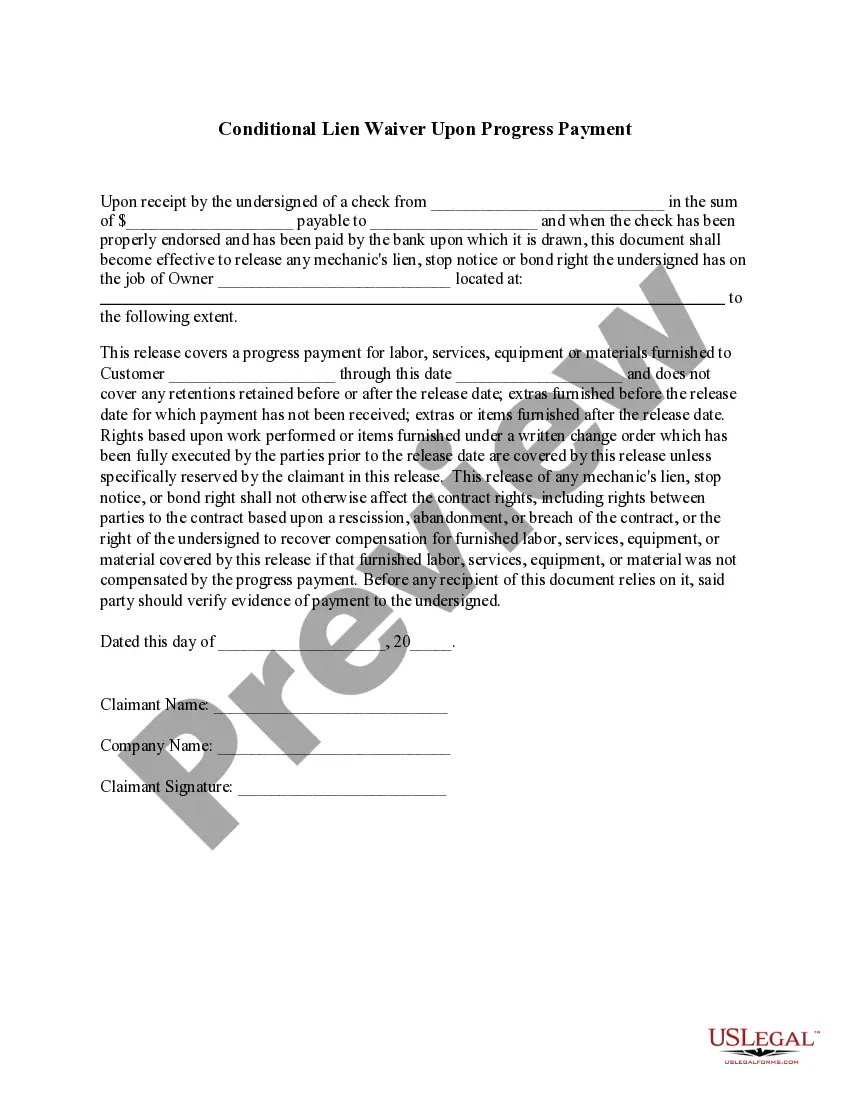
A conditional waiver release on final payment is a document that allows a contractor or subcontractor to confirm receipt of payment while retaining the right to file a lien until the payment clears. Essentially, this waiver serves as a promise that upon payment, the contractor will not pursue a lien on the property. This is crucial for both parties to ensure security, and understanding such documents can be easily managed with the help of resources available on US Legal Forms.
Filling out a lien waiver involves providing essential details like the names of the involved parties, the project address, and the payment amount being acknowledged. It's vital to ensure that the waiver accurately reflects the work completed and payments received. Always validate the document by signing it, and remember that using platforms like US Legal Forms can simplify this process, ensuring you complete it correctly.
Writing a release of lien involves a few straightforward steps. Begin by clearly stating the parties involved and the property description. Include details about the payment received and explicitly mention the waiver of the lien, following the guidelines of the Delaware Unconditional Waiver and Release Upon Final Payment. To simplify the process, consider using templates from uslegalforms, which provide clear structure and legal language.
To create a release of lien, start by gathering necessary information, including the original contract and payment details. You can easily use templates available on uslegalforms, ensuring you incorporate essential elements such as property description and payment amounts. A well-drafted Delaware Unconditional Waiver and Release Upon Final Payment can protect both parties and finalize the transaction.
To obtain a lien release form, you can visit uslegalforms, a reliable resource for legal documents. They offer a variety of templates, including the Delaware Unconditional Waiver and Release Upon Final Payment. Simply select the form you need, fill it out with the required information, and download it for your use.
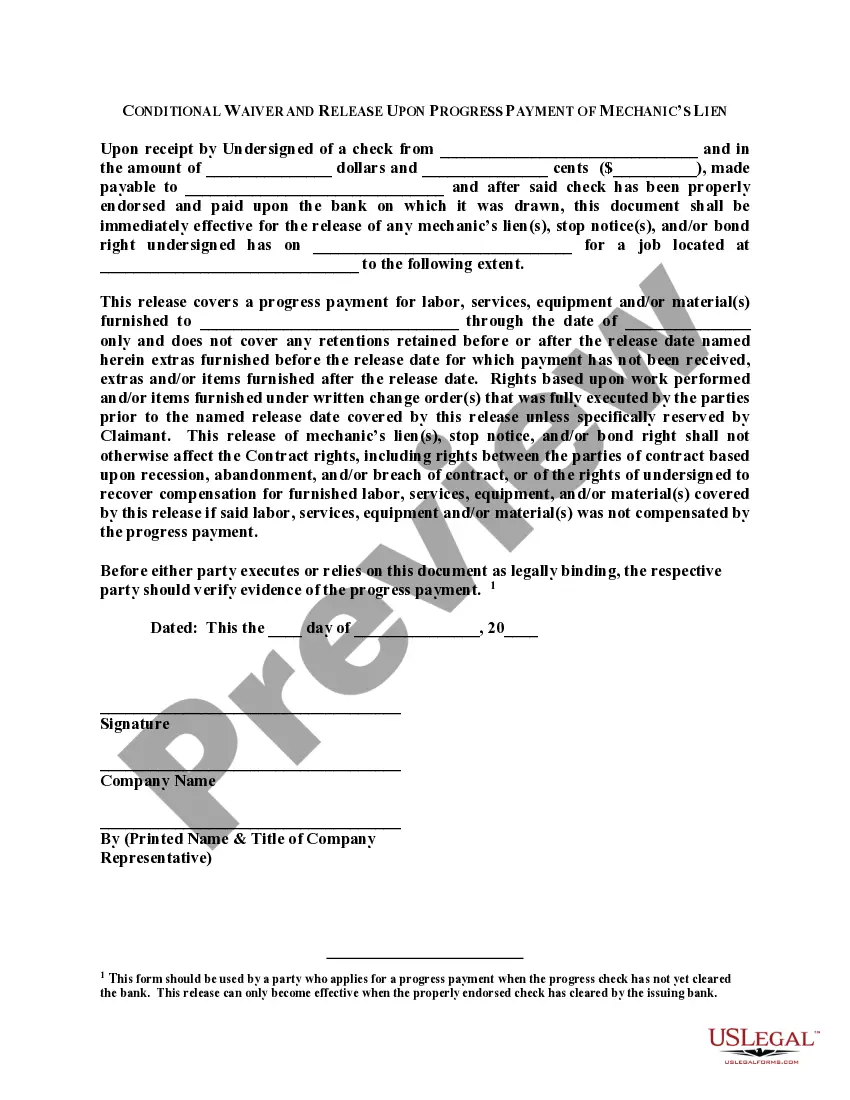
A conditional waiver stipulates that the waiver of claims is valid only upon specific conditions being met, such as receipt of payment. An unconditional waiver, however, releases any claims immediately, without conditions attached. Knowing these distinctions can guide you in selecting the appropriate waiver for your situation, ensuring clarity and financial security in your agreements.
The primary difference between conditional release and unconditional release lies in the terms of payment. An unconditional release waives rights immediately upon signing, indicating that full payment is received. In contrast, a conditional release only takes effect once payment is rendered. Understanding these differences helps ensure you choose the right type of waiver for your transaction needs.
Filling out a conditional waiver and release on final payment involves indicating that the waiver is contingent upon receiving payment. Begin by entering relevant details about the project, like names and payment amounts, then specify the condition clearly within the document. This ensures all parties understand that the waiver takes full effect only when payment is successfully processed. Using our platform, you can easily generate the necessary forms to secure your interests.