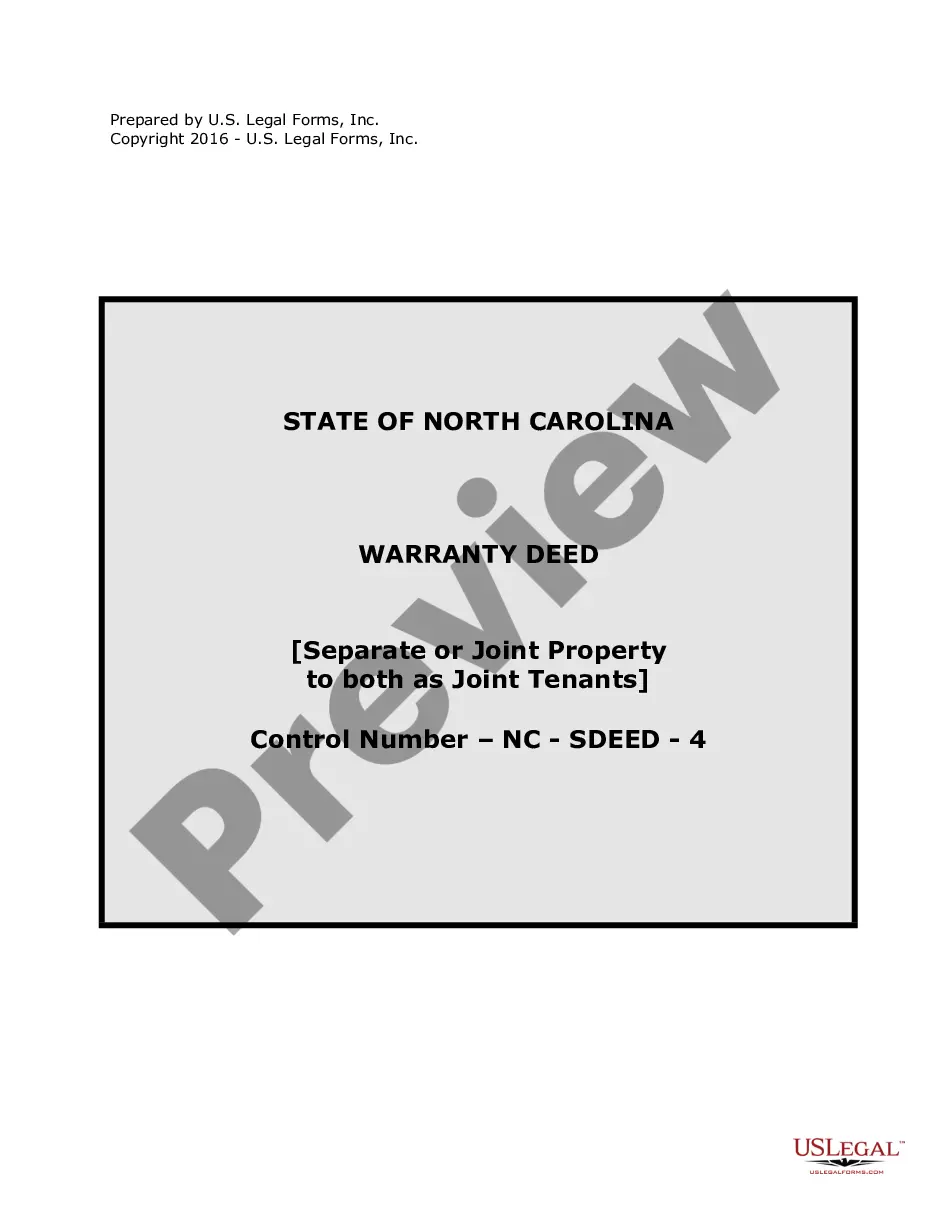
North Carolina Warranty Deed for Separate or Joint Property to Joint Tenancy
About this form
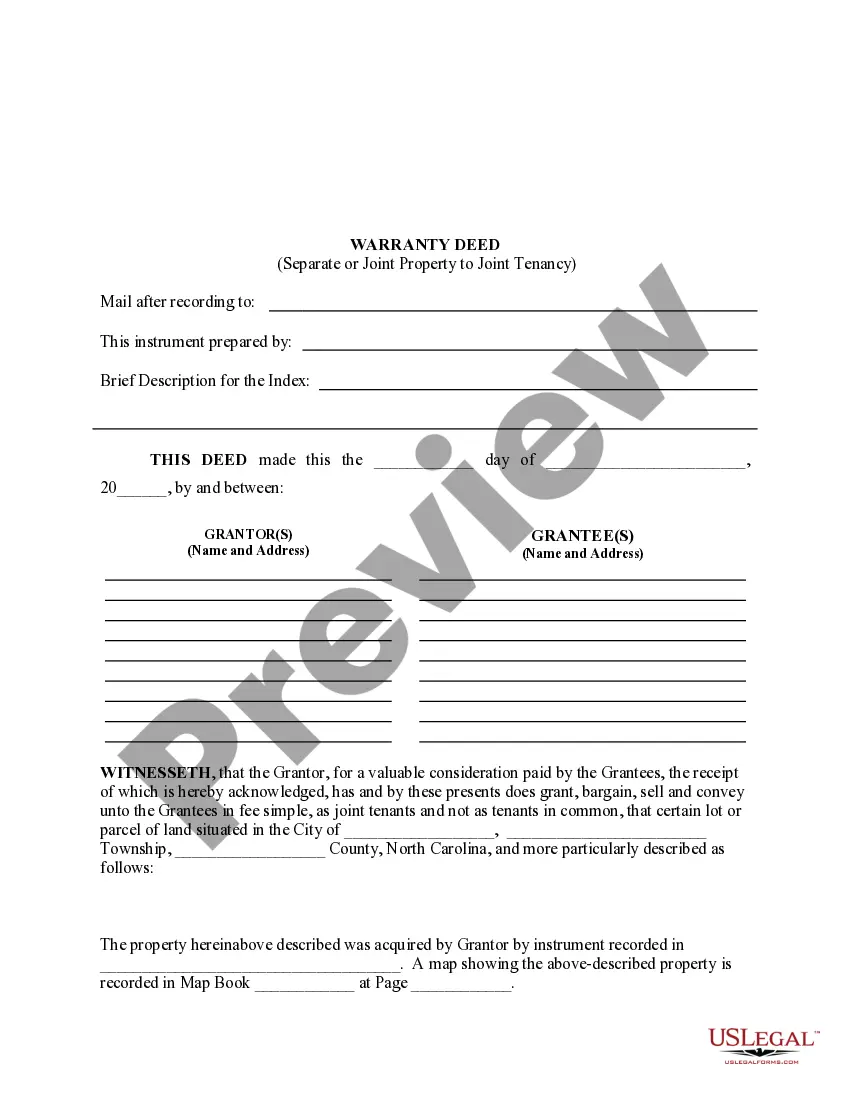
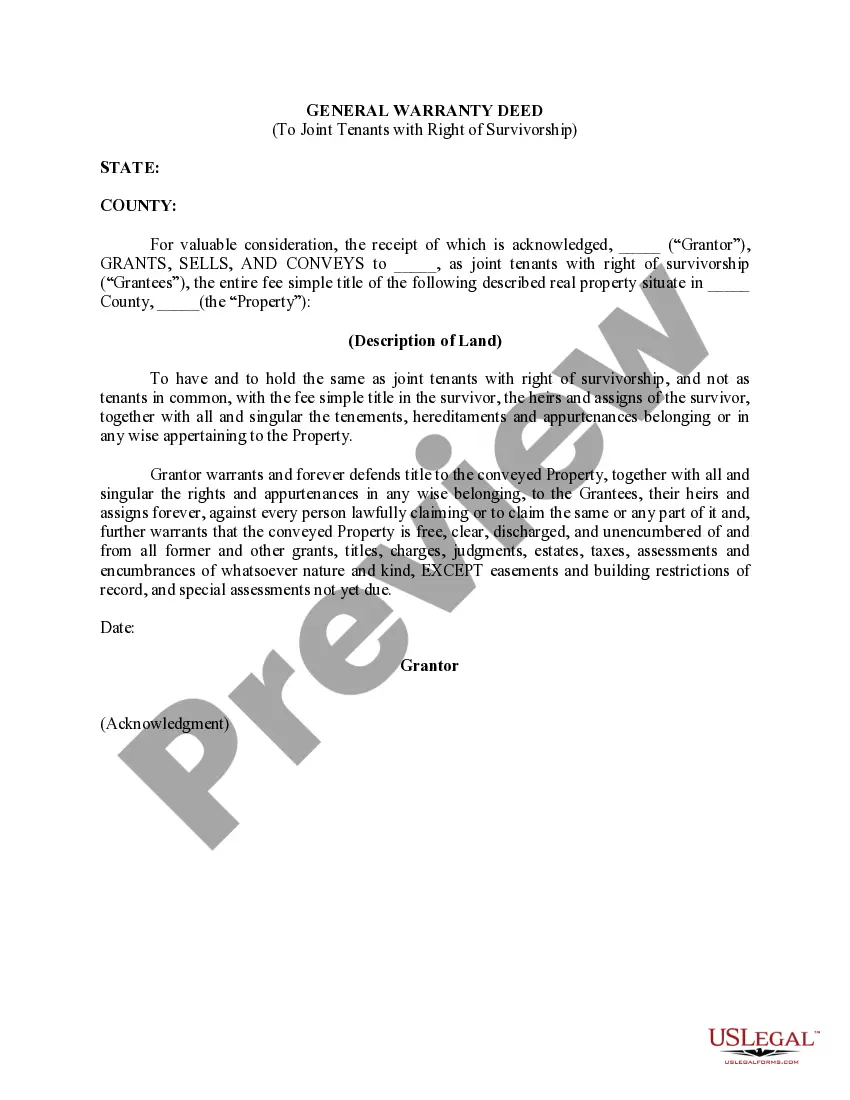
The Warranty Deed for Separate or Joint Property to Joint Tenancy is a legal document used to transfer ownership of property into joint tenancy. This form allows the conversion of either separate property or jointly held property into a joint tenancy holding, where both parties have equal rights to the property. This type of deed differs from a tenancy in common as joint tenancy includes the right of survivorship, meaning that upon the death of one owner, the property automatically passes to the surviving owner without going through probate.
Key parts of this document
- Grantor and grantee details: Names and addresses of the individuals transferring and receiving the property.
- Description of property: Details of the property being transferred, including location and legal description.
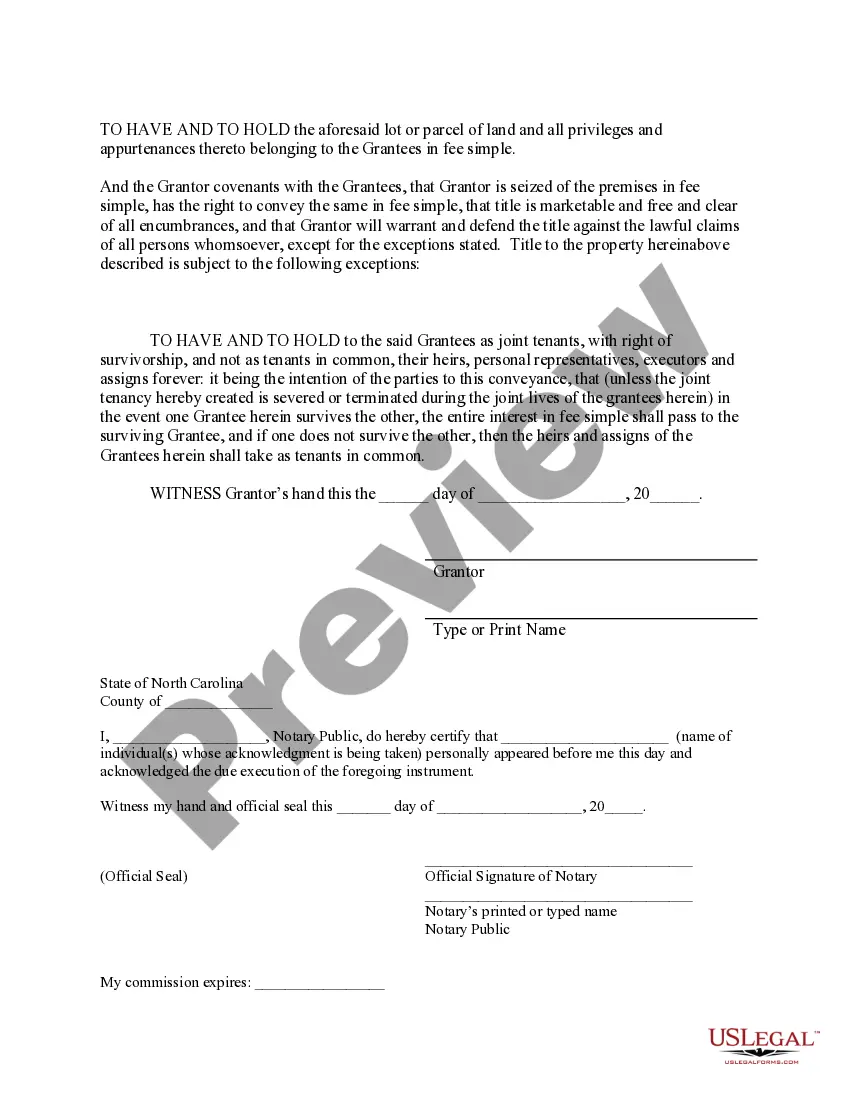
- Covenants: Grantor's assurances regarding ownership, rights to convey, and encumbrances.
- Joint tenancy clause: Stipulates the property will be owned as joint tenants with rights of survivorship.
- Notary acknowledgment: Certification by a notary public verifying the identity of the grantor.


Common use cases
This Warranty Deed is used when individuals who own property separately or jointly wish to reclassify their ownership to joint tenancy. It is particularly useful in situations where couples, family members, or partners want to ensure that upon the death of one party, the property seamlessly transfers to the surviving party, avoiding probate complications. This form is often utilized in estate planning to simplify property transfer and maintain family assets.
Who this form is for
This form is suitable for:
- Couples wishing to convert their separate property to joint tenancy.
- Co-owners of real estate looking to secure ownership rights collaboratively.
- Individuals involved in estate planning to ensure smooth transfer of property upon death.
- Parties seeking legal recognition of shared ownership interests.
How to prepare this document
- Identify the grantor and grantee: Fill in the names and addresses of both parties involved in the property transfer.
- Specify the property: Provide a detailed description of the property being transferred, including its legal description.
- Enter the execution date: Write the date on which the deed is being signed.
- Notarization: Ensure the form is signed in front of a notary public, who will fill in their official details.
- Review for accuracy: Double-check all entered information for completeness and accuracy before finalizing.
Does this document require notarization?
This form needs to be notarized to ensure legal validity. US Legal Forms provides secure online notarization powered by Notarize, allowing you to complete the process through a verified video call, available anytime.
Get your form ready online
Our built-in tools help you complete, sign, share, and store your documents in one place.
Make edits, fill in missing information, and update formatting in US Legal Forms—just like you would in MS Word.
Download a copy, print it, send it by email, or mail it via USPS—whatever works best for your next step.
Sign and collect signatures with our SignNow integration. Send to multiple recipients, set reminders, and more. Go Premium to unlock E-Sign.
If this form requires notarization, complete it online through a secure video call—no need to meet a notary in person or wait for an appointment.
We protect your documents and personal data by following strict security and privacy standards.
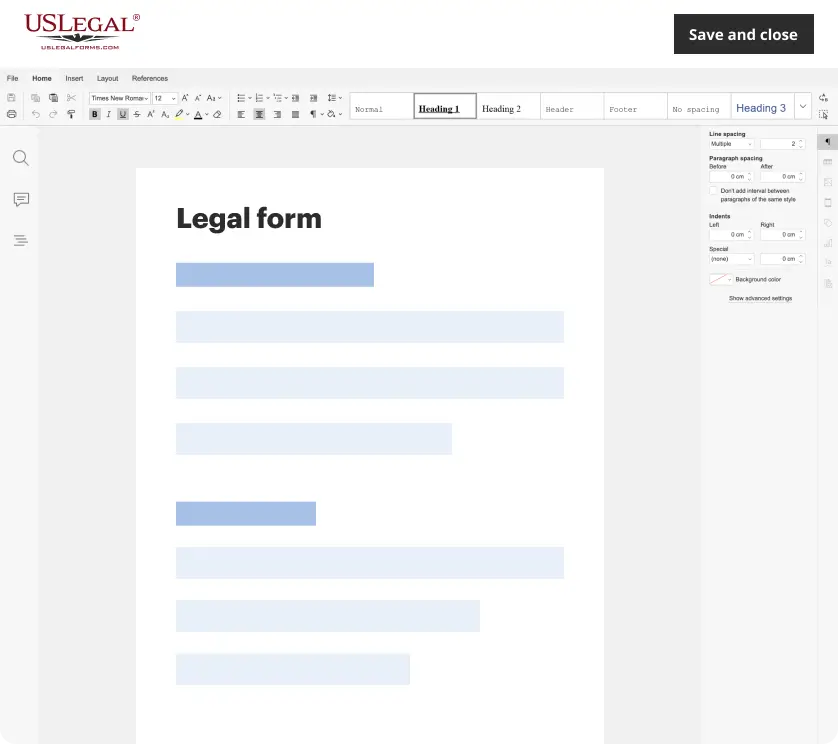
Make edits, fill in missing information, and update formatting in US Legal Forms—just like you would in MS Word.
Download a copy, print it, send it by email, or mail it via USPS—whatever works best for your next step.
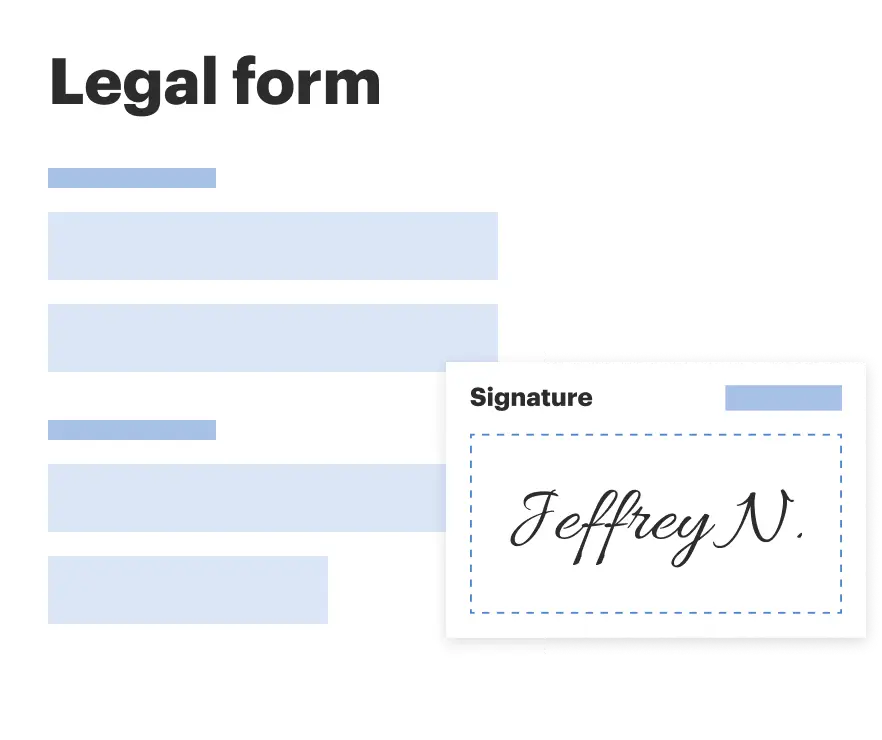
Sign and collect signatures with our SignNow integration. Send to multiple recipients, set reminders, and more. Go Premium to unlock E-Sign.

If this form requires notarization, complete it online through a secure video call—no need to meet a notary in person or wait for an appointment.
We protect your documents and personal data by following strict security and privacy standards.
Common mistakes to avoid
- Incorrectly stating property descriptions, which can lead to legal disputes.
- Failing to include all required signatures, especially from the grantor and notary.
- Not understanding the implications of joint tenancy versus tenancy in common.
- Neglecting to provide accurate and up-to-date addresses for all parties involved.
Advantages of online completion
- Convenience: Access and complete the form from anywhere at any time.
- Editability: Easily correct or modify information before finalizing the document.
- Reliability: Obtain a deed drafted according to state-specific legal standards.
Looking for another form?
Form popularity
FAQ
In North Carolina, if one owner of a jointly owned property dies, the surviving owner typically retains full ownership of the property. This is due to the right of survivorship inherent in joint tenancy arrangements. To protect your interests, it is advisable to draft a North Carolina Warranty Deed for Separate or Joint Property to Joint Tenancy that clearly outlines these rights.
The requirements for a warranty deed in North Carolina include identifying the parties involved, providing a precise description of the property, and including the grantor's signature. Furthermore, the deed must be acknowledged by a notary public, delivered to the grantee, and accepted. Using templates from US Legal Forms can help you meet these requirements easily.
A general warranty deed in North Carolina is a type of deed that guarantees the grantor holds clear title to the property and has the right to convey it. This deed offers the highest level of protection to the grantee, as it warrants against any past claims to the property. When drafting a North Carolina Warranty Deed for Separate or Joint Property to Joint Tenancy, a general warranty deed ensures comprehensive coverage.
While it is not legally required for an attorney to prepare a deed in North Carolina, it is highly recommended. An attorney can provide valuable guidance and ensure that all legal requirements are met, reducing the risk of errors. Platforms like US Legal Forms offer templates that can simplify the process, but consulting a legal professional can provide further peace of mind.
For a deed to be valid in North Carolina, it must include the names of the parties, a lawful property description, the intent to convey, the grantor's signature, acknowledgment by a notary, delivery of the deed, and acceptance by the grantee. Meeting these requirements ensures that your North Carolina Warranty Deed for Separate or Joint Property to Joint Tenancy holds up in legal situations.
Common problems with warranty deeds in North Carolina often revolve around unclear property descriptions or missing signatures. These issues can lead to disputes over property ownership or challenges in enforcing the deed. Utilizing services like US Legal Forms can help ensure your North Carolina Warranty Deed for Separate or Joint Property to Joint Tenancy is correctly prepared.
In North Carolina, a warranty deed must include several key elements to be valid. This includes the names of the grantor and grantee, a clear description of the property, and a statement indicating the intention to convey the property. Additionally, the deed must be signed by the grantor and acknowledged before a notary public.
Filling out a North Carolina general warranty deed requires attention to detail. Start by providing the names of the grantor and grantee, along with their addresses. Include the property's legal description and specify the type of ownership, especially if it’s a North Carolina Warranty Deed for Separate or Joint Property to Joint Tenancy. Ensure that all parties sign the document in front of a notary to finalize the deed, and consider using uslegalforms for a guided approach.
Filling out a warranty deed form involves entering specific details about the property and the involved parties. Begin with the full names of the grantor and grantee, followed by a precise description of the property. When dealing with a North Carolina Warranty Deed for Separate or Joint Property to Joint Tenancy, indicate how the grantees will hold the property. Lastly, don't forget to sign and have the deed notarized for it to be legally binding.
While anyone can technically prepare a warranty deed, it's advisable to consult a legal professional to ensure accuracy and compliance with state laws. Incorrectly filled deeds can lead to complications down the road. For those looking to prepare a North Carolina Warranty Deed for Separate or Joint Property to Joint Tenancy, using a reliable platform like uslegalforms can simplify the process and ensure that all necessary legal requirements are met.