North Carolina Complex Will with Credit Shelter Marital Trust for Large Estates
Overview of this form
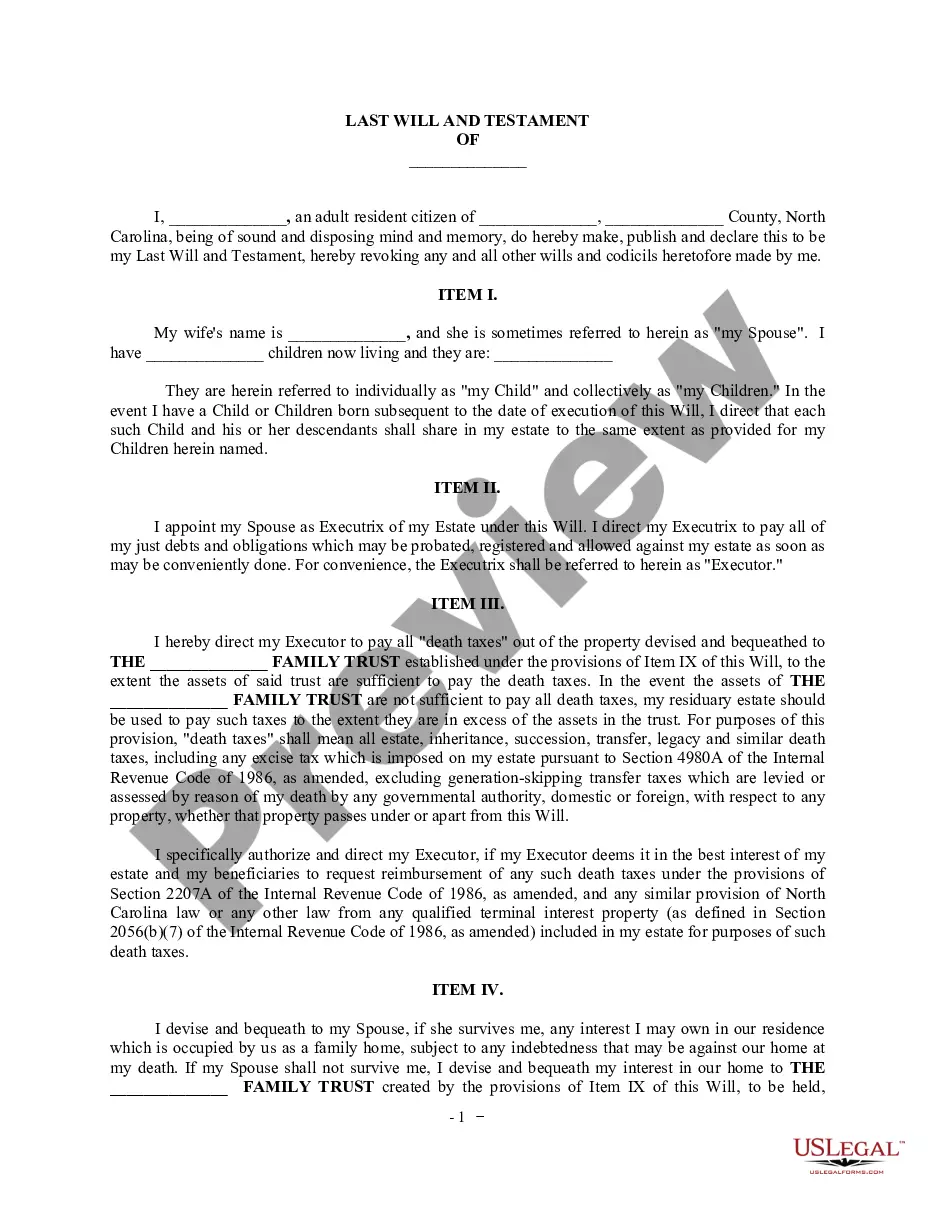
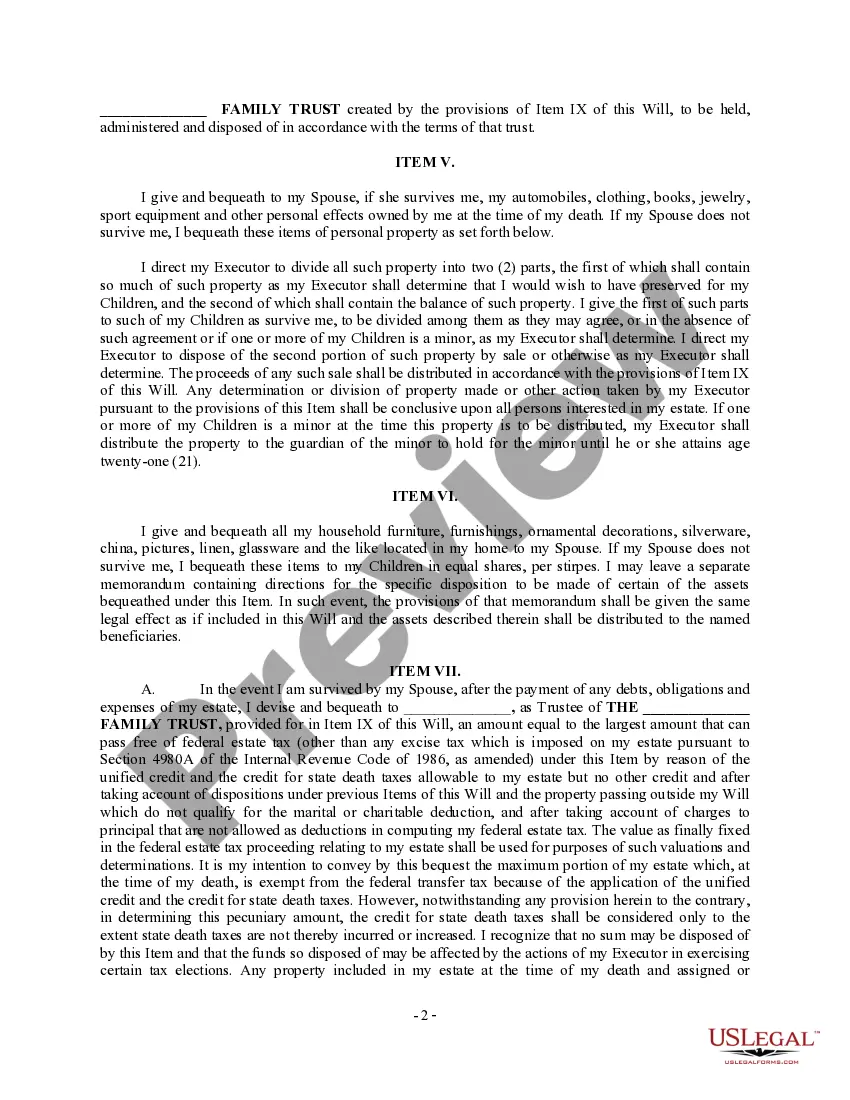
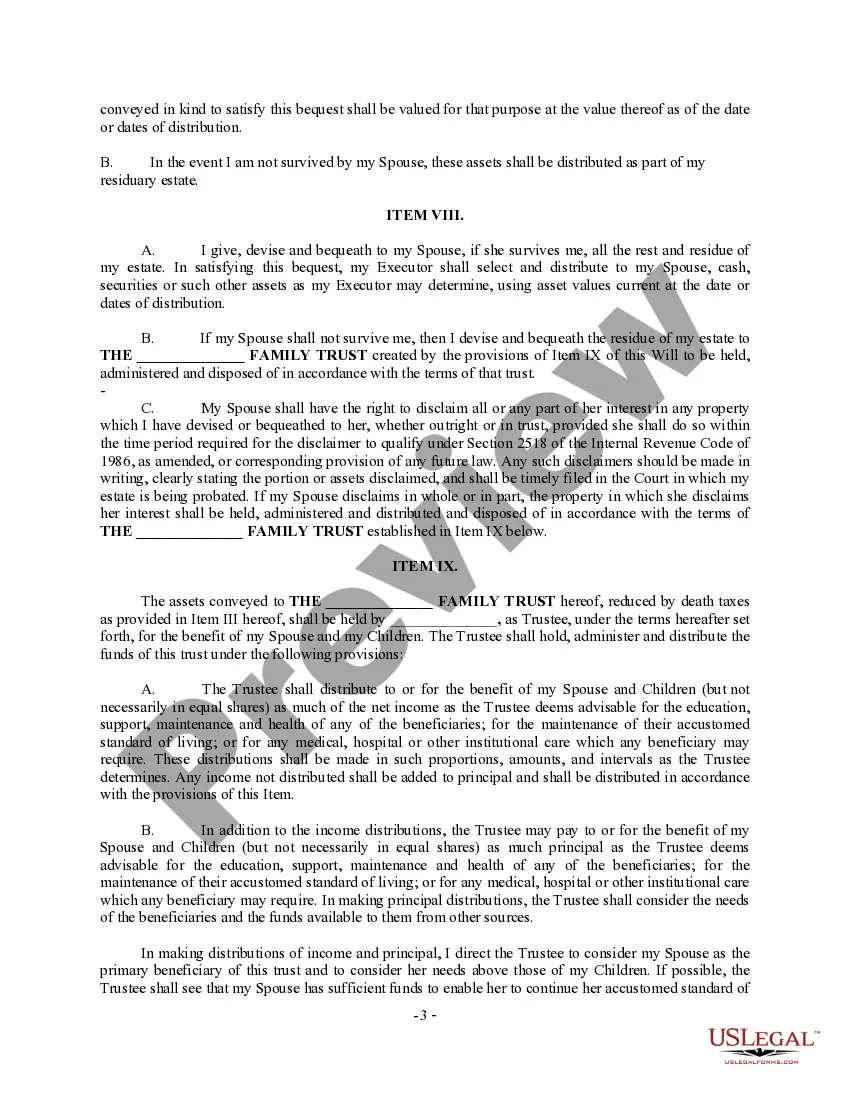
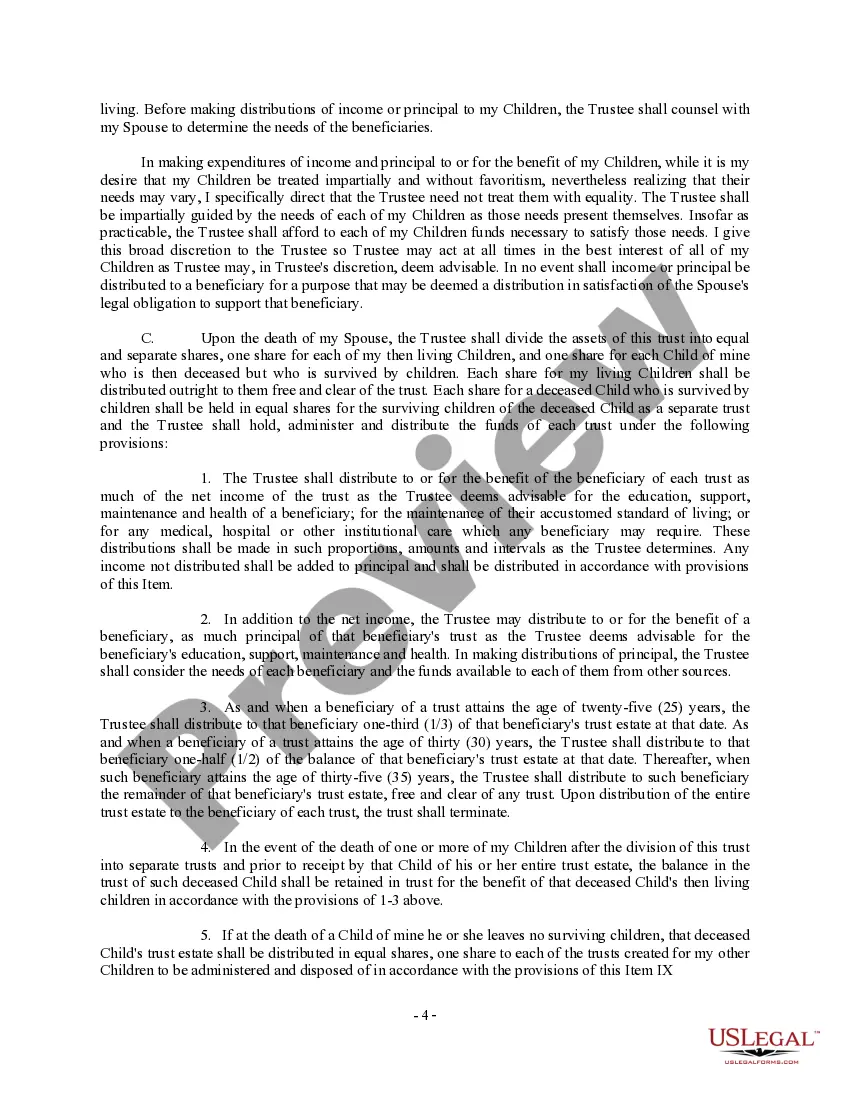
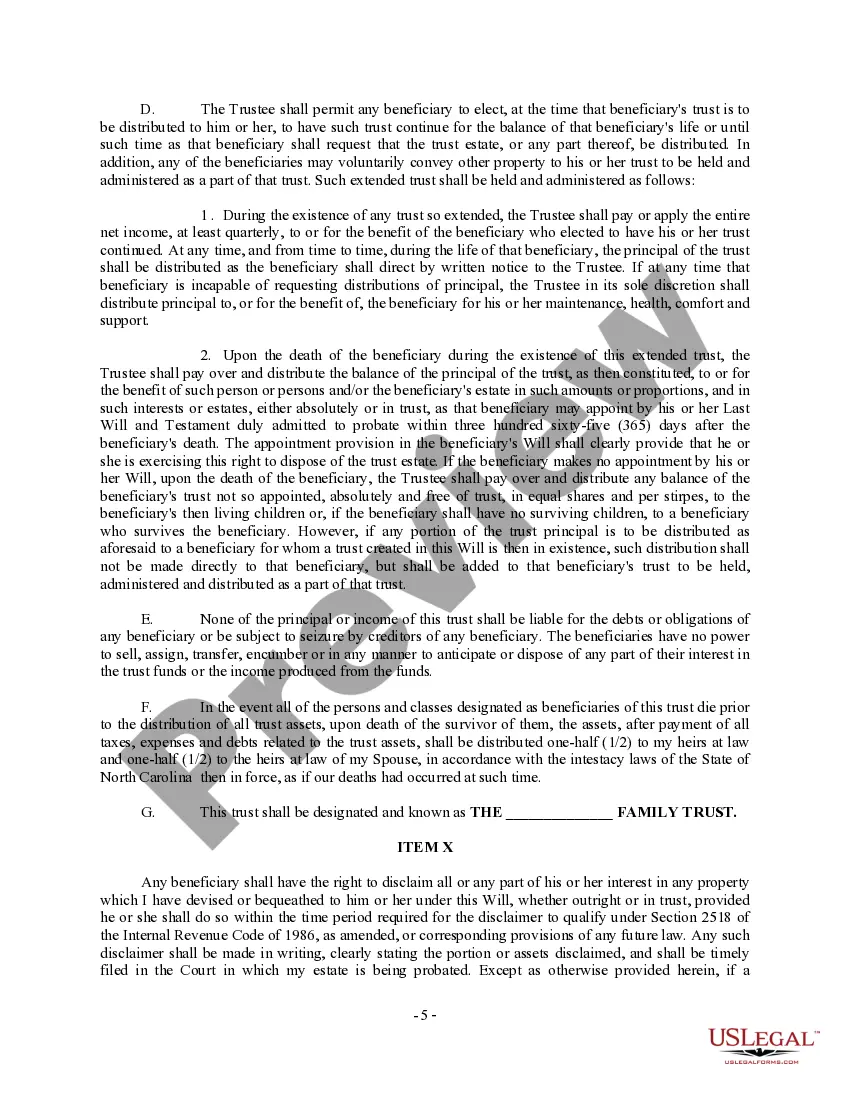
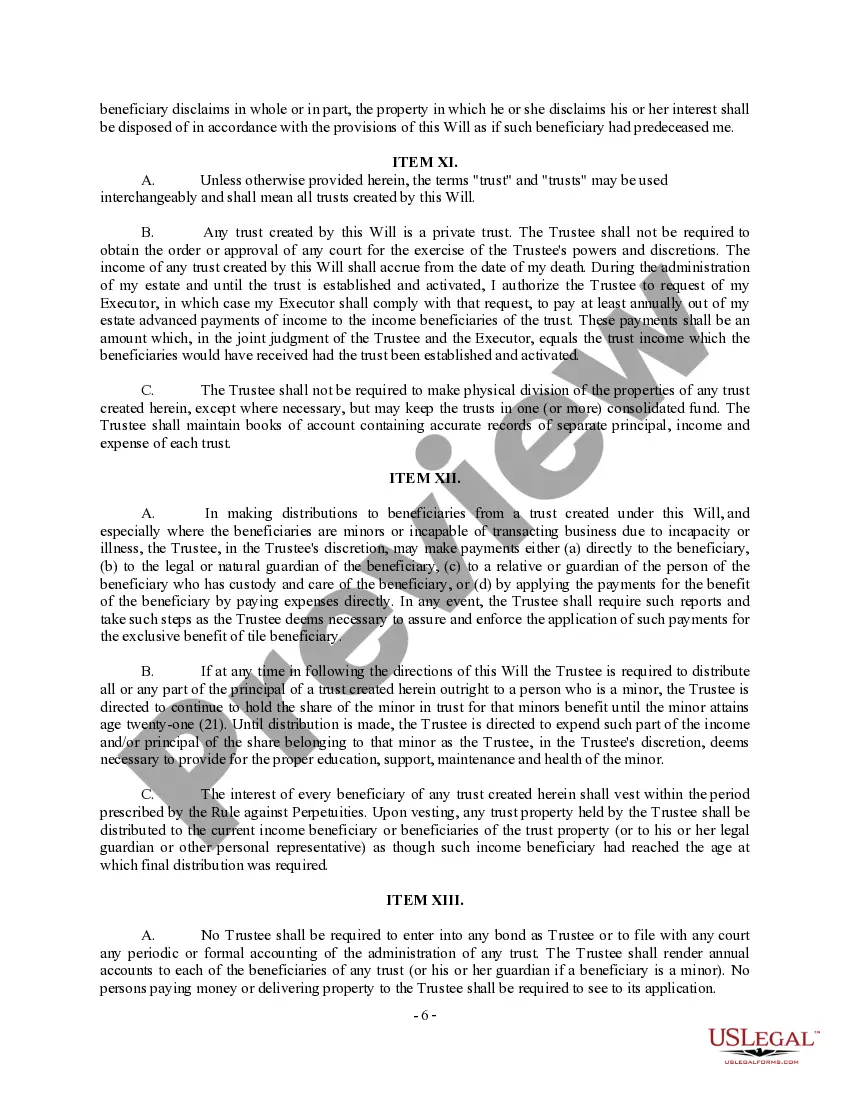
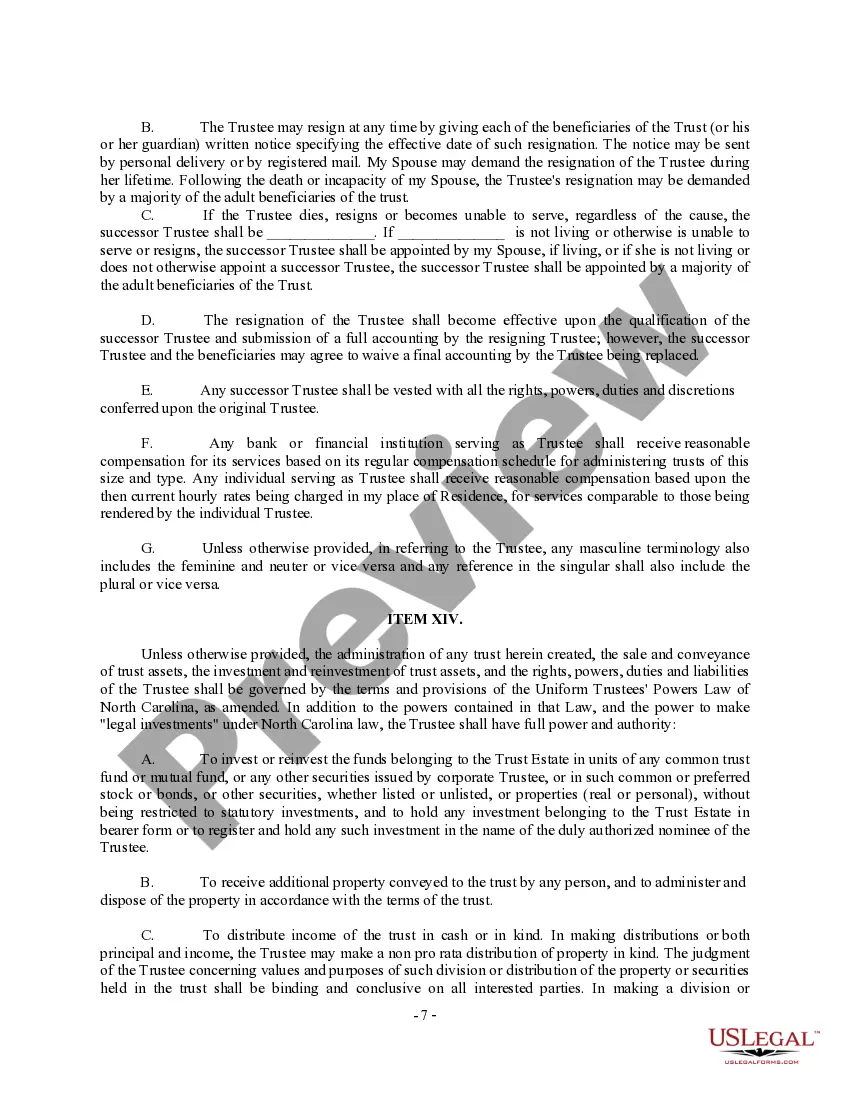
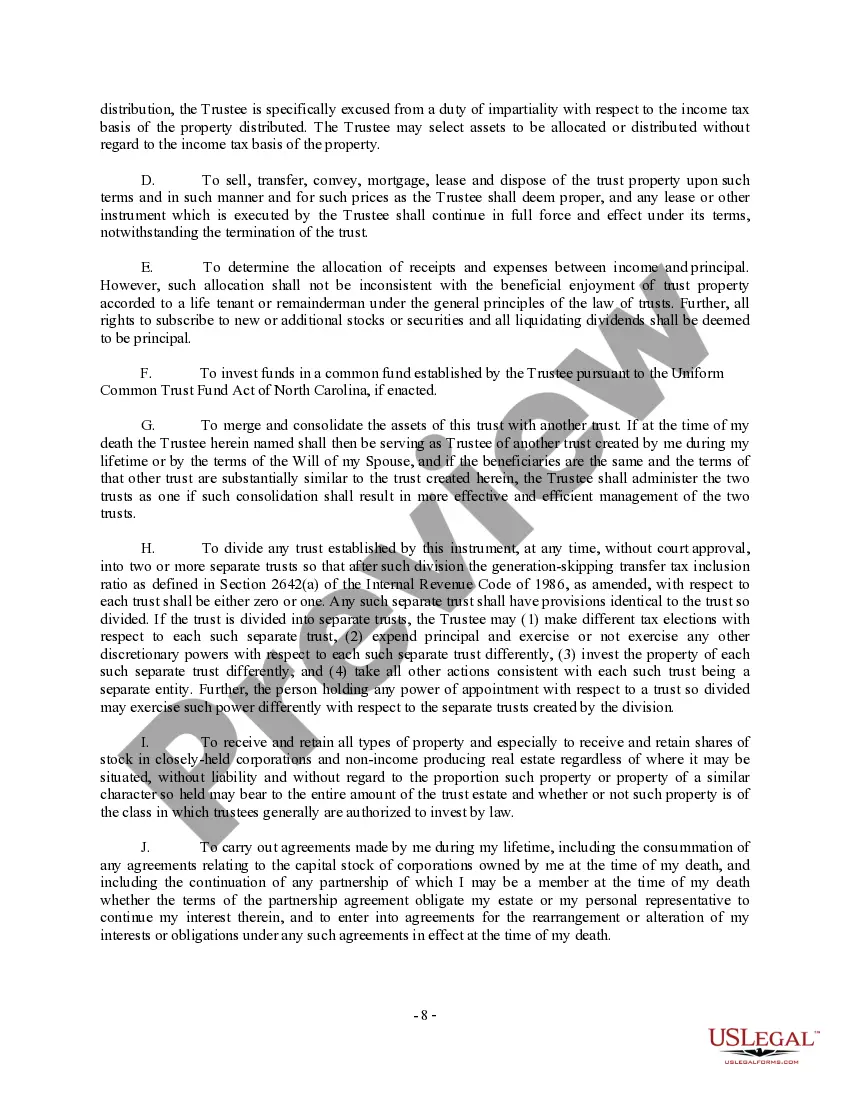
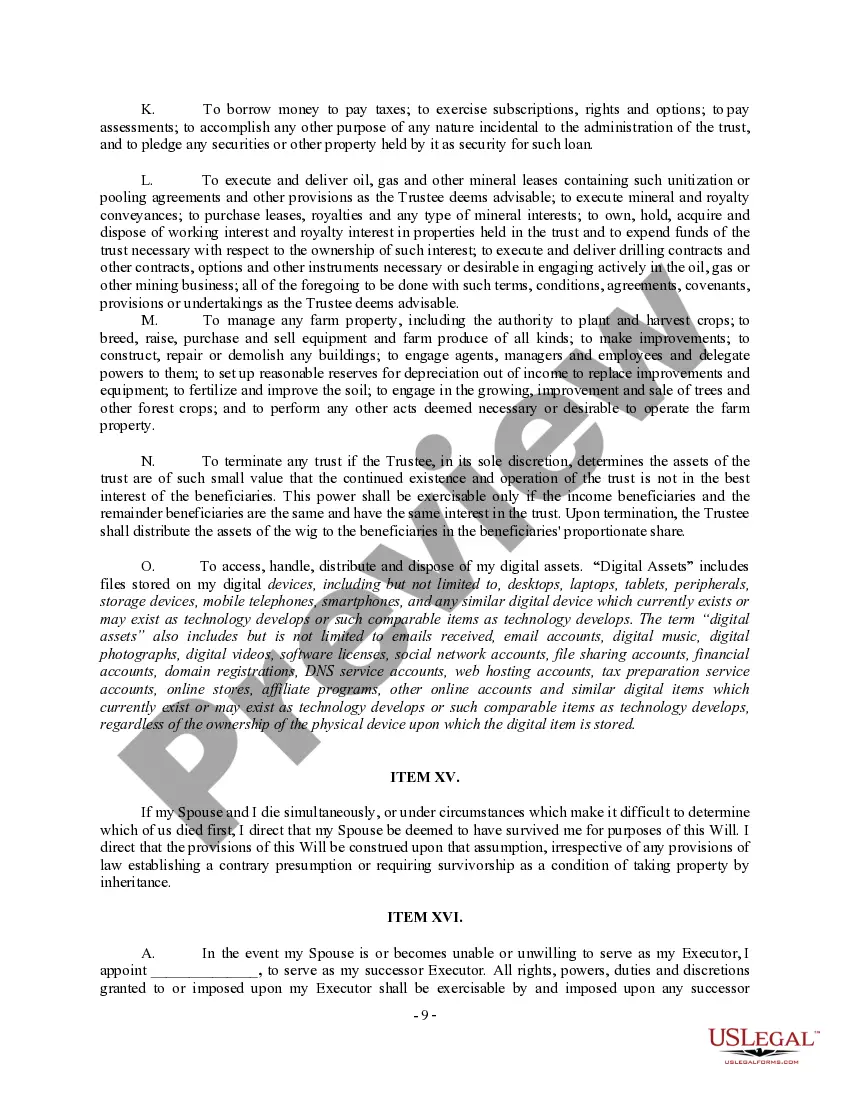
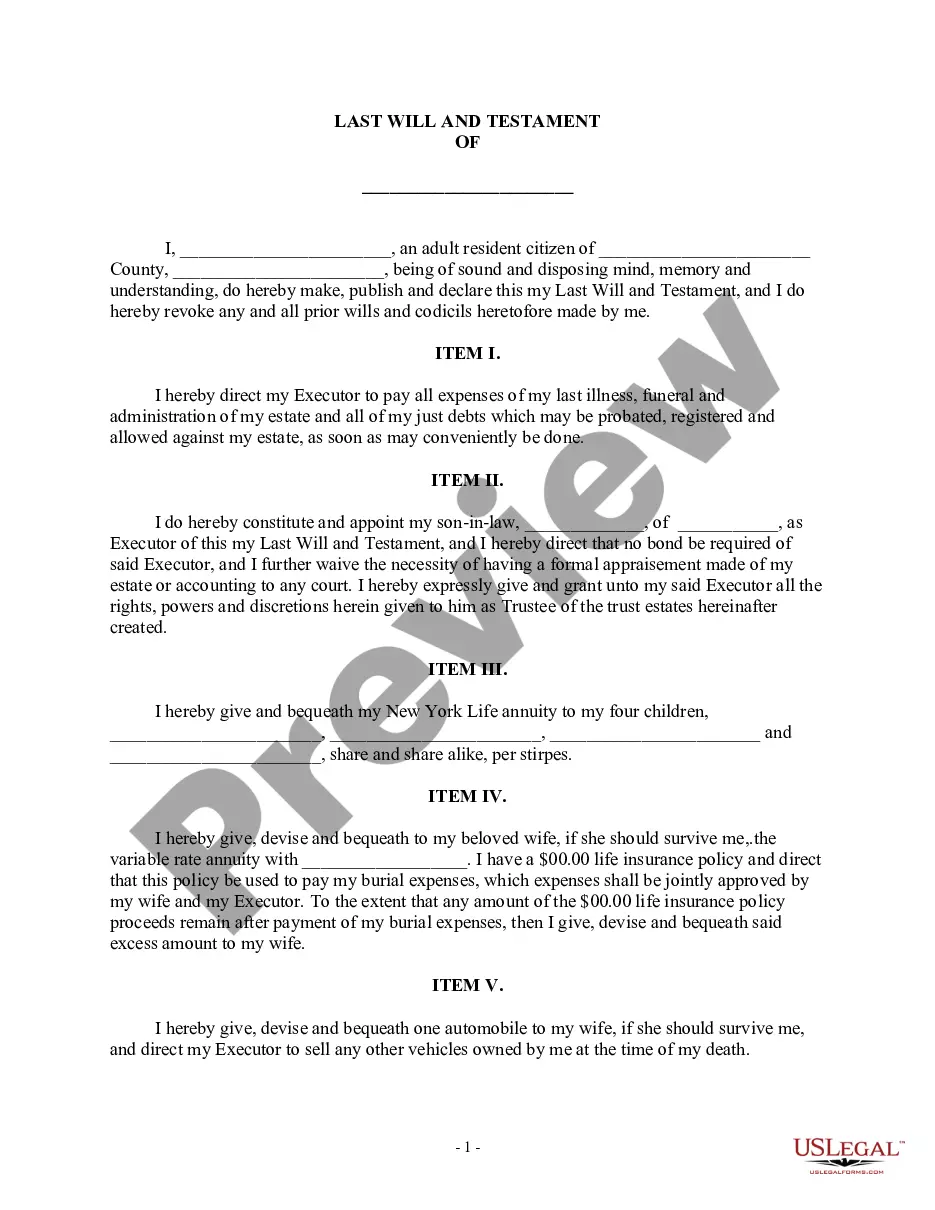
The Complex Will with Credit Shelter Marital Trust for Large Estates is a comprehensive legal document that allows couples to efficiently manage their estate and minimize tax liabilities. This form is specifically designed for those with large estates, enabling a structured distribution of assets after death while maximizing the amount that can be passed to heirs without incurring estate taxes. Unlike simpler wills, this form incorporates a Credit Shelter Trust, which can ultimately double the tax-free amount passed to children, making it a strategic choice for significant estates.
Main sections of this form
- Identification of Testator: Includes personal details of the individual creating the will.
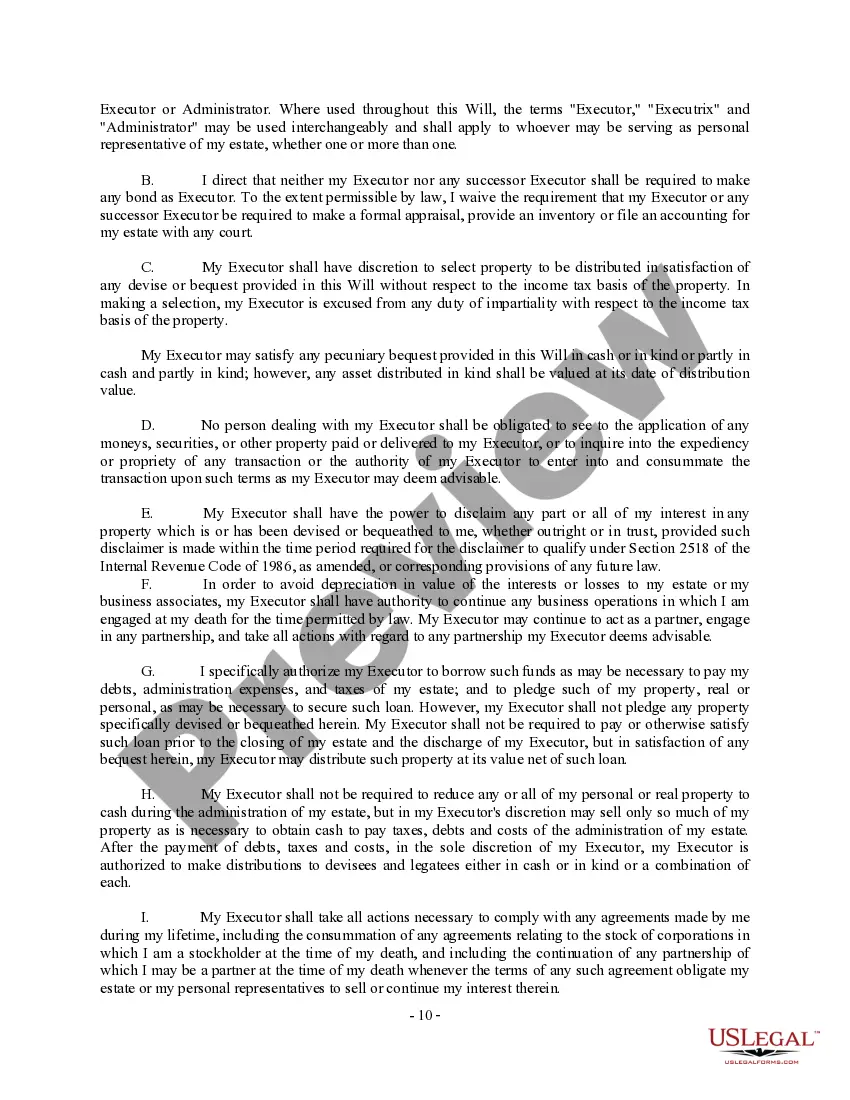
- Appointment of Executor: Designates the surviving spouse or another trusted individual to manage the estate.
- Credit Shelter Trust Provision: Outlines how a designated amount of the estate passes to the trust to avoid estate taxes.
- Distribution Instructions: Details on how assets and personal belongings should be distributed to the spouse and children.
- Contingency Clauses: Addresses situations where the spouse may not survive the testator and how assets will be divided among children or other beneficiaries.




When to use this document
This form is useful for married couples with large estates who want to ensure that their wealth is managed effectively and passed on to their heirs with minimal tax implications. Consider using this complex will when there are significant assets to protect, including real estate, investments, and family businesses. It is especially relevant if the couple has children, and there is a desire to establish specific guidelines for asset distribution to benefit both the surviving spouse and children.
Intended users of this form
- Couples with an estate valued at over one million dollars.
- Individuals looking to maximize their estate's tax benefits while protecting assets for their heirs.
- Parents wanting to set clear instructions for asset distribution to children.
- Married individuals seeking to plan for the financial future of their family after death.
Steps to complete this form
- Identify yourself as the testator, providing your full name, address, and county of residence.
- Designate your spouse and children, including their names and any relevant details.
- Select an executor to handle your estate, making sure they are willing and able to serve.
- Specify the amount to be placed in the Credit Shelter Trust and how the remaining assets will be divided.
- Review the form for completeness, ensuring all sections are filled out accurately before signing.
Is notarization required?
Notarization is required for this form to take effect. Our online notarization service, powered by Notarize, lets you verify and sign documents remotely through an encrypted video session, available 24/7.
Get your form ready online
Our built-in tools help you complete, sign, share, and store your documents in one place.
Make edits, fill in missing information, and update formatting in US Legal Forms—just like you would in MS Word.
Download a copy, print it, send it by email, or mail it via USPS—whatever works best for your next step.
Sign and collect signatures with our SignNow integration. Send to multiple recipients, set reminders, and more. Go Premium to unlock E-Sign.
If this form requires notarization, complete it online through a secure video call—no need to meet a notary in person or wait for an appointment.
We protect your documents and personal data by following strict security and privacy standards.

Make edits, fill in missing information, and update formatting in US Legal Forms—just like you would in MS Word.

Download a copy, print it, send it by email, or mail it via USPS—whatever works best for your next step.

Sign and collect signatures with our SignNow integration. Send to multiple recipients, set reminders, and more. Go Premium to unlock E-Sign.

If this form requires notarization, complete it online through a secure video call—no need to meet a notary in person or wait for an appointment.

We protect your documents and personal data by following strict security and privacy standards.
Mistakes to watch out for
- Failing to update the will after major life changes such as marriage, divorce, or having children.
- Not clearly specifying beneficiaries or asset distribution, which can lead to confusion and disputes.
- Omitting necessary provisions for managing trusts and tax liabilities, resulting in unexpected financial burdens.
Benefits of completing this form online
- Convenience of filling out the document digitally from home.
- Ability to edit and customize the form quickly as your personal circumstances change.
- Access to legally sound templates that have been reviewed by licensed attorneys.
- Immediate download option, allowing users to print and execute the will promptly.
Looking for another form?
Form popularity
FAQ
A credit shelter trust (CST) is a trust created after the death of the first spouse in a married couple. Assets placed in the trust are generally held apart from the estate of the surviving spouse, so they may pass tax-free to the remaining beneficiaries at the death of the surviving spouse.
A marital trust starts as a revocable living trust. A surviving spouse can be its trustee.
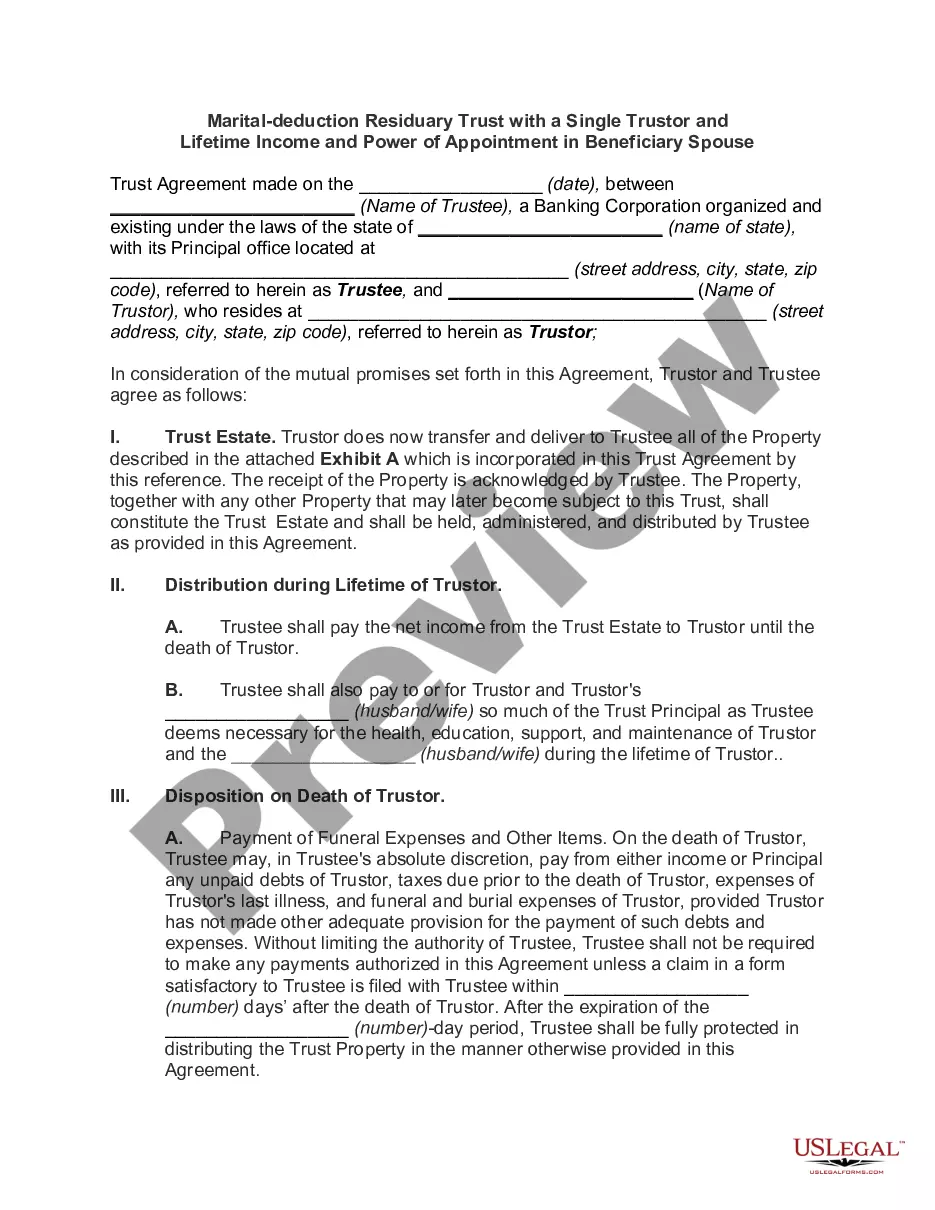
A Trust (or Marital Trust) It is a trust that takes advantage of the unlimited marital deduction in order to avoid estate taxes at the time of the first spouse's death in the event that the first spouse's individual estate is more than the individual exemption amount.
A bypass trust, or AB trust, is a legal arrangement that allows married couples to avoid estate tax on certain assets when one spouse passes away.The first part is the marital trust, or A trust. The second is a bypass, family or B trust. The marital trust is a revocable trust that belongs to the surviving spouse.
A marital trust allows the couple's heirs to avoid probate and take less of a hit from estate taxes by taking full advantage of the unlimited marital deductiona provision that enables spouses to pass assets to each other without tax consequences.
A marital trust is a type of irrevocable trust that allows you to transfer assets to a surviving spouse tax free. It can also shield the estate of the surviving spouse before the remaining assets pass on to your children.
Yes, the surviving spouse may serve as trustee of the credit shelter trust.All of the assets in the credit shelter trust, including any appreciation in value during the surviving spouse's lifetime, pass free of estate tax to the beneficiaries.
A bypass trust can still be useful in some circumstances. If your estate is greater than the current estate tax exemption, a bypass trust is still a good way to protect your assets from the estate tax.