Louisiana Closing Statement

What this document covers
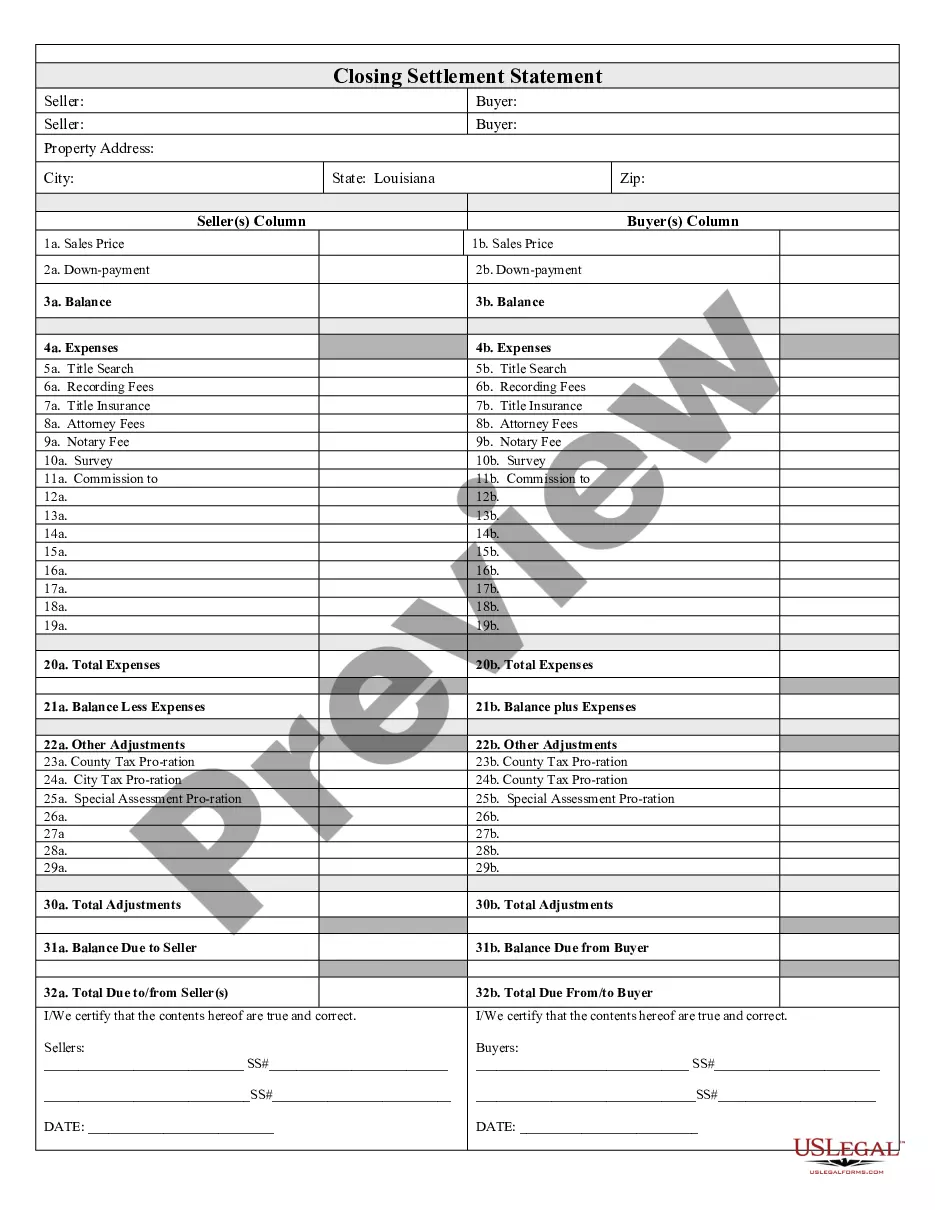
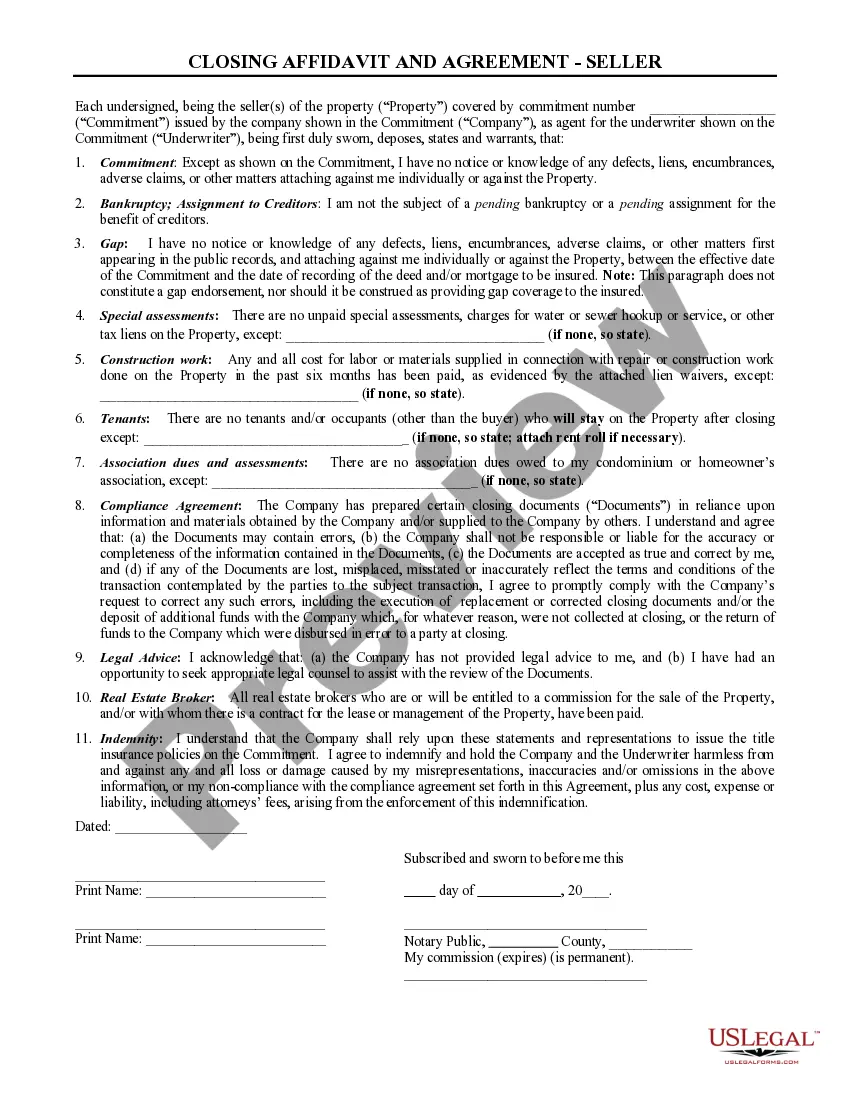
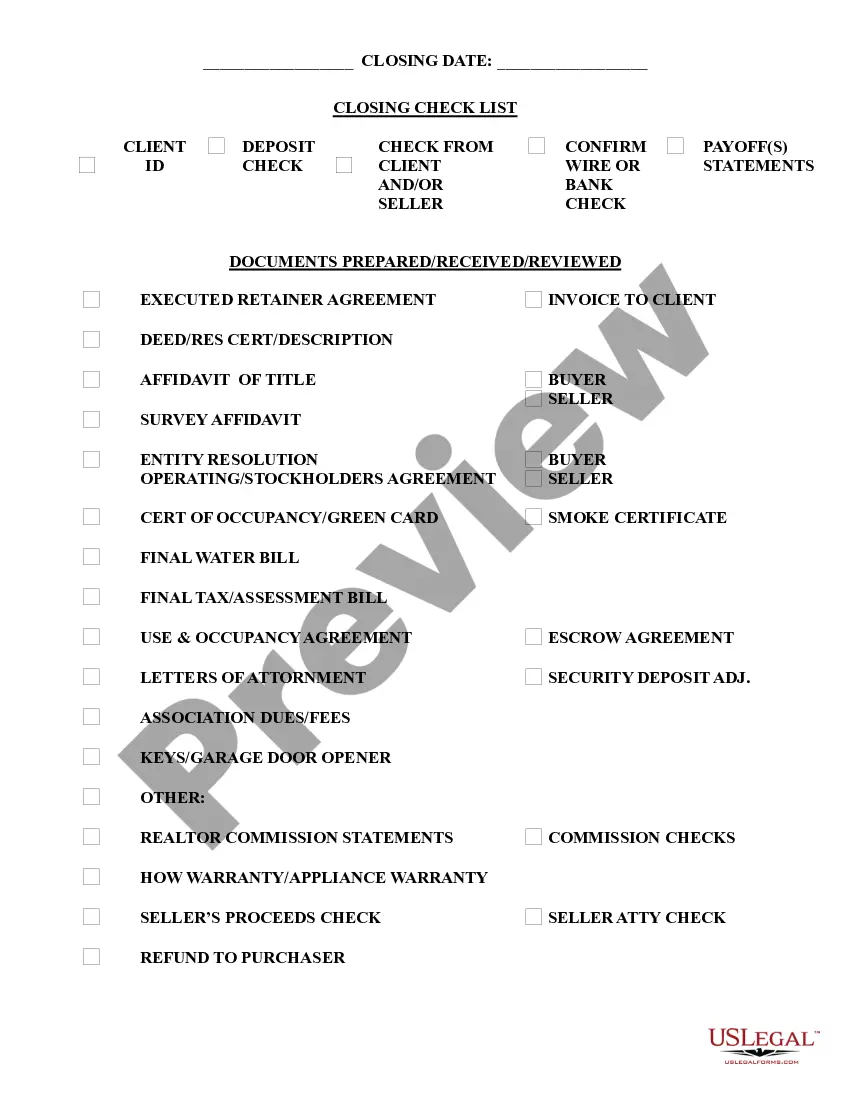
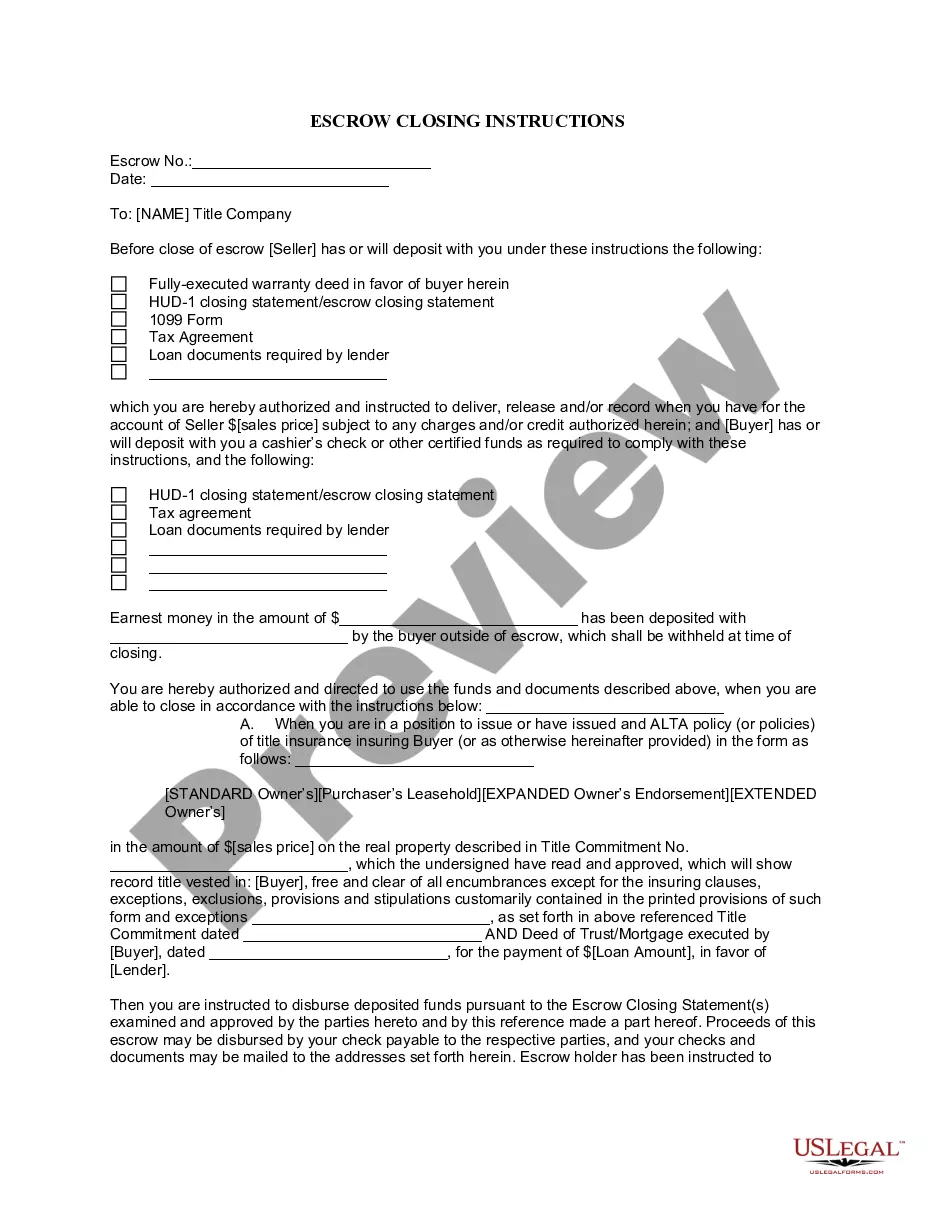
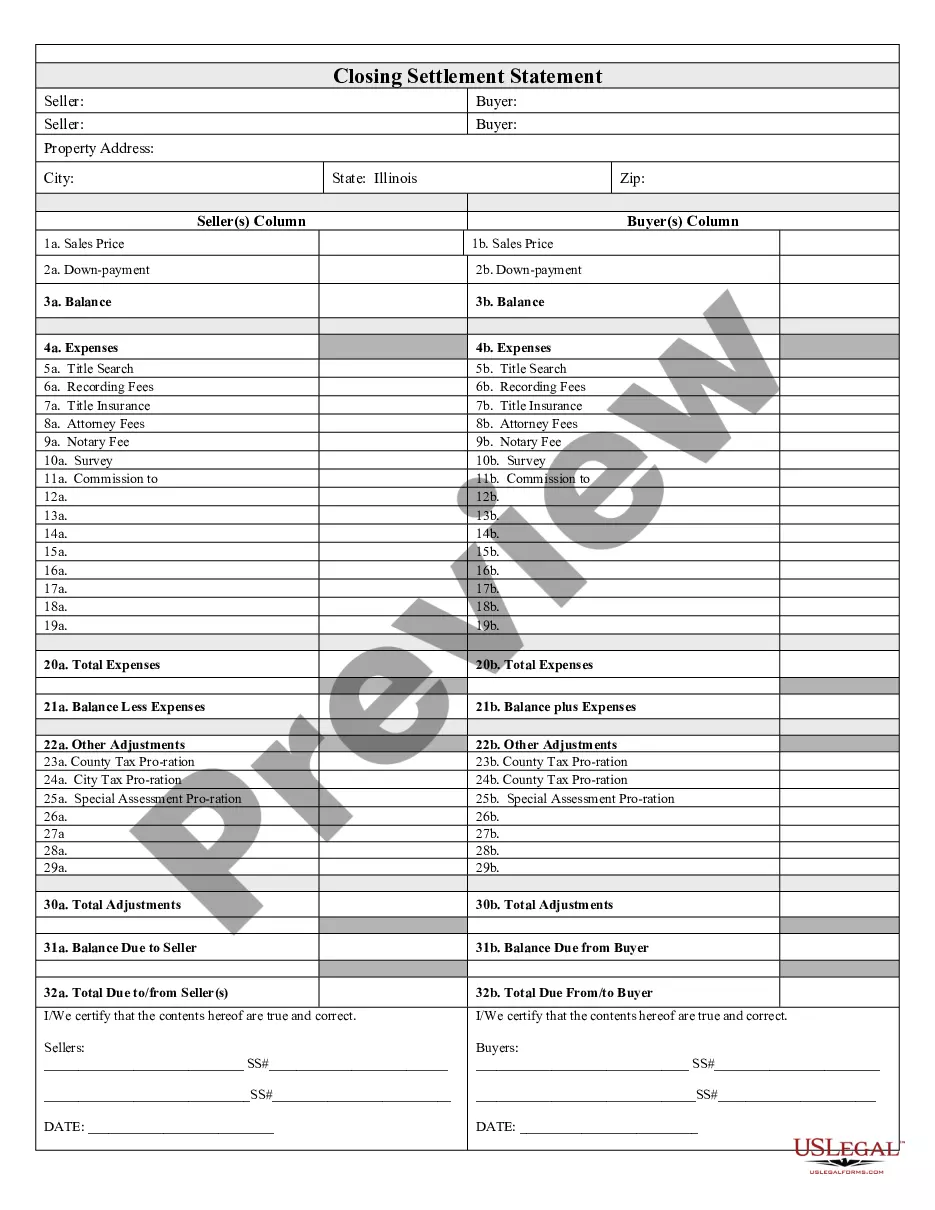
The Closing Statement is a crucial document used in real estate transactions, specifically for cash sales or owner-financed deals. It itemizes the financial details of the sale, ensuring both the buyer and seller agree on the amounts due at closing. This form differs from other real estate forms by providing a comprehensive breakdown of expenses, credits, and the final settlement figures for both parties.
Form components explained
- Balance calculations that reflect amounts due to and from each party
- Itemized expenses such as title search fees, recording fees, and attorney fees
- Pro-rations for county and city taxes, along with special assessments
- Final amounts due, including any adjustments to the initial balance
- Certification sections for both the seller and buyer to verify the accuracy of the statement

When to use this document
This Closing Statement should be used whenever a real estate transaction involves a cash sale or owner financing. It is essential during the closing process to document and confirm the financial terms agreed upon by both the buyer and the seller. This form ensures transparency and serves as a record for future reference.
Who should use this form
- Buyers conducting a cash purchase of real estate
- Sellers involved in a cash sale or offering financing directly to the buyer
- Real estate agents or brokers facilitating the transaction
- Attorneys representing either party in the real estate transaction
How to prepare this document
- Identify the parties involved in the transaction (buyer and seller).
- Specify the details of the transaction, including the purchase price and any financing terms.
- Fill out the itemized expenses and fees that will be deducted from the sale proceeds.
- Calculate pro-rations for taxes and other adjustments to arrive at the final amounts due.
- Ensure both parties review the form and sign to certify its accuracy.
Does this form need to be notarized?
In most cases, this form does not require notarization. However, some jurisdictions or signing circumstances might. US Legal Forms offers online notarization powered by Notarize, accessible 24/7 for a quick, remote process.
Get your form ready online
Our built-in tools help you complete, sign, share, and store your documents in one place.
Make edits, fill in missing information, and update formatting in US Legal Forms—just like you would in MS Word.
Download a copy, print it, send it by email, or mail it via USPS—whatever works best for your next step.
Sign and collect signatures with our SignNow integration. Send to multiple recipients, set reminders, and more. Go Premium to unlock E-Sign.
If this form requires notarization, complete it online through a secure video call—no need to meet a notary in person or wait for an appointment.
We protect your documents and personal data by following strict security and privacy standards.

Make edits, fill in missing information, and update formatting in US Legal Forms—just like you would in MS Word.

Download a copy, print it, send it by email, or mail it via USPS—whatever works best for your next step.

Sign and collect signatures with our SignNow integration. Send to multiple recipients, set reminders, and more. Go Premium to unlock E-Sign.

If this form requires notarization, complete it online through a secure video call—no need to meet a notary in person or wait for an appointment.

We protect your documents and personal data by following strict security and privacy standards.
Common mistakes
- Failing to include all expenses and fees, leading to discrepancies at closing.
- Not fully engaging both parties in the review process before signing.
- Omitting necessary pro-rations or adjustments that could affect final balances.
- Entering incorrect details about the property, buyer, or seller information.
Benefits of completing this form online
- Convenient access to a legally vetted template drafted by licensed attorneys.
- Edit and personalize the form easily to meet specific transaction requirements.
- Instant download for quick and efficient use, streamlining the closing process.
- Ensured compliance with relevant legal standards and regulations.
Legal use & context
- The Closing Statement is an important legal document that outlines the details of financial transactions in real estate.
- It provides transparency and accountability to both parties and can be used as a reference in case of disputes.
- Ensure that all entries are accurate to maintain the enforceability of the document.
Main things to remember
- The Closing Statement is essential for documenting the financial details of a real estate transaction.
- Accuracy in completing the form is crucial for avoiding disputes and ensuring compliance.
- Both the seller and buyer must review and sign the statement to validate it.
Looking for another form?
Form popularity
FAQ
According to data from ClosingCorp, the average closing cost in Louisiana is $3,365 after taxes, or approximately 1.68% to 3.37% of the final home sale price.
According to data from ClosingCorp, the average closing cost in Louisiana is $3,365 after taxes, or approximately 1.68% to 3.37% of the final home sale price.
Closing costs are fees and expenses you pay when you close on your house, beyond the down payment. These costs can run 3 to 5 percent of the loan amount and may include title insurance, attorney fees, appraisals, taxes and more.
A mortgage closing disclosure is a type of standard settlement statement that is formulated and regulated for the mortgage lending market. The HUD-1 settlement statement is a type of closing statement used in reverse mortgages.
Louisiana is a community-property state. Attorneys conduct closings. Conveyance is by warranty or quitclaim deed. Mortgages are the security instruments.
A closing statement, also called a HUD1 or settlement sheet, is a legal form your closing or settlement agent uses to itemize all of the costs you and the seller will have to pay at closing to complete a real estate transaction.
Total closing costs to purchase a $300,000 home could cost anywhere from approximately $6,000 to $12,000 or even more. The funds can't typically be borrowed because that would raise the buyer's loan ratios to a point where they might no longer qualify.
According to lines 235 to 237 of the Louisiana Residential Agreement to Buy or Sell, SELLER's title shall be merchantable and free of all liens and encumbrances except those that can be satisfied at Act of Sale. All costs and fees required to make title merchantable shall be paid by SELLER.
The deed and mortgage documents are filed with the county recorder and these become public record. 3feff You can always obtain copies of these from the recorder's office or from a title company. Most documents are digitized in some form, especially those related to the transaction.