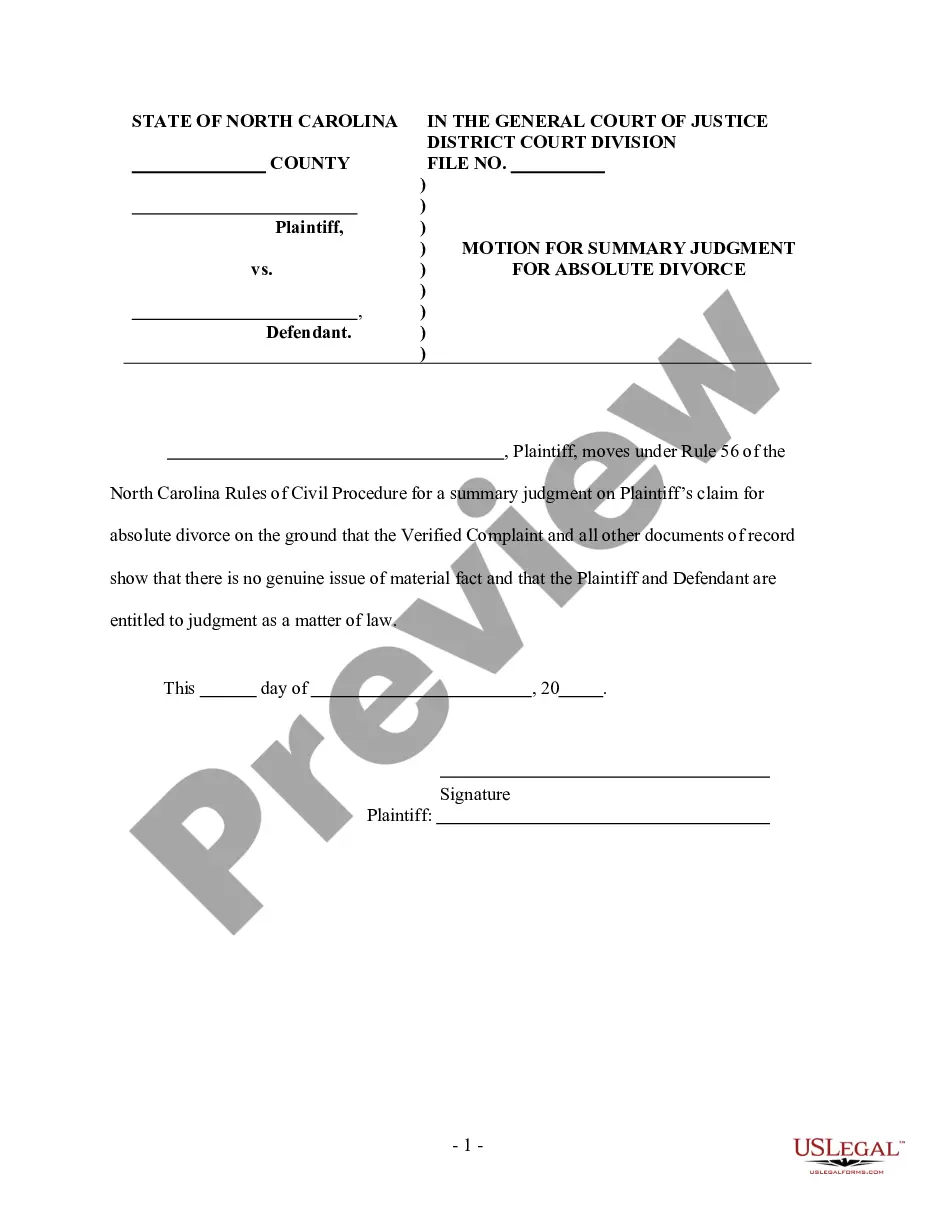
North Carolina Motion for Summary Judgment for Absolute Divorce
What is this form?
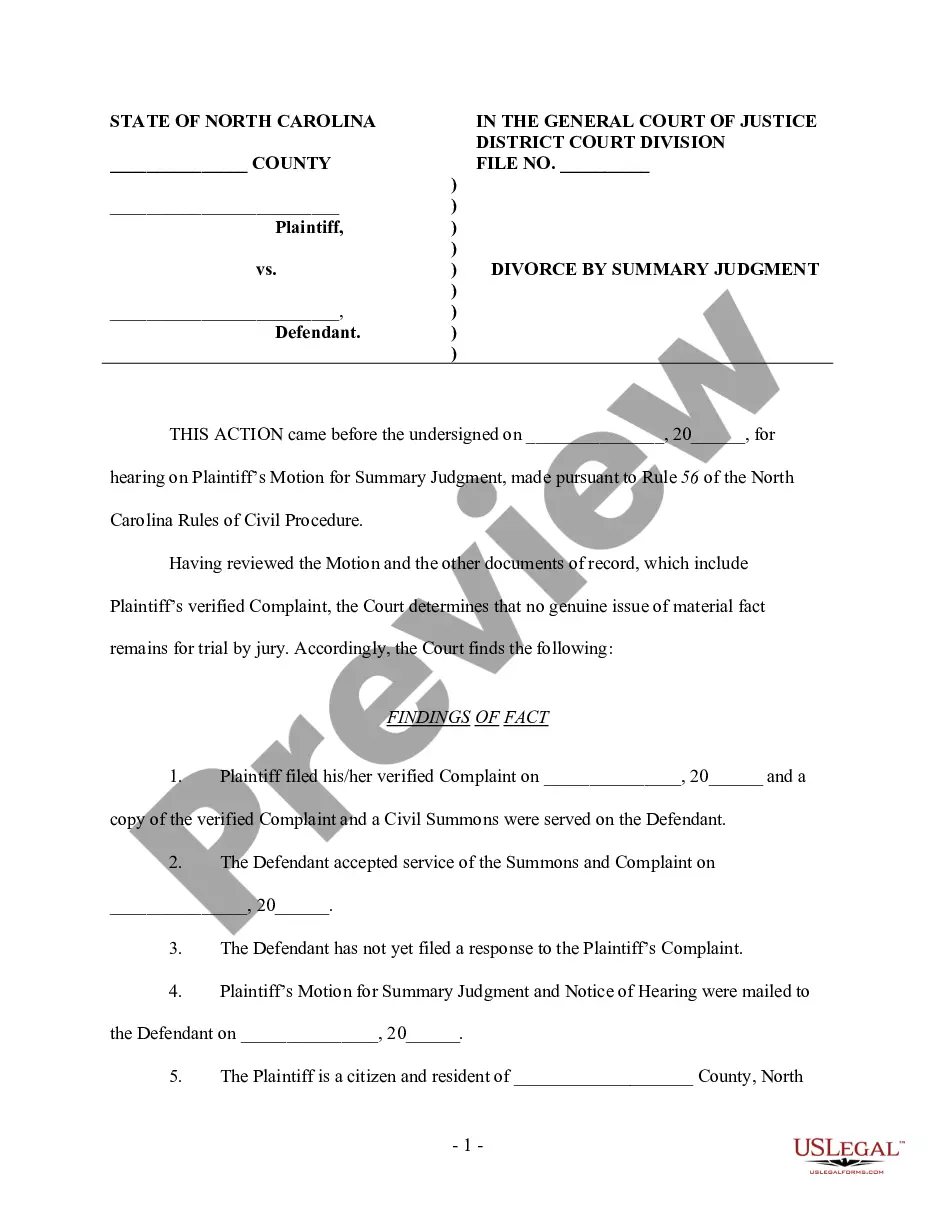
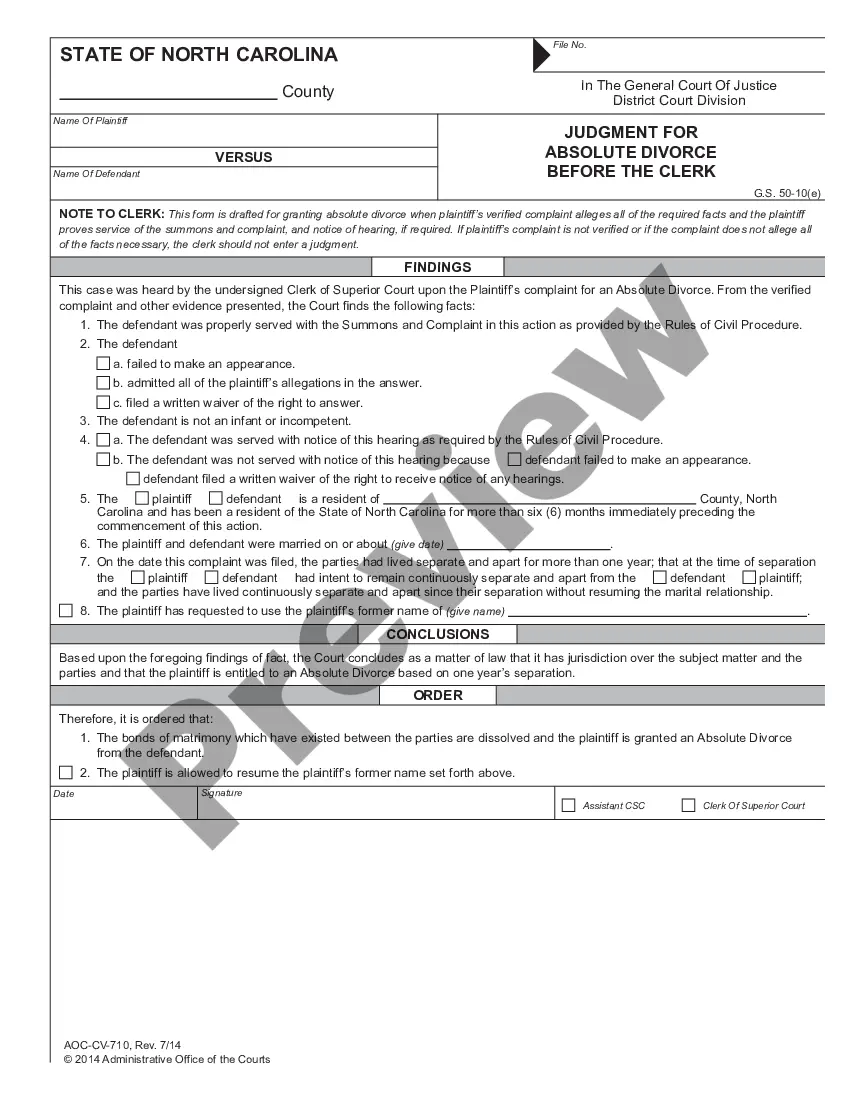
The Motion for Summary Judgment for Absolute Divorce is a legal document that requests the court to make a determination in a divorce case without going to trial. This form asserts that there are no genuine disputes regarding material facts, allowing the court to issue a judgment based on the law. It differs from other motions by focusing specifically on the request for an absolute divorce, streamlining the process for those who meet the necessary criteria.
What’s included in this form
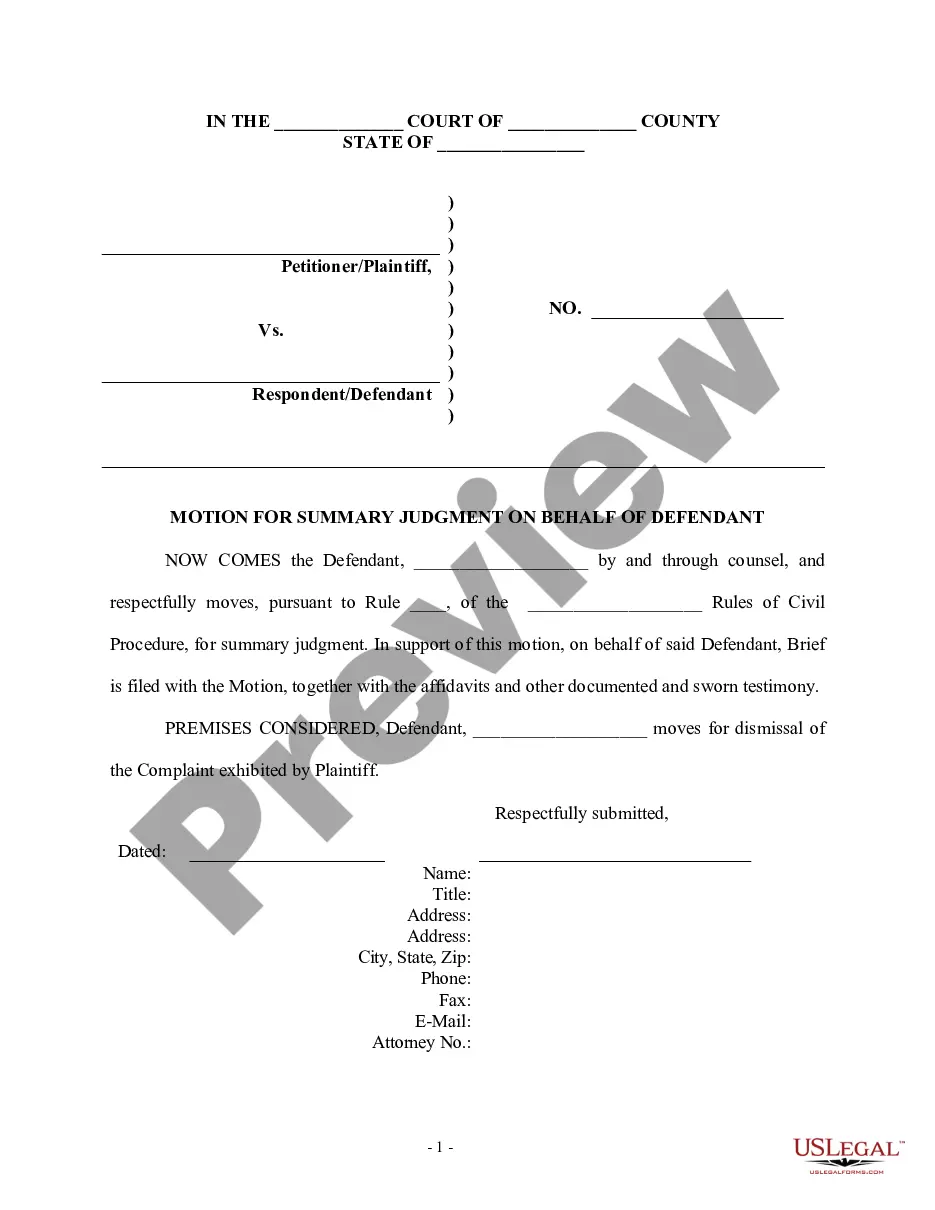
- Caption: Identifies the court and the parties involved in the case.
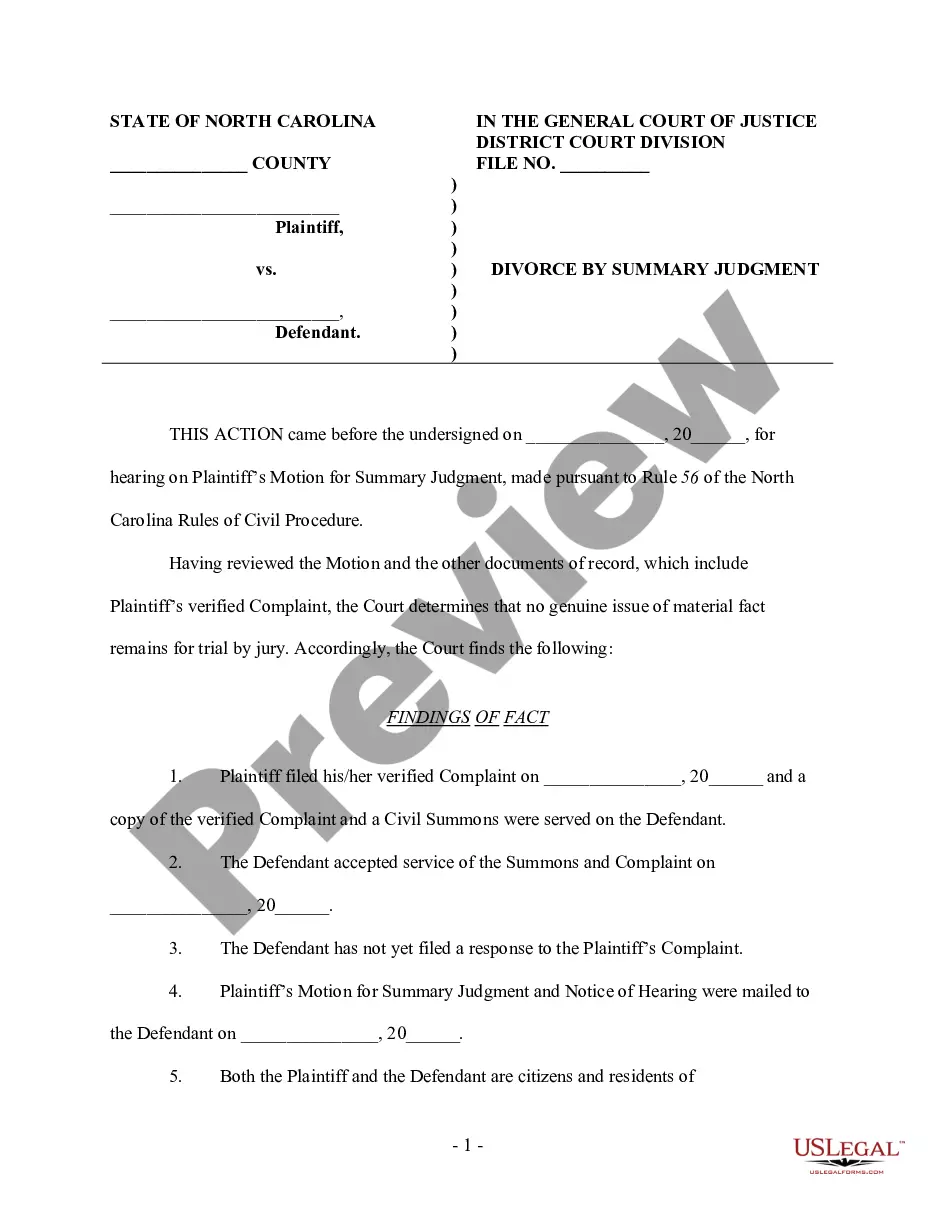
- Statement of facts: Outlines the circumstances surrounding the marriage and the grounds for divorce.
- Request for judgment: Clearly states the request for the court to grant the divorce based on the provided evidence.
- Supporting arguments: Legal reasoning that supports the request for summary judgment.
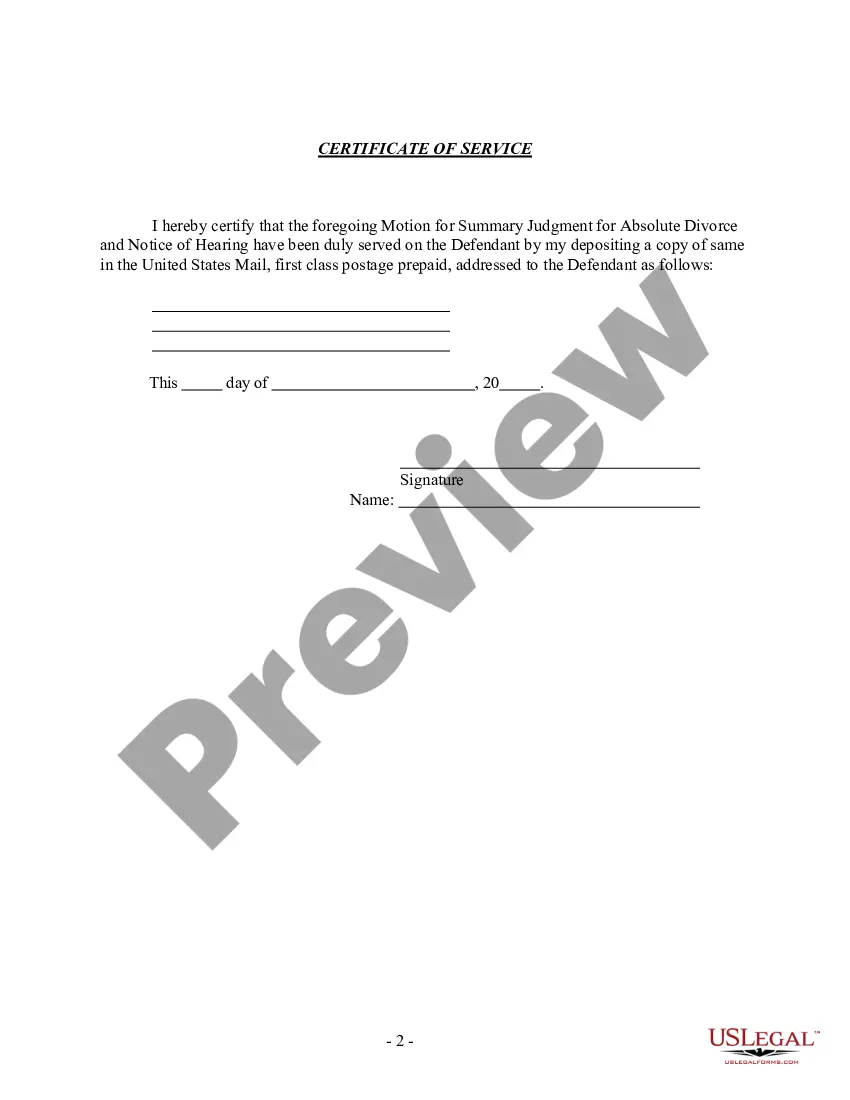
- Signature line: Space for the party filing the motion or their attorney to sign.
Situations where this form applies
This form is typically used when one party in a divorce case believes there are no factual disputes requiring a trial. It is appropriate in scenarios such as uncontested divorces, where both parties agree on the terms of the divorce, or when all necessary evidence is clearly documented and can support a judgment without further court proceedings.
Intended users of this form
- Individuals seeking an absolute divorce with no contested issues.
- Parties who have reached an agreement on all aspects of the divorce.
- Those who wish to expedite the divorce process by avoiding a trial.
How to prepare this document
- Identify the parties involved by entering their names and addresses in the caption section.
- Clearly state the grounds for the divorce in the statement of facts section.
- Provide the necessary supporting documents that illustrate the absence of factual disputes.
- Detail the request for judgment, specifying that you are seeking a summary judgment for absolute divorce.
- Sign the motion, certifying that the information provided is accurate to the best of your knowledge.
Does this form need to be notarized?
This form does not typically require notarization unless specified by local law. However, reviewing local court requirements is essential to ensure compliance.
Get your form ready online
Our built-in tools help you complete, sign, share, and store your documents in one place.
Make edits, fill in missing information, and update formatting in US Legal Forms—just like you would in MS Word.
Download a copy, print it, send it by email, or mail it via USPS—whatever works best for your next step.
Sign and collect signatures with our SignNow integration. Send to multiple recipients, set reminders, and more. Go Premium to unlock E-Sign.
If this form requires notarization, complete it online through a secure video call—no need to meet a notary in person or wait for an appointment.
We protect your documents and personal data by following strict security and privacy standards.

Make edits, fill in missing information, and update formatting in US Legal Forms—just like you would in MS Word.

Download a copy, print it, send it by email, or mail it via USPS—whatever works best for your next step.

Sign and collect signatures with our SignNow integration. Send to multiple recipients, set reminders, and more. Go Premium to unlock E-Sign.

If this form requires notarization, complete it online through a secure video call—no need to meet a notary in person or wait for an appointment.

We protect your documents and personal data by following strict security and privacy standards.
Mistakes to watch out for
- Failing to provide sufficient evidence to support the motion.
- Not following local court rules regarding format and filing procedures.
- Omitting necessary signatures or filing the form without proper notarization.
Why complete this form online
- Convenience of downloading and completing the form at your own pace.
- Editability allows for customization to fit your specific situation.
- Reliable access to legal templates drafted by licensed attorneys.
Legal use & context
- This form is legally binding once signed and filed with the court.
- It is designed for use in uncontested divorce proceedings, where both parties have reached an agreement.
- Failure to follow local court rules may affect the enforceability of the motion.
Quick recap
- The Motion for Summary Judgment for Absolute Divorce is ideal for uncontested divorce cases.
- Clear and accurate information is crucial for the success of the motion.
- Be aware of any state-specific requirements that may apply when using this form.
Looking for another form?
Form popularity
FAQ
How Is Summary Judgment Granted? Summary judgment is granted when there are no other facts to be tried.Summary judgment is granted when the facts can be decided upon without needing to go to trial, where the opposing party would lose due to a lack of evidence.
In North Carolina, absolute divorce signifies nothing more than the termination of the marriage bond that was created by your wedding ceremony and marriage certificate.Neither one of you is required to file for a divorce; but neither one of you can prevent the other party from seeking a divorce.
In law, a summary judgment (also judgment as a matter of law or summary disposition) is a judgment (also, judgement) entered by a court for one party and against another party summarily, i.e., without a full trial.A factfinder has to decide what the facts are and apply the law.
Decision on motions for summary judgment: About 15 months after beginning of representation. The judge will make a decision on summary judgment about three months after s/he hears arguments from both sides.
A summary judgement occurs when, in a civil case, one party wants to move to a court decision without a trial.When a motion for summary judgement is granted, it indicates there is sufficient evidence to declare one party the clear winner.
The purpose of summary judgment is to avoid unnecessary trials. It may also simplify a trial, as when partial summary judgment dispenses with certain issues or claims. For example, a court might grant partial summary judgment in a personal injury case on the issue of liability.
The entire process usually takes 90 days. Immediate filing for divorce is not a requirement in North Carolina, and you may want to remain married while being separated due to beneficial reasons such as social security and health insurance.
A summary judgement occurs when, in a civil case, one party wants to move to a court decision without a trial.When a motion for summary judgement is granted, it indicates there is sufficient evidence to declare one party the clear winner.