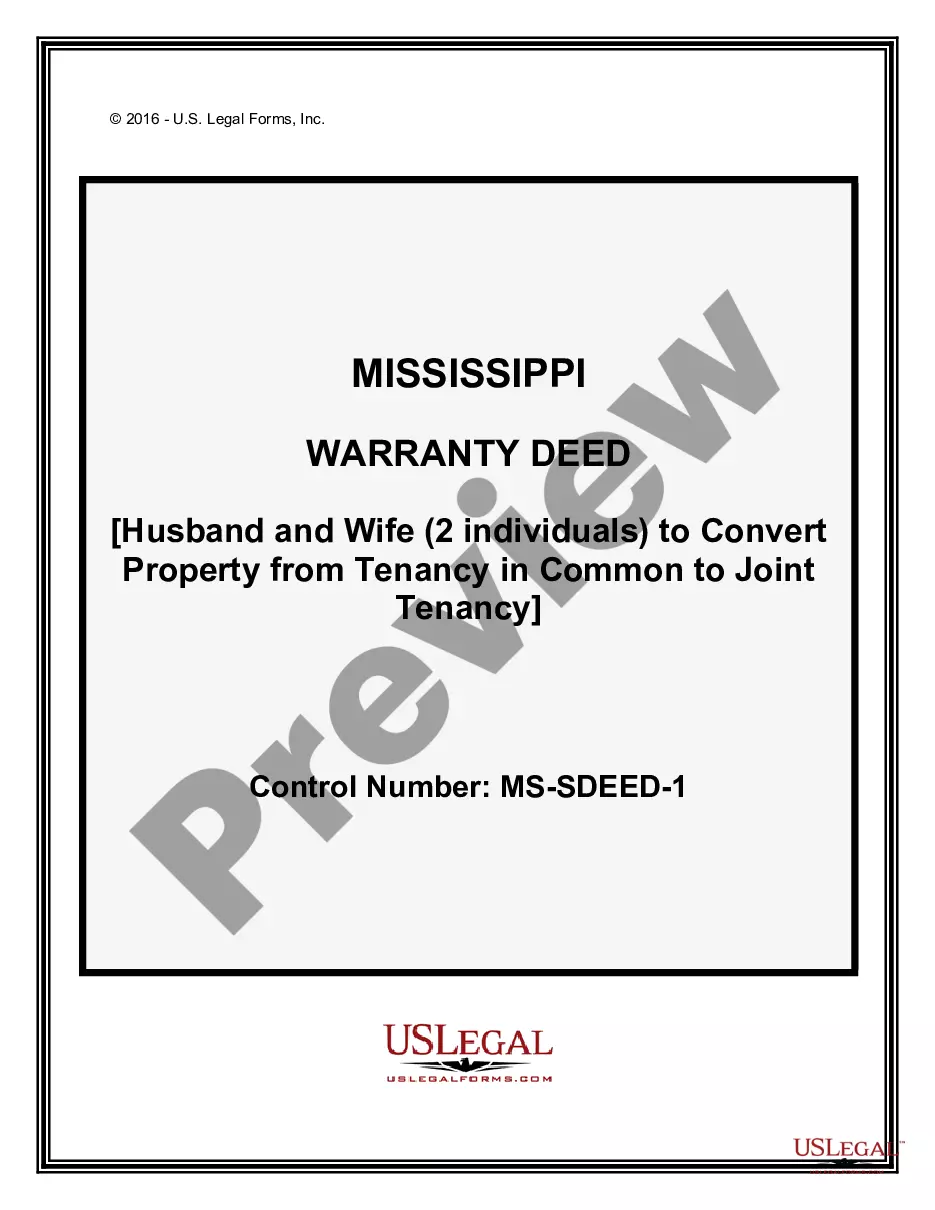
Mississippi Warranty Deed for Husband and Wife Converting Property from Tenants in Common to Joint Tenancy
Understanding this form
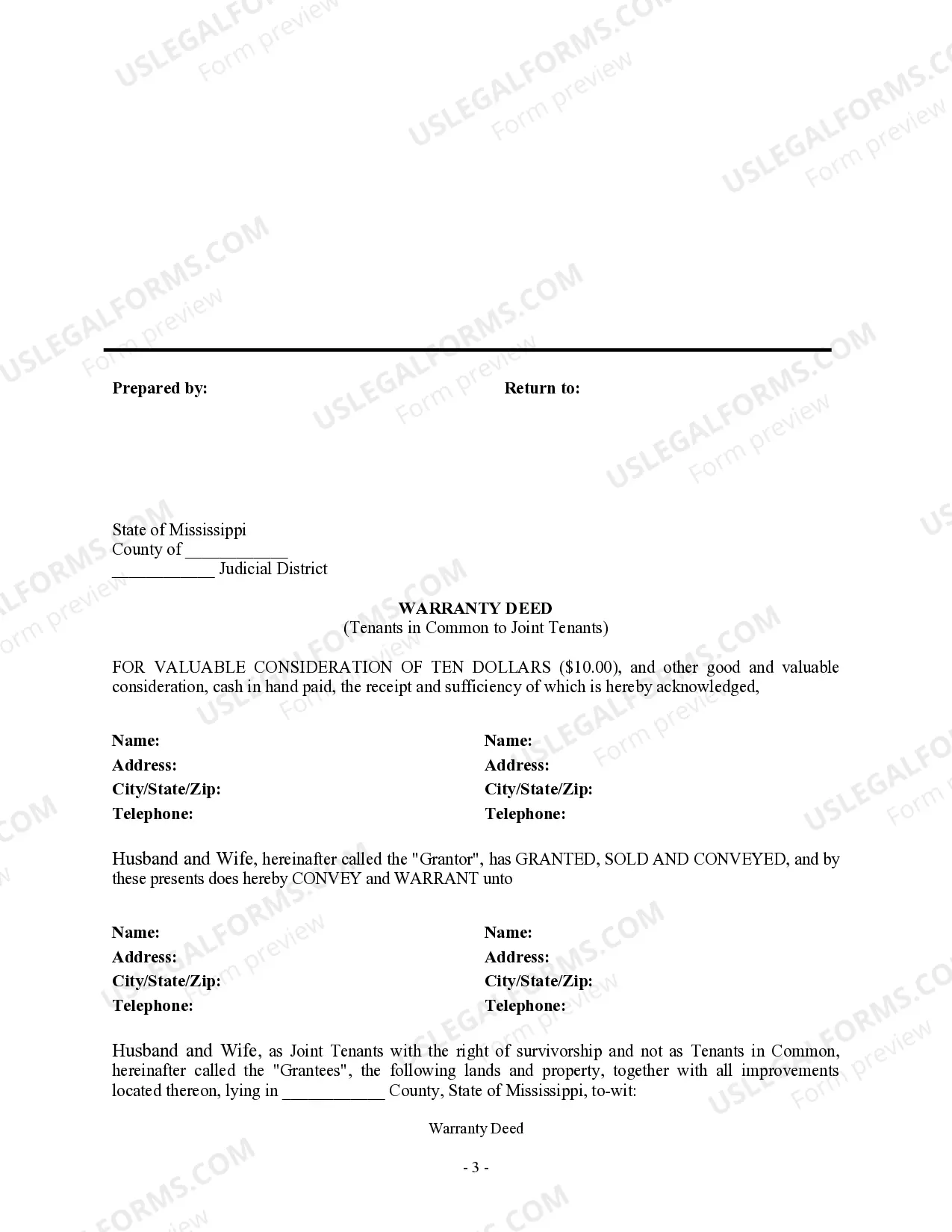
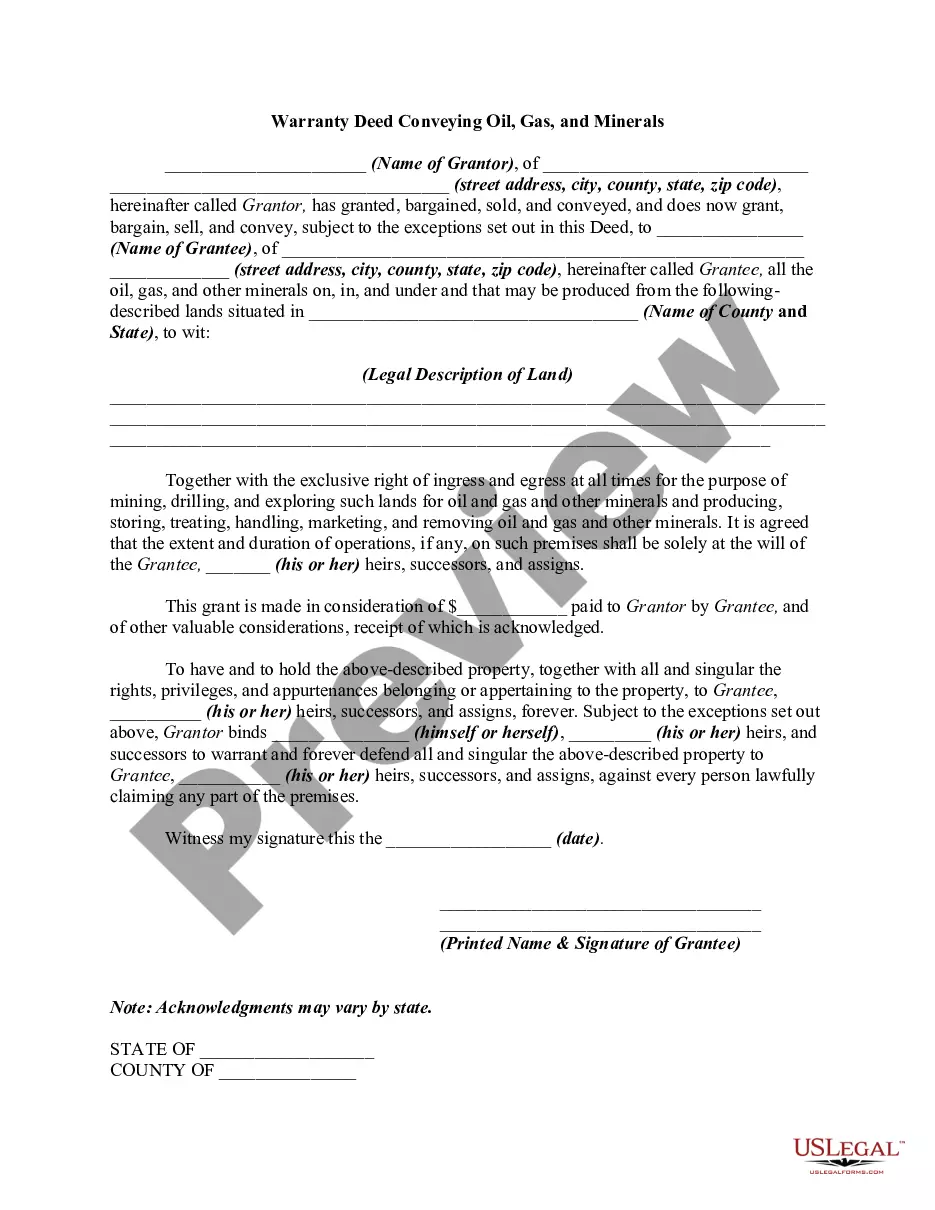
The Warranty Deed for Husband and Wife Converting Property from Tenants in Common to Joint Tenancy is a legal form that allows married couples to convert their ownership of property from tenants in common to joint tenants. This form is essential when spouses wish to establish rights of survivorship and share equal ownership, ensuring the seamless transfer of property upon the death of one spouse. Unlike other deed forms, this document specifically caters to married couples transitioning from one form of ownership to another.
Key parts of this document
- Identification of grantors and grantees as husband and wife
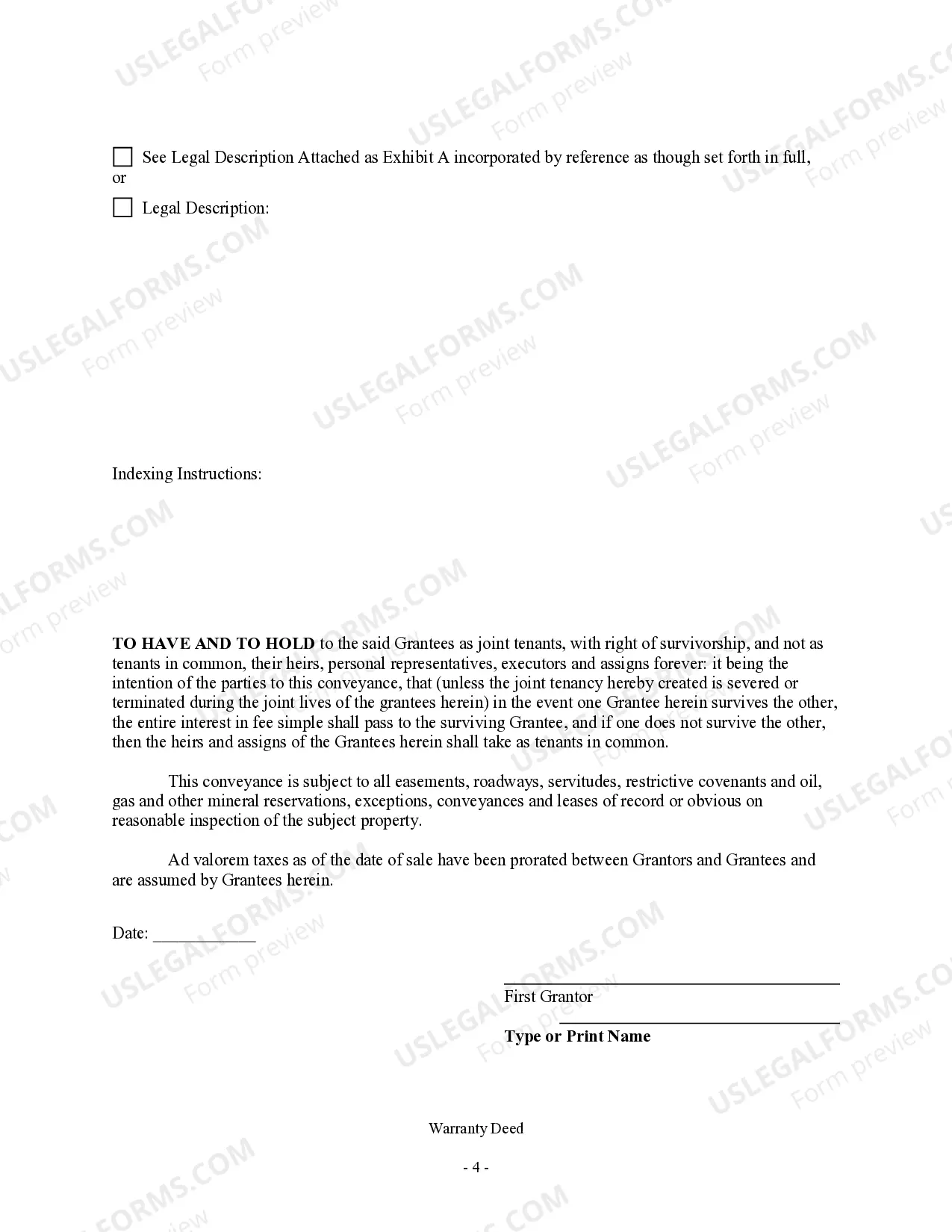
- Legal description of the property involved
- Statement of consideration for the property being transferred
- Disclaimer regarding easements and other encumbrances
- Assumption of ad valorem taxes prorated between parties
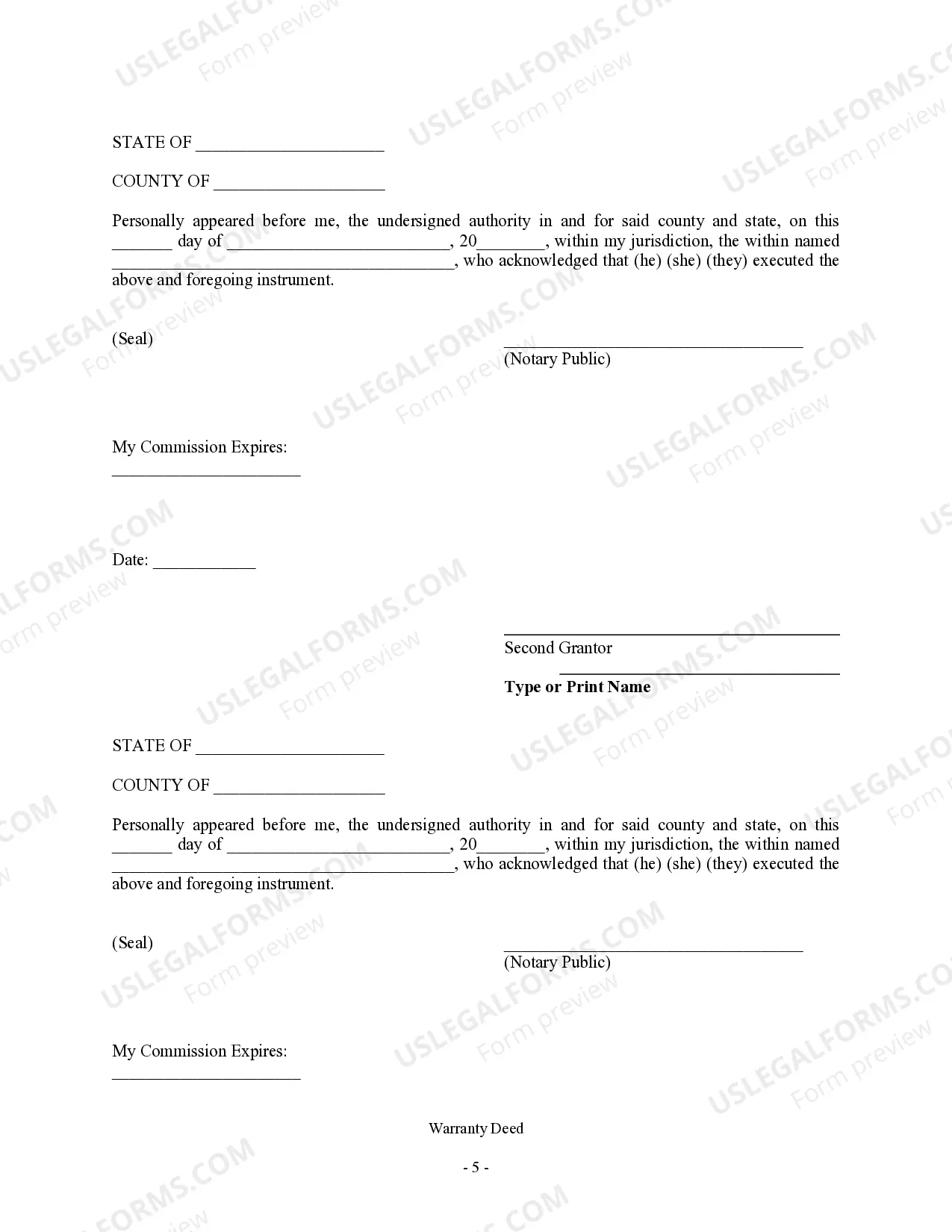
- Signature and date lines for both grantors




When to use this form
This Warranty Deed should be used when a married couple currently holds property as tenants in common and wishes to convert their ownership to joint tenancy. This transition is crucial for couples who want to simplify estate planning and ensure that if one spouse passes away, the other automatically inherits the property without going through probate.
Intended users of this form
- Married couples looking to change their property ownership type
- Homeowners seeking legal documentation for estate planning
- Individuals wanting to ensure survivorship rights in property ownership
Steps to complete this form
- Identify the full names of both grantors (husband and wife).
- Provide the legal description of the property being conveyed.
- Enter the amount of consideration for the transfer.
- Include any applicable easements or encumbrances that affect the property.
- Sign and date the form in the presence of authorized witnesses if required.
Does this form need to be notarized?
To make this form legally binding, it must be notarized. Our online notarization service, powered by Notarize, lets you verify and sign documents remotely through an encrypted video session.
Get your form ready online
Our built-in tools help you complete, sign, share, and store your documents in one place.
Make edits, fill in missing information, and update formatting in US Legal Forms—just like you would in MS Word.
Download a copy, print it, send it by email, or mail it via USPS—whatever works best for your next step.
Sign and collect signatures with our SignNow integration. Send to multiple recipients, set reminders, and more. Go Premium to unlock E-Sign.
If this form requires notarization, complete it online through a secure video call—no need to meet a notary in person or wait for an appointment.
We protect your documents and personal data by following strict security and privacy standards.

Make edits, fill in missing information, and update formatting in US Legal Forms—just like you would in MS Word.

Download a copy, print it, send it by email, or mail it via USPS—whatever works best for your next step.

Sign and collect signatures with our SignNow integration. Send to multiple recipients, set reminders, and more. Go Premium to unlock E-Sign.

If this form requires notarization, complete it online through a secure video call—no need to meet a notary in person or wait for an appointment.

We protect your documents and personal data by following strict security and privacy standards.
Common mistakes to avoid
- Failing to include the legal description of the property.
- Not dating the document, which can lead to issues with enforcement.
- Overlooking the need for witnesses or notarization, where applicable.
- Incorrectly stating the type of ownership being converted.
Why use this form online
- Convenient access to the form any time, allowing for quick completion.
- Editable fields for easy input of necessary information.
- Reliable templates drafted by licensed attorneys, ensuring legal compliance.
Summary of main points
- The Warranty Deed allows couples to convert property ownership from tenants in common to joint tenancy.
- It ensures that property ownership easily transfers to the surviving spouse upon death.
- This form is applicable specifically in Mississippi and contains essential details for proper execution.
Looking for another form?
Form popularity
FAQ
Although not required, hire a title company that will help with the deed modification process. Create a new document called a deed transfer. Each owner will sign the new deed in the presence of a notary, who will make the document official with a stamp.
If a home is owned by only one person then it is not registered with the Land Registry as either Joint Tenants or Tenants in Common. It is registered as a Sole Owner, you can only be a joint tenant or tenant in common if there is more than one owner of the property.
' Spouses typically acquire title as tenants by the entireties, which only applies to spouses. Sometimes you will see a couple who acquired the property before marriage. In some states, a premarital joint tenancy automatically becomes tenants by the entireties upon marriage.
Deciding on Asset Ownership Can Start When You Marry You can own the property as joint tenants or as tenants in common. In a joint tenancy, the partners own the whole property and do not have a particular share in it, while tenants in common each have a definite share in the property.
The dangers of joint tenancy include the following: Danger #1: Only delays probate. When either joint tenant dies, the survivor usually a spouse or child immediately becomes the owner of the entire property. But when the survivor dies, the property still must go through probate.
In estate law, joint tenancy is a special form of ownership by two or more persons of the same property. The individuals, who are called joint tenants, share equal ownership of the property and have the equal, undivided right to keep or dispose of the property. Joint tenancy creates a Right of Survivorship.
Tenancy by the entirety, another joint-owned property option, is when the parties are husband and wife. In this case, each spouse has an equal and undivided interest in the property. If one spouse dies, the full title of the property automatically passes to the surviving spouse.
Each party has a full ownership interest in the property. The property will pass instantly to the survivor upon the death of the other without probate. Conveyance by one party without the other breaks the joint tenancy. Seller warrants that he/she has good title and will warrant and defend title.
What Is the Difference Between a Warranty Deed & a Survivorship Deed?A warranty deed is the most comprehensive and provides the most guarantees. Survivorship isn't so much a deed as a title. It's a way to co-own property where, upon the death of one owner, ownership automatically passes to the survivor.