Mississippi Heirship Affidavit - Descent
What is this form?
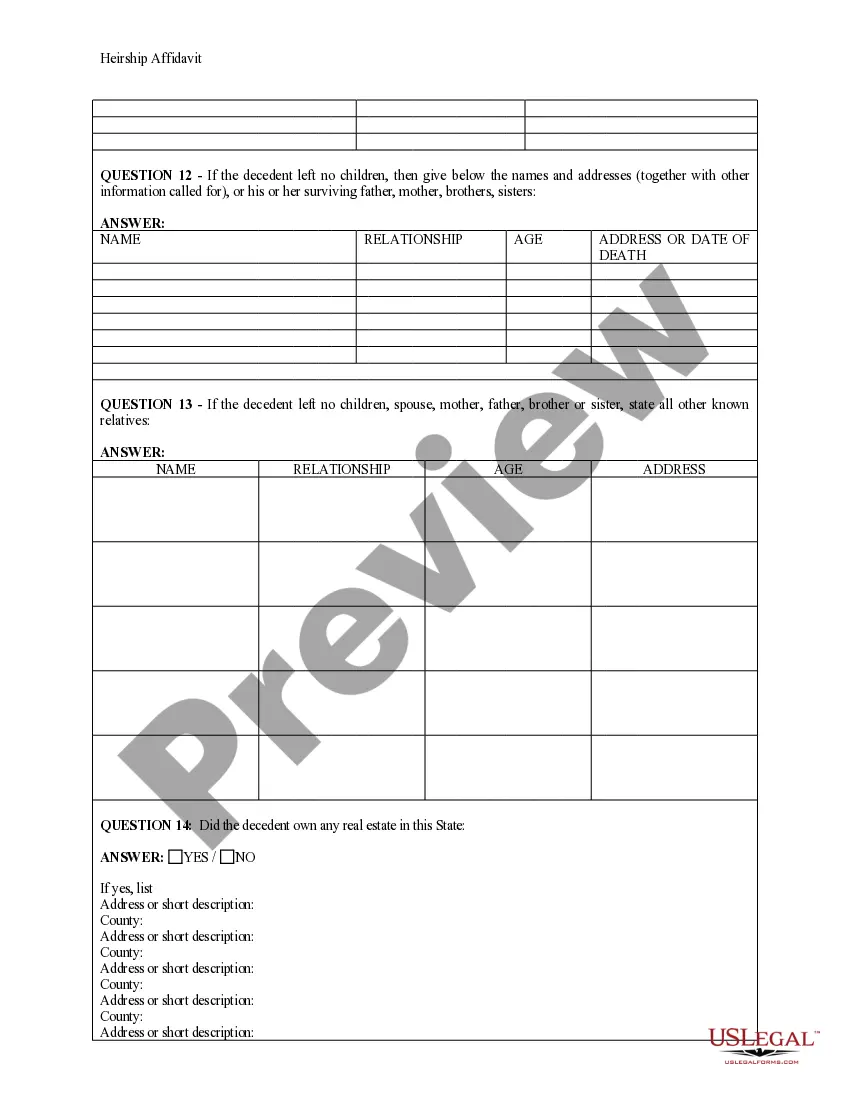
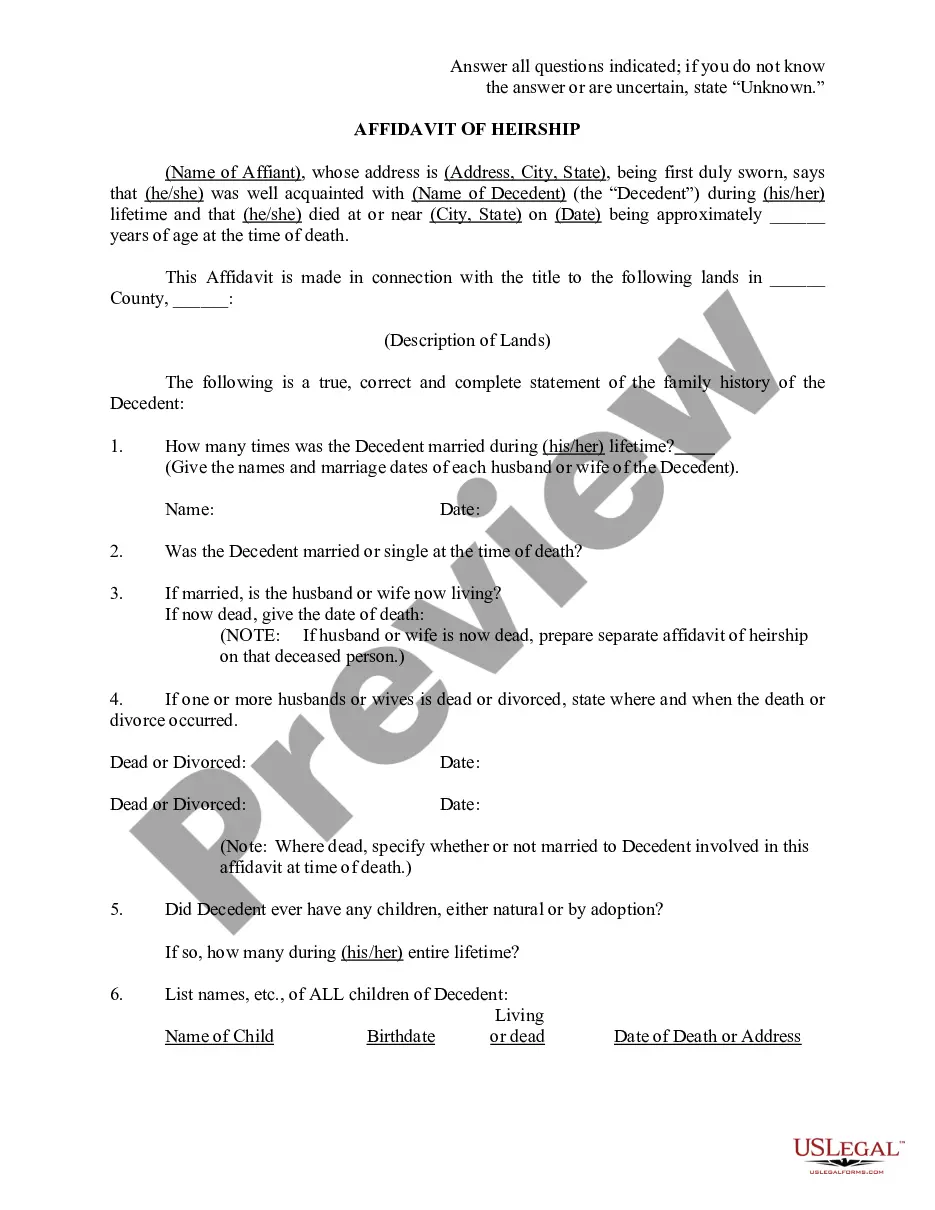
The Heirship Affidavit - Descent is a legal document used to declare the heirs of a deceased individual. It serves to establish ownership of both personal and real property when someone dies without a will, thereby ensuring that the rightful heirs can claim their inheritance. This form is distinct from a will in that it does not require prior legal proceedings, making it a vital tool in situations where a decedent's estate has not been formally probated.
What’s included in this form
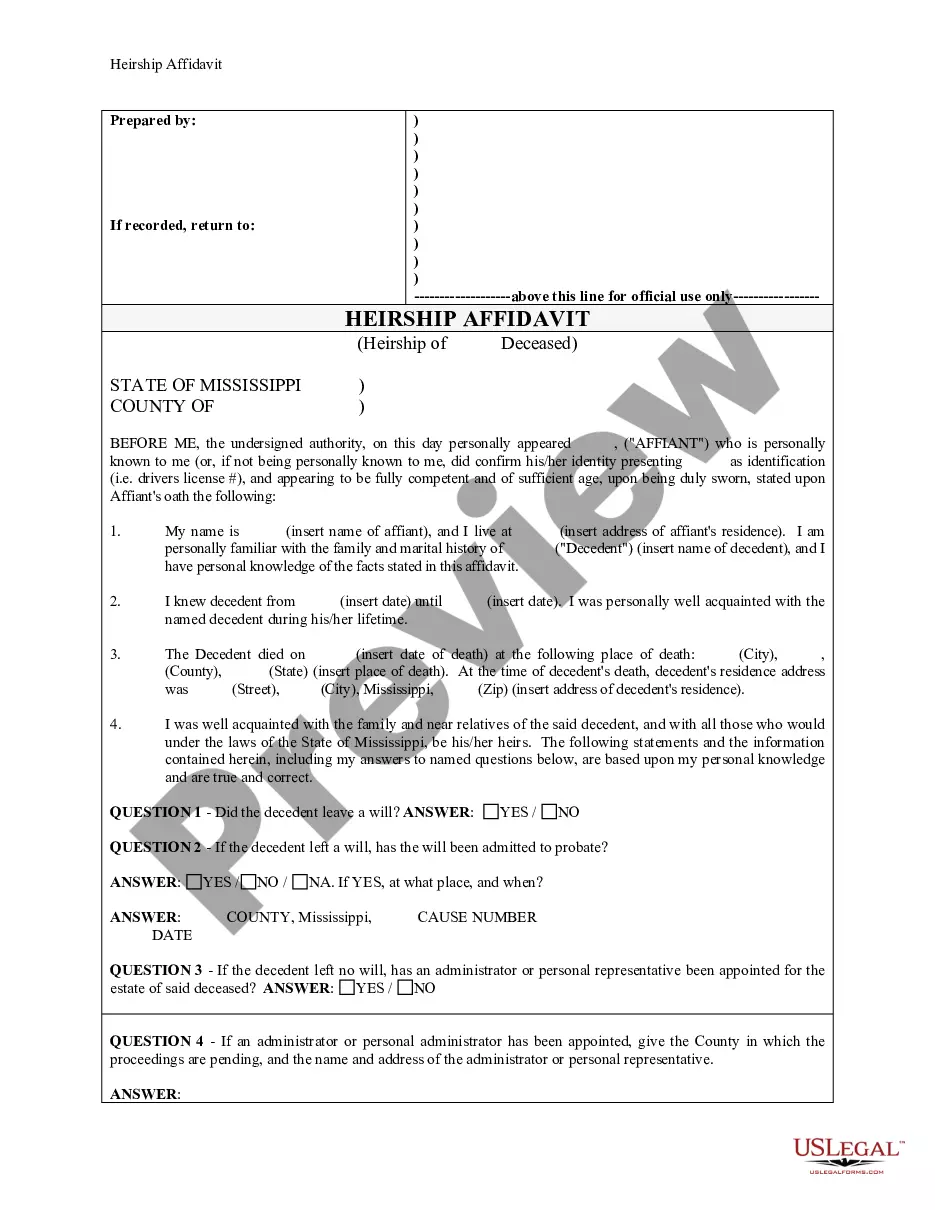
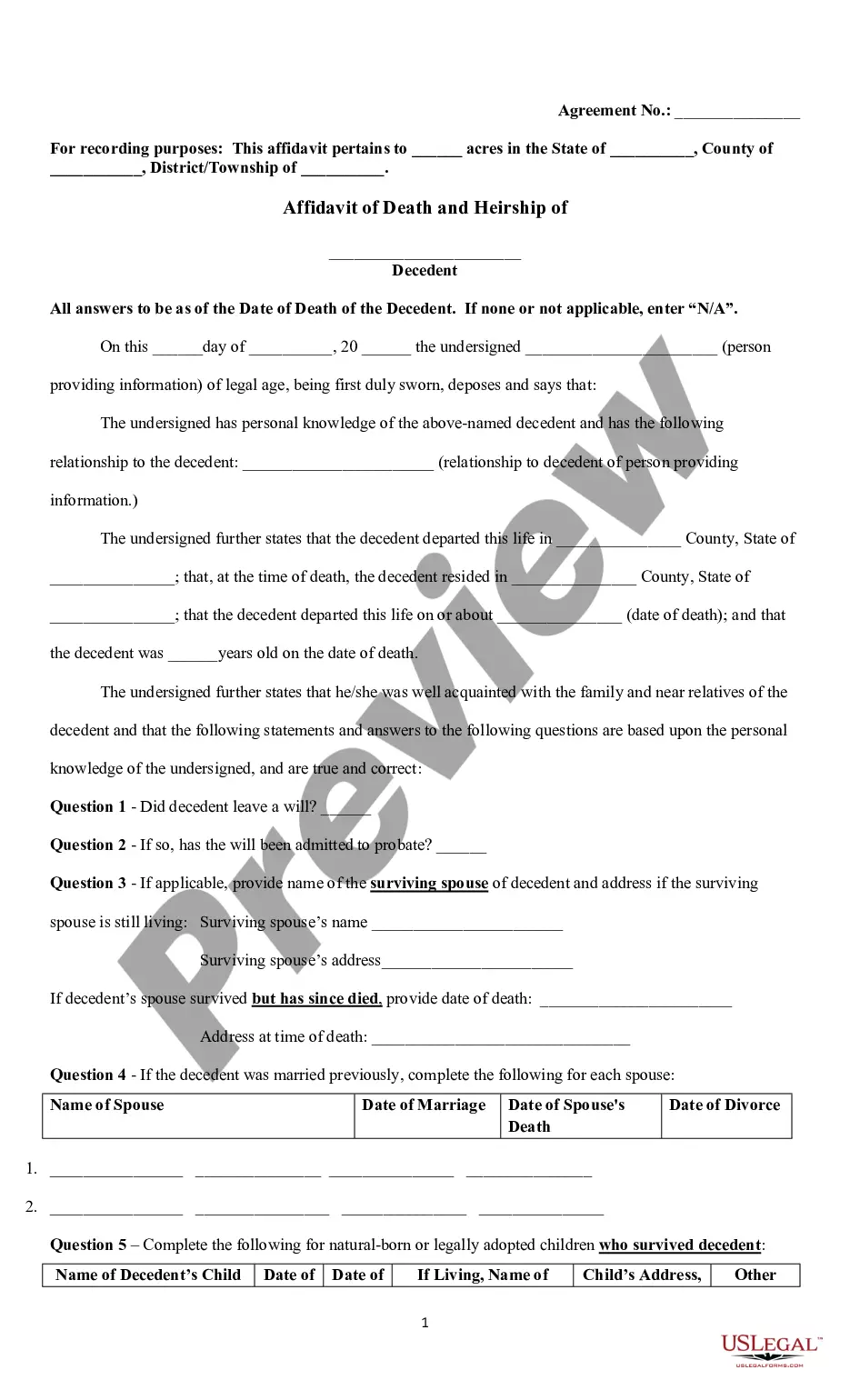
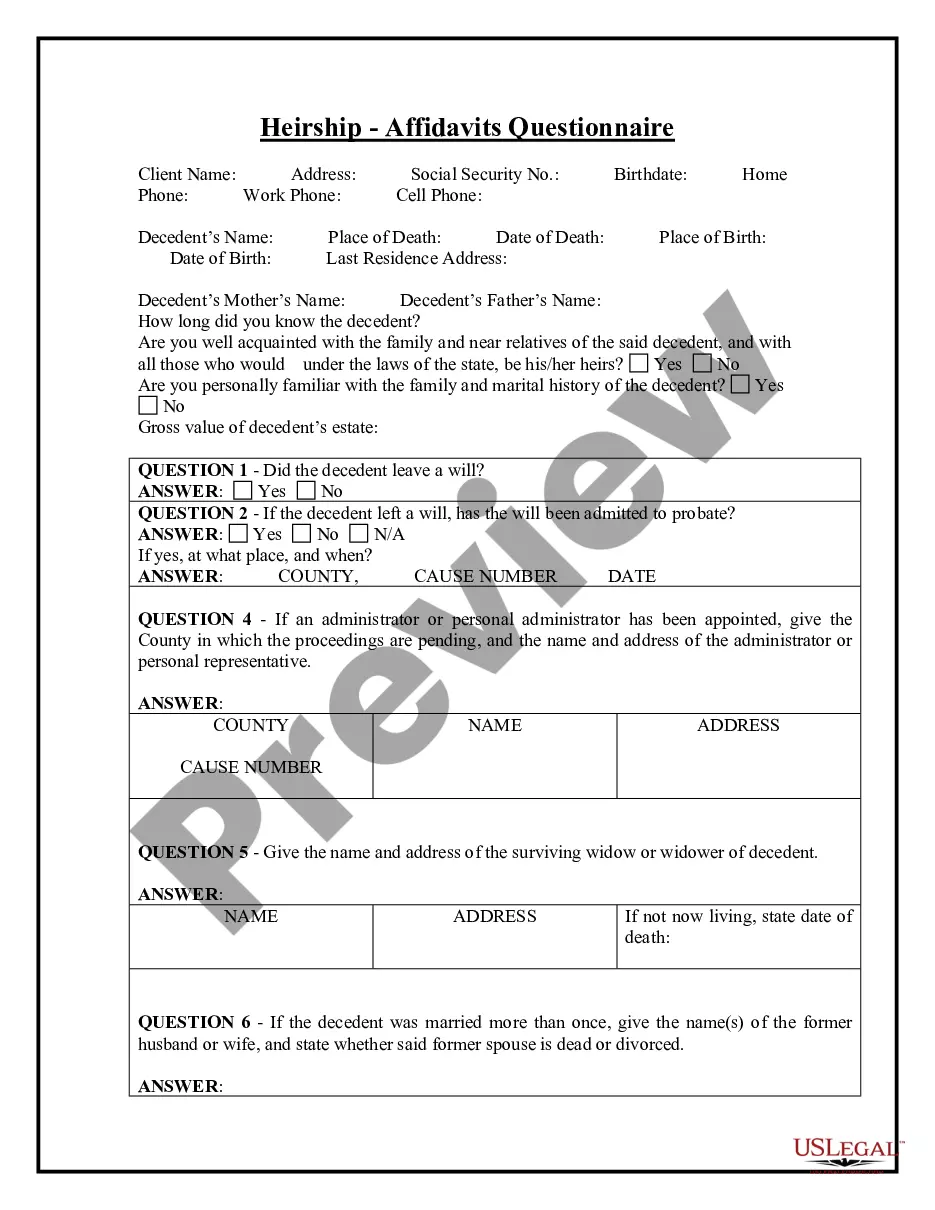
- Statement of whether the decedent left a will.
- Confirmation of admission of the will to probate, if applicable.
- Information regarding the appointment of an administrator or personal representative, if one exists.
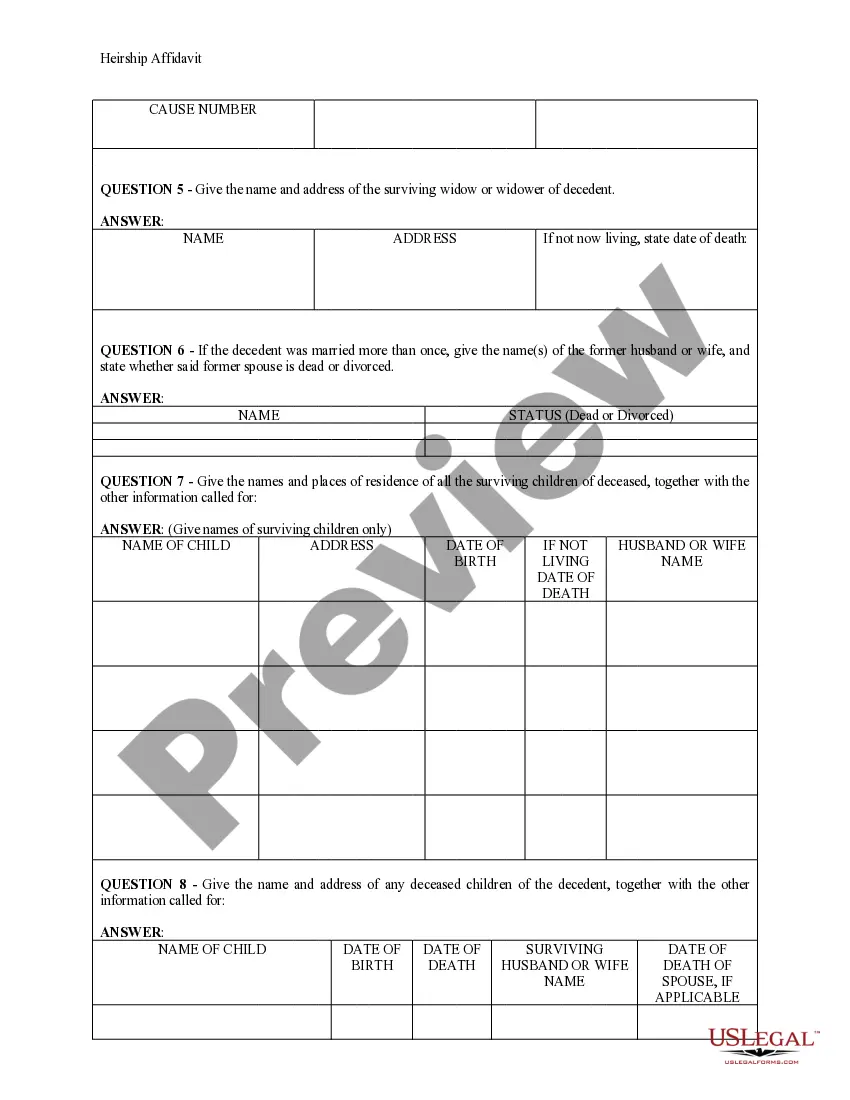
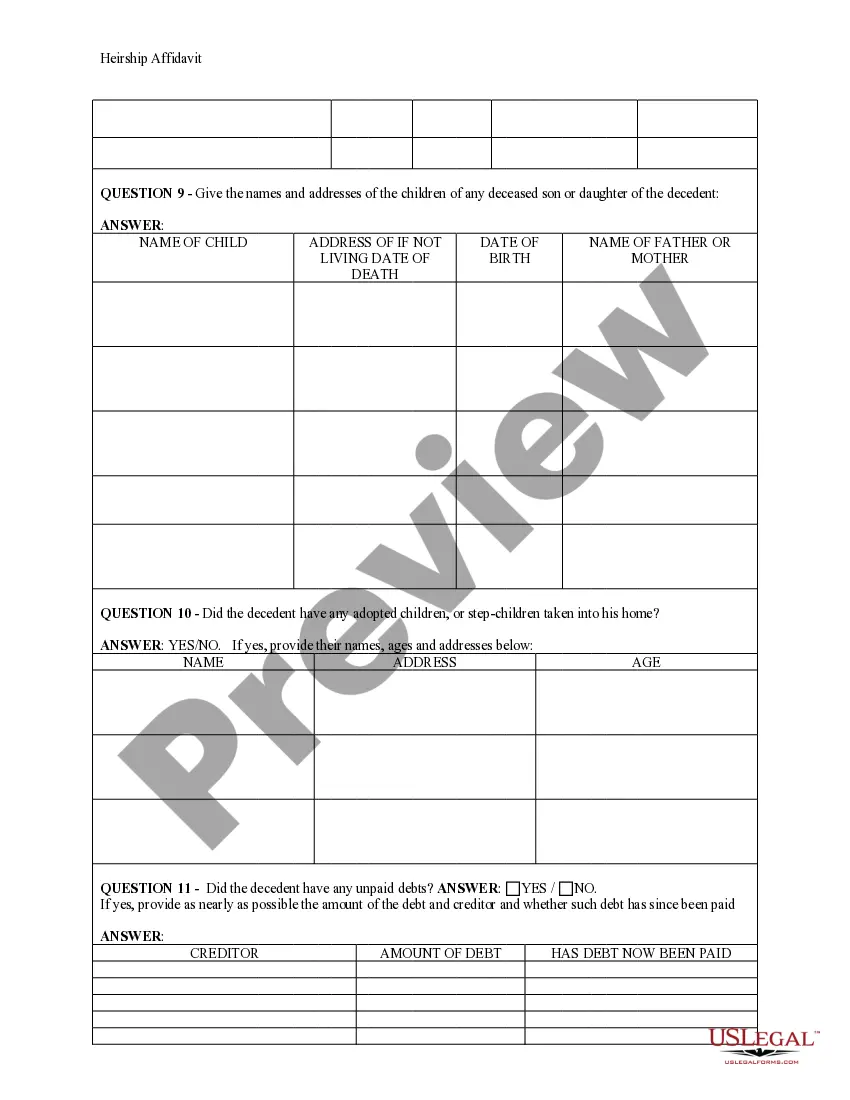
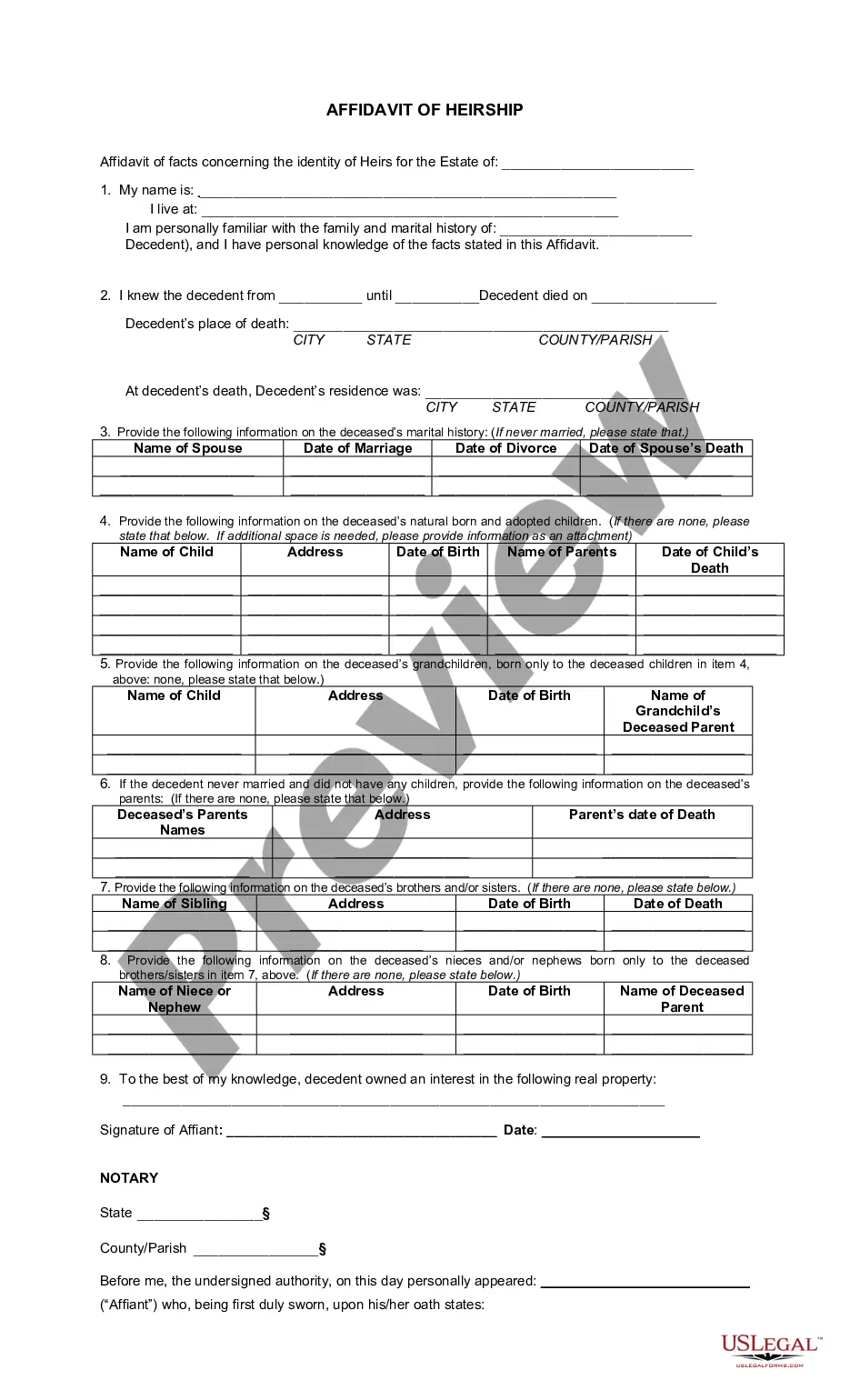
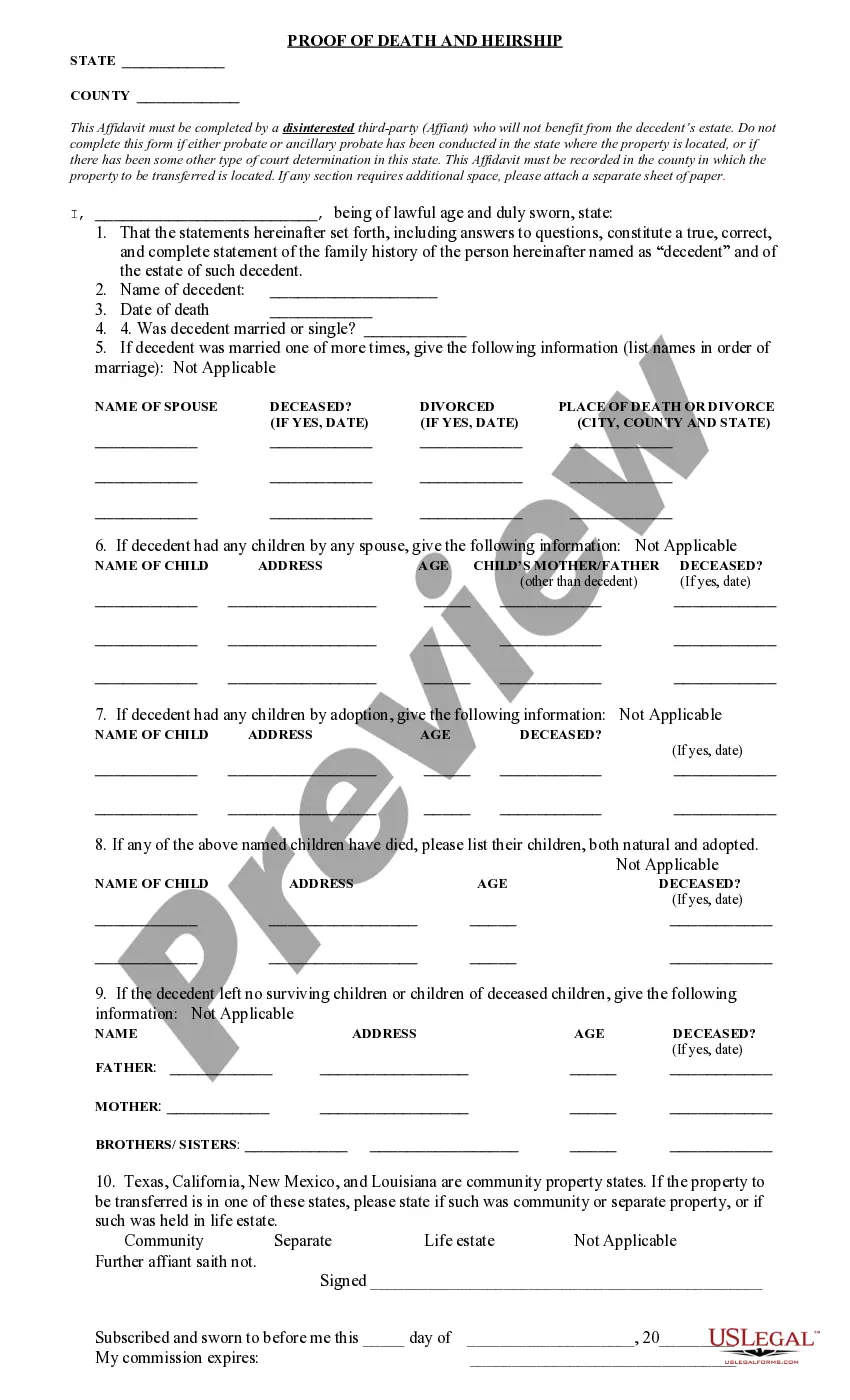
- Details related to the heirs and their relationship to the deceased.
When to use this form
This form is commonly used when a person dies intestate (without a will) or when heirs seek to clarify their rights to the deceased's property. For example, if a son wants to sell land inherited from a deceased parent who left no will, he would use an heirship affidavit to establish his entitlement to the property.
Who can use this document
- Individuals claiming inheritance from a deceased person.
- Heirs seeking to establish their rights to property without a formal estate opening.
- Personal representatives of the estate, if no will exists or estate has not been probated.
How to prepare this document
- Begin by answering whether the decedent left a will.
- If applicable, indicate if the will has been admitted to probate.
- Provide details about any appointed administrator or personal representative, including their name and address.
- List the heirs of the deceased and their relationship to the deceased.
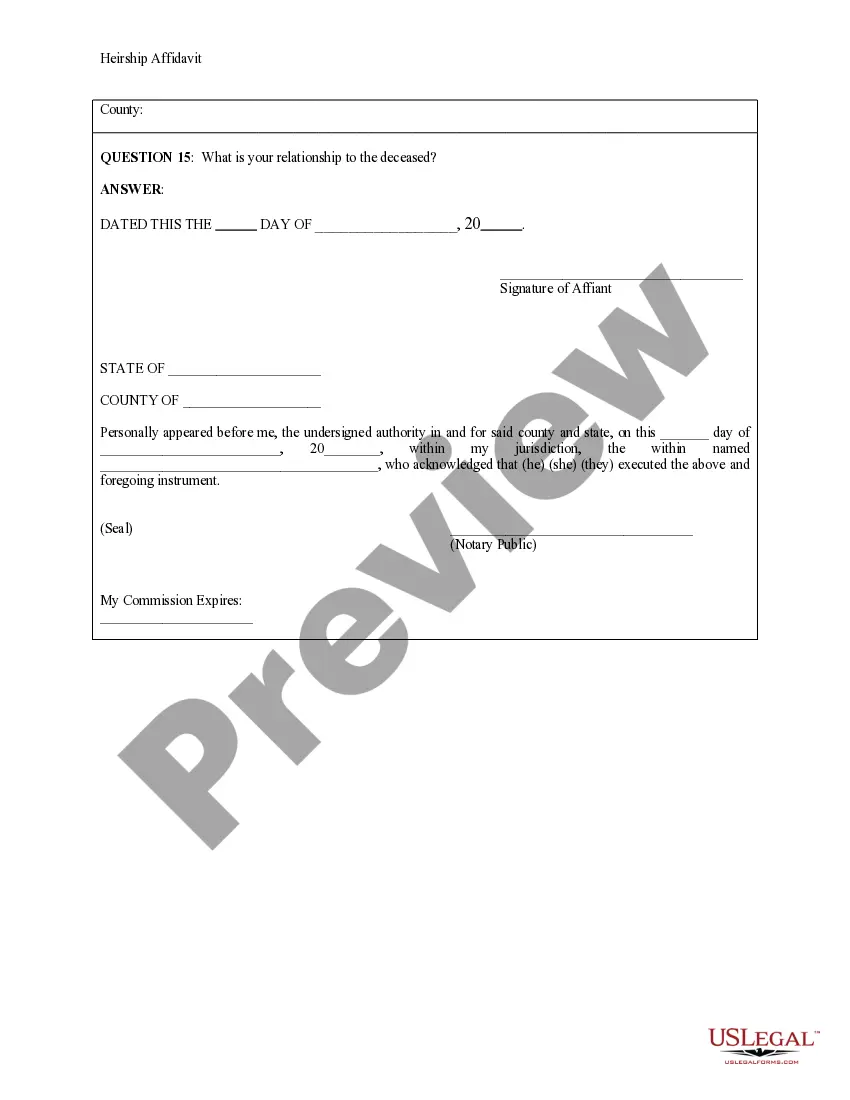
- Sign and date the affidavit before a notary, if required.
Notarization requirements for this form
This form must be notarized to be legally valid. US Legal Forms provides secure online notarization powered by Notarize, allowing you to complete the process through a verified video call.
Get your form ready online
Our built-in tools help you complete, sign, share, and store your documents in one place.
Make edits, fill in missing information, and update formatting in US Legal Forms—just like you would in MS Word.
Download a copy, print it, send it by email, or mail it via USPS—whatever works best for your next step.
Sign and collect signatures with our SignNow integration. Send to multiple recipients, set reminders, and more. Go Premium to unlock E-Sign.
If this form requires notarization, complete it online through a secure video call—no need to meet a notary in person or wait for an appointment.
We protect your documents and personal data by following strict security and privacy standards.

Make edits, fill in missing information, and update formatting in US Legal Forms—just like you would in MS Word.

Download a copy, print it, send it by email, or mail it via USPS—whatever works best for your next step.

Sign and collect signatures with our SignNow integration. Send to multiple recipients, set reminders, and more. Go Premium to unlock E-Sign.

If this form requires notarization, complete it online through a secure video call—no need to meet a notary in person or wait for an appointment.

We protect your documents and personal data by following strict security and privacy standards.
Common mistakes
- Failing to confirm whether a will exists before completing the form.
- Not providing accurate information about the heirs.
- Neglecting to have the document notarized if required by local law.
Advantages of online completion
- Convenience of immediate access and download from anywhere.
- Editability allows users to customize the form easily.
- Reliable templates created by licensed attorneys ensure legal compliance.
Legal use & context
The Heirship Affidavit serves as a legal declaration of heirship, which can enhance the legitimacy of claims made by heirs regarding property ownership. While it is not a substitute for probate, it helps convey the rights of heirs in a clear and documented manner, especially in cases where formal processes are avoided.
Main things to remember
- The Heirship Affidavit is crucial for establishing ownership when a decedent passes without a will.
- Correctly completing this form can simplify the transfer of inherited property.
- Understanding state-specific rules is essential to ensure the form's legality and effectiveness.
Looking for another form?
Form popularity
FAQ
An affidavit of heirship is needed to transfer a deceased person's interest in real or personal property to his or her heirs when the decedent dies without leaving a last will and testament or without disposing of all of his or her property in a will.
An affidavit is used for the purpose of proving in court that a claim is true, and is typically used in conjunction with witness statements and other corroborating evidence. Through an affidavit, an individual swears that the information contained within is true to the best of their knowledge.
Does an affidavit of heirship need to be recorded in Texas? Yes, after the affidavit is signed and executed, it must be filed with the county deed records where the decedent's real property is located.
An Affidavit of Heirship is a sworn statement that heirs can use in some states to establish property ownership when the original owner dies intestate. Affidavits of Heirship are generally used when the decedent only left real property, personal property, or had a small estate.
An heir-at-law is anyone who's entitled to inherit from someone who dies without leaving a last will and testament or other estate plans.
A fee of $15 for the first page and $4 for each additional page is common. Ask if you can file the two affidavits of heirship as one document. Some counties let you file the two affidavits of heirship as one document if the decedent and property descriptions are the same.
Following approval by the court, heirs can use this affidavit to acquire property from the estate. Estates with no will or a will that has not been probated by the Texas courts within four years of the deceased's death can be inherited via the use of an affidavit of heirship.