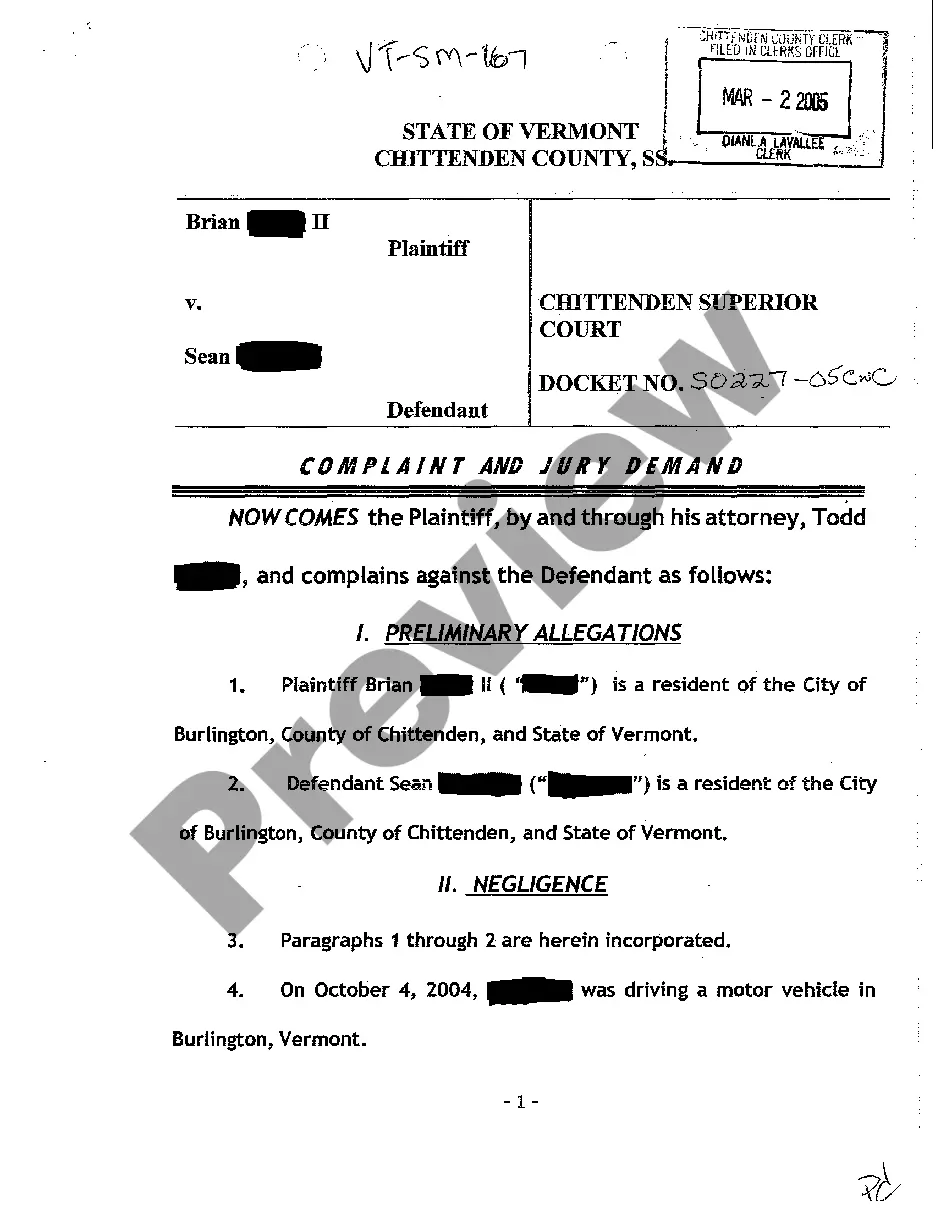
Missouri Closing Statement
What is this form?
The Closing Statement is a critical document used in real estate transactions involving cash sales or owner financing. This form serves as a detailed accounting of the financial aspects of the sale and is verified by signatures from both the seller and the buyer. Unlike other settlement documents, the Closing Statement itemizes all expenses, fees, and balances involved in the real estate transaction. This ensures both parties are fully informed about the financial commitments before the property changes hands.
Form components explained
- Expenses: Lists all costs incurred during the transaction, such as title searches and attorney fees.
- Balance fields: Calculates the total amount due from the buyer to the seller and vice versa.
- Adjustments: Details any prorations for taxes or special assessments that need to be considered.
- Signatures: Includes signature fields for both the seller and buyer to verify that all information is accurate and agreed upon.
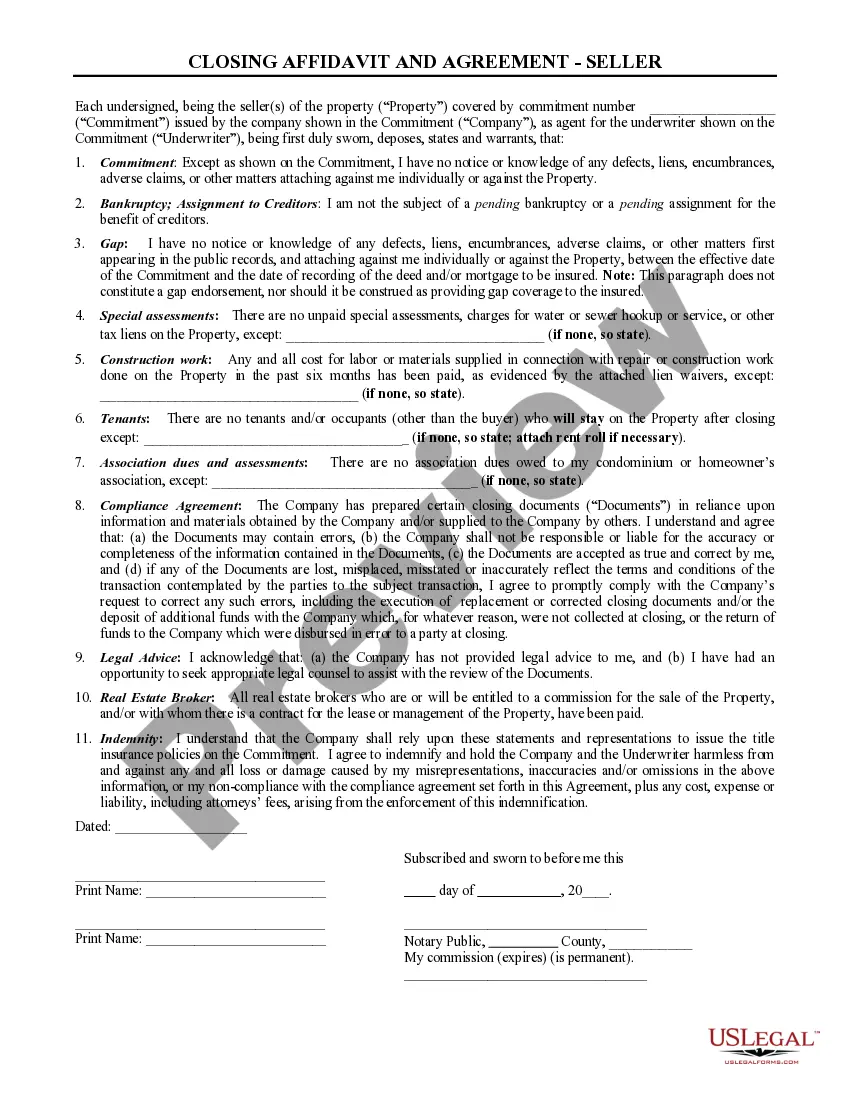
- Certification: Certifies the contents of the statement are true and correct, safeguarding both partiesâ interests.

When to use this document
You should use the Closing Statement when you are finalizing a real estate transaction. It is essential in situations such as selling or purchasing a property where cash payment is made or when financing is provided by the seller. This document ensures that all financial responsibilities are clearly outlined and agreed upon before the exchange of property occurs.
Intended users of this form
This form is intended for:
- Property sellers engaged in cash sales or owner financing.
- Buyers acquiring properties under similar financial arrangements.
- Real estate agents and attorneys facilitating the transaction.
How to prepare this document
Follow these steps to complete the Closing Statement:
- Identify the involved parties by entering the names of the seller and buyer.
- Specify the property details, addressing the location and description of the real estate being sold.
- Fill out the expenses, including all relevant fees, taxes, and commissions associated with the transaction.
- Calculate and enter the total amounts due as well as any balances for the seller and buyer.
- Ensure both parties sign and date the document to certify accuracy and agreement.
Does this form need to be notarized?
This form does not typically require notarization unless specified by local law. It is always a good idea to check your stateâs requirements to ensure compliance with any additional notarization rules.
Get your form ready online
Our built-in tools help you complete, sign, share, and store your documents in one place.
Make edits, fill in missing information, and update formatting in US Legal Forms—just like you would in MS Word.
Download a copy, print it, send it by email, or mail it via USPS—whatever works best for your next step.
Sign and collect signatures with our SignNow integration. Send to multiple recipients, set reminders, and more. Go Premium to unlock E-Sign.
If this form requires notarization, complete it online through a secure video call—no need to meet a notary in person or wait for an appointment.
We protect your documents and personal data by following strict security and privacy standards.

Make edits, fill in missing information, and update formatting in US Legal Forms—just like you would in MS Word.

Download a copy, print it, send it by email, or mail it via USPS—whatever works best for your next step.

Sign and collect signatures with our SignNow integration. Send to multiple recipients, set reminders, and more. Go Premium to unlock E-Sign.

If this form requires notarization, complete it online through a secure video call—no need to meet a notary in person or wait for an appointment.

We protect your documents and personal data by following strict security and privacy standards.
Common mistakes
- Failing to include all expenses, which can lead to disputes later on.
- Missing signatures from either party, which can invalidate the transaction.
- Errors in calculations, particularly in balances or prorations.
Benefits of completing this form online
- Convenience: Easily download and complete the form from any device.
- Editability: Customize the form to match the specific needs of your transaction.
- Reliability: Forms are drafted by licensed attorneys, ensuring legal compliance.
Looking for another form?



Form popularity
FAQ
The Missouri Closing Statement is a detailed accounting of a real estate sale’s finances, used in cash sales or seller-financed transactions. It itemizes expenses, balance fields, and adjustments, and includes signatures from both parties plus a certification. It is used when finalizing a transaction to ensure all costs are clearly understood and agreed before transfer.
Mistakes in the Closing Statement can delay the sale or create disputes. Common issues include missing or inaccurate expenses, incorrect balance fields, improper or missing adjustments, and unsigned certification. Reviewing the document carefully with all parties helps prevent these problems and ensures each item reflects the final agreed terms.
Avoid common missteps such as signing before all numbers are accurate, failing to review expenses, balance fields, or adjustments, and neglecting the certification. Do not rely on verbal understandings; ensure the document is complete, accurate, and signed by both seller and buyer before closing.
Key mistakes include omitting items from the Expenses list, incorrect adjustments or prorations, mismatched balances, missing signatures, and failing to certify the statement. These issues can create disputes or delays; thorough review against related documents and ensuring both parties sign the statement helps prevent them.
This form's Adjustments section covers prorations for taxes or special assessments. Common errors include miscalculating prorations, failing to reflect timely changes, and not reconciling updates with the Buyer or Seller. Correcting any adjustments before signing ensures the balances and disclosures match the final agreement.
The Missouri Closing Statement described here is designed for cash sales or seller-financed transactions and emphasizes itemized expenses, balance calculations, and prorations with a certification and signatures from both parties. In contrast, standard mortgage-financed closings typically focus on lender disclosures and financing terms.