Missouri Lease Subordination Agreement
Understanding this form
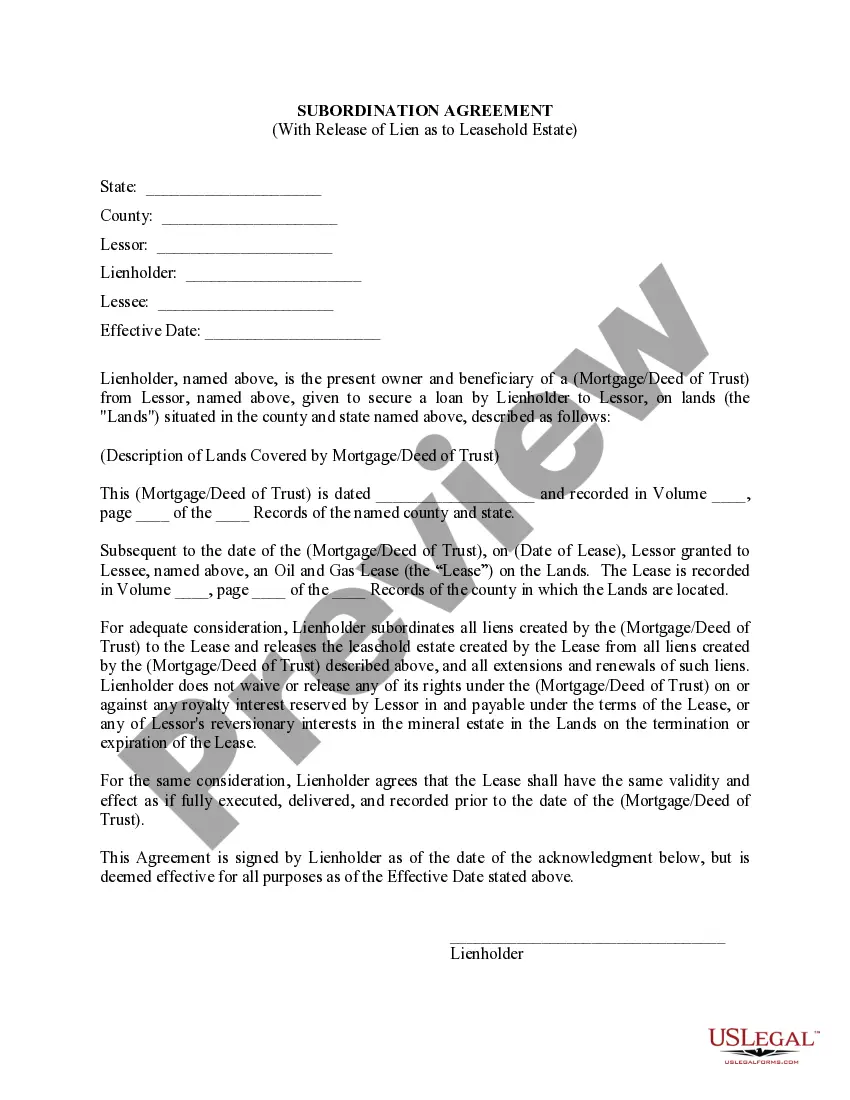
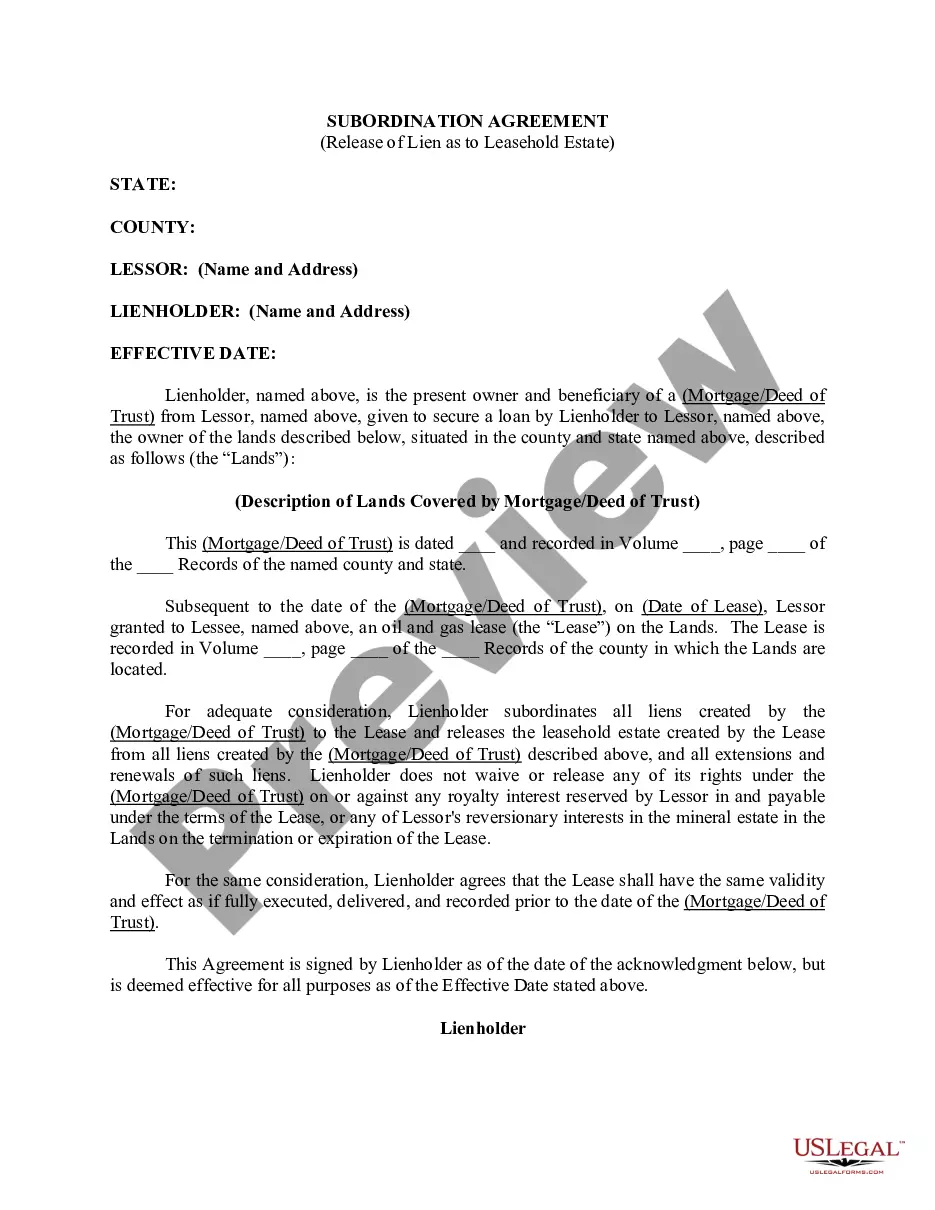
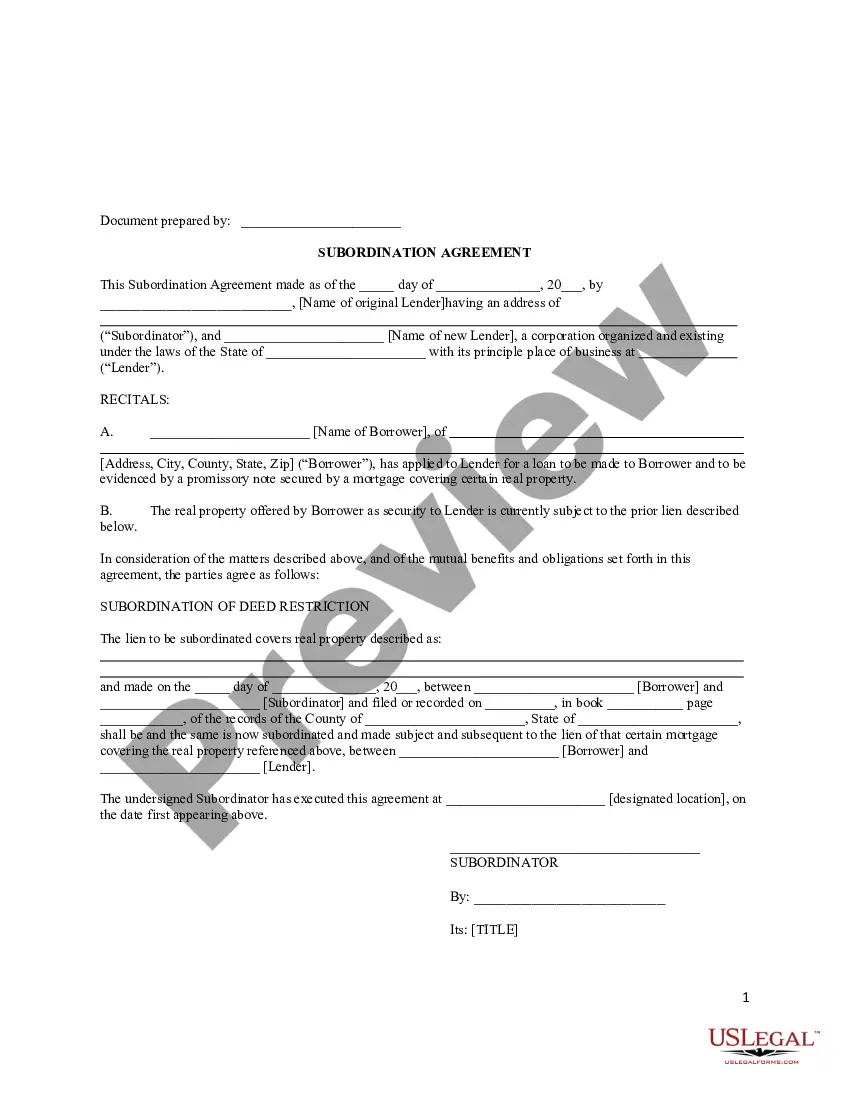
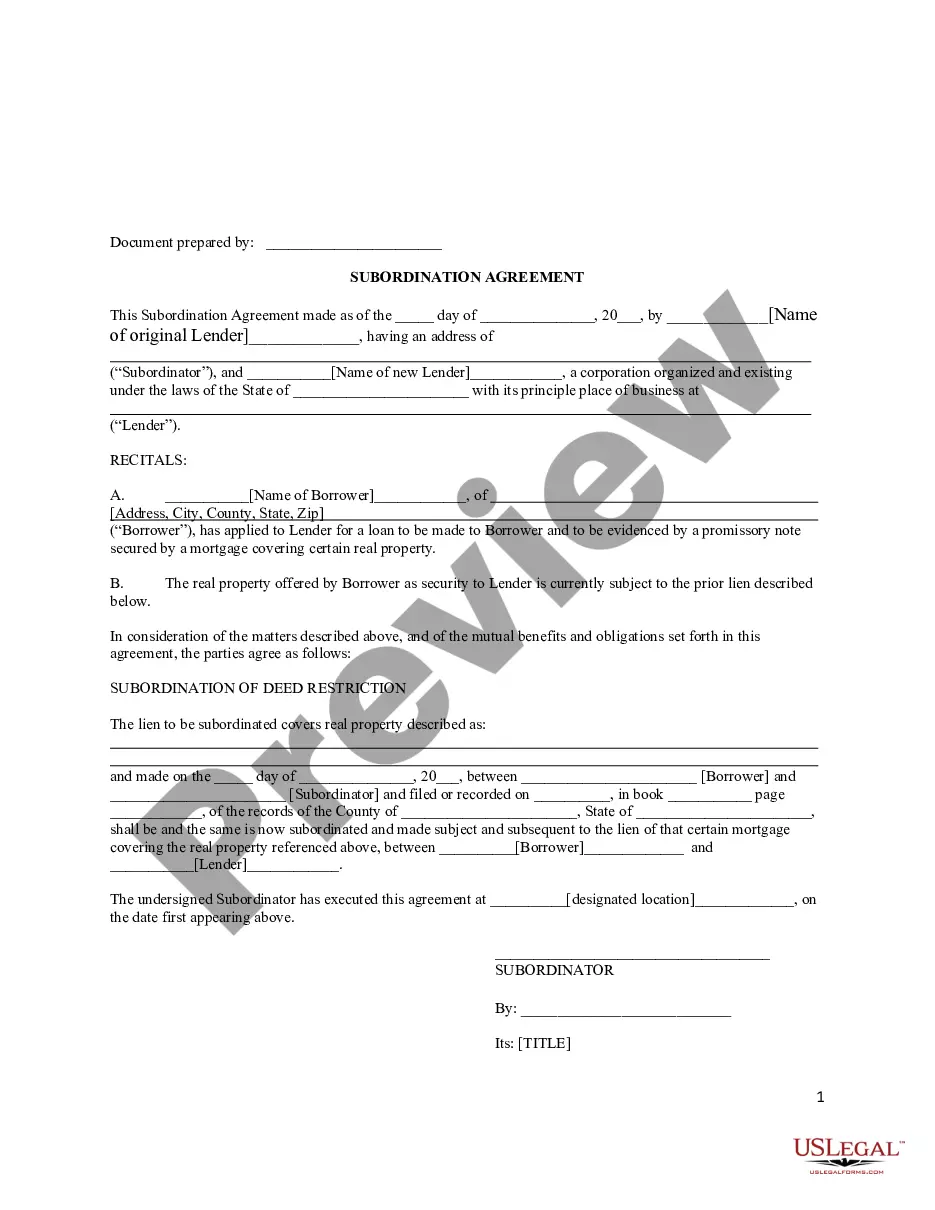
The Lease Subordination Agreement is a legal document that allows a lienholder's interest in a property to be subordinated to a mineral, oil, or gas lease. This means that any claims or debts originally held by the lienholder will take a secondary position to the lease agreement. This form is particularly important when a property owner seeks additional financing secured by the same property, ensuring that new financing has priority over existing loans. It differs from typical lease agreements as it specifically addresses lien priority and the rights of lienholders in relation to leases.
Key components of this form
- Lessor and Lessee identification: Names of the parties involved in the lease.
- Property description: Detailed information about the land associated with the mortgage or deed of trust.
- Effective date: The date on which the agreement becomes legally binding.
- Subordination clause: Specifies that the lienholder's claims are subordinate to the lease.
- Release of lien clause: Indicates the lienholder relinquishes their lien on the leasehold estate.
Common use cases
This form should be used when a property owner wants to secure a mineral, oil, or gas lease on a property that is already subject to an existing mortgage or deed of trust. It is necessary when the owner applies for a new loan that needs to take priority over the existing claims of the lienholder. Using this agreement ensures that the new lease can be executed without conflicts over lien priority.
Who this form is for
- Property owners seeking to lease mineral rights on their property.
- Lienholders who need to adjust the priority of their claims to accommodate new leases.
- Lessee interested in ensuring their lease is recognized legally against existing liens.
Steps to complete this form
- Identify the parties: Enter the full names of the lessor, lienholder, and lessee.
- Specify the property: Include a detailed description of the lands covered by the mortgage or deed of trust.
- Enter dates: Fill in the effective date and other relevant dates for the mortgage and lease.
- Include signatures: Ensure that the lienholder signs the form as required.
- Record details: Make sure to record the details of the lease and mortgage in the appropriate public records.
Does this form need to be notarized?
This form must be notarized to be legally valid. US Legal Forms provides secure online notarization powered by Notarize, allowing you to complete the process through a verified video call.
Get your form ready online
Our built-in tools help you complete, sign, share, and store your documents in one place.
Make edits, fill in missing information, and update formatting in US Legal Forms—just like you would in MS Word.
Download a copy, print it, send it by email, or mail it via USPS—whatever works best for your next step.
Sign and collect signatures with our SignNow integration. Send to multiple recipients, set reminders, and more. Go Premium to unlock E-Sign.
If this form requires notarization, complete it online through a secure video call—no need to meet a notary in person or wait for an appointment.
We protect your documents and personal data by following strict security and privacy standards.

Make edits, fill in missing information, and update formatting in US Legal Forms—just like you would in MS Word.

Download a copy, print it, send it by email, or mail it via USPS—whatever works best for your next step.

Sign and collect signatures with our SignNow integration. Send to multiple recipients, set reminders, and more. Go Premium to unlock E-Sign.

If this form requires notarization, complete it online through a secure video call—no need to meet a notary in person or wait for an appointment.

We protect your documents and personal data by following strict security and privacy standards.
Common mistakes to avoid
- Failing to provide complete property descriptions.
- Not including all necessary signatures from the parties involved.
- Incorrectly filling out the effective date or failing to specify it.
Why use this form online
- Convenience: Download and complete the form at your own pace.
- Editability: Easily input information without the need for physical paperwork.
- Reliability: Access professionally drafted legal documents that meet your needs.
Legal use & context
- Ensures that the rights of lienholders and lessees are clearly defined.
- Helps avoid disputes over priority claims in property interests.
- Facilitates smoother transactions in the leasing of mineral rights.
Summary of main points
- The Lease Subordination Agreement allows a lease to take precedence over existing mortgages.
- Completing this form helps clarify the rights and responsibilities of all parties involved.
- Using this form ensures legal compliance with state-specific regulations for leases and liens.
Looking for another form?
Form popularity
FAQ
Yes, you can create your own lease agreement in Missouri, but it must comply with state laws to be enforceable. A well-drafted lease should cover essential aspects like rent, duration, and responsibilities of both parties. If you want to ensure that your lease agreement is legally sound, consider using templates that include a Missouri Lease Subordination Agreement. This approach can save you time and help you avoid potential legal issues.
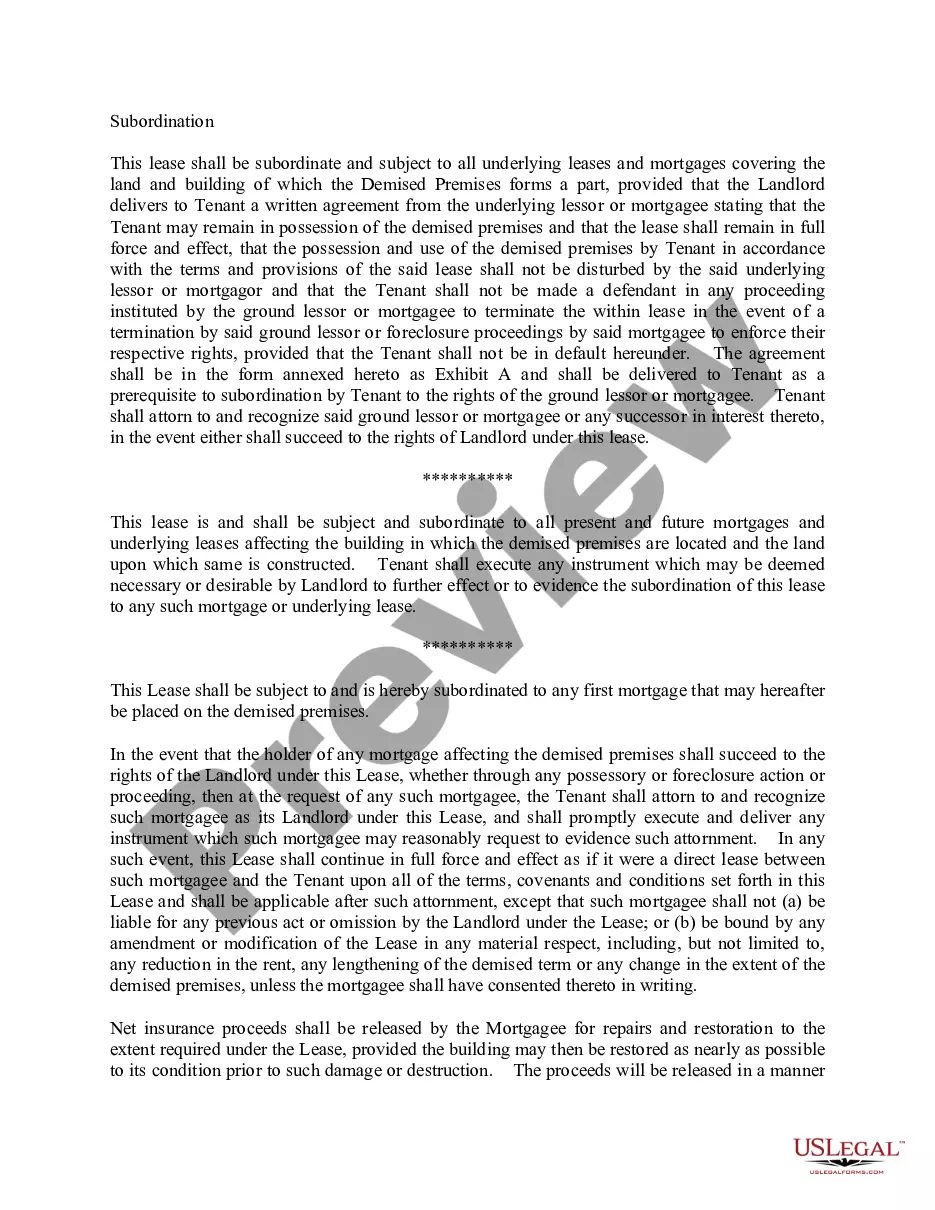
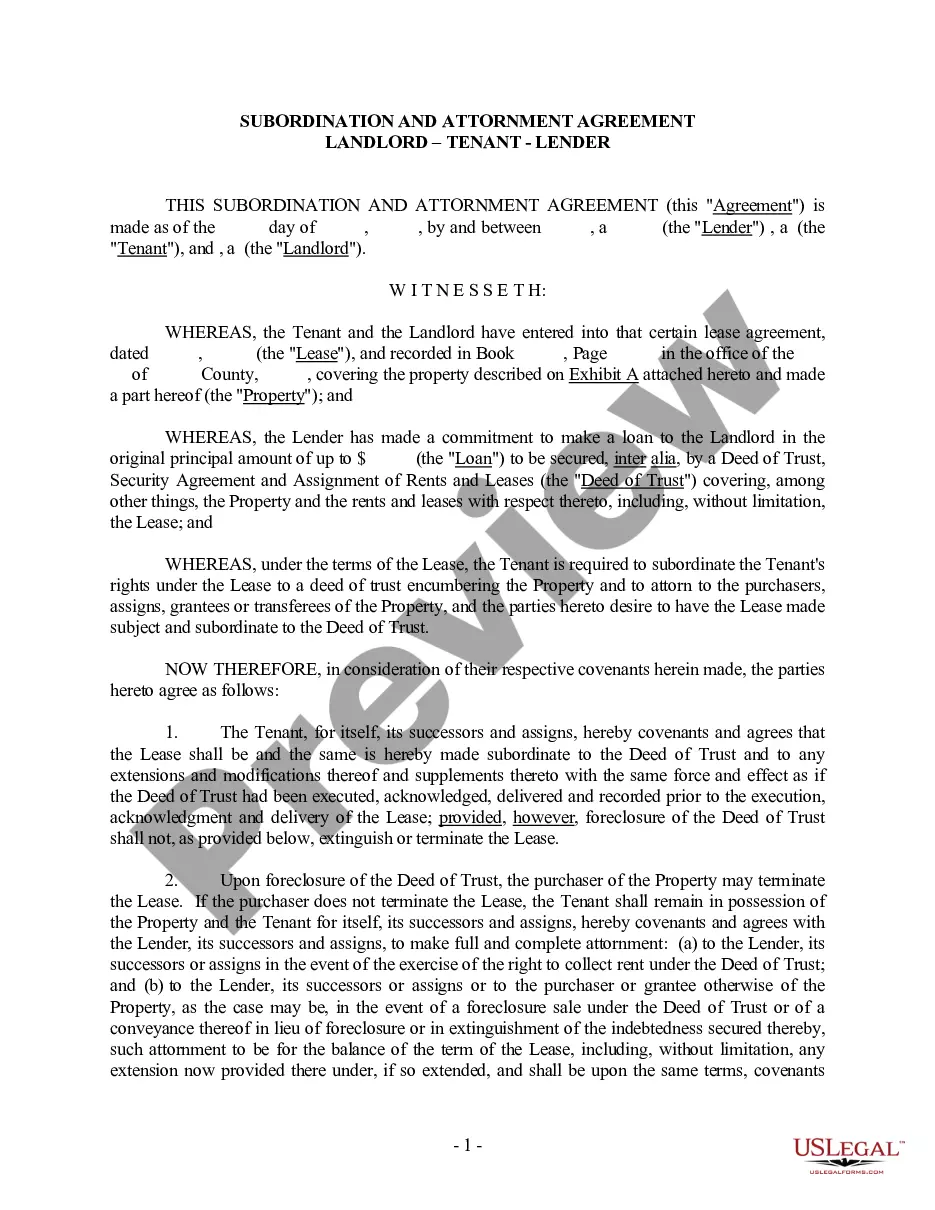
A subordination agreement in a lease is a legal document that establishes the priority of leases and mortgages in relation to the property. This agreement allows a tenant's lease to be subordinate to a lender's mortgage, meaning the lender's rights take precedence over the lease. Understanding the implications of such agreements is crucial for both landlords and tenants. For those in Missouri, a Missouri Lease Subordination Agreement can help clarify these priorities and provide peace of mind.
In Missouri, subleasing is generally allowed, but it depends on the terms of your original lease. You must often obtain permission from your landlord before you can sublease your rental unit. Additionally, the sublease agreement must comply with local laws and regulations. To ensure that you follow all legal requirements, consider using a Missouri Lease Subordination Agreement to clarify terms and protect your rights.
Despite its technical-sounding name, the subordination agreement has one simple purpose. It assigns your new mortgage to first lien position, making it possible to refinance with a home equity loan or line of credit. Signing your agreement is a positive step forward in your refinancing journey.
Subordination is the tenant's agreement that its interest under the lease will be subordinate to that of the lender.Attornment is the tenant's agreement to become the tenant of someone other than the original landlord and who has now taken title to the property.
Most rental agreements are short-term agreements, such as month-to-month tenancies, while lease agreements are usually for longer rental periods, such as six months, a year, or more.
A Subordination and Non-Disturbance Agreement (SNDA) commonly called a non-disturb is an agreement that your landlord asks its lender to provide. The agreement basically says that if the building goes bankrupt and the lender takes control of the building from the landlord, the lender will honor your lease.
A lease is automatically void when it is against the law, such as a lease for an illegal purpose. In other circumstances, like fraud or duress, a lease can be declared void at the request of one party but not the other.
Subordination clauses in mortgages refer to the portion of your agreement with the mortgage company that says their lien takes precedence over any other liens you may have on your property.However, it's also possible to have other liens. You might have some placed by contractors until work is paid off.
A rental agreement will be void and unenforceable if it allows the landlord to terminate the tenancy of a tenant for a crime committed in relation to the rental property if it does not also include the new domestic abuse protection language set forth in sec.