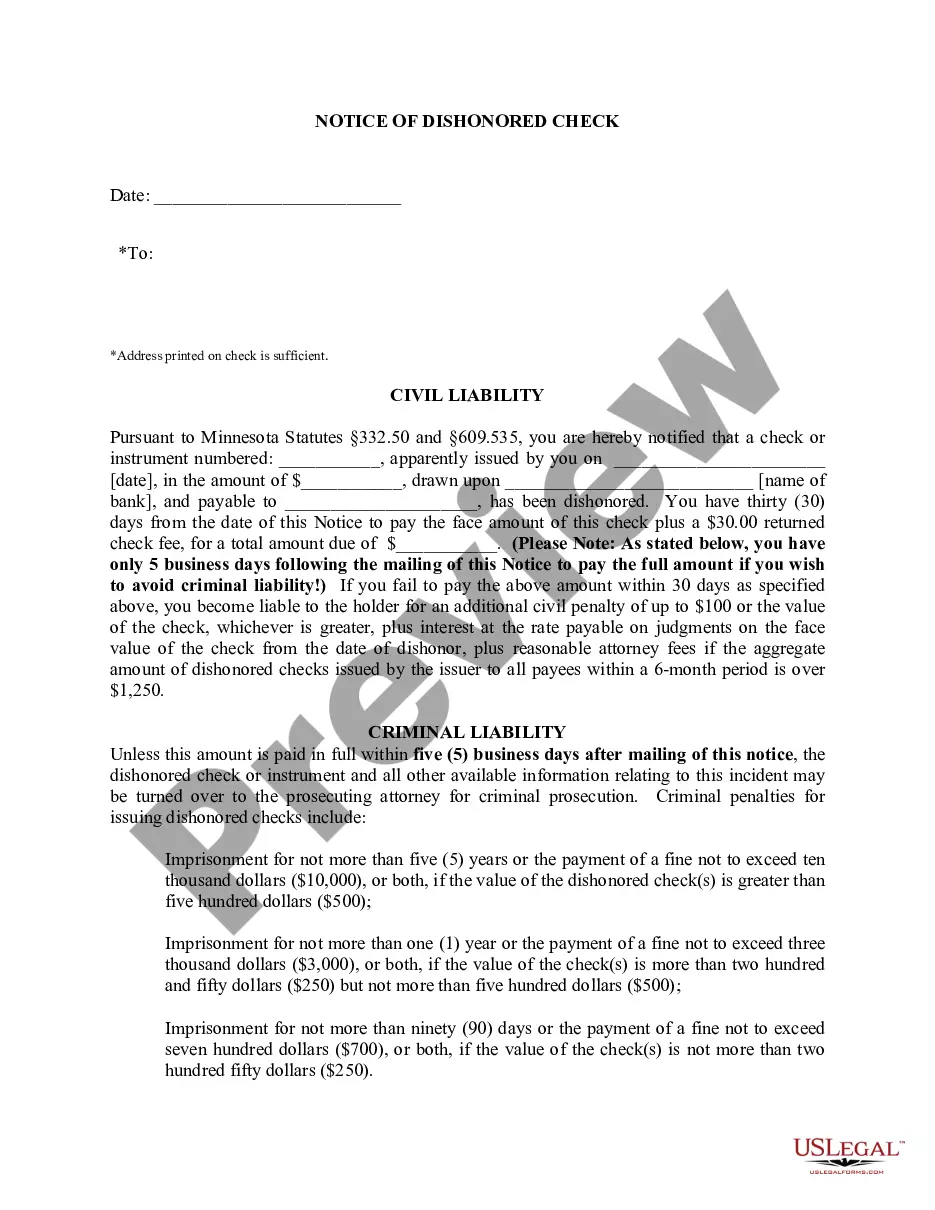
Minnesota Notice of Dishonored Check - Civil and Criminal - Keywords: bad check, bounced check
What is this form?
The Notice of Dishonored Check is a legal document informing an individual or business that a check they issued has bounced, meaning the bank did not process it for reasons such as insufficient funds or a closed account. This form is important for potential recovery of the owed amount and could serve as a precursor to further action, including legal proceedings. Understanding this form is crucial for anyone who has received a bad check, as it outlines the next steps to reclaim funds.
Form components explained
- Details of the dishonored check, including the amount and the issuing party's information.
- Notice period for payment (typically five business days after mailing the notice).
- Consequences of non-payment, which may include criminal prosecution or civil penalties.
- Instructions for the recipient on how to resolve the dishonored check situation.
- Reference to applicable state statutes regarding dishonored checks.




When this form is needed
This form is necessary when a check you have issued has bounced, and you need to formally notify the recipient. It can be utilized by business owners or individuals who accept checks as part of payment and want to recover the amount due or pursue legal action against the issuer for insufficient funds. Use this form to fulfill legal requirements before escalating the matter to collections or court.
Who should use this form
- Business owners who receive checks as payment for goods or services.
- Individuals who have accepted checks and now face a dishonored payment.
- Any person needing to provide official notice of a bounced check to the issuer.
- Creditors looking to inform debtors of legal responsibilities regarding dishonored checks.
Completing this form step by step
- Identify the parties involved, including the payee and issuer of the dishonored check.
- Fill in the details of the bounced check, including the check number, date, and amount.
- Specify the payment deadline, typically five business days from the date of mailing.
- Provide any instructions for payment, including where and how to pay.
- Mail the filled form to the issuer, ensuring you maintain proof of mailing for your records.
Does this document require notarization?
In most cases, this form does not require notarization. However, some jurisdictions or signing circumstances might. US Legal Forms offers online notarization powered by Notarize, accessible 24/7 for a quick, remote process.
Get your form ready online
Our built-in tools help you complete, sign, share, and store your documents in one place.
Make edits, fill in missing information, and update formatting in US Legal Forms—just like you would in MS Word.
Download a copy, print it, send it by email, or mail it via USPS—whatever works best for your next step.
Sign and collect signatures with our SignNow integration. Send to multiple recipients, set reminders, and more. Go Premium to unlock E-Sign.
If this form requires notarization, complete it online through a secure video call—no need to meet a notary in person or wait for an appointment.
We protect your documents and personal data by following strict security and privacy standards.

Make edits, fill in missing information, and update formatting in US Legal Forms—just like you would in MS Word.

Download a copy, print it, send it by email, or mail it via USPS—whatever works best for your next step.

Sign and collect signatures with our SignNow integration. Send to multiple recipients, set reminders, and more. Go Premium to unlock E-Sign.

If this form requires notarization, complete it online through a secure video call—no need to meet a notary in person or wait for an appointment.

We protect your documents and personal data by following strict security and privacy standards.
Avoid these common issues
- Failing to include all necessary information about the check being dishonored.
- Not sending the notice via a method that provides proof of delivery.
- Ignoring state-specific requirements for notification.
- Forgetting to specify the payment deadline or method in the notice.
Benefits of using this form online
- Immediate access to legally compliant templates drafted by licensed attorneys.
- Convenience of downloading and customizing forms from anywhere.
- Elimination of guesswork with clearly outlined instructions.
- Easy tracking and managing of multiple forms from a single platform.
Legal use & context
- A Notice of Dishonored Check is a legally recognized document informing the issuer of a bounced check.
- Failure to comply with the notice can lead to further legal action, including criminal charges.
- It serves as a first step in the collection process before pursuing additional legal remedies.
Quick recap
- The Notice of Dishonored Check is essential for notifying issuers of bounced checks.
- Use this form to pursue recovery of funds legally and effectively.
- Ensure compliance with state-specific laws to enhance collection efforts.
Looking for another form?
Form popularity
FAQ
In Minnesota, a debt typically becomes uncollectible after six years from the date of the last payment or acknowledgment. This includes debts related to bad checks or bounced checks. If you have received a Minnesota Notice of Dishonored Check, it is crucial to act promptly. Resources like US Legal Forms can help you navigate the complexities of collecting on these debts and ensure you understand your rights.
Statute 609.10 outlines the criminal implications of issuing a bad check in Minnesota. This law classifies the act of writing a check without sufficient funds as a criminal offense under certain conditions. Being aware of this statute can help individuals avoid serious legal consequences associated with bounced checks.
In Minnesota, the statute regarding worthless checks falls under Section 604.113. This law specifies the legal ramifications for issuing a check without sufficient funds, classifying it as a civil offense. If you find yourself dealing with a bounced check, it’s important to understand your rights and obligations under this statute.
Statute 473.4465 addresses the collection of bad debt, including issues related to dishonored checks within specific jurisdictions. This statute provides guidance on how municipalities can manage and collect on bounced checks issued for services. Familiarity with this law can be beneficial for both individuals and businesses dealing with bad checks.
Statute 524.2 101 pertains to the handling of financial management and fiduciary responsibilities in Minnesota. It outlines the obligations of individuals managing another person’s finances, including the duties related to dealing with any dishonored checks. Understanding this statute can help protect against legal issues related to bounced checks.
Yes, bouncing checks is considered illegal in Minnesota and can lead to both civil and criminal repercussions. When a check is returned due to insufficient funds, the issuer may be held liable for the amount of the check along with additional penalties. It's advisable to manage your finances carefully to avoid the complications associated with bad checks.
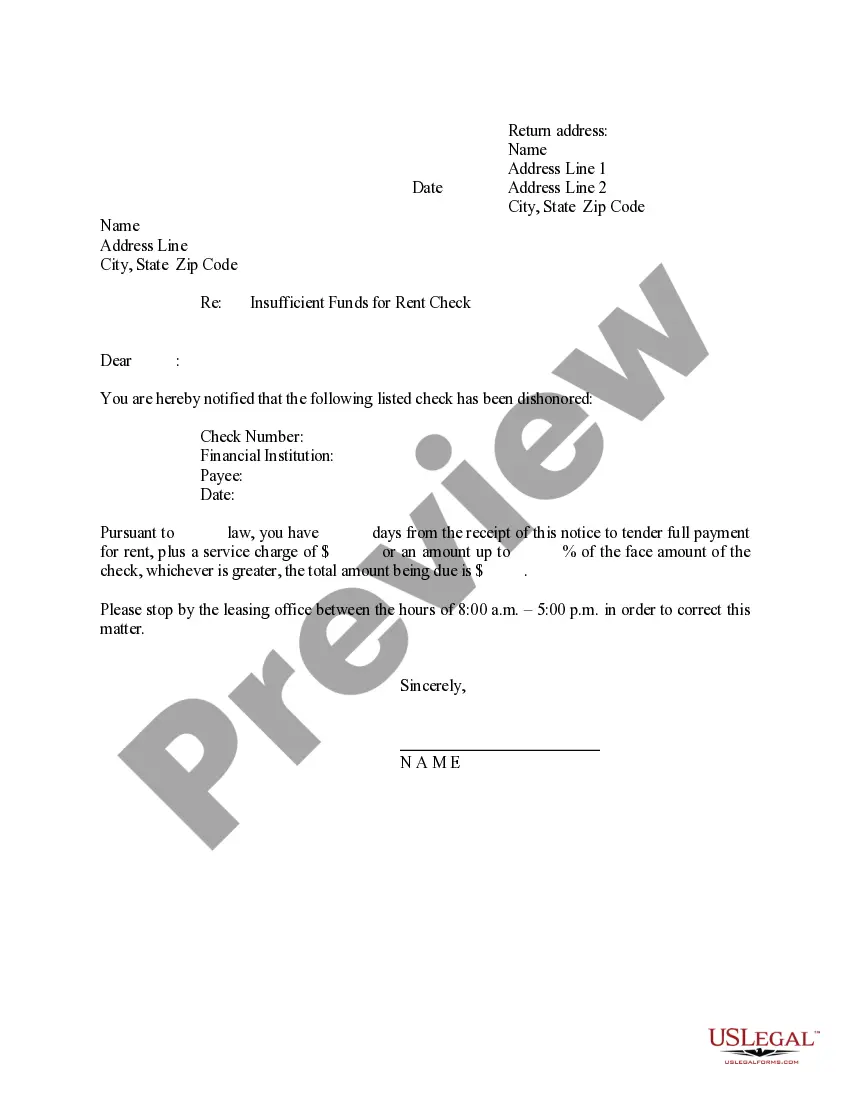
To write a letter regarding a bounced check, start by clearly stating the issue. Include details such as the check number, date, amount, and the reason for the dishonor. It’s important to request payment for the bounced check and provide a deadline for response. Utilizing the Minnesota Notice of Dishonored Check template from US Legal Forms can simplify this process.
In Minnesota, the statute for dishonored checks falls under Section 604.113. This law establishes the penalties for issuing a bad check, including civil and criminal consequences. If a check bounces due to insufficient funds, the issuer may face fines or potential criminal charges depending on the amount. Understanding this statute is crucial for anyone dealing with bounced checks.
In Minnesota, the statute of limitations for collecting a debt, such as a bounced check or bad check, typically lasts for six years. This means you have six years from the date of the dishonored check to pursue legal action for recovery. After this period, the debt becomes uncollectible, and you cannot enforce payment through the courts. If you need assistance with a Minnesota Notice of Dishonored Check - Civil and Criminal, consider using US Legal Forms, which offers templates and guidance to help you navigate the process effectively.
A legal letter for a bounced check, often referred to as a Minnesota Notice of Dishonored Check, serves as a formal communication to the check writer regarding their insufficient funds. This letter notifies the individual that their check was returned due to non-payment, and it typically includes details about the original transaction. It is important to include specific information, such as the check number, amount, and the date it was issued. Utilizing a platform like US Legal Forms can help you easily create this letter, ensuring you follow the proper legal guidelines.