Michigan Marital Domestic Separation and Property Settlement Agreement no Children parties may have Joint Property or Debts Effective Immediately
What is this form?
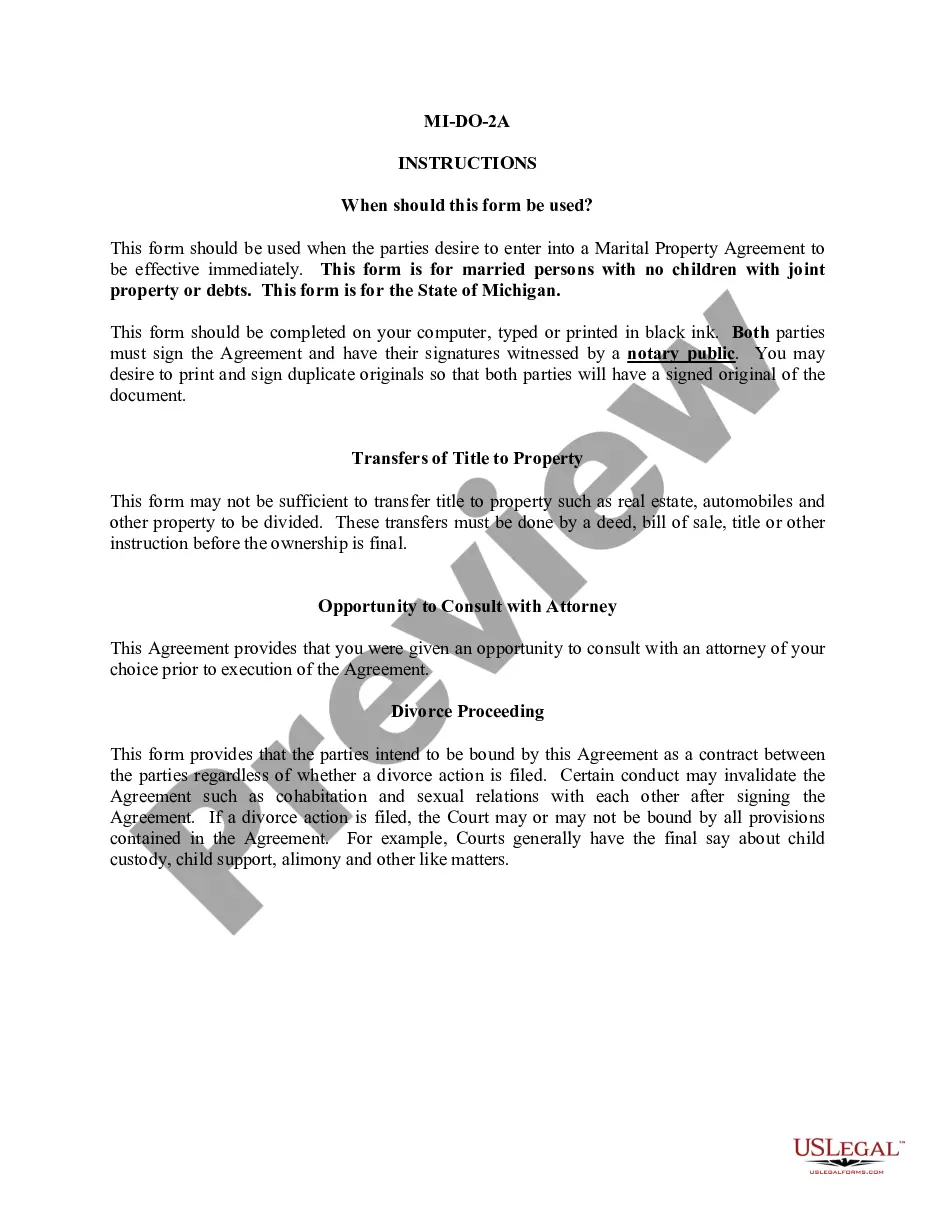
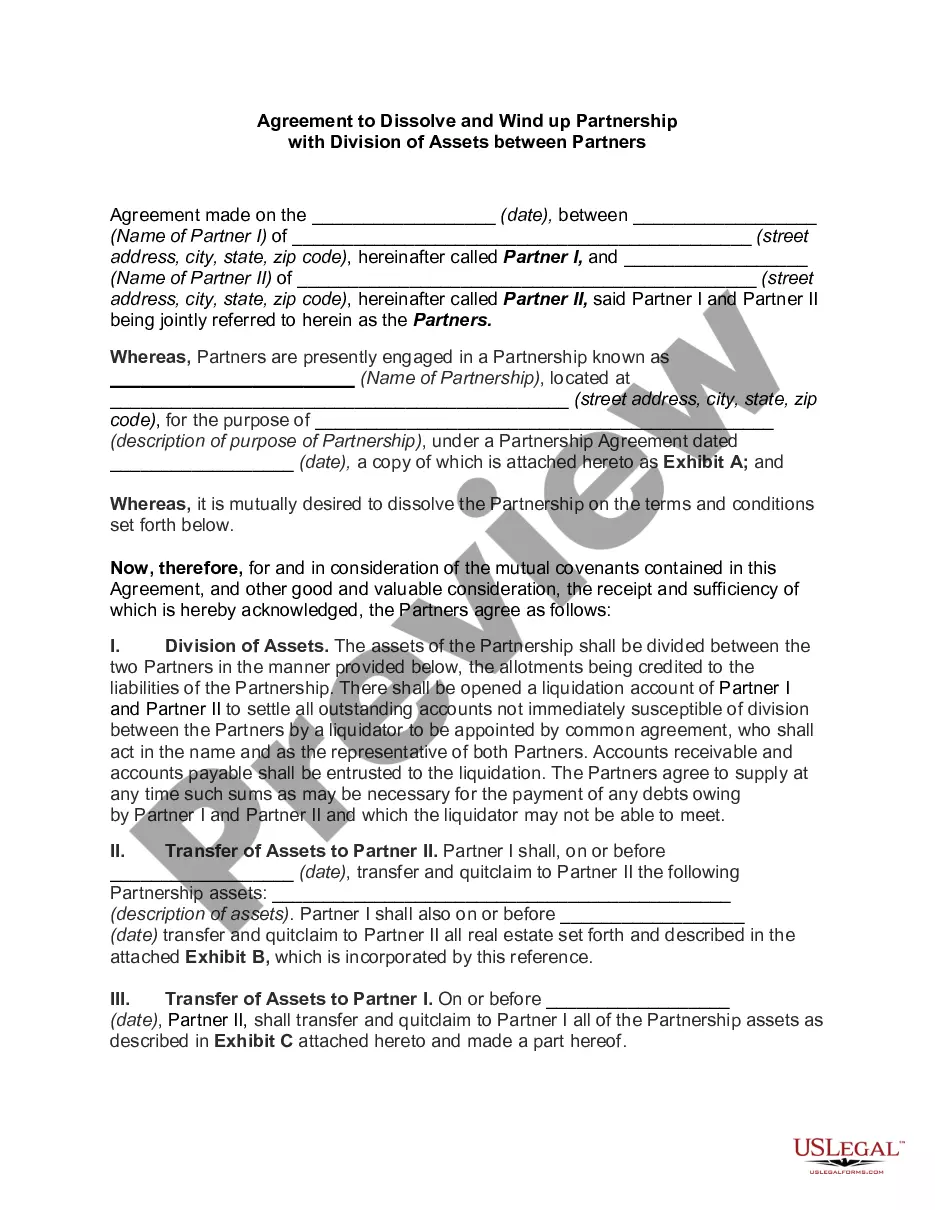
The Marital Domestic Separation and Property Settlement Agreement is a legal document designed for couples without children who wish to formally separate and address their property and financial obligations. Unlike divorce agreements, this form specifically allows parties to settle their affairs immediately while remaining married, focusing on the division of assets and repayment of debts. It's specifically tailored for individuals in the state of Michigan and is essential for those looking to clearly delineate their rights and responsibilities moving forward.
Key parts of this document
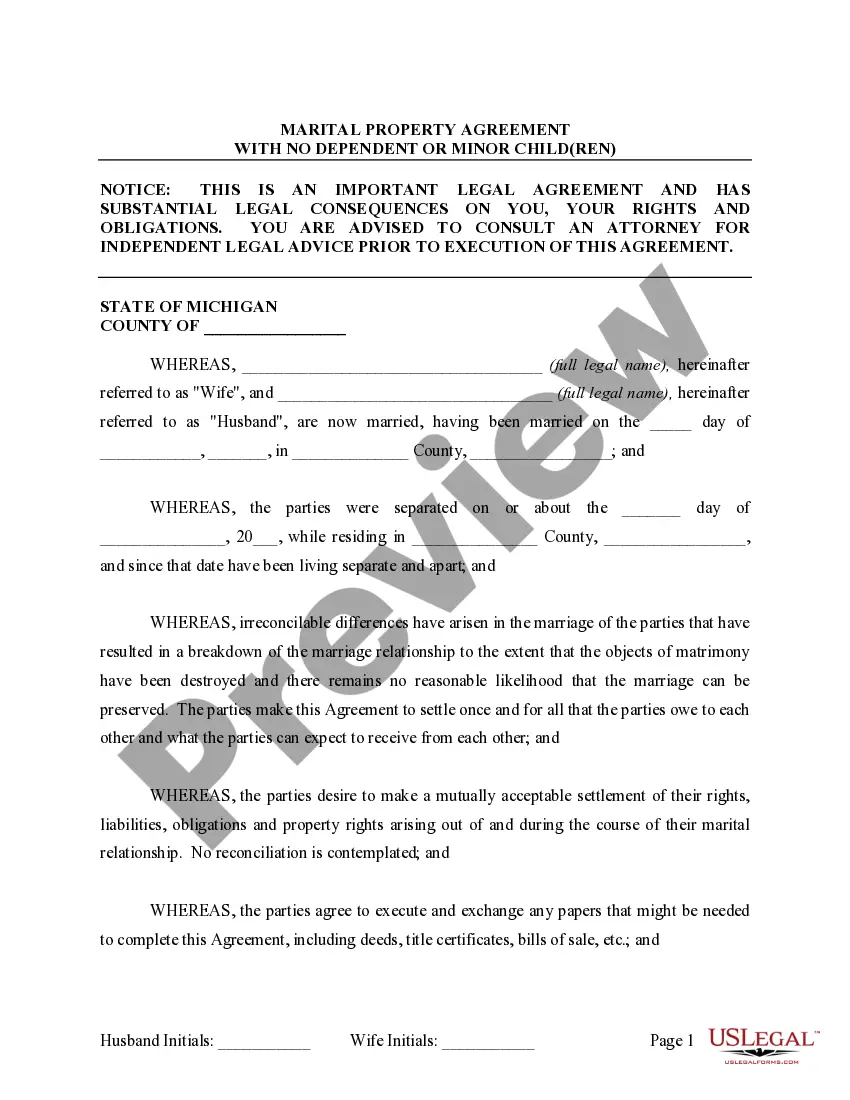
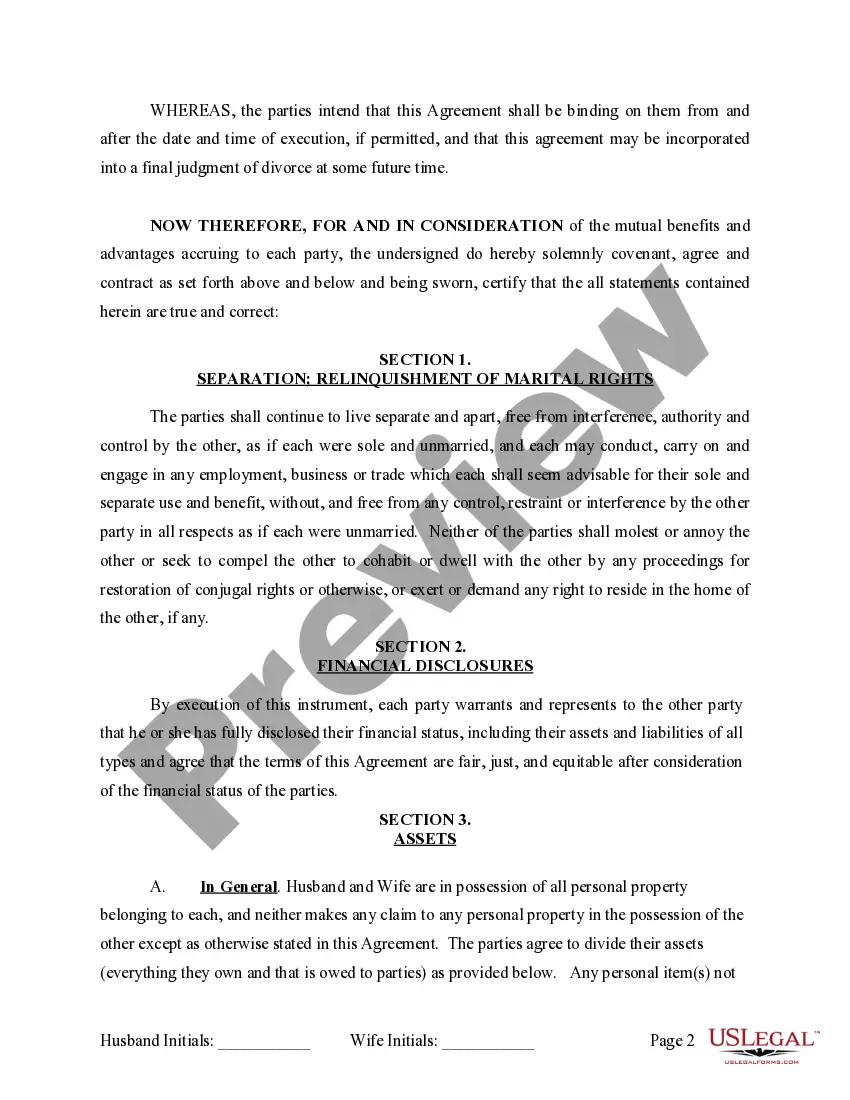
- Sections outlining separation details and relinquishment of marital rights.
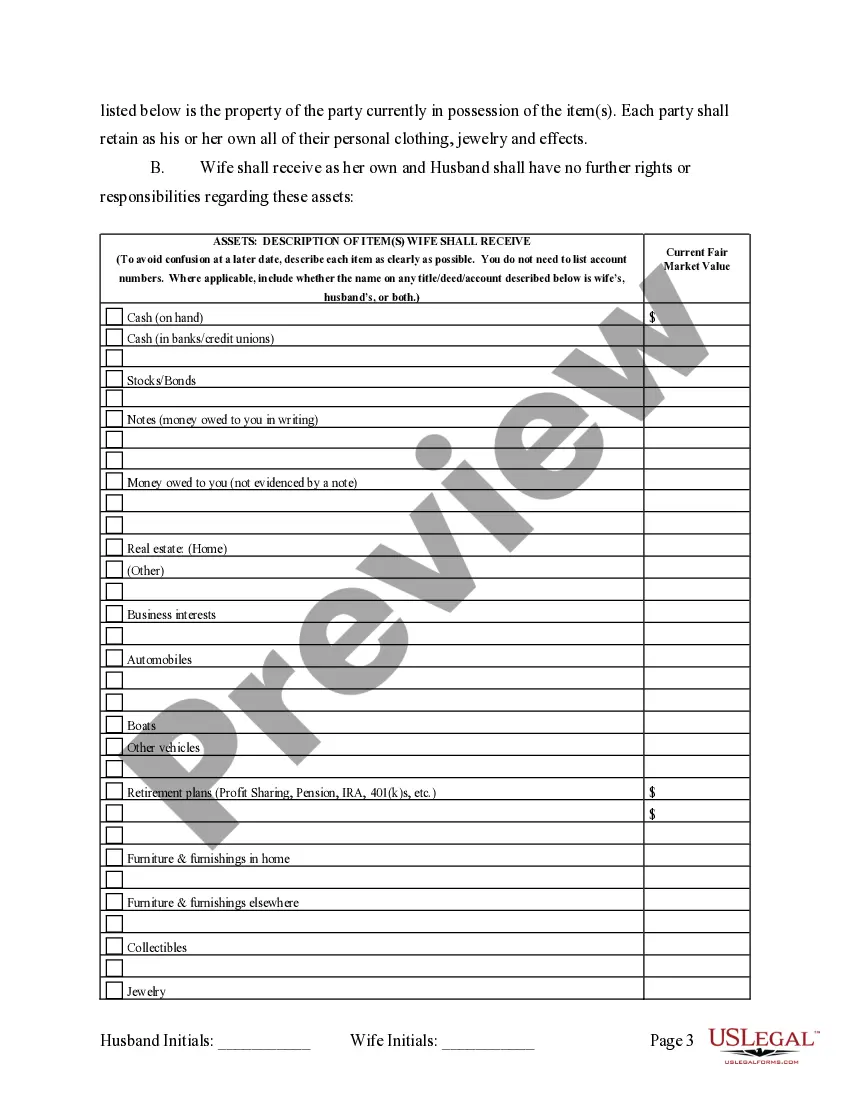
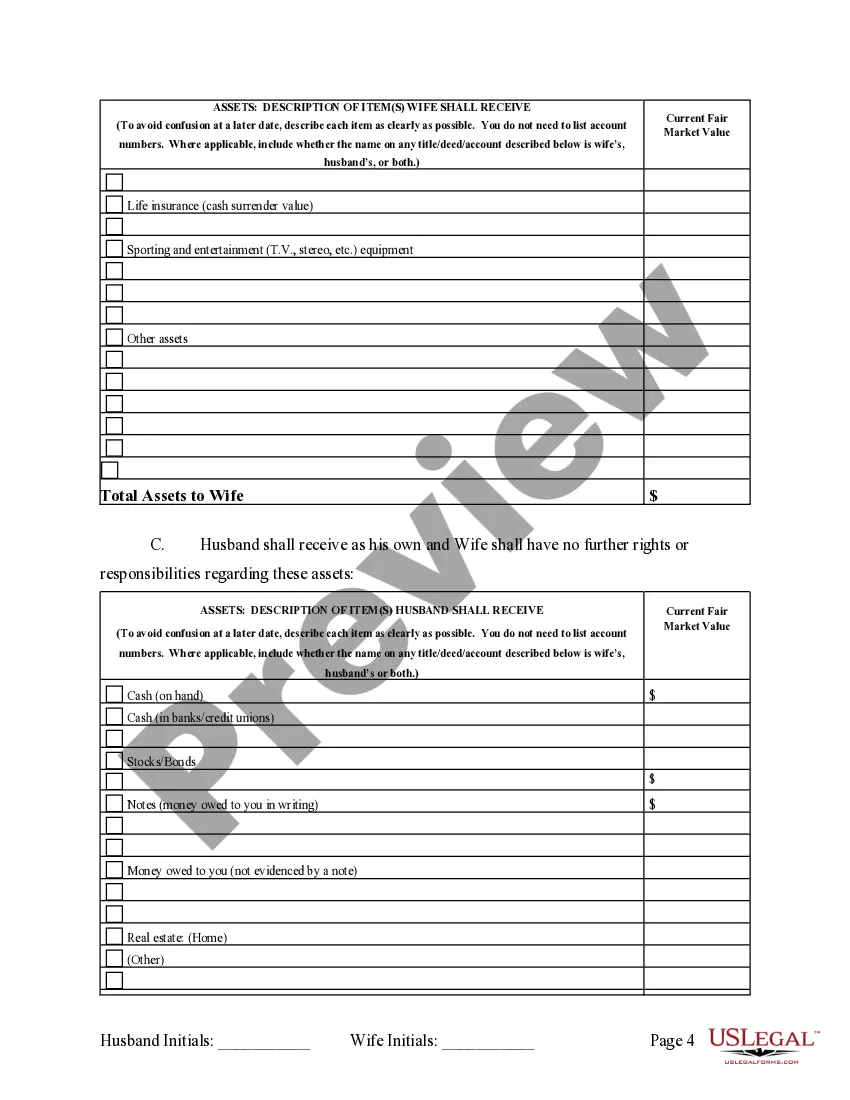
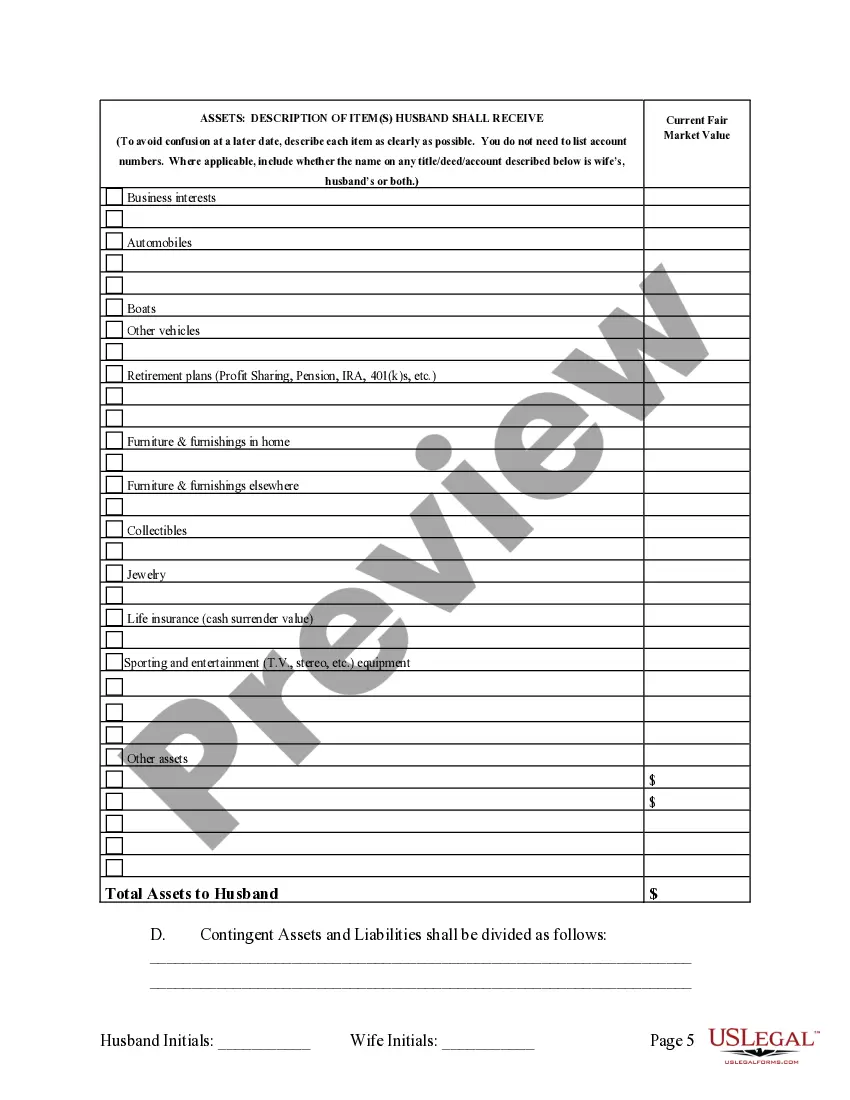
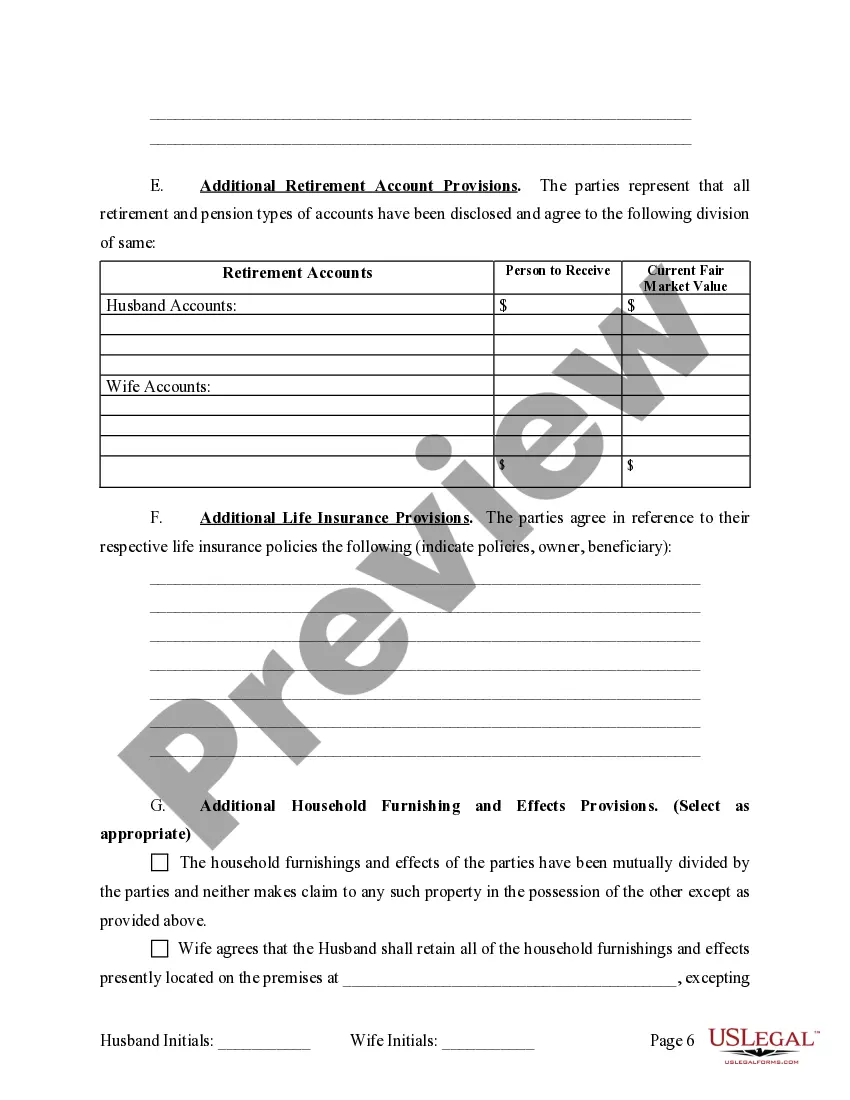
- Financial disclosures that require both parties to declare their assets and liabilities.
- Specific clauses detailing the division of marital assets and debts.
- Provisions for spousal support, if applicable, including terms and conditions.
- Acknowledgment of the opportunity to consult with an attorney before signing.
- Notarization requirements to ensure legality and enforceability of the agreement.
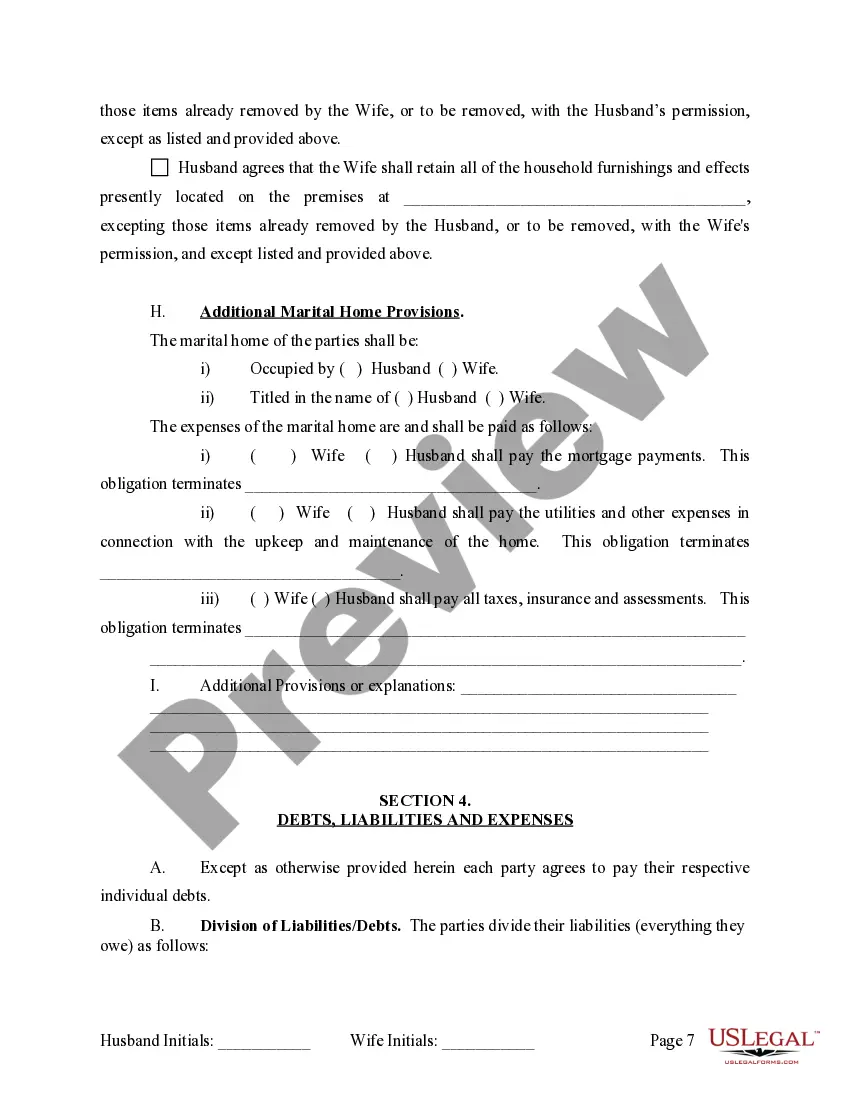
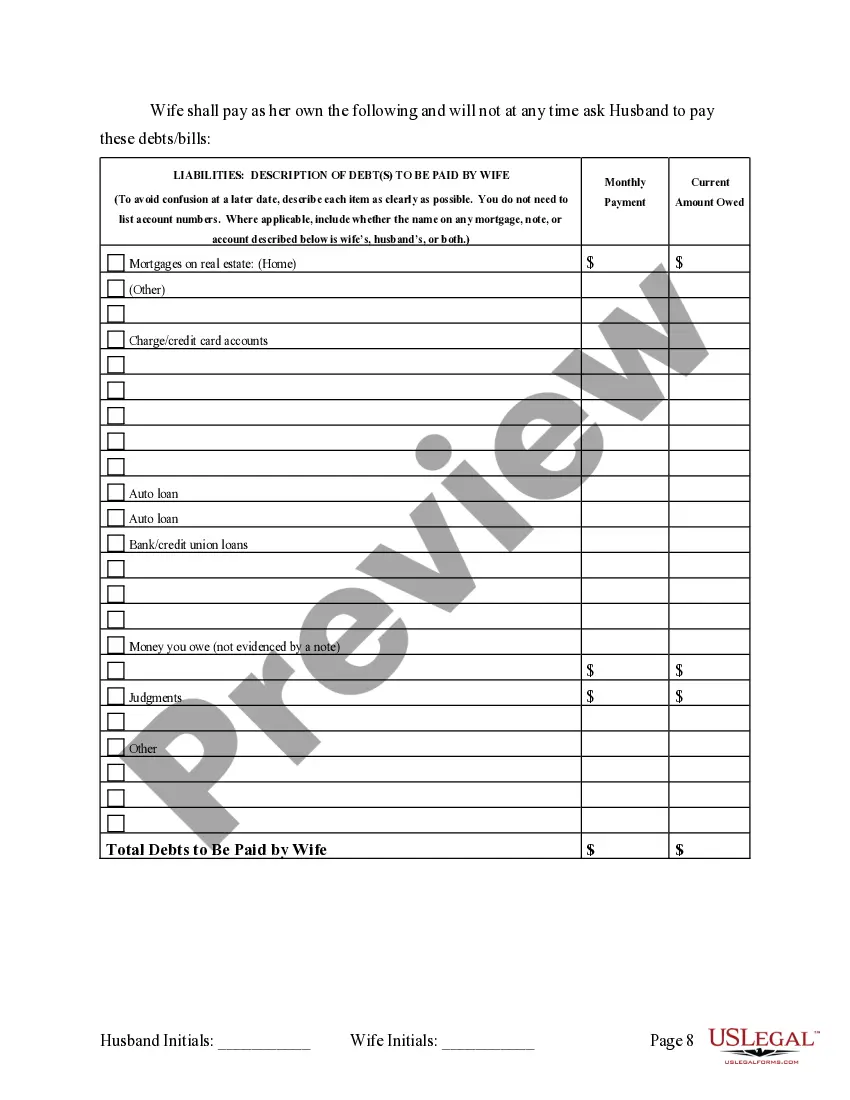
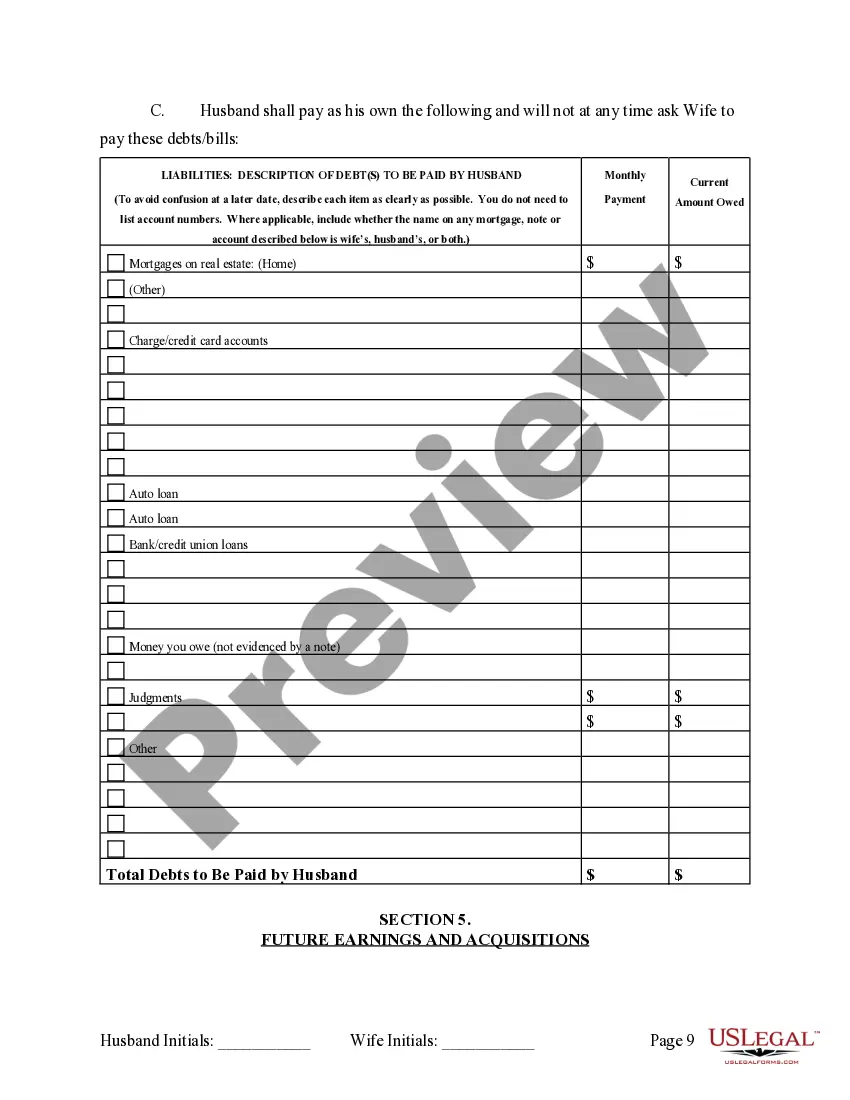


When to use this form
This form should be used when a married couple without minor children decides to separate and needs to establish a binding agreement on the division of their shared property and debts. It's appropriate when both parties have reached an agreement on their financial obligations and wish to do so formally to avoid potential disputes in the future.
Who can use this document
- Married individuals in Michigan seeking a property settlement without minor children.
- Couples who wish to clarify their financial responsibilities after separation.
- Parties who have joint property and debts that need to be divided fairly.
Steps to complete this form
- Identify the parties involved, including full names and addresses.
- Simplify the financial disclosure by listing all assets and liabilities.
- Clearly define the terms for the division of property and payment of debts.
- Specify any agreements regarding spousal support and its duration.
- Both parties should sign in the presence of a notary public to ensure legal validity.
Does this document require notarization?
Notarization is required for this form to take effect. Our online notarization service, powered by Notarize, lets you verify and sign documents remotely through an encrypted video session, available 24/7.
Get your form ready online
Our built-in tools help you complete, sign, share, and store your documents in one place.
Make edits, fill in missing information, and update formatting in US Legal Forms—just like you would in MS Word.
Download a copy, print it, send it by email, or mail it via USPS—whatever works best for your next step.
Sign and collect signatures with our SignNow integration. Send to multiple recipients, set reminders, and more. Go Premium to unlock E-Sign.
If this form requires notarization, complete it online through a secure video call—no need to meet a notary in person or wait for an appointment.
We protect your documents and personal data by following strict security and privacy standards.

Make edits, fill in missing information, and update formatting in US Legal Forms—just like you would in MS Word.

Download a copy, print it, send it by email, or mail it via USPS—whatever works best for your next step.

Sign and collect signatures with our SignNow integration. Send to multiple recipients, set reminders, and more. Go Premium to unlock E-Sign.

If this form requires notarization, complete it online through a secure video call—no need to meet a notary in person or wait for an appointment.

We protect your documents and personal data by following strict security and privacy standards.
Common mistakes
- Failing to fully disclose all financial assets and liabilities.
- Not having the agreement notarized, which can jeopardize its enforceability.
- Leaving out specific details regarding the division of property, leading to future disputes.
- Not consulting with an attorney, which may result in overlooking important legal rights.
Benefits of completing this form online
- Convenient access to legal forms without the need for in-person meetings.
- Editability allows for customization to fit specific needs and circumstances.
- Reliable drafting by licensed attorneys ensures legal compliance and accuracy.
Summary of main points
- This Marital Domestic Separation Agreement is essential for couples without children who wish to settle their financial affairs while remaining married.
- Proper completion and notarization of the form are critical for its legality and enforceability.
- Use this form to protect your rights and obligations after separation from your spouse.
Looking for another form?

Form popularity
FAQ
The 10-year rule in Michigan refers to a provision that grants potential benefits to spouses who have been married for at least ten years. This rule may influence spousal support and other entitlements during divorce proceedings. Understanding this nuance is essential when drafting a Michigan Marital Domestic Separation and Property Settlement Agreement no Children parties may have Joint Property or Debts Effective Immediately, as it can significantly impact both parties' rights.
Creating a divorce settlement agreement template requires clarity and detailed documentation of assets and debts. Start by listing all joint properties, debts, and other financial obligations. Utilizing a reliable platform like uslegalforms can help you navigate the intricacies of a Michigan Marital Domestic Separation and Property Settlement Agreement no Children parties may have Joint Property or Debts Effective Immediately, ensuring all necessary elements are included.
Many individuals express regret over the failure to communicate effectively during a divorce. Open dialogue can prevent misunderstandings and result in a more amicable settlement. Addressing issues early on, particularly in drafting a Michigan Marital Domestic Separation and Property Settlement Agreement no Children parties may have Joint Property or Debts Effective Immediately, can lead to a smoother transition.
It's important to remain in your home during a divorce, as leaving can affect your rights to the property. By staying, you assert your claim and maintain your presence, which is crucial for negotiations. Leaving the property could be interpreted as abandonment, complicating your Michigan Marital Domestic Separation and Property Settlement Agreement no Children parties may have Joint Property or Debts Effective Immediately.
In Michigan, certain accounts may remain protected during a divorce. Typically, accounts established before the marriage, such as retirement accounts or inherited funds, can be safeguarded, provided they remain separate. However, assets acquired during the marriage are usually subject to division, unless specified otherwise in a Michigan Marital Domestic Separation and Property Settlement Agreement no Children parties may have Joint Property or Debts Effective Immediately.
Yes, you can file for legal separation without a lawyer, but it's wise to seek help to navigate the complexities. Using a platform like uslegalforms can simplify the process, especially for creating a Michigan Marital Domestic Separation and Property Settlement Agreement no Children parties may have Joint Property or Debts Effective Immediately. Forms are available that guide you through the necessary steps. Having the right resources can help you complete the paperwork accurately and understand your rights.
Moving out during a divorce can create complications, especially regarding property and debt division in a Michigan Marital Domestic Separation and Property Settlement Agreement no Children parties may have Joint Property or Debts Effective Immediately. When one spouse leaves, it may be perceived as abandoning the marital home, influencing legal outcomes. Staying in place can provide you with better leverage in negotiations and help establish your interests. It's crucial to approach separation thoughtfully to protect your rights.
Proof of separation in a Michigan Marital Domestic Separation and Property Settlement Agreement no Children parties may have Joint Property or Debts Effective Immediately can be established through various documents. You may present evidence such as a signed separation agreement or a record of living apart. Additionally, communications regarding the separation can strengthen your case. These documents help clarify your intent and status, making it clear that you are pursuing separation.