Idaho Boarding Stable Agreement - Horse Equine Forms
What this document covers
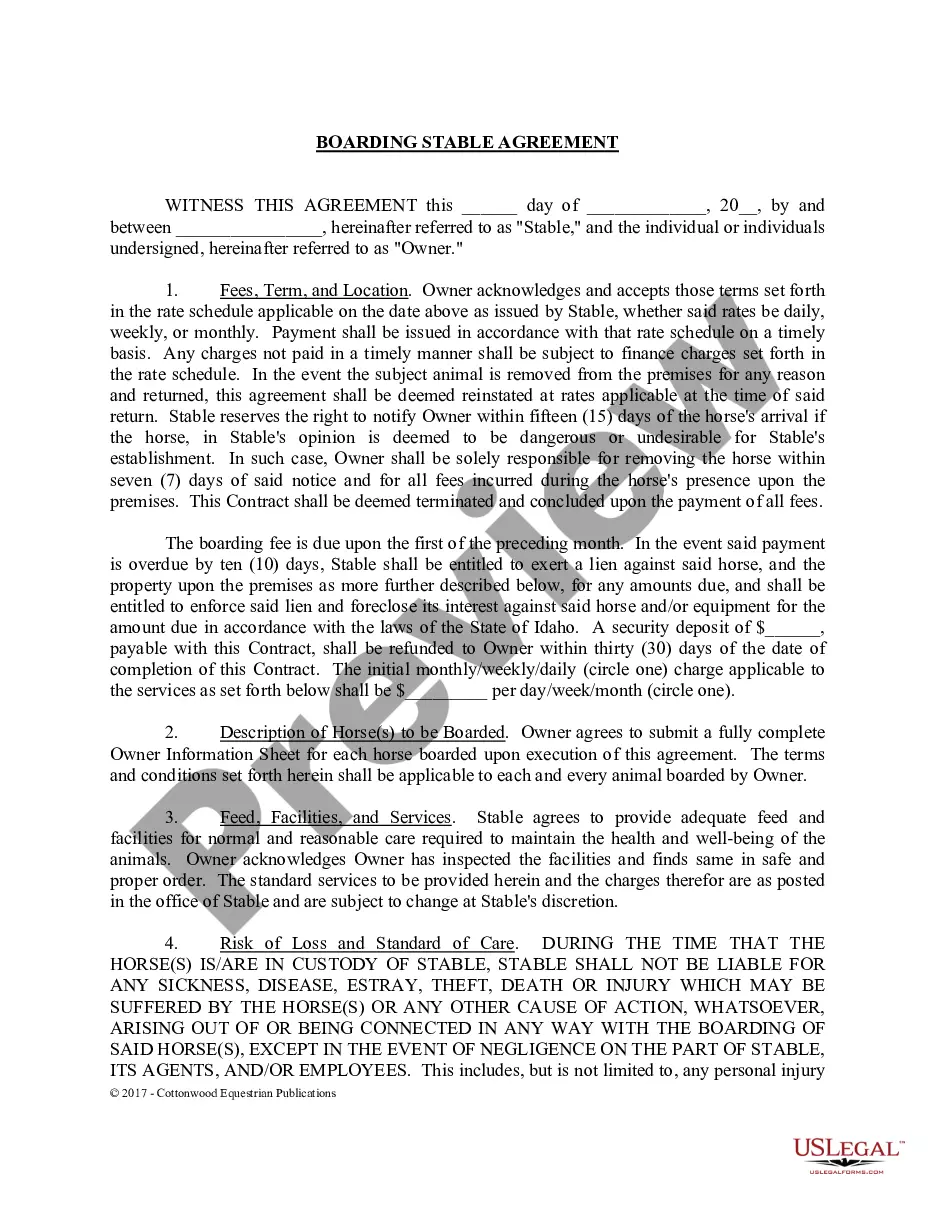
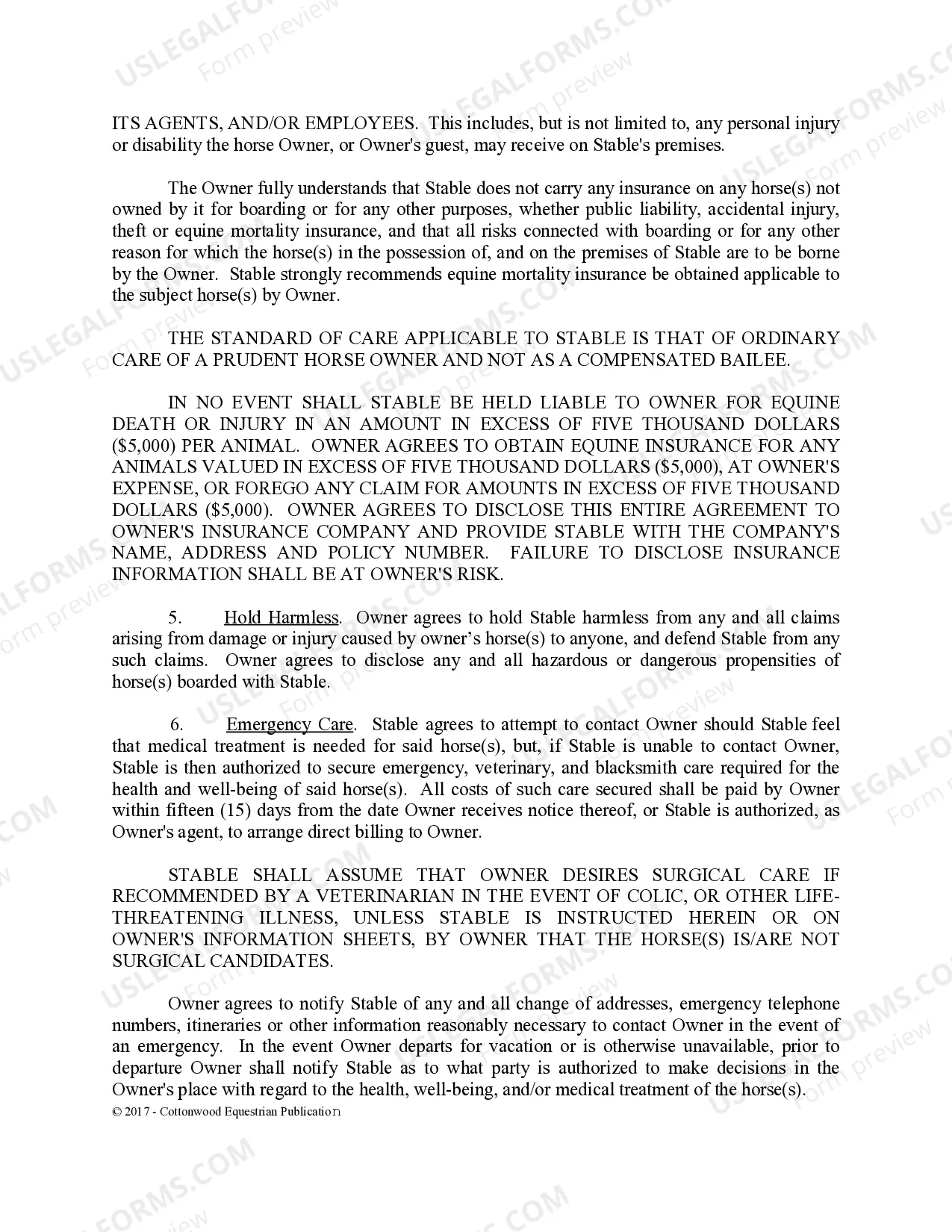
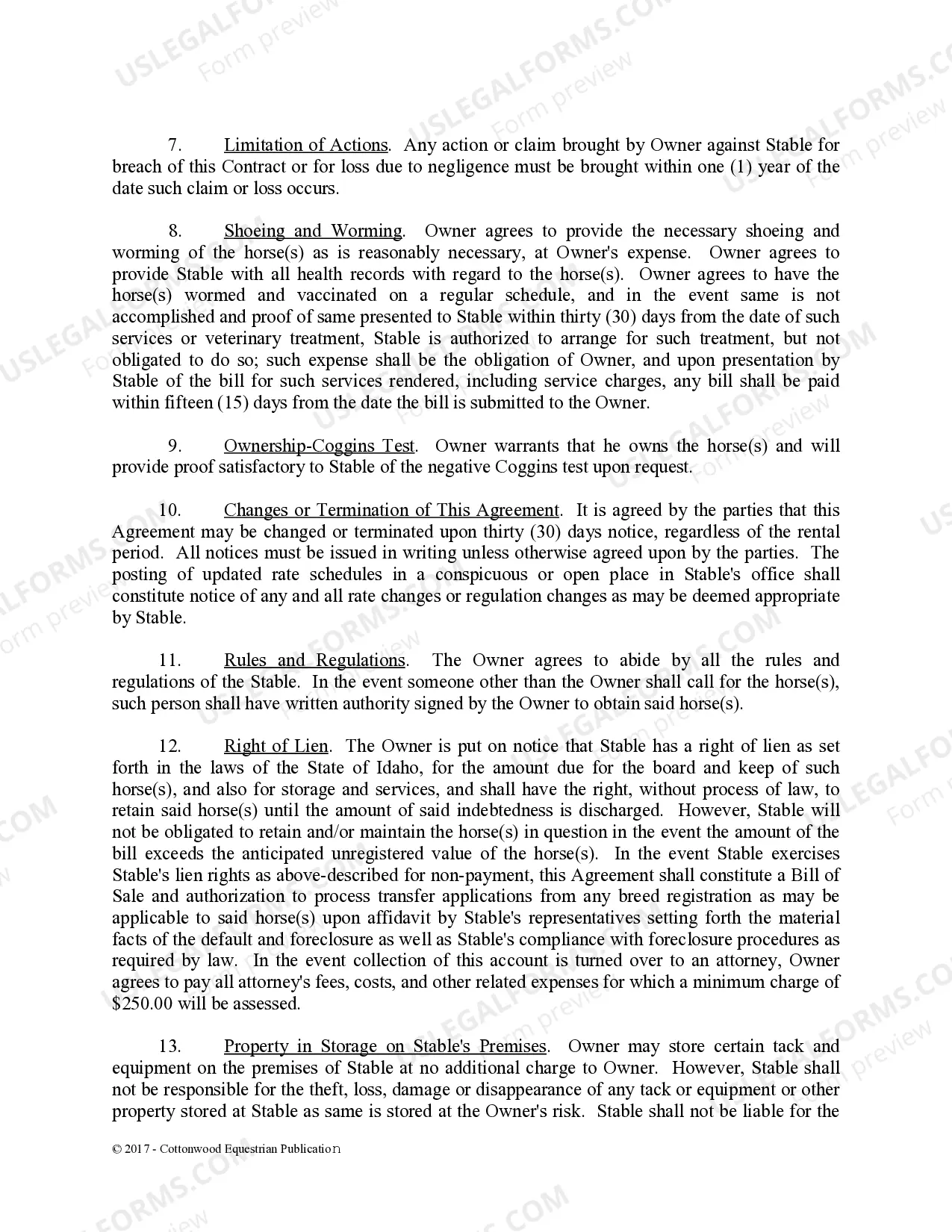
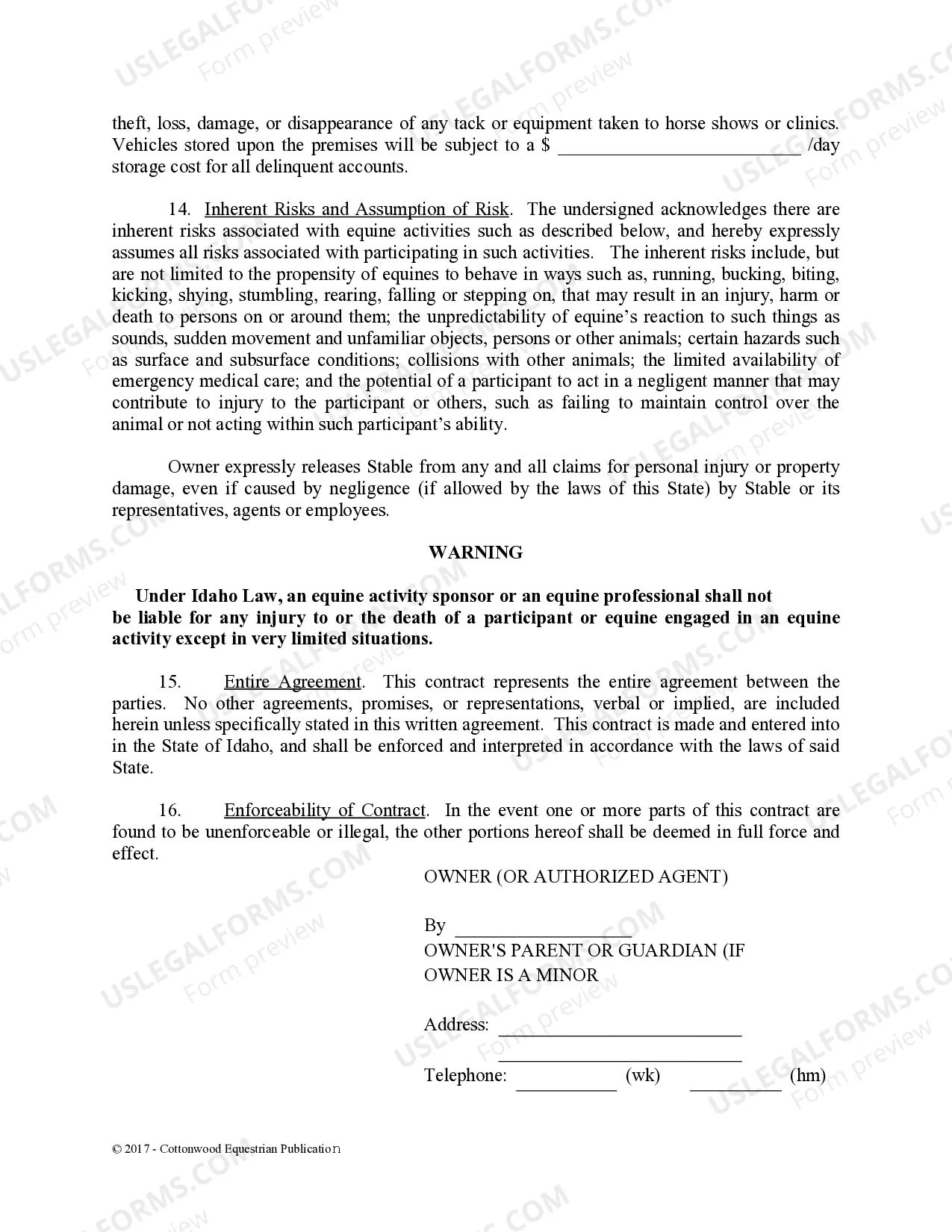
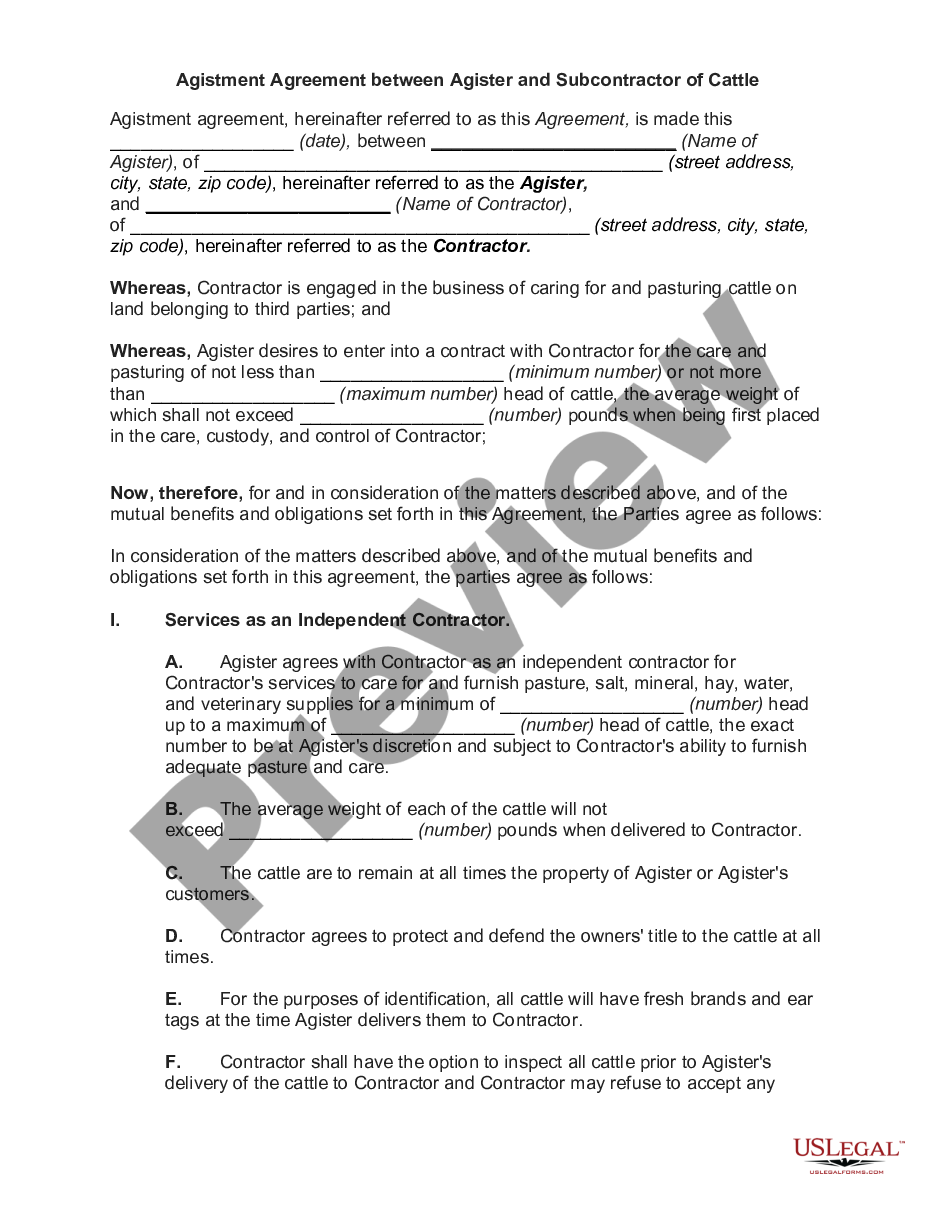
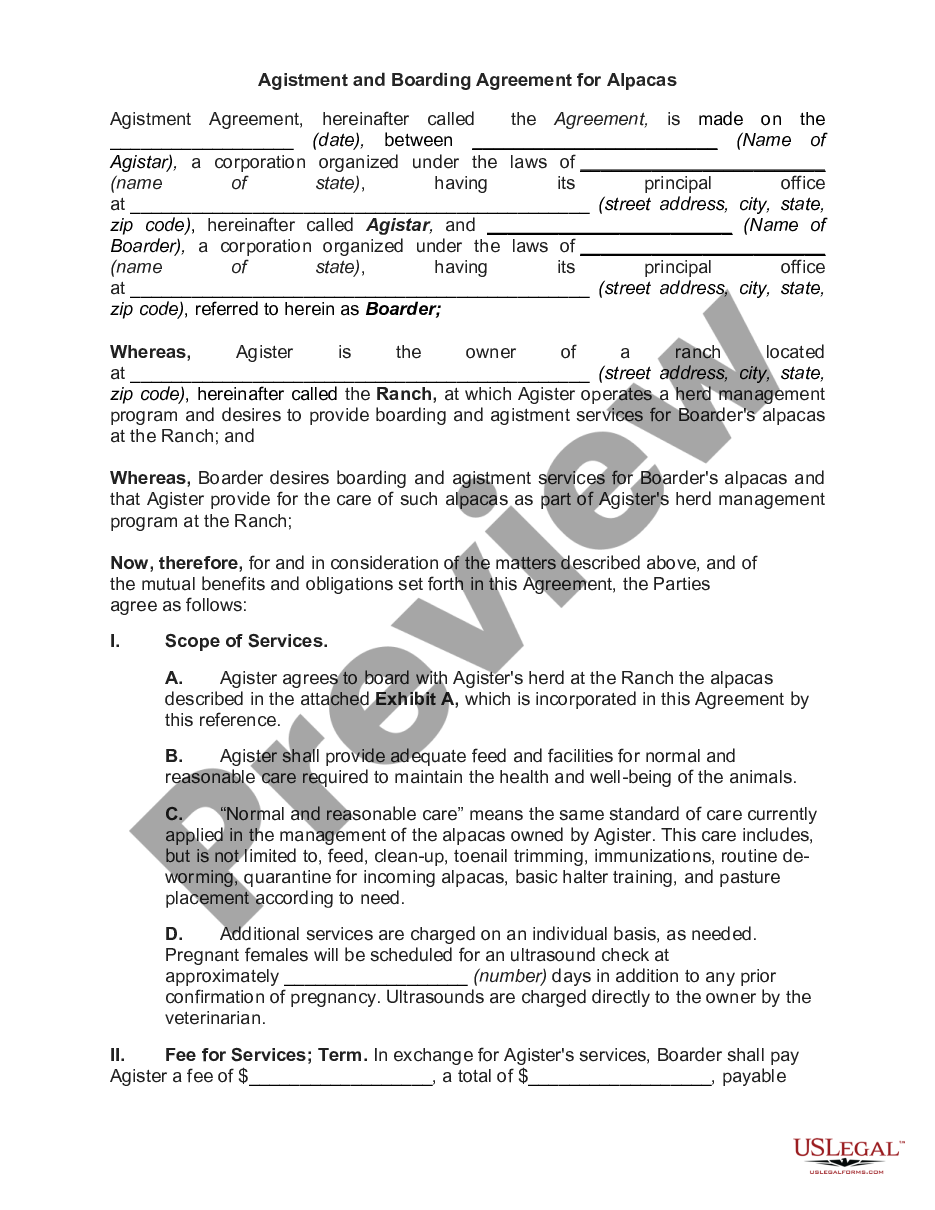
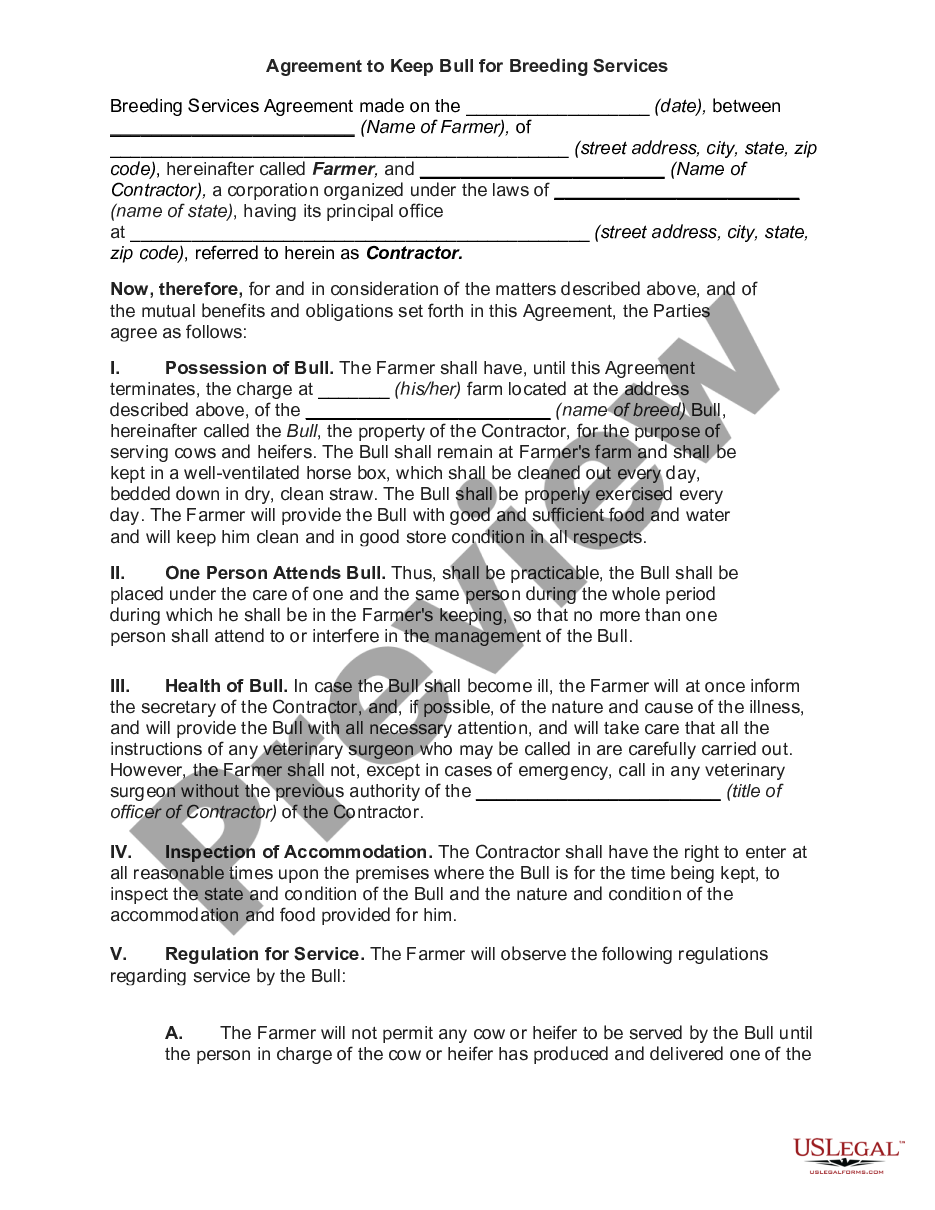
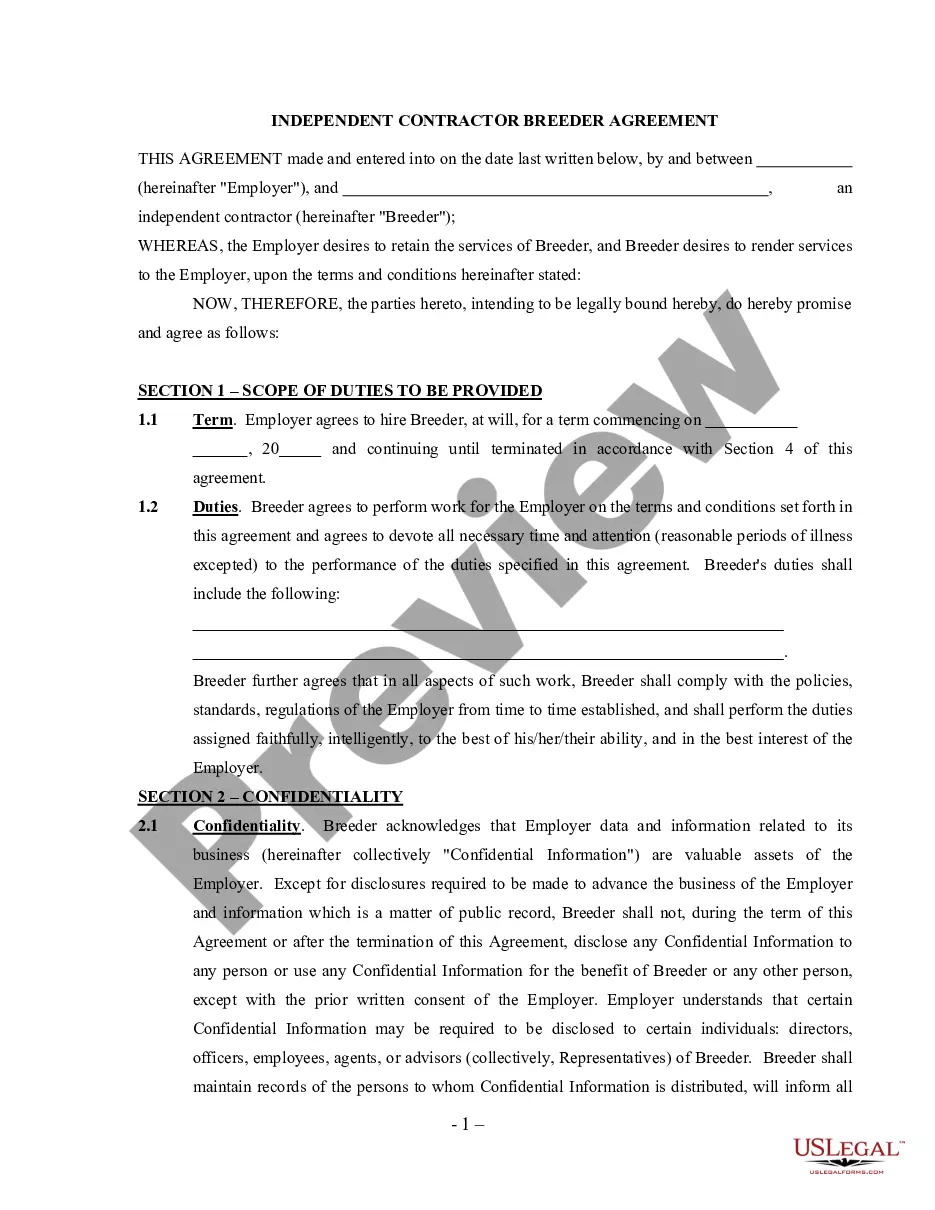
The Boarding Stable Agreement is a legal document that establishes the terms and conditions between a stable owner and a horse owner for boarding services. This agreement is tailored specifically for equine care, detailing responsibilities regarding fees, liability, standard of care, and emergency procedures. It ensures a clear understanding of both parties' obligations and helps safeguard the interests of the stable and the horse owner alike.
Form components explained
- Fees, term, and location of boarding services
- Description and identification of horse(s) to be boarded
- Standard of care and liability provisions for the horse's well-being
- Emergency care protocols and owner's responsibilities
- Rights concerning lien on the horse for unpaid fees
- Agreement on rules and regulations of the stable

Common use cases
This form should be used when a horse owner requires boarding services for their horse at a stable. It is essential for situations where clear terms of care, responsibility for veterinary emergencies, and financial obligations need to be established. Using this agreement helps prevent misunderstandings and can serve as a reference in case of disputes regarding fees or care standards.
Who this form is for
- Horse owners seeking to board their horses at a stable
- Stable owners providing boarding services to horse owners
- Individuals or entities involved in equine management and care
- Parents or guardians of minor horse owners needing legal alignment
How to complete this form
- Identify the parties involved: specify the names of the stable owner and the horse owner.
- Fill in the fee structure: select the applicable boarding charges and payment due dates.
- Provide a detailed description of the horse(s) to be boarded.
- Review and understand the liability and standard of care clauses, signing as necessary.
- Indicate emergency contact information for the horse owner and any decisions regarding medical care.
- Sign and date the agreement to make it legally binding.
Does this form need to be notarized?
Notarization is not commonly needed for this form. However, certain documents or local rules may make it necessary. Our notarization service, powered by Notarize, allows you to finalize it securely online anytime, day or night.
Get your form ready online
Our built-in tools help you complete, sign, share, and store your documents in one place.
Make edits, fill in missing information, and update formatting in US Legal Forms—just like you would in MS Word.
Download a copy, print it, send it by email, or mail it via USPS—whatever works best for your next step.
Sign and collect signatures with our SignNow integration. Send to multiple recipients, set reminders, and more. Go Premium to unlock E-Sign.
If this form requires notarization, complete it online through a secure video call—no need to meet a notary in person or wait for an appointment.
We protect your documents and personal data by following strict security and privacy standards.

Make edits, fill in missing information, and update formatting in US Legal Forms—just like you would in MS Word.

Download a copy, print it, send it by email, or mail it via USPS—whatever works best for your next step.

Sign and collect signatures with our SignNow integration. Send to multiple recipients, set reminders, and more. Go Premium to unlock E-Sign.

If this form requires notarization, complete it online through a secure video call—no need to meet a notary in person or wait for an appointment.

We protect your documents and personal data by following strict security and privacy standards.
Mistakes to watch out for
- Failing to accurately complete the description of the horse(s).
- Not providing emergency contact information.
- Overlooking the understanding of liability clauses.
- Neglecting to check for updates in the fee schedule.
- Not signing the agreement before boarding the horse.
Why complete this form online
- Convenience of accessing the form anytime, anywhere.
- Editable fields allowing customization to suit specific needs.
- Reliability of using templates drafted by licensed attorneys.
- Streamlined process for legal compliance without requiring legal expertise.
Legal use & context
- The agreement outlines the terms of liability and care, effectively protecting both parties.
- Establishes a legal framework for addressing disputes regarding the care or boarding of the horse.
- Informs stable owners of their rights under Idaho law, particularly regarding liens on the horse.
Looking for another form?

Form popularity
FAQ
Know local ordinances. Many states all across the country stipulate a ratio of acreage per horse for equine facilities. Determine your goals. Figure out prices. Assess insurance coverage. Create a boarding contract. Evaluate your facility. Plan pasture management. Organize manure disposal.
Create a Horse Boarding Facility Website. Encourage Boarder Reviews. Market Yourself Locally. Make Sure You're Searchable. Develop An Email List. Be Smart About Social Media. Once You Get New Borders, Make Sure You Keep Them. Make Sure Your Bottom Line Lands You In The Black.
A horse is assigned a stall and you're given access to trails, a pasture or arena. The cost of boarding averages $400 to $500 per month but can go as high as $1,200 to $2,500 in metropolitan areas. Services such as mucking out stalls, feeding and turning out your horse to pasture may not be included in the price.
The cost of boarding averages $400 to $500 per month but can go as high as $1,200 to $2,500 in metropolitan areas. Services such as mucking out stalls, feeding and turning out your horse to pasture may not be included in the price. For those lucky enough to own sufficient land, there are still costs to consider.
Horse boarding is like rental housing for your horse.A horse can be housed in a barn with other horses and receive the care they need. Owners can visit their horse for riding, grooming, training, etc. Horse boarding services may vary based on the company and the price.
Full board will include all the necessities for the horse, plus a stall with full turn out to pasture. Full board does not require owners to visit their horses every day; instead, staff at the barn clean the stall, feed the horse, and bring him in/out of the pasture.
Full board will include all the necessities for the horse, plus a stall with full turn out to pasture. Full board does not require owners to visit their horses every day; instead, staff at the barn clean the stall, feed the horse, and bring him in/out of the pasture.
Scope out legalities. Consider zoning, business permits and your state's lien laws. Evaluate your facilities. Investigate the cost of liability insurance. Research your market. Crunch the numbers. Draw up a legal boarding contract.
Equine/Stable Liability will be required; Care, Custody, Control to provide coverage for the non-owned boarded horses; General Liability and Property insurance.