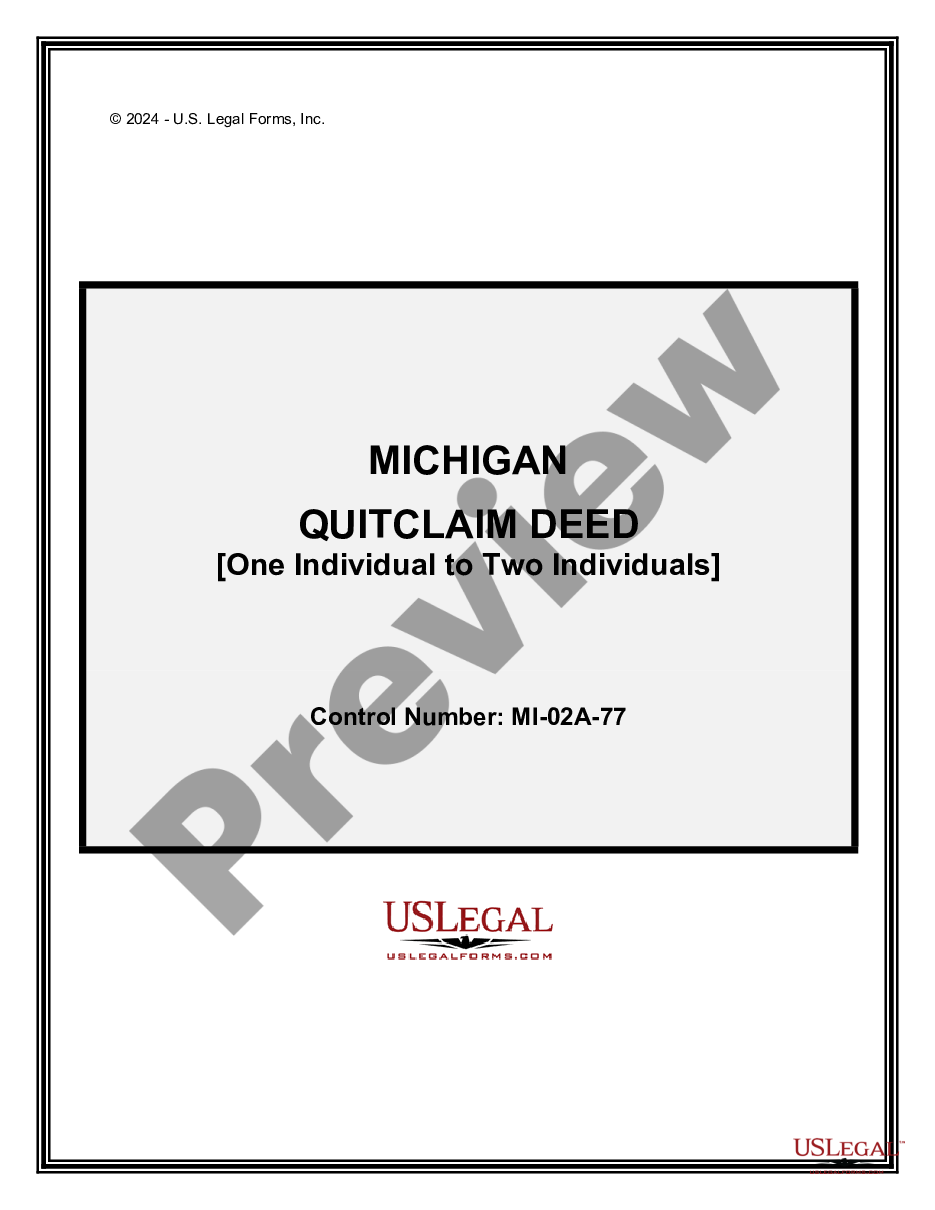
Michigan Quitclaim Deed from Individual to Two Individuals in Joint Tenancy
Understanding this form
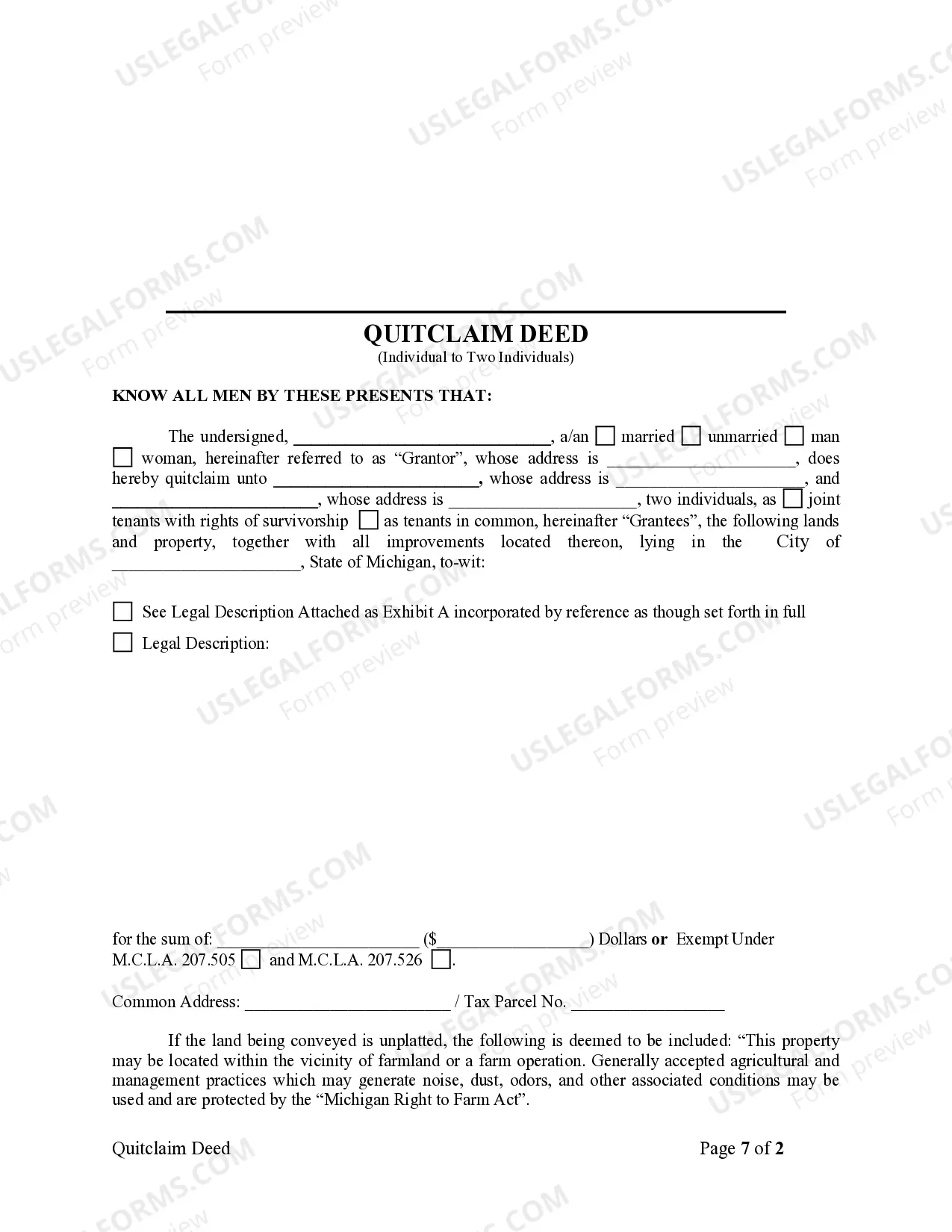
The Quitclaim Deed from Individual to Two Individuals in Joint Tenancy is a legal document that allows an individual (the Grantor) to transfer property ownership to two individuals (the Grantees) who hold the property in joint tenancy. This form is distinct from other types of deeds, such as warranty deeds, as it does not guarantee the quality of the title being conveyed. The Quitclaim Deed is particularly useful for transferring property between family members or friends without the complexity of a sale.
Main sections of this form
- Identification of the Grantor and Grantees: Names and addresses of all parties involved.
- Description of the Property: Clear legal description of the property being transferred.
- Reservation of Rights: The Grantor may reserve rights to oil, gas, and minerals beneath the property.
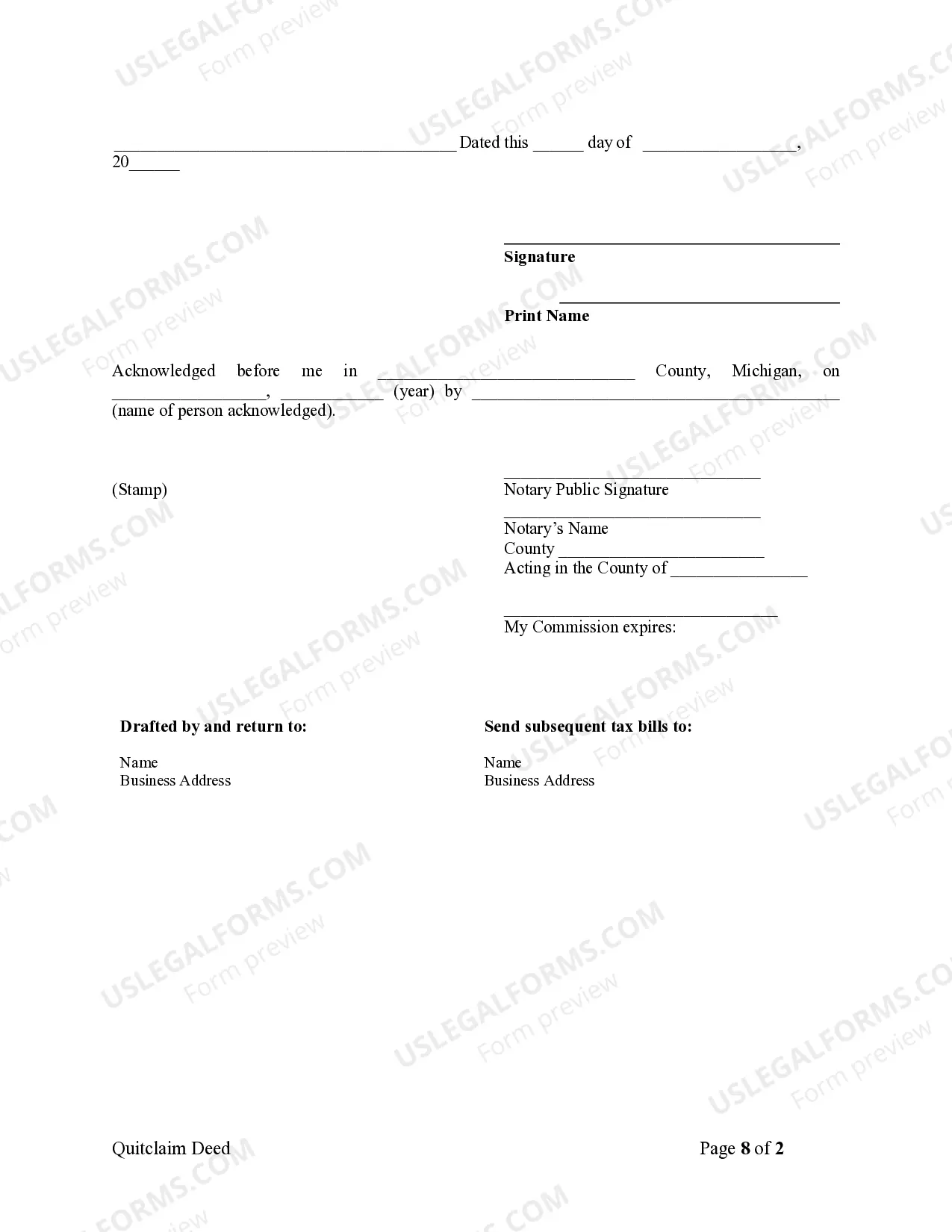
- Signatures: Requires the signature of the Grantor, along with date and notary information.
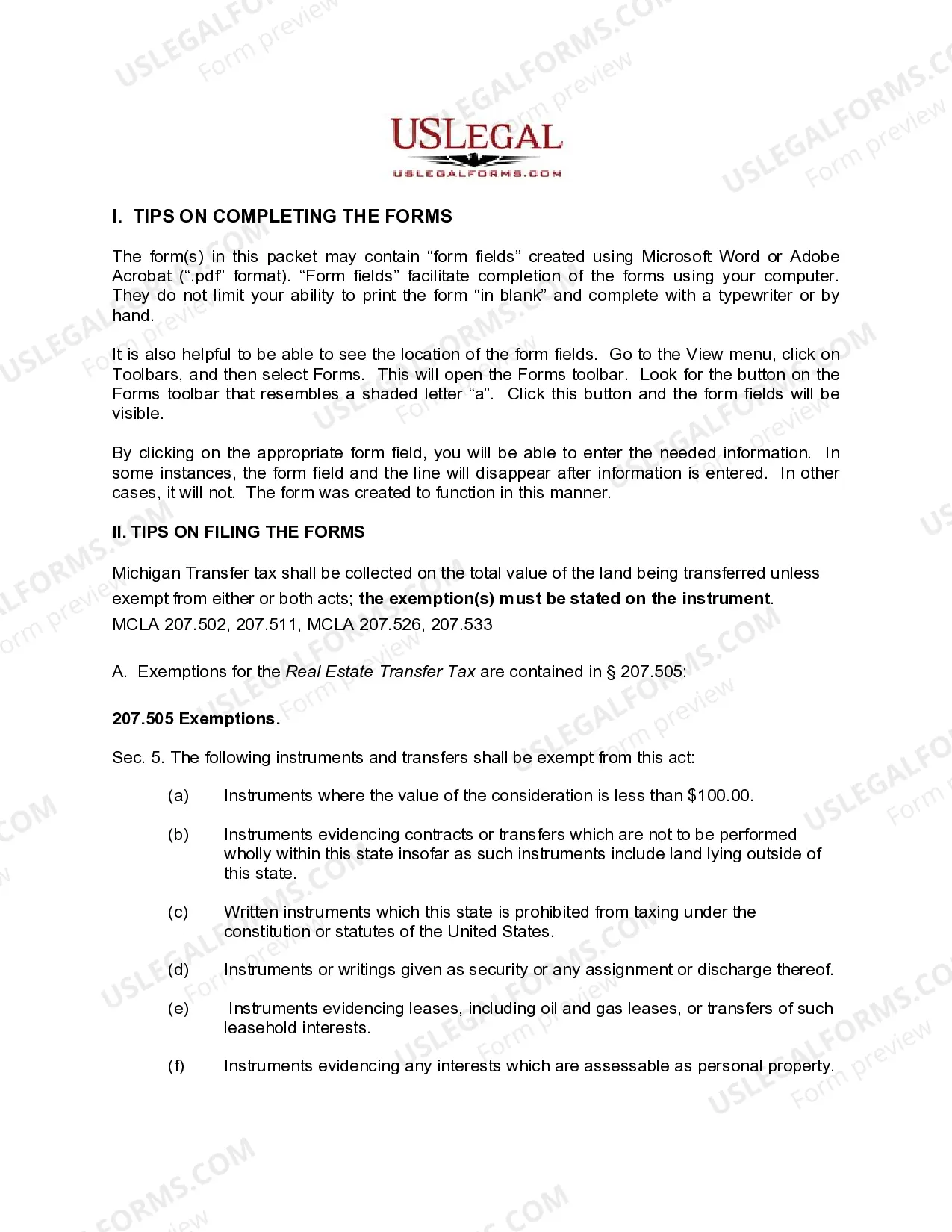
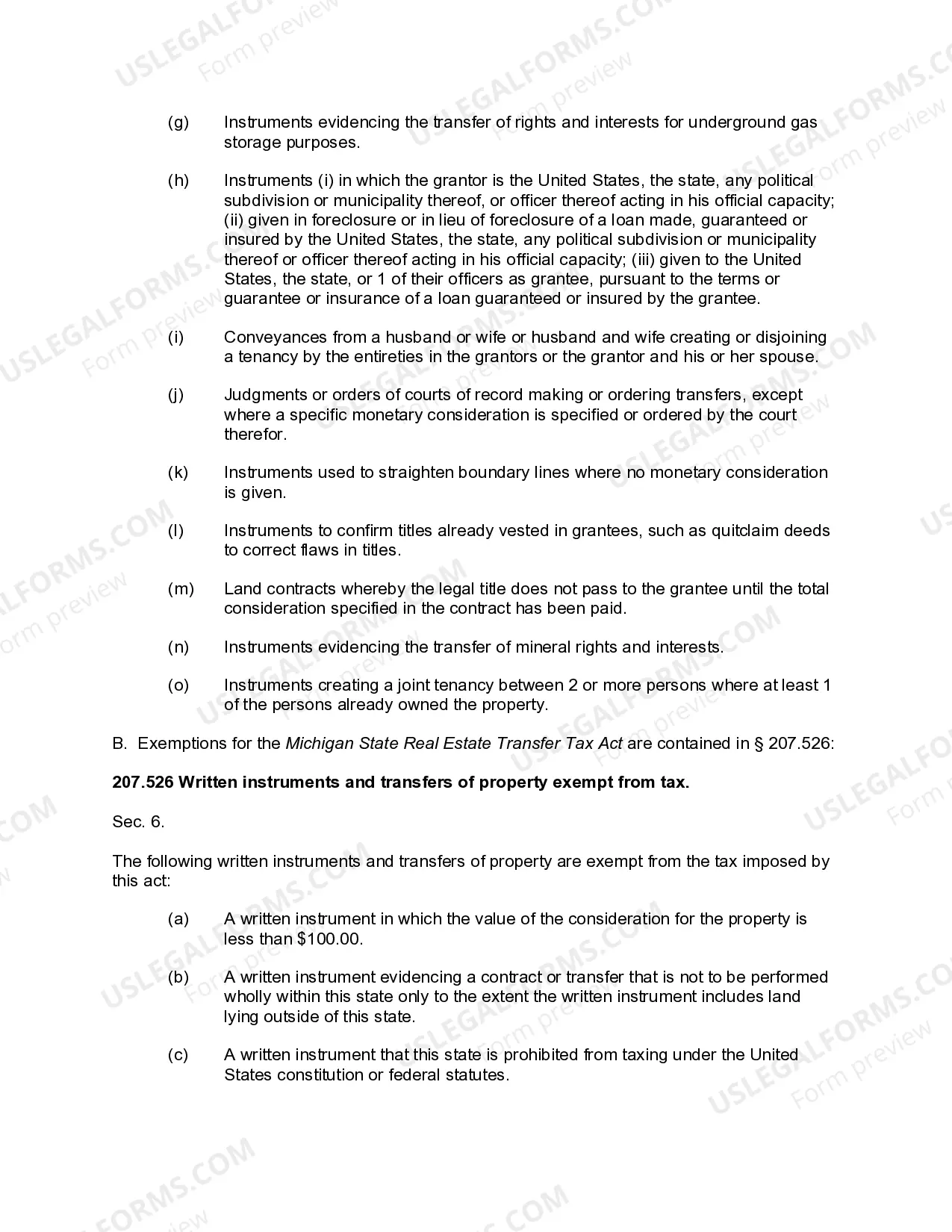
- Exemption Clauses: Provisions regarding potential exemptions from transfer taxes.





When to use this document
This quitclaim deed is used when an individual wishes to transfer their interest in a property to two other individuals, establishing joint tenancy. Common scenarios include transferring property to family members, friends, or co-owners when there is no exchange of money. It is also ideal for simplifying shared ownership arrangements and ensuring that all parties have equal rights to the property.
Who can use this document
- Individuals looking to transfer their property interest to two other owners.
- Family members seeking joint ownership of a property.
- Co-owners who want to formalize their shared ownership rights.
- Anyone looking to simplify the transfer of property without monetary exchange.
Steps to complete this form
- Identify the parties: Enter the names and addresses of the Grantor and the two Grantees.
- Specify the property: Include a precise legal description of the property being transferred.
- Reserve any rights: Indicate if the Grantor is reserving rights to any oil, gas, or minerals beneath the property.
- Sign the document: The Grantor must sign and date the deed in the appropriate section.
- Notarize the deed: Obtain notarization to ensure the document meets legal requirements.
Does this form need to be notarized?
Yes, this form must be notarized to be legally valid. Notarization ensures that the Grantor's signature is authentic and that the parties understand the implications of the deed. US Legal Forms provides integrated online notarization services, allowing you to complete the process securely through video calls, 24/7.
Get your form ready online
Our built-in tools help you complete, sign, share, and store your documents in one place.
Make edits, fill in missing information, and update formatting in US Legal Forms—just like you would in MS Word.
Download a copy, print it, send it by email, or mail it via USPS—whatever works best for your next step.
Sign and collect signatures with our SignNow integration. Send to multiple recipients, set reminders, and more. Go Premium to unlock E-Sign.
If this form requires notarization, complete it online through a secure video call—no need to meet a notary in person or wait for an appointment.
We protect your documents and personal data by following strict security and privacy standards.

Make edits, fill in missing information, and update formatting in US Legal Forms—just like you would in MS Word.

Download a copy, print it, send it by email, or mail it via USPS—whatever works best for your next step.

Sign and collect signatures with our SignNow integration. Send to multiple recipients, set reminders, and more. Go Premium to unlock E-Sign.

If this form requires notarization, complete it online through a secure video call—no need to meet a notary in person or wait for an appointment.

We protect your documents and personal data by following strict security and privacy standards.
Typical mistakes to avoid
- Failing to include a complete legal description of the property.
- Not reserving rights to minerals when applicable.
- Omitting the signatures or notary information.
- Using incorrect state-specific terminology or forms.
Why complete this form online
- Convenience: Easily download and fill out the form from anywhere.
- Editable: Form fields allow you to make changes quickly and accurately.
- Reliable: Developed by licensed attorneys to ensure compliance with legal standards.
Legal use & context
- Quitclaim deeds are typically used in non-commercial property transfers.
- This form may not provide legal recourse for the Grantees if there are disputes regarding ownership.
- Ensure understanding of local laws regarding joint tenancy and property transfers.
Main things to remember
- The Quitclaim Deed allows for easy transfer of property to two parties in joint tenancy.
- Proper completion and notarization are essential for the deed's legal validity.
- Use this form to simplify property ownership arrangements among individuals.
Looking for another form?

Form popularity
FAQ
But you might be wondering if an owner can transfer a deed to another person without a real estate lawyer. The answer is yes. Parties to a transaction are always free to prepare their own deeds.A quitclaim deed, for example, is far simpler than a warranty deed.
There will be a $30 recording fee. If you prepare a quitclaim deed using the Do-It-Yourself Quitclaim Deed (after Divorce) tool, detailed instructions on what to do next will print out along with the deed.
In Michigan, a quit claim deed must be signed by a witness, in addition to the notary, to make it legal.After all required signatures are collected and notarized, file the document with your local register of deeds to complete the transaction.
Michigan uses quitclaim deed Form 863, which is different in each county, so make sure to get the form at the office or website of the County Register of Deeds in the county where the property is located.