Maine Notice of Option for Recording
Understanding this form
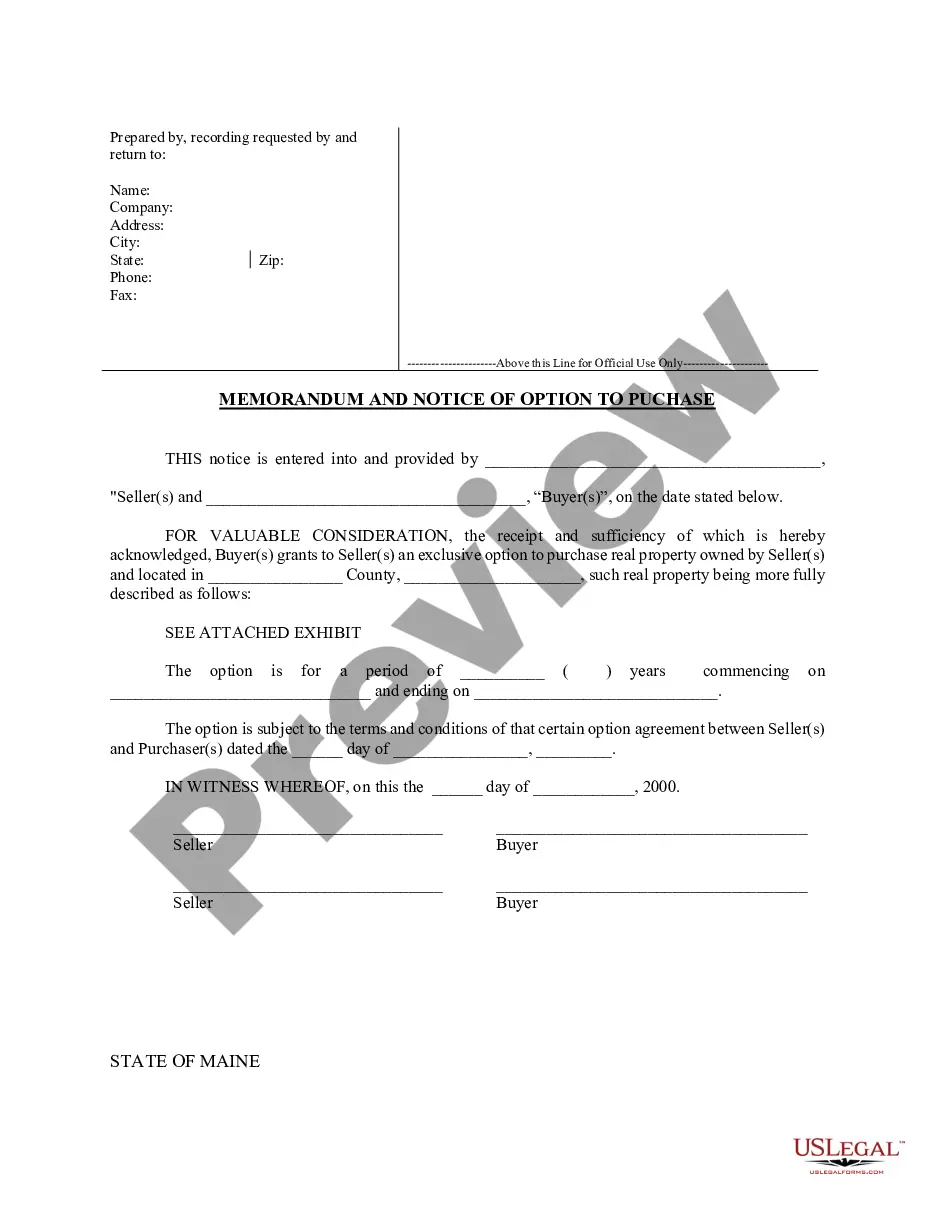
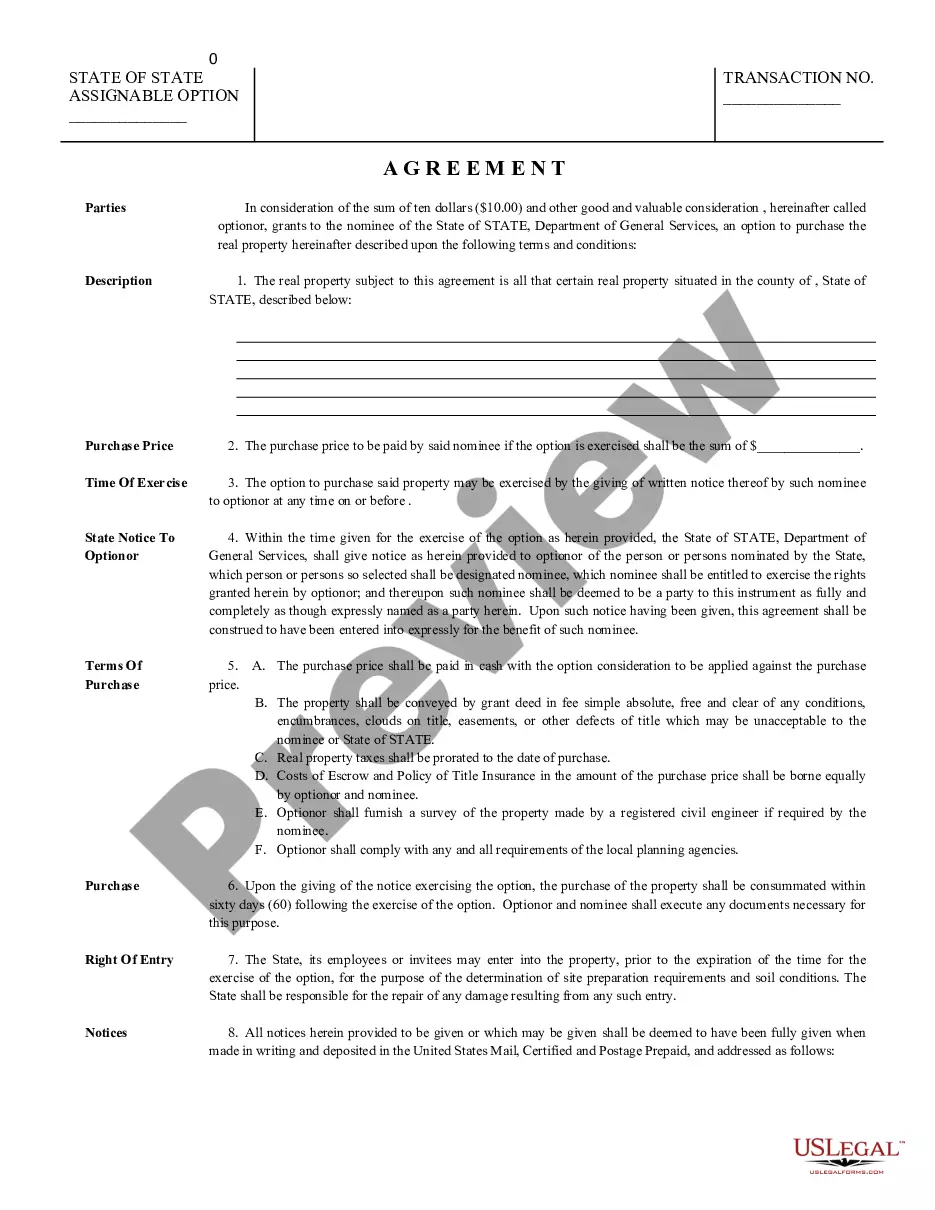
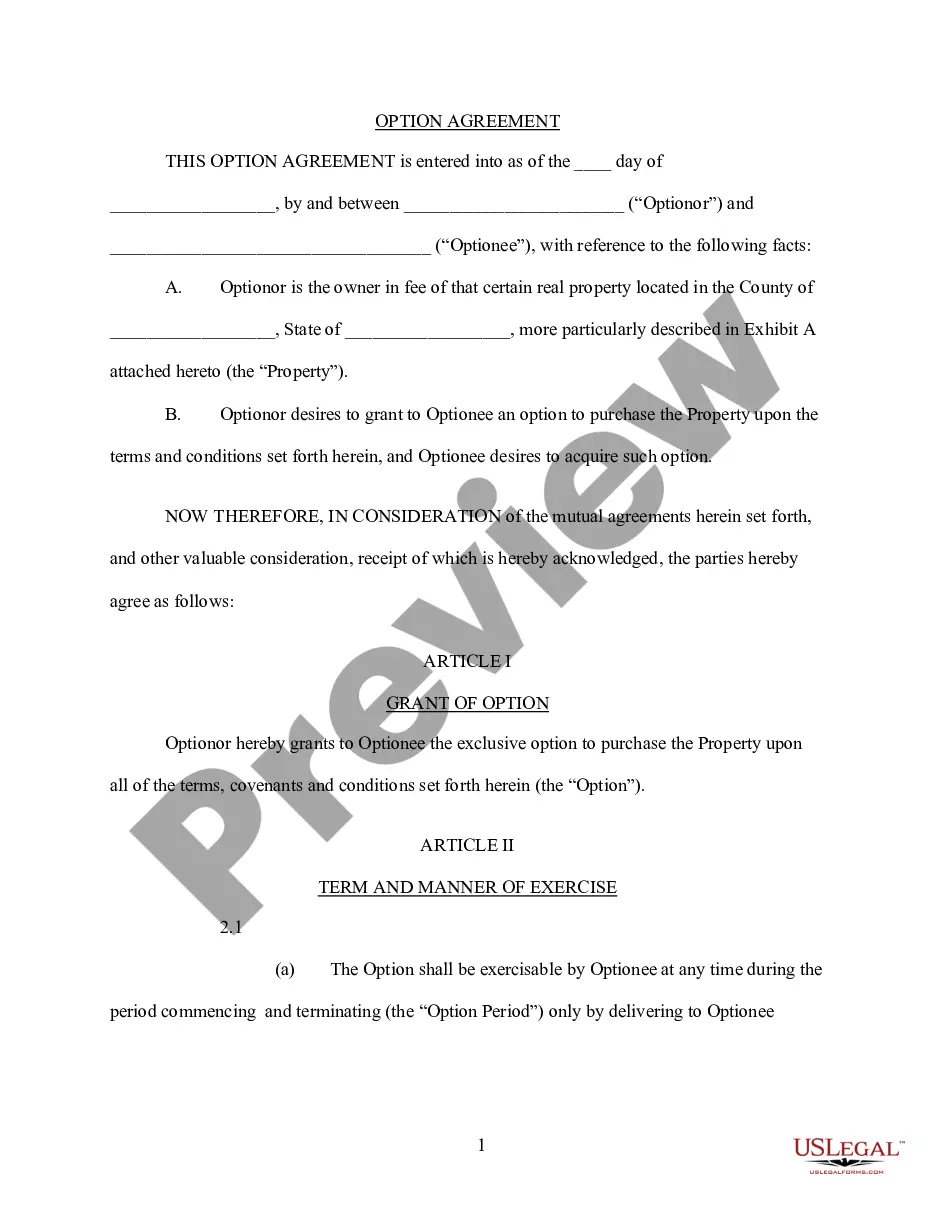
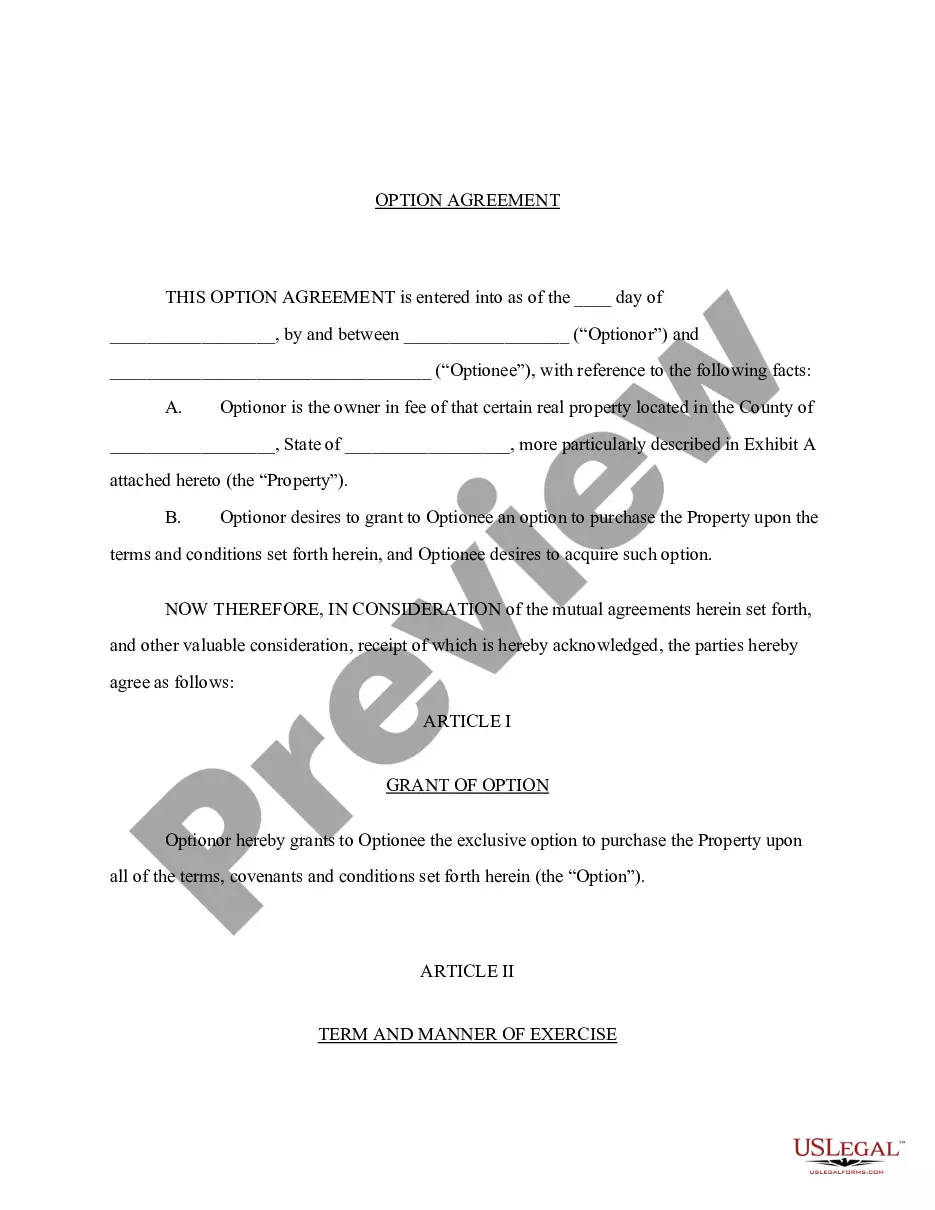
The Notice of Option for Recording is a legal document that serves to inform interested parties that an option to purchase real estate exists. This form allows parties to provide notice without the need to record the entire option agreement, thus streamlining the process of establishing the buyer's right to purchase a property. It is an important tool in real estate transactions, ensuring that all relevant stakeholders are aware of the buyer's option to buy the property.
Key parts of this document
- Prepared by, recording requested by, and return to sections for contact details.
- Identification of the seller(s) and buyer(s) involved in the transaction.
- Description of the specific property subject to the option.
- Specifications regarding the duration of the option period.
- Reference to the original option agreement between the involved parties.
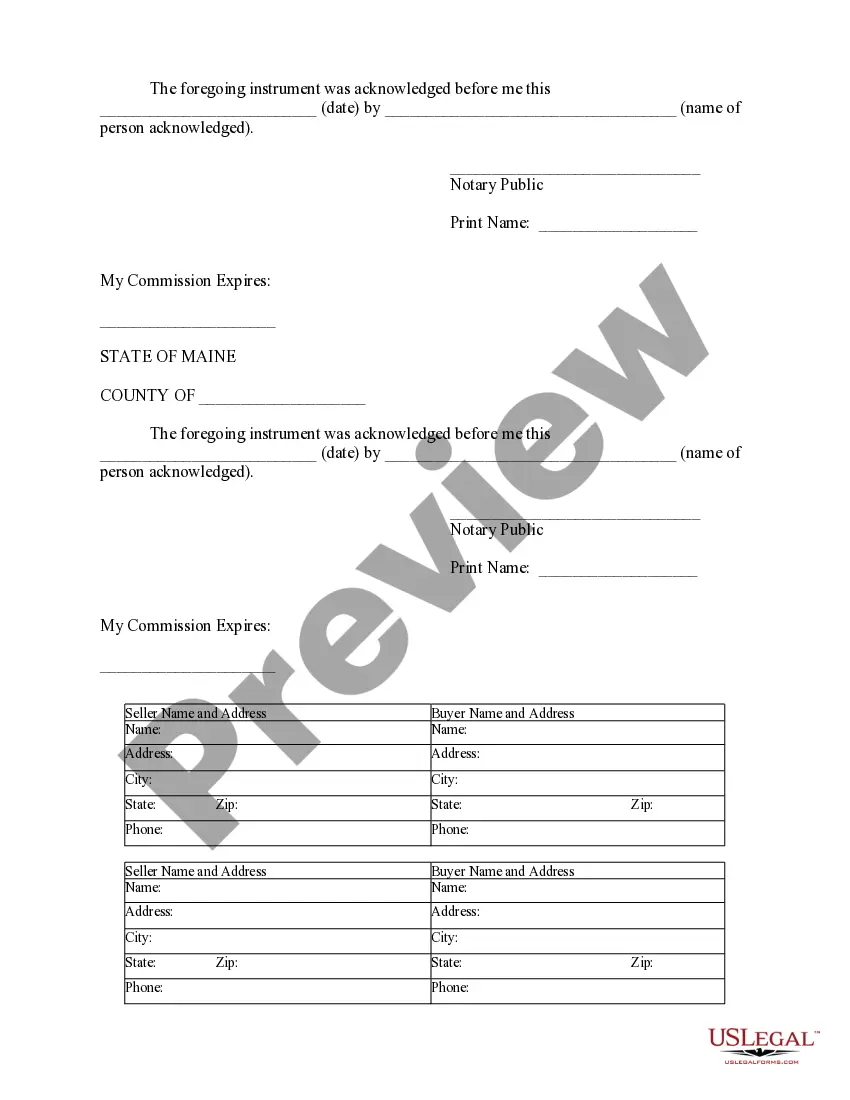
- Signature and acknowledgment sections for all parties and a notary public.
When to use this form
This form is used when a seller grants a buyer an option to purchase their property. It is typically employed in real estate transactions when the buyer wants to secure the right to purchase the property without committing to immediate ownership. This form can be particularly useful when the buyer needs time to conduct due diligence or secure financing.
Who this form is for
- Real estate sellers who wish to offer an option to purchase their property.
- Buyers interested in securing an exclusive right to purchase real estate.
- Real estate agents facilitating transactions between buyers and sellers.
How to complete this form
- Identify the parties involved: Enter the names of the seller(s) and buyer(s).
- Specify the property: Provide a detailed description of the property being purchased.
- Enter the option period: Clearly state the start and end dates of the option period.
- Reference the option agreement: Include details of the original option agreement date.
- Obtain signatures: Ensure all parties sign the document and have it notarized.
Does this form need to be notarized?
This document requires notarization to meet legal standards. US Legal Forms provides secure online notarization powered by Notarize, allowing you to complete the process through a verified video call, available 24/7.
Get your form ready online
Our built-in tools help you complete, sign, share, and store your documents in one place.
Make edits, fill in missing information, and update formatting in US Legal Forms—just like you would in MS Word.
Download a copy, print it, send it by email, or mail it via USPS—whatever works best for your next step.
Sign and collect signatures with our SignNow integration. Send to multiple recipients, set reminders, and more. Go Premium to unlock E-Sign.
If this form requires notarization, complete it online through a secure video call—no need to meet a notary in person or wait for an appointment.
We protect your documents and personal data by following strict security and privacy standards.
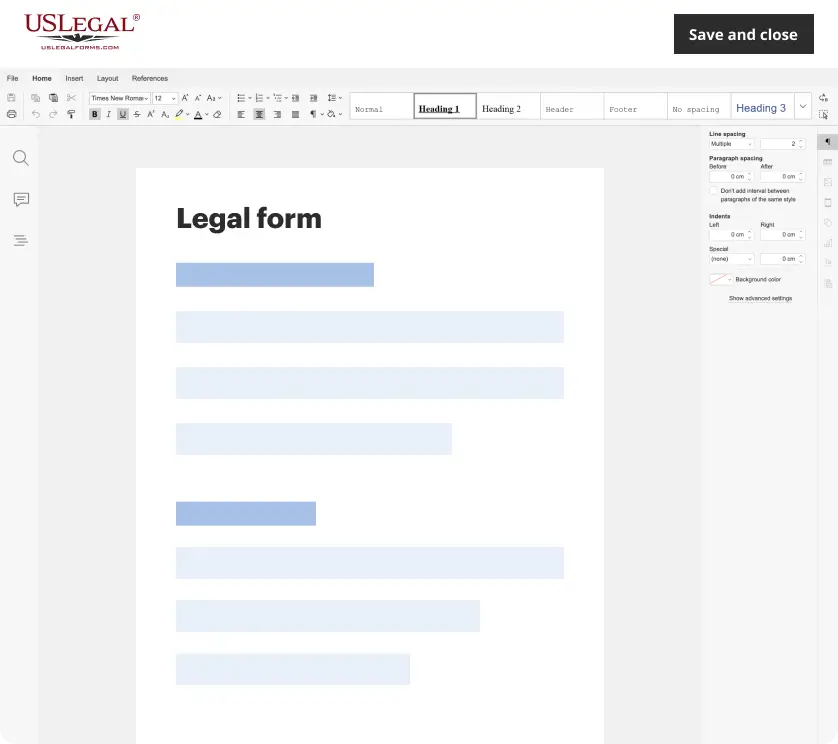
Make edits, fill in missing information, and update formatting in US Legal Forms—just like you would in MS Word.
Download a copy, print it, send it by email, or mail it via USPS—whatever works best for your next step.
Sign and collect signatures with our SignNow integration. Send to multiple recipients, set reminders, and more. Go Premium to unlock E-Sign.

If this form requires notarization, complete it online through a secure video call—no need to meet a notary in person or wait for an appointment.
We protect your documents and personal data by following strict security and privacy standards.
Typical mistakes to avoid
- Failing to provide a complete description of the property.
- Omitting the dates for the option period.
- Neglecting to include all required signatures or notarization.
Why use this form online
- Convenience of downloading and completing the form at your own pace.
- Editable format allowing users to customize the form to fit their specific needs.
- Access to professionally drafted templates ensuring legal compliance.
Legal use & context
- This form is a legally recognized document in real estate transactions, providing necessary notice of an option to purchase.
- It establishes the buyer's right while protecting the seller's interests.
- Failure to properly record or complete the form can lead to disputes regarding property rights.
What to keep in mind
- The Notice of Option for Recording informs others of a buyer's exclusive right to purchase a property.
- Proper completion and notarization of the form are crucial to its validity.
- This form simplifies the process of recording an option agreement in real estate transactions.
Looking for another form?
Form popularity
FAQ
Must have a prepared document with original signatures and notary (Maine notary must include an acknowledgement statement). Names(s) of each signer (individuals, corporations, trusts etc.) Notary/attorney name (or bar number for attorney) must be printed beneath signature line.
The most common documents are related to mortgages, deeds, easements, foreclosures, estoppels, leases, licenses, and fees, among other kinds of documents. The most important real estate documents list ownership, encumbrances, and lien priority. These are used to maintain proper real estate transactions.
Although recording statutes vary between U.S. states, they virtually all require that an interest in real property be formally recorded in the appropriate county office in order to be valid.If your deed has not been recorded, you are not recognized as the legal owner of your property.
The information about your home purchase and the terms and conditions of your mortgage loan are recorded among the land records in the jurisdiction where the property is located. These documents are public. In most states, you do not even have to go down to the local recorder of deeds office.
Currently, Alaska, Arkansas, California, Colorado, District of Columbia, Georgia, Hawaii, Idaho, Indiana, Kentucky, Maine, Maryland, Michigan, Minnesota, Mississippi, Montana, Nebraska, Nevada, New Jersey, New York, North Dakota, Ohio (regarding mortgages, OH follows the Race statute), Oregon, Pennsylvania (regarding
Mortgages are interests in property, and so can and should be recorded as soon as possible after the closing. Most states have recording statutes that impose restrictions on when and how a document conveying property rights can be legally created.
1. C Explanation: Recording an instrument provides constructive notice to the public of the interest set forth in the recorded instrument. 2. A Explanation: A corporate seal may be added where a corporation is grantor, in order to indicate that the person who signed had authority to sign on behalf of the corporation.
In order to clear the title to the real property owned by the mortgagor, the Satisfaction of Mortgage document must be recorded with the County Recorder or Recorder of Deeds. If the mortgagee fails to record a satisfaction within the set time limits, the mortgagee may be responsible for damages set out by statute.
Failure to record a deed effectively makes it impossible for the public to know about the transfer of a property. That means the legal owner of the property appears to be someone other than the buyer, a situation that can generate serious ramifications.