Maryland Release of Lien - Subcontractor or Material Supplier - Individual
About this form
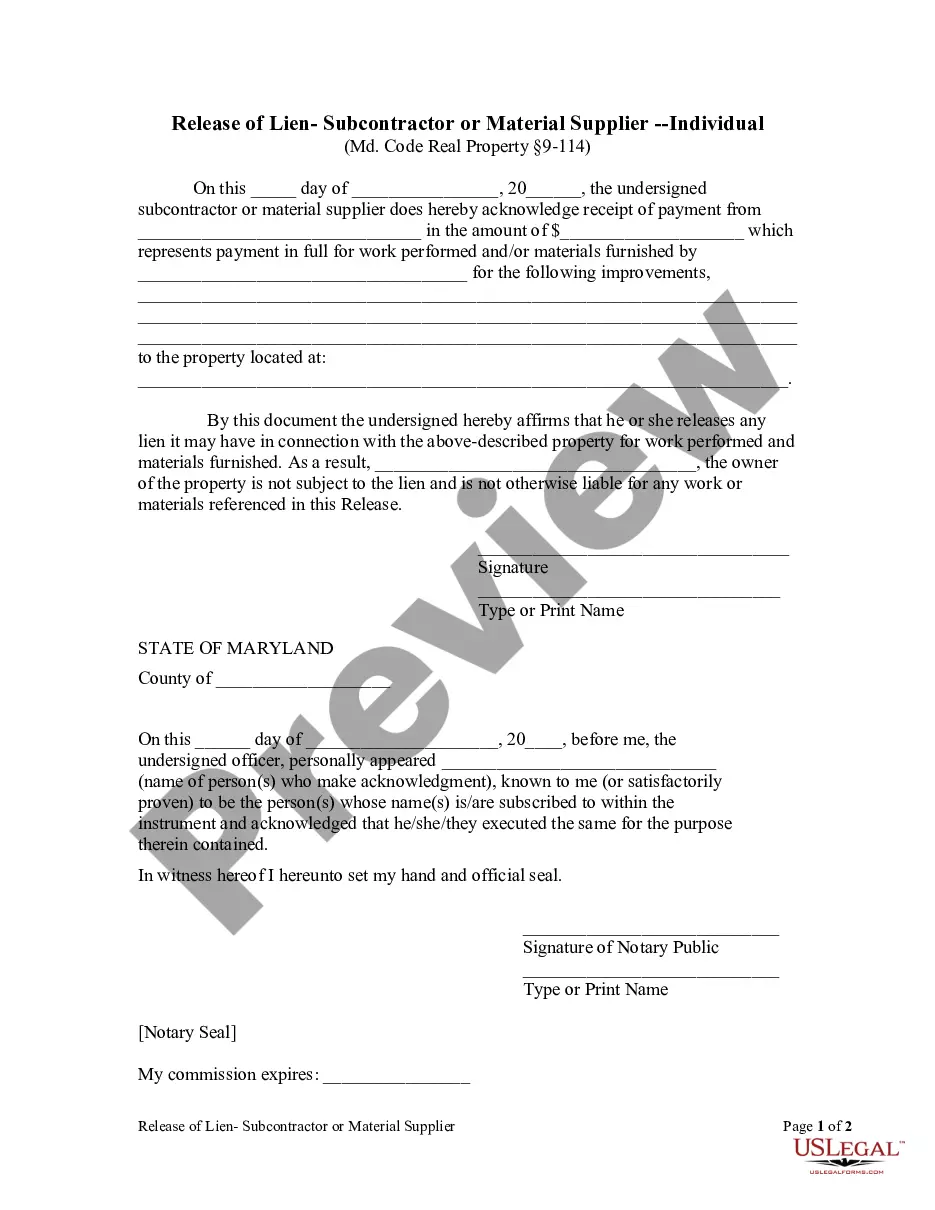
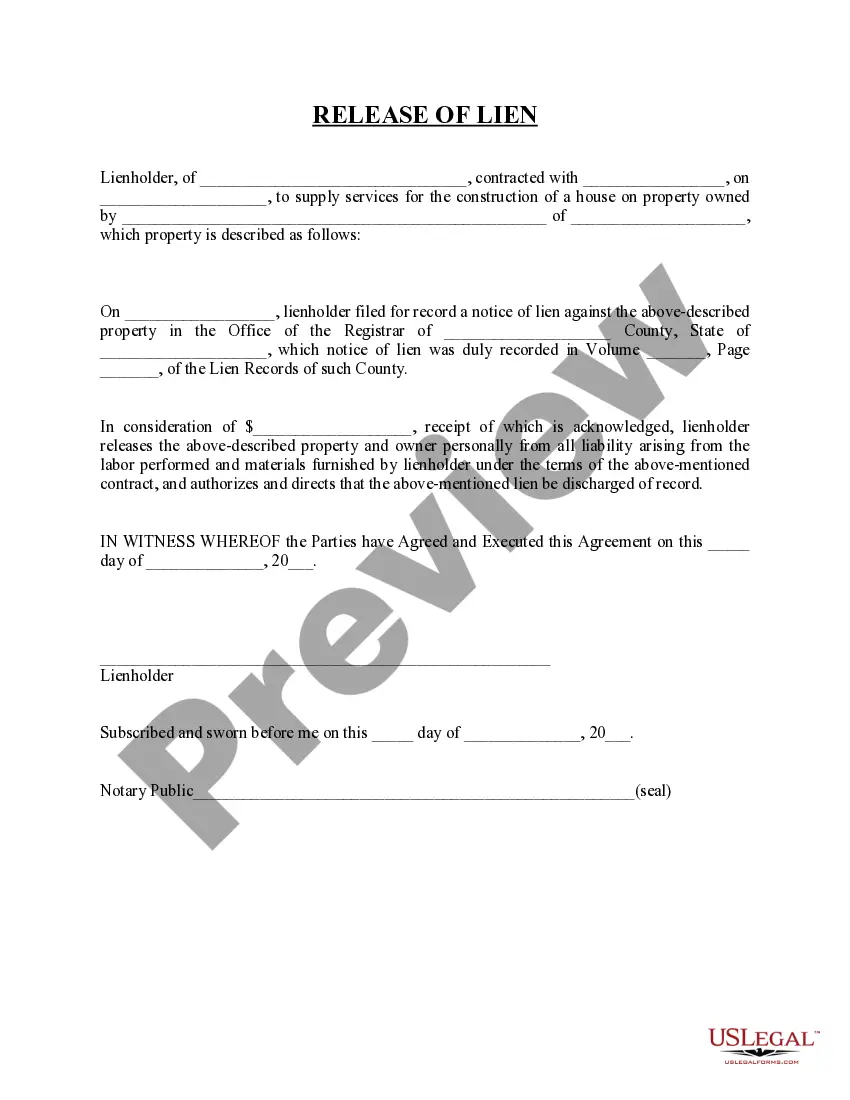
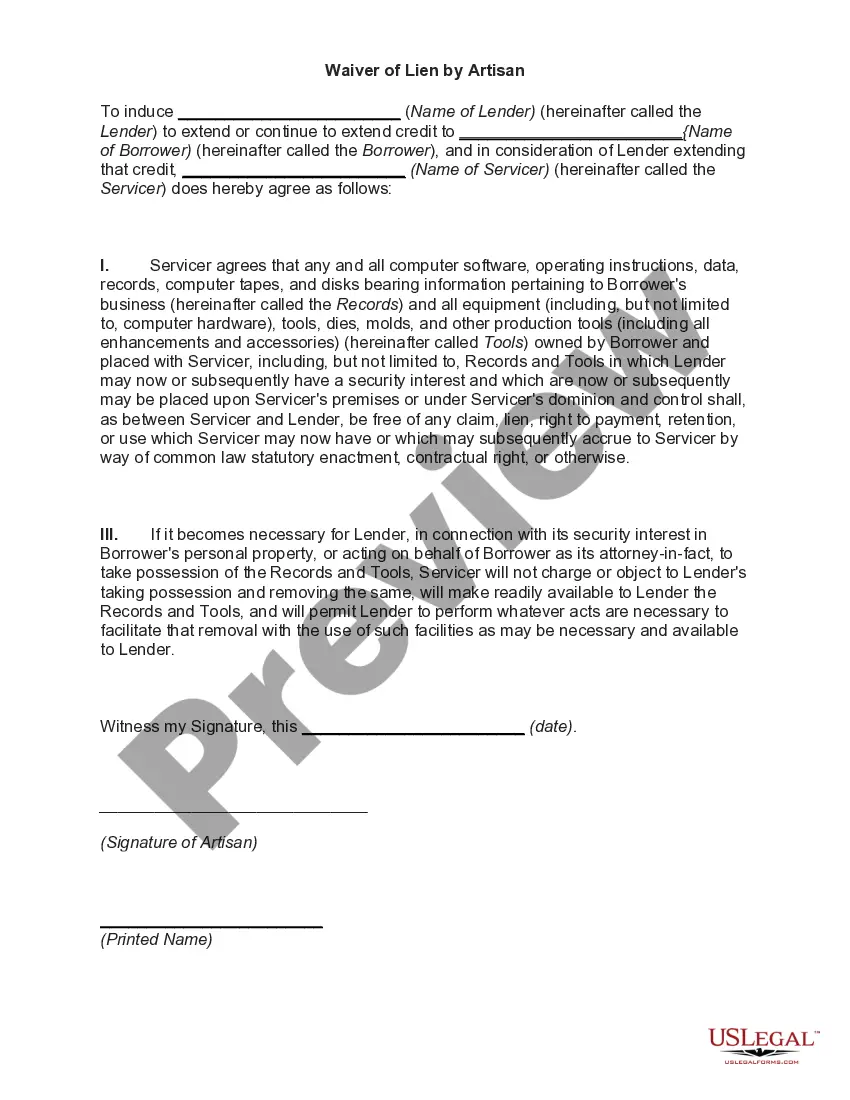
The Release of Lien - Subcontractor or Material Supplier form is a legal document used by subcontractors and material suppliers. Its primary function is to acknowledge the receipt of payment in full for services or goods provided in connection with property improvements. This form ensures that the subcontractor or supplier releases any lien rights they may have against the property in question, offering protection to the property owner from further claims related to the work performed or materials supplied.
What’s included in this form
- Acknowledgment of receipt of payment in full.
- Details of the payment amount and the party making the payment.
- Description of the work performed or materials furnished.
- Affirmation of the release of any lien related to the property.
- Signatures of the subcontractor or material supplier and a notary public.
- Certification of delivery to the lien claimant.

Common use cases
This form should be used when a subcontractor or materials supplier has received full payment for their services or products provided for improvements on a property. It is essential when the subcontractor or supplier desires to formally acknowledge this payment and release any claim or lien against the property owner, thereby protecting the owner from potential legal issues regarding unpaid work or materials.
Who this form is for
Eligible users of this form include:
- Subcontractors providing services on construction projects.
- Material suppliers delivering products for property improvements.
- Individuals seeking to ensure they have no further claims against a property after payment is received.
Instructions for completing this form
- Enter the date of the acknowledgment at the top of the form.
- Specify the name of the party making the payment and the amount received.
- Describe the work performed or materials supplied in detail.
- Provide the property address that is associated with the lien release.
- Sign the document where indicated and have it notarized.
- Deliver a copy of the completed form to the lien claimant and keep a record of this delivery.
Does this form need to be notarized?
To make this form legally binding, it must be notarized. Our online notarization service, powered by Notarize, lets you verify and sign documents remotely through an encrypted video session.
Get your form ready online
Our built-in tools help you complete, sign, share, and store your documents in one place.
Make edits, fill in missing information, and update formatting in US Legal Forms—just like you would in MS Word.
Download a copy, print it, send it by email, or mail it via USPS—whatever works best for your next step.
Sign and collect signatures with our SignNow integration. Send to multiple recipients, set reminders, and more. Go Premium to unlock E-Sign.
If this form requires notarization, complete it online through a secure video call—no need to meet a notary in person or wait for an appointment.
We protect your documents and personal data by following strict security and privacy standards.

Make edits, fill in missing information, and update formatting in US Legal Forms—just like you would in MS Word.

Download a copy, print it, send it by email, or mail it via USPS—whatever works best for your next step.

Sign and collect signatures with our SignNow integration. Send to multiple recipients, set reminders, and more. Go Premium to unlock E-Sign.

If this form requires notarization, complete it online through a secure video call—no need to meet a notary in person or wait for an appointment.

We protect your documents and personal data by following strict security and privacy standards.
Avoid these common issues
- Failing to provide a complete description of the work performed or materials supplied.
- Not having the form notarized, if required.
- Omitting the date of the payment acknowledgment.
- Neglecting to deliver a copy of the form to the lien claimant.
Benefits of using this form online
- Immediate access to tailored legal forms drafted by licensed attorneys.
- The ability to customize the document to fit specific needs.
- Convenient downloading and printing options for easy use.
- Access to support and guidance throughout the completion process.
Looking for another form?
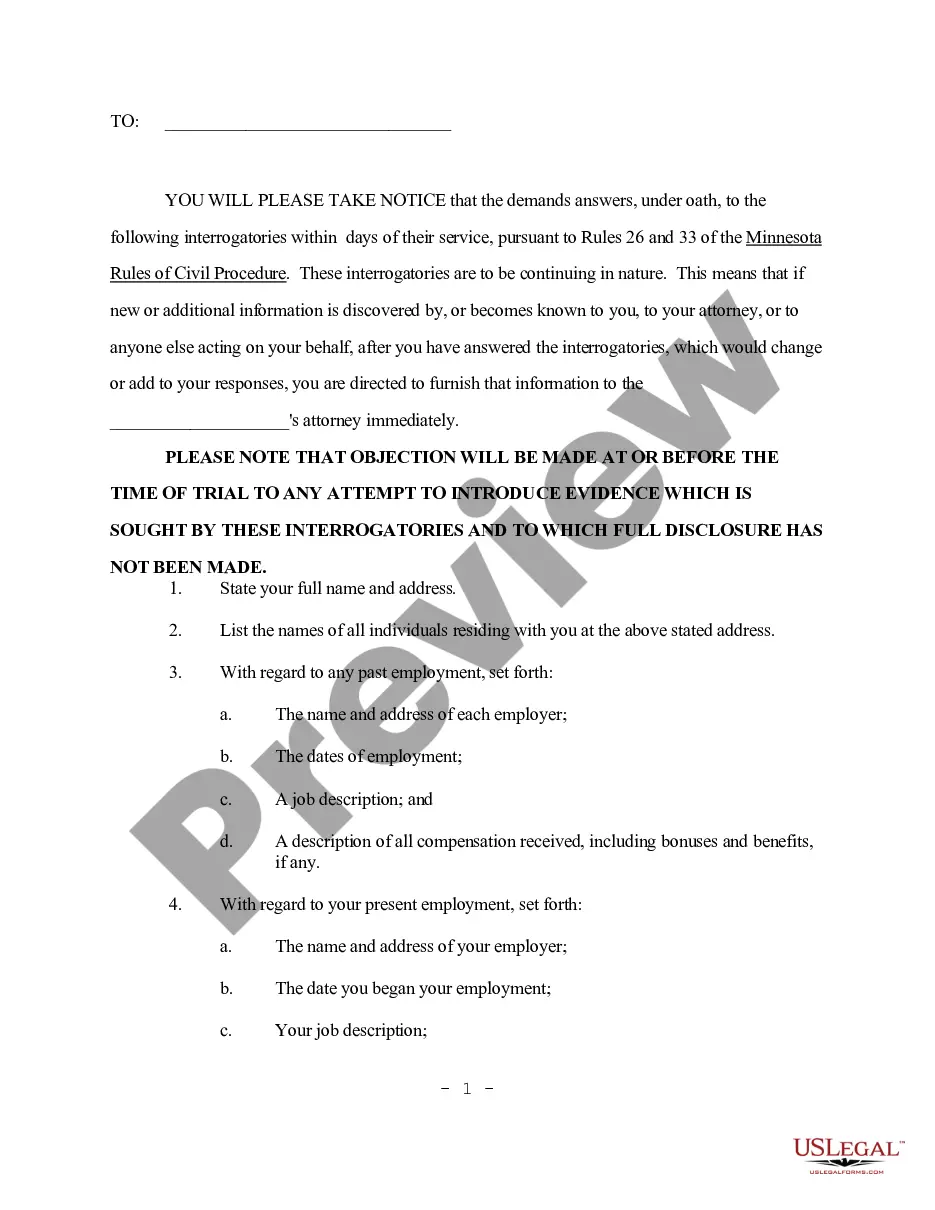
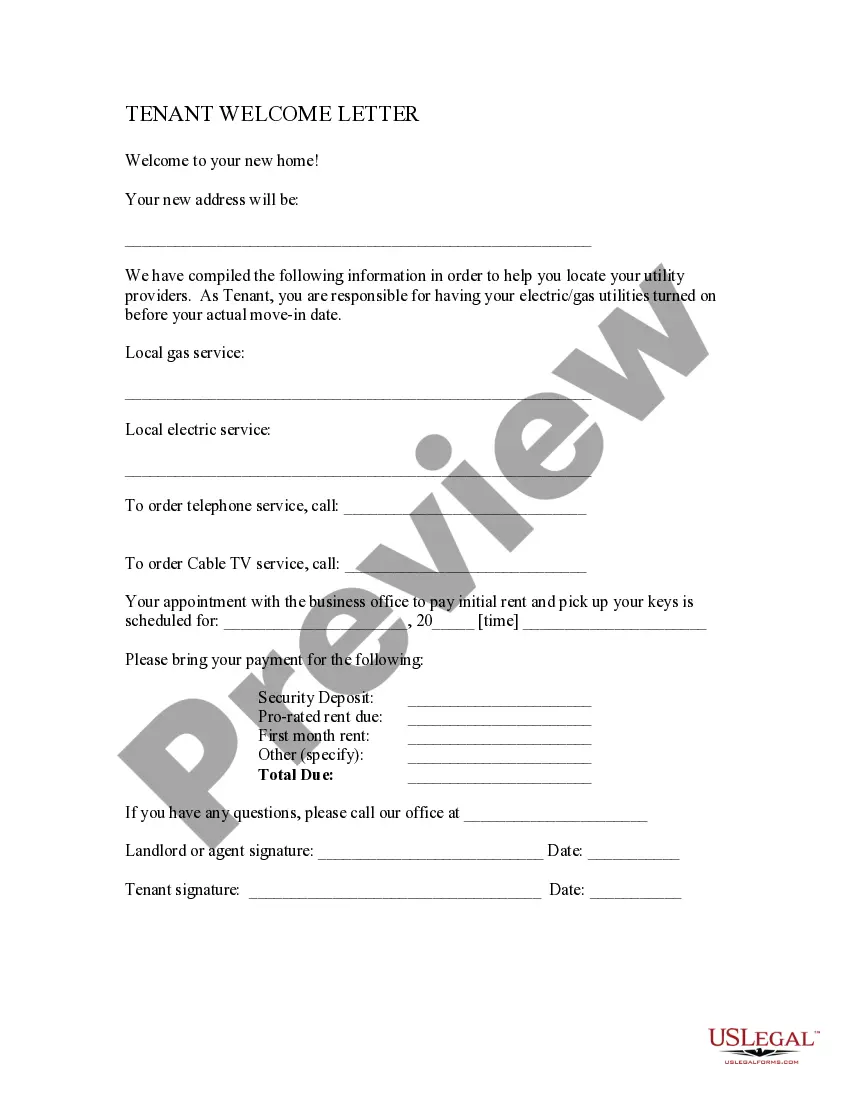
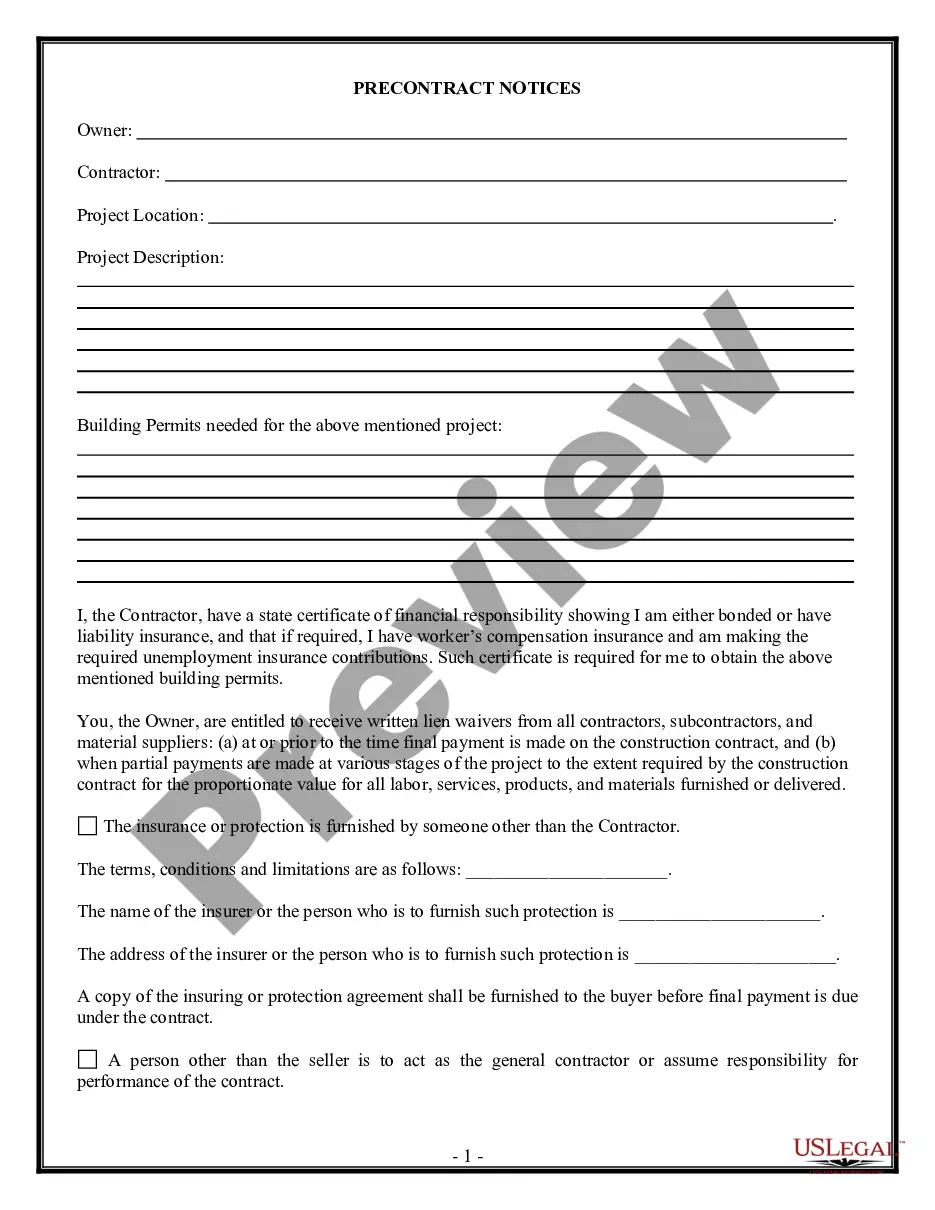
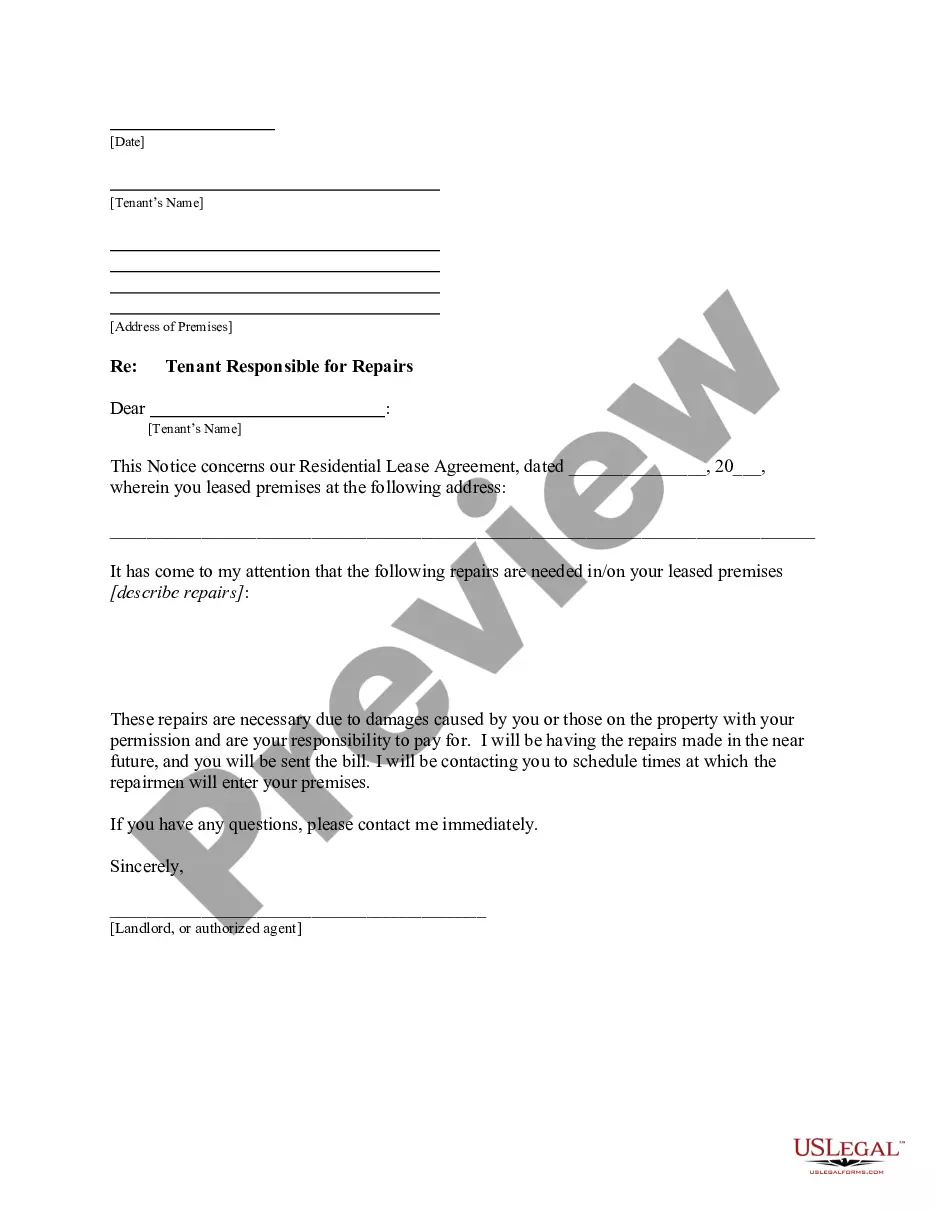
Form popularity
FAQ
When payment issues arise, material suppliers can file mechanics liens. However, there are several rules that are unique to suppliers compared to the more commonly tackled procedures for contractors. When payment issues arise, material suppliers can file mechanics liens to get paid.
In fact, the subcontractor doesn't have any contract with the owner neither written nor verbal!However, presuming that the subcontractor on the project has a written contract with someone, they can still file a lien even if they don't have a written agreement with the property owner.
What Is a Mechanics' (Construction) Lien? When a contractor files a mechanics' (construction) lien on your home, the lien makes your home into what's called security for an outstanding debt, which the contractor claims is due and unpaid for services or materials.
Negotiate with the contractor who placed the lien (the "lienor" to remove it. Obtain a lien bond to discharge the lien, or. File a lawsuit to vacate the lien.
It basically states that you've paid the subcontractor what is owed, they accept the payment in full, and they waive the right to put a lien on your property. Simply present this form to the subcontractor with your payment and ask them to sign it. Make sure you get their signature!
Formalize a defense for disputing the amount of the lien. Gather supporting documentation for your rebuttal, depending on the type of lien. Contact the agent representing the creditor to dispute the amount of the claim. Negotiate a payment settlement with the creditor if you cannot pay the amount you owe in full.
Legally, an unpaid contractor, subcontractor or supplier can file a lien (sometimes called a mechanic's lien) that could eventually force the sale of your home in place of compensation.Conversely, if the contractor who worked on your project does not pay for materials, a supplier could place a lien on your property.
The simplest way to prevent liens and ensure that subcontractors and suppliers are paid is to pay with joint checks. This is when both parties endorse the check. Compare the contractor's materials or labor bill to the schedule of payments in your contract and the Preliminary Notices.