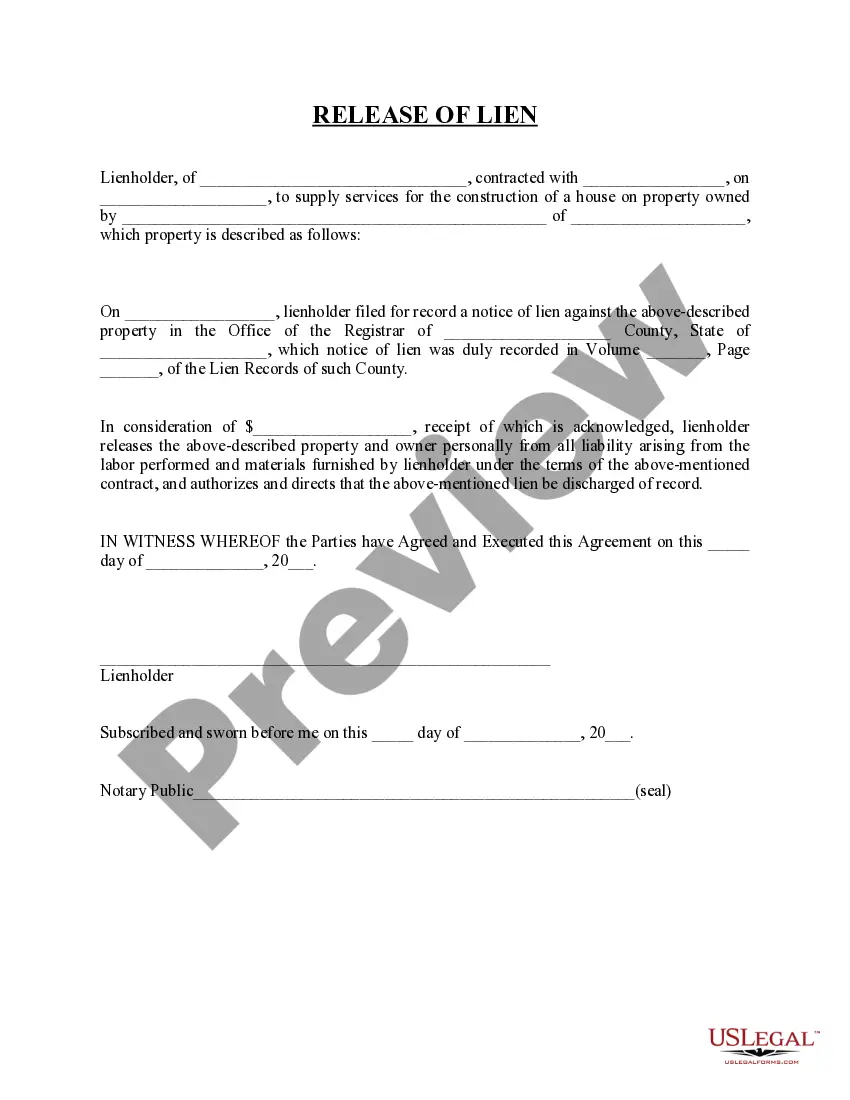
Release of Lien for Contractor
About this form
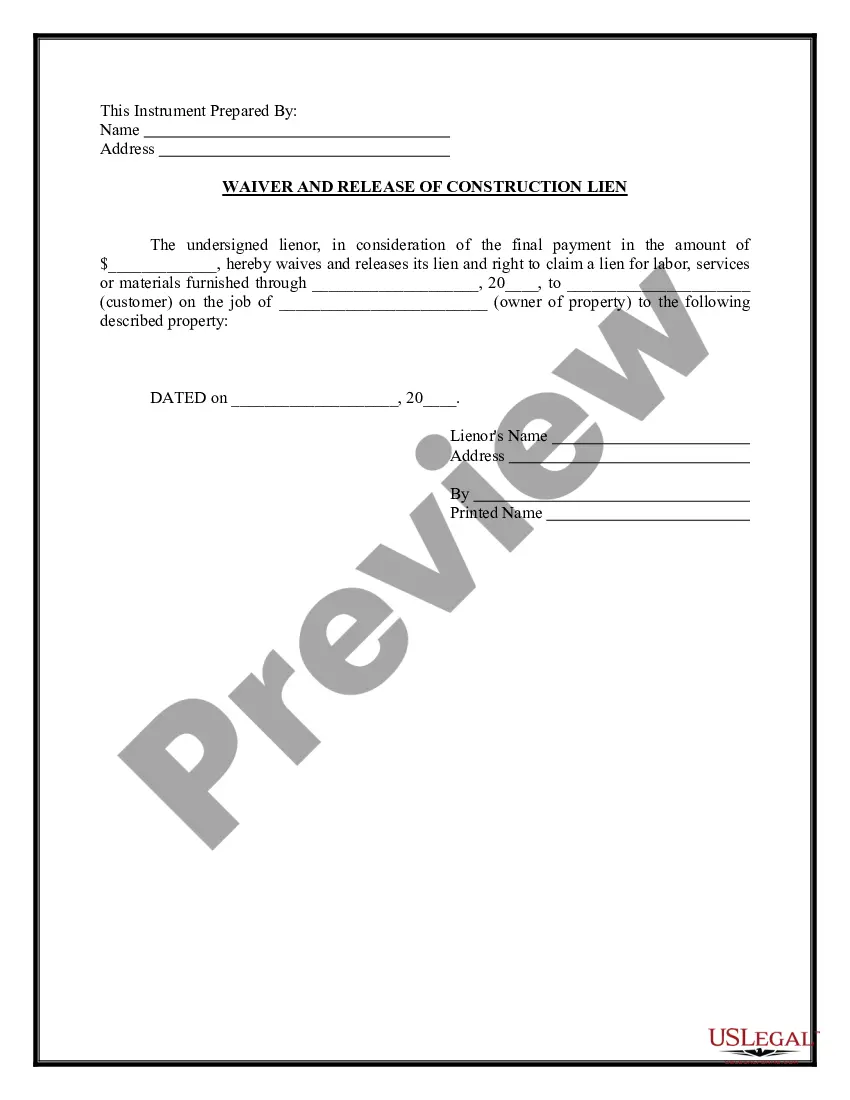
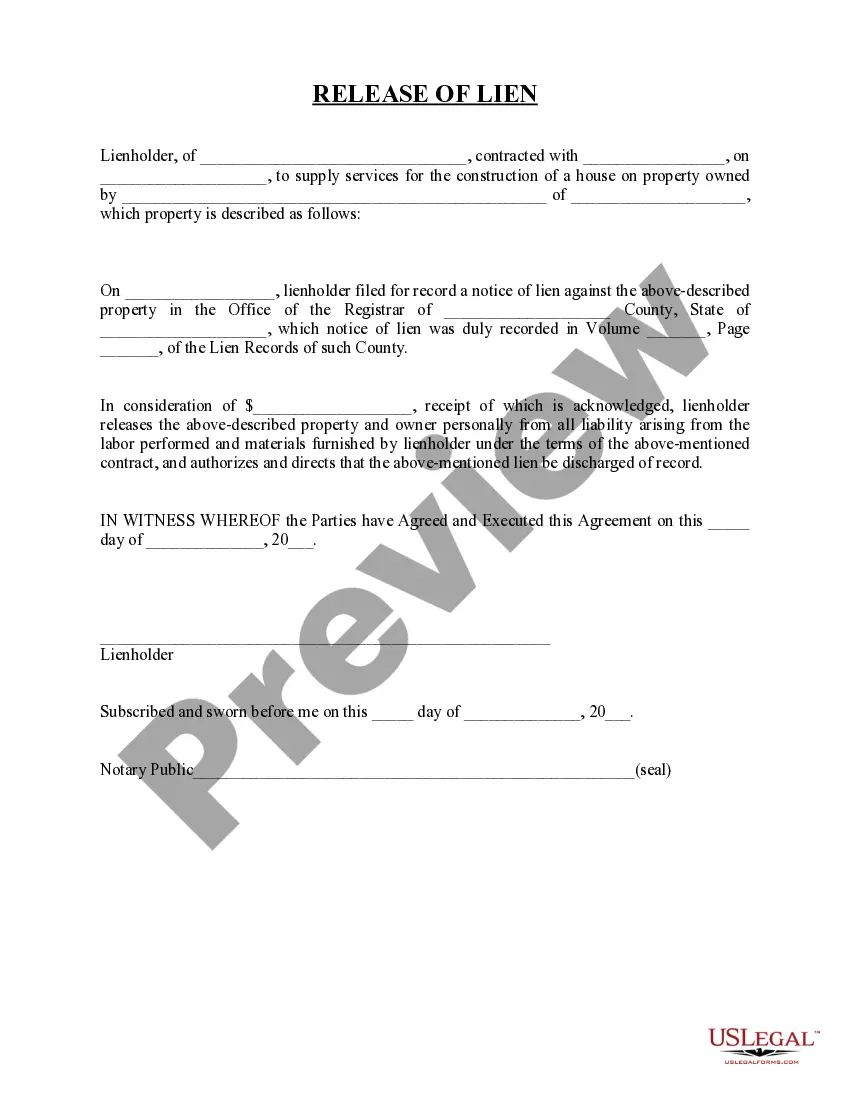
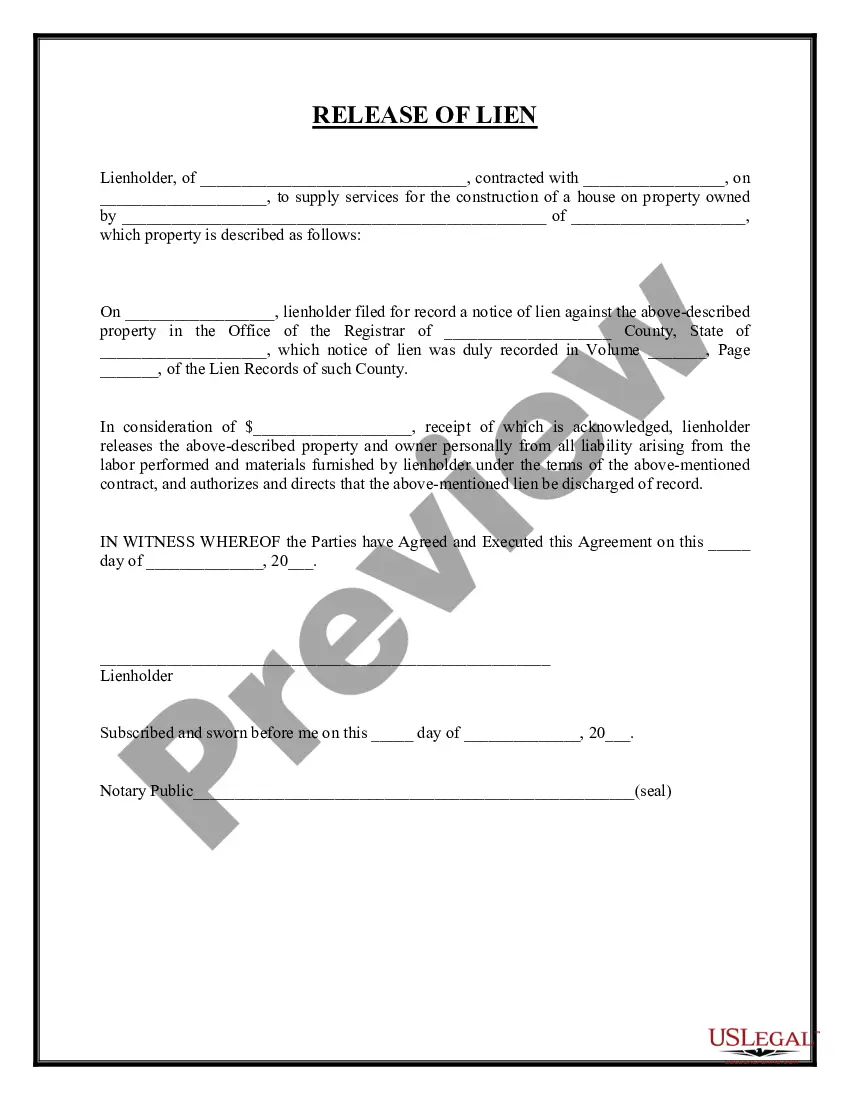
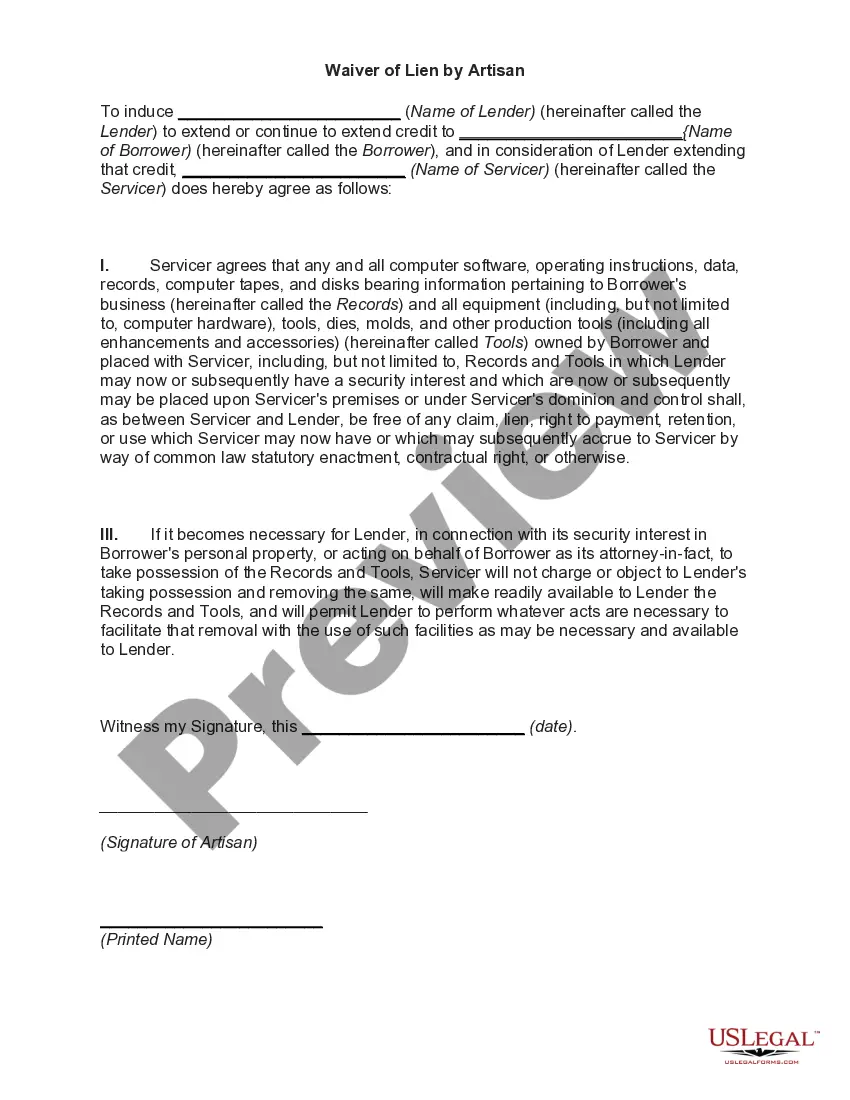
The Release of Lien for Contractor is a legal document that effectively terminates a lien placed on a property by a contractor or service provider. This form serves as a formal declaration that the lienholder releases the owner from any claims related to the labor and materials provided under a specific contract. Unlike other lien documents, which might assert a claim, this release confirms that all obligations have been satisfied, allowing for clear property ownership free from encumbrances.
What’s included in this form
- Identification of the lienholder and property owner.
- Date of the original contract and specific services provided.
- Description of the property under lien.
- Consideration amount exchanged for the release.
- Signature of the lienholder, acknowledging the release.
- Notarization section for verification of signatures.
When to use this form
This form is used when a contractor has completed work on a property and is releasing any claims they have against the property owner's assets. It can be employed after full payment has been received or when the parties agree to eliminate the lien for any reason. Essentially, it formalizes the completion of all obligations under a construction contract.
Who should use this form
- Contractors or subcontractors who have placed a lien on a property.
- Property owners who have settled accounts with their contractors.
- Legal professionals assisting clients in real estate transactions.
- Anyone involved in construction or renovation contracts.
How to complete this form
- Identify the lienholder and the property owner by filling in their names.
- Enter the date of the original contract and the services provided.
- Describe the property affected by the lien accurately.
- Specify the consideration amount received for the release.
- Have the lienholder sign the release and date it accordingly.
- Complete the notarization section by acquiring a notary's signature and seal.
Notarization requirements for this form
Yes, this form must be notarized to be legally valid. Notarization helps verify the identities of the parties involved and ensures that all signatures are authentic. US Legal Forms provides integrated online notarization services, allowing users to complete this step securely via video call without needing to travel.
Get your form ready online
Our built-in tools help you complete, sign, share, and store your documents in one place.
Make edits, fill in missing information, and update formatting in US Legal Forms—just like you would in MS Word.
Download a copy, print it, send it by email, or mail it via USPS—whatever works best for your next step.
Sign and collect signatures with our SignNow integration. Send to multiple recipients, set reminders, and more. Go Premium to unlock E-Sign.
If this form requires notarization, complete it online through a secure video call—no need to meet a notary in person or wait for an appointment.
We protect your documents and personal data by following strict security and privacy standards.

Make edits, fill in missing information, and update formatting in US Legal Forms—just like you would in MS Word.

Download a copy, print it, send it by email, or mail it via USPS—whatever works best for your next step.

Sign and collect signatures with our SignNow integration. Send to multiple recipients, set reminders, and more. Go Premium to unlock E-Sign.

If this form requires notarization, complete it online through a secure video call—no need to meet a notary in person or wait for an appointment.

We protect your documents and personal data by following strict security and privacy standards.
Mistakes to watch out for
- Failing to fully identify the property involved in the lien.
- Not including the consideration amount, which makes the release void.
- Omitting signatures from either the lienholder or the notary.
- Using outdated or incorrect language not compliant with state laws.
Quick recap
- The Release of Lien for Contractor is crucial for clearing property titles post-construction.
- All details of the lien and property must be accurately recorded to avoid legal complications.
- Notarization is a required step to enhance the validity and enforceability of the release.
Looking for another form?
Form popularity
FAQ
A lien release, in its most simple form, is a document that asks the property records office to remove a previously filed mechanics lien. Some states call it a lien discharge, because the filing indicates the discharge of a debt.
It basically states that you've paid the subcontractor what is owed, they accept the payment in full, and they waive the right to put a lien on your property. Simply present this form to the subcontractor with your payment and ask them to sign it. Make sure you get their signature!
A lien release is a document that is filed in the public land records as the official notice that the lien is removed. Once payment has been received, a contractor has a duty to remove any lien that was filed against the property.
Lien release letters should have a conspicuous title such as Release of Lien at the top of the page. The first paragraph should list the date the lien was placed on the property and the names and addresses of both the lienholder and the owner of the property.
It basically states that you've paid the subcontractor what is owed, they accept the payment in full, and they waive the right to put a lien on your property. Simply present this form to the subcontractor with your payment and ask them to sign it. Make sure you get their signature!
The main purpose of a lien waiver is to provide protection to the paying party. In exchange for such payment, the lien waiver waives the payee's right to file a lien for the exact value of the payment they have received.
Satisfy the terms of the loan by paying the balance of the loan back to the lender, including any interest incurred. If you don't receive the lien release, submit a request to your lender for proof that the loan has been satisfied.
Negotiate with the contractor who placed the lien (the "lienor" to remove it. Obtain a lien bond to discharge the lien, or. File a lawsuit to vacate the lien.