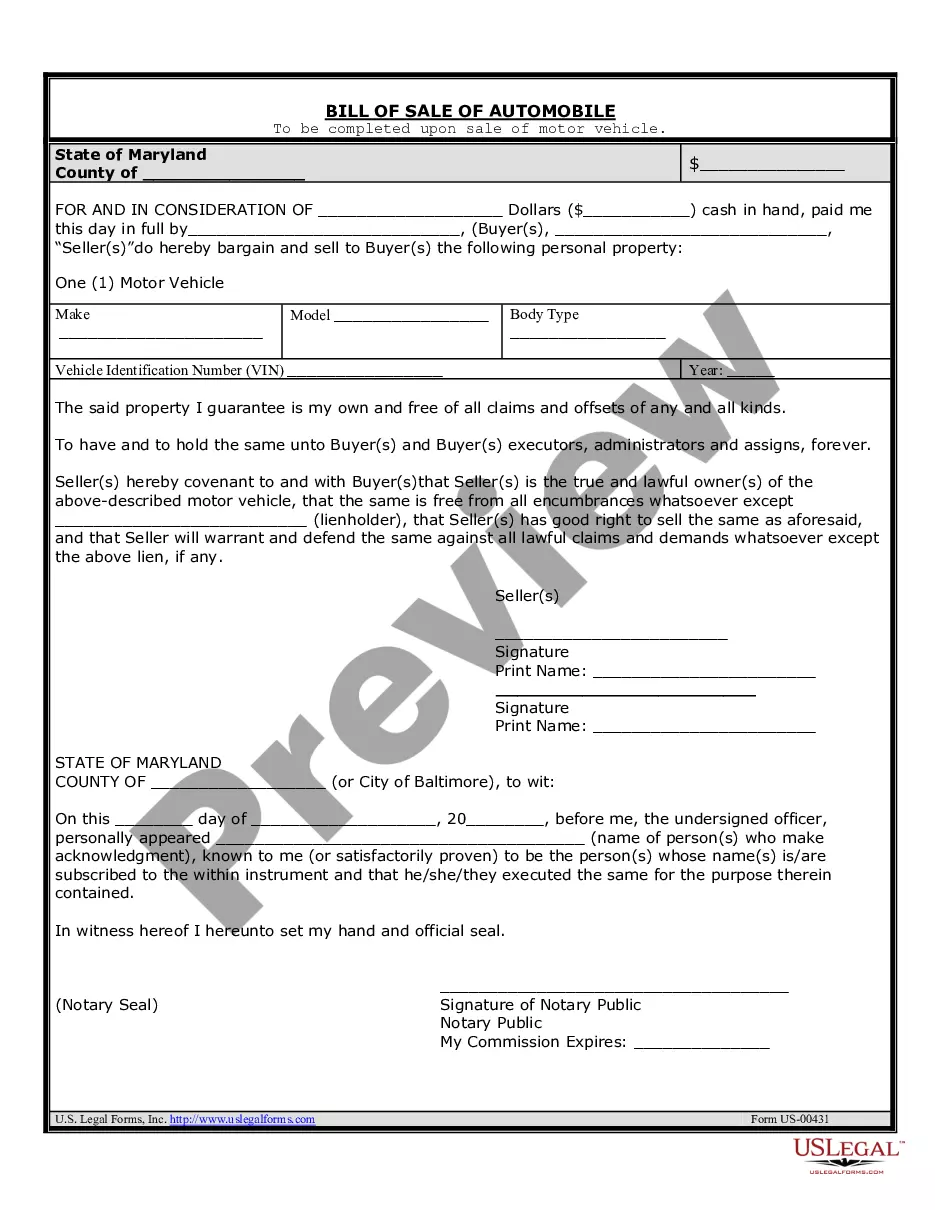
Maryland Bill of Sale of Automobile and Odometer Statement
What this document covers
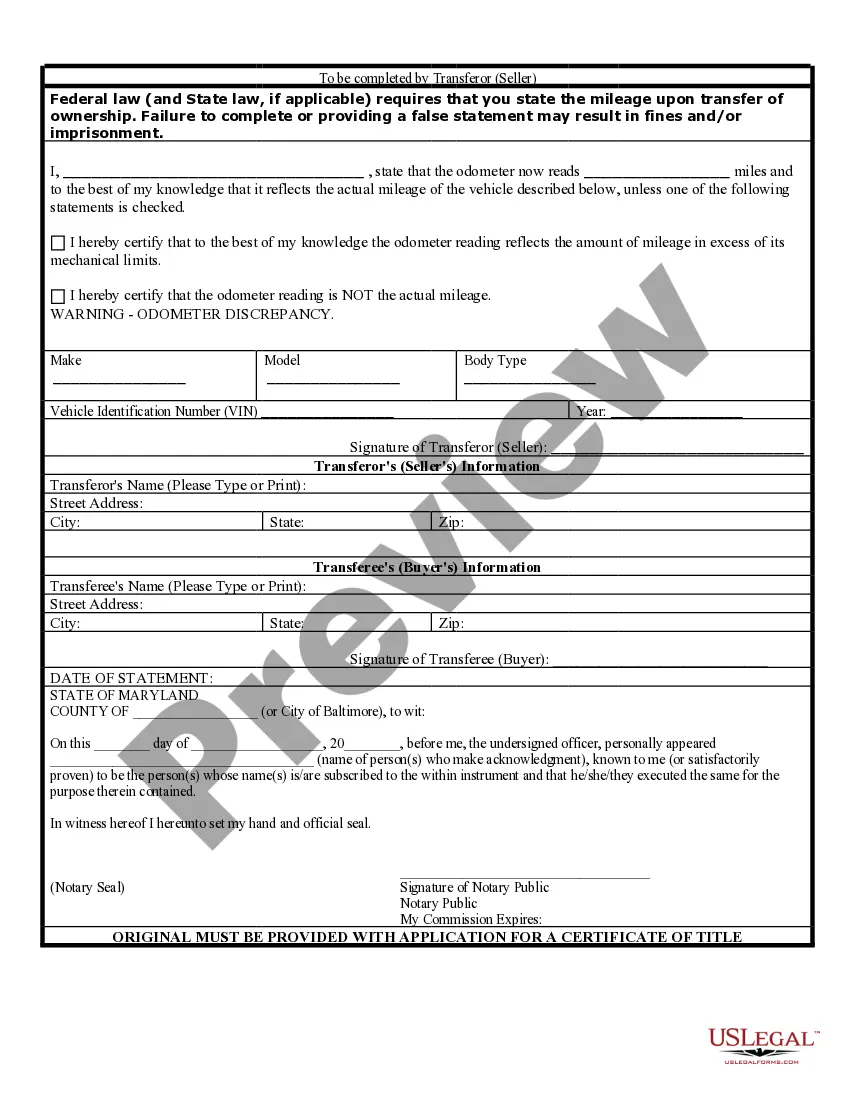
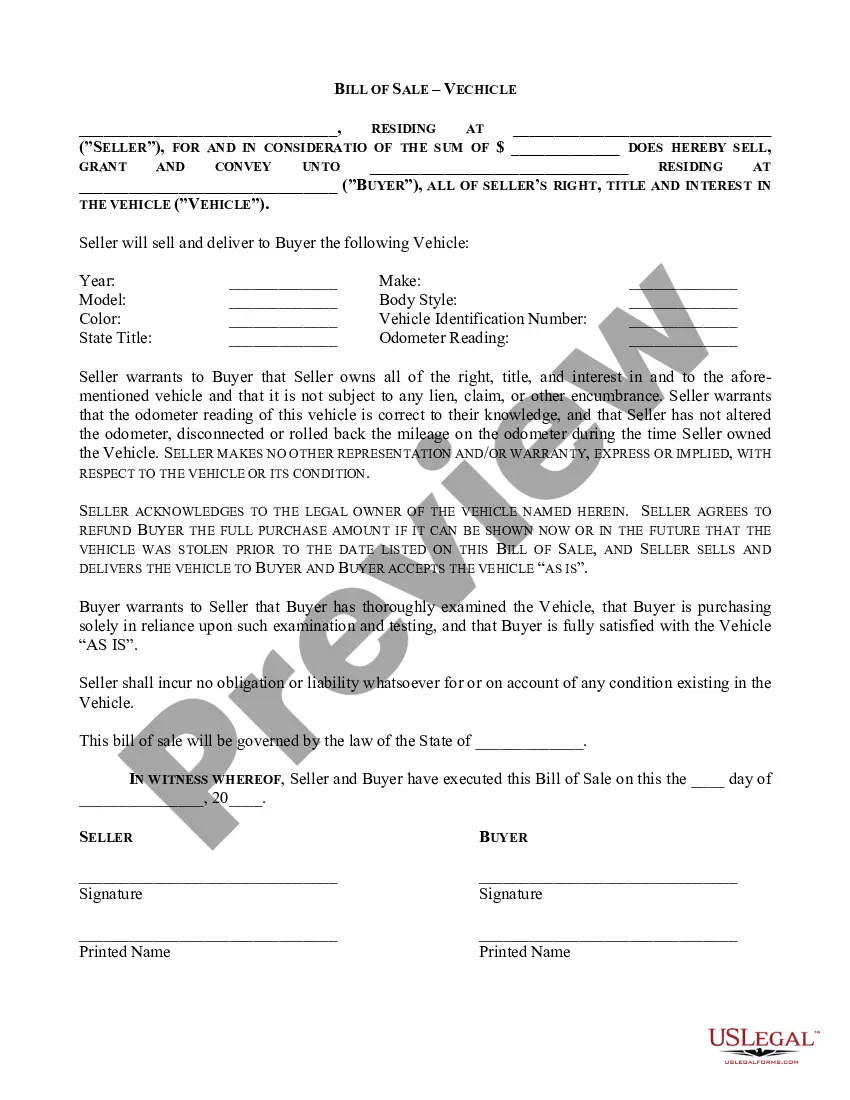
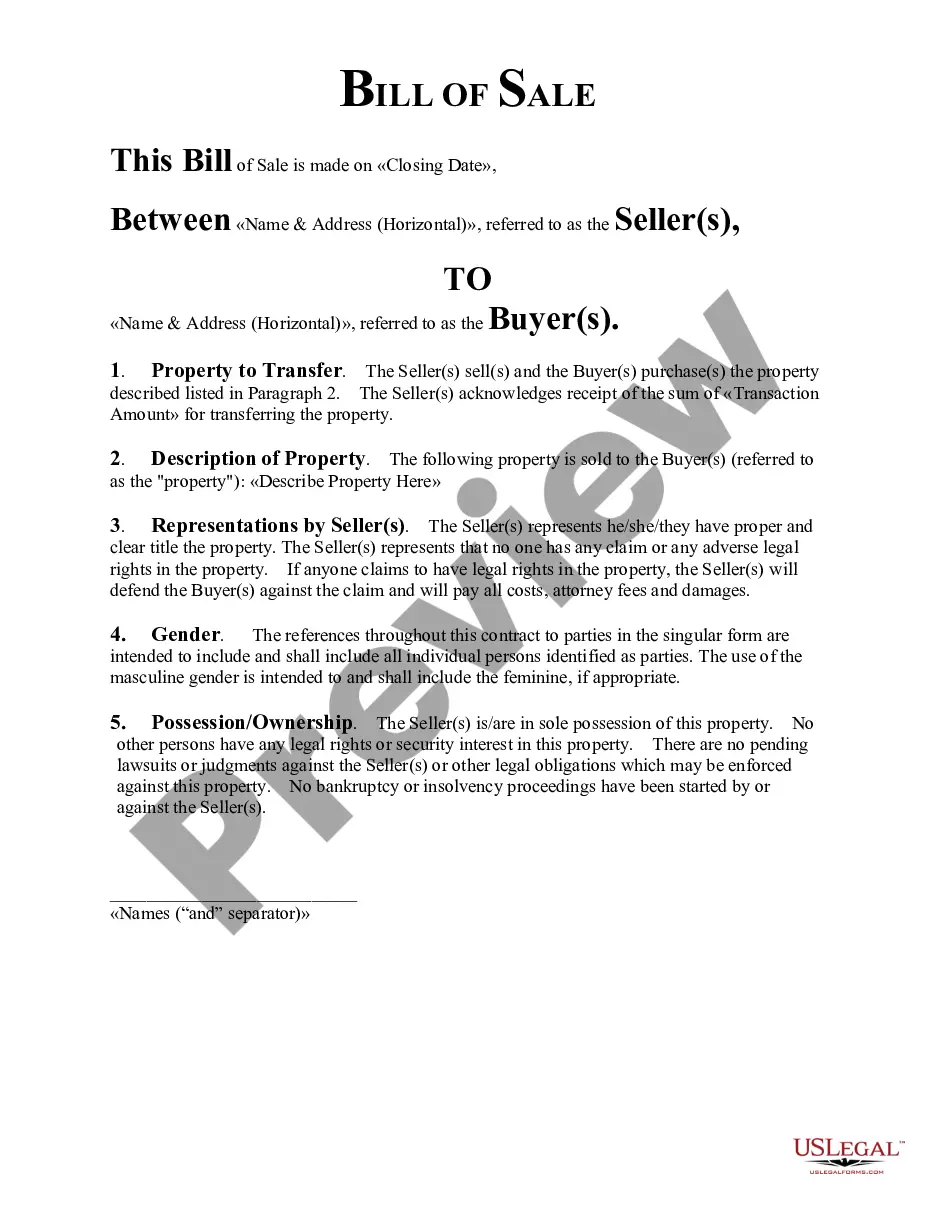
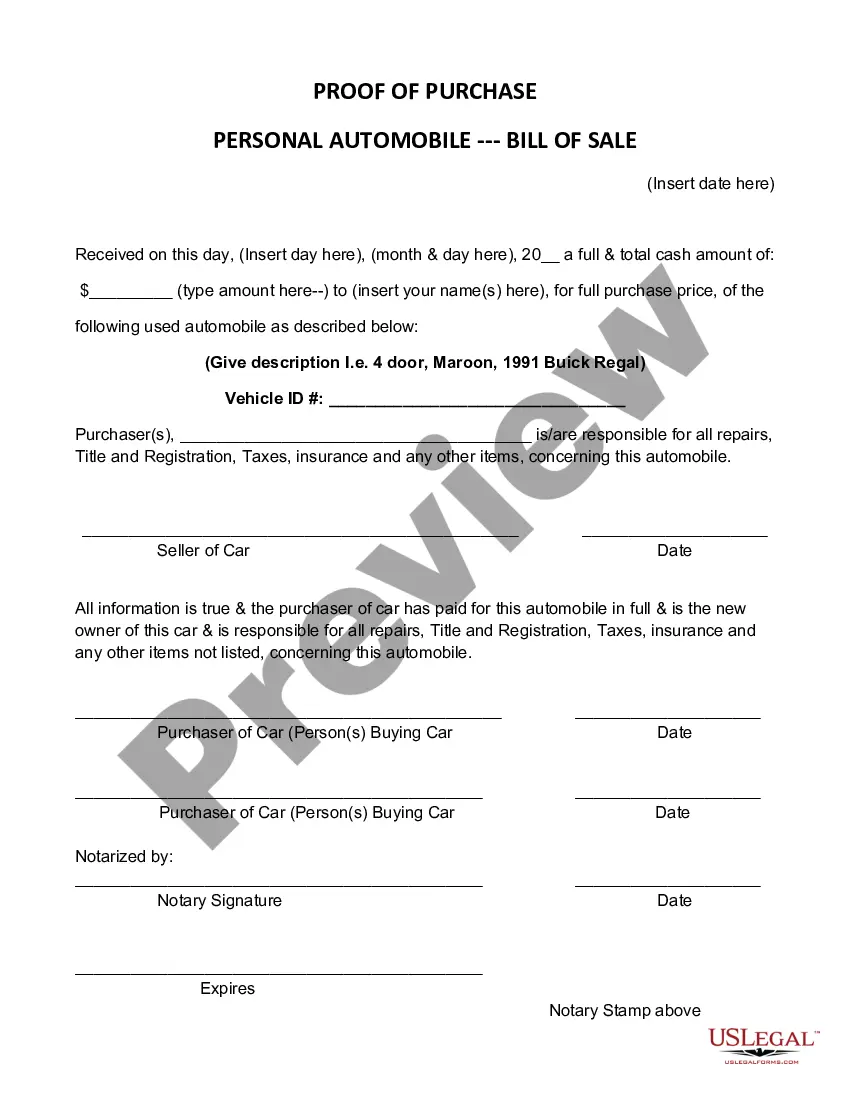
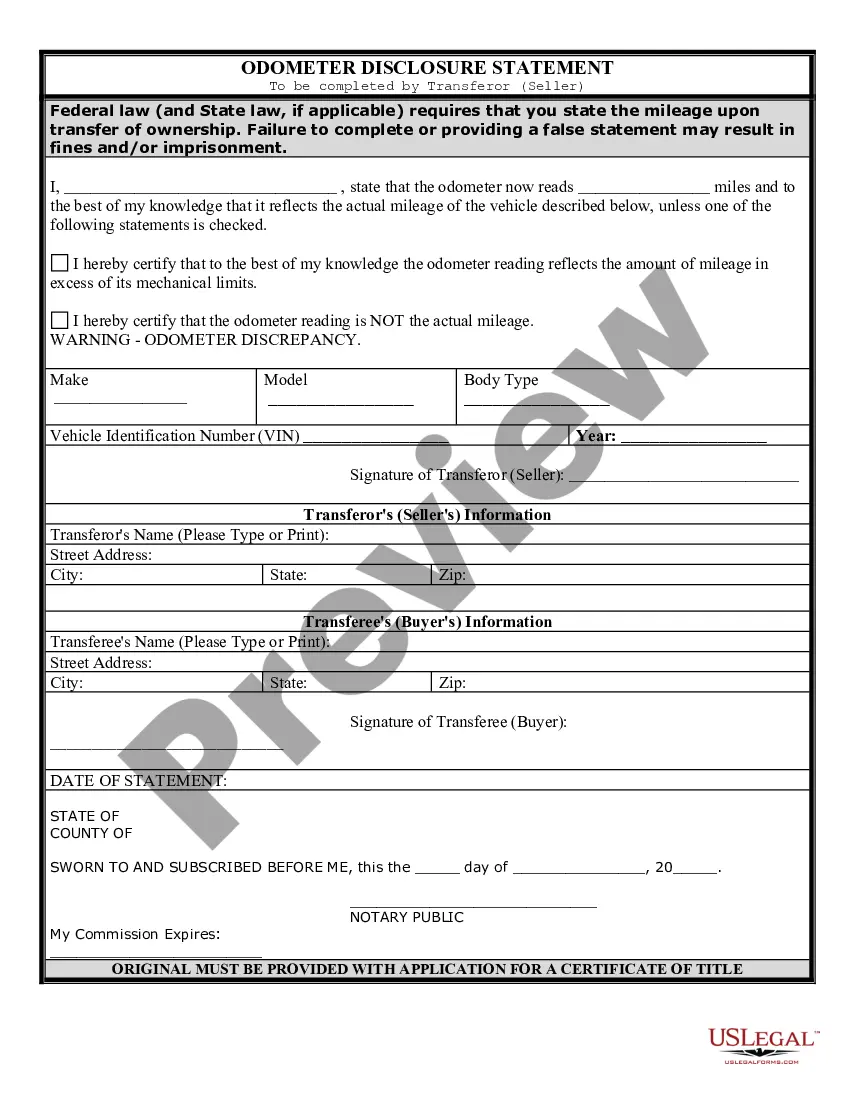
The Bill of Sale of Automobile is a legal document that records the transfer of ownership of a vehicle from the seller to the buyer. It includes essential details such as the make, model, year, and Vehicle Identification Number (VIN) of the automobile. This form also incorporates an Odometer Disclosure Statement, which is mandated by federal and state law, ensuring that both parties acknowledge the mileage on the vehicle at the time of sale. Unlike general bills of sale, this specific form is tailored for automotive transactions, ensuring compliance with applicable laws regarding odometer readings and vehicle ownership transfer.
Key components of this form
- Seller and buyer details including names and signatures.
- Transaction amount and date of sale.
- Vehicle specifications including make, model, year, and VIN.
- Guarantee of ownership and freedom from encumbrances.
- Odometer Disclosure Statement with current mileage.
When to use this document
This form should be used whenever a motor vehicle is sold or transferred from one party to another. It is particularly important for private sales, where no formal dealership paperwork exists, ensuring all necessary information regarding the sale and vehicle details is documented. Additionally, this form is essential when the buyer requires proof of ownership and verification of the vehicle's mileage.
Who needs this form
- Individuals selling their personal vehicles.
- Buyers purchasing used cars from private sellers.
- Parties needing to document the sale for loan purposes or title transfer.
- Anyone requiring a formal record of the vehicle sale for tax or legal reasons.
How to prepare this document
- Identify the seller and buyer by entering their names and contact information.
- Specify the sale amount in both numerals and words.
- Fill in the vehicle details such as make, model, year, and VIN.
- Complete the Odometer Disclosure Statement, noting the exact mileage on the vehicle.
- Both parties should sign the document in the presence of a notary public.
Does this form need to be notarized?
This form needs to be notarized to ensure legal validity. US Legal Forms provides secure online notarization powered by Notarize, allowing you to complete the process through a verified video call, available anytime.
Get your form ready online
Our built-in tools help you complete, sign, share, and store your documents in one place.
Make edits, fill in missing information, and update formatting in US Legal Forms—just like you would in MS Word.
Download a copy, print it, send it by email, or mail it via USPS—whatever works best for your next step.
Sign and collect signatures with our SignNow integration. Send to multiple recipients, set reminders, and more. Go Premium to unlock E-Sign.
If this form requires notarization, complete it online through a secure video call—no need to meet a notary in person or wait for an appointment.
We protect your documents and personal data by following strict security and privacy standards.

Make edits, fill in missing information, and update formatting in US Legal Forms—just like you would in MS Word.

Download a copy, print it, send it by email, or mail it via USPS—whatever works best for your next step.

Sign and collect signatures with our SignNow integration. Send to multiple recipients, set reminders, and more. Go Premium to unlock E-Sign.

If this form requires notarization, complete it online through a secure video call—no need to meet a notary in person or wait for an appointment.

We protect your documents and personal data by following strict security and privacy standards.
Typical mistakes to avoid
- Failing to fill out the Odometer Disclosure Statement completely.
- Not signing the document in front of a notary public.
- Leaving out important vehicle details like the VIN.
- Not retaining a copy of the signed Bill of Sale for future reference.
Why use this form online
- Instant access to a legally compliant Bill of Sale template drafted by licensed attorneys.
- Convenient download for immediate use, saving time and effort.
- Editable fields allow customization to meet specific transaction needs.
- Reduces the risk of legal issues by ensuring all necessary information is included.
Legal use & context
- This form serves as a legal record of the sale, protecting both the buyer and seller.
- Completing this form ensures compliance with federal regulations regarding odometer disclosures.
- Failure to use this document could result in legal disputes over ownership or undisclosed vehicle issues.
- It may be required to present this form when applying for a new title with local DMV offices.
What to keep in mind
- The Bill of Sale of Automobile protects the interests of both buyers and sellers in vehicle transactions.
- It includes essential information related to the car and guarantees clear title from the seller.
- The Odometer Disclosure Statement is a critical aspect of this form to comply with legal requirements.
- Notarization is required for the form to be legally binding.
Looking for another form?
Form popularity
FAQ
Write the title "Bill of Sale" at the top of the paper. Write the buyer's full name and address under the title of "Buyer." Write the seller's full name and address under the title of "Seller." Write down the year, make, model, color, current odometer reading, and Vehicle Identification Number from the vehicle.
You will need the title, signed over to you; the MVA Bill of Sale, if required; the passing inspection report; proof of insurance; and the titling fee.
You will need a notary, witnessing both the buyer(s) and seller(s) signatures, if you present a bill of sale to complete your transaction.A notarized MVA Bill of Sale200b (form # VR-181) is needed if the sale price is less than the vehicle's book value and the vehicle is 7 years old or newer.
Step 1: Get the vehicle inspected. In Maryland, sellers are required to get a vehicle safety inspection by a licensed Maryland inspection station. Step 2: Organize and gather all related vehicle documentation. Step 3: Bill of Sale. Step 4: Transfer the title. Step 5: Remove your plates and cancel your insurance.
The date of the sale. A description of the car, including its: Year, make and model. The selling price of the car. If the car is a gift or partial gift, you should still create a bill of sale. Warranty information. The full names, addresses and signatures of the buyer and seller.
You will need a notary, witnessing both the buyer(s) and seller(s) signatures, if you present a bill of sale to complete your transaction.A notarized MVA Bill of Sale200b (form # VR-181) is needed if the sale price is less than the vehicle's book value and the vehicle is 7 years old or newer.
The date of the sale. A description of the car, including its: Year, make and model. The selling price of the car. If the car is a gift or partial gift, you should still create a bill of sale. Warranty information. The full names, addresses and signatures of the buyer and seller.
A description of the vehicle, including the year, make, model, vehicle style, and Vehicle Identification Number (VIN) Printed names and signatures of the buyer and seller. Date of the sale. Total cost of the vehicle.