Kentucky Paternity Law and Procedure Handbook
What is this form?
The Paternity Law and Procedure Handbook is a comprehensive guide that outlines the laws and procedures associated with establishing legal paternity in the United States. This handbook serves as a valuable resource for both unmarried parents needing to establish paternity and legal professionals seeking a clear understanding of state-specific regulations. It differentiates itself from other legal documents by providing in-depth explanations, frequently asked questions, and guidelines tailored to various states, making it an essential tool for anyone involved in a paternity case.
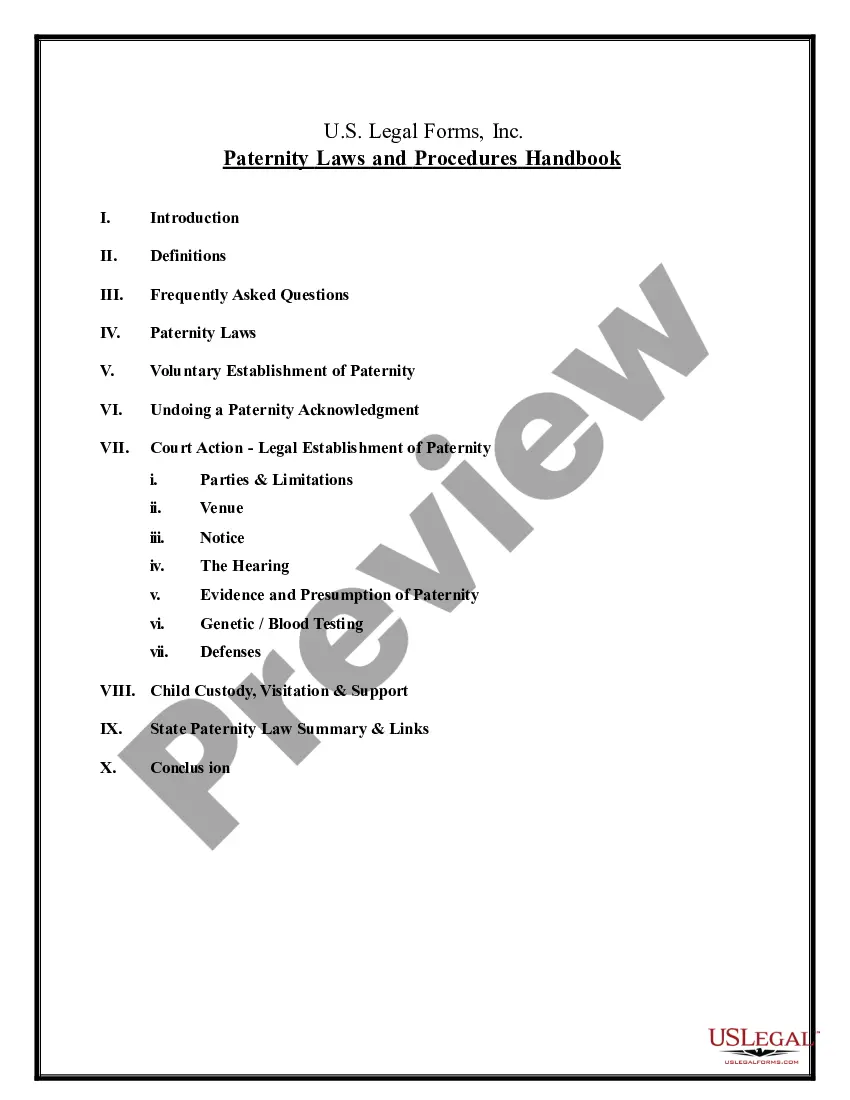
Main sections of this form
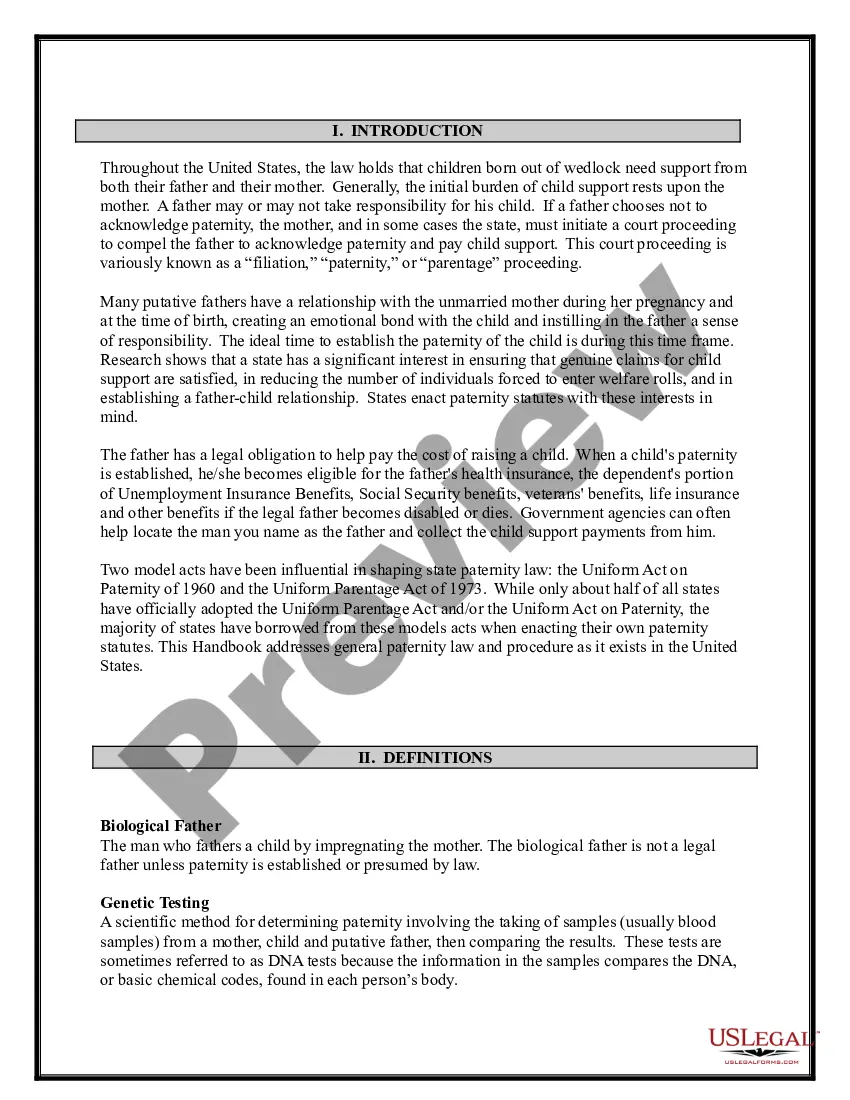
- Introduction to the importance of establishing paternity and legal obligations.
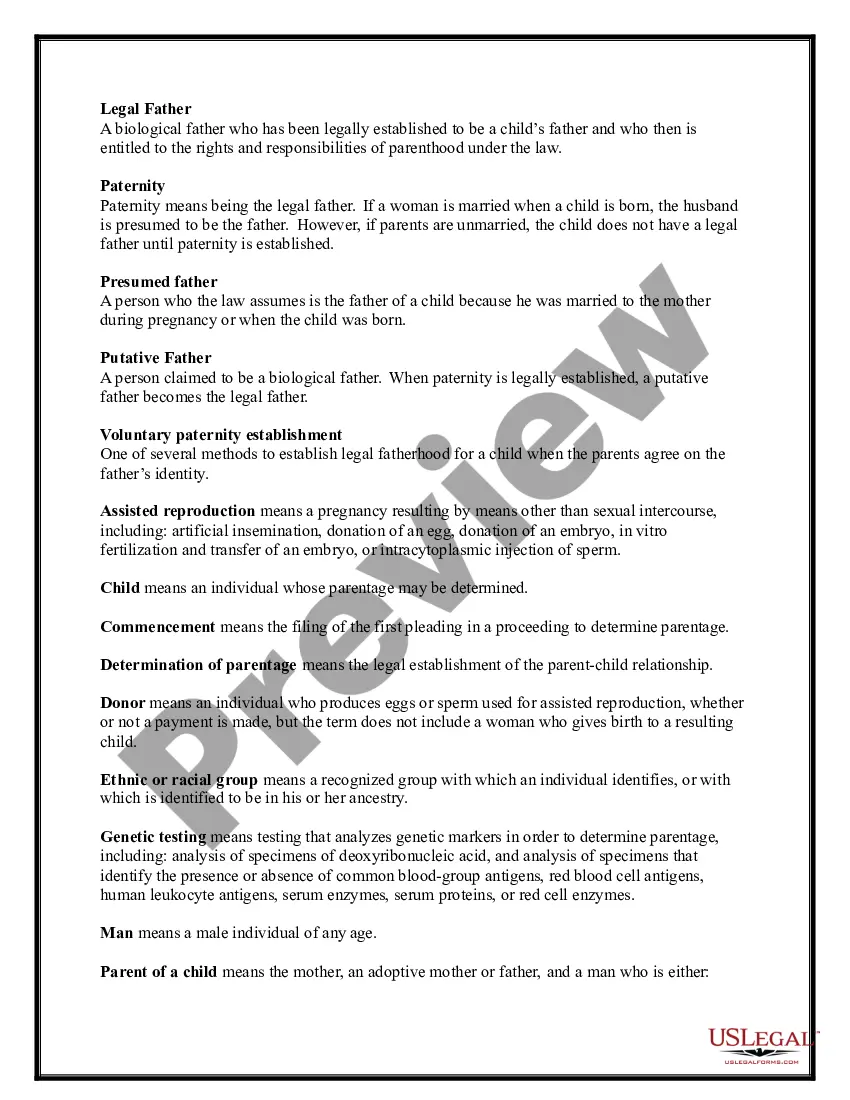
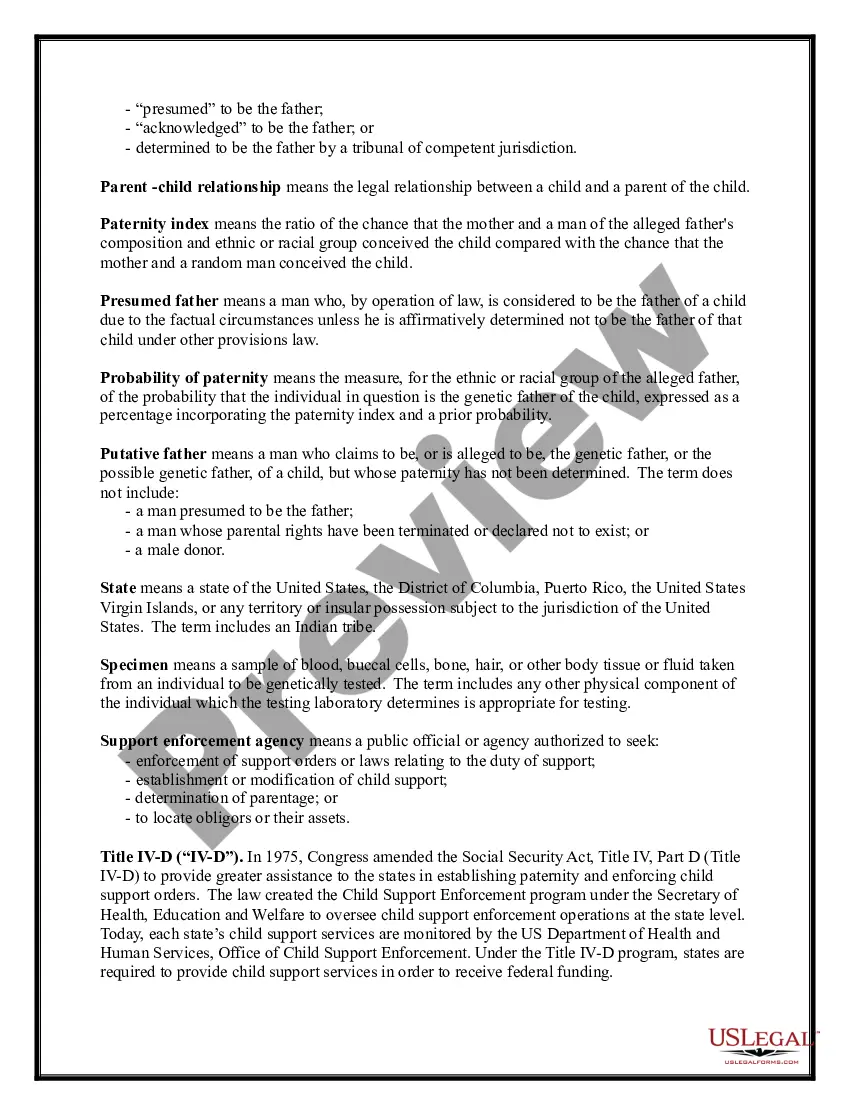
- Definitions related to paternity terminology, including biological and legal fathers.
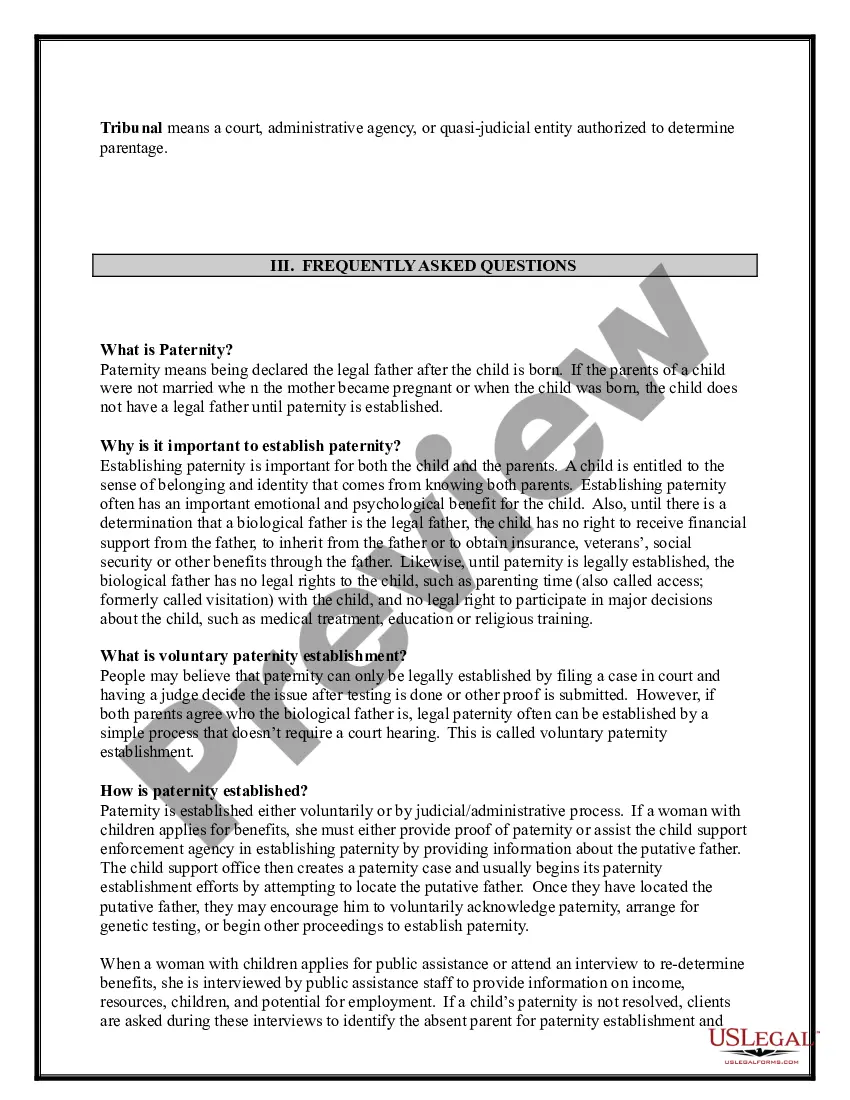
- Frequently asked questions addressing common concerns about paternity establishment.
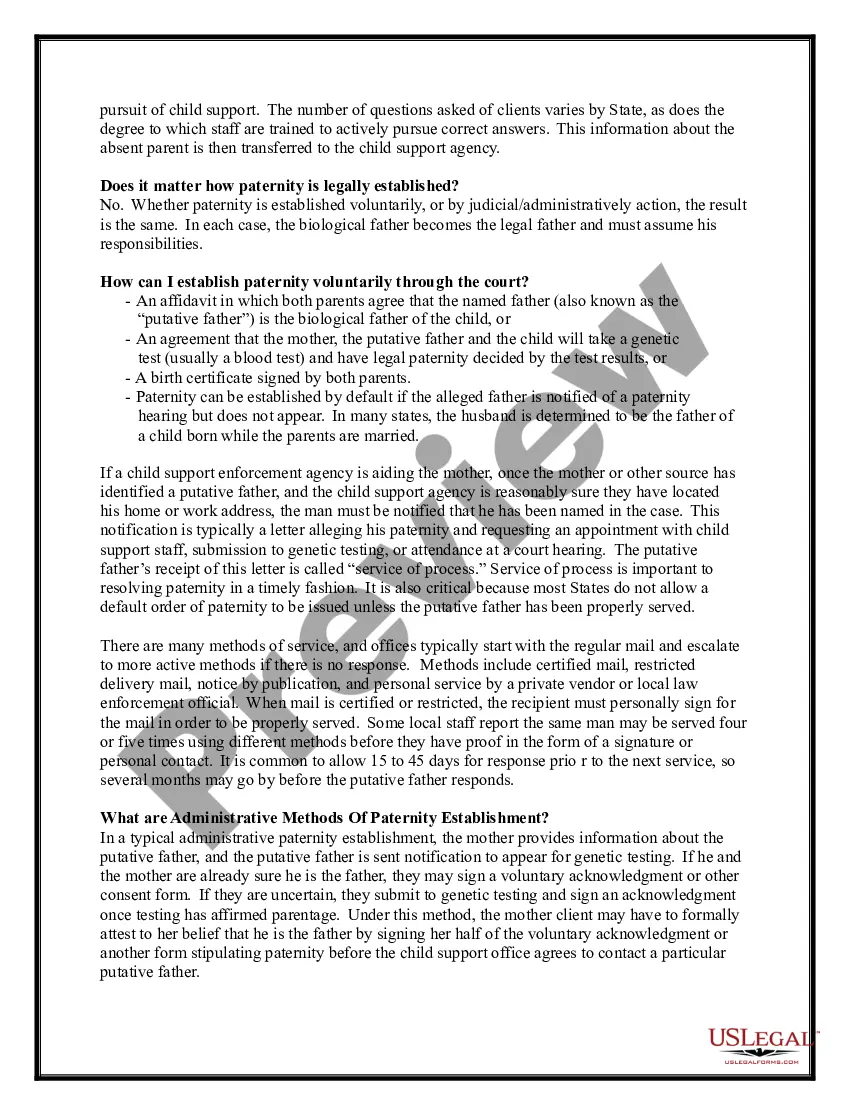
- Detailed discussion on voluntary paternity establishment and court action procedures.
- Overview of relevant state laws and genetic testing procedures.
- Conclusion summarizing the significance of understanding paternity laws.


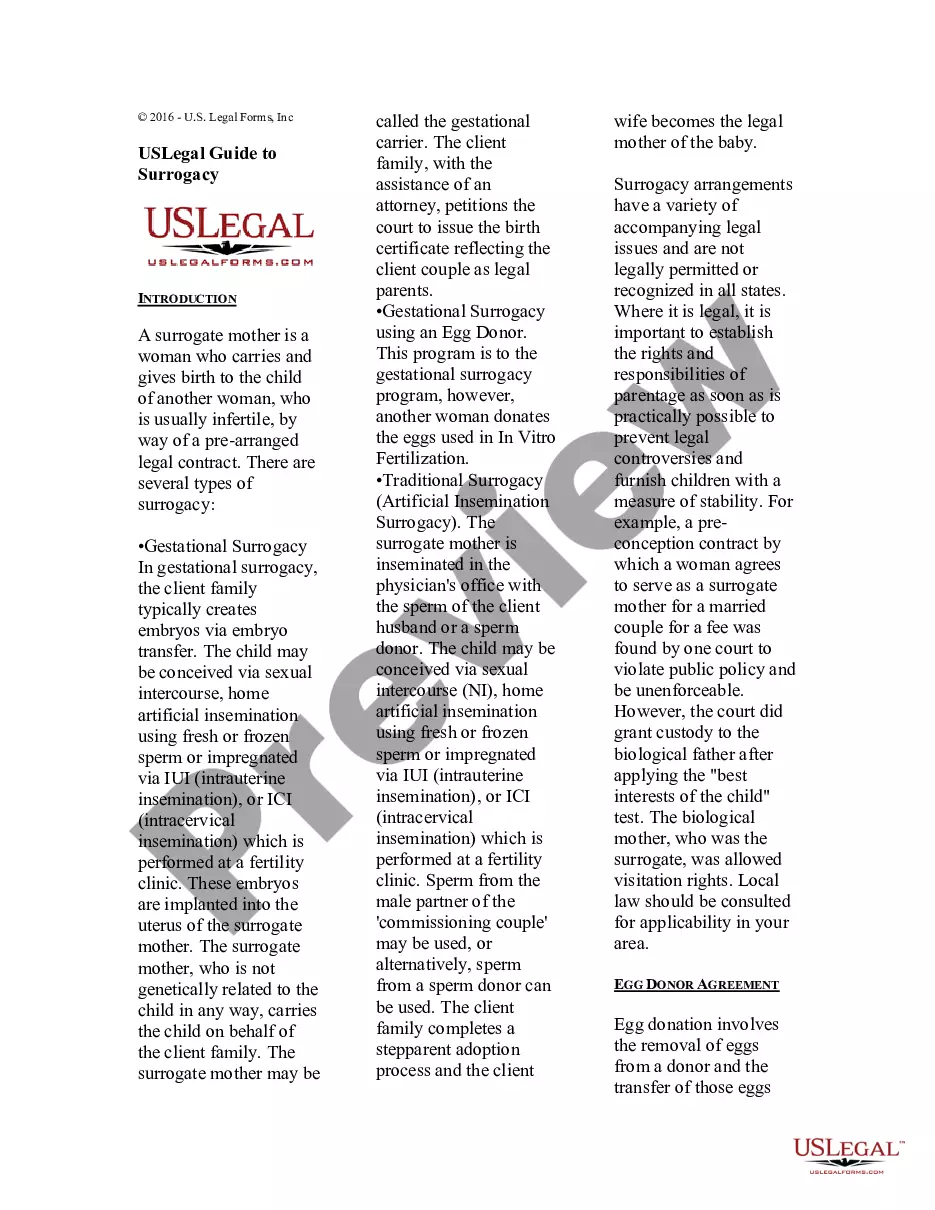
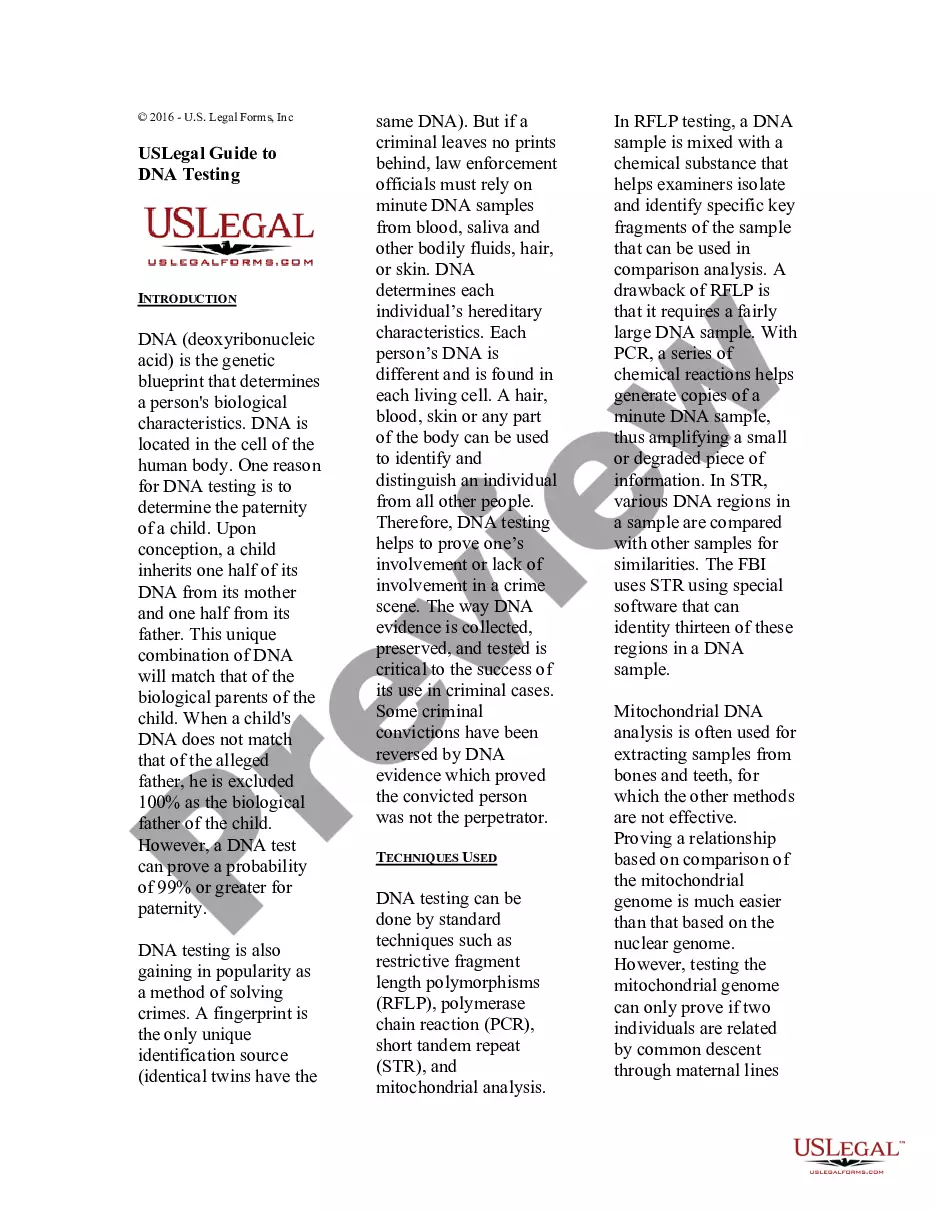
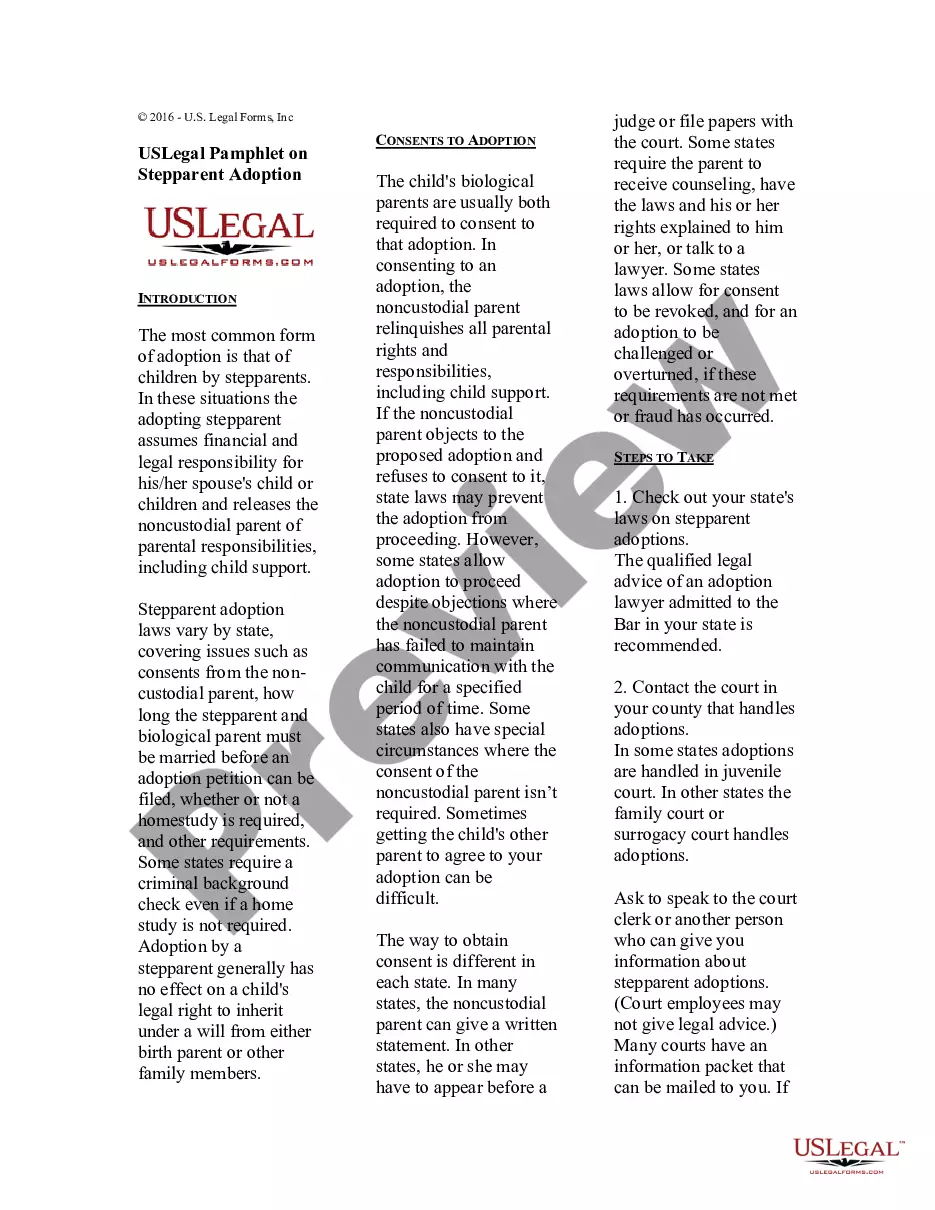
When to use this document
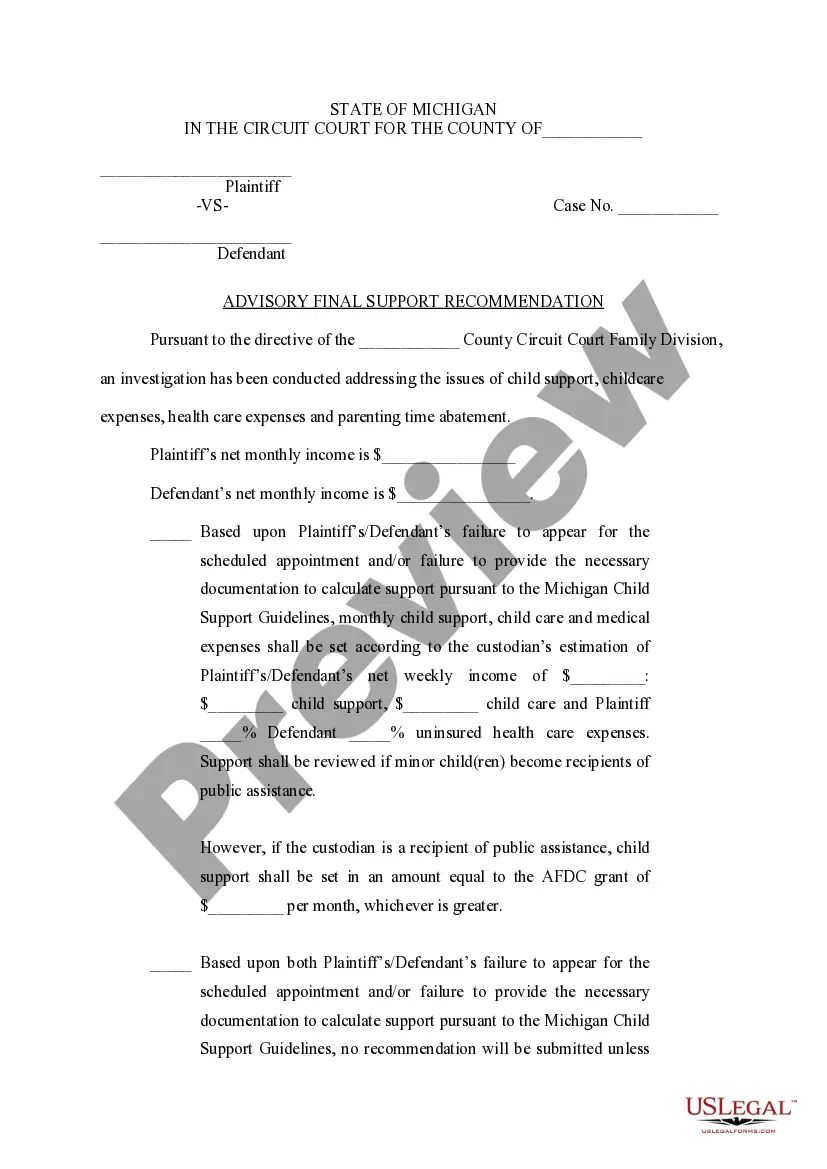
This handbook is useful in various scenarios, including when an unmarried couple has a child and needs to establish the legal paternity of the father. It is also applicable when there are disputes about paternity, when fatherhood needs to be legally recognized for support and custody purposes, or when parents wish to formalize their understanding of paternity rights and responsibilities. Additionally, it can help navigate situations where the voluntary acknowledgment of paternity is contested or complicated.
Intended users of this form
- Unmarried parents seeking to establish paternity legally.
- Fathers wanting to understand their rights and obligations regarding child support and custody.
- Mothers needing to secure child support from the biological father.
- Legal professionals assisting clients with paternity-related matters.
- Anyone involved in disputes around paternity and parental responsibilities.
Instructions for completing this form
- Review the handbook to understand your rights and obligations regarding paternity.
- Identify the parties involved, including the mother, child, and alleged father.
- Follow the guidelines for voluntary paternity acknowledgment if both parents agree.
- Initiate court proceedings if necessary, ensuring all documentation is properly filed.
- Consider genetic testing if paternity is disputed or uncertain.
Does this form need to be notarized?
Notarization is generally not required for this form. However, certain states or situations might demand it. You can complete notarization online through US Legal Forms, powered by Notarize, using a verified video call available anytime.
Get your form ready online
Our built-in tools help you complete, sign, share, and store your documents in one place.
Make edits, fill in missing information, and update formatting in US Legal Forms—just like you would in MS Word.
Download a copy, print it, send it by email, or mail it via USPS—whatever works best for your next step.
Sign and collect signatures with our SignNow integration. Send to multiple recipients, set reminders, and more. Go Premium to unlock E-Sign.
If this form requires notarization, complete it online through a secure video call—no need to meet a notary in person or wait for an appointment.
We protect your documents and personal data by following strict security and privacy standards.

Make edits, fill in missing information, and update formatting in US Legal Forms—just like you would in MS Word.

Download a copy, print it, send it by email, or mail it via USPS—whatever works best for your next step.

Sign and collect signatures with our SignNow integration. Send to multiple recipients, set reminders, and more. Go Premium to unlock E-Sign.

If this form requires notarization, complete it online through a secure video call—no need to meet a notary in person or wait for an appointment.

We protect your documents and personal data by following strict security and privacy standards.
Mistakes to watch out for
- Failing to understand the difference between biological and legal fatherhood.
- Not filing for paternity within the appropriate time frame.
- Assuming paternity is automatically established without signing necessary documents.
- Overlooking the importance of legal representation if disputes arise.
- Neglecting to consider genetic testing before signing paternity acknowledgment forms.
Why use this form online
- Convenient access to important legal information and guidelines.
- Editable templates that can be tailored to individual circumstances.
- Reliable resources prepared by licensed attorneys to ensure compliance with state laws.
- Immediate availability, avoiding delays associated with in-person consultations.
Legal use & context
- The handbook is designed to provide a clear overview of paternity laws across the U.S.
- It serves as a reference for individuals involved in paternity disputes or related legal processes.
- While it offers general guidance, it should not substitute for personalized legal advice from an attorney.
- Users are encouraged to refer to their respective state laws for specific procedures and requirements.
Looking for another form?




Form popularity
FAQ
Relationship between the child and both parents. Relationship between the child and any siblings. The child's mental and physical health. Each parent's mental and physical health. The child's involvement in his or her school, community, and home.
I don't like the father. Do I have to establish paternity? You don't have to file for paternity unless you want a child support order. If you wait for over four (4) years from the child's birth to file a paternity action, you might not be able to get back child support for those four years.
If a child is born to an unmarried mother, the mother is the sole custodial parent and legal guardian of the child unless a court order is issued stating otherwise. After paternity is established, the father may petition the court for visitation rights or for custody.
Kentucky is not a state that favors mothers over fathers. In fact, Kentucky is the first state to give both a fair shot. According to WFPL, the bill that offers parents a fair shot is a bill that states divorced parents receive joint custody as a default.