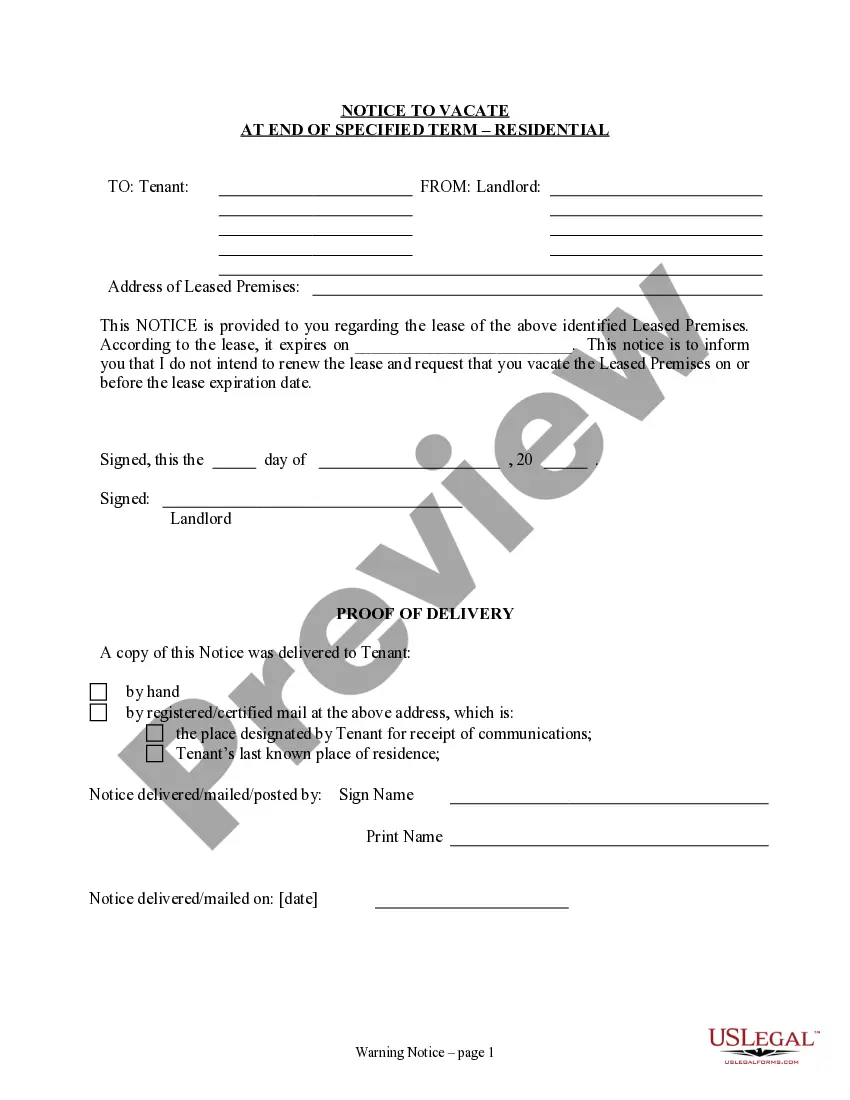
Massachusetts Notice of Intent Not to Renew at End of Specified Term from Landlord to Tenant for Residential Property
About this form
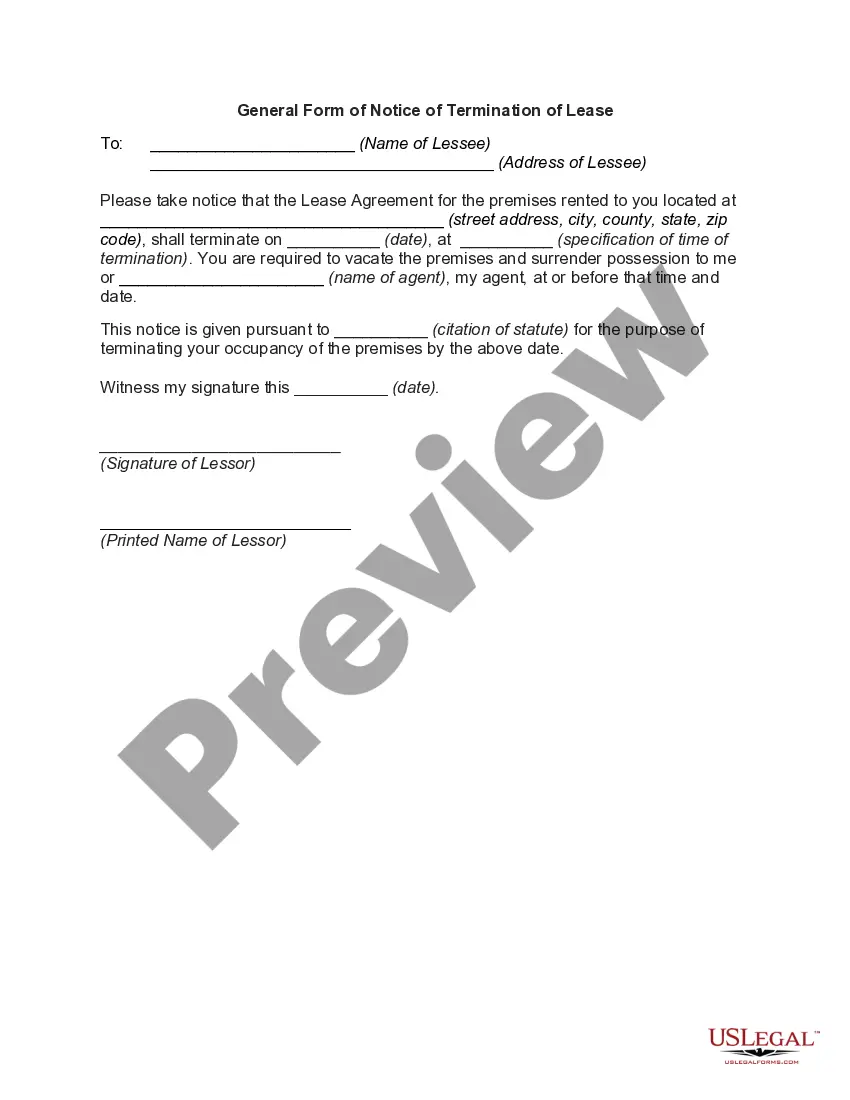
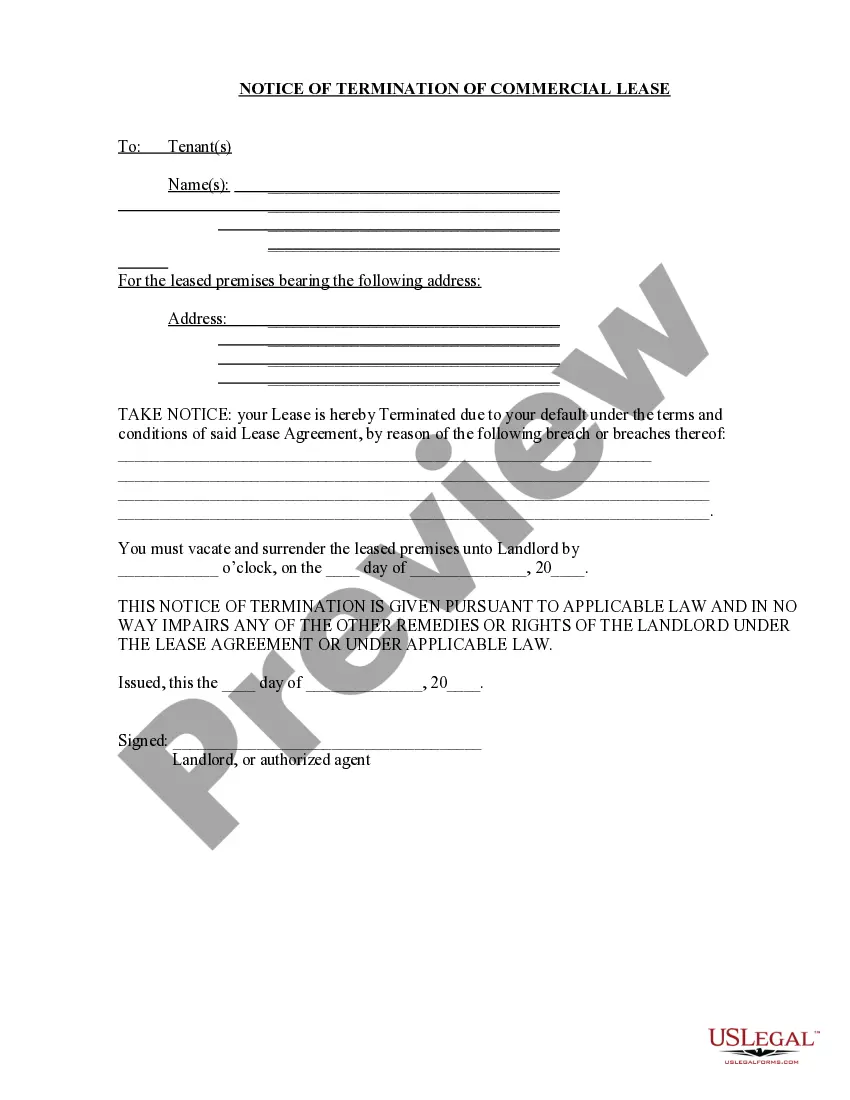
The Notice of Intent Not to Renew at End of Specified Term is a legal document used by landlords to inform tenants that their residential lease will not be renewed once it expires. This form is especially relevant when a lease has a defined end date and ensures that tenants are notified in advance, allowing them to prepare for vacating the property. It serves to prevent misunderstandings or disputes about lease renewal.
Main sections of this form
- Identification of the leased premises and parties involved.
- Expiration date of the current lease term.
- Statement of intent not to renew the lease.
- Request for the tenant to vacate the property.
- Signature of the landlord to validate the notice.

When this form is needed
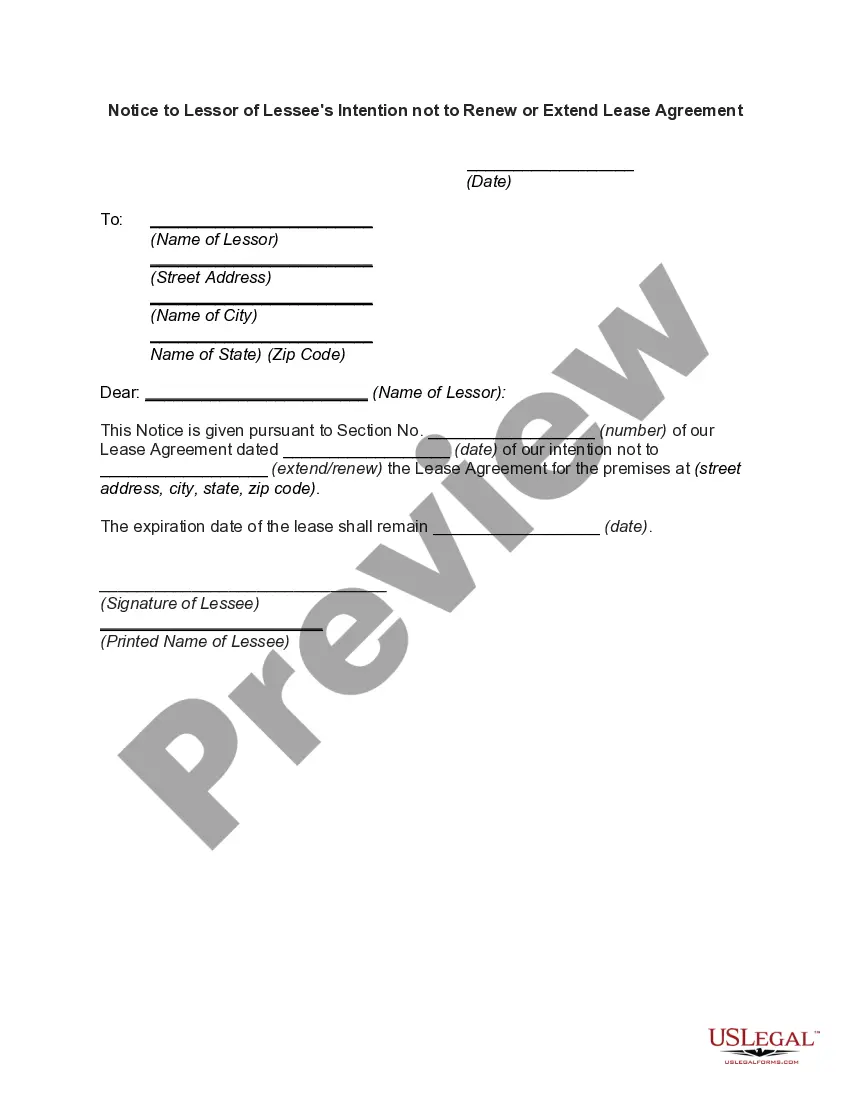
This form is necessary in situations where a landlord intends to terminate a lease that ends at a specific date without renewal. Using this notice is crucial to provide clarity and legal protection for both parties, particularly in cases where tenants may assume that a lease will automatically renew unless otherwise stated.
Who this form is for
- Landlords managing residential properties.
- Property managers acting on behalf of landlords.
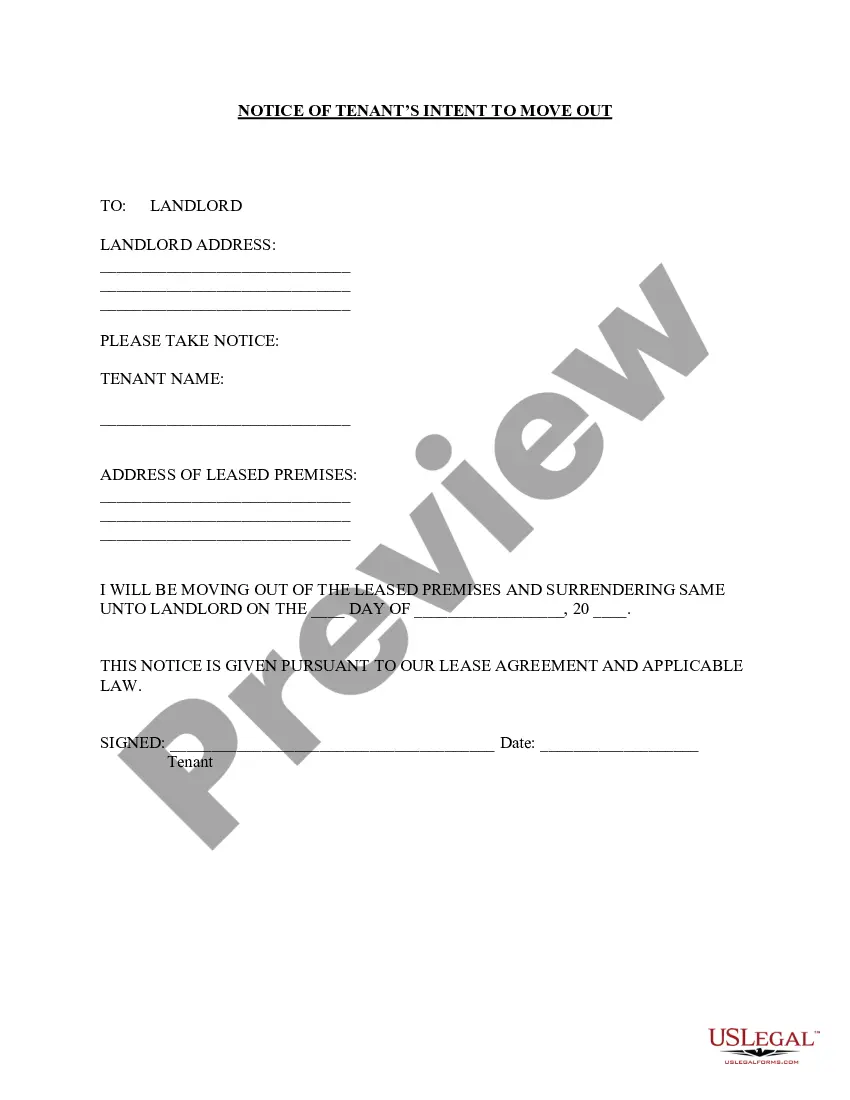
- Tenants wanting to confirm non-renewal of their lease.
How to prepare this document
- Identify the leased premises and the parties involved.
- Specify the expiration date of the lease.
- Clearly state the intent not to renew the lease.
- Request the tenant to vacate the premises by the expiration date.
- Sign and date the notice to authenticate it.
Is notarization required?
This form usually doesn’t need to be notarized. However, local laws or specific transactions may require it. Our online notarization service, powered by Notarize, lets you complete it remotely through a secure video session, available 24/7.
Get your form ready online
Our built-in tools help you complete, sign, share, and store your documents in one place.
Make edits, fill in missing information, and update formatting in US Legal Forms—just like you would in MS Word.
Download a copy, print it, send it by email, or mail it via USPS—whatever works best for your next step.
Sign and collect signatures with our SignNow integration. Send to multiple recipients, set reminders, and more. Go Premium to unlock E-Sign.
If this form requires notarization, complete it online through a secure video call—no need to meet a notary in person or wait for an appointment.
We protect your documents and personal data by following strict security and privacy standards.
Make edits, fill in missing information, and update formatting in US Legal Forms—just like you would in MS Word.
Download a copy, print it, send it by email, or mail it via USPS—whatever works best for your next step.
Sign and collect signatures with our SignNow integration. Send to multiple recipients, set reminders, and more. Go Premium to unlock E-Sign.

If this form requires notarization, complete it online through a secure video call—no need to meet a notary in person or wait for an appointment.
We protect your documents and personal data by following strict security and privacy standards.
Common mistakes
- Failing to provide the notice within the required time frame.
- Not including essential details about the lease or property.
- Using vague language that may cause confusion for tenants.
Why use this form online
- Easy access to legal forms anytime, anywhere.
- Editable templates that can be customized to specific needs.
- Reliable forms drafted by licensed attorneys, ensuring compliance.
Looking for another form?
Form popularity
FAQ
Can An Apartment Refuse To Renew A Lease? In most states, it is up to the property owner and manager to determine whether or not they want to extend their lease agreement with a tenant. If they do not want to continue to rent to that tenant for some reason, it is within their rights to do so.
You can immediately file an eviction if the tenant refuses to leave the property.If you took a rental payment from the tenant after their lease expired, you'll need to provide all the normal notices. When your tenant overstays their lease, you will still, however, be required to go through the normal eviction process.
At-will tenancy is subject to the will of both the tenant and the landlord (hence the name). In other words, the tenant can choose to leave and stop paying rent at any time, and the landlord can choose to stop accepting rent and ask the tenant to leave at any time.
A termination notice has to give the tenant 14 clear days before the tenant has to leave the residential premises. The day the notice is served on the tenant and the day the tenant moves out do not count as part of the 14 days.
With that said, the lease does not terminate immediately. Once the notice is delivered, the earliest the lease can terminate is 30 days after the beginning of the next rent period.
The law requires tenants at will to give landlords written notice that they are moving out at least one full rental period or 30 days (whichever is longer) before moving.
Though landlords must scrupulously respect tenants' rights, one thing they don't have to do is automatically renew tenant's leases. In fact, except for discriminatory or retaliatory reasons, landlords of rental properties can refuse to renew tenant leases as it suits them.
Landlords can choose not to renew a lease because the tenants smoke, because they got bedbugs, or because the tenant didn't do a good job following the lease while they were there.Retaliation: A landlord cannot give you a non-renewal, and cannot choose to not renew your lease, for reasons that are retaliatory.
In Massachusetts, the landlord cannot terminate a lease, refuse to renew a lease, or raise the rent on a tenant who has: Exercised a legal right.