Massachusetts Paving Contract for Contractor
About this form
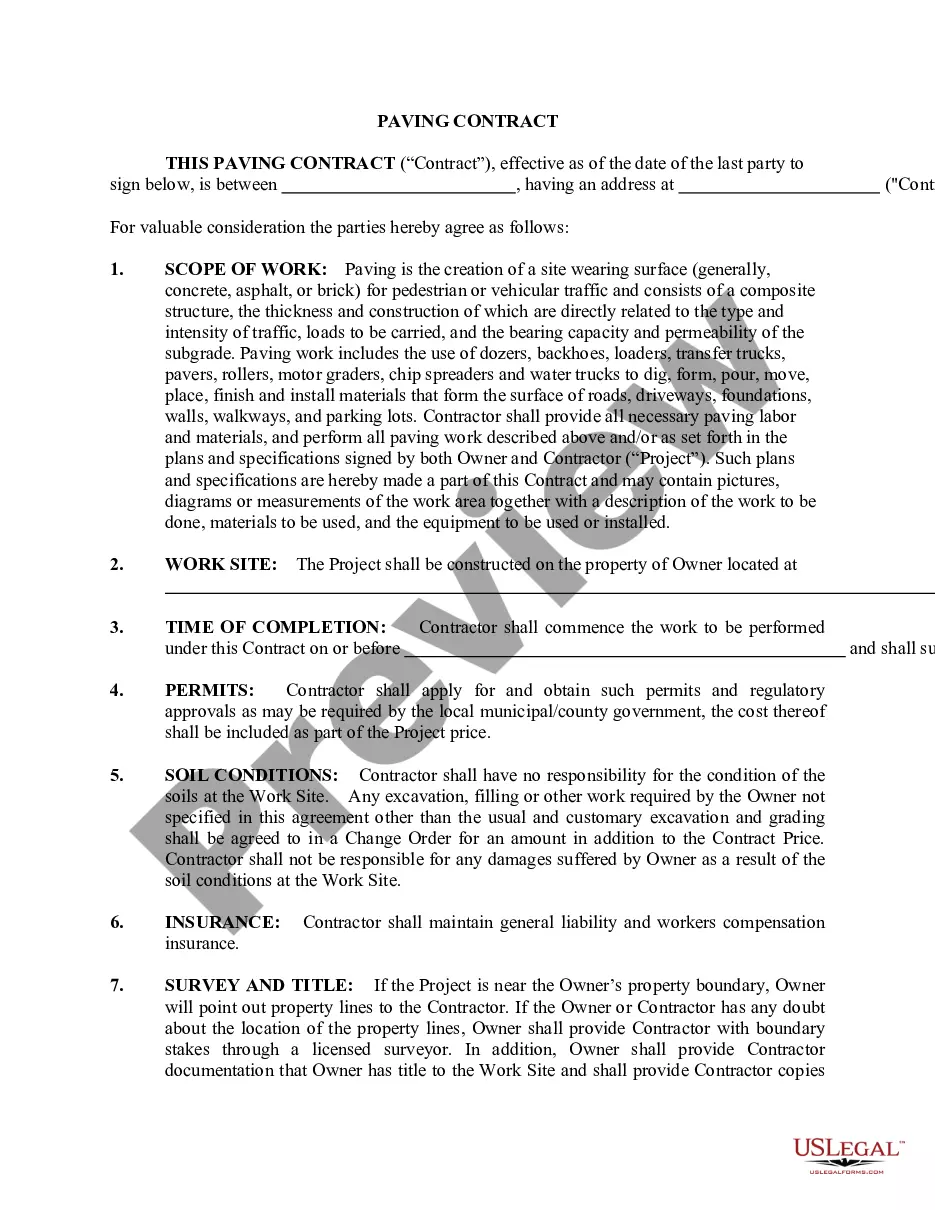
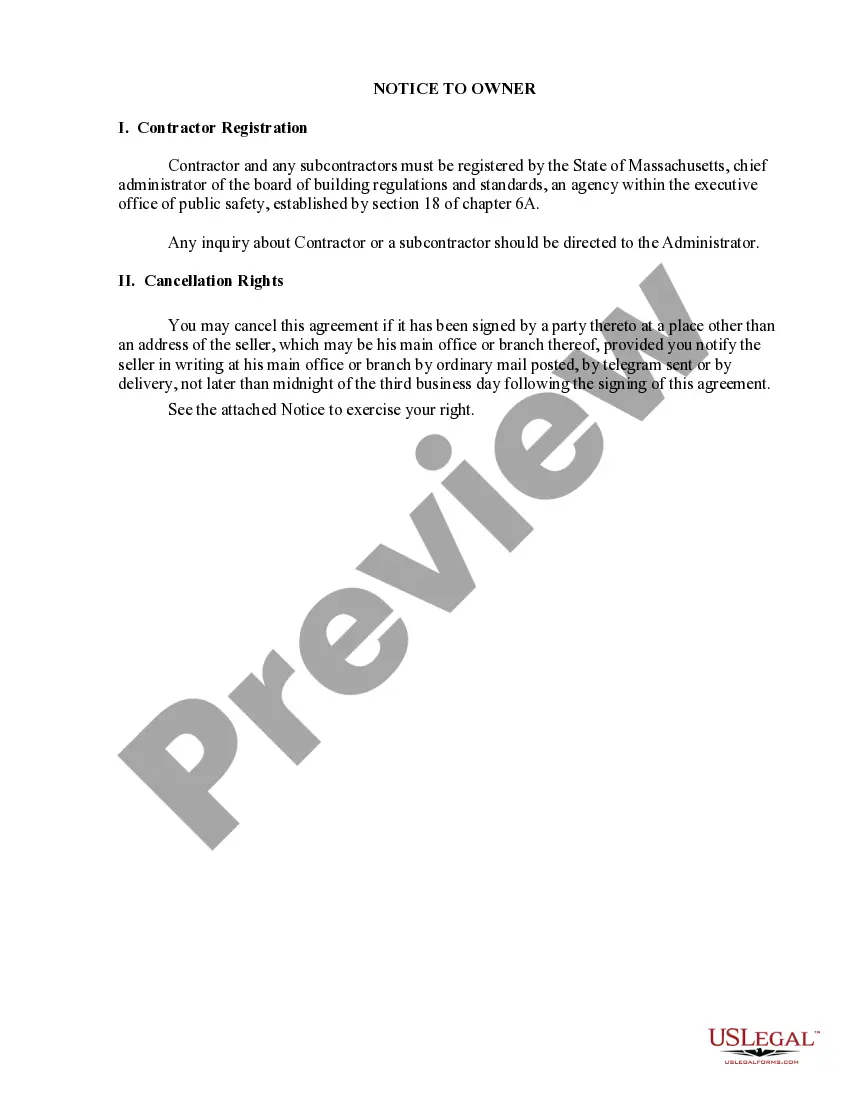
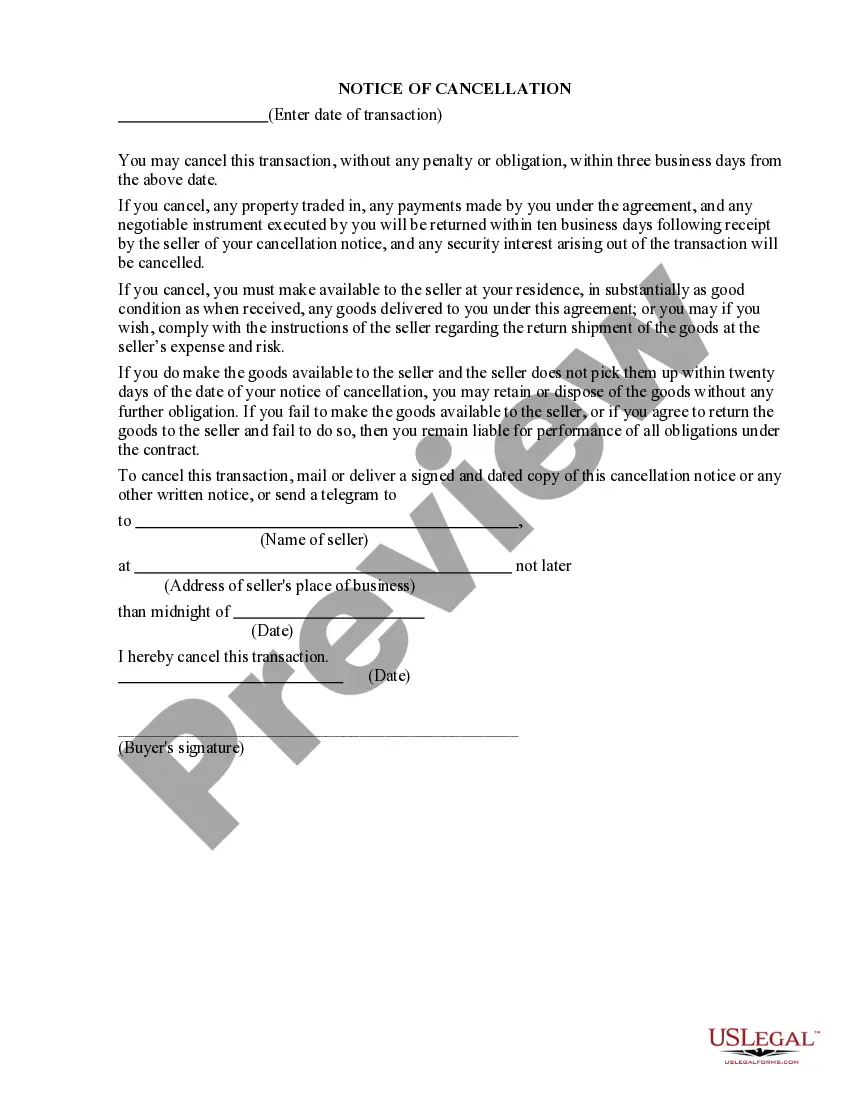
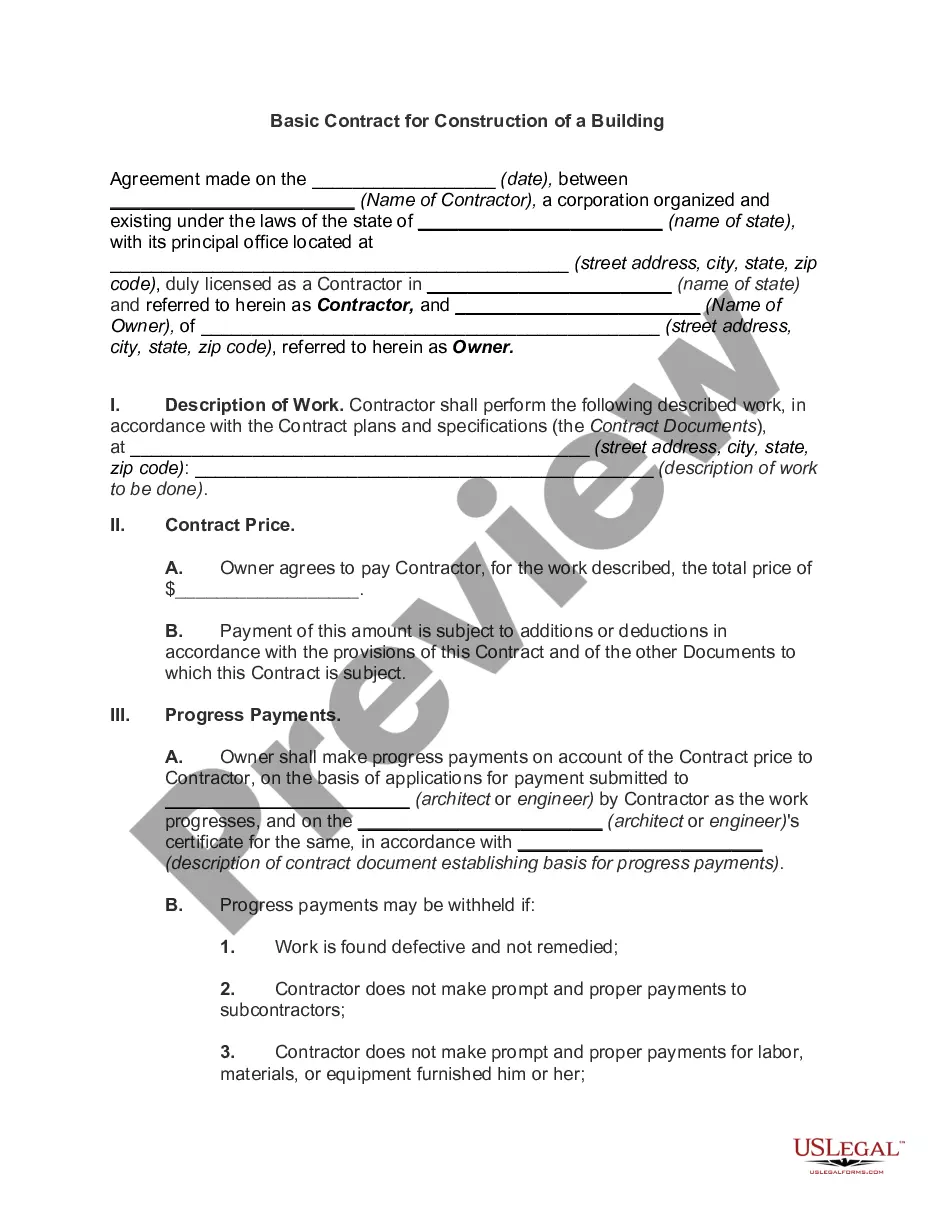
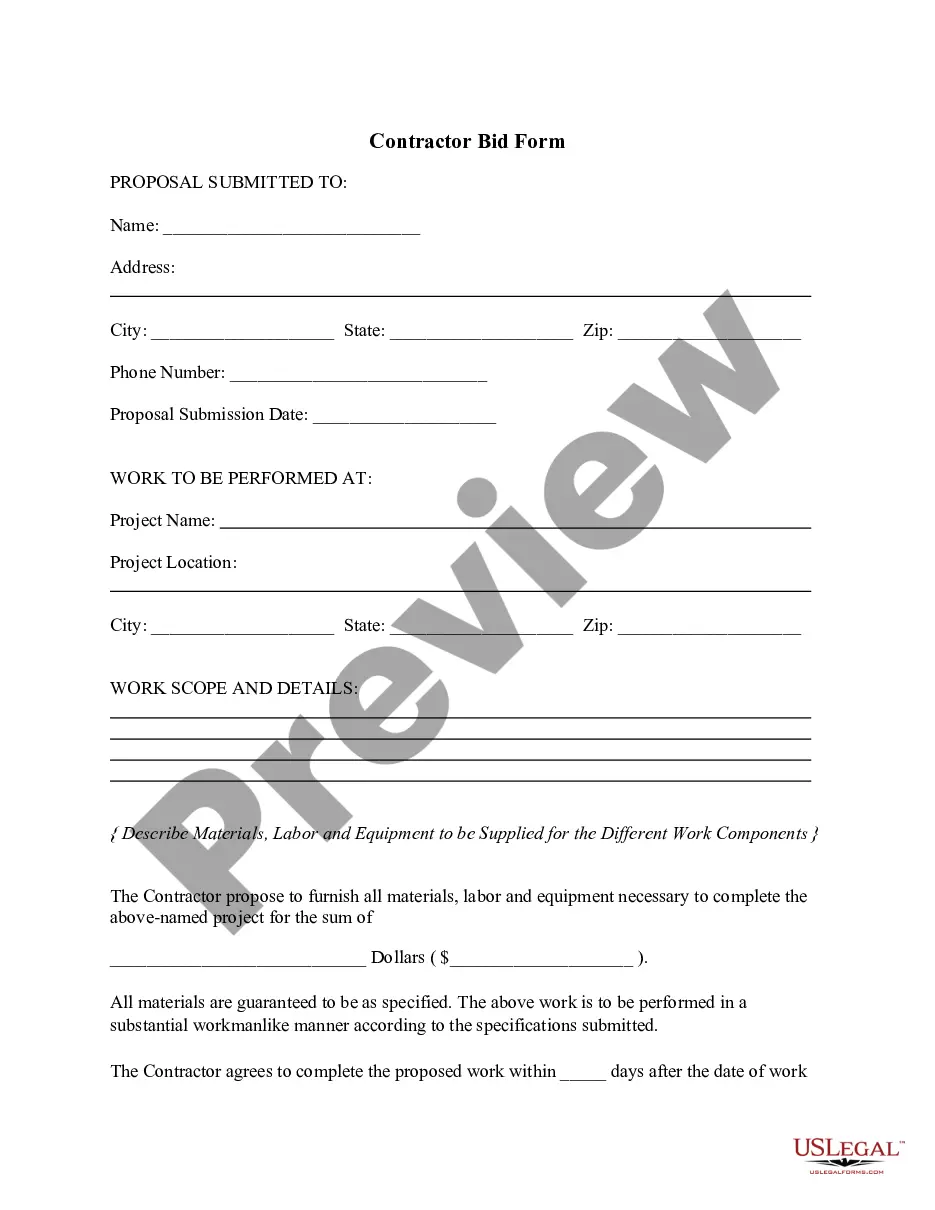
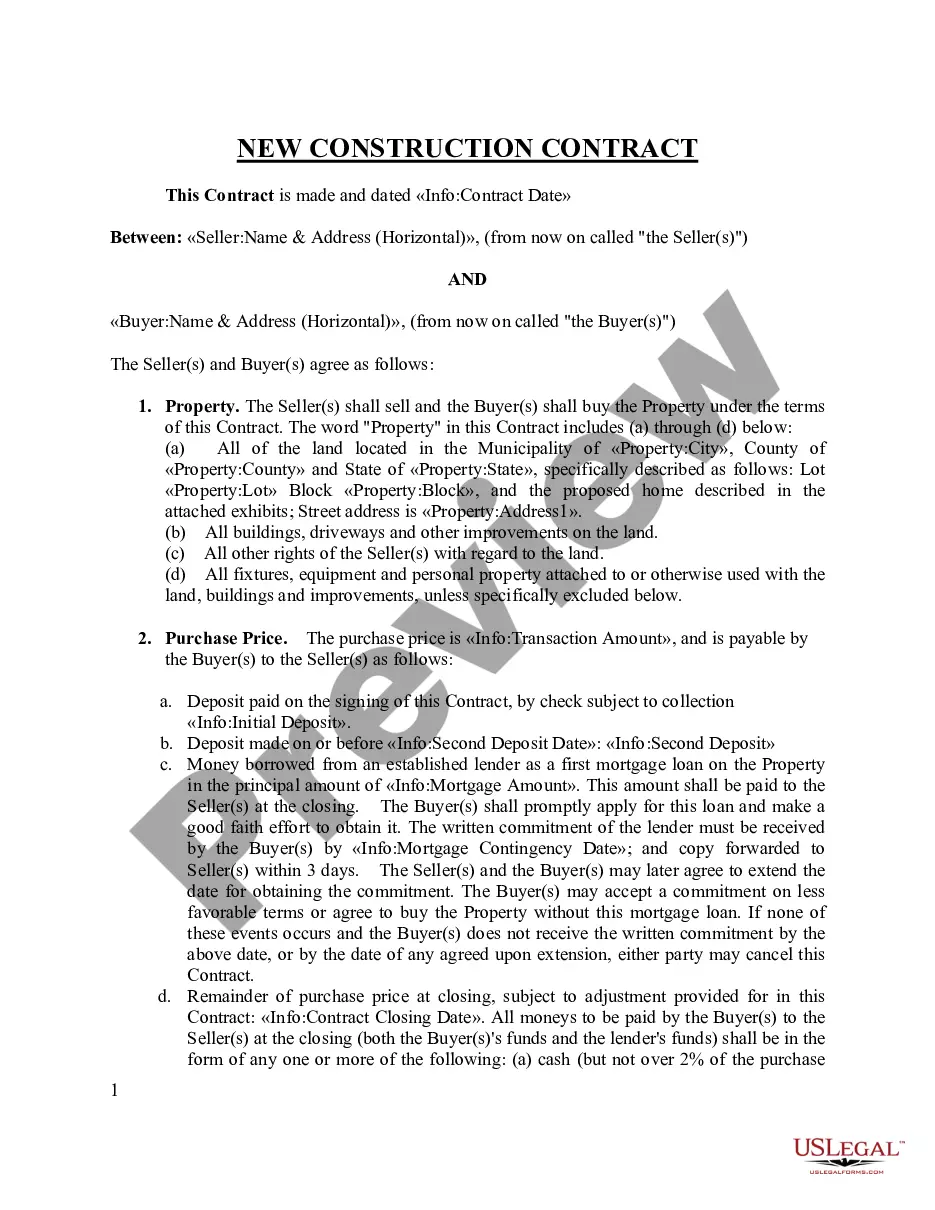
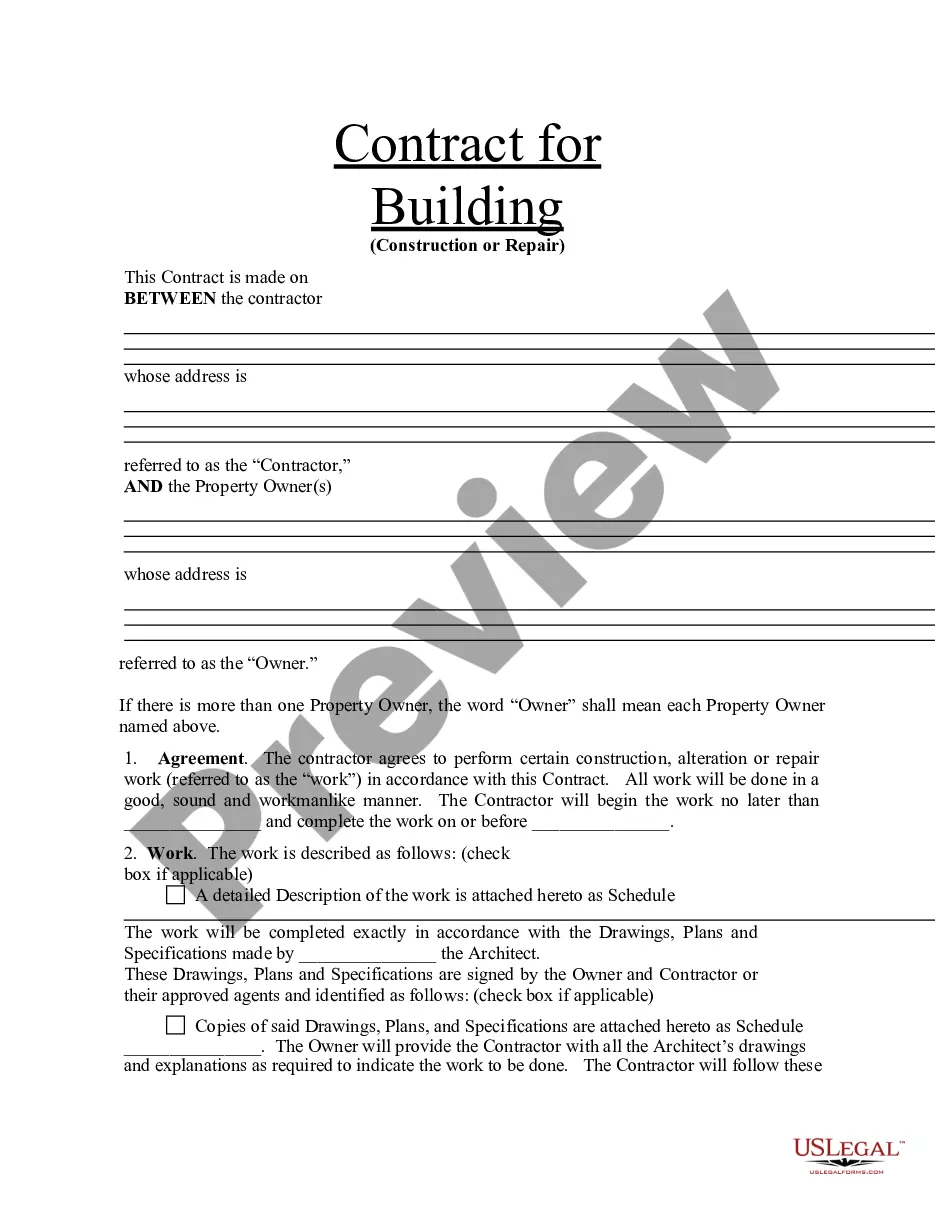
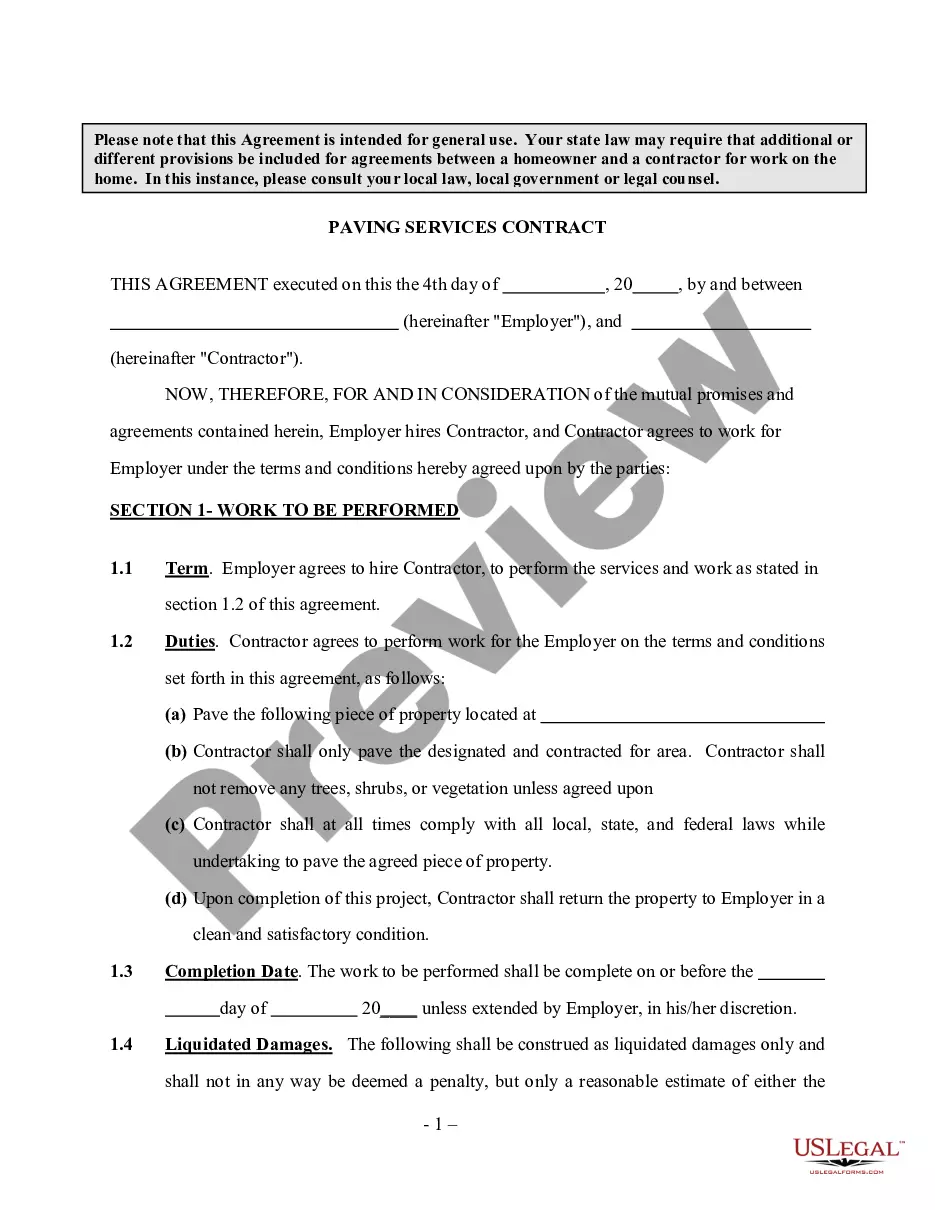
The Paving Contract for Contractor is a legal document that formalizes the agreement between a paving contractor and a property owner. This contract outlines the terms of service, including payment arrangements, work specifications, and responsibilities related to permits and insurance. It is specifically designed to comply with the laws of Massachusetts, making it a reliable choice for parties in that jurisdiction looking to ensure a clear understanding and enforceability of their agreement.
What’s included in this form
- Permits: Indicates the contractor's responsibility for obtaining necessary permits and approvals.
- Soil conditions: Clarifies that the contractor is not liable for existing soil conditions at the work site.
- Insurance: Outlines the contractor's obligation to maintain general liability and workers compensation insurance.
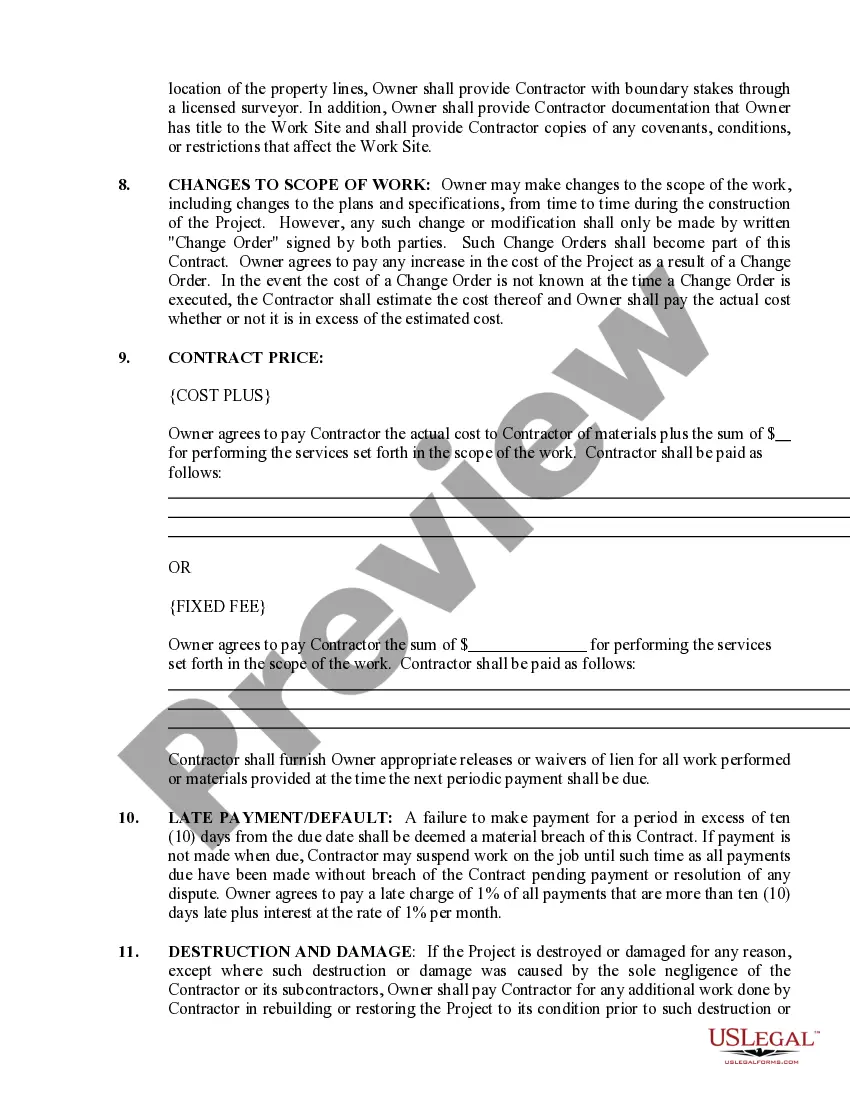
- Changes to scope: Details the process for making changes to the project scope through written change orders.
- Contract price: Allows for both fixed fee and cost-plus payment arrangements.
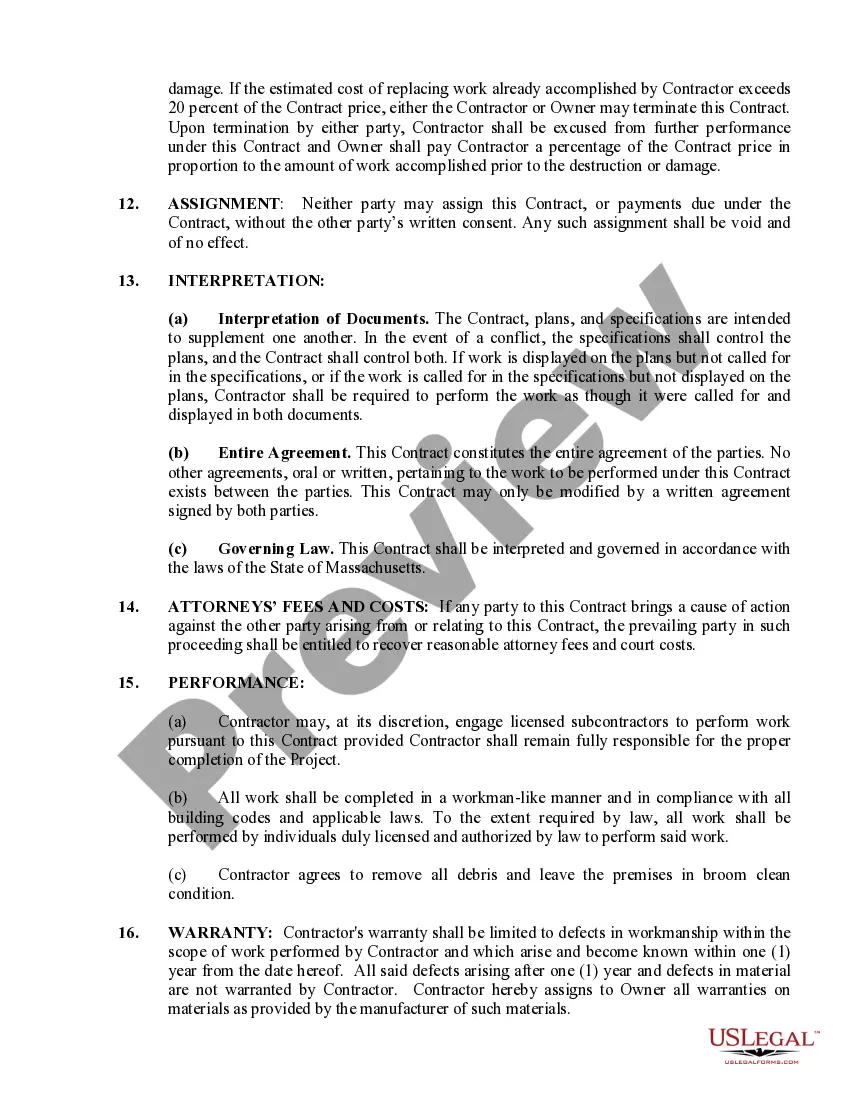
- Warranty: Defines the contractor's warranty regarding workmanship and materials.
Common use cases
This form should be used when a property owner wants to engage a paving contractor for services such as road, driveway, or parking lot paving. It is essential in situations where there are variations in project scope or budget, particularly if the project may require changes during construction. By using this contract, both parties can protect their interests and ensure responsibilities and expectations are clearly established.
Who should use this form
- Property owners who are hiring a paving contractor for any paving projects.
- Paving contractors who need a standardized contract to formalize their agreements with clients.
- Individuals or businesses in Massachusetts undertaking paving projects requiring legal documentation.
Steps to complete this form
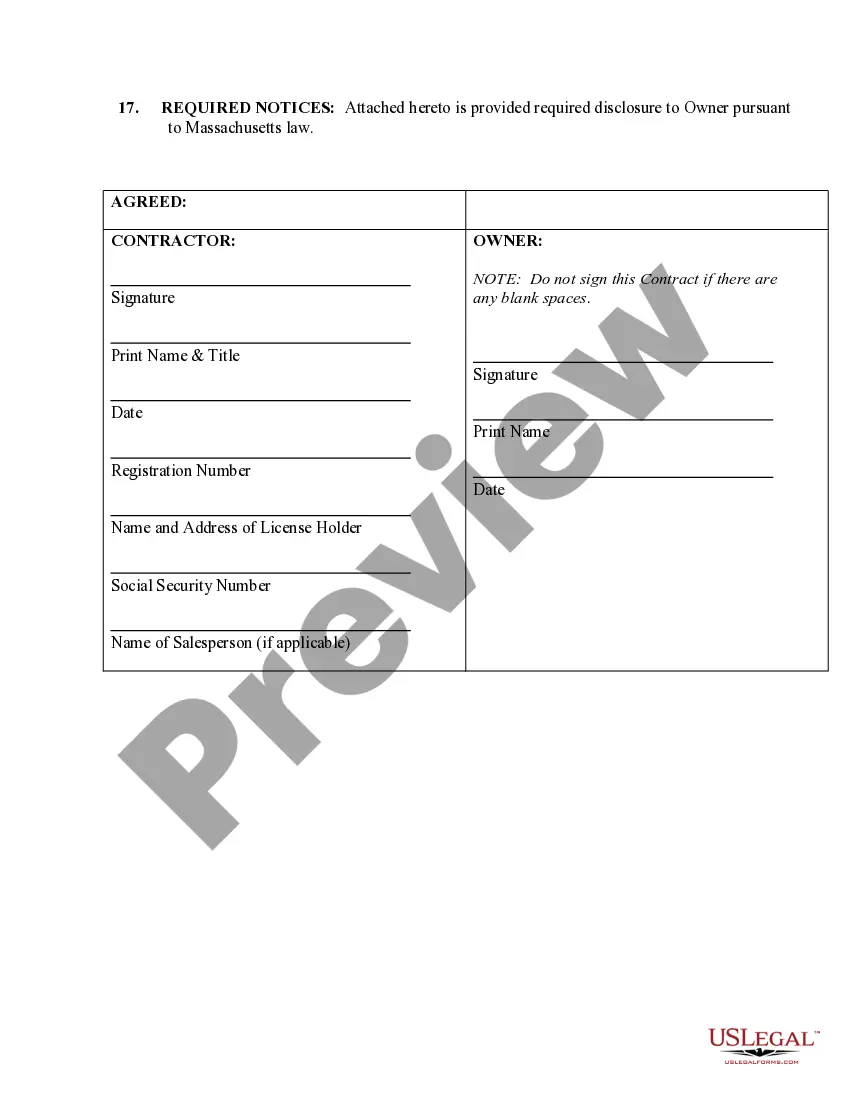
- Identify the parties: Enter the names and contact details of both the contractor and the property owner.
- Specify the project: Clearly describe the paving work to be done and any specific requirements.
- Include payment details: Choose between a cost-plus or fixed fee arrangement and state the contract price.
- Outline project changes: Detail how changes can be made through written change orders.
- Sign and date: Ensure that both parties sign and date the contract to make it effective.
Is notarization required?
This form usually doesn’t need to be notarized. However, local laws or specific transactions may require it. Our online notarization service, powered by Notarize, lets you complete it remotely through a secure video session, available 24/7.
Get your form ready online
Our built-in tools help you complete, sign, share, and store your documents in one place.
Make edits, fill in missing information, and update formatting in US Legal Forms—just like you would in MS Word.
Download a copy, print it, send it by email, or mail it via USPS—whatever works best for your next step.
Sign and collect signatures with our SignNow integration. Send to multiple recipients, set reminders, and more. Go Premium to unlock E-Sign.
If this form requires notarization, complete it online through a secure video call—no need to meet a notary in person or wait for an appointment.
We protect your documents and personal data by following strict security and privacy standards.

Make edits, fill in missing information, and update formatting in US Legal Forms—just like you would in MS Word.

Download a copy, print it, send it by email, or mail it via USPS—whatever works best for your next step.

Sign and collect signatures with our SignNow integration. Send to multiple recipients, set reminders, and more. Go Premium to unlock E-Sign.

If this form requires notarization, complete it online through a secure video call—no need to meet a notary in person or wait for an appointment.

We protect your documents and personal data by following strict security and privacy standards.
Common mistakes to avoid
- Failing to clearly define the scope of work can lead to misunderstandings.
- Not including necessary permits may result in legal issues or fines.
- Neglecting to specify payment terms can lead to disputes over costs.
- Not having both parties sign the contract can render it unenforceable.
Benefits of completing this form online
- Convenience: Download the form instantly and fill it at your convenience.
- Editability: Customize the contract terms according to your specific needs.
- Reliability: This form is drafted by licensed attorneys to ensure legal soundness.
- This contract is legally binding once signed by both parties.
- All terms must comply with Massachusetts construction law to be enforceable.
- Changes or amendments to the contract must be documented in writing to maintain legality.
Quick recap
- The Paving Contract for Contractor establishes clear terms between property owners and contractors.
- It is essential to understand the implications of permits and changes to project scope.
- Using this contract can protect the interests of both parties and help prevent disputes.
Looking for another form?
Form popularity
FAQ
Name of contractor and contact information. Name of homeowner and contact information. Describe property in legal terms. List attachments to the contract. The cost. Failure of homeowner to obtain financing. Description of the work and the completion date. Right to stop the project.
Identifying/Contact Information. Title and Description of the Project. Projected Timeline and Completion Date. Cost Estimate and Payment Schedule. Stop Work Clause and Stop Payment Clause. Act of God Clause. Change Order Agreement. Warranty.
Massachusetts law prohibits a contractor requiring an initial deposit of over 33% of the total contract price unless special materials are ordered. Any contractor demanding over a 33% deposit should raise a huge red flag .
You shouldn't pay more than 10 percent of the estimated contract price upfront, according to the Contractors State License Board.
Begin with the Date and the Address of the Other Party. Start with the Basic Details of the Planned Work. Include Special Stipulations. State Whether There Will be a Further Agreement. Create an Area for Signatures. Sign and Date the Contract Letter.
Contract Types Overview. Express and Implied Contracts. Unilateral and Bilateral Contracts. Unconscionable Contracts. Adhesion Contracts. Aleatory Contracts. Option Contracts. Fixed Price Contracts.
Both parties should sign the contract, and both should be bound by the terms and conditions spelled out in the agreement. In general that means the contractor will be obliged to provide specified materials and to perform certain services for you. In turn, you will be required to pay for those goods and that labor.
#1: Review Your Bid. #2: Review Complete Plans. #3: Review All Specifications. #4: Visit the Job Site. #5: Review the Job Schedule. #6: Complete a Project Checklist. #7: Verify Project Funding. #8: Read Complete Contract.