Louisiana Identity Theft by Known Imposter Package
What this form package covers
The Louisiana Identity Theft by Known Imposter Package provides essential forms to help individuals whose identity has been stolen by someone they know. This package focuses on facilitating communication with creditors and other relevant entities to rectify the damage caused by the identity theft. It differs from other identity theft packages by specifically addressing situations involving known imposters, which allows victims to handle their unique circumstances more effectively.
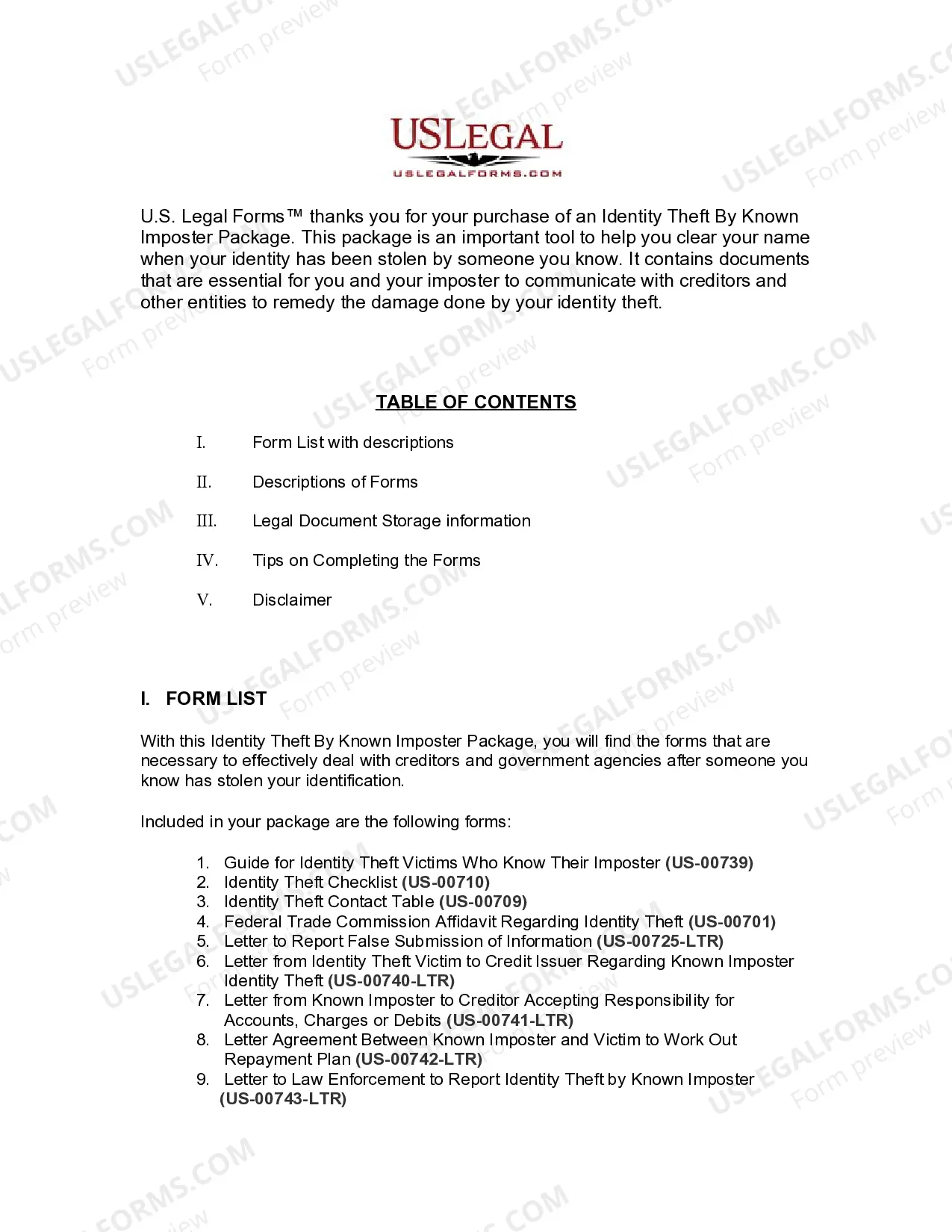
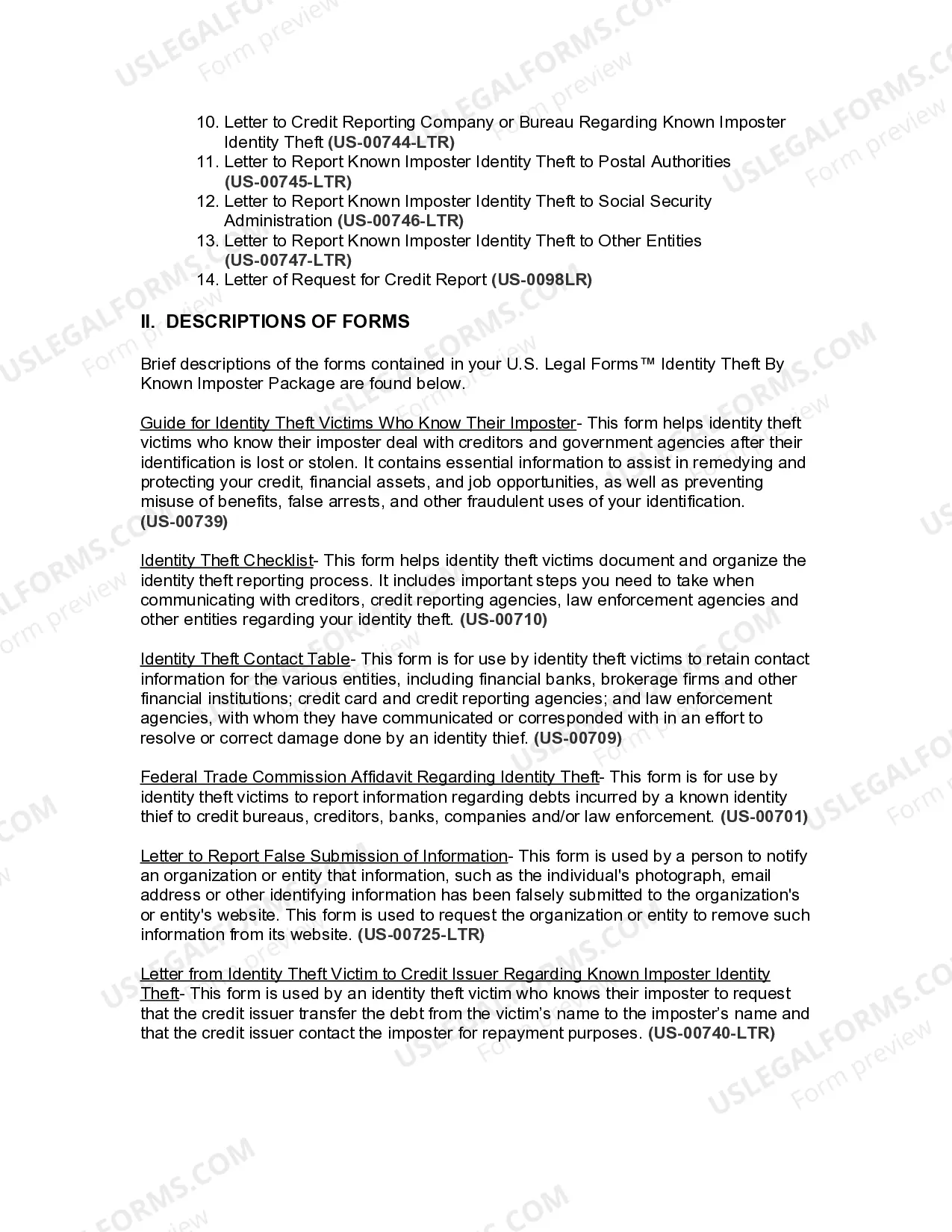
Forms you’ll find in this package
- Federal Trade Commission Affidavit regarding Identity Theft
- Identity Theft Contact Table
- Identity Theft Checklist
- Sample Letter to Report False Submission of Information
- Guide for Identity Theft Victims Who Know Their Imposter
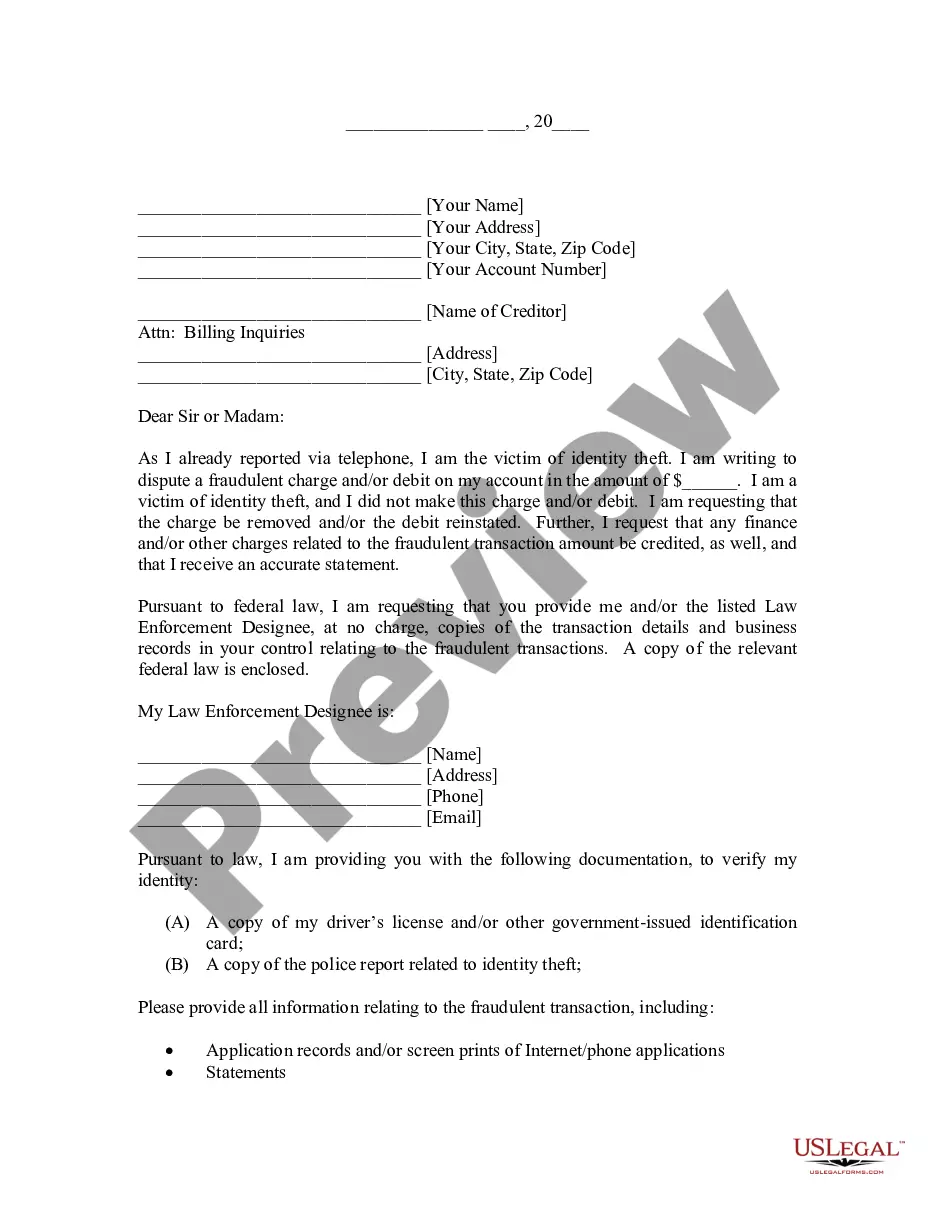
- Letter from Identity Theft Victim to Credit Issuer Regarding Known Imposter Identity Theft
- Letter from Known Imposter to Creditor Accepting Responsibility for Accounts, Charges or Debits
- Letter Agreement Between Known Imposter and Victim to Work Out Repayment Plan
- Letter to Law Enforcement to Report Identity Theft by Known Imposter
- Letter to Credit Reporting Company or Bureau Regarding Known Imposter Identity Theft
- Letter to Report Known Imposter Identity Theft to Postal Authorities
- Letter to Report Known Imposter Identity Theft to Social Security Administration
- Letter to Report Known Imposter Identity Theft to Other Entities
- Sample Letter for Request for Free Credit Report Allowed by Federal Law
When to use this form package
This package is useful in various situations, including:
- When your identity has been stolen by someone you know personally.
- If you need to communicate with creditors regarding fraudulent accounts opened in your name.
- When you must report the impersonation to law enforcement agencies.
- When you require assistance in managing the complex process of identity theft recovery.
Intended users of this form package
- Victims of identity theft involving known individuals.
- Individuals seeking to repair their credit and financial records after identity theft.
- Those needing to notify creditors, law enforcement, and other agencies about their situation.
- Anyone looking for structured guidance to navigate the identity theft recovery process.
Steps to complete these forms
- Review the included forms and guides to understand your options.
- Identify the imposter and gather any evidence related to the identity theft.
- Fill out the forms, ensuring all information is accurate and complete.
- Have the known imposter sign the necessary letters and agreements as required.
- Submit the completed documents to the appropriate creditors and agencies.
- Keep copies of all correspondence for your records.
Do forms in this package need to be notarized?
Forms in this package typically do not require notarization unless required by local law. However, it is important to verify specific requirements for particular forms as some entities may have their own notarization policies.
Get your form ready online
Our built-in tools help you complete, sign, share, and store your documents in one place.
Make edits, fill in missing information, and update formatting in US Legal Forms—just like you would in MS Word.
Download a copy, print it, send it by email, or mail it via USPS—whatever works best for your next step.
Sign and collect signatures with our SignNow integration. Send to multiple recipients, set reminders, and more. Go Premium to unlock E-Sign.
If this form requires notarization, complete it online through a secure video call—no need to meet a notary in person or wait for an appointment.
We protect your documents and personal data by following strict security and privacy standards.

Make edits, fill in missing information, and update formatting in US Legal Forms—just like you would in MS Word.

Download a copy, print it, send it by email, or mail it via USPS—whatever works best for your next step.

Sign and collect signatures with our SignNow integration. Send to multiple recipients, set reminders, and more. Go Premium to unlock E-Sign.

If this form requires notarization, complete it online through a secure video call—no need to meet a notary in person or wait for an appointment.

We protect your documents and personal data by following strict security and privacy standards.
Mistakes to watch out for
- Failing to gather sufficient evidence before submitting forms.
- Not notifying all relevant creditors and agencies involved in the identity theft.
- Neglecting to review the fully completed forms for accuracy.
- Overlooking the importance of obtaining signatures from the known imposter.
Benefits of using this package online
- Convenient access to all essential forms in one package.
- Ability to fill out and edit forms from the comfort of your home.
- Comprehensive guidance to navigate the complexities of identity theft recovery.
- Cost savings of up to forty percent compared to purchasing forms separately.
Looking for another form?

Form popularity
FAQ
Skimmer devices. Thieves can copy your credit card information using a hand held device called a skimmer. Dumpster diving. Printed documents that state private information should be shredded before being thrown away. Mail theft. Internet. Phishing. Pretext Calling. Shoulder Surfing. Card Verification Value Code Requests.
You may be able to have your identity theft charges dropped if: You didn't obtain use a person's information unlawfully If you did not obtain or use someone else's personal information unlawfully, you are not guilty of identity theft.
Aggravated identity theft is punishable by a mandatory minimum sentence of imprisonment for two years or by imprisonment for five years if it relates to a terrorism offense. At least thus far, the government has rarely prosecuted the five-year terrorism form of the offense.
Check your credit card statements and bank account. If you notice any suspicious activity, alert your bank or credit union right away. Run a credit report. U.S. citizens are entitled to a free one every 12 months. Monitor your finances closely.
Report Identity Theft. Report identity (ID) theft to the Federal Trade Commission (FTC) online at IdentityTheft.gov or by phone at 1-877-438-4338.
Identity thieves can also obtain your personal information by stealing your wallet or purse. When this occurs, we recommend that you immediately contact credit card companies, bank, and credit bureaus to let them know of your situation.
Go to your local police office with: Tell the police someone stole your identity and you need to file a report.
A thief can get your personal information in person or online.steal your mail or garbage to get your account numbers or your Social Security number. trick you into sending personal information in an email. steal your account numbers from a business or medical office.
The identified categories are: Physical Theft: examples of this would be dumpster diving, mail theft, skimming, change of address, reshipping, government records, identity consolidation. Technology-Based: examples of this are phishing, pharming, DNS Cache Poisoning, wardriving, spyware, malware and viruses.