Kentucky Last Will and Testament for Divorced Person Not Remarried with No Children
Overview of this form
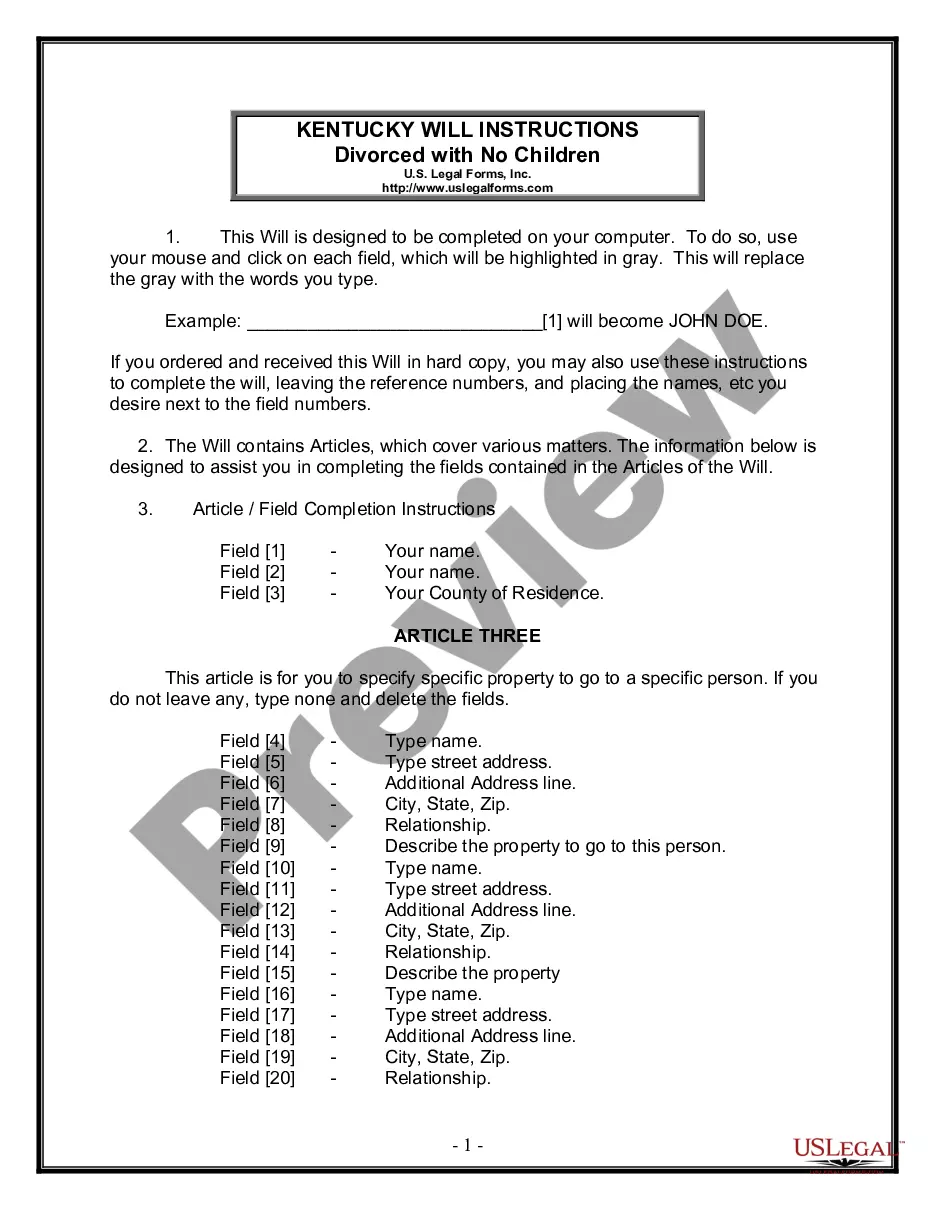
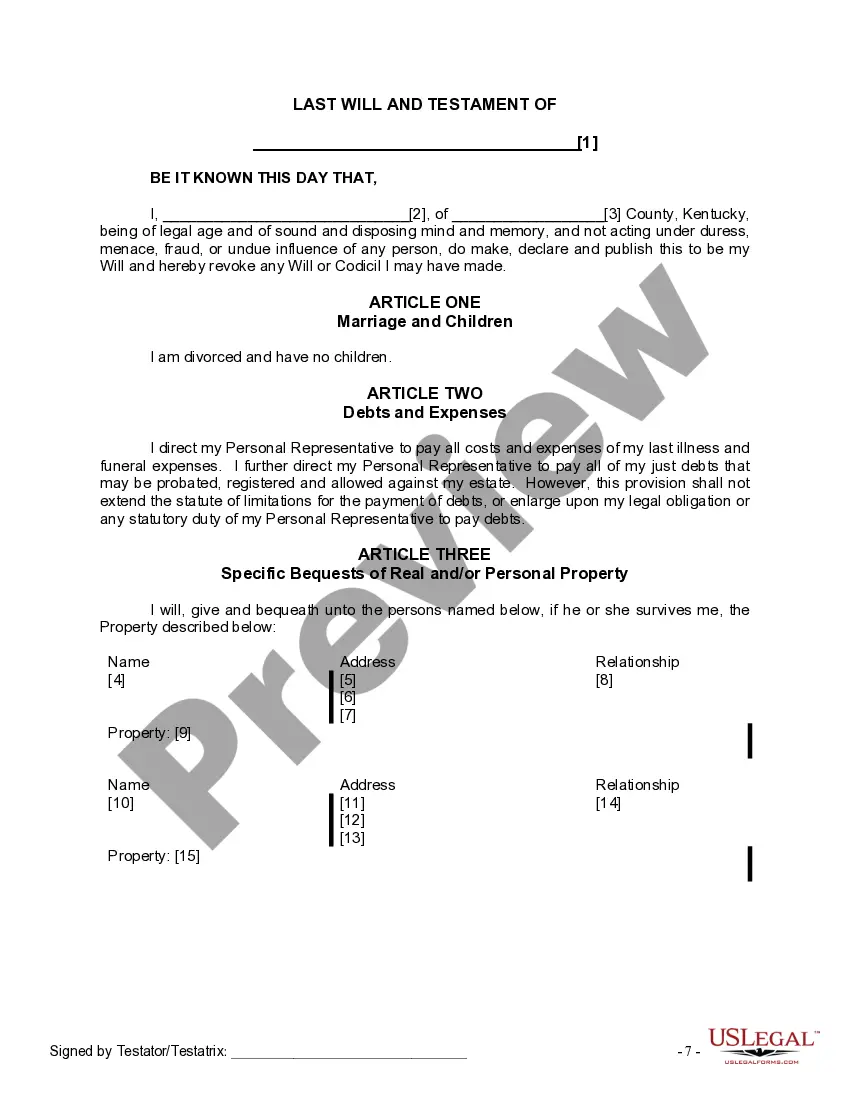
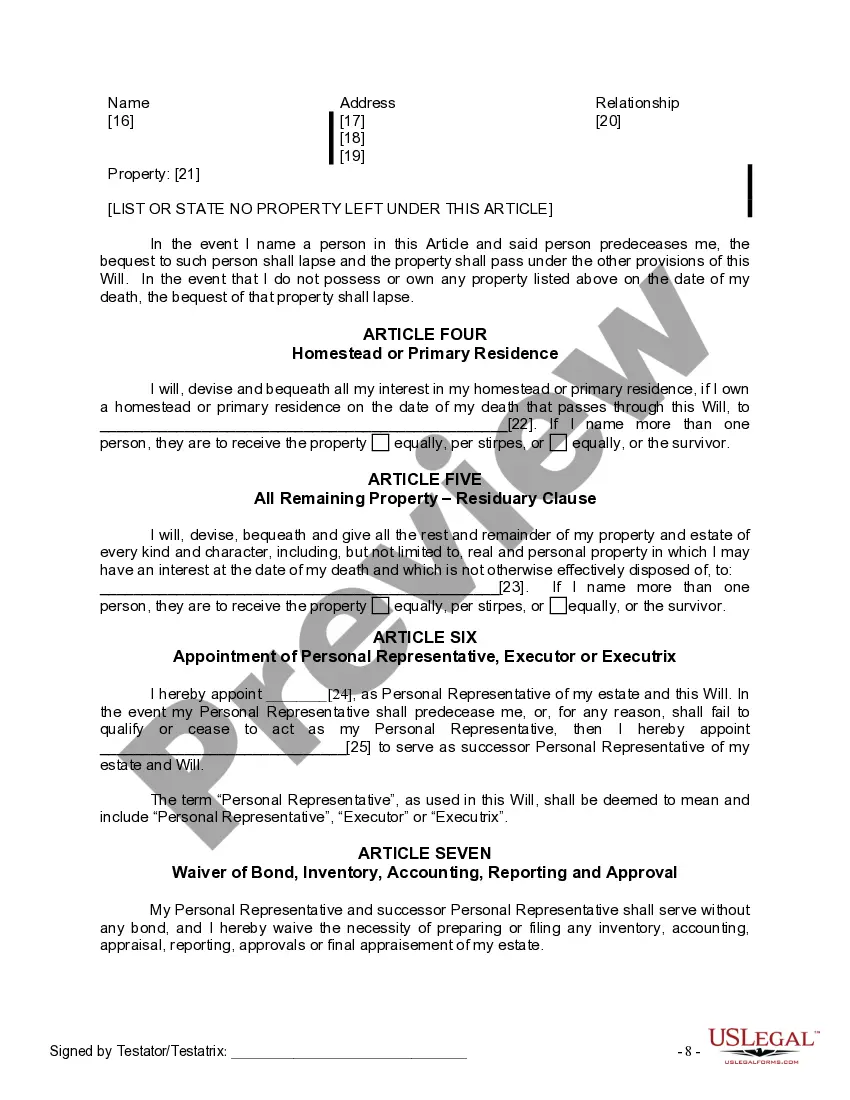
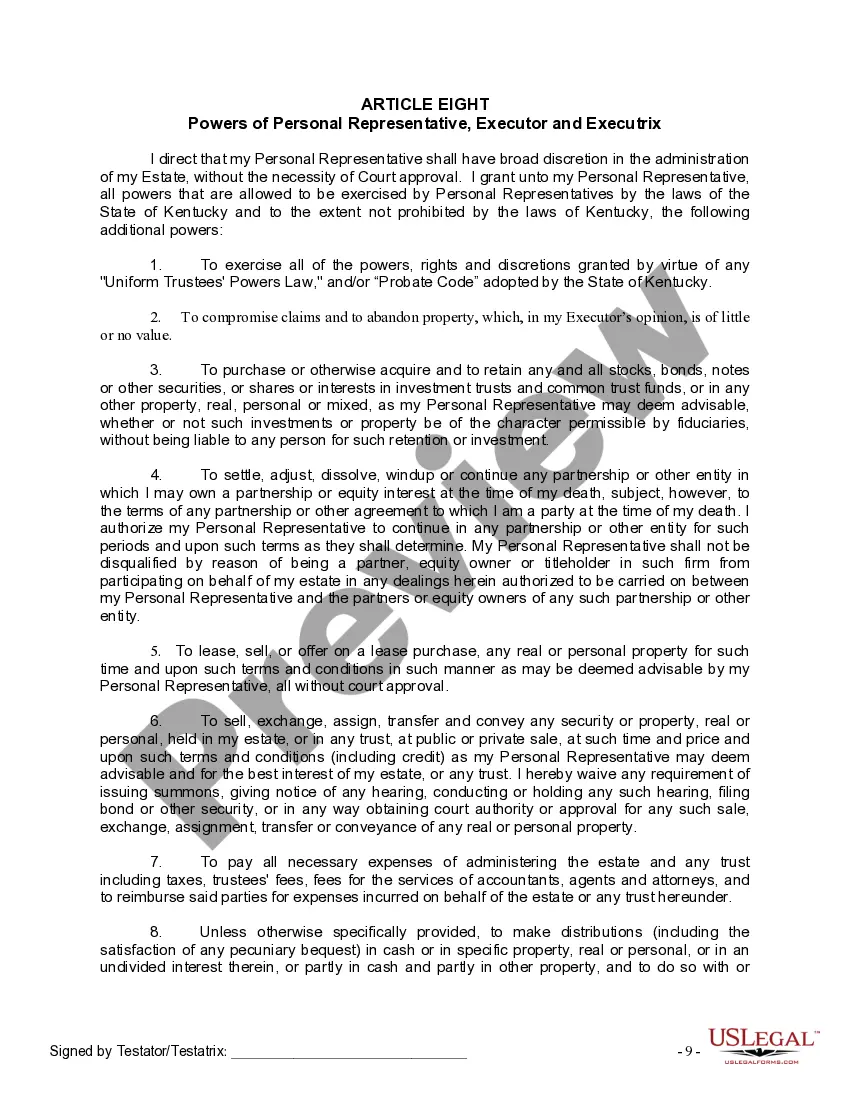
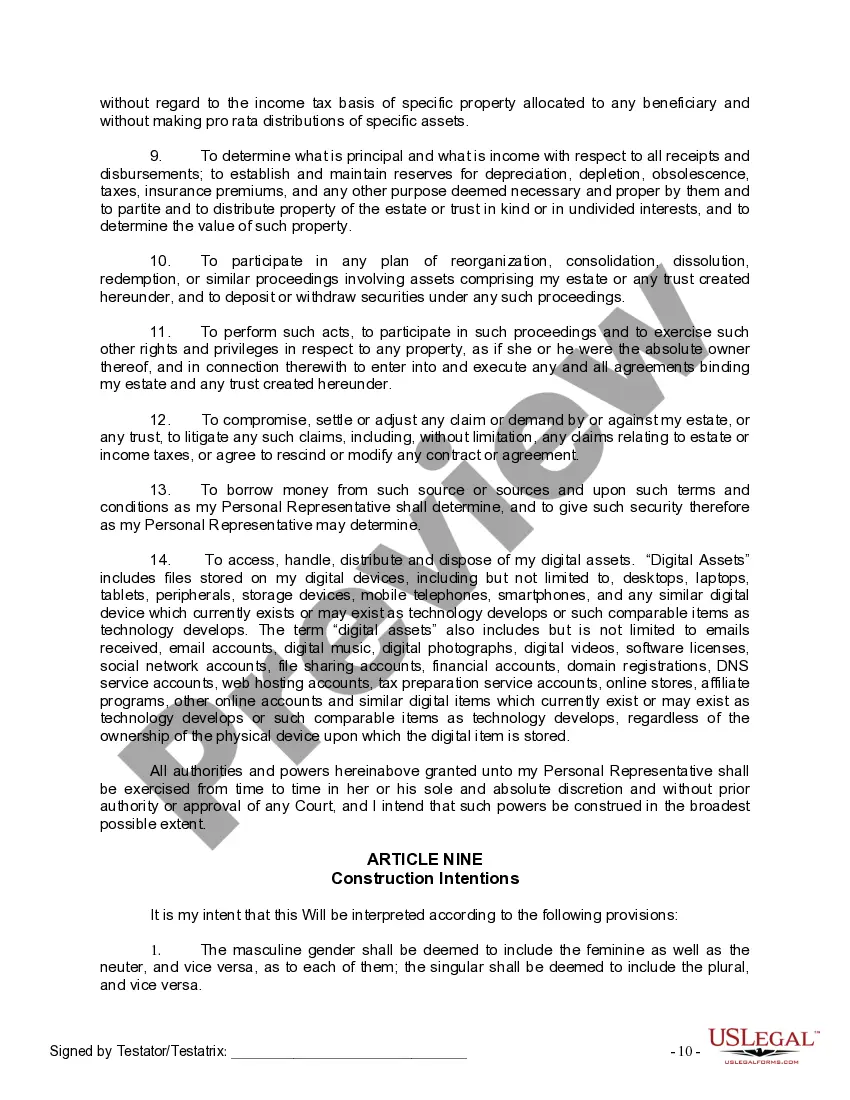
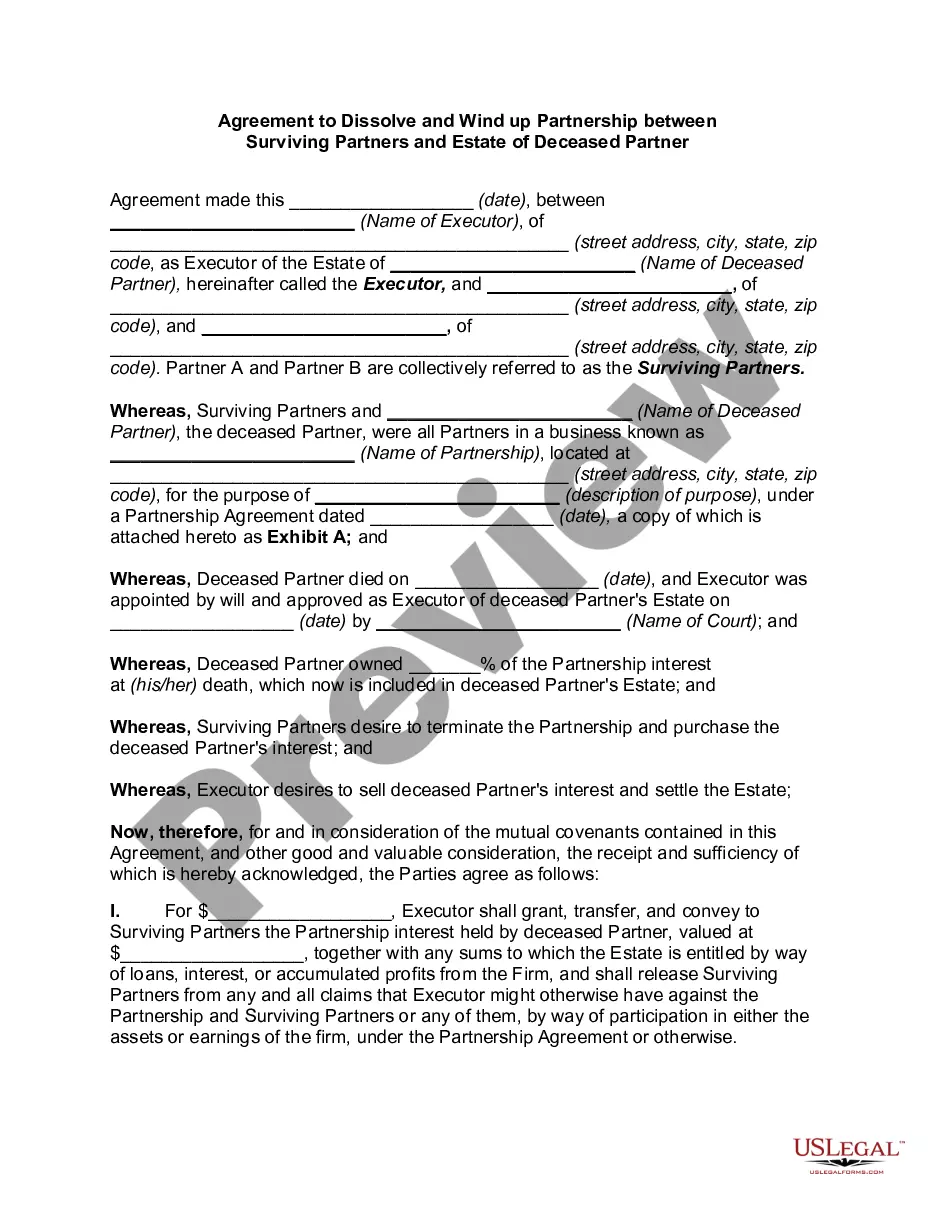
This Last Will and Testament is specifically drafted for a divorced person who is not remarried and has no children. Its primary purpose is to clearly outline the distribution of your assets upon your death, appoint a personal representative, and provide for any burial wishes. Unlike standard wills, this form caters to individuals in unique family situations, ensuring that your specific concerns are addressed.
What’s included in this form
- Personal information: Enter your name and county of residence.
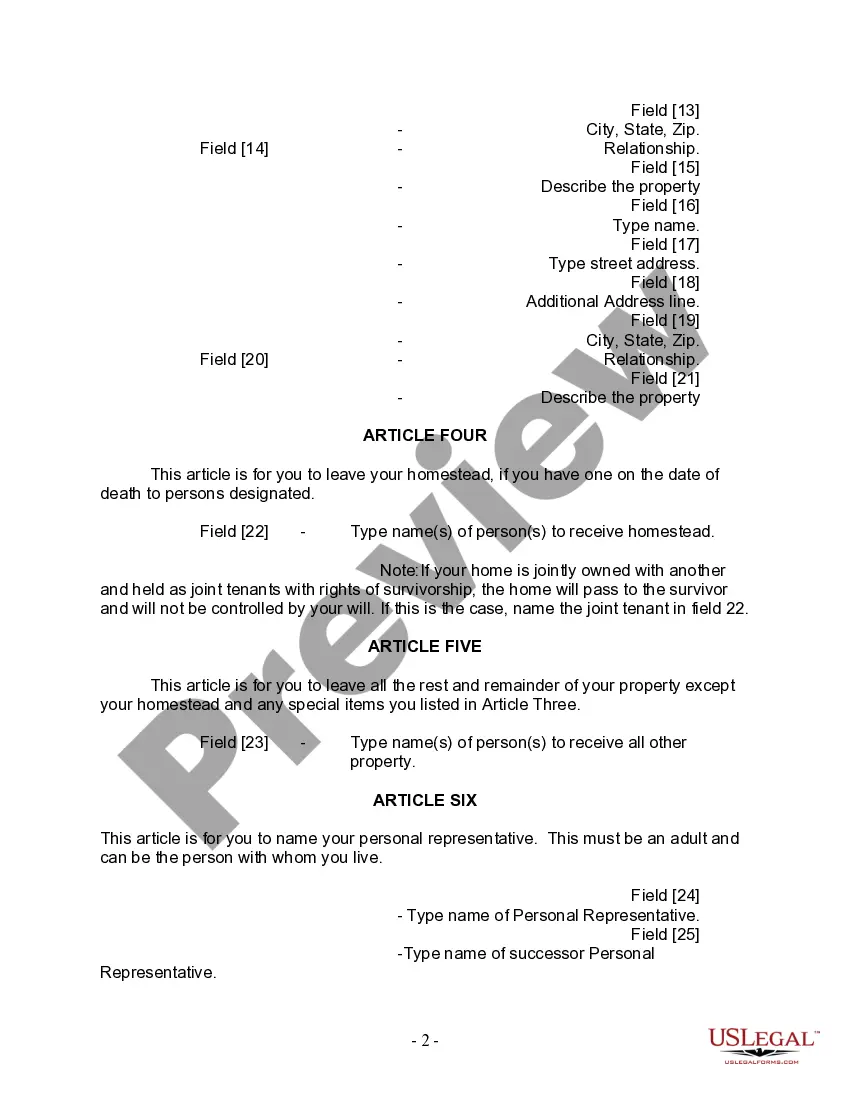
- Specific bequests: Designate any specific items or properties you wish to leave to named individuals.
- Homestead provision: Specify who will inherit your primary residence.
- Residual clause: Outline who will receive any remaining assets not otherwise specified.
- Personal representative: Name the individual who will execute your will after your passing.
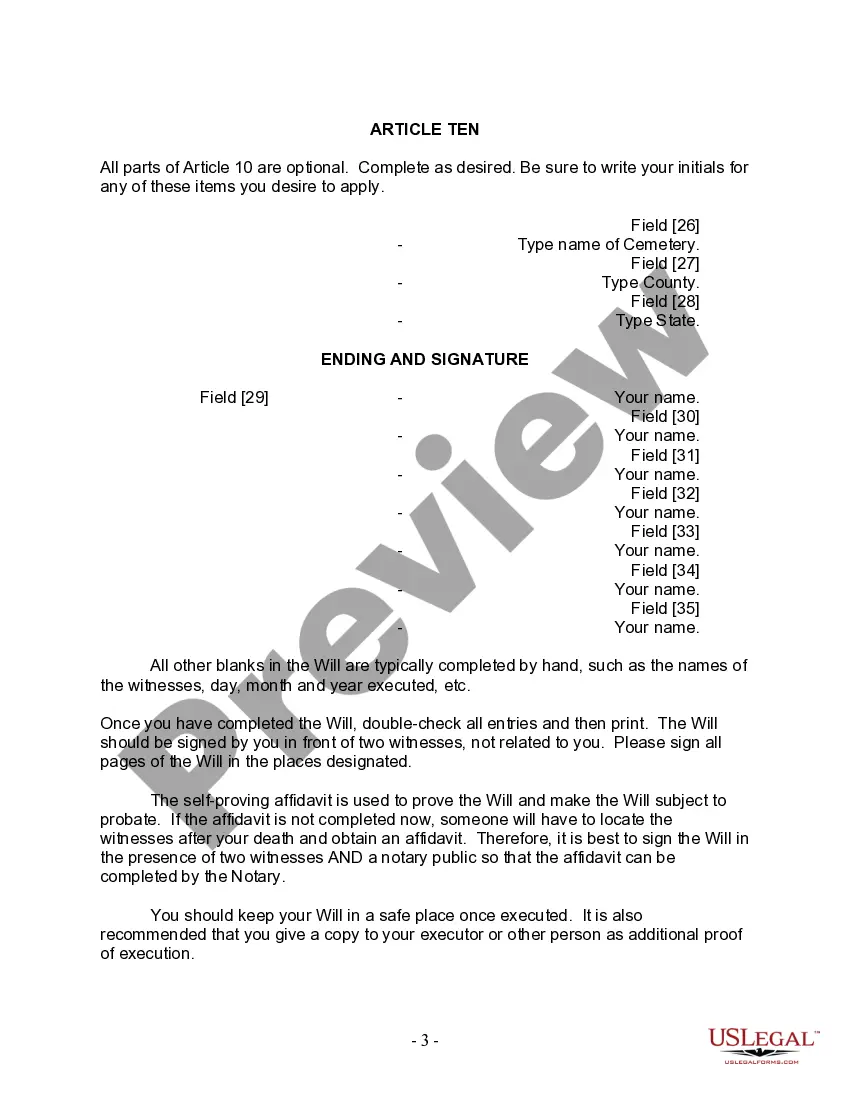
- Signature and witness requirements: Instructions for signing the document in the presence of witnesses.



When this form is needed
This form is ideal for individuals who are divorced, have no children, and wish to formalize their wishes regarding asset distribution upon death. Use it when you want to ensure specific instructions are followed, especially if your circumstances differ from traditional family structures.
Who should use this form
- Divorced individuals who have not remarried.
- Persons with no children.
- Individuals wanting to dictate the distribution of their property after death.
- People wishing to appoint a personal representative for their estate.
How to complete this form
- Fill in your personal information such as name and county of residence.
- List any specific properties or items you wish to bequeath to selected individuals.
- Designate who will inherit your homestead or primary residence.
- State how the remainder of your assets should be distributed.
- Appoint a personal representative who will manage your affairs after your death.
- Sign the will in front of two witnesses and include their signatures as per legal requirements.
Does this document require notarization?
This document requires notarization to meet legal standards. US Legal Forms provides secure online notarization powered by Notarize, allowing you to complete the process through a verified video call, available 24/7.
Get your form ready online
Our built-in tools help you complete, sign, share, and store your documents in one place.
Make edits, fill in missing information, and update formatting in US Legal Forms—just like you would in MS Word.
Download a copy, print it, send it by email, or mail it via USPS—whatever works best for your next step.
Sign and collect signatures with our SignNow integration. Send to multiple recipients, set reminders, and more. Go Premium to unlock E-Sign.
If this form requires notarization, complete it online through a secure video call—no need to meet a notary in person or wait for an appointment.
We protect your documents and personal data by following strict security and privacy standards.

Make edits, fill in missing information, and update formatting in US Legal Forms—just like you would in MS Word.

Download a copy, print it, send it by email, or mail it via USPS—whatever works best for your next step.

Sign and collect signatures with our SignNow integration. Send to multiple recipients, set reminders, and more. Go Premium to unlock E-Sign.

If this form requires notarization, complete it online through a secure video call—no need to meet a notary in person or wait for an appointment.

We protect your documents and personal data by following strict security and privacy standards.
Common mistakes to avoid
- Failing to sign the will in the presence of the required number of witnesses.
- Not updating the will after significant life changes, such as divorce.
- Leaving out specific directives about personal belongings or property.
- Not clearly designating alternate beneficiaries in case the primary ones pass away before you.
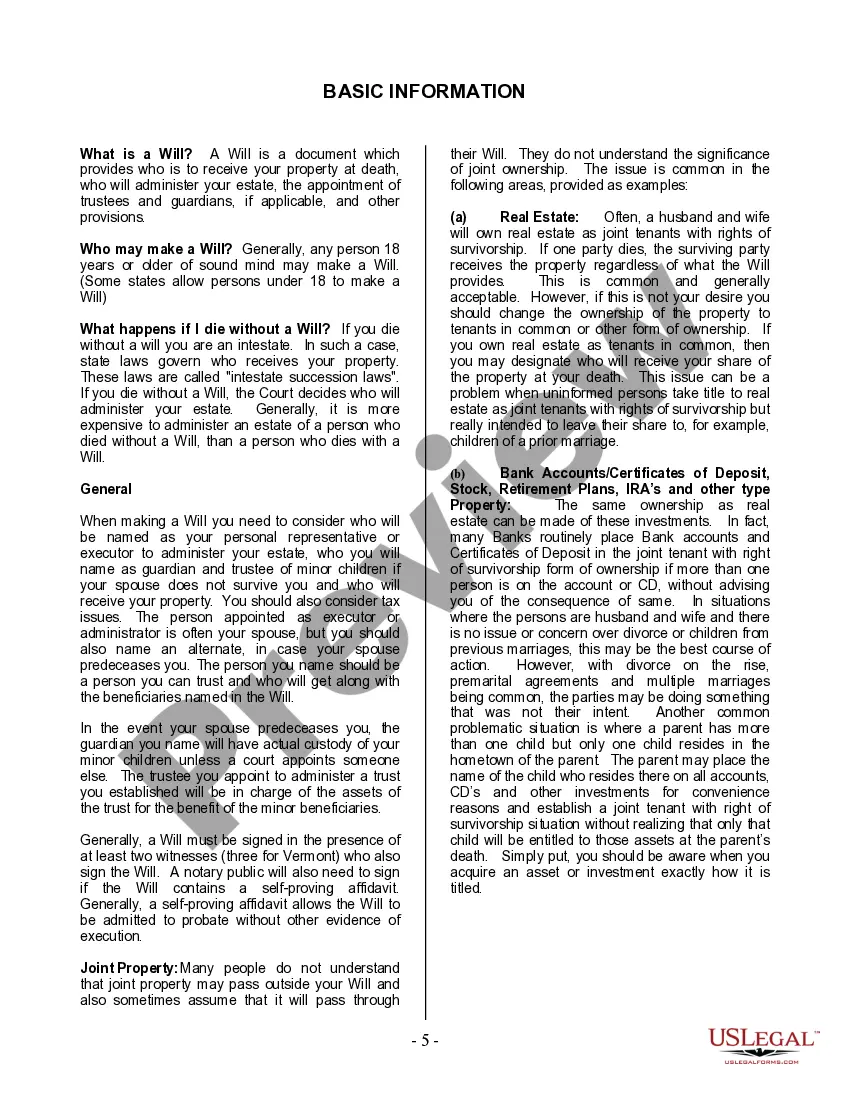
- Assuming joint property will pass according to the will rather than by joint ownership rules.
Advantages of online completion
- Convenient access to a legally-sound document from anywhere.
- Edit and customize the form easily to meet your specific needs.
- Receive guidance throughout the completion process to avoid errors.
- Secure storage options available for your completed will.
Looking for another form?


Form popularity
FAQ
Self-written wills are typically valid, even when handwritten, as long as they're properly witnessed and notarized, or proven in court. A handwritten will that is not witnessed or notarized is considered a holographic will. Not all states accept holographic wills .
No, in Kentucky, you do not need to notarize your will to make it legal. However, Kentucky allows you to make your will "self-proving" and you'll need to go to a notary if you want to do that. A self-proving will speeds up probate because the court can accept the will without contacting the witnesses who signed it.
You can make your own will in Kentucky, using Nolo's Quicken WillMaker & Trust. However, you may want to consult a lawyer in some situations. For example, if you think that your will might be contested or if you want to disinherit your spouse, you should talk with an attorney.
Kentucky law provides for many different manners in which to avoid probate. For example, probate is altogether unnecessary for small estates.In this way, the owner who dies first passes his or her interest in the property to the survivor, and the interest in property does not have to go through the probate process.
Kentucky recognizes holographic, or handwritten, wills; such a will must be entirely in the testator's handwriting and signed and dated by the testator in order to be valid.
The first step is to locate the deceased person's original will. The second step is to file a petition, using form AOC-805, which asks the District Court judge to admit the will to probate and to appoint an execu- tor to administer and settle the decedent's estate. KRS ?394.140, 394.145.
In Kentucky you can write a will in your own handwriting. This type of will is known as a holographic will.If you prepare your own will and type it, it must be signed by at least two witnesses.
For example, California requires that all sections of the will necessary to make the will valid must be written entirely by hand and that the person writing the will must sign it. If these state rules aren't followed, the holographic will won't be valid.