Kentucky Fiduciary Deed for use by Executors, Trustees, Trustors, Administrators and other Fiduciaries
Overview of this form
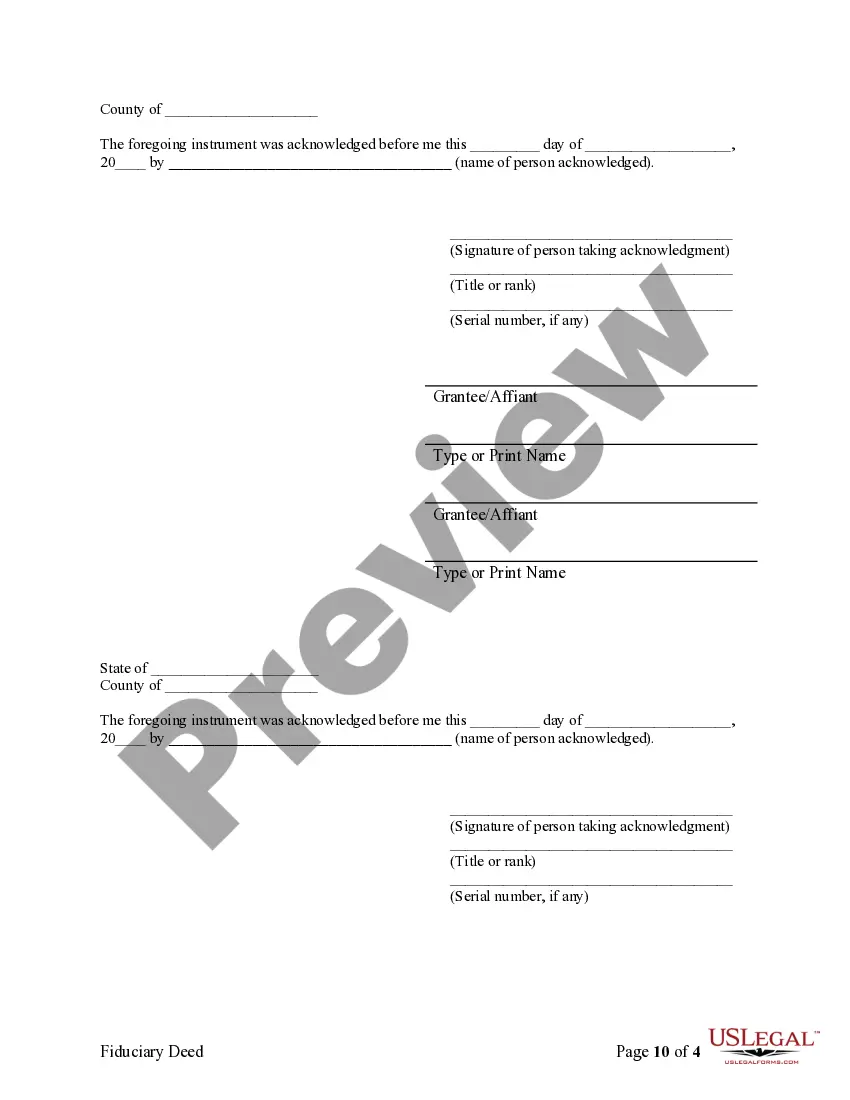
The Fiduciary Deed is a legal document used by executors, trustees, trustors, administrators, and other fiduciaries to transfer property ownership. Unlike standard warranty deeds, this form specifically caters to individuals acting in a fiduciary capacity, ensuring that the transfer of real estate aligns with their legal obligations under fiduciary duties.
Main sections of this form
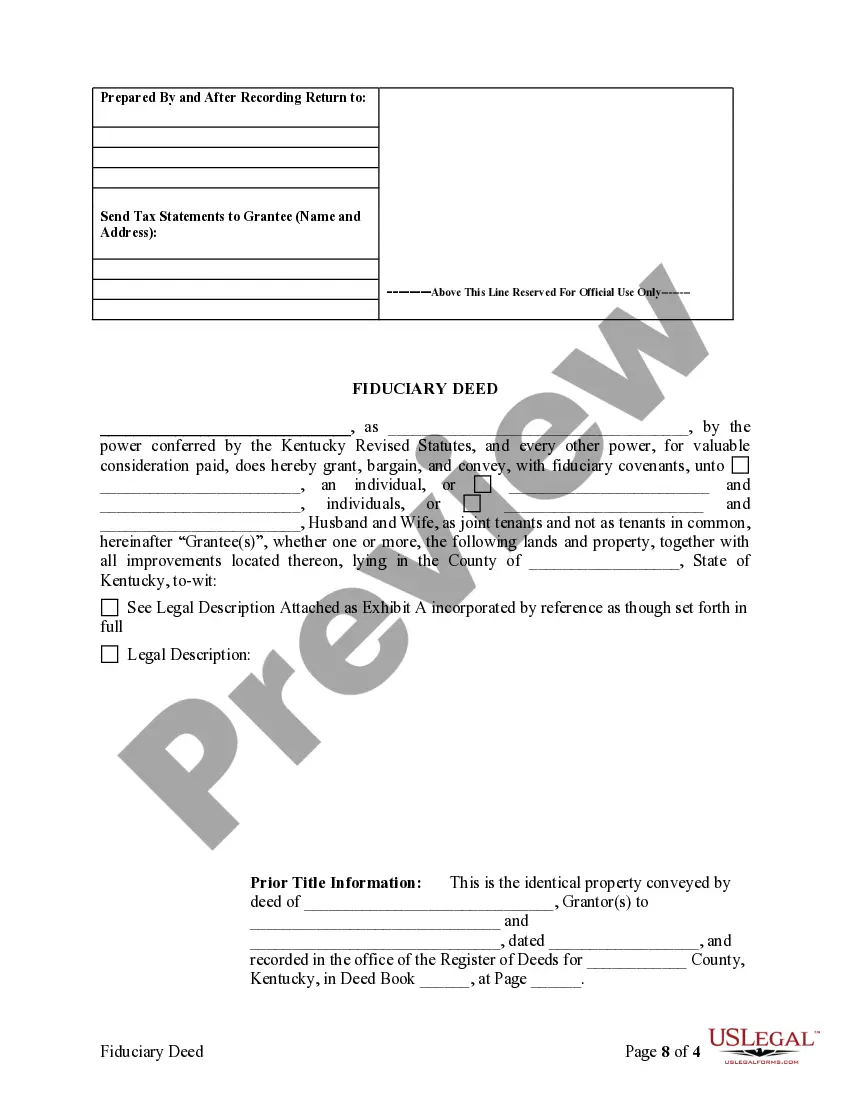
- Grantor and grantee information, including addresses.
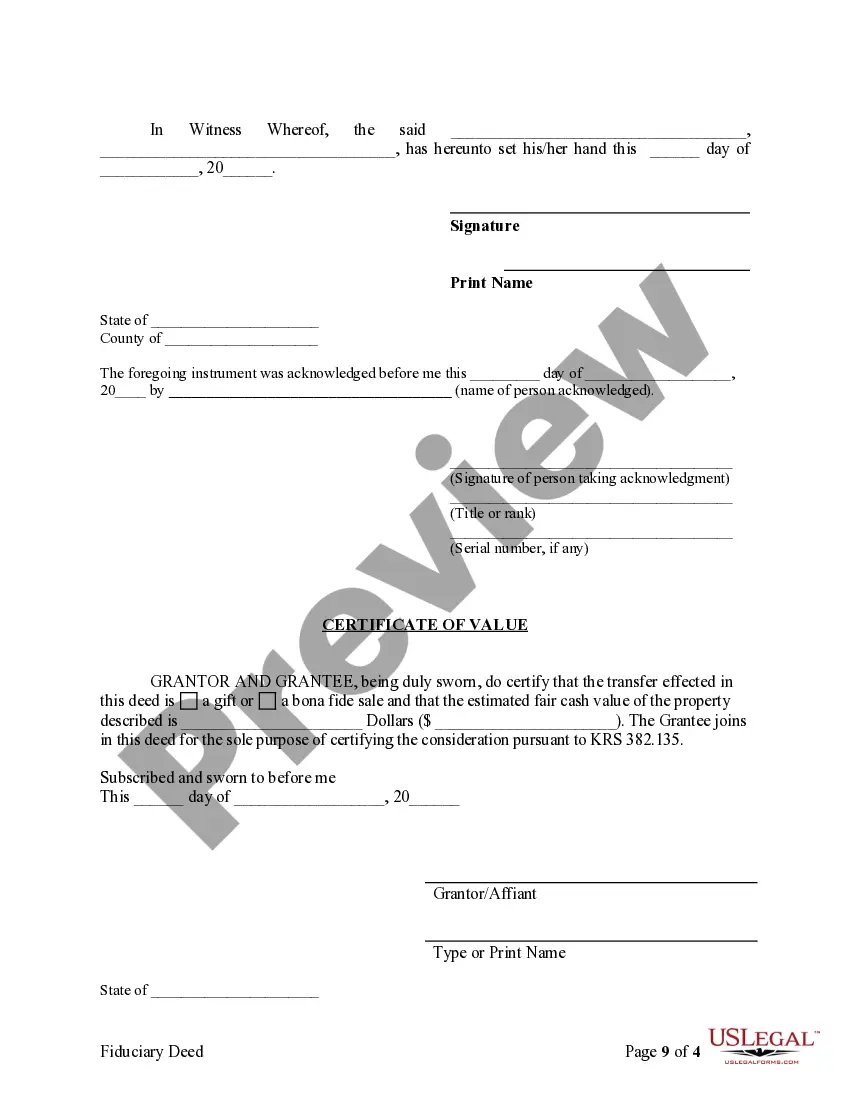
- Statement of consideration certifying the transaction value.
- Legal description of the property being transferred.
- Signature lines for the grantor and notary public.
- Certificate of value to affirm the transfer conditions.





Common use cases
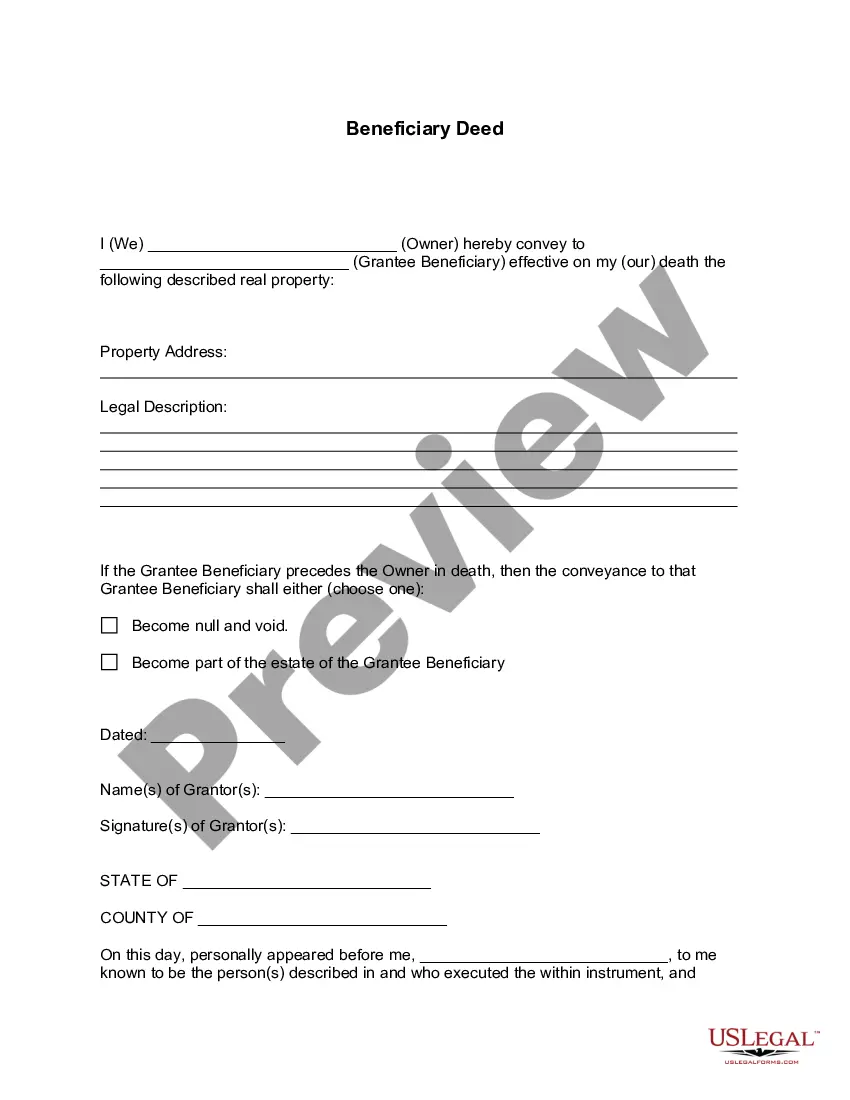
This form is useful when a fiduciary is tasked with transferring property as part of estate management, such as when settling a deceased individual's estate or administering a trust. It is critical in situations involving property sales, gifts, or transfers among family members, especially when the transfer is executed under the authority granted by a will or trust document.
Who should use this form
This form is intended for:
- Executors of wills who need to transfer real estate as part of the estate settlement.
- Trustees managing a trust that contains real property.
- Administrators of estates when a will is not present.
- Guardians or conservators acting on behalf of a ward.
- Trustors wishing to transfer property into or out of a trust.
Completing this form step by step
- Identify the parties involved: the grantor (the fiduciary) and the grantee (the individual receiving the property).
- Specify the property being transferred by adding a detailed legal description in the designated section.
- Select and enter the appropriate type of consideration for the property transfer.
- Ensure all parties sign the deed in the presence of a notary public.
- Complete the certificate of value to affirm the transaction's conditions.
Notarization guidance
Yes, this form must be notarized to be legally valid. A notary public's signature and seal verify the identities of the parties involved and confirm that the form was signed voluntarily. US Legal Forms offers integrated online notarization, providing secure video calls without the need for in-person meetings.
Get your form ready online
Our built-in tools help you complete, sign, share, and store your documents in one place.
Make edits, fill in missing information, and update formatting in US Legal Forms—just like you would in MS Word.
Download a copy, print it, send it by email, or mail it via USPS—whatever works best for your next step.
Sign and collect signatures with our SignNow integration. Send to multiple recipients, set reminders, and more. Go Premium to unlock E-Sign.
If this form requires notarization, complete it online through a secure video call—no need to meet a notary in person or wait for an appointment.
We protect your documents and personal data by following strict security and privacy standards.

Make edits, fill in missing information, and update formatting in US Legal Forms—just like you would in MS Word.

Download a copy, print it, send it by email, or mail it via USPS—whatever works best for your next step.

Sign and collect signatures with our SignNow integration. Send to multiple recipients, set reminders, and more. Go Premium to unlock E-Sign.

If this form requires notarization, complete it online through a secure video call—no need to meet a notary in person or wait for an appointment.

We protect your documents and personal data by following strict security and privacy standards.
Avoid these common issues
- Failing to notarize the document, which can invalidate the deed.
- Not matching the consideration amounts in the statement and the deed.
- Omitting the legal description of the property.
- Inaccurate or incomplete signatures from involved parties.
Benefits of completing this form online
- Convenience of filling out the form from any location with internet access.
- Editability allows users to make necessary adjustments easily.
- Access to professionally drafted legal templates ensures reliability.
Legal use & context
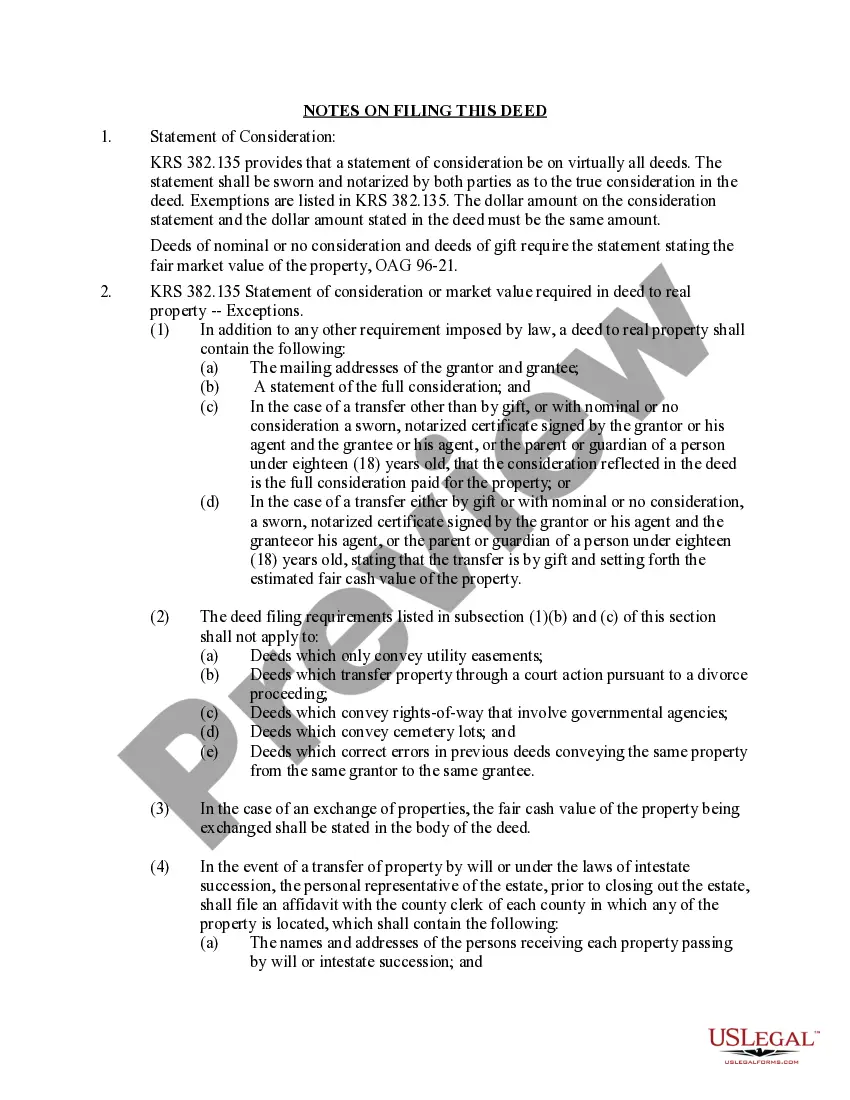
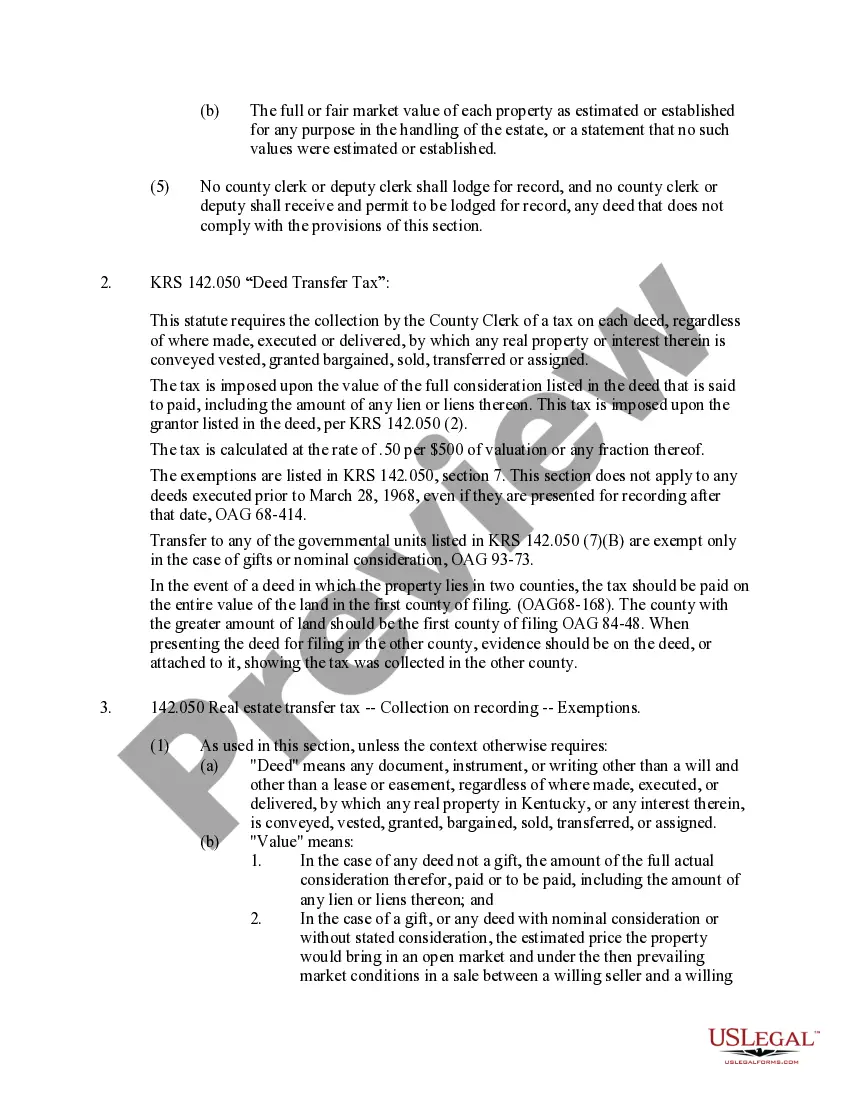
- The Fiduciary Deed is enforceable under Kentucky law when properly completed and recorded.
- Failure to comply with notarization or property description requirements may render the deed void.
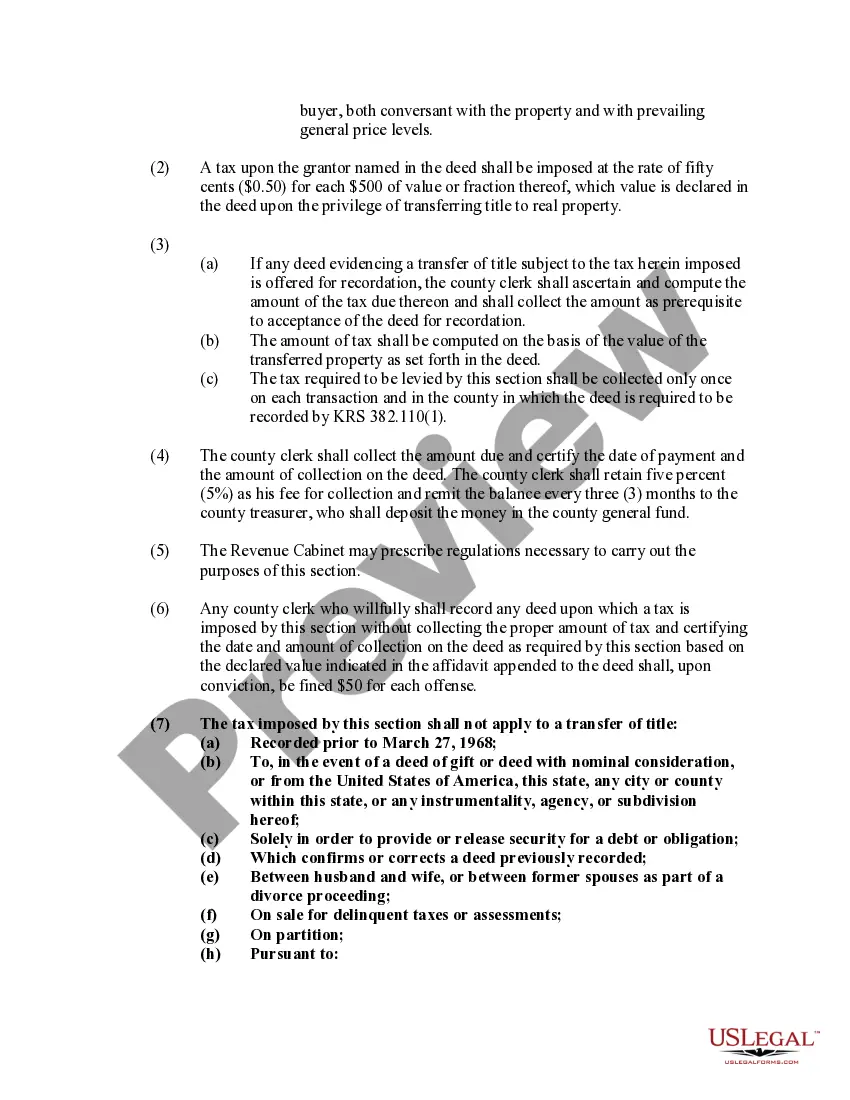
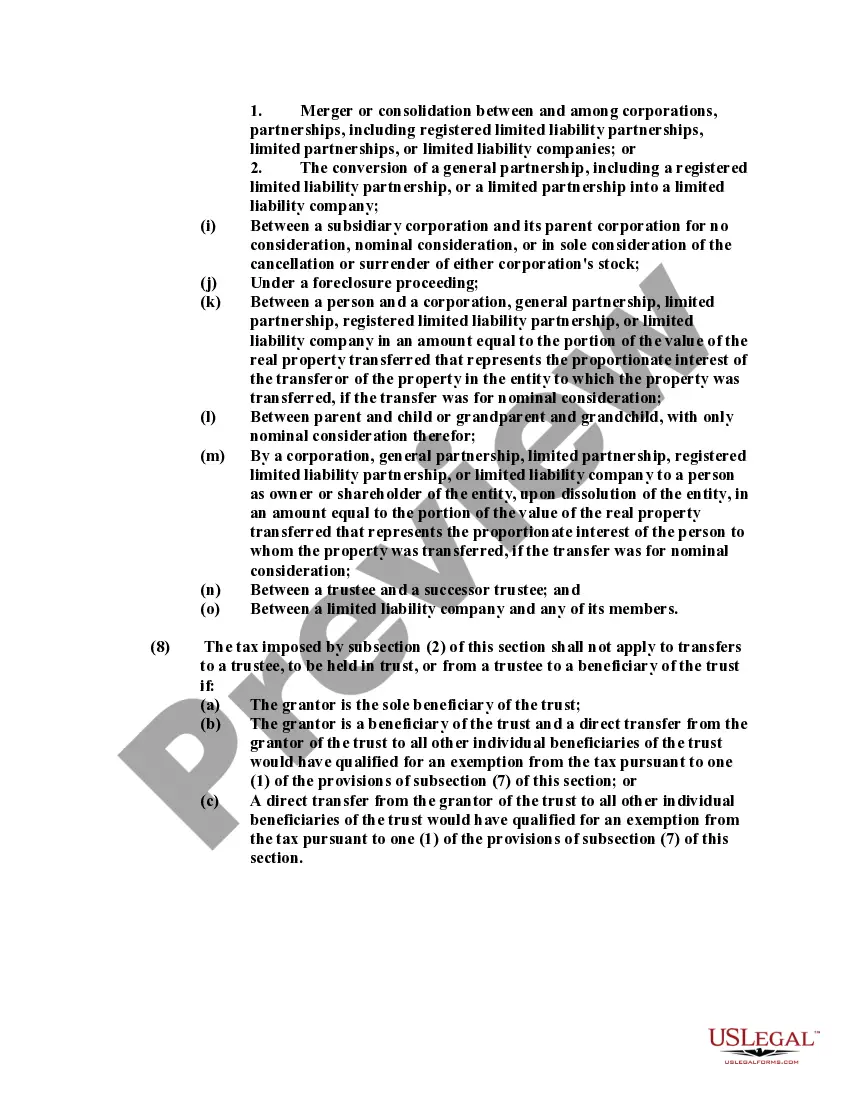
- Certain exemptions may apply under Kentucky law for specific transactions, such as transfers between family members.
What to keep in mind
- Use the Fiduciary Deed for property transfers by executors, trustees, and other fiduciaries in Kentucky.
- Ensure all parties are accurately identified, and the property is correctly described.
- Notarization is necessary to validate the deed.
- Utilizing online forms can provide convenience and legal security.
Looking for another form?



Form popularity
FAQ
Executors can use the money in the estate in whatever way they determine best for the estate and for fulfilling the decedent's wishes. Typically, this will amount to paying off debts and transferring bequests to the beneficiaries according to the terms of the will.
In most states, an executor's deed must be signed by a witness and notarized. An executor's deed should be recorded in the real estate records of the county in which the property being conveyed is located.
The executor can be removed by the judge on the case. The court will force the executor to return the property to the estate or pay restitution to the beneficiaries of the estate.The executor cannot give away property because the property belongs to someone else. Unless he pays full price for it.
When the executor has paid off the debts, filed the taxes and sold any property needed to pay bills, he can submit a final estate accounting to the probate court. Once the probate court approves the accounting, he can distribute assets to you and other beneficiaries according to the terms of the will.
Yes, It's Possible for an Executor to Sell Property To Themselves Here's How. If you've been named the executor of an estate, you have a crucial job.In most cases, the executor sets about putting the house on the market and selling it so the proceeds can be distributed to any heirs.
Once the COURT appoints you as executor, you will record an affidavit of death of joint tenant to get your mother's name of the property. Then, when you get an order for final distribution, you will record a certified copy to get the property into the names of the beneficiaries under the will.
The court will force the executor to return the property to the estate or pay restitution to the beneficiaries of the estate.The executor cannot transfer estate property to himself because the property belongs to someone else unless he pays the full price for it.
As an Executor, what you cannot do is go against the terms of the Will, Breach Fiduciary duty, fail to act, self-deal, embezzle, intentionally or unintentionally through neglect harm the estate, and cannot do threats to beneficiaries and heirs.