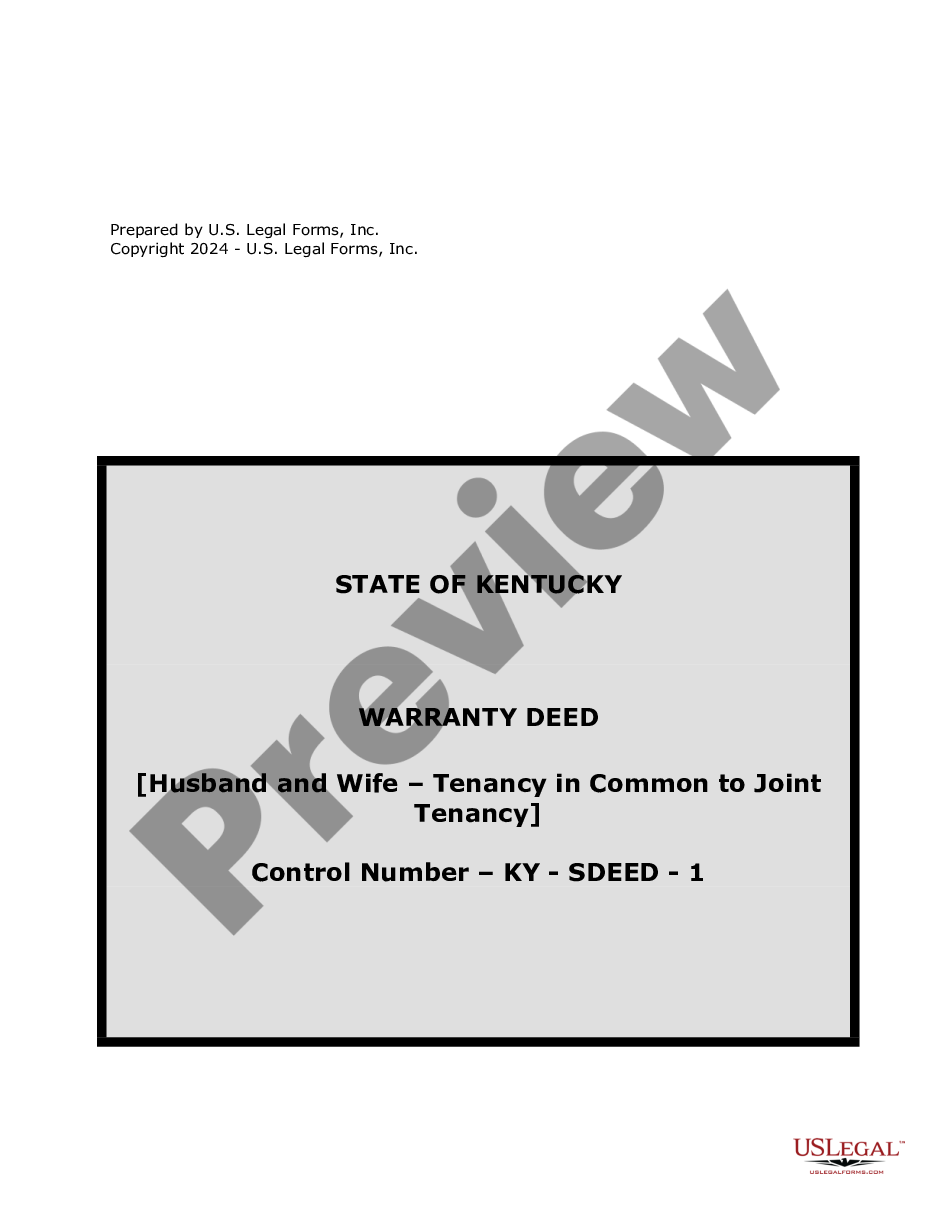
Kentucky Warranty Deed for Husband and Wife Converting Property from Tenants in Common to Joint Tenancy
What is this form?
This Warranty Deed allows a husband and wife to convert their property ownership from tenants in common to joint tenants. This format is essential for couples looking to simplify ownership rights and provide a mechanism for automatic transfer of property to the surviving spouse upon death. Understanding the distinction between tenants in common and joint tenancy is crucial, as it affects how property is managed and inherited.
What’s included in this form
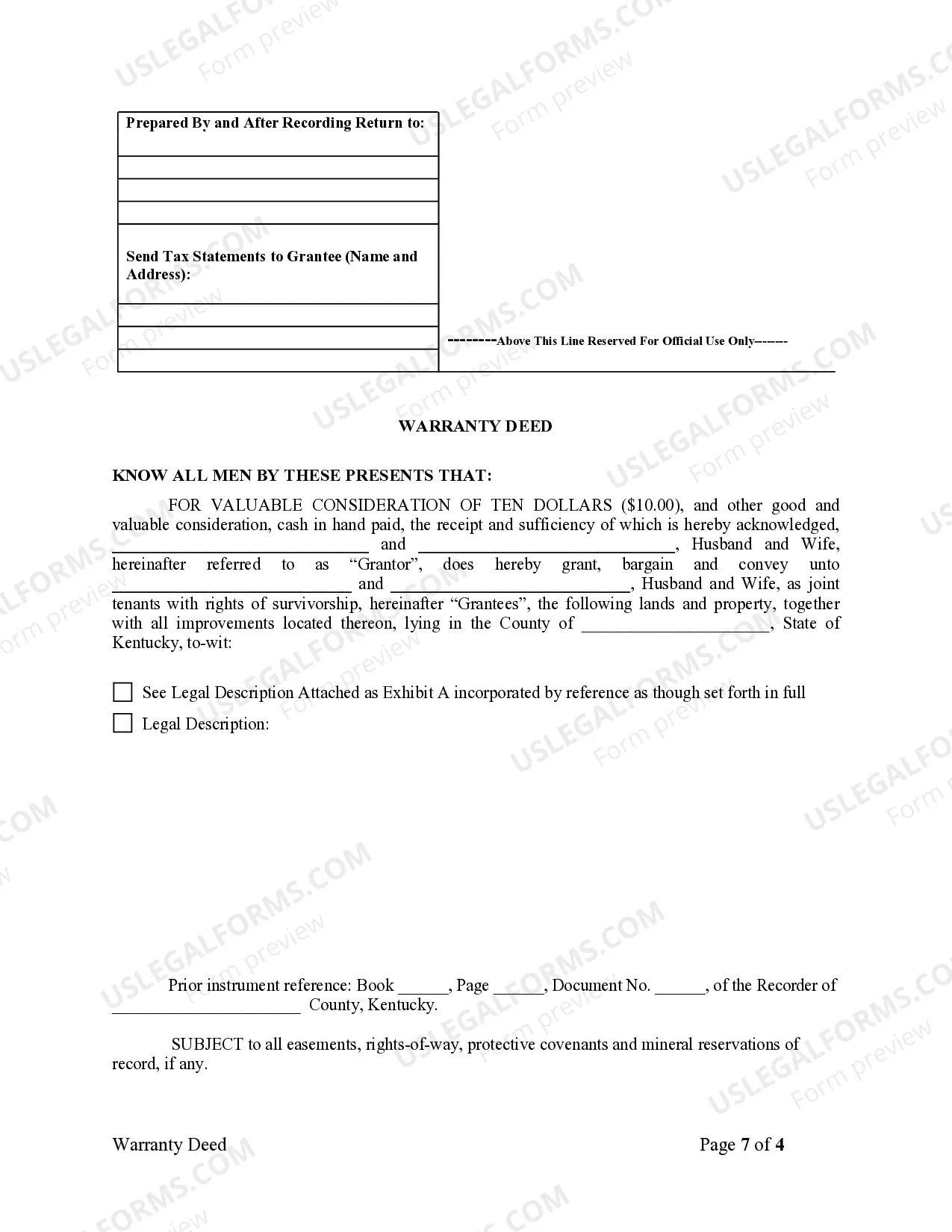
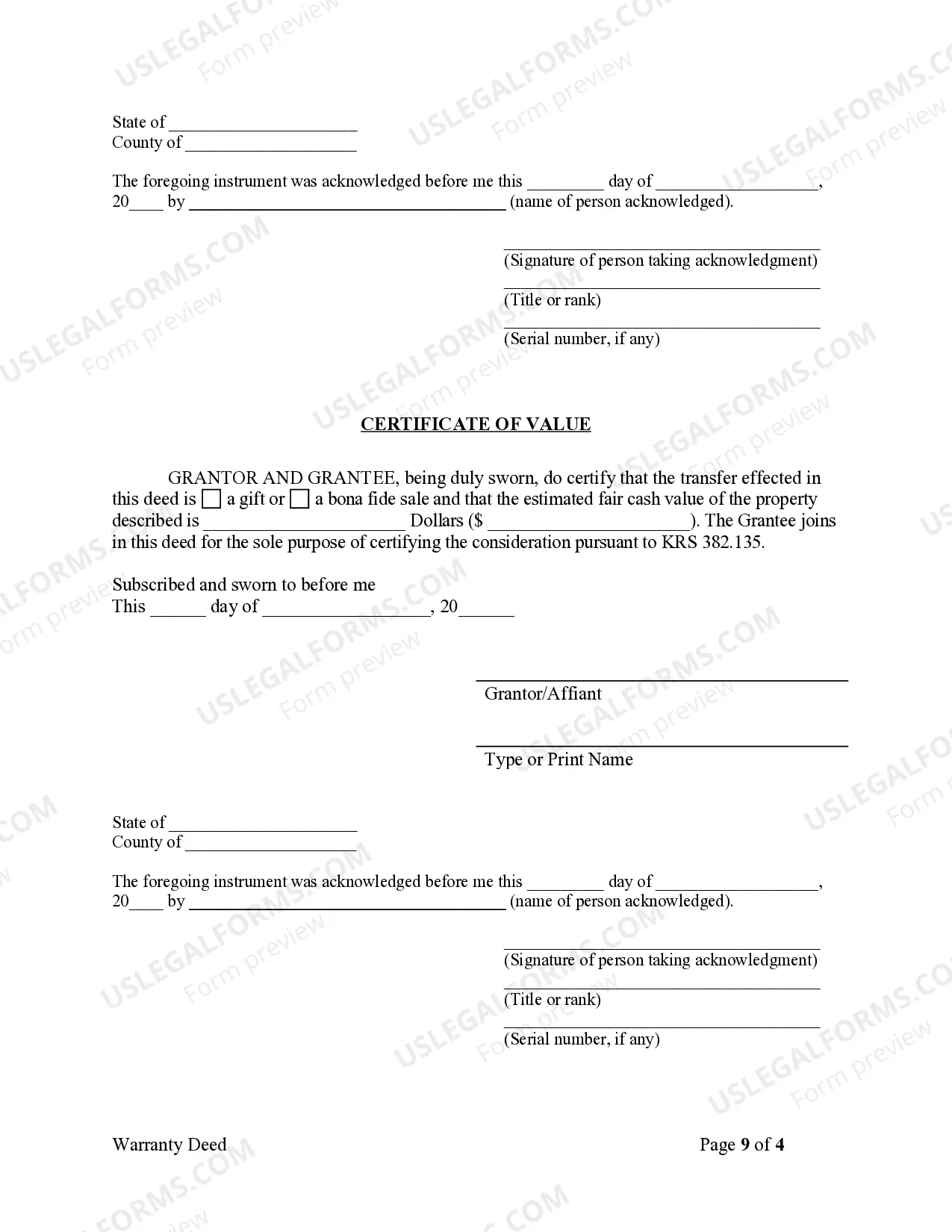
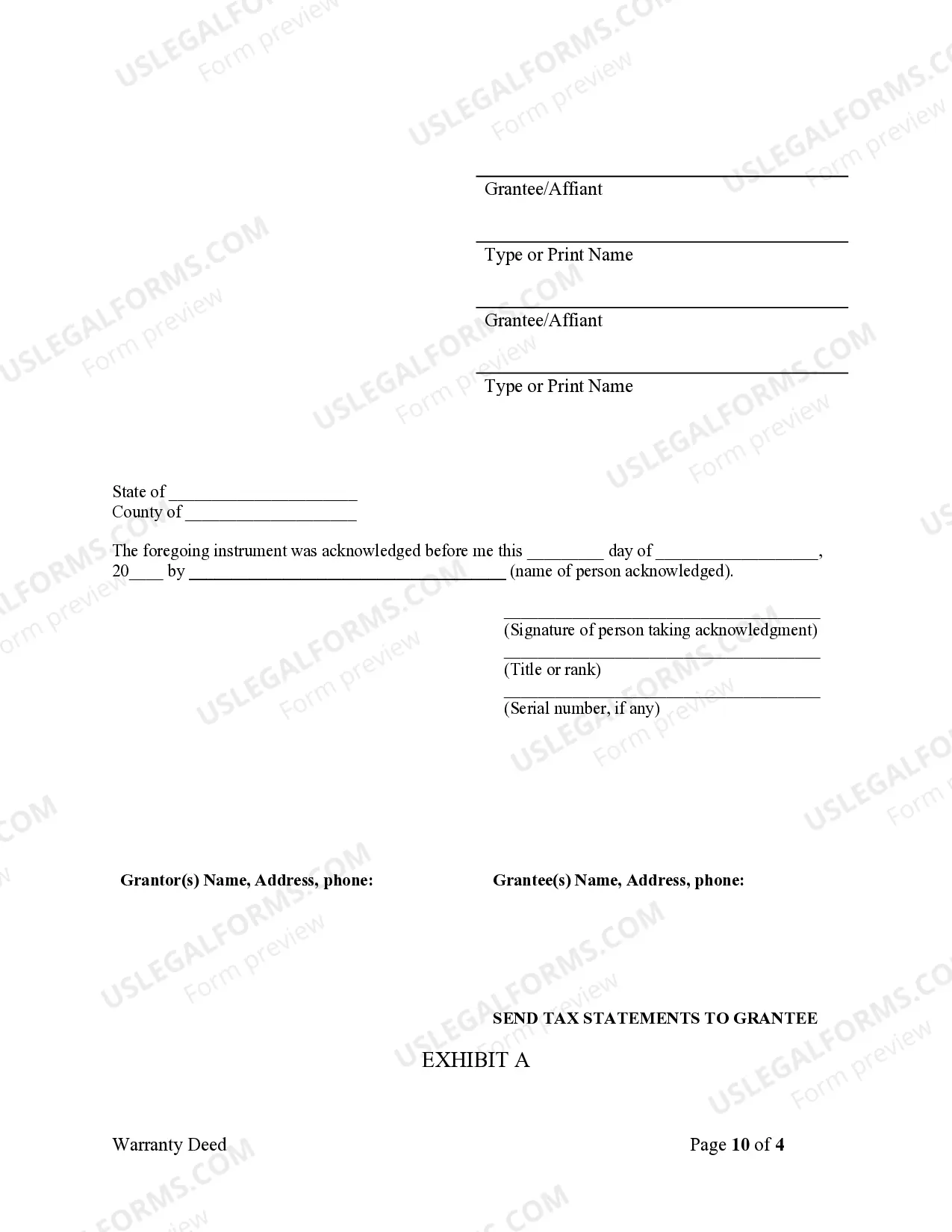
- Grantor and grantee information: Names and addresses of both parties involved in the deed.
- Property description: A detailed legal description of the property being transferred.
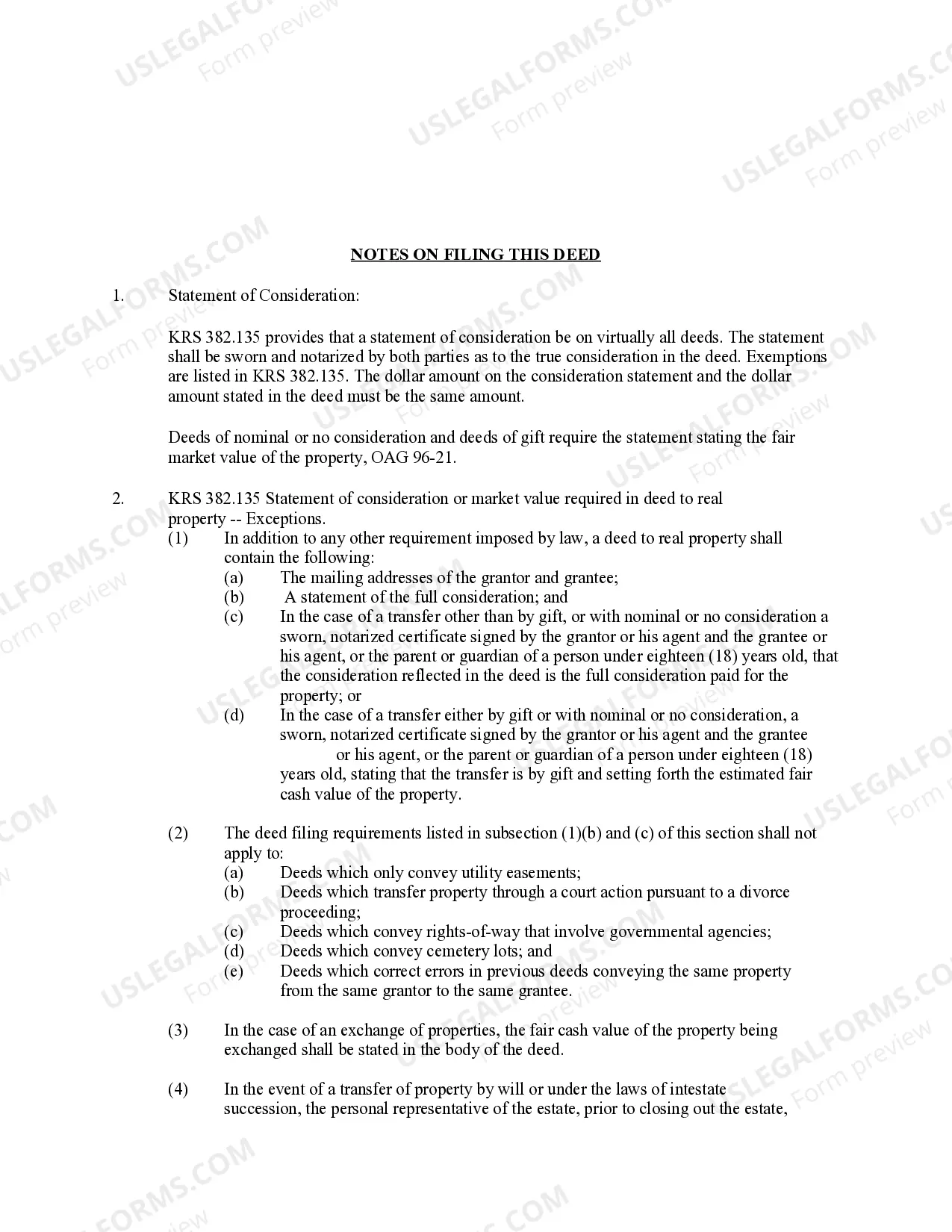
- Statement of consideration: A declaration of the value exchanged for the property.
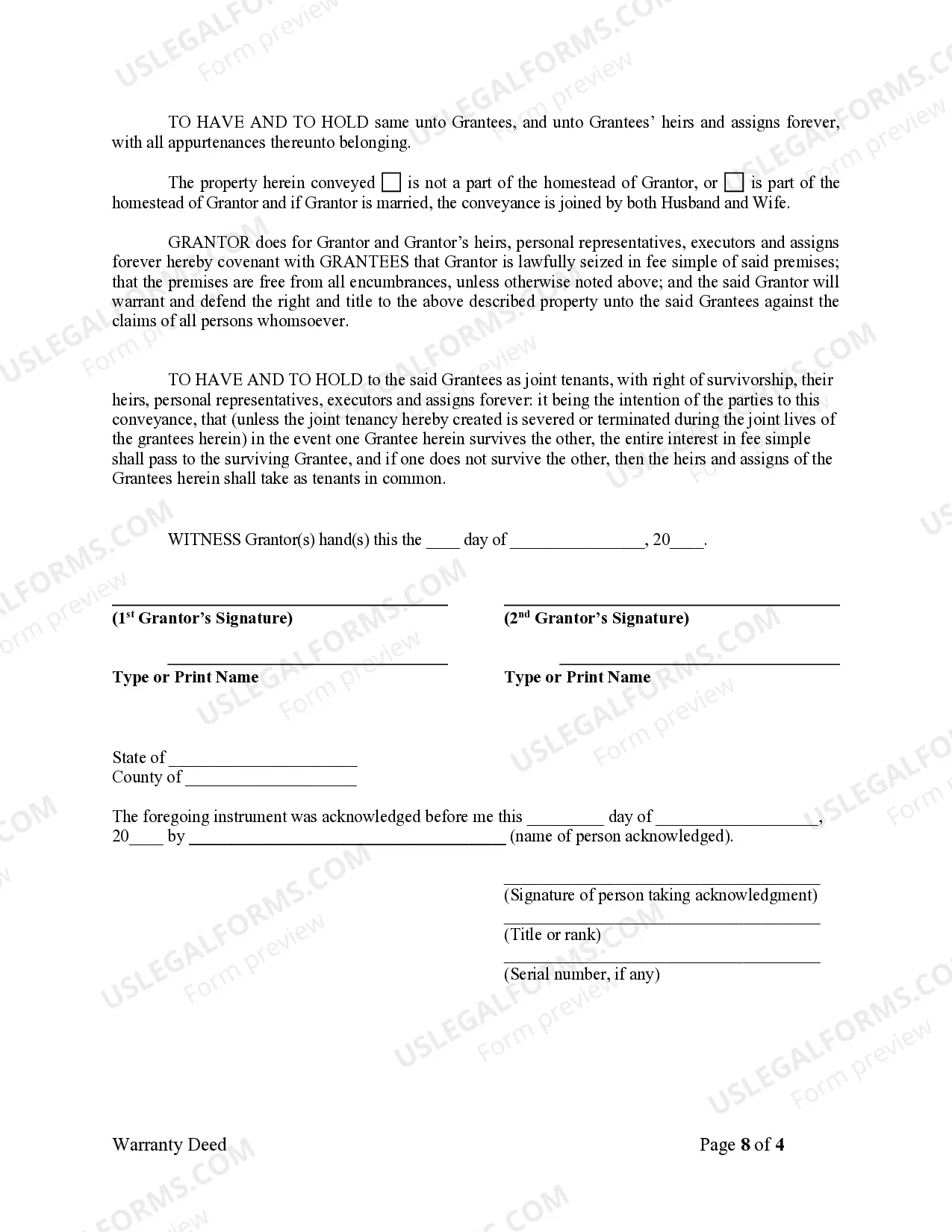
- Notary acknowledgment: Requirements for notarization to validate the deed.
- Joint tenants clause: Specifies how property will pass to surviving spouses.
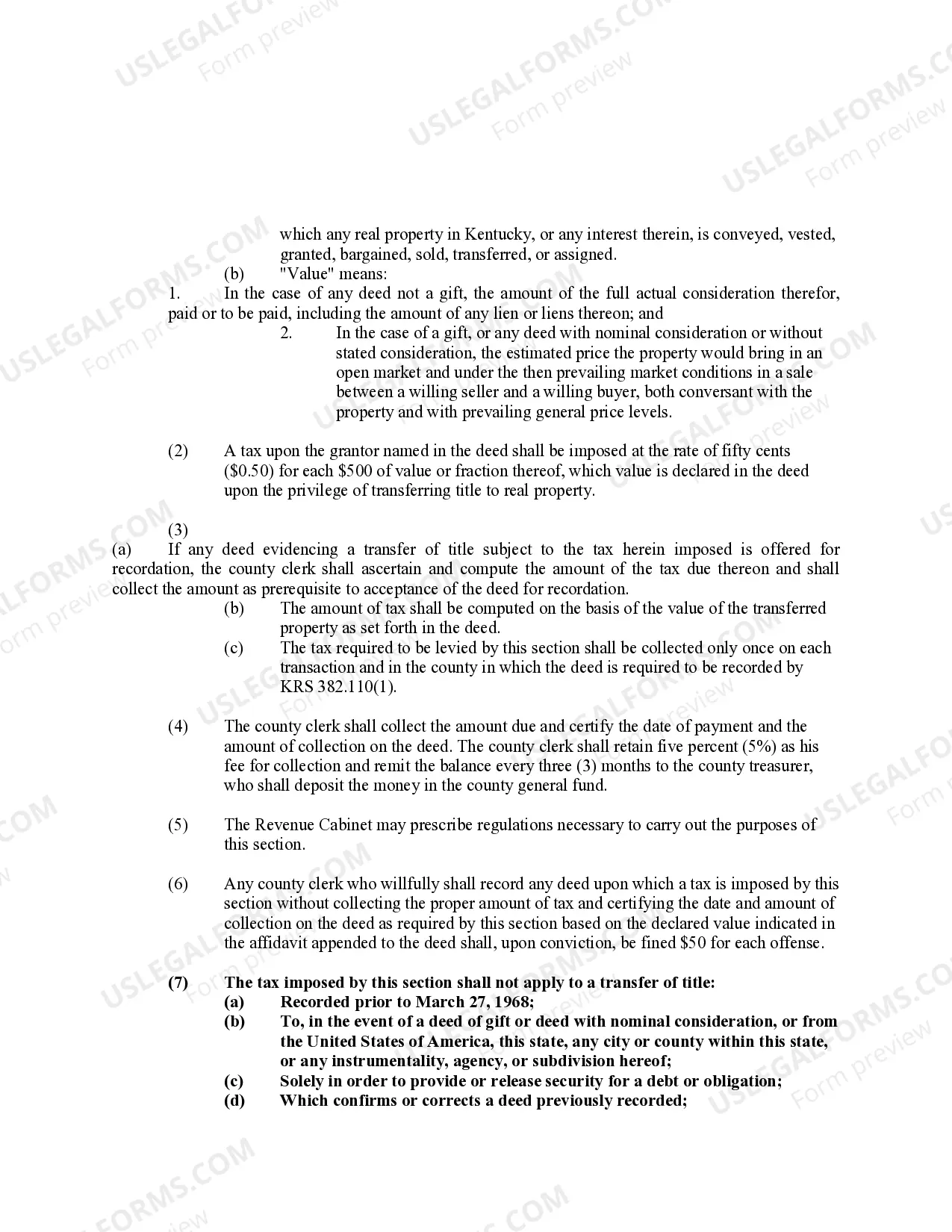
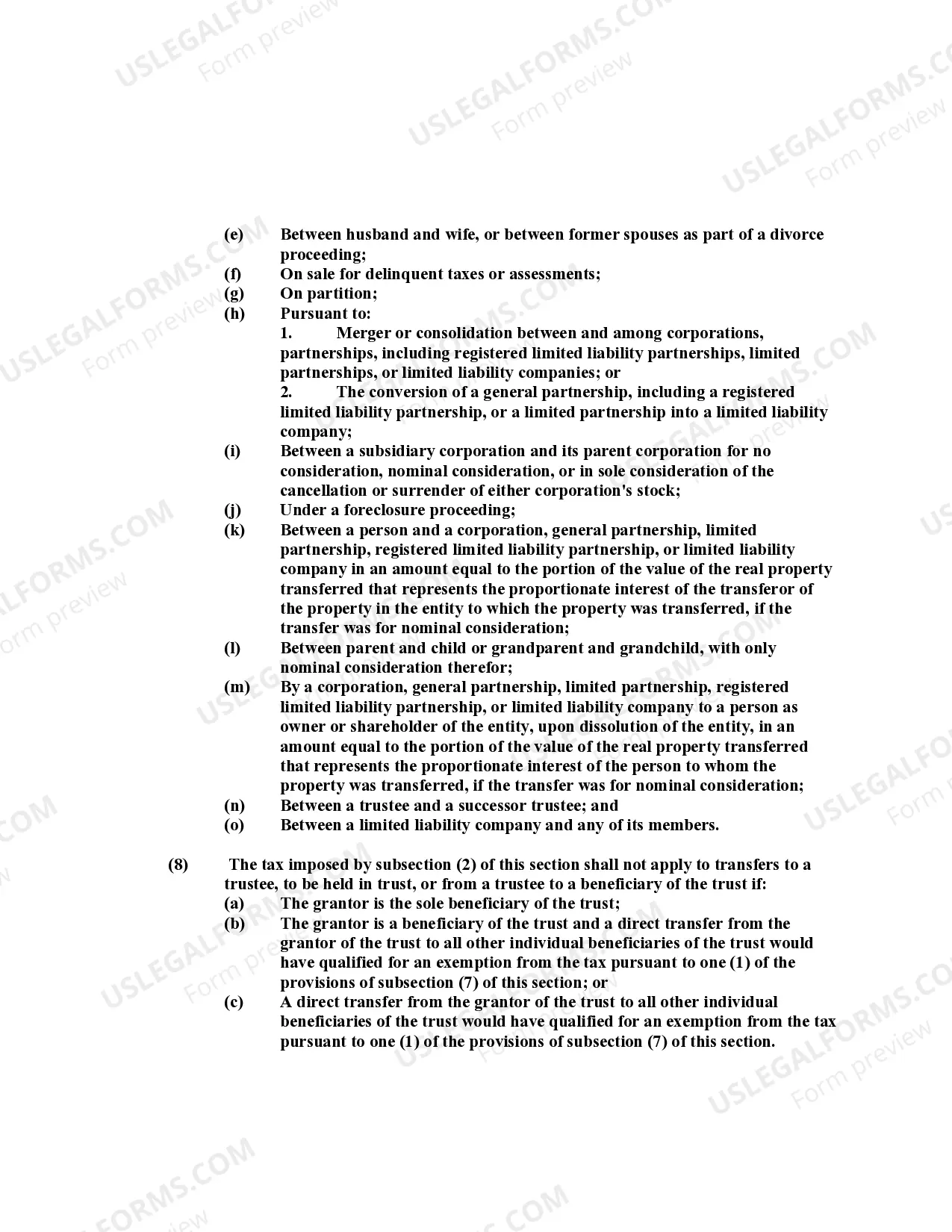





When this form is needed
This form should be used when a married couple wishes to change their ownership of property held as tenants in common to joint tenants. This conversion may be sought for various reasons, including estate planning, simplifying how property passes upon death, or ensuring survivorship rights in the property. If both spouses own the property and agree to these changes, this form is appropriate.
Who can use this document
This form is intended for:
- Married couples who currently hold property as tenants in common.
- Individuals seeking to establish joint tenancy with survivorship rights.
- Homeowners looking to simplify transfer of property upon the death of a spouse.
- Couples involved in estate planning or property transfer discussions.
Steps to complete this form
- Identify the parties: Enter the names and addresses of both the husband and wife as grantors.
- Describe the property: Provide a legal description of the property being transferred.
- Complete the statement of consideration: Indicate the value exchanged in the transaction.
- Sign in front of a notary: Both parties must sign the deed in the presence of a notary public.
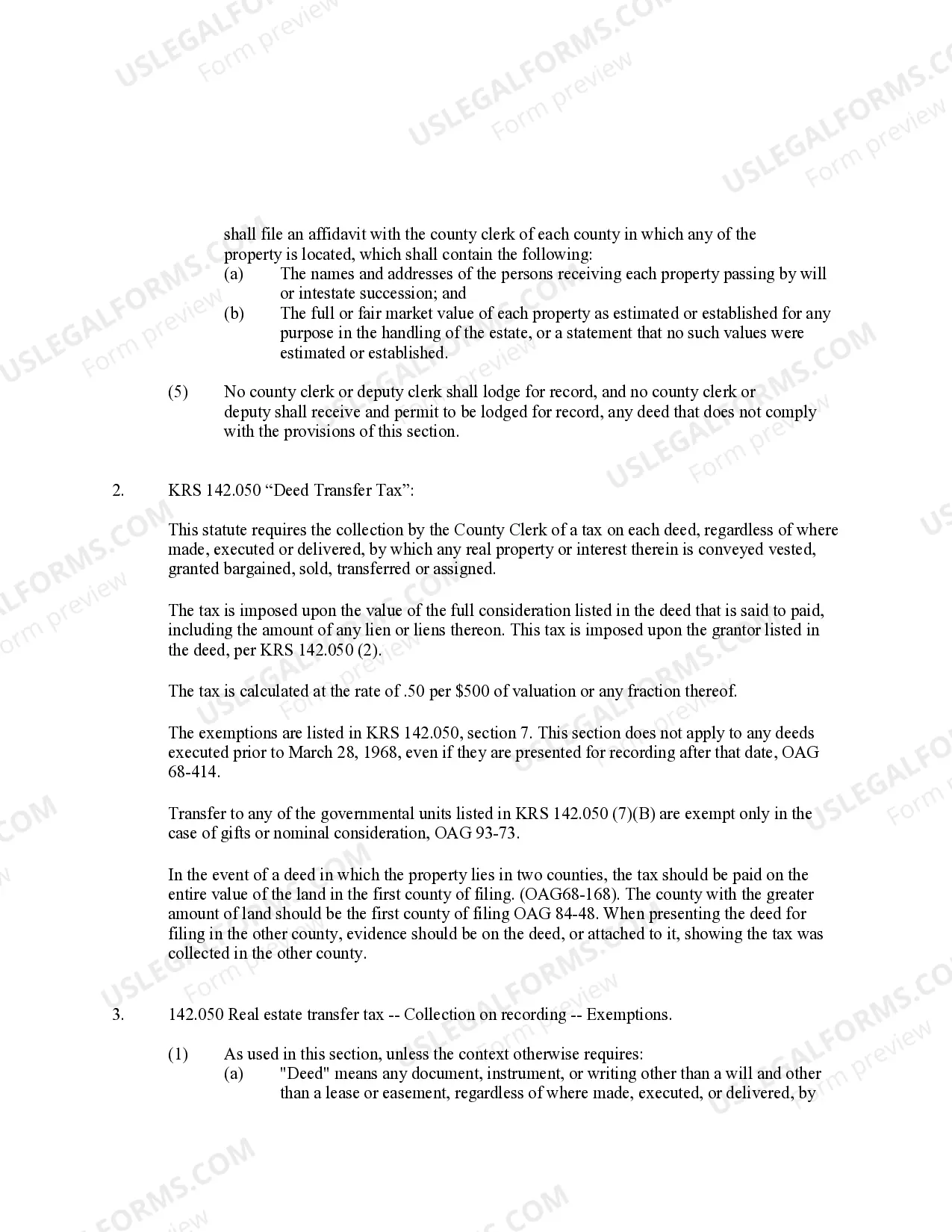
- File with the county clerk: Submit the completed deed to the appropriate county office for recording.
Does this form need to be notarized?
To make this form legally binding, it must be notarized. Our online notarization service, powered by Notarize, lets you verify and sign documents remotely through an encrypted video session.
Get your form ready online
Our built-in tools help you complete, sign, share, and store your documents in one place.
Make edits, fill in missing information, and update formatting in US Legal Forms—just like you would in MS Word.
Download a copy, print it, send it by email, or mail it via USPS—whatever works best for your next step.
Sign and collect signatures with our SignNow integration. Send to multiple recipients, set reminders, and more. Go Premium to unlock E-Sign.
If this form requires notarization, complete it online through a secure video call—no need to meet a notary in person or wait for an appointment.
We protect your documents and personal data by following strict security and privacy standards.

Make edits, fill in missing information, and update formatting in US Legal Forms—just like you would in MS Word.

Download a copy, print it, send it by email, or mail it via USPS—whatever works best for your next step.

Sign and collect signatures with our SignNow integration. Send to multiple recipients, set reminders, and more. Go Premium to unlock E-Sign.

If this form requires notarization, complete it online through a secure video call—no need to meet a notary in person or wait for an appointment.

We protect your documents and personal data by following strict security and privacy standards.
Common mistakes to avoid
- Failing to have the deed properly notarized, which can invalidate the document.
- Not providing a clear legal description of the property, leading to potential disputes.
- Inaccurately completing the statement of consideration, which must match the value stated in the deed.
- Not filing the deed with the county clerk after completion and notarization.
Benefits of using this form online
- Convenient access: Download and complete the form from the comfort of your home.
- Editability: Fill out the form digitally, minimizing errors often made with handwritten documents.
- Guidance: Clear instructions provided to help ensure proper completion.
- Compliance: Forms are developed based on state-specific legal requirements to ensure validity.
Looking for another form?



Form popularity
FAQ
When joint tenants have right of survivorship, it means that the property shares of one co-tenant are transferred directly to the surviving co-tenant (or co-tenants) upon their death. While ownership of the property is shared equally in life, the living owners gain total ownership of any deceased co-owners' shares.
In order to terminate a joint tenancy, one of the four unities must be destroyed. You may do this by conveying your joint tenancy interest to any third person. This can be done through gift or sale. Upon termination, a tenancy in common is formed between the third person and the remaining co-tenant(s).
It would be simple for us to say that you can simply record a new document putting both of you onto title to the home as joint tenants with rights of survivorship. Usually, when you make a simple change in the title from tenants in common to joint tenants, the taxing authorities will ignore that change.
Sole Ownership If a home is owned by only one person then it is not registered with the Land Registry as either Joint Tenants or Tenants in Common. It is registered as a Sole Owner, you can only be a joint tenant or tenant in common if there is more than one owner of the property.
Change from joint tenants to tenants in common You can make this change without the other owners' agreement. A solicitor, conveyancer or legal executive can also make the application for you.
Change from tenants in common to joint tenantsYou need the agreement of all the other joint owners to change from being tenants in common to joint tenants. A solicitor, conveyancer or legal executive can also make the application for you.
The term joint tenants in common (JTIC) refers to a legal relationship in which two or more people own a piece of property or another asset where no rights of survivorship are afforded to any of the account holders. If one owner dies, the surviving owner doesn't necessarily acquire the rights of the deceased owner.
You may agree with your other co-tenant(s) to sever it. If you cannot agree on how to divide the property, you may terminate your tenancy in common by seeking judicial partition of the property.
A third way to terminate your tenancy in common is through ouster. Ouster is the wrongful dispossession or exclusion of a person entitled to possession of property.Ousting a co-tenant will terminate the tenancy in common.