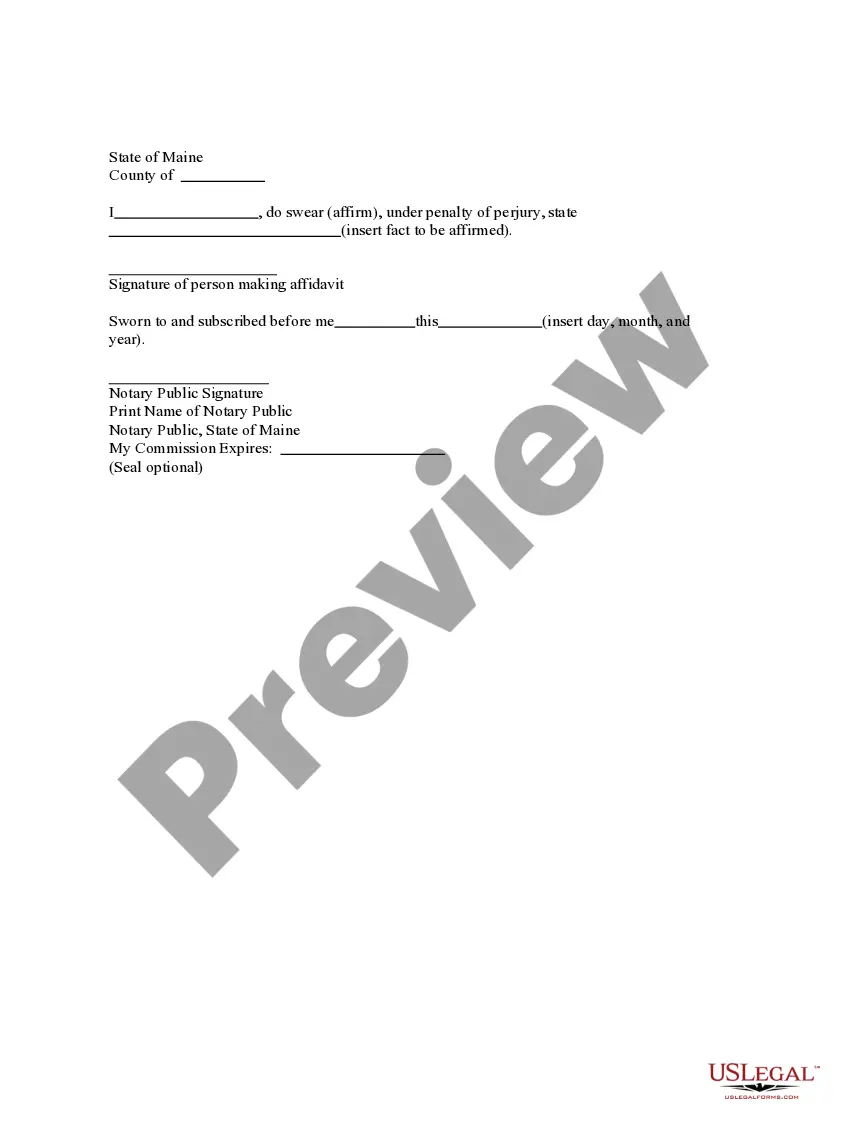
Kentucky Notice of Furnishing - Corporation or LLC
About this form
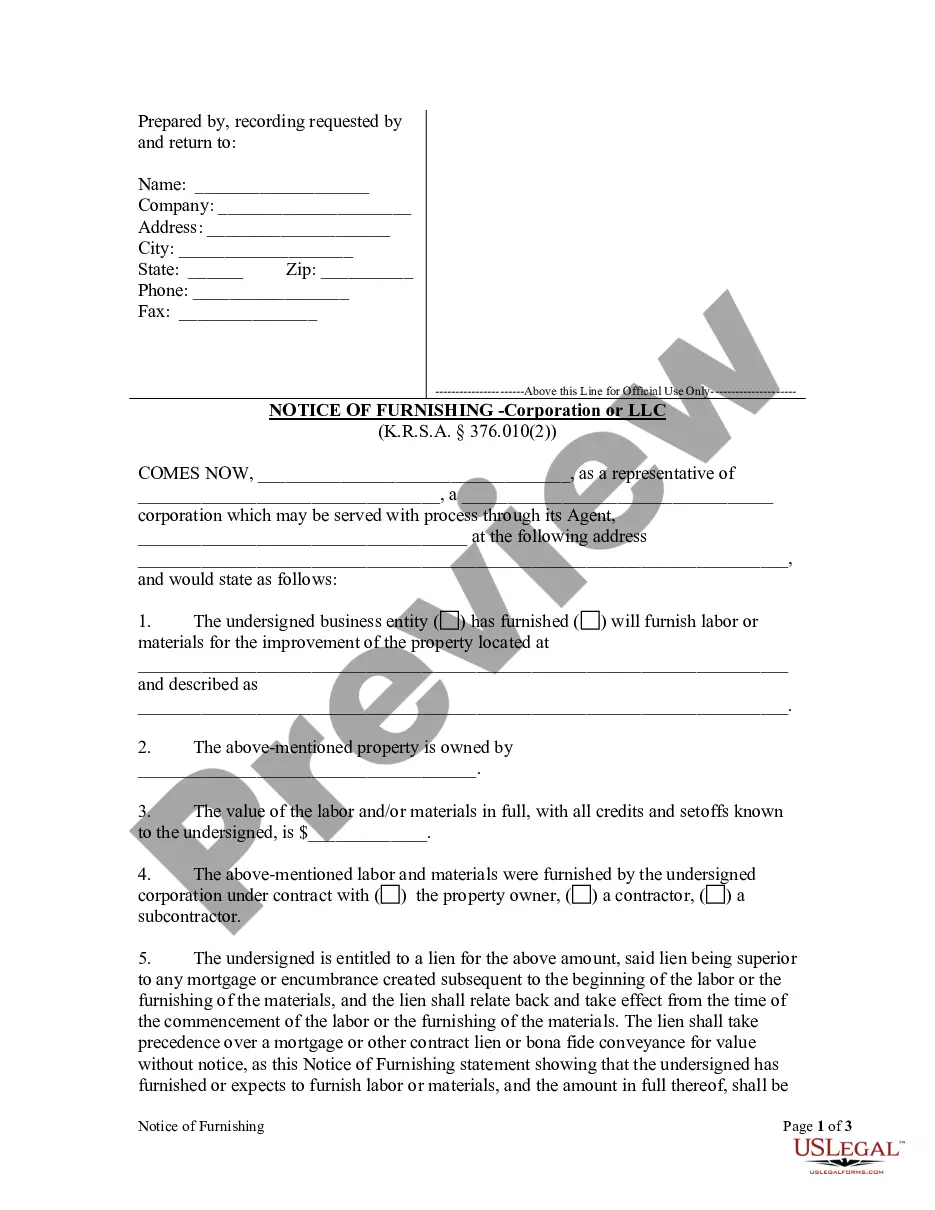
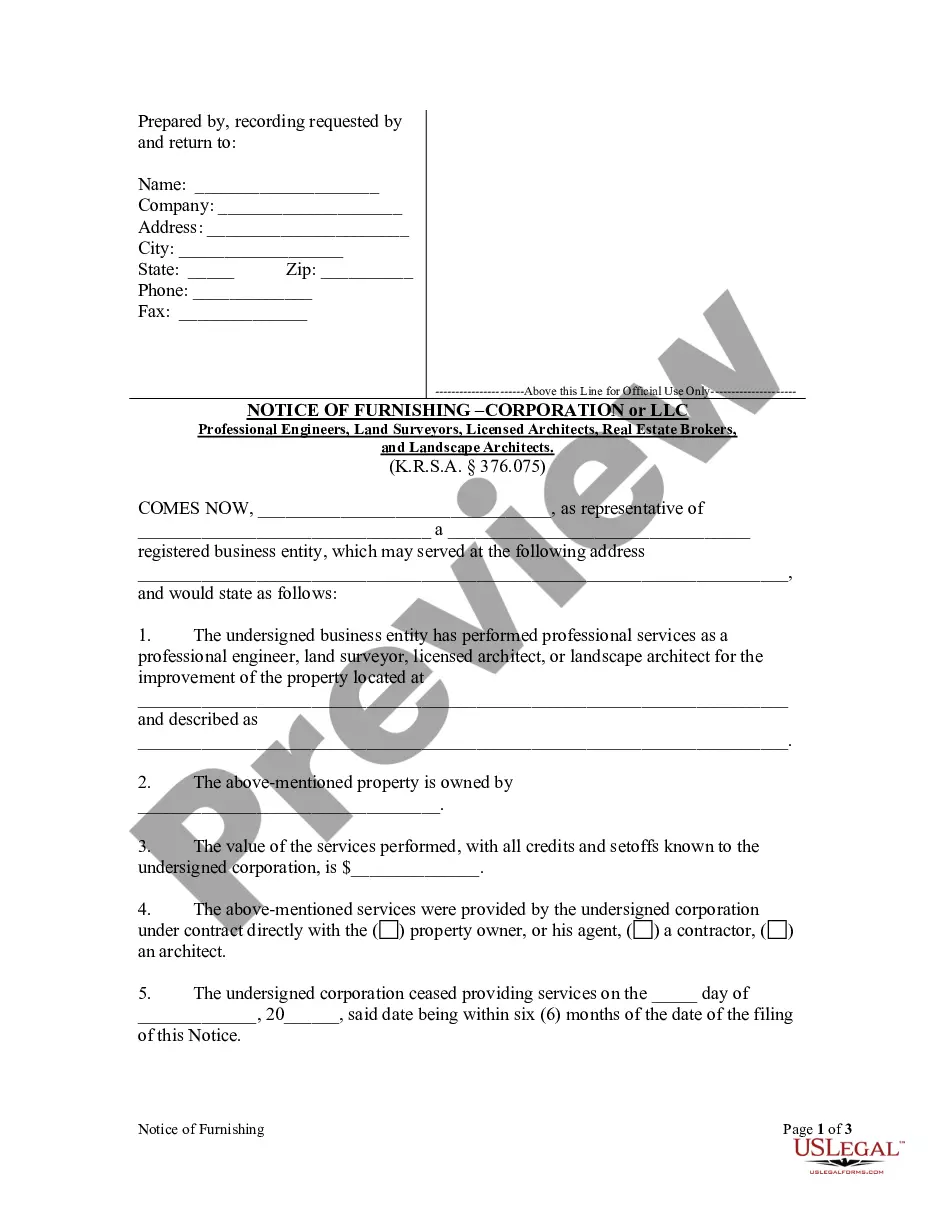
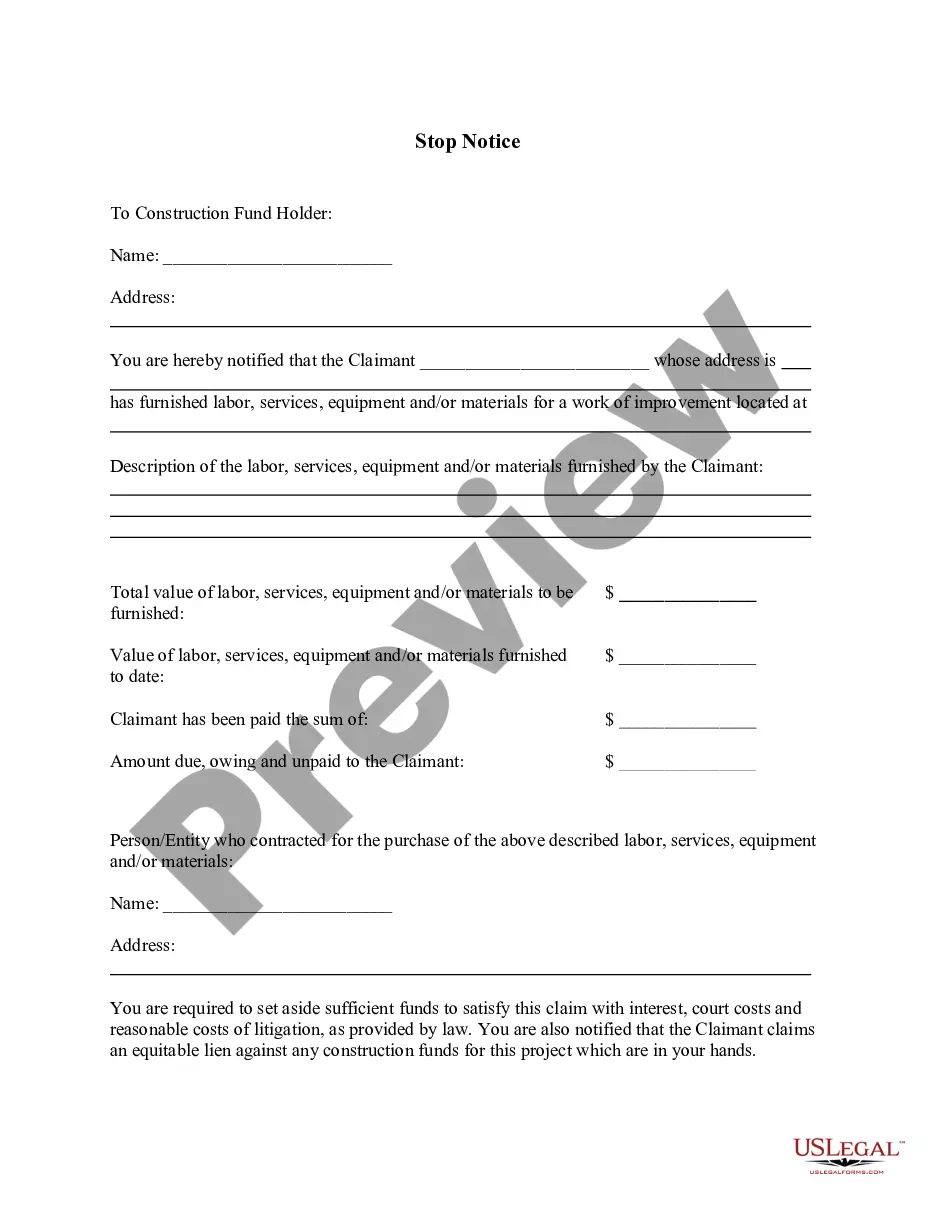
The Notice of Furnishing for a Corporation or LLC is a legal document used to inform property owners about labor and materials provided by a lien claimant. This form serves as a critical step in establishing a lien on a property, ensuring that the lien takes precedence over any subsequent mortgage or lien. This notice is particularly important for contractors and material suppliers who wish to secure their payment rights in a legal context.
What’s included in this form
- Identification of the parties involved, including the lien claimant and property owner.
- Description of the property where labor and materials were or will be furnished.
- Statement of the value of labor and/or materials provided.
- Indication of the relationship of the claimant to the property owner (contractor, subcontractor, etc.).
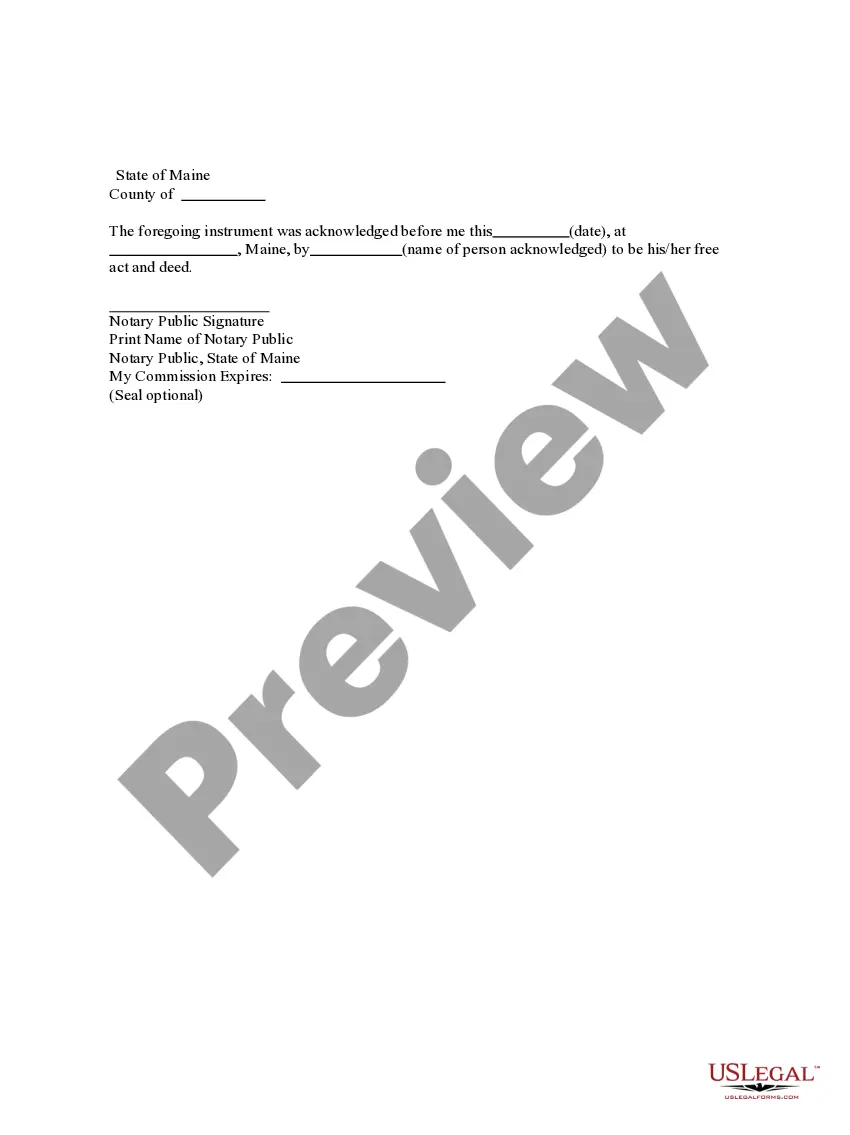
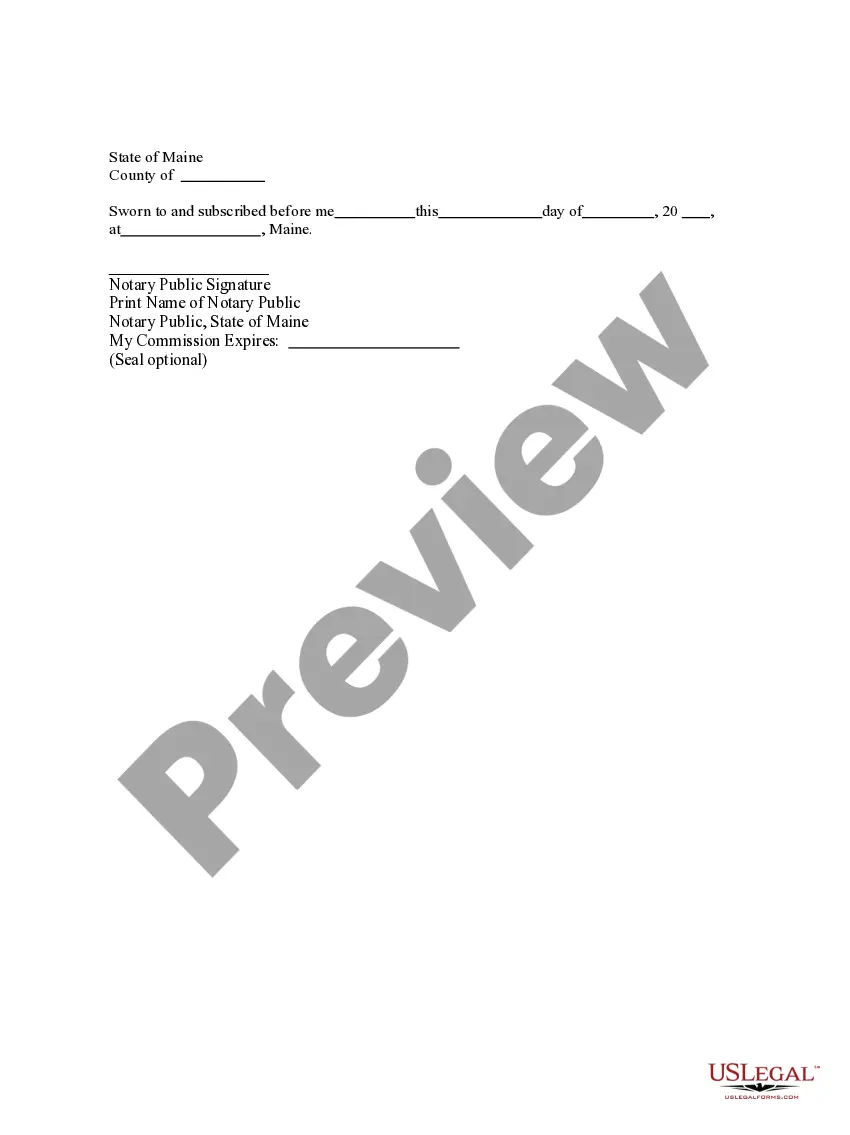
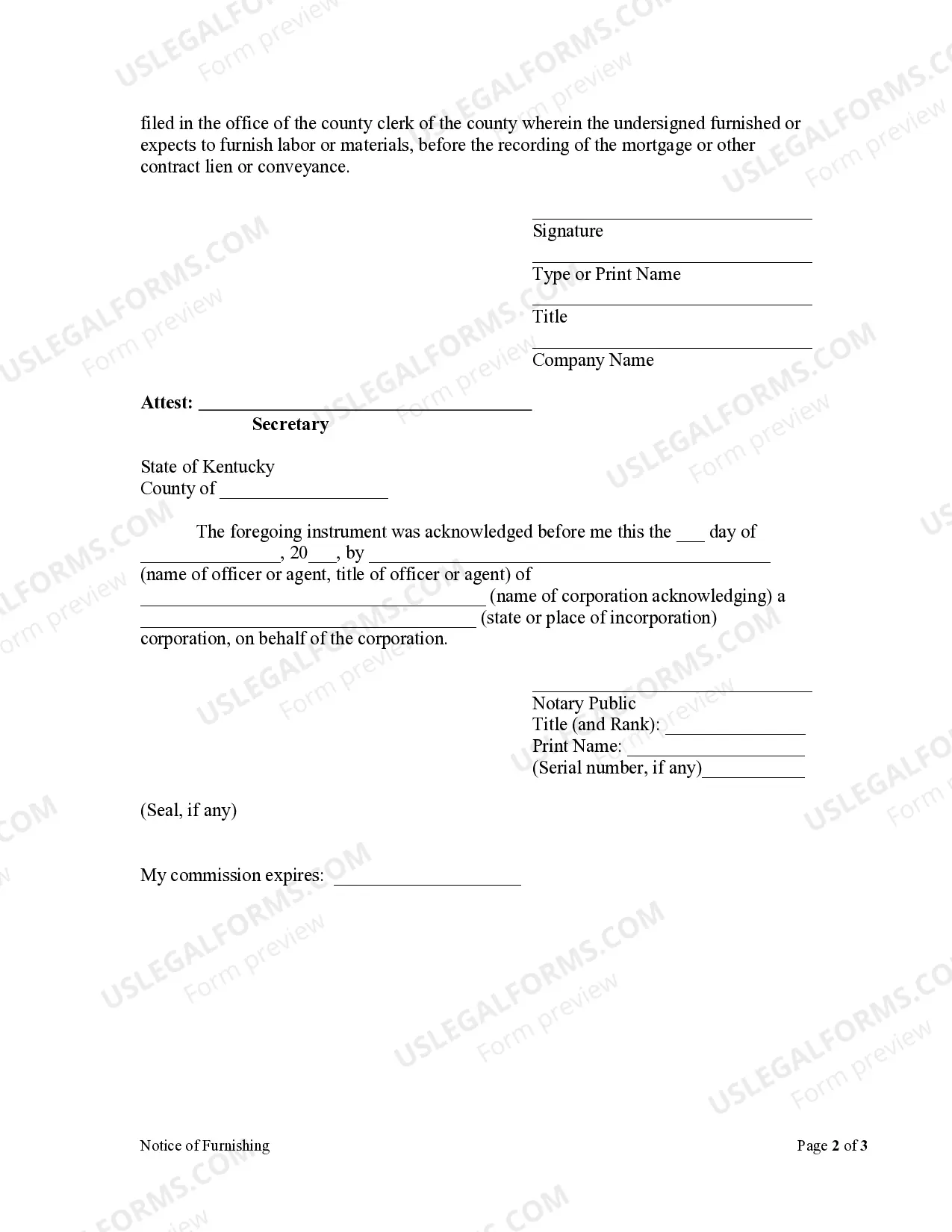
- Signature and acknowledgment by a notary public.
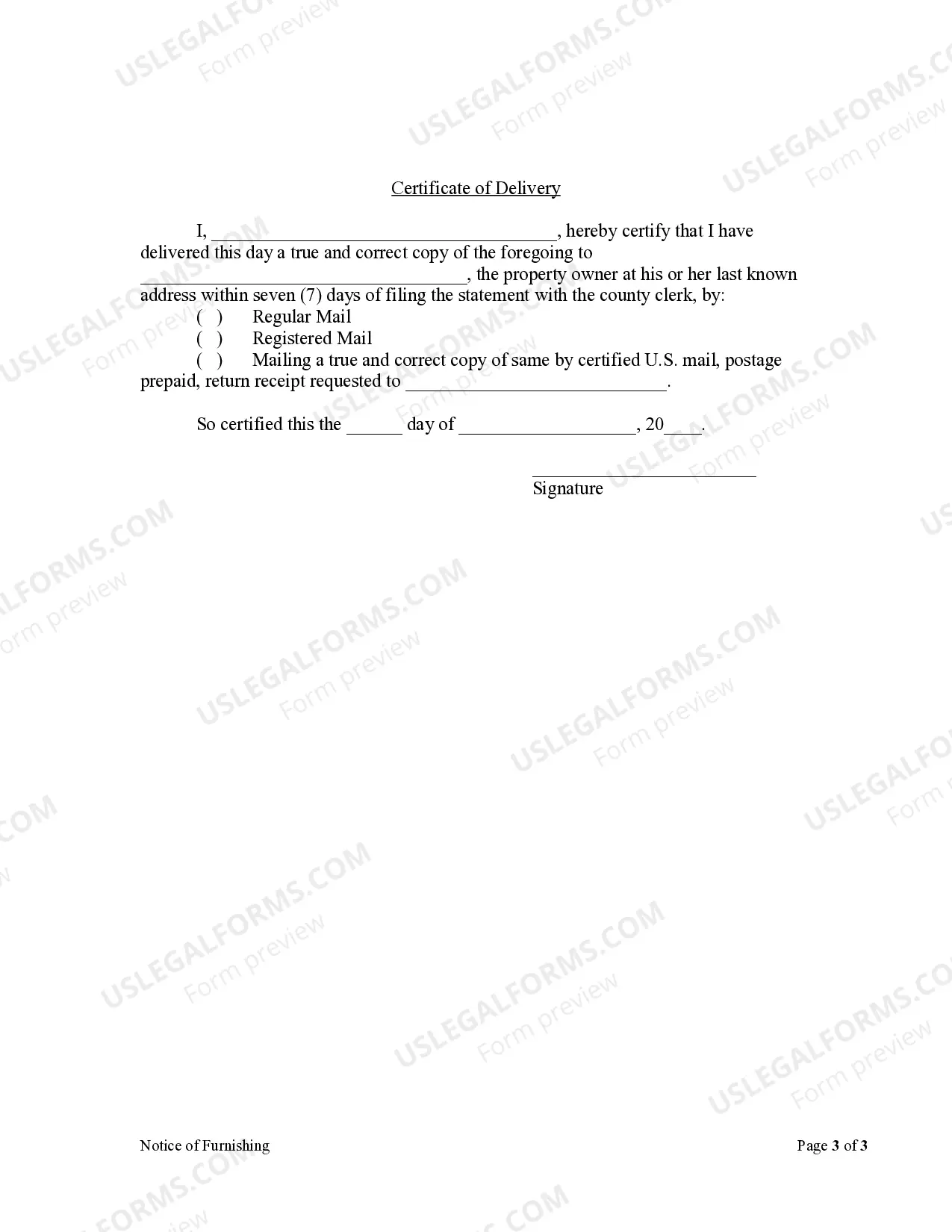
- Certificate of delivery to the property owner.
When to use this document
Use the Notice of Furnishing when you have provided or plan to provide labor or materials for the improvement of a property. Filing this notice before a mortgage or other lien is recorded is critical to securing your right to a lien on the property. This form is crucial for contractors, subcontractors, and suppliers who want to ensure their financial interests are protected in real estate projects.
Who needs this form
- Contractors who have supplied labor or materials for property improvements.
- Subcontractors working under a primary contractor.
- Material suppliers providing essential resources for construction projects.
- Corporations or LLCs engaged in construction or renovation activities.
Instructions for completing this form
- Identify the lien claimantâs name and company information at the top of the form.
- Fill in the details regarding the property where the labor and materials were provided.
- State the full value of the labor and materials furnished.
- Specify whether the work was done directly for the property owner, a contractor, or a subcontractor.
- Sign the form in the designated section and have it notarized if required.
- Deliver a copy of the form to the property owner and retain proof of delivery.
Does this form need to be notarized?
Yes, this form must be notarized to be legally valid. The notary public will verify the identity of the signer and the authenticity of the signature, which is crucial in legal proceedings. US Legal Forms offers integrated online notarization, available 24/7 through secure video calls, ensuring convenience and legal equivalence without the need to travel.
Get your form ready online
Our built-in tools help you complete, sign, share, and store your documents in one place.
Make edits, fill in missing information, and update formatting in US Legal Forms—just like you would in MS Word.
Download a copy, print it, send it by email, or mail it via USPS—whatever works best for your next step.
Sign and collect signatures with our SignNow integration. Send to multiple recipients, set reminders, and more. Go Premium to unlock E-Sign.
If this form requires notarization, complete it online through a secure video call—no need to meet a notary in person or wait for an appointment.
We protect your documents and personal data by following strict security and privacy standards.

Make edits, fill in missing information, and update formatting in US Legal Forms—just like you would in MS Word.

Download a copy, print it, send it by email, or mail it via USPS—whatever works best for your next step.

Sign and collect signatures with our SignNow integration. Send to multiple recipients, set reminders, and more. Go Premium to unlock E-Sign.

If this form requires notarization, complete it online through a secure video call—no need to meet a notary in person or wait for an appointment.

We protect your documents and personal data by following strict security and privacy standards.
Typical mistakes to avoid
- Failing to file the form before the recording of a mortgage, which can jeopardize lien rights.
- Not providing an accurate description of services or materials supplied, leading to potential disputes.
- Omitting the signature or failing to have the document notarized, which can render it invalid.
- Neglecting to deliver a copy to the property owner after filing.
Benefits of completing this form online
- Convenience of downloading and filling out the form at any time.
- Editability allows users to customize the prepared document to fit specific needs.
- Access to forms vetted by licensed attorneys ensures legal compliance.
- Fast delivery options to ensure timely filing.
Looking for another form?


Form popularity
FAQ
Notice of Furnishing is the term for preliminary notice in four states.Most parties who furnish labor and/or materials on construction projects need to send these notices in order to secure lien rights.
How much does it cost to file a mechanics lien in Kentucky? As of January 1, 2020, the cost to file a mechanics lien with a county recorder in Kentucky is $46 for the first 5 pages, and $3 for each page thereafter.
The Notice of Commencement (sometimes called a Notice of Project Commencement, a Notice of Contract, or Affidavit of Commencement) is most simply explained as a document that formally designates the beginning of a construction project.
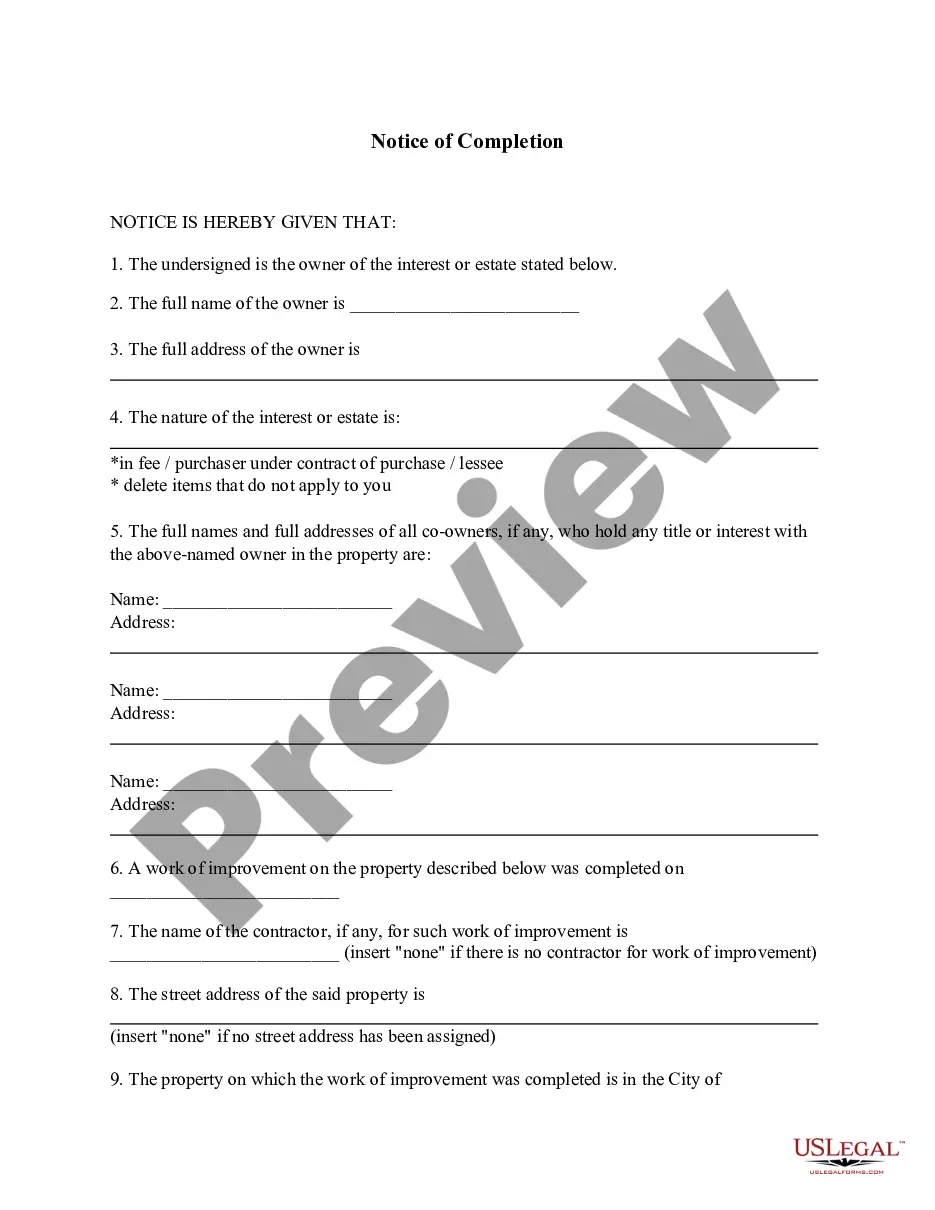
A Notice of Completion Is: The Notice of Completion typically comes from the property owner on a private project to notify the participants on a project specifically, the parties that have Mechanics Lien Rights that the project has been completed.
Name and address of owner. Name and address of original contractor. Name and address of the party who hired you. Description of the property location. Date of first furnishing services to the project. Name and address of the lien claimant.
Using a Notice of Commencement in Michigan. A Notice of Commencement is a form executed by a land owner or lessee before the start of any actual physical improvement to real property.
To claim a lien in Kentucky, the claimant must file a statement of the account due to him within six (6) months after he ceases to labor or furnish materials. K.R.S. 376.080(1). The statement must be filed in the office of the county clerk of the county in which the building or improvement is situated.
To attach a lien, the creditor records the judgment with the county clerk for the Kentucky county where the debtor has property now or may have any property in the future.