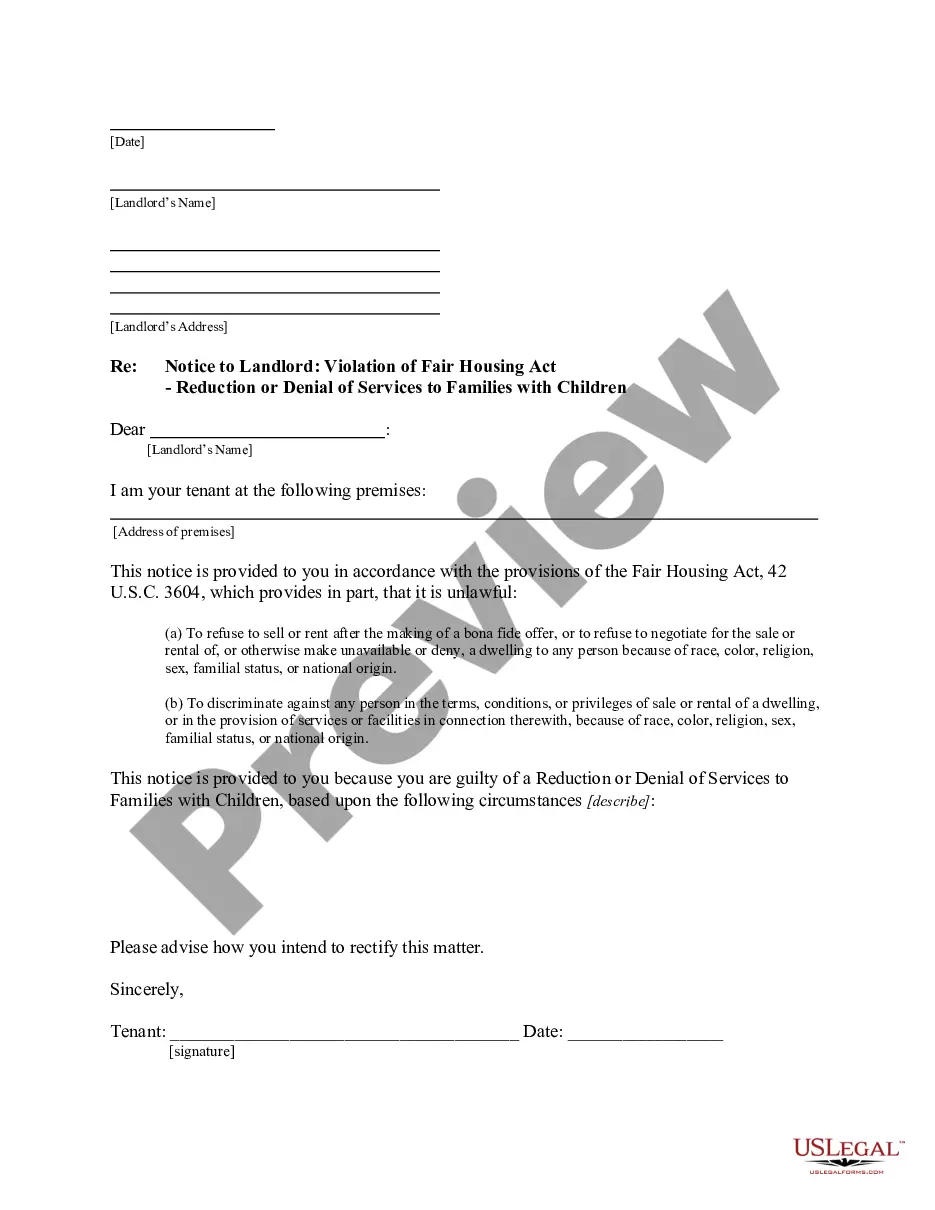
Kansas Mutual Wills package with Last Wills and Testaments for Married Couple with No Children
Understanding this form
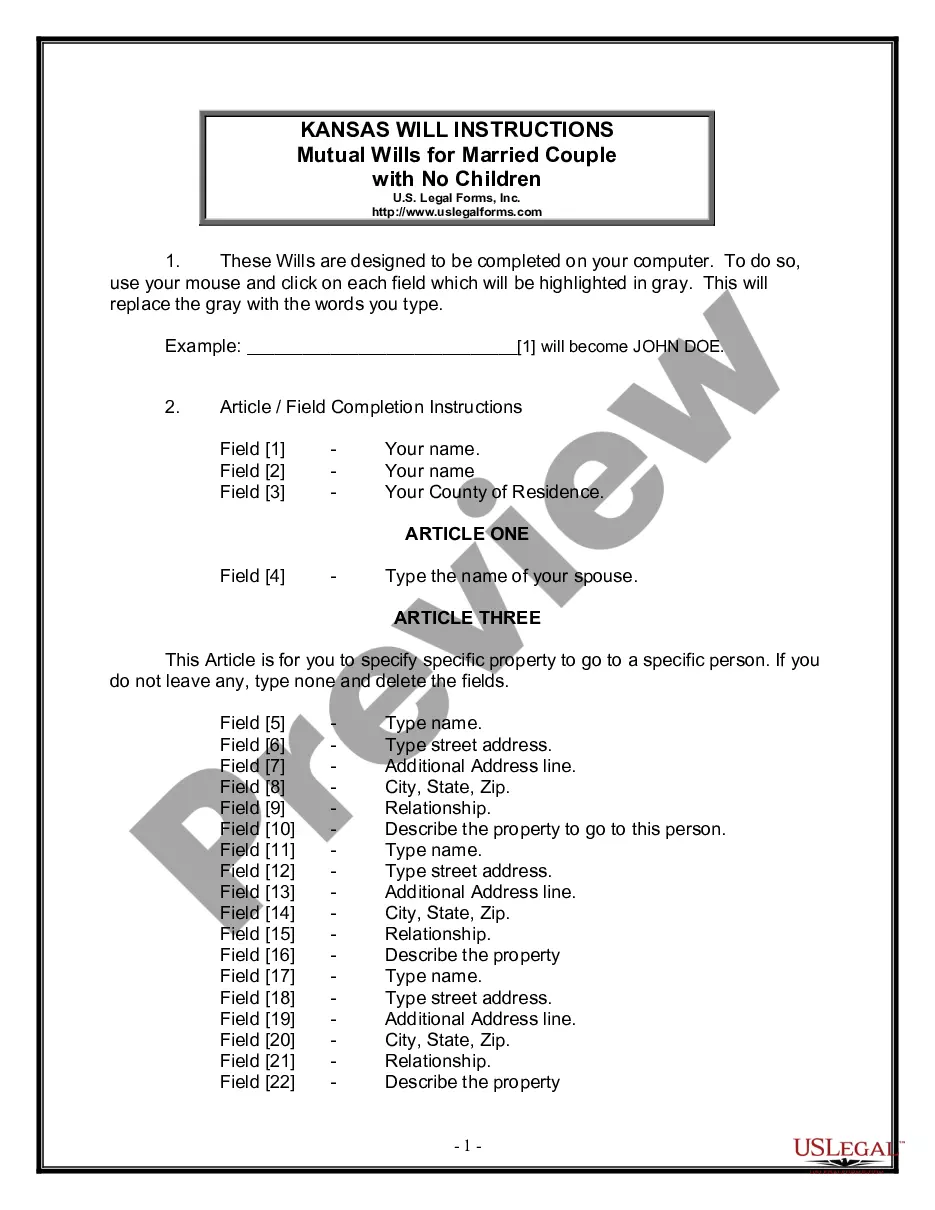
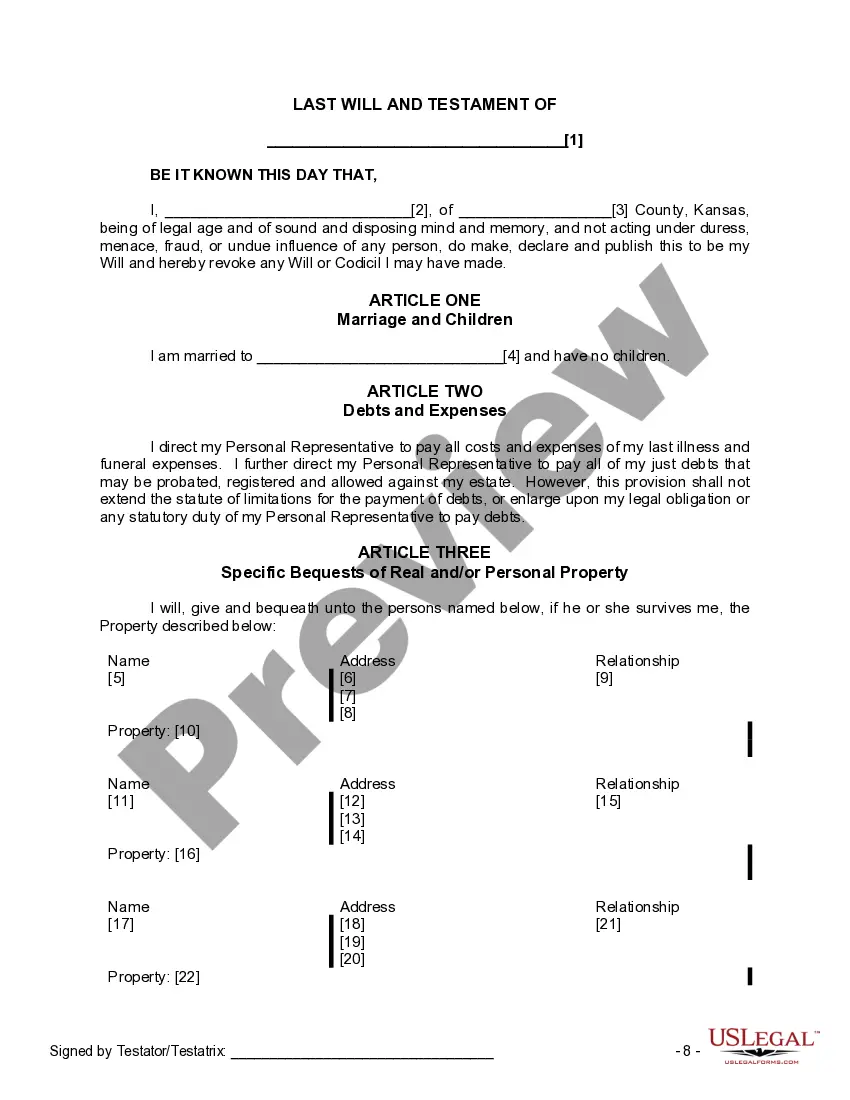
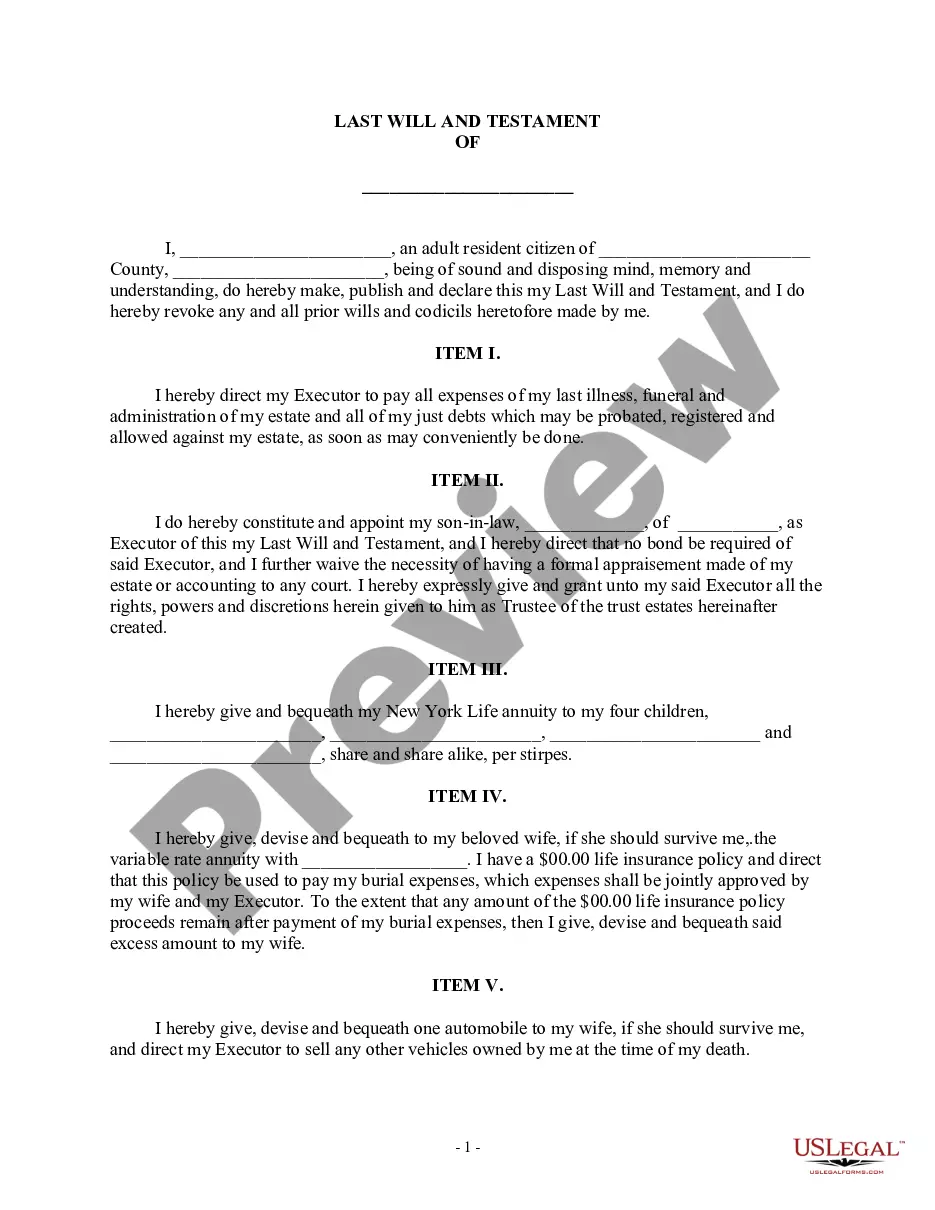
The Mutual Wills package with Last Wills and Testaments for Married Couple with No Children is a legal document that allows two spouses to jointly declare their final wishes concerning the distribution of their assets upon death. This form is specifically designed for couples without children, enabling them to name beneficiaries, appoint a personal representative, and establish clear instructions for their estate management. Unlike individual wills, mutual wills create binding agreements between spouses, ensuring that both parties' wishes are honored, even if one spouse passes away first.
Key components of this form
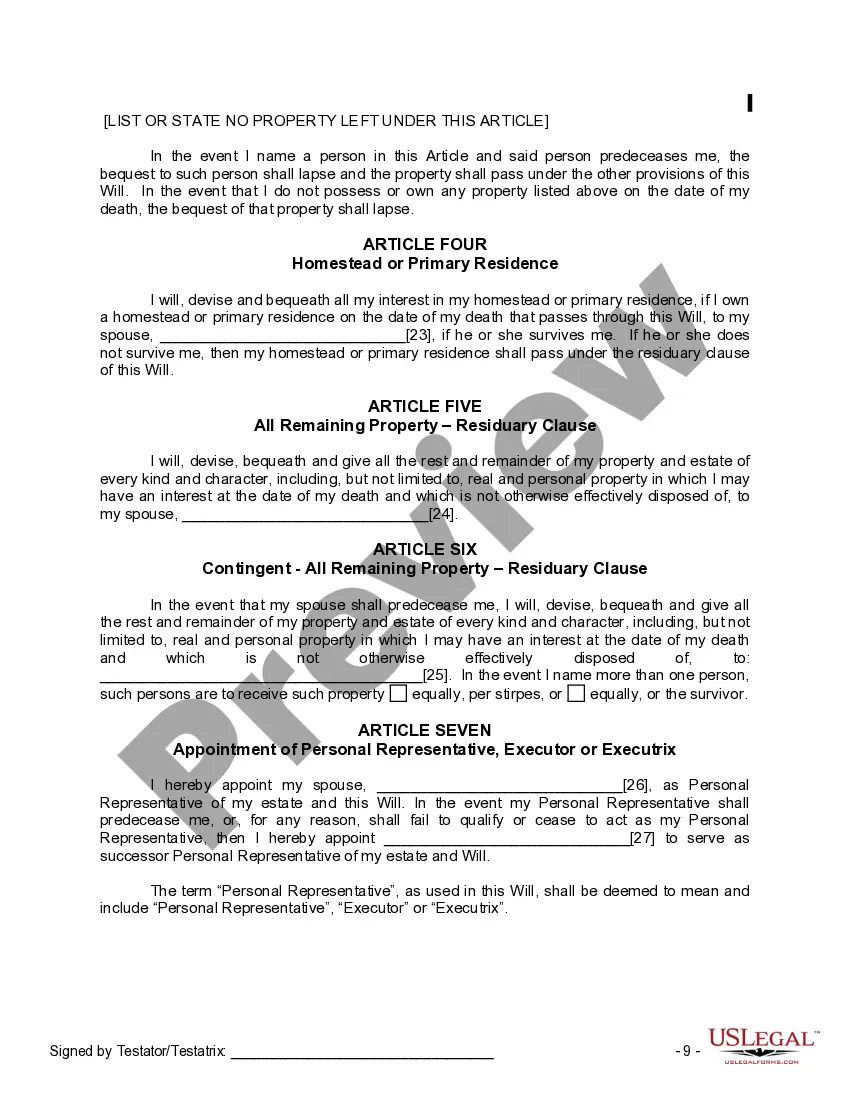
- Appointment of a personal representative to oversee the estate.
- Specific bequests to named beneficiaries for particular assets.
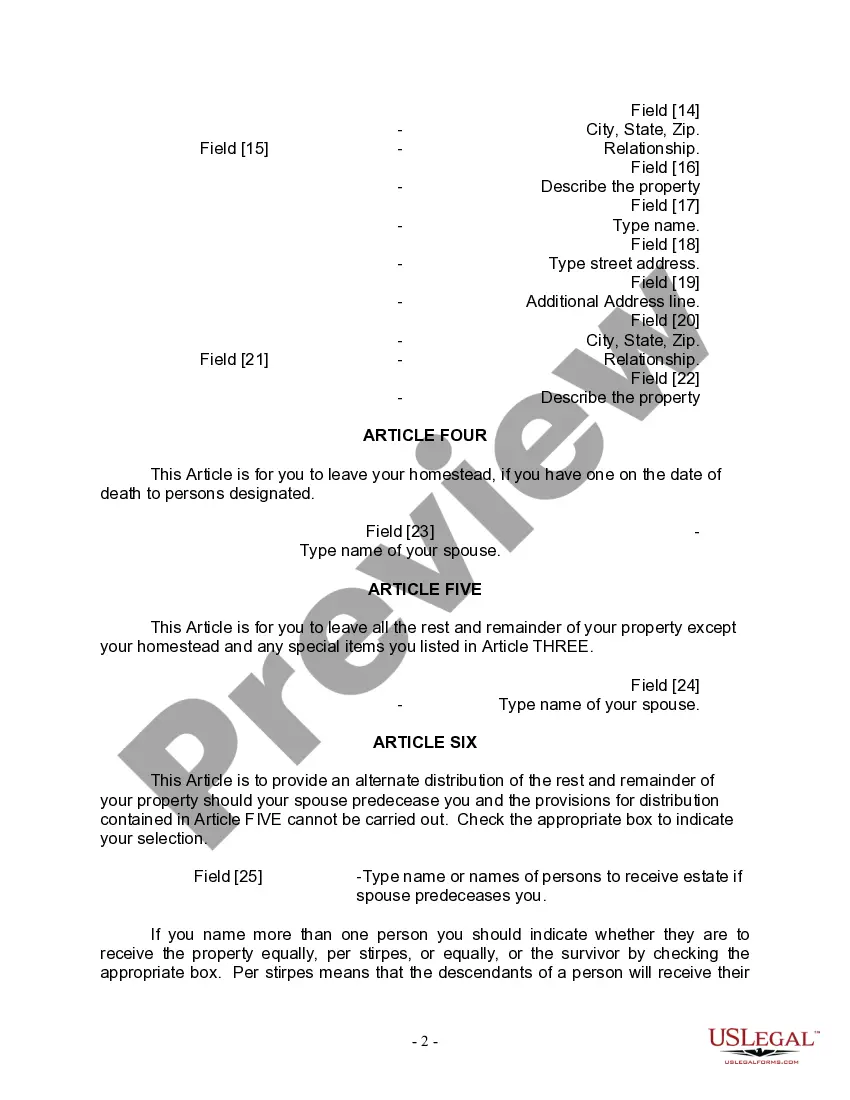
- Provisions for the homestead or primary residence.
- Residuary clause for remaining property distribution.
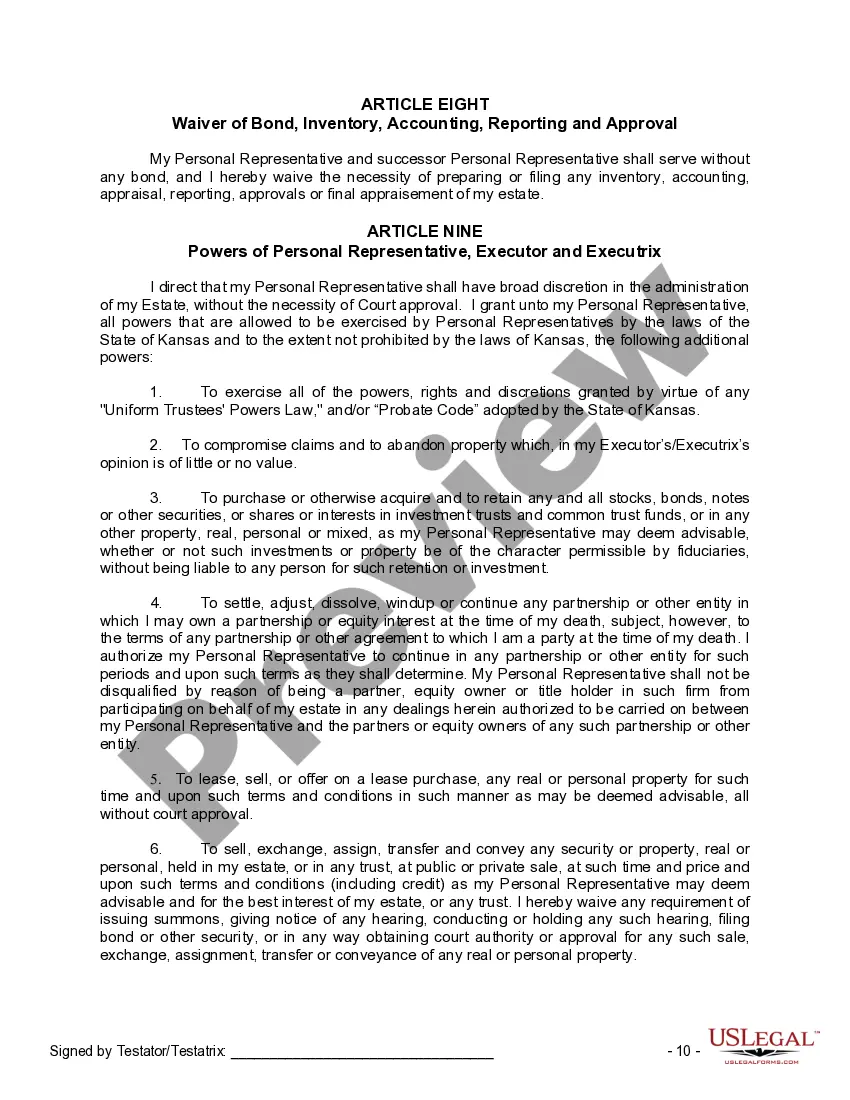
- Power for the personal representative to administer the estate with broad discretion.
- Provisions regarding the execution and witnessing of the wills.




Situations where this form applies
This Mutual Wills package is ideal when a married couple seeks to formalize their estate plans without children. It's particularly useful for couples wanting to ensure that their assets are distributed according to their mutual wishes, providing peace of mind that their spouse is cared for after their passing. This form can be utilized when both spouses are in agreement about their estate distribution, even in the absence of direct heirs like children.
Who this form is for
Who should consider this form:
- Married couples without children.
- Spouses looking to coordinate their estate plans.
- Individuals wanting to ensure their partner inherits all assets upon death.
- Couples who wish to avoid intestacy and unclear asset distribution.
How to prepare this document
To complete your Mutual Wills, follow these steps:
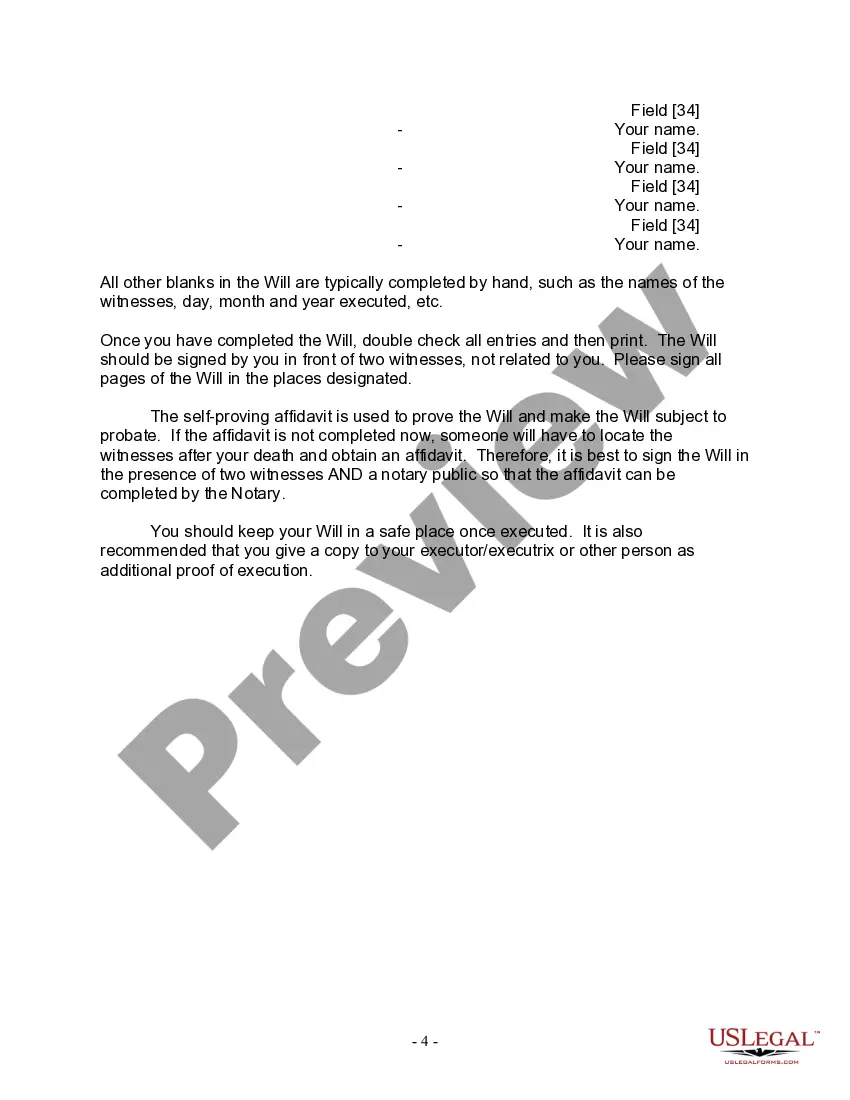
- Identify both spouses' names and county of residence as the beginning of the will.
- Designate specific property to bequeath to named beneficiaries if desired.
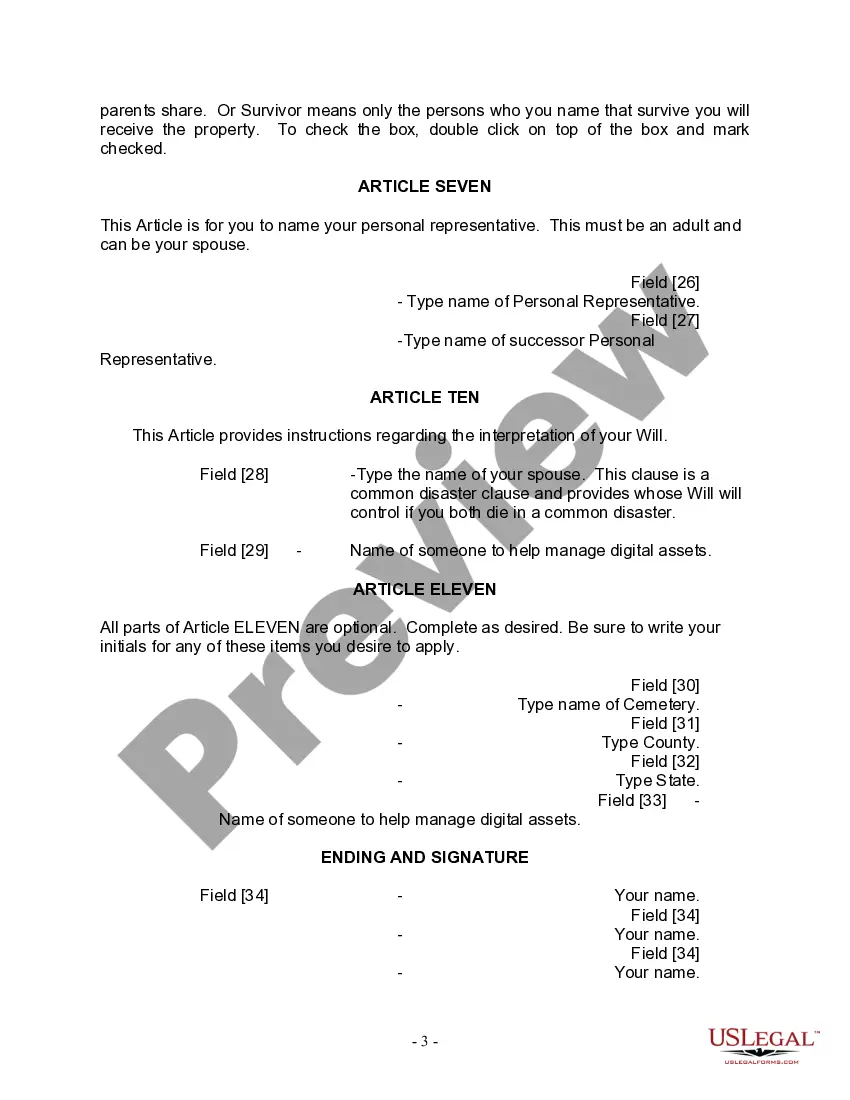
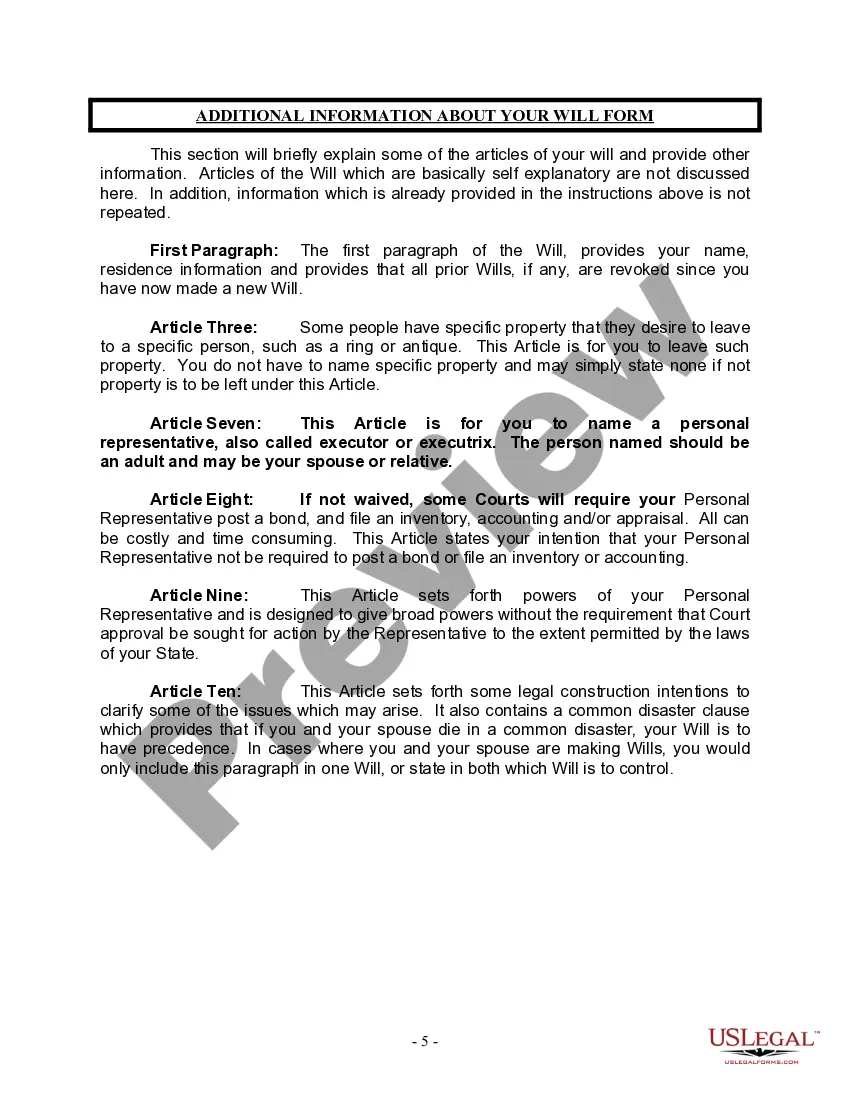
- Appoint a personal representative, who can be one of the spouses or an alternate.
- Review and ensure clarity in the homestead and residue provisions.
- Sign the wills in the presence of two witnesses, ensuring all legal requirements are followed.
Notarization requirements for this form
Yes, this form must be notarized to be legally valid. It is essential to have the wills signed in front of a notary public to ensure that they meet the self-proving affidavit requirements and help facilitate the probate process. US Legal Forms offers integrated online notarization, allowing you to complete this step securely via video call, without needing to travel.
Get your form ready online
Our built-in tools help you complete, sign, share, and store your documents in one place.
Make edits, fill in missing information, and update formatting in US Legal Forms—just like you would in MS Word.
Download a copy, print it, send it by email, or mail it via USPS—whatever works best for your next step.
Sign and collect signatures with our SignNow integration. Send to multiple recipients, set reminders, and more. Go Premium to unlock E-Sign.
If this form requires notarization, complete it online through a secure video call—no need to meet a notary in person or wait for an appointment.
We protect your documents and personal data by following strict security and privacy standards.

Make edits, fill in missing information, and update formatting in US Legal Forms—just like you would in MS Word.

Download a copy, print it, send it by email, or mail it via USPS—whatever works best for your next step.

Sign and collect signatures with our SignNow integration. Send to multiple recipients, set reminders, and more. Go Premium to unlock E-Sign.

If this form requires notarization, complete it online through a secure video call—no need to meet a notary in person or wait for an appointment.

We protect your documents and personal data by following strict security and privacy standards.
Common mistakes to avoid
- Failing to have the wills signed and witnessed correctly.
- Not discussing the contents of the will with the appointed personal representative.
- Leaving out specific bequests and relying solely on the residuary clause.
- Not updating the wills after major life events, such as relocation or changes in financial status.
Benefits of using this form online
- Conveniently complete your wills online from the comfort of your home.
- Edit and customize terms easily to reflect mutual decisions.
- Access reliable legal forms drafted by licensed attorneys.
- Save time and reduce costs compared to hiring a lawyer for basic wills.
Key takeaways
- The Mutual Wills package ensures mutual desires for property distribution between married couples.
- Proper execution with witnesses and a notary is important for legal validity.
- This package simplifies the estate planning process for couples without children.
Looking for another form?

Form popularity
FAQ
Here are our top 5 reasons why it is better to have a separate Will for each spouse. When someone dies, their Will becomes locked in since they can no longer express a change to their wishes. This means that if one spouse passes away, the joint Will would become locked and difficult to update for the surviving spouse.
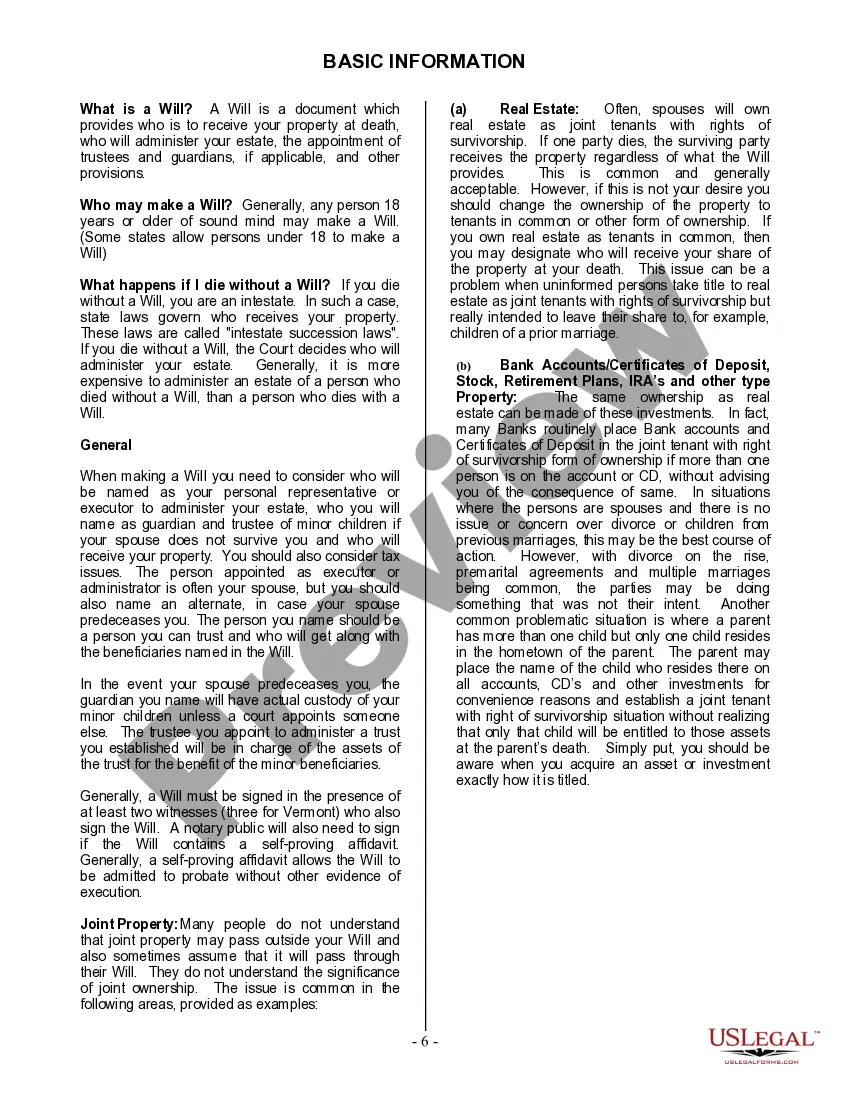
When a person dies without leaving a valid will, their property (the estate) must be shared out according to certain rules.A person who dies without leaving a will is called an intestate person. Only married or civil partners and some other close relatives can inherit under the rules of intestacy.
When you marry, any existing will is automatically revoked (cancelled) and becomes no longer valid. If you do not make a new one, then when you die the law of intestacy decides how your assets are divided. Usually, your entire estate would go to your wife, husband or civil partner.
Yes, but steps can often be taken to effectively get around the Will. When your spouse signs a Will leaving you out, the Will itself is not automatically invalid.We often see a husband leave his second wife out of his Will and instead leave everything to husband's adult children from a prior marriage.
The reality is, however, that both you and your spouse should each have your own will, and it should be planned as soon as possible. Some couples think that they can have one joint will together, but this is not a sound approach.
It is a customary estate planning practice for each spouse to have his or her own will. While some practitioners may draft a joint will for a married couple, it is not recommended.
Making one will for two people is usually not advisable because it's irrevocable after the first spouse's death.Even though married couples often have the same goals in mind when making their estate plan, most attorneys advise against joint wills.
If each spouse has their own Will, California law allows them to make new Wills after the divorce has been filed and creating the new Will does not violate the Automatic Temporary Restraining Order (ATRO) against changing beneficiaries, selling assets, etc.
Mirror wills are based on the idea that married or unmarried couples will likely have the same wishes regarding their estate. No matter which spouse dies first, the estates are handled the same way. The basic structure of a mirror will is similar to an individual last will.