Kansas Residential Rental Lease Application
Overview of this form
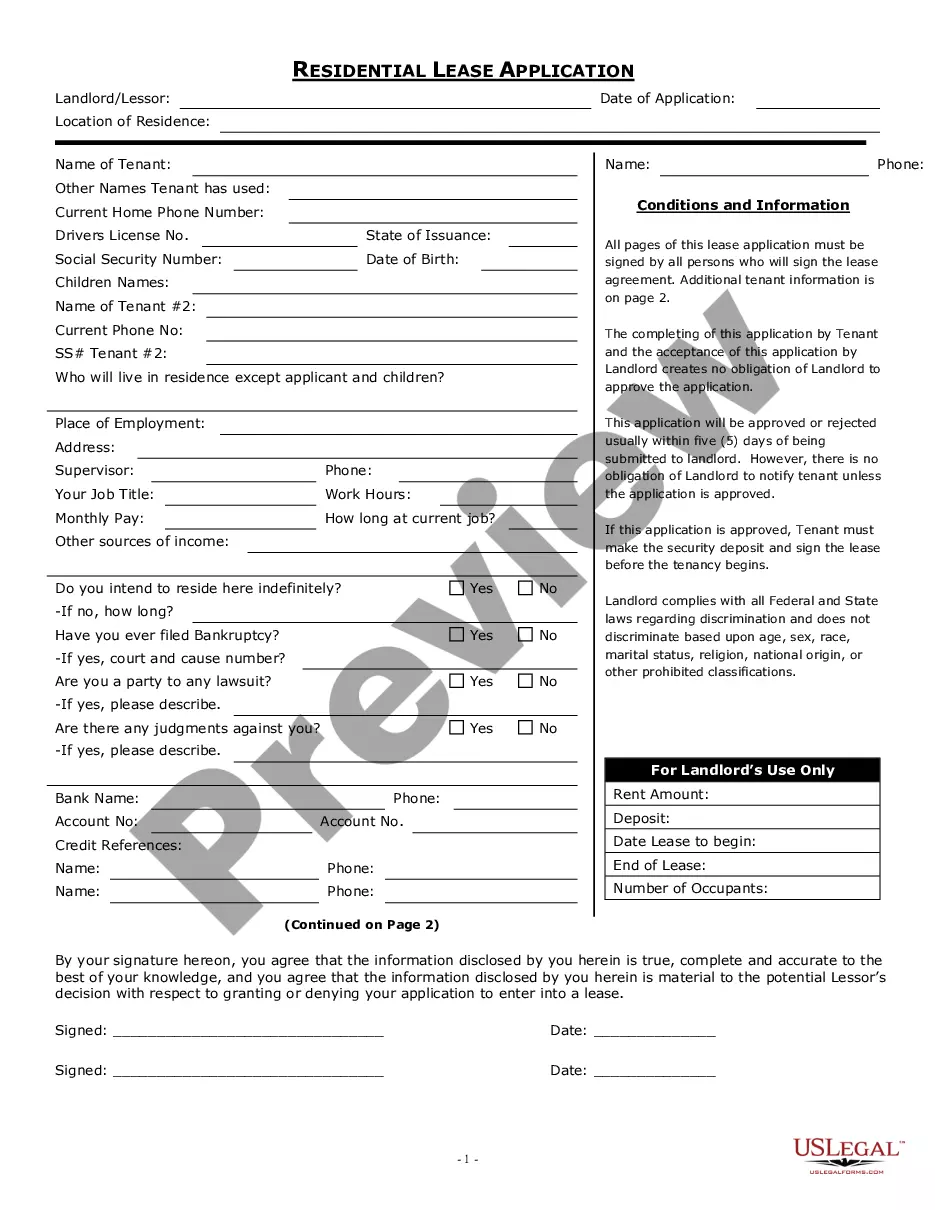
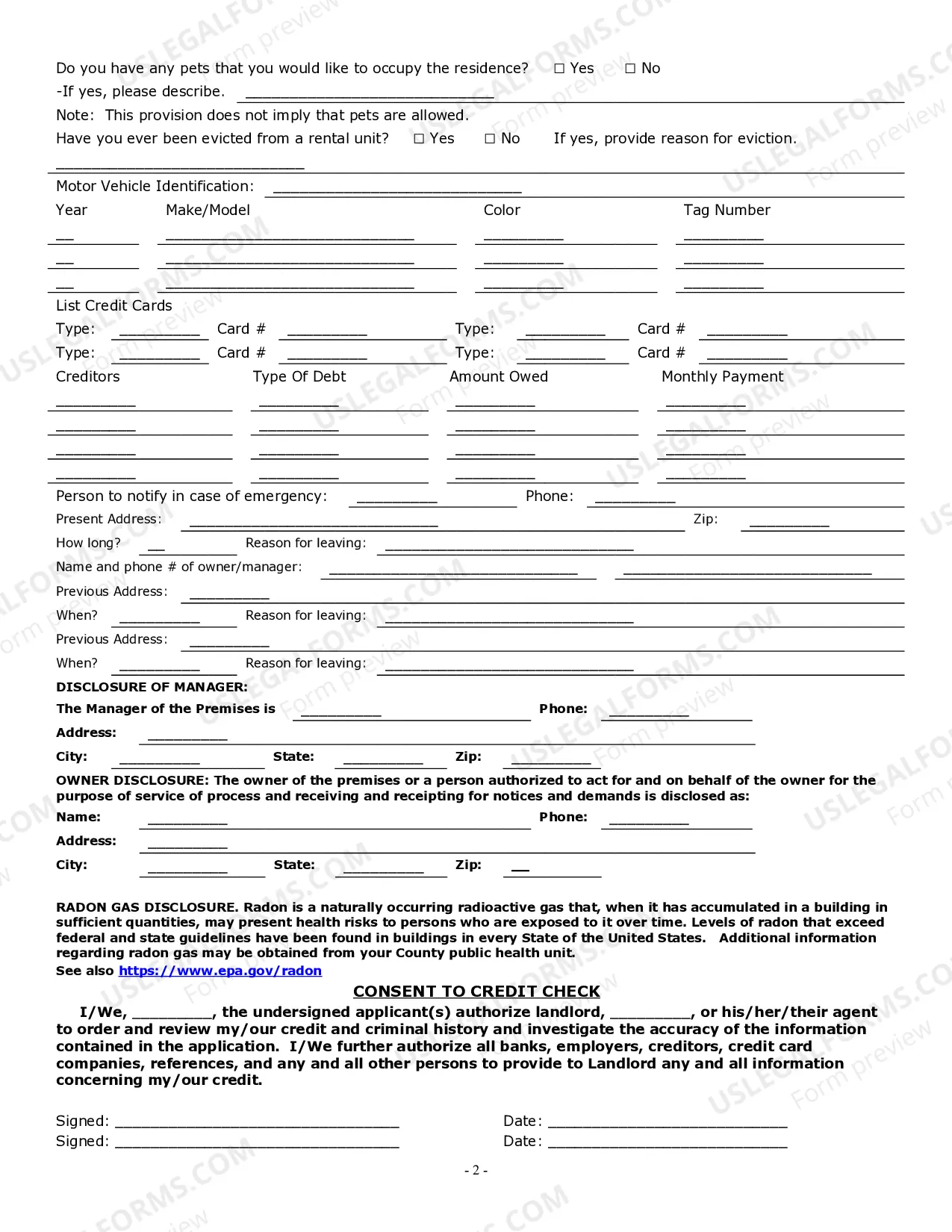
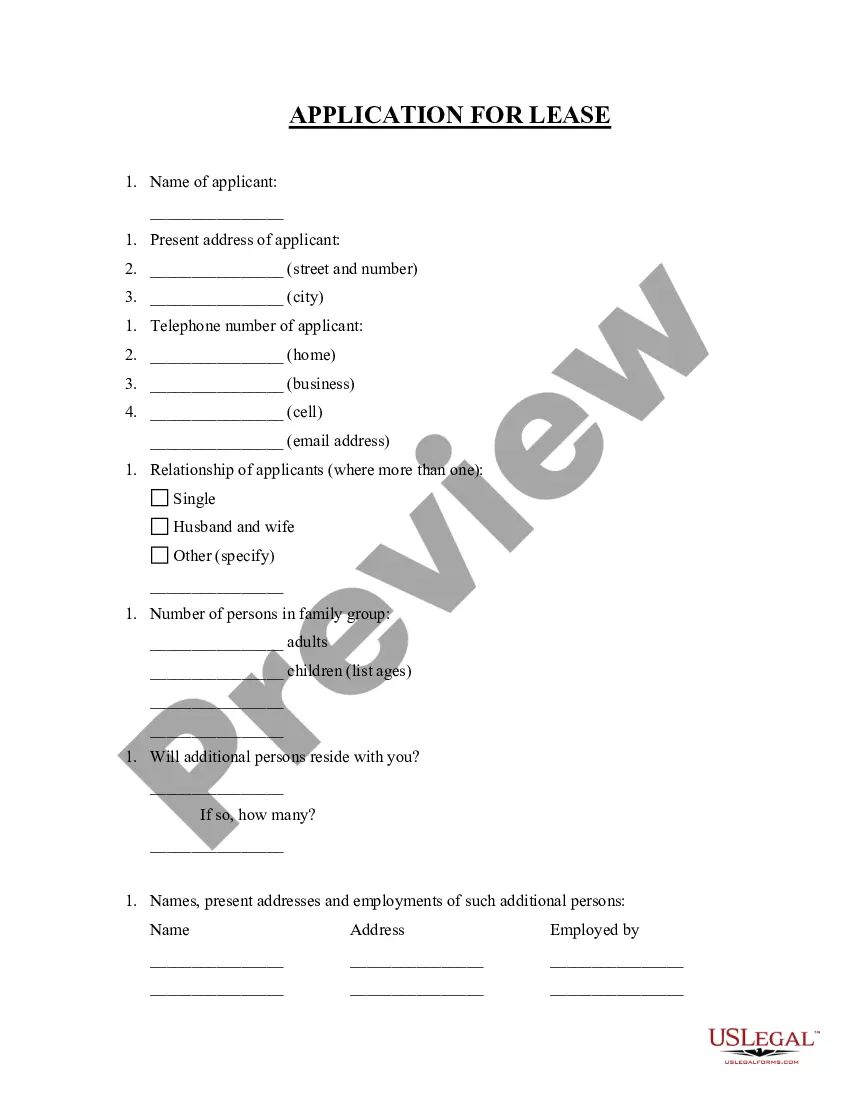
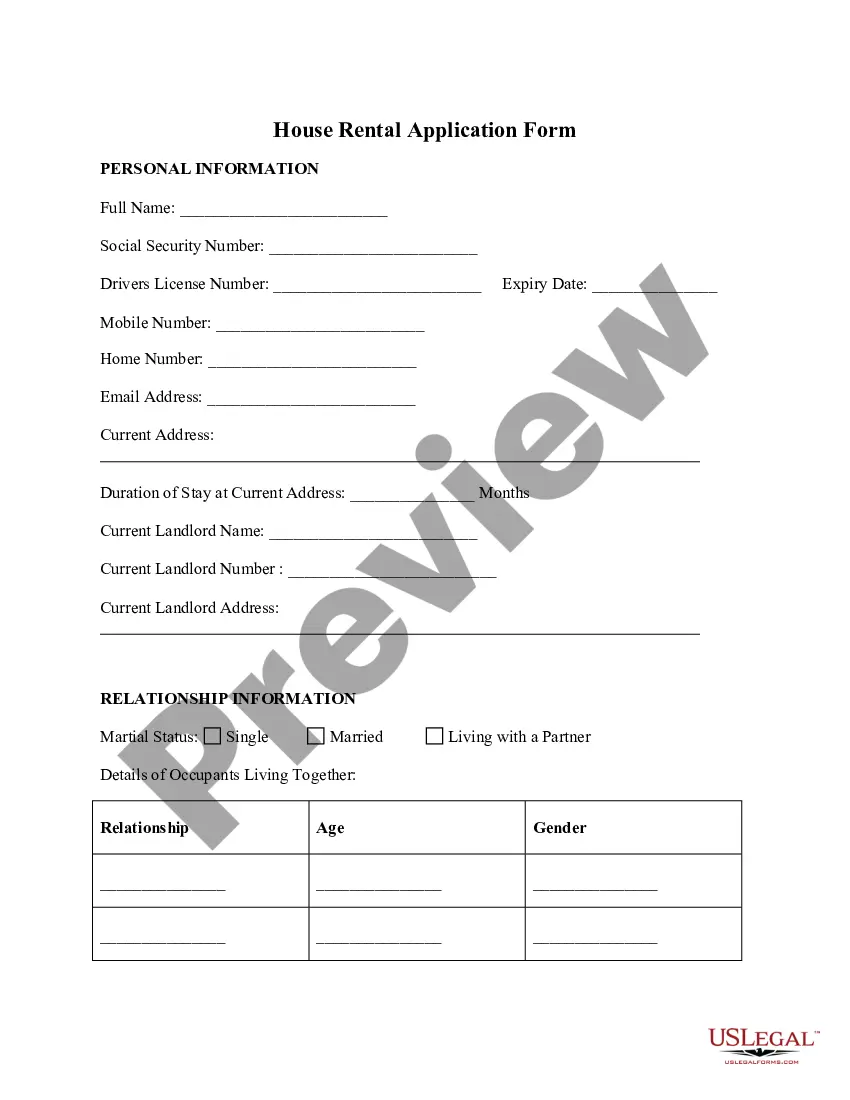
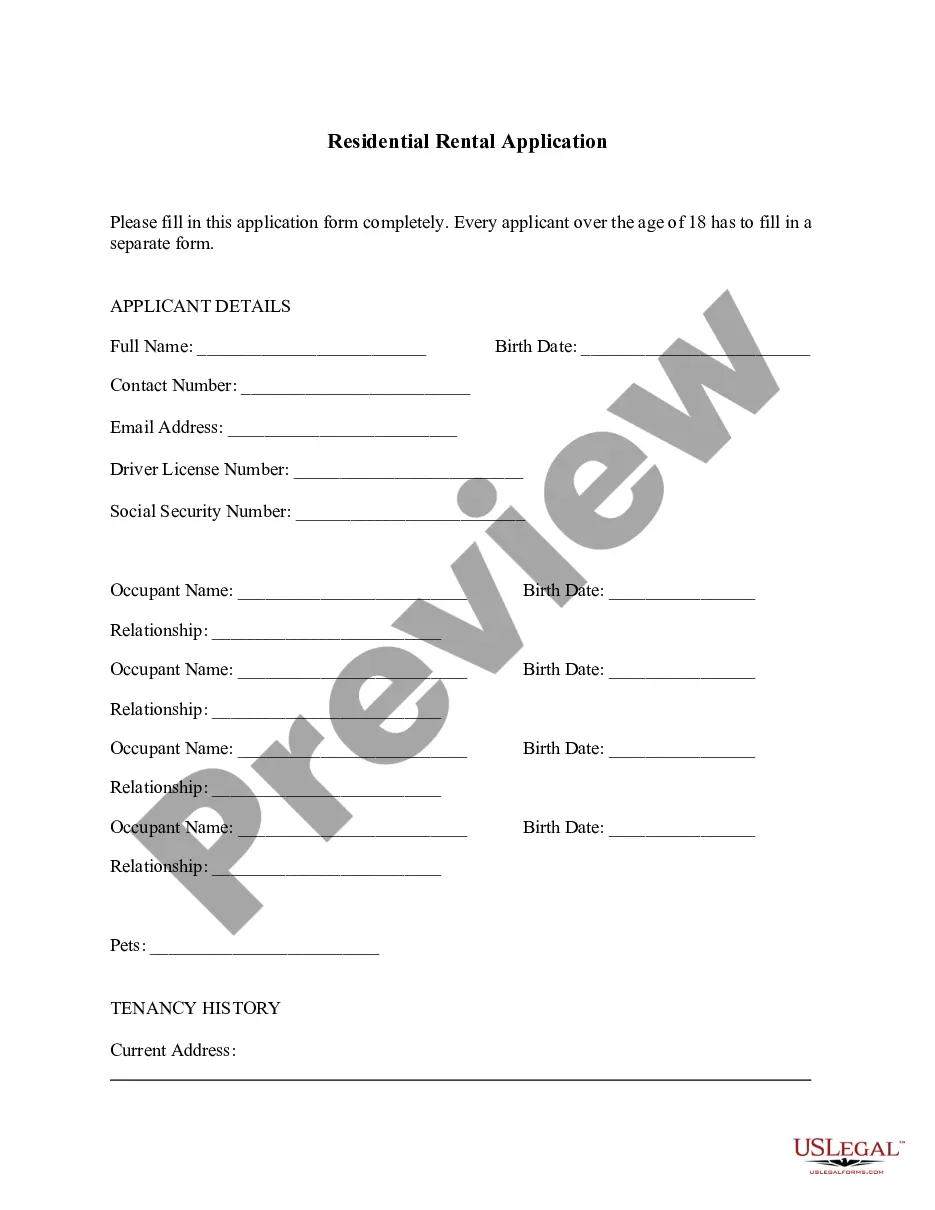
The Residential Rental Lease Application is a document that potential tenants complete to apply for a rental property. This form allows landlords to gather essential information about a prospective tenant, including their rental history and personal details. Unlike a rental agreement, which outlines the terms of a rental arrangement, this application helps landlords evaluate applicants before entering into a lease.
Key parts of this document
- Tenant information: Personal details such as name, contact information, and social security number.
- Rental history: Previous addresses, landlordsâ contact information, and lease dates.
- Employment information: Current employer, job title, and income verification.
- Credit check authorization: A section where the tenant permits the landlord to conduct a credit and background check.
- The signature section: A declaration stating the information provided is accurate and complete.

When to use this form
This form should be used when a landlord is considering a new tenant for a residential property. It is particularly useful when the landlord has multiple applications and wants to evaluate each applicant's qualifications consistently. Using this application can streamline the tenant selection process and ensure that all critical information is collected.
Who needs this form
- Landlords seeking to rent out residential properties.
- Property management companies looking to screen potential tenants.
- Experienced landlords and first-time landlords alike, as it helps ensure a thorough review of applicants.
How to prepare this document
- Gather basic tenant details including name, contact information, and social security number.
- Fill out the rental history section, providing past addresses and accommodating landlord contacts.
- List current employment details, including employer name, job title, and salary.
- Sign the authorization for a credit check, allowing the landlord to evaluate your financial history.
- Review all information for accuracy before submitting the application to the landlord.
Does this document require notarization?
This form does not typically require notarization unless specified by local law. Always check your jurisdiction's regulations to confirm compliance.
Get your form ready online
Our built-in tools help you complete, sign, share, and store your documents in one place.
Make edits, fill in missing information, and update formatting in US Legal Forms—just like you would in MS Word.
Download a copy, print it, send it by email, or mail it via USPS—whatever works best for your next step.
Sign and collect signatures with our SignNow integration. Send to multiple recipients, set reminders, and more. Go Premium to unlock E-Sign.
If this form requires notarization, complete it online through a secure video call—no need to meet a notary in person or wait for an appointment.
We protect your documents and personal data by following strict security and privacy standards.

Make edits, fill in missing information, and update formatting in US Legal Forms—just like you would in MS Word.

Download a copy, print it, send it by email, or mail it via USPS—whatever works best for your next step.

Sign and collect signatures with our SignNow integration. Send to multiple recipients, set reminders, and more. Go Premium to unlock E-Sign.

If this form requires notarization, complete it online through a secure video call—no need to meet a notary in person or wait for an appointment.

We protect your documents and personal data by following strict security and privacy standards.
Common mistakes to avoid
- Failing to provide complete and accurate employment information.
- Not including all previous rental addresses or landlord contacts.
- Overlooking signatures on the credit check authorization section.
Advantages of online completion
- Convenient access: Download the form from any device at any time.
- Editability: Easily fill out the form online or print it for handwriting.
- Time-saving: Streamline your application process with a ready-made template.
Legal use & context
- The form provides a structured way for landlords to evaluate tenant applications.
- Information collected adheres to Fair Housing laws to prevent discrimination.
- It serves as a preliminary agreement that facilitates the leasing process between landlord and tenant.
Summary of main points
- The Residential Rental Lease Application is essential for landlords evaluating tenant applications.
- Include complete and accurate information to improve application chances.
- Understand the local laws related to tenant screening as they can vary by state.
Looking for another form?
Form popularity
FAQ
Terms. The lease should state the length of the agreement. Rent. The amount of rent and when it is due. Deposits and fees. The names of all tenants. Occupancy limits. Restrictions on disruptive activity. Pets. Maintenance and repairs.
Names of all tenants. Limits on occupancy. Term of the tenancy. Rent. Deposits and fees. Repairs and maintenance. Entry to rental property. Restrictions on tenant illegal activity.
A rental application allows a landlord to collect a tenant's personal and employment information and obtains their consent to run consumer reports.The tenant may be required to pay a non-refundable fee that is usually equal to the landlord's cost of obtaining a credit and background check.
The Lease Must be in Writing It does not matter if the lease is handwritten or typed. If the lease is for more than one year, it must be in written form and contain the following terms.
The Lease Must be in Writing It does not matter if the lease is handwritten or typed.
Details to include: Tenant/Buyer: The name and address of the party who is leasing the property and obtaining the option to purchase. Property: The address and legal description of the property. Rent Payments: The amount of the monthly rent payments and any late fees.
As long as the contract spells out specific details and both parties have signed that they agree to the contract's terms, a handwritten contract is legally binding and enforceable in court.
If you're thinking of renting out your property, or you're a tenant, and the current owner doesn't already have an agreement drawn up, it's possible to create your own rental contract.
Collect each party's information. Include specifics about your property. Consider all of the property's utilities and services. Know the terms of your lease. Set the monthly rent amount and due date. Calculate any additional fees. Determine a payment method. Consider your rights and obligations.