Indiana Last Will and Testament for other Persons
About this form
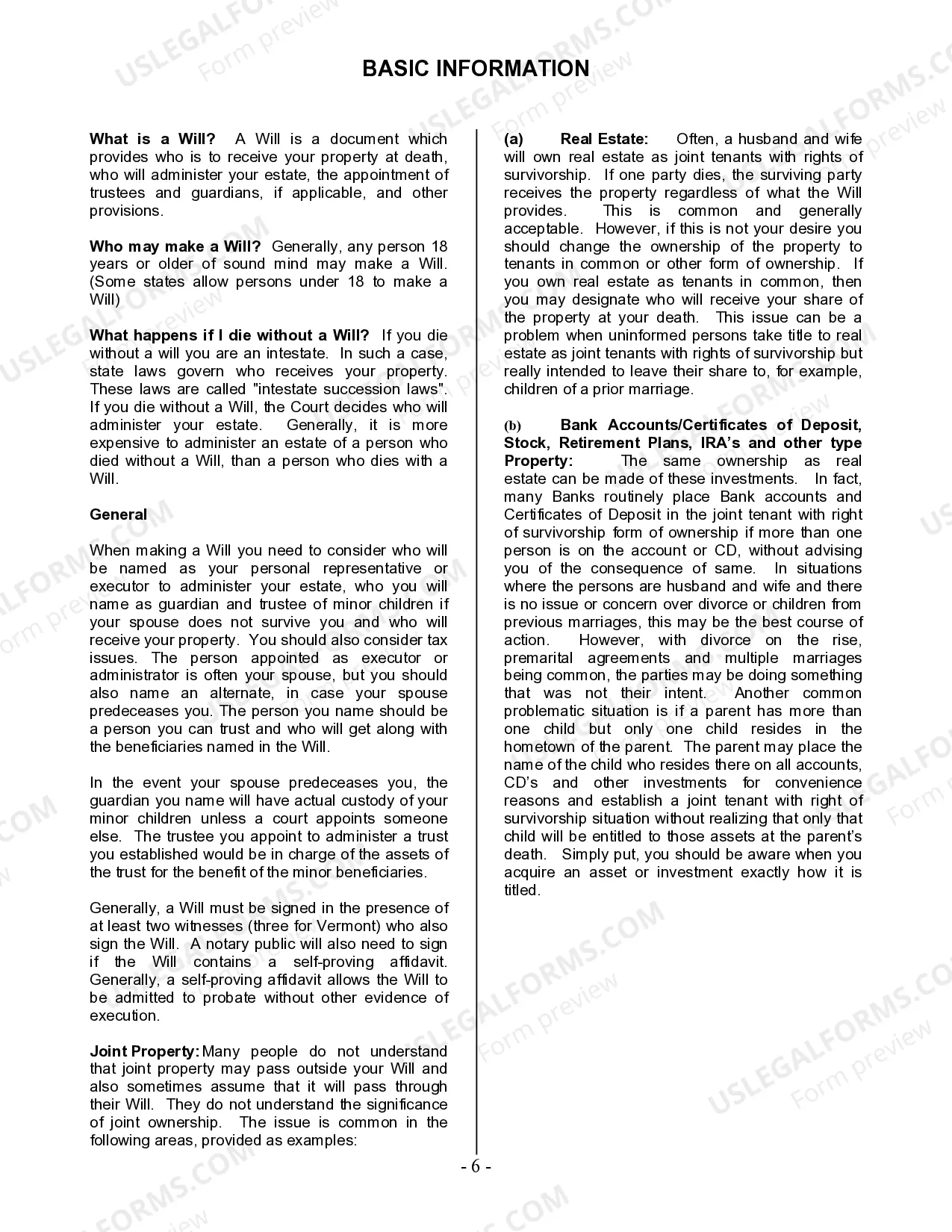
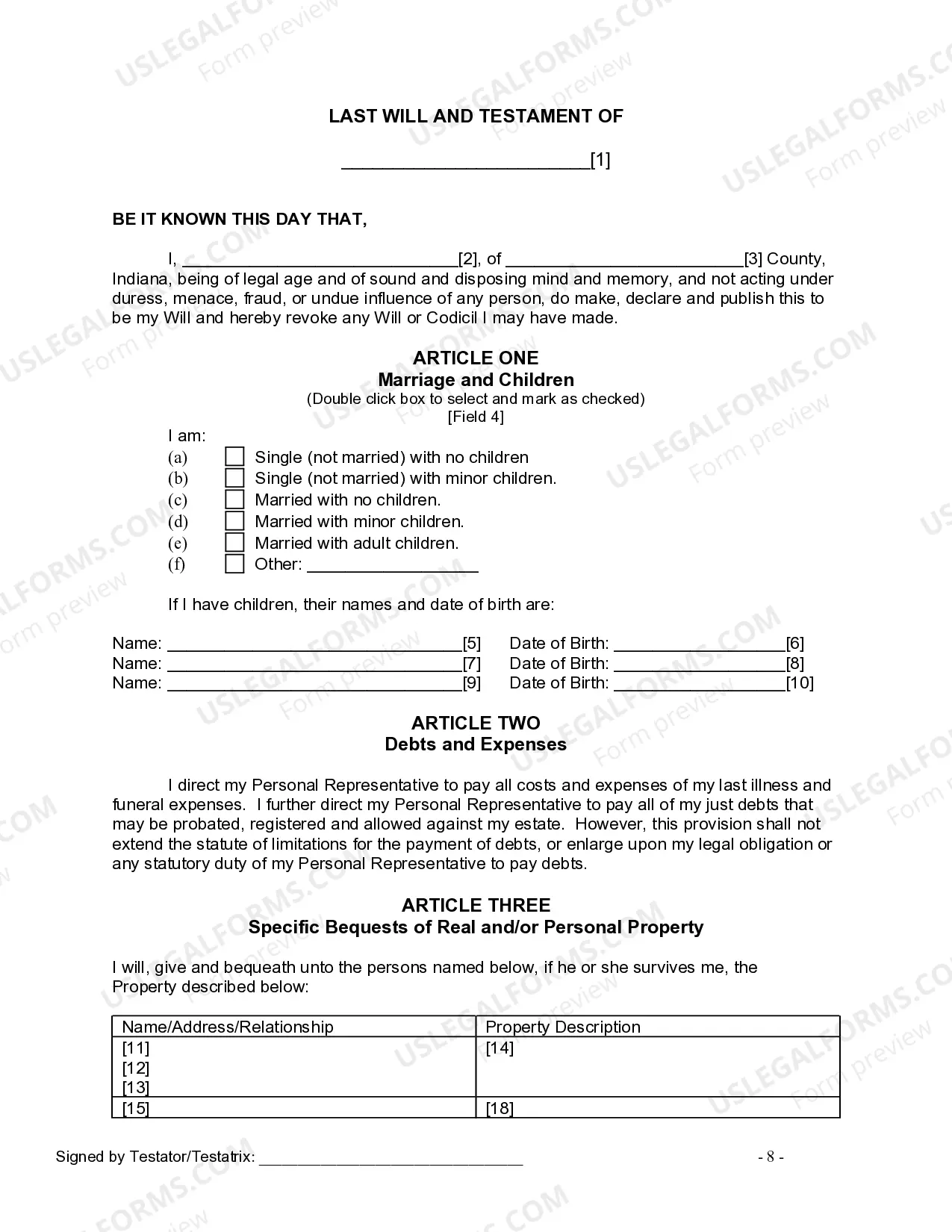
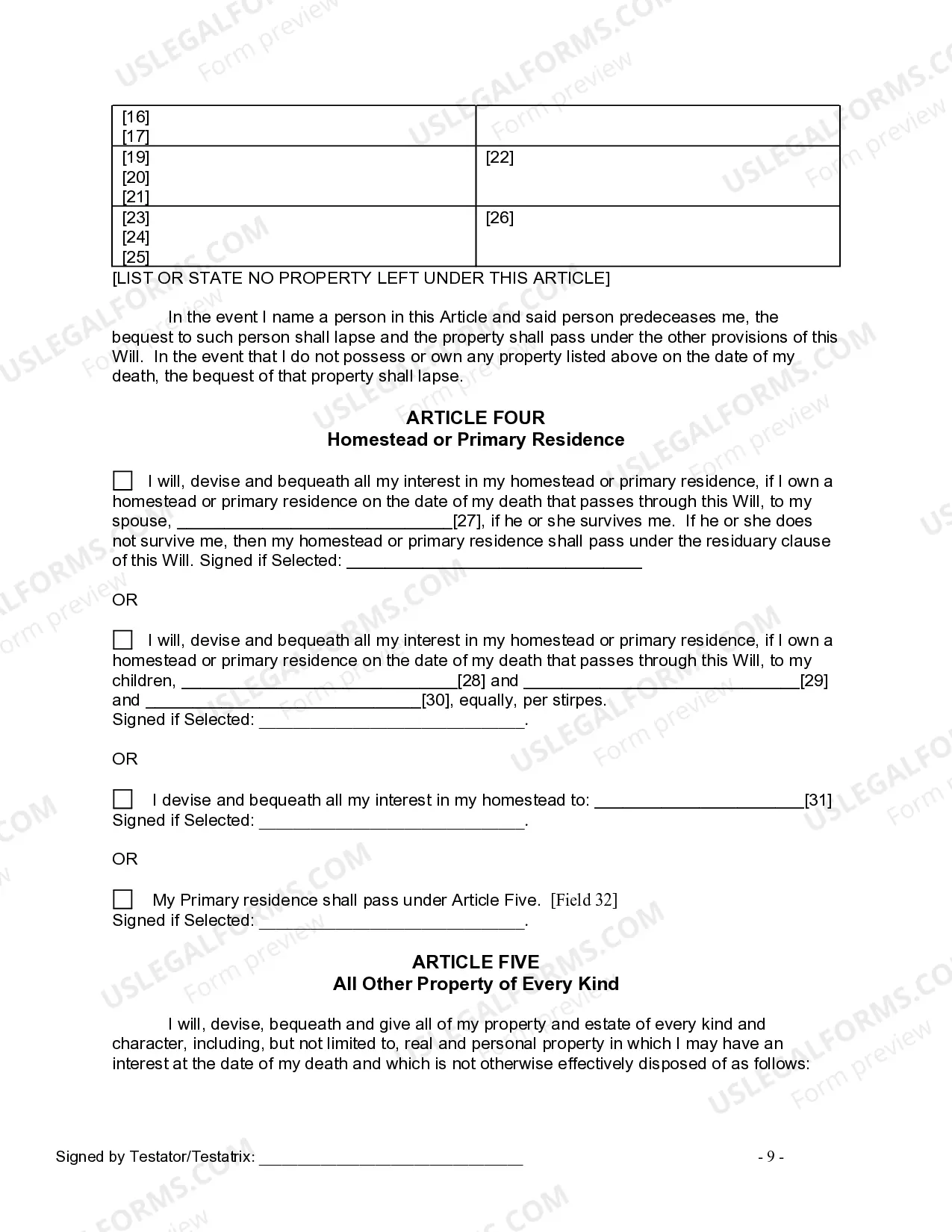
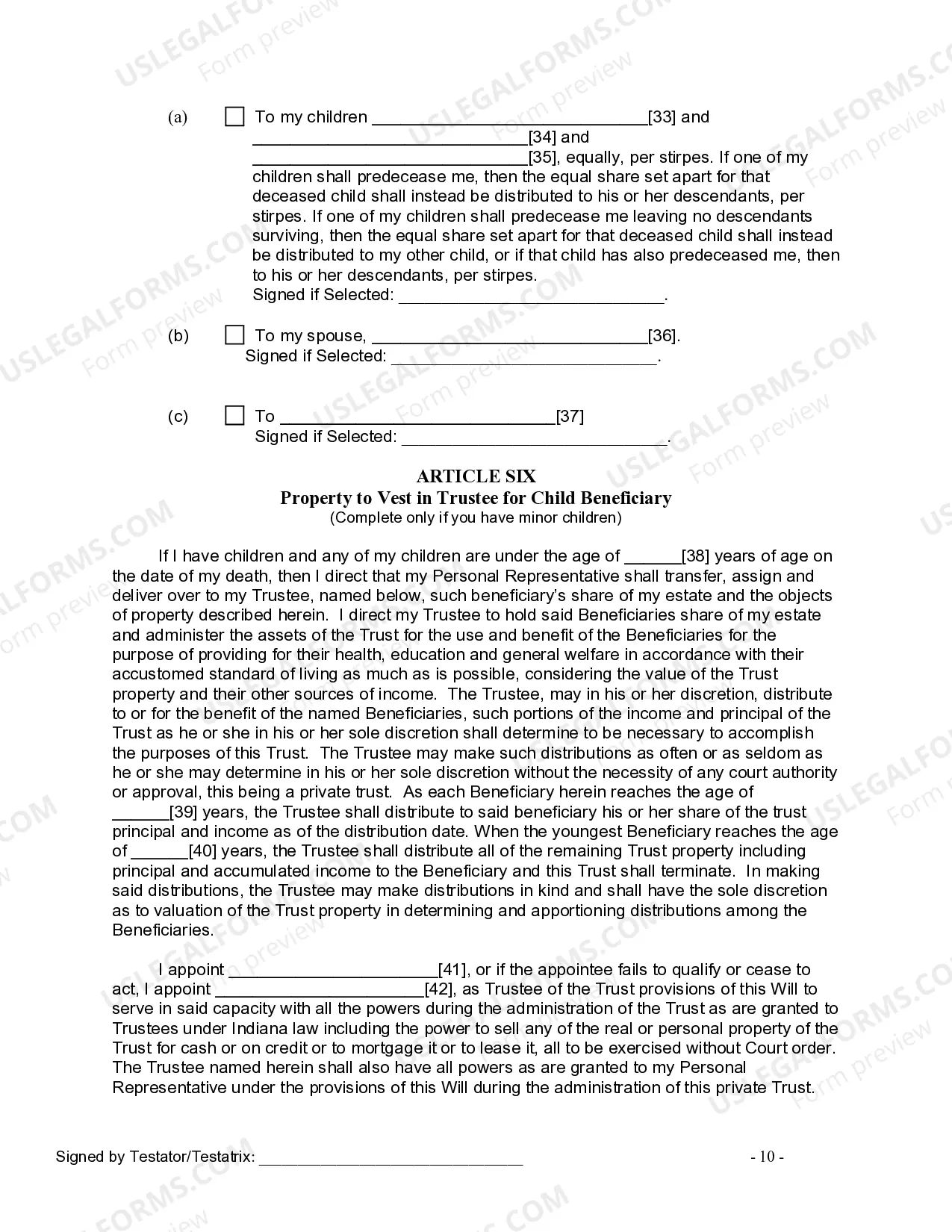
The Last Will and Testament for other Persons is a legal document that outlines how an individual's property and assets will be distributed after their death. This will is specifically tailored for individuals residing in Indiana who do not have a pre-existing will or need a general template that deviates from traditional formats. It allows you to specify beneficiaries, appoint a personal representative, and include various wishes regarding your estate in a straightforward manner.
Form components explained
- Personal details of the testator, including name and county of residence.
- Identification of marital status and details of any children.
- Instructions for the payment of debts and funeral expenses.
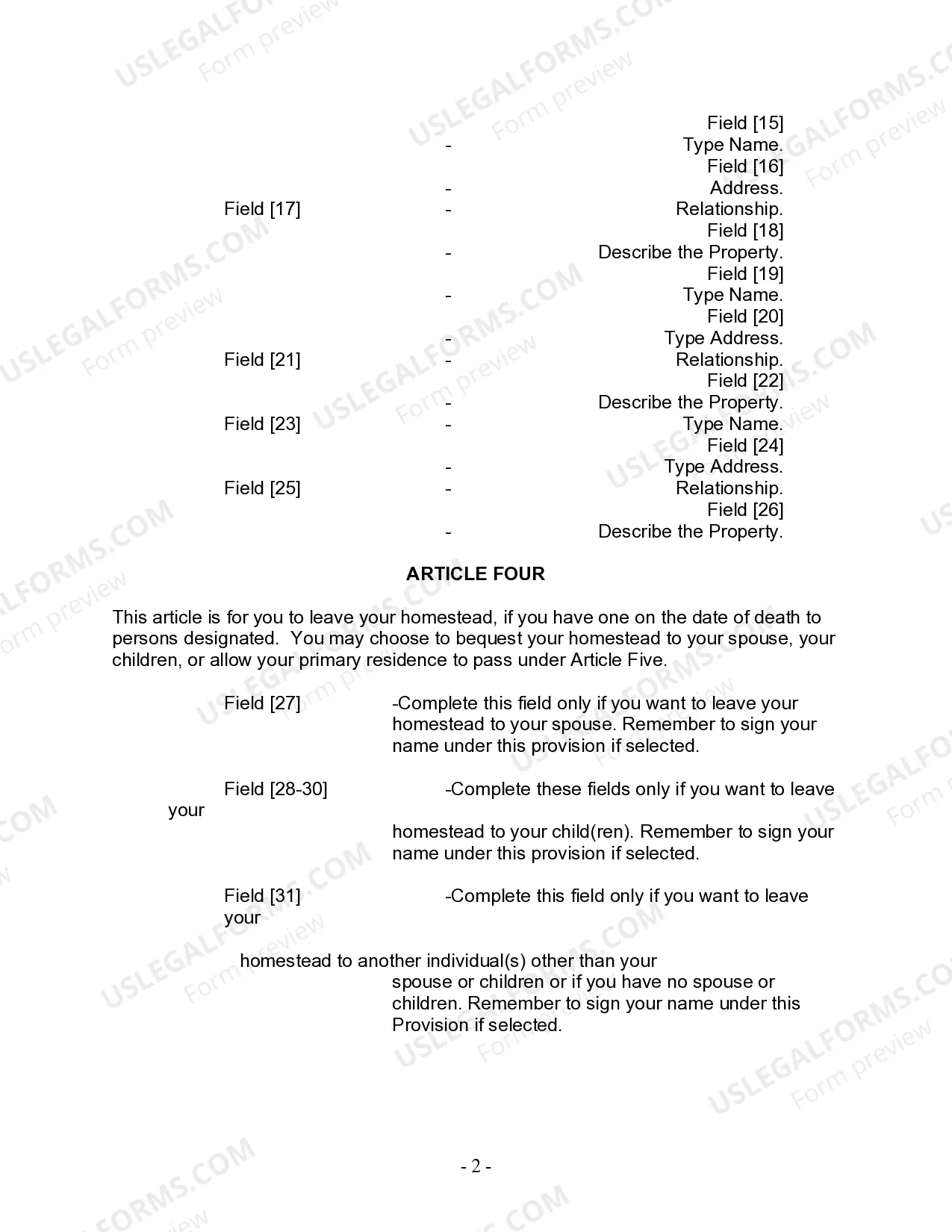
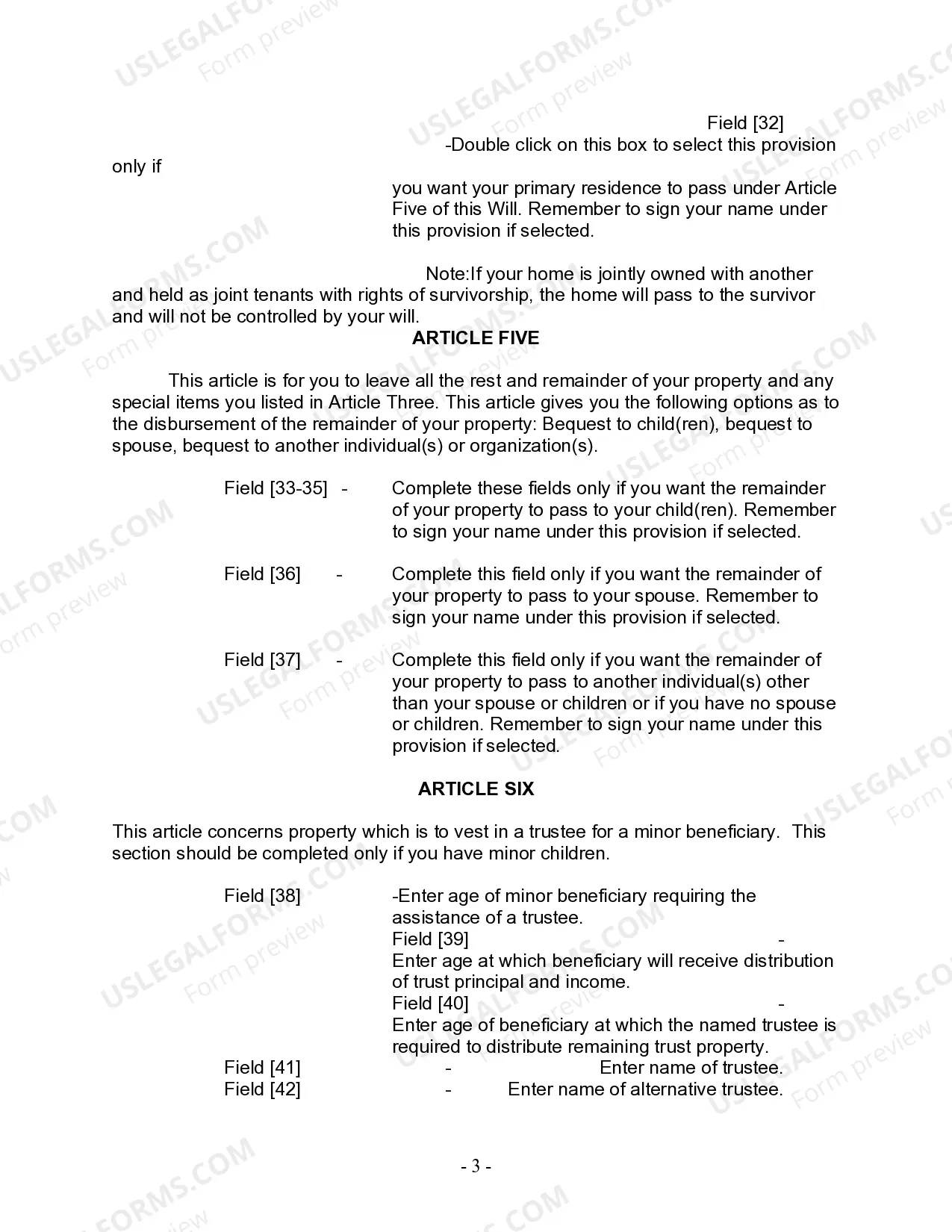
- Specific bequests of property, both real and personal.
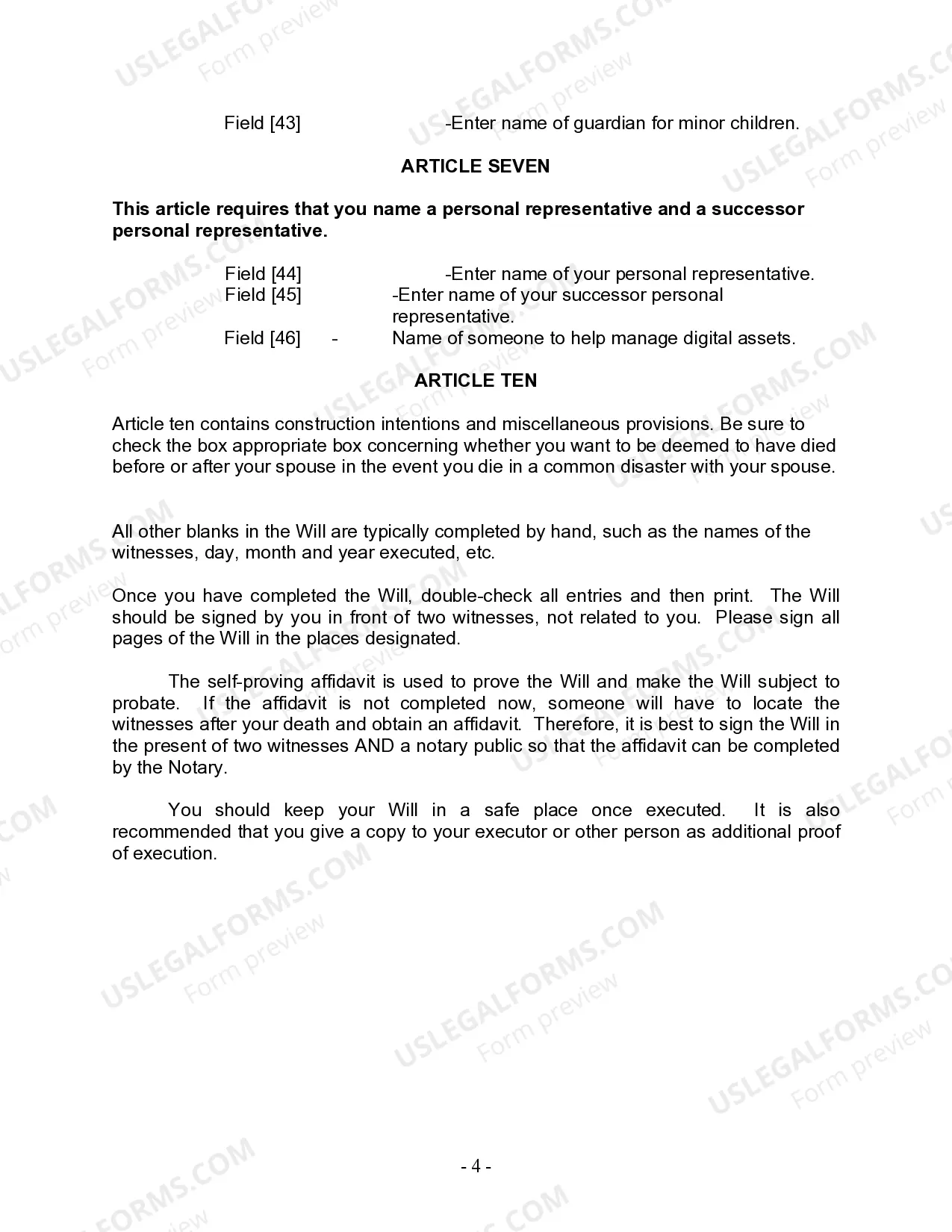
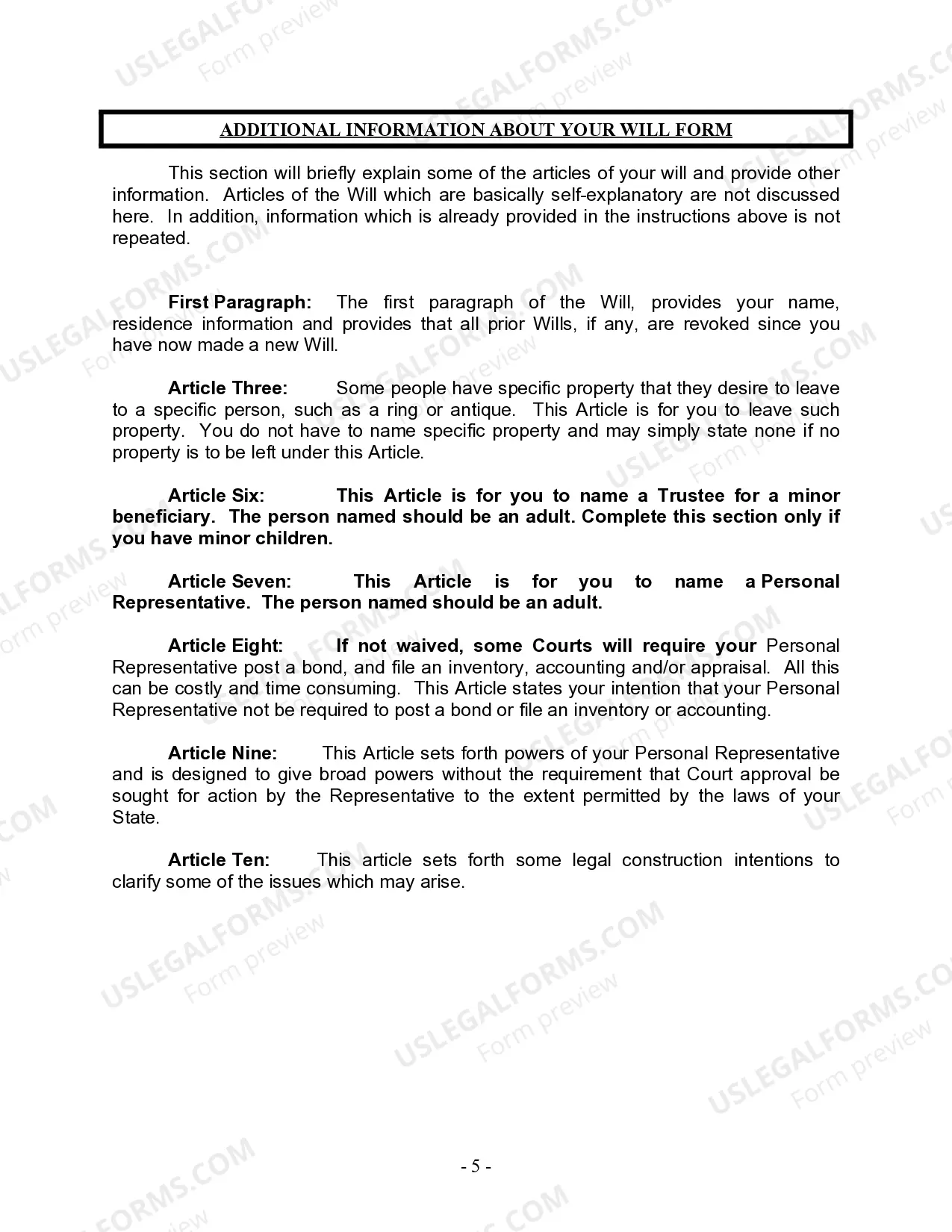
- Appointment of a personal representative to manage the estate.
- Provisions for the guardianship of minor children.






Common use cases
This form is necessary when you want to create a legally binding last will and testament in Indiana but do not have a previous document that meets your requirements. You might also use it if you have experienced significant life changes, such as marriage, the birth of children, or acquiring new assets, and wish to ensure your current wishes regarding your estate are documented accordingly.
Who this form is for
- Individuals who are residents of Indiana.
- People without a existing will or those wishing to update their estate planning.
- Parents with minor children who need to designate guardianship in their will.
- Anyone who desires to clearly express the distribution of their property after death.
How to complete this form
- Enter your full name and county of residence at the beginning of the document.
- Select your marital status and provide details about any children.
- List specific bequests and who will receive your property.
- Designate your personal representative and any alternative representatives.
- Sign the document in the presence of two witnesses to ensure its validity.
Does this form need to be notarized?
This form does not typically require notarization unless specified by local law. However, having your will notarized could provide additional legal assurance and simplify the probate process.
Get your form ready online
Our built-in tools help you complete, sign, share, and store your documents in one place.
Make edits, fill in missing information, and update formatting in US Legal Forms—just like you would in MS Word.
Download a copy, print it, send it by email, or mail it via USPS—whatever works best for your next step.
Sign and collect signatures with our SignNow integration. Send to multiple recipients, set reminders, and more. Go Premium to unlock E-Sign.
If this form requires notarization, complete it online through a secure video call—no need to meet a notary in person or wait for an appointment.
We protect your documents and personal data by following strict security and privacy standards.

Make edits, fill in missing information, and update formatting in US Legal Forms—just like you would in MS Word.

Download a copy, print it, send it by email, or mail it via USPS—whatever works best for your next step.

Sign and collect signatures with our SignNow integration. Send to multiple recipients, set reminders, and more. Go Premium to unlock E-Sign.

If this form requires notarization, complete it online through a secure video call—no need to meet a notary in person or wait for an appointment.

We protect your documents and personal data by following strict security and privacy standards.
Common mistakes to avoid
- Failing to have the will signed in front of two witnesses.
- Leaving out important property details or failing to update the will after significant life changes.
- Not properly appointing a personal representative, which can delay the probate process.
Benefits of using this form online
- Convenient access to a comprehensive template tailored for Indiana residents.
- Easy editing on your computer, allowing for changes as your circumstances evolve.
- Instant download and printable options for easier handling and distribution.
Quick recap
- The Last Will and Testament for Other Persons form is specifically designed for Indiana residents.
- It includes essential provisions for asset distribution, appointing guardians, and naming a personal representative.
- Completing the form online is user-friendly and allows for easy modification.
- Always ensure the document is properly executed to avoid legal challenges after your death.
Looking for another form?



Form popularity
FAQ
You can read, type, print, and staple at the will maker's direction. But you must not decide or even weigh in on the terms of the will. Do not sway the will maker in any way; you must be a neutral actor. Also, do not not use your own handwriting to fill in a fill-in-the-blanks will.
A handwritten will is also known as a holographic will in California. Under California Probate Code Section 6111, a handwritten will may be valid in California if the signature and material provisions of the will are in the handwriting of the person making the will.
Stepping through our service on behalf of somebody else is perfectly legal, and in many cases is the most practical approach to getting a high quality, well drafted Will for people who are unable to use the more traditional Will writing approaches.
Under probate law, wills can only be contested by spouses, children or people who are mentioned in the will or a previous will.A last will and testament can only be contested during the probate process when there is a valid legal question about the document or process under which it was created.
No, in Indiana, you do not need to notarize your will to make it legal. However, Indiana allows you to make your will "self-proving." A self-proving will speeds up probate because the court can accept the will without contacting the witnesses who signed it.
For a will to be considered valid under Indiana inheritance laws, it must not only be handwritten or printed, but also contain the decedent's signature along with those of two witnesses. Should a decedent be physically unable to sign his or her will prior to passing away, another person can sign for him or her.
A will can also be declared invalid if someone proves in court that it was procured by undue influence. This usually involves some evil-doer who occupies a position of trust -- for example, a caregiver or adult child -- manipulating a vulnerable person to leave all, or most, of his property to the manipulator instead
As of November 2010, the states that permit holographic wills to probate include Alaska, Arizona, Arkansas, California, Colorado, Idaho, Kentucky, Louisiana, Maine, Michigan, Mississippi, Montana, Nebraska, Nevada, New Jersey, North Carolina, North Dakota, Oklahoma, Pennsylvania, South Dakota, Tennessee, Texas, Utah,
Once filed, the will is a matter of public record. Anyone can see it. Interested parties can also usually learn the name of the executor by getting a copy of the death certificate from the county registrar.