Mississippi Fiat
What this document covers
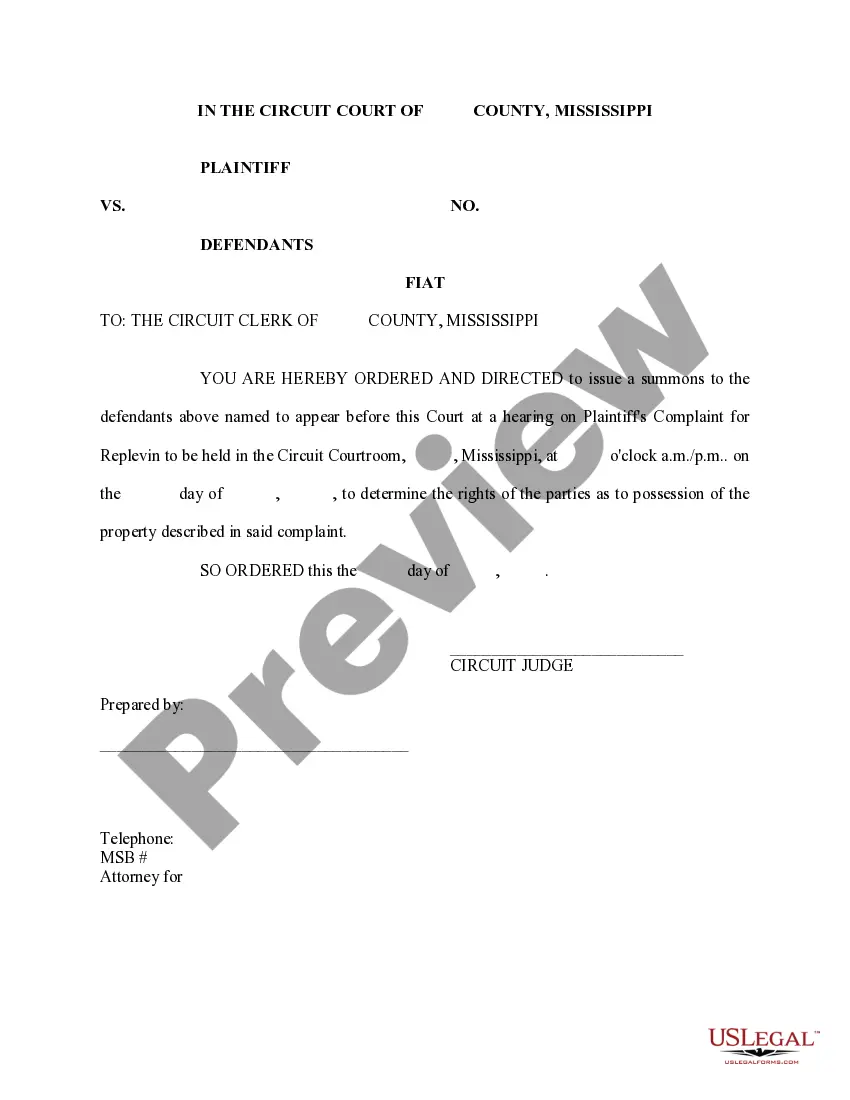
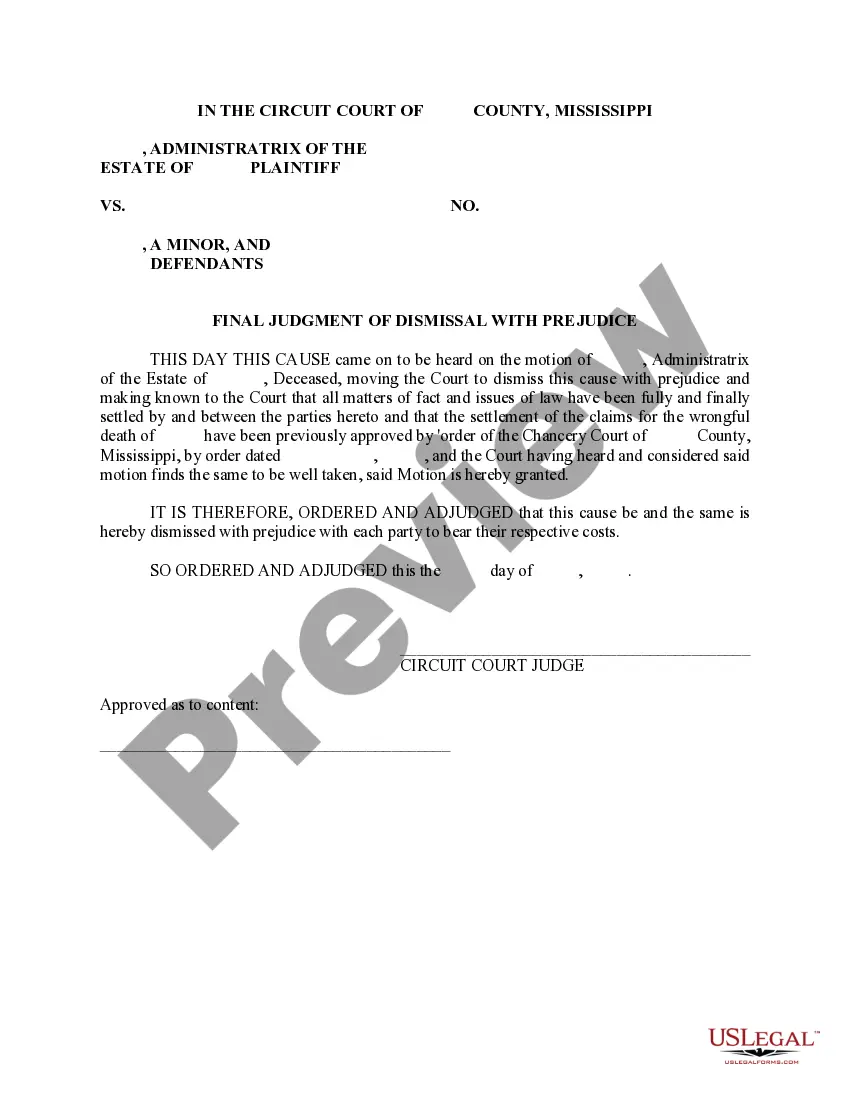
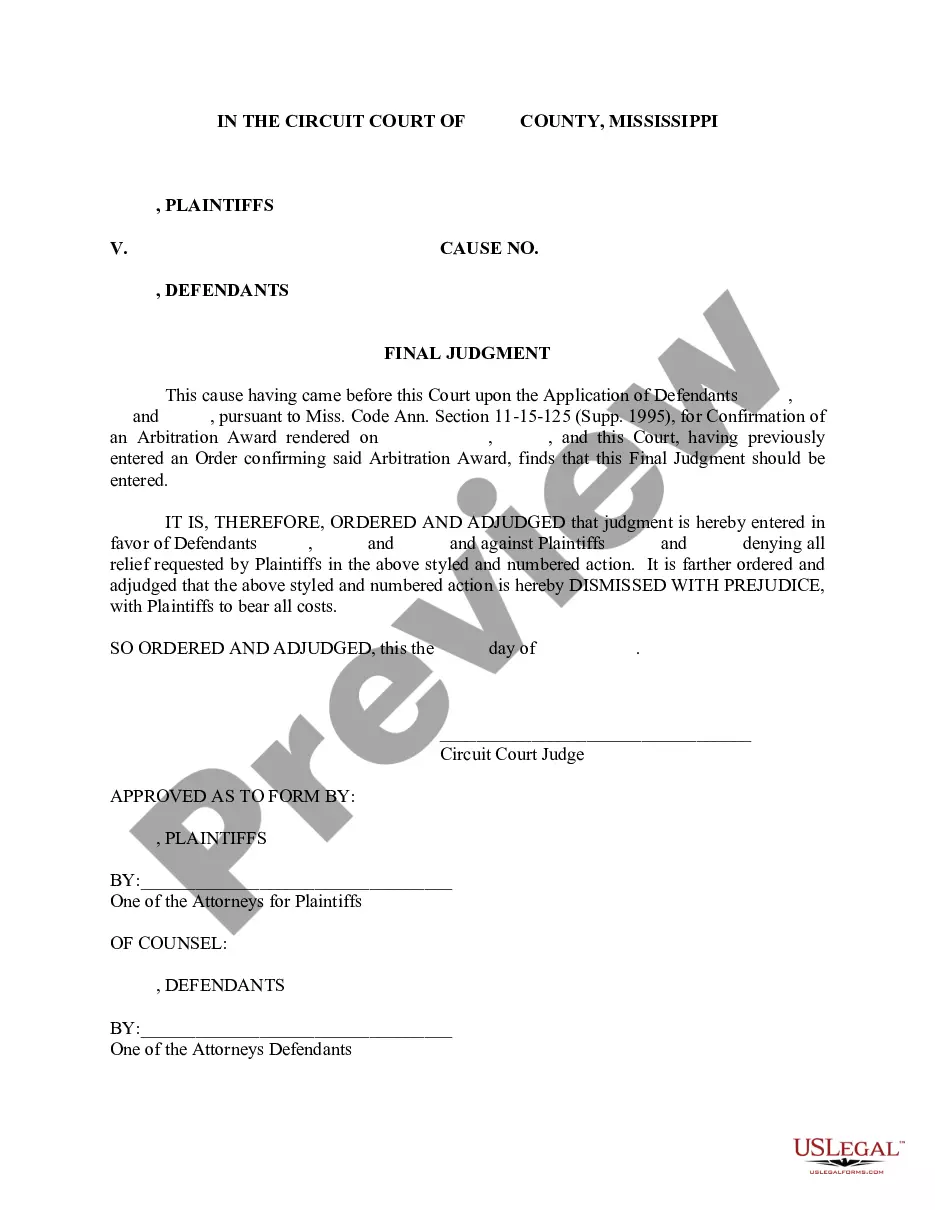
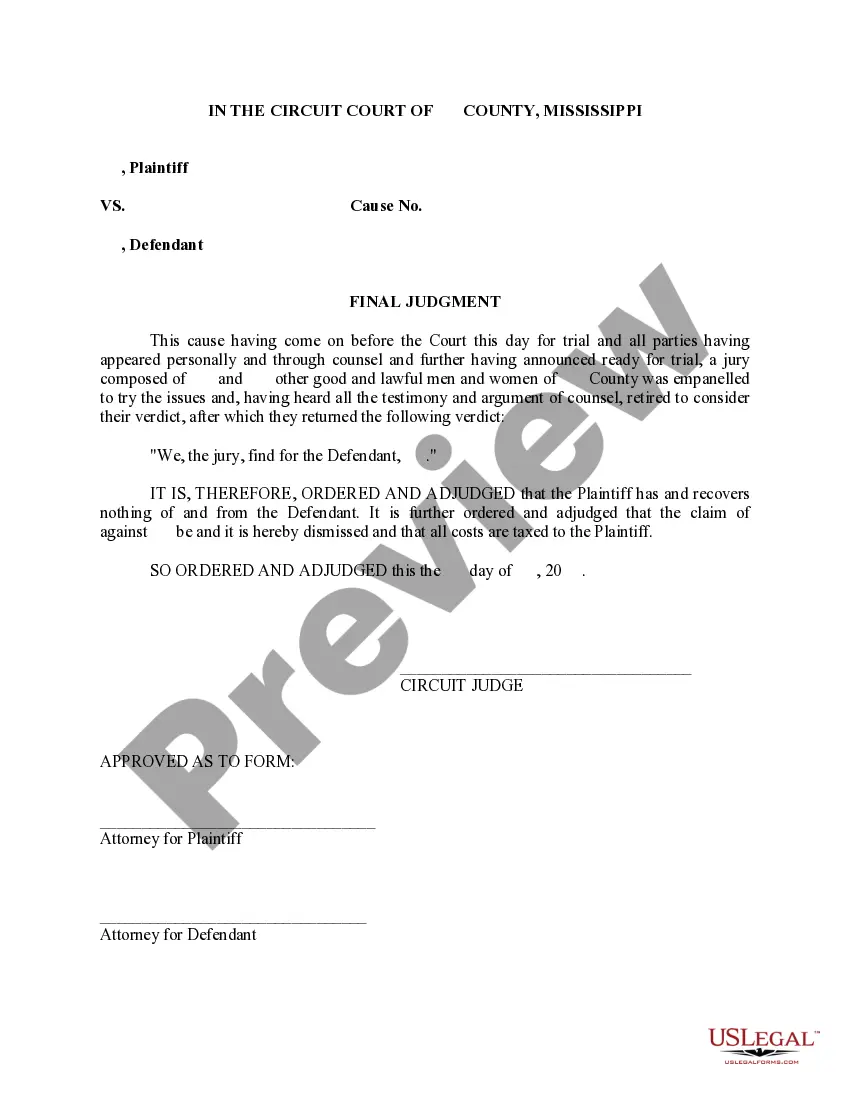
The Fiat is a legal document issued by the Court in Mississippi that compels a party to appear before the court on a specified date and time. This form is crucial for initiating legal proceedings and differs from summons or other court orders as it specifically demands attendance rather than providing notification of legal actions. US Legal Forms ensures that the Fiat adheres to all Mississippi codes and statutes, making it a reliable choice for legal compliance.
Form components explained
- Case number: Unique identifier for the legal action.
- Party information: Identification of the individuals involved.
- Court details: The specific court where the appearance is required.
- Date and time: When the summoned party must appear.
- Signature line: Section for court officials to sign and validate the document.



When to use this form
You should use the Fiat when a court requires an individual or entity to appear in court for a specific case. This form is essential for situations where a party may not voluntarily attend a hearing or proceeding. It is often used in civil cases, family law matters, or other instances requiring official court attendance.
Who should use this form
This form is intended for:
- Attorneys who represent clients in Mississippi courts.
- Parties involved in a legal dispute requiring court attendance.
- Court officials responsible for issuing legal documents.
Completing this form step by step
To complete the Fiat form, follow these steps:
- Identify the case number related to the legal action.
- Fill in the names and addresses of the parties involved.
- Specify the court details including the name of the court.
- Clearly state the date and time the part is required to appear.
- Have the appropriate court official sign the form to validate it.
Is notarization required?
This form does not typically require notarization unless specified by local law.
Get your form ready online
Our built-in tools help you complete, sign, share, and store your documents in one place.
Make edits, fill in missing information, and update formatting in US Legal Forms—just like you would in MS Word.
Download a copy, print it, send it by email, or mail it via USPS—whatever works best for your next step.
Sign and collect signatures with our SignNow integration. Send to multiple recipients, set reminders, and more. Go Premium to unlock E-Sign.
If this form requires notarization, complete it online through a secure video call—no need to meet a notary in person or wait for an appointment.
We protect your documents and personal data by following strict security and privacy standards.

Make edits, fill in missing information, and update formatting in US Legal Forms—just like you would in MS Word.

Download a copy, print it, send it by email, or mail it via USPS—whatever works best for your next step.

Sign and collect signatures with our SignNow integration. Send to multiple recipients, set reminders, and more. Go Premium to unlock E-Sign.

If this form requires notarization, complete it online through a secure video call—no need to meet a notary in person or wait for an appointment.

We protect your documents and personal data by following strict security and privacy standards.
Common mistakes to avoid
- Failing to include the correct case number, which can delay proceedings.
- Inaccurate or incomplete party information, leading to potential legal complications.
- Not adhering to the specific submission guidelines of the court, resulting in rejection.
Benefits of using this form online
- Convenient access to a legally compliant form that adheres to state statutes.
- Editable templates allow users to tailor the form to their specific case needs.
- Reliable resource, prepared by licensed attorneys, ensuring legal accuracy.
Main things to remember
- The Fiat demands attendance in court and is critical for legal proceedings.
- Completing the form accurately is essential to avoid legal issues.
- Utilizing US Legal Forms ensures compliance with Mississippi legal statutes.
Looking for another form?

Form popularity
FAQ
The difference between Illegal and Legal. When used as nouns, illegal means an illegal act or technique, whereas legal means the legal department of a company. When used as adjectives, illegal means contrary to or forbidden by law, especially criminal law, whereas legal means relating to the law or to lawyers.
The definition of legal is something connected to law or a government's system of rules. An example of legal is the type of action that will be decided by a court.
Fiat is a Latin term meaning let it be done. Judicial fiat refers to an order or a decree especially an arbitrary one. It can also refer to a court decree relating to a routine matter such as scheduling. A Judge's fiat can be a handwritten and intialled note from the judge directing that some action occur.
: not allowed by the laws or rules He was arrested for illegal activities. The team made an illegal play.
1 : a command or act of will that creates something without or as if without further effort According to the Bible, the world was created by fiat. 2 : an authoritative determination : dictate a fiat of conscience. 3 : an authoritative or arbitrary order : decree government by fiat.
Adjective. permitted by law; lawful: Such acts are not legal.appointed, established, or authorized by law; deriving authority from law.
(Entry 1 of 2) 1 : of or relating to law She has many legal problems. 2a : deriving authority from or founded on law : de jure a legal government. b : having a formal status derived from law often without a basis in actual fact : titular a corporation is a legal but not a real person.
The origin of the word fiat in English is connected to the origin of the world itself. Taken from the Latin meaning let it be done, this word appears in the Latin translation of Genesis, the first book of the bible, when God proclaimed let there be light (fiat lux).
In an abstract sense, justice, ethical correctness, or harmony with the rules of law or the principles of morals. In a concrete legal sense, a power, privilege, demand, or claim possessed by a particular person by virtue of law. These rights are capable of being enforced or redressed in a civil action in a court.