Indiana Living Wills and Health Care Package
Overview of this form package
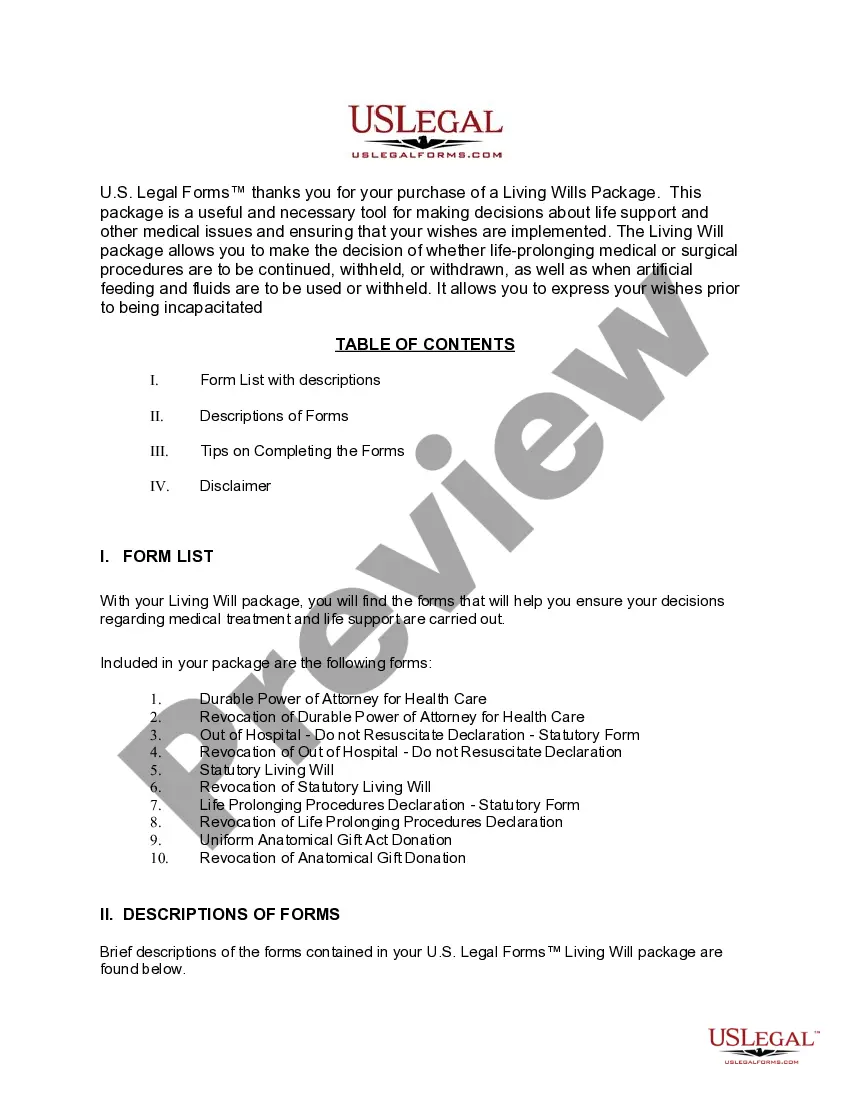
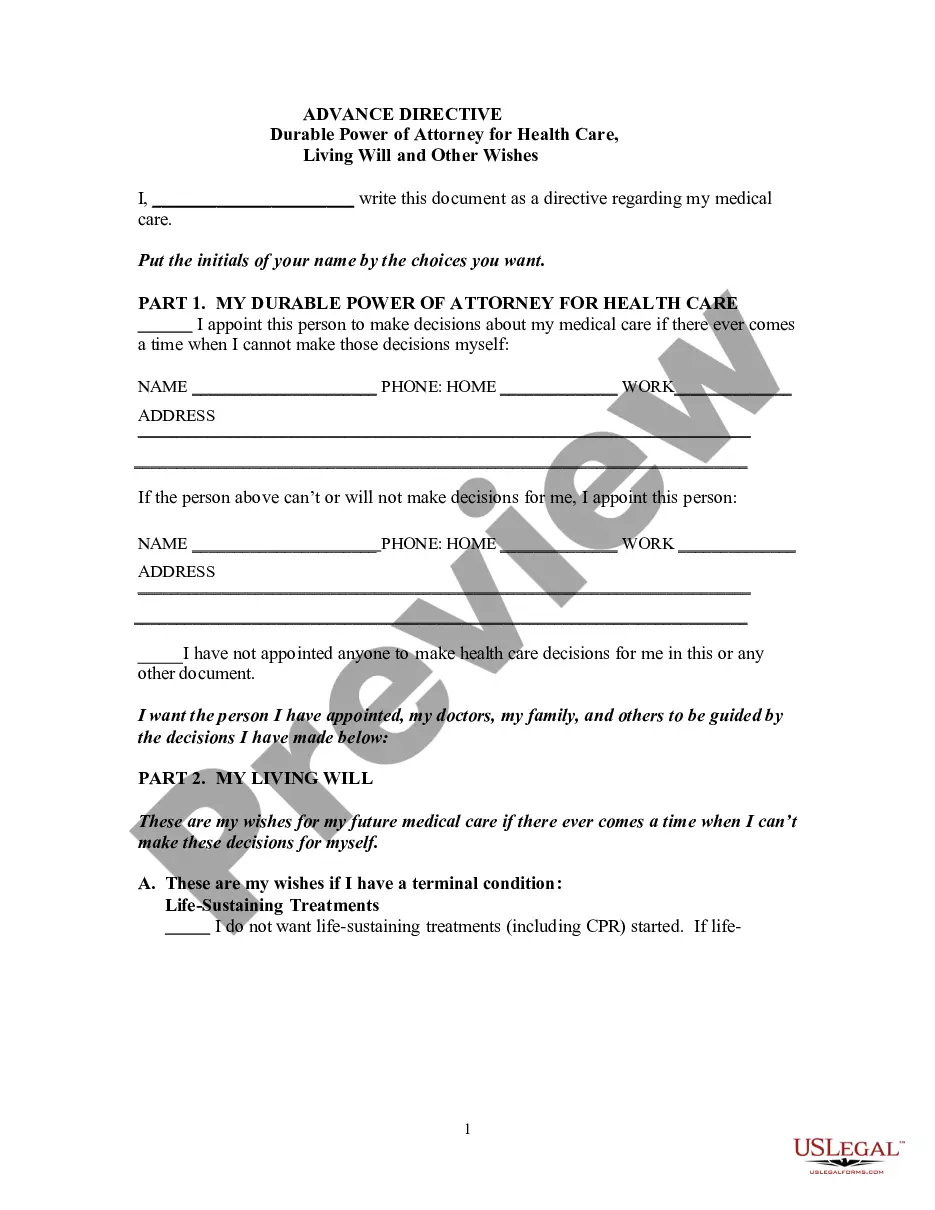
The Indiana Living Wills and Health Care Package is a comprehensive collection of legal forms designed to help individuals articulate their medical treatment preferences in the event of a terminal illness or severe medical condition. This package supports users in making important decisions about life support and medical care, ensuring that their wishes are respected when they are unable to communicate. It differs from other legal form packages by focusing specifically on health care directives and decisions regarding life-sustaining procedures in Indiana.
Forms included in this package
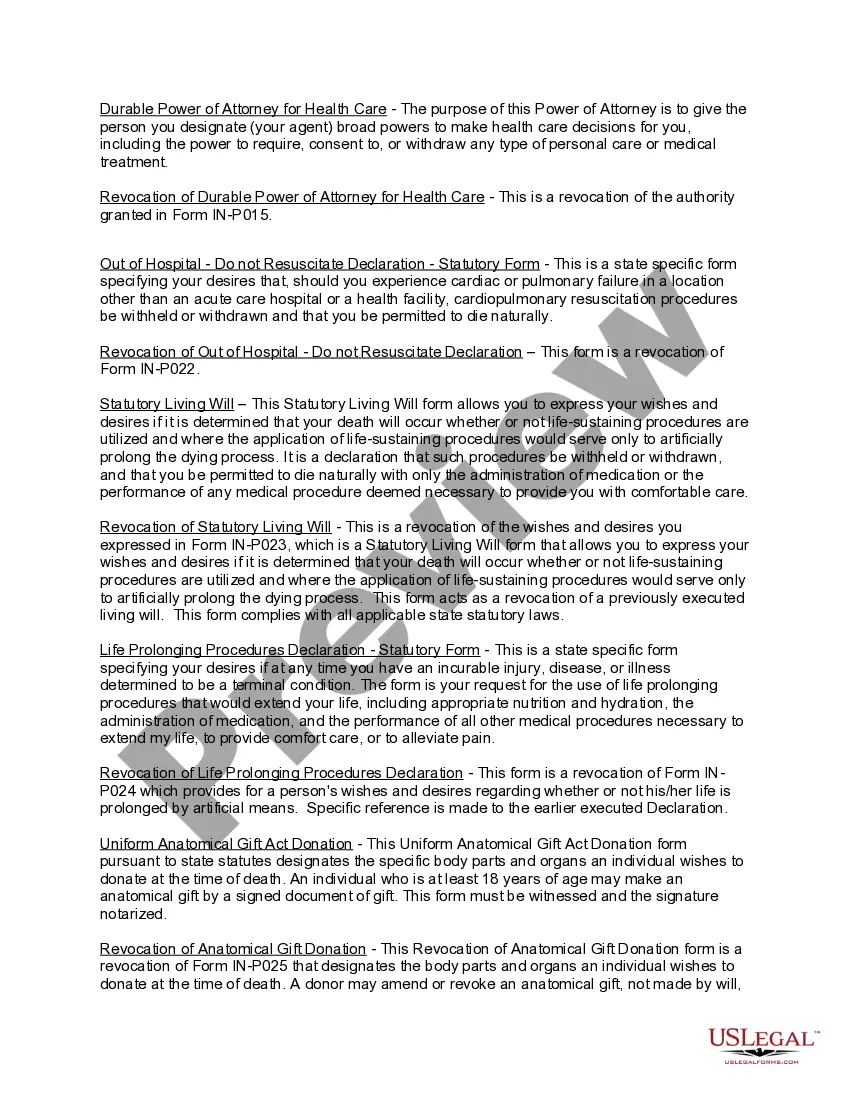
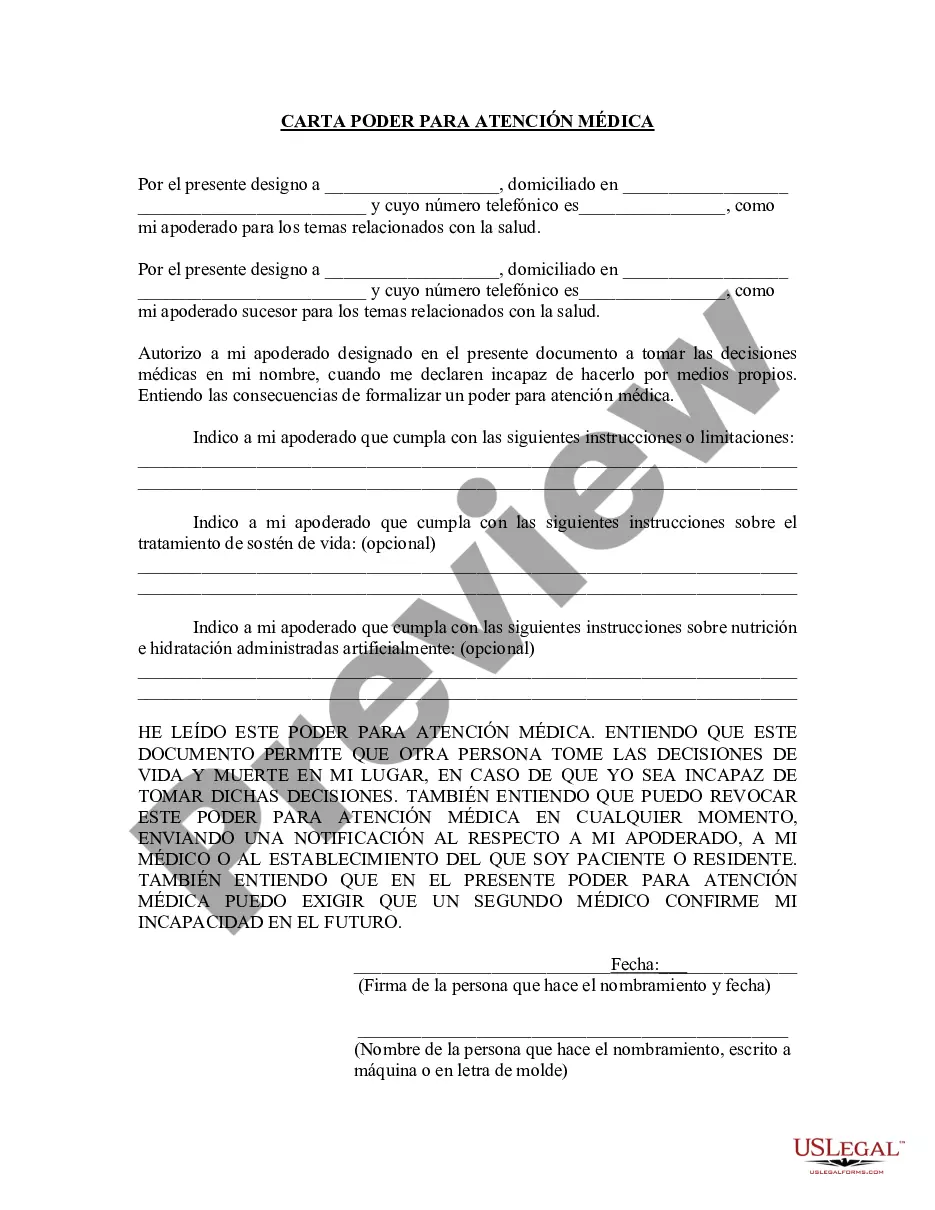
- Durable Power of Attorney for Health Care
- Revocation of Durable Power of Attorney for Health Care
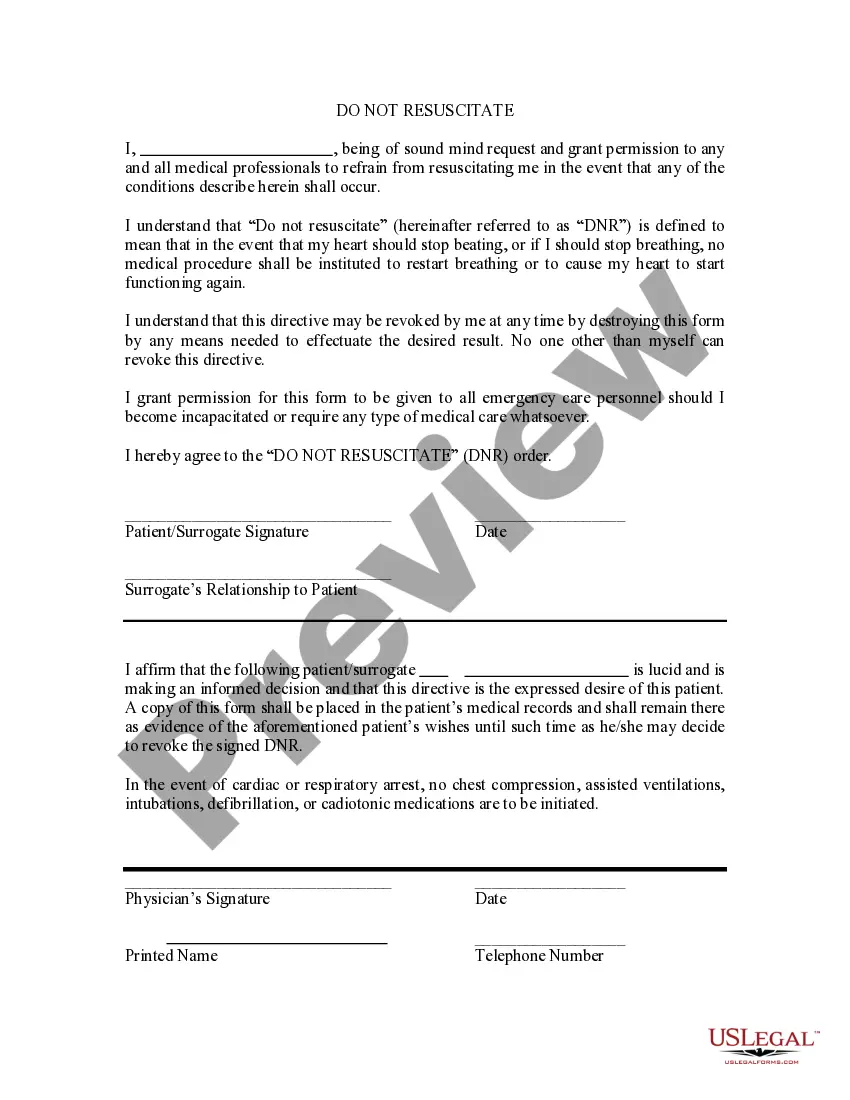
- Out of Hospital - Do not Resuscitate Declaration - DNR - Statutory Form
- Revocation of Out of Hospital - Do Not Resuscitate Declaration - DNR
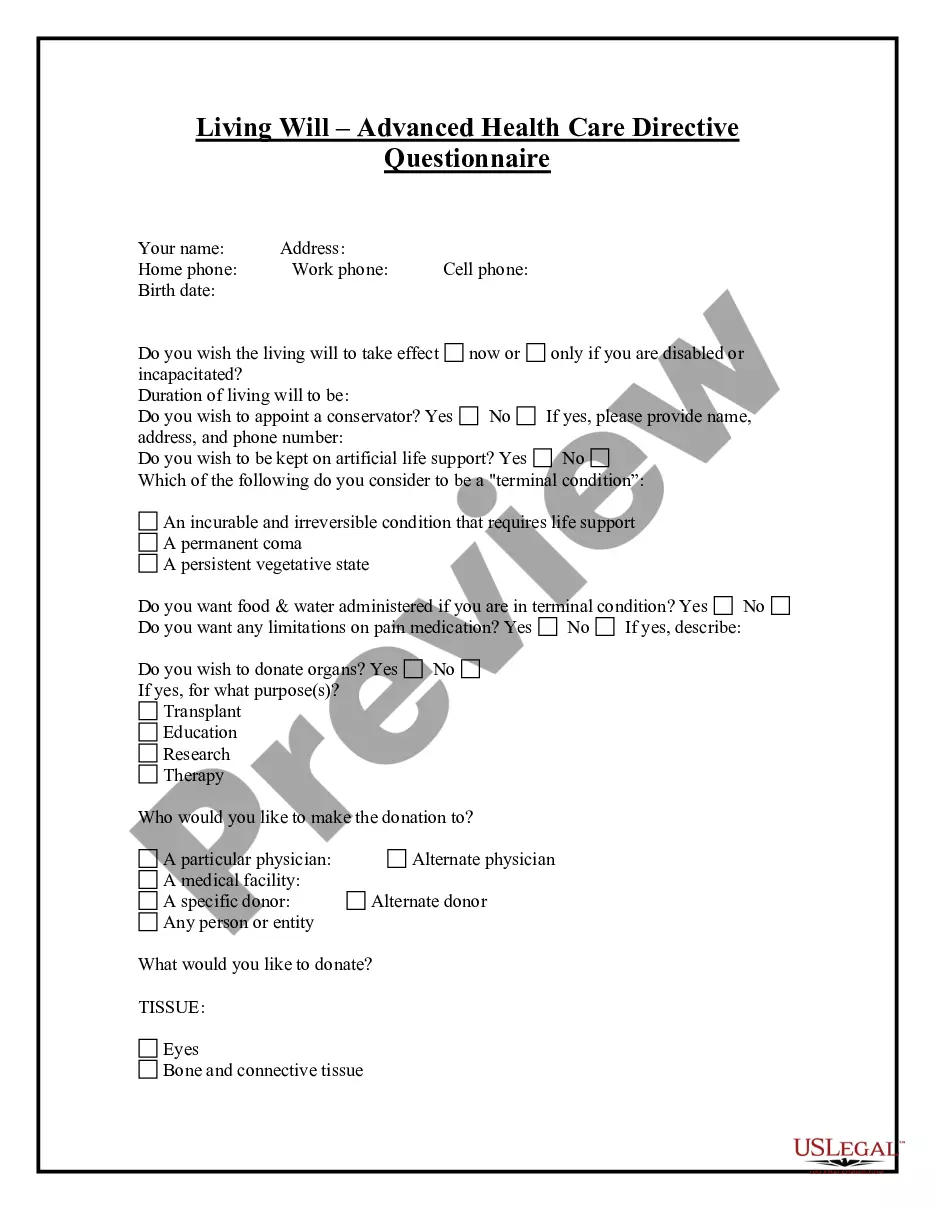
- Statutory Living Will
- Revocation of Statutory Living Will
- Life Prolonging Procedures Declaration - Statutory Form
- Revocation of Life Prolonging Procedures Declaration
- Revised Uniform Anatomical Gift Act Donation
- Revocation of Anatomical Gift Donation

When to use this document
This form package is particularly useful in the following situations:
- When a person wants to ensure their medical preferences are known and respected in a life-threatening situation.
- If an individual is diagnosed with a terminal illness and wishes to clarify their end-of-life care decisions.
- When a family member or loved one is facing a medical crisis and needs clear directives to follow regarding life support.
- For individuals who wish to make organ donation decisions known in advance.
Intended users of this form package
- Adults of any age who wish to prepare for potential medical emergencies.
- Individuals diagnosed with chronic or terminal conditions who want to make their medical preferences clear.
- Family members acting on behalf of loved ones in need of health care directives.
- Anyone who wants peace of mind knowing their health care decisions will be honored.
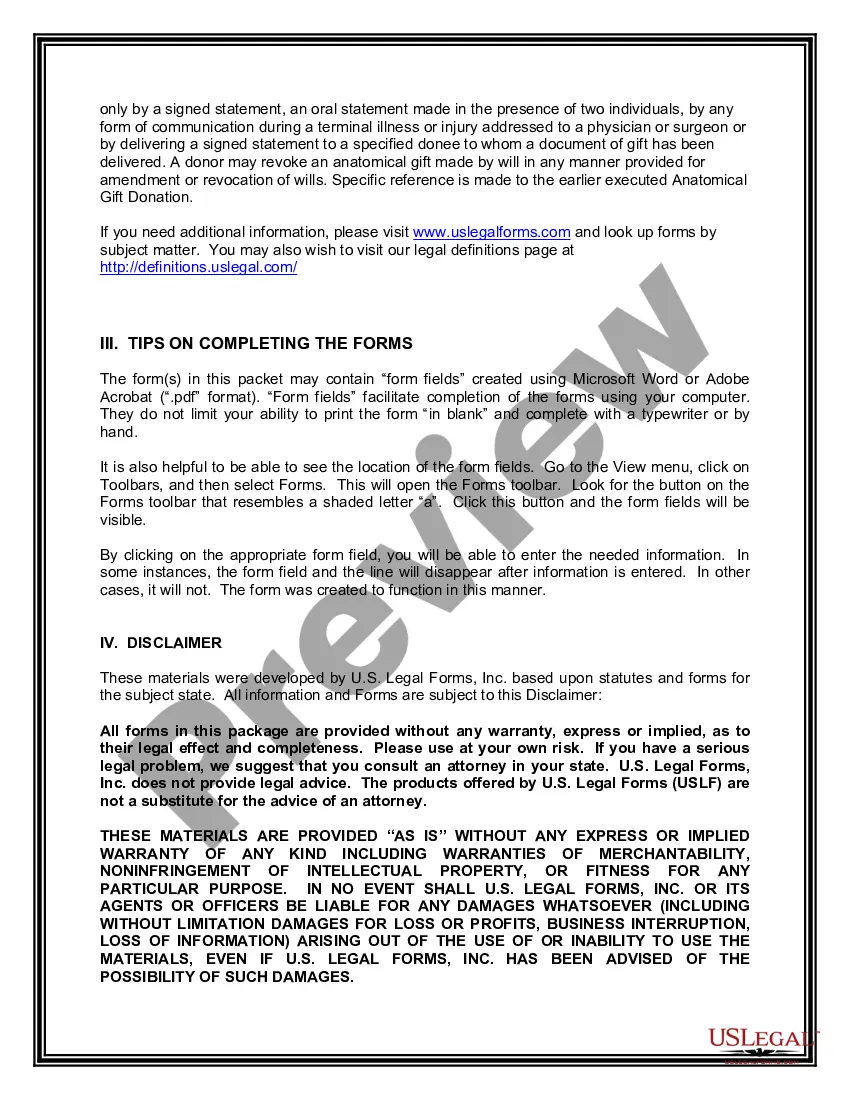
Instructions for completing these forms
- Review the forms included in the package to understand your options.
- Choose the appropriate forms that reflect your desires regarding medical treatment and life-sustaining procedures.
- Fill out the required fields clearly, providing your personal information and preferences.
- Sign the forms in the presence of witnesses, if required, to ensure their validity.
- Store the completed documents in a safe place and provide copies to relevant family members or healthcare providers.
Do documents in this package require notarization?
Some included forms must be notarized to ensure validity. US Legal Forms provides secure online notarization powered by Notarize, allowing you to complete the process through a verified video call anytime.
Get your form ready online
Our built-in tools help you complete, sign, share, and store your documents in one place.
Make edits, fill in missing information, and update formatting in US Legal Forms—just like you would in MS Word.
Download a copy, print it, send it by email, or mail it via USPS—whatever works best for your next step.
Sign and collect signatures with our SignNow integration. Send to multiple recipients, set reminders, and more. Go Premium to unlock E-Sign.
If this form requires notarization, complete it online through a secure video call—no need to meet a notary in person or wait for an appointment.
We protect your documents and personal data by following strict security and privacy standards.

Make edits, fill in missing information, and update formatting in US Legal Forms—just like you would in MS Word.

Download a copy, print it, send it by email, or mail it via USPS—whatever works best for your next step.

Sign and collect signatures with our SignNow integration. Send to multiple recipients, set reminders, and more. Go Premium to unlock E-Sign.

If this form requires notarization, complete it online through a secure video call—no need to meet a notary in person or wait for an appointment.

We protect your documents and personal data by following strict security and privacy standards.
Avoid these common issues
- Not signing the documents correctly or missing required witness signatures.
- Failing to communicate your wishes to family members or healthcare proxies.
- Not reviewing the forms periodically to ensure they still reflect your current desires.
- Neglecting to store the completed forms in an accessible location.
Benefits of completing this package online
- Convenience of accessing and completing forms from the comfort of your home.
- Editability allows you to make changes as your preferences evolve.
- Reliability of documents created by licensed attorneys ensures legal compliance.
Legal use & context
- The documents in this package are legally binding when completed and signed according to Indiana law.
- Each form serves a specific purpose, helping to clarify the individual's intentions regarding medical care.
- Revocation forms allow individuals to change their decisions if circumstances change.
Summary of main points
- The Indiana Living Wills and Health Care Package includes essential forms for expressing medical treatment preferences.
- It is particularly beneficial for adults who want to ensure their wishes are followed in medical crises.
- Completing these forms requires careful consideration and communication with loved ones.
Looking for another form?
Form popularity
FAQ
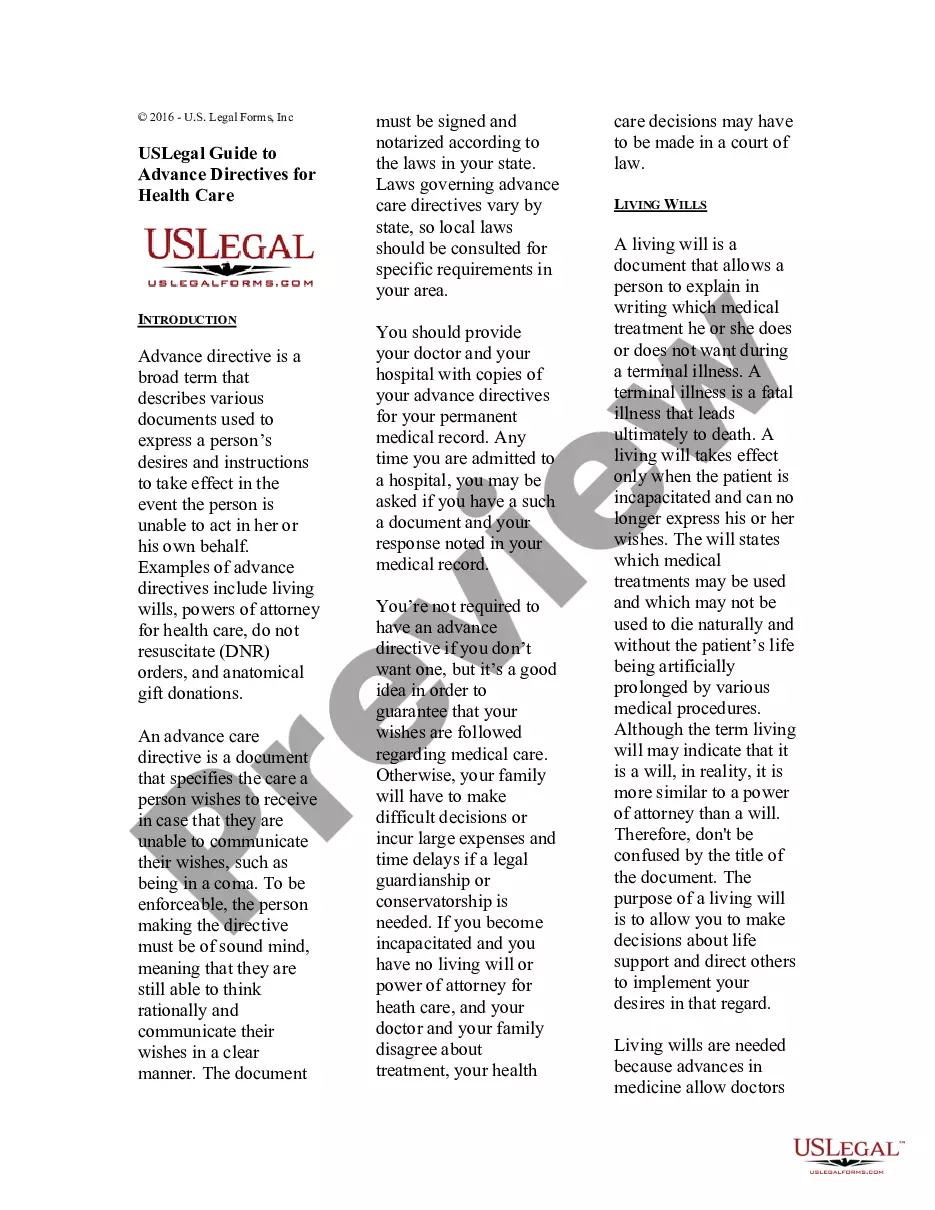
A living will is a legal document that contains a person's medical care and treatment instructions. The purpose of a living will is to allow a person to express health care decisions while he or she is mentally able to do so.
You do not need a lawyer to make a living will, although you can get one from a lawyer if you prefer to. Every state has its own requirements for making a living will, so if you make one on your own, make sure you find a form that meets your state's requirements.
What is an advanced health care directive? What are the components? How are they used? When do they become effective? What happens if I don't have one? Can I change my mind? If I have a living will, does that mean I won't get treatment? Where do I get these forms?
The name and contact information of your healthcare agent/proxy. Answers to specific questions about your preferences for care if you become unable to speak for yourself. Names and signatures of individuals who witness your signing your advance directive, if required.
The cost of setting up a living will varies from state to state, depending on whether it must be witnessed by a notary. Costs typically fall between $250-$500 to hire a lawyer to draft the living will, while forms can be self-completed for between $45 and $75.
A living will becomes effective when your primary physician decides that you can no longer make your own healthcare decisions. If you are ill or injured and cannot express your healthcare wishes, and your doctor certifies this fact in writing, your living will takes effect.
Step 1 Download Your Living Will. Download in Adobe PDF, Microsoft Word (. Step 2 Health Care Directive. Step 3 Life Support. Step 4 Life-Sustaining Treatment. Step 5 End of Life Wishes. Step 6 Medical Power of Attorney. Step 7 Witness Acknowledgment. Step 8 Notary Acknowledgment.
Living will. A living will is a written, legal document that spells out medical treatments you would and would not want to be used to keep you alive, as well as your preferences for other medical decisions, such as pain management or organ donation. In determining your wishes, think about your values.