Connecticut Amendment to Living Trust

What is this form?
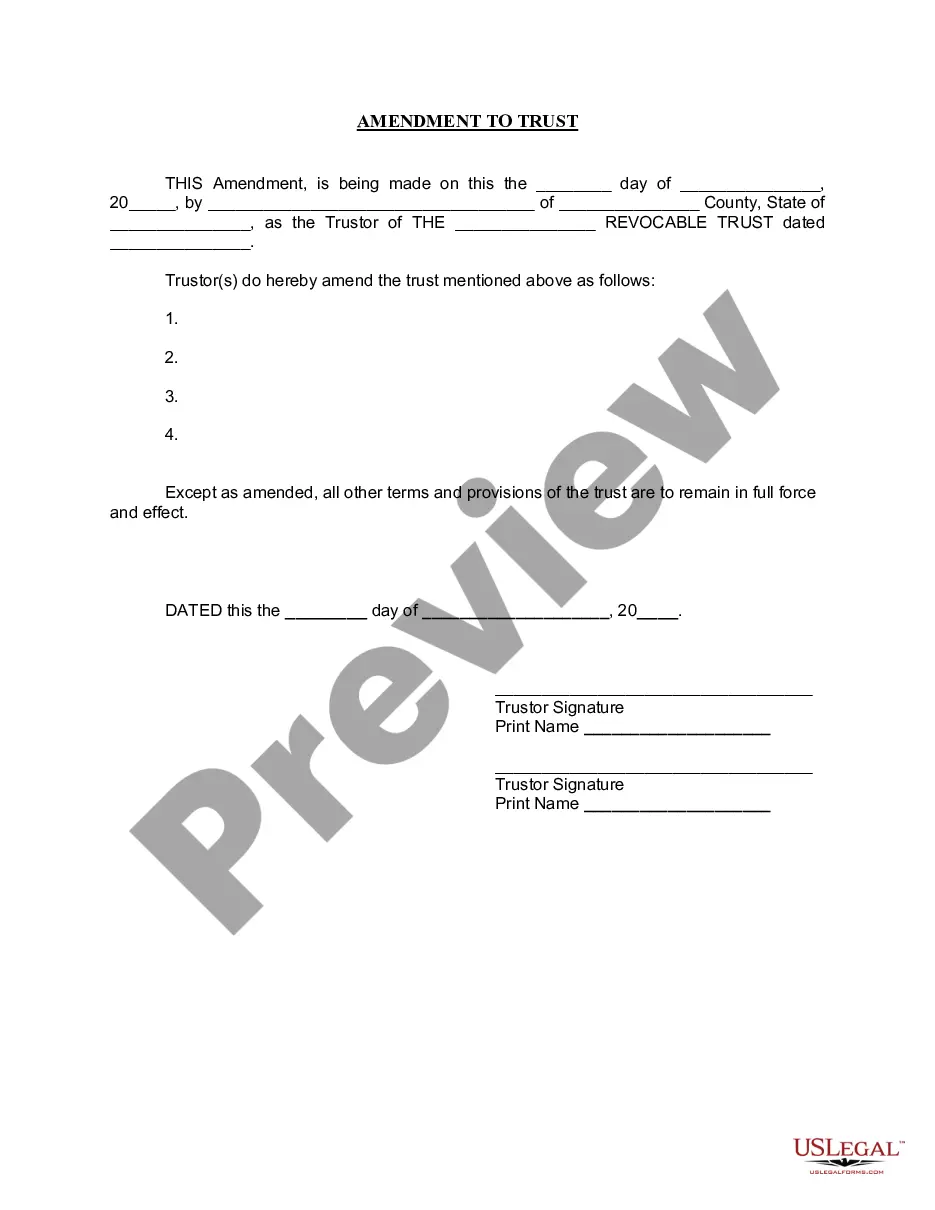
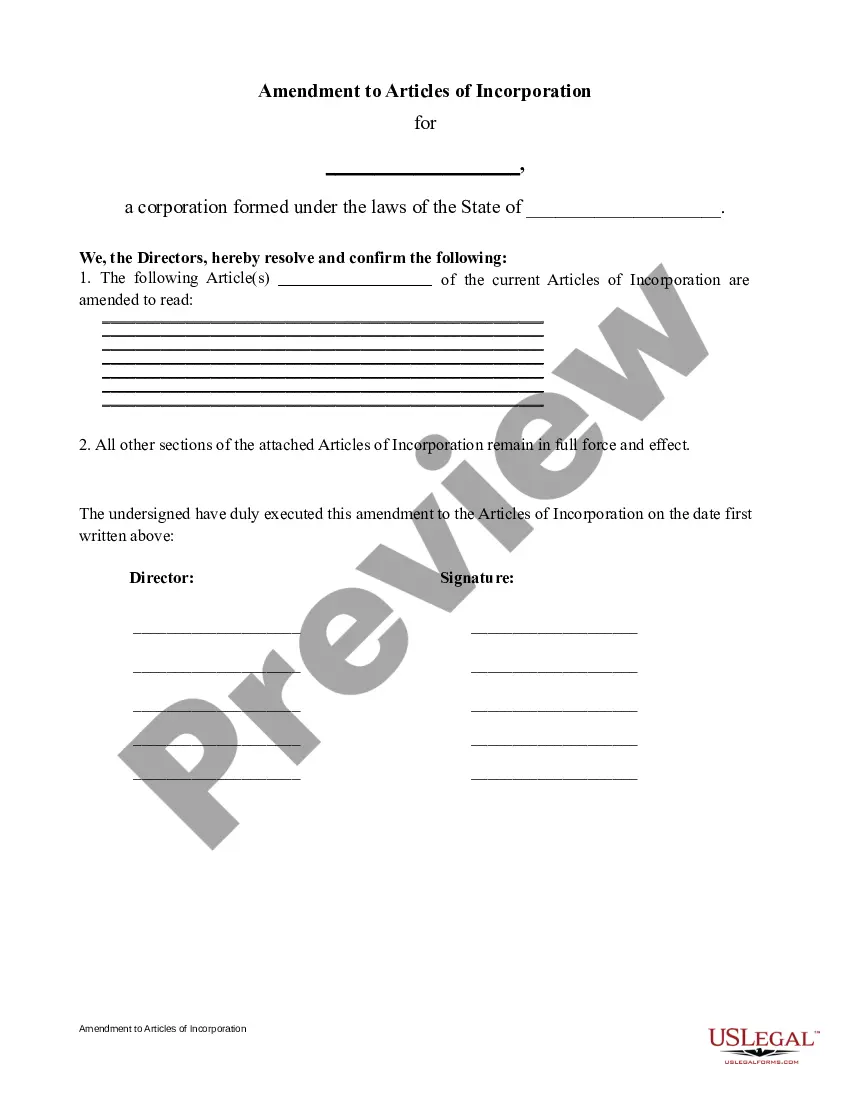
The Amendment to Living Trust is a legal document used to modify an existing living trust, which is created during a person's lifetime to manage their assets. This form allows the Trustor to change specific provisions within the trust while keeping the overall purpose intact. It differs from other forms by focusing solely on amendments, ensuring that all unchanged parts of the trust remain valid and enforceable.
Main sections of this form
- Date of amendment
- Name and details of the Trustor
- Description of the specific changes being made to the trust
- Signatures of the Trustor(s)
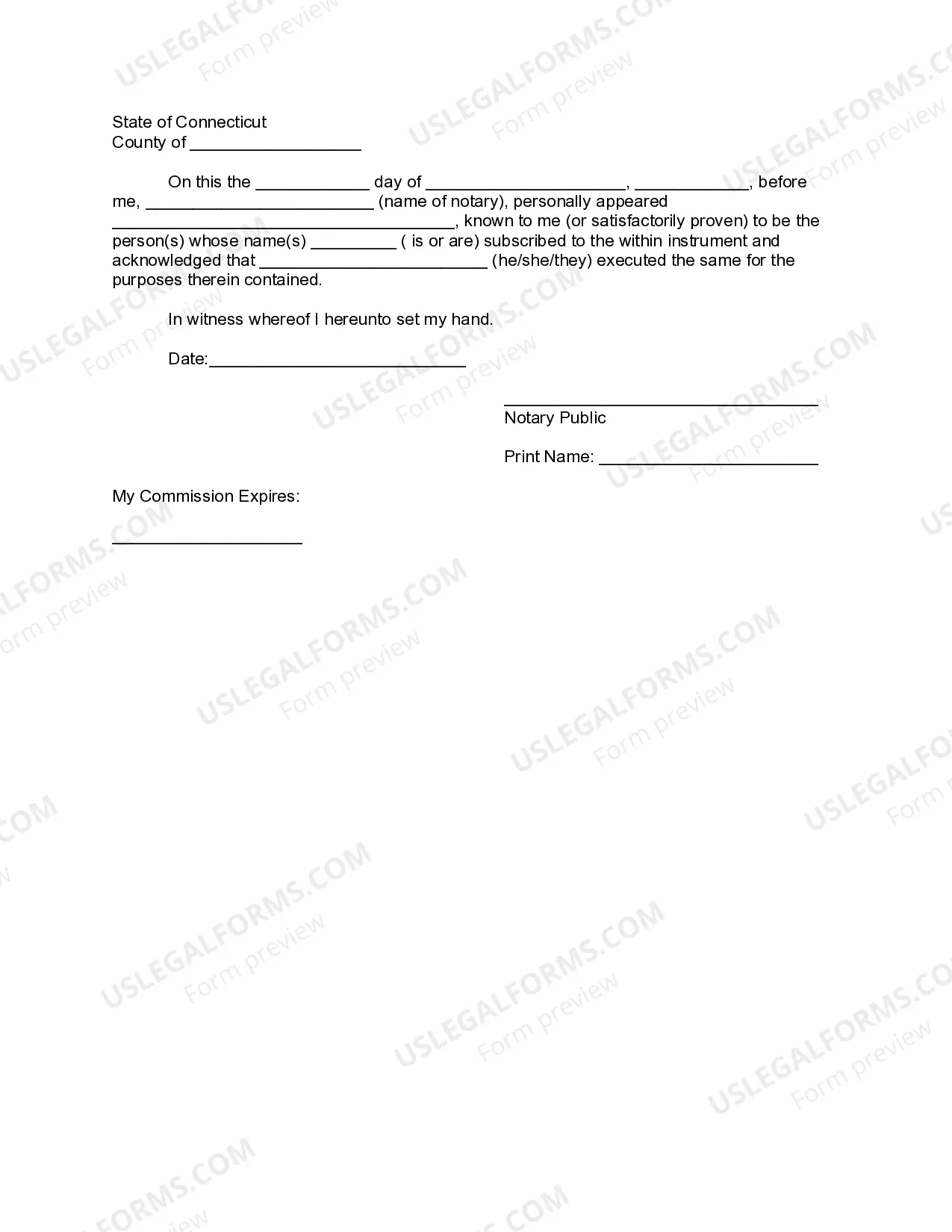
- Notary acknowledgment section

When to use this form
This form should be used when a Trustor wishes to make changes to their living trust. Common situations include altering beneficiaries, changing trustees, or updating asset descriptions. It ensures that the trust reflects the Trustor's current wishes without the need for creating an entirely new trust document.
Who can use this document
- Individuals who have established a living trust and wish to amend it
- Trustors seeking to revise trust provisions while preserving existing terms
- People wanting to ensure their trust accurately reflects their current intentions
How to prepare this document
- Enter the date when the amendment is being made.
- Provide the name and county of the Trustor.
- Clearly specify the changes being made to the living trust.
- Have the Trustor(s) sign the amendment in the presence of a notary public.
- Complete the notary acknowledgment section, including the notaryâs signature and commission details.
Is notarization required?
Yes, this form must be notarized to be legally valid. It is crucial that the signatures of the Trustor(s) are witnessed by a notary public, ensuring the authenticity of the amendment. US Legal Forms offers integrated online notarization services for added convenience, allowing for secure video calls without the need for travel.
Get your form ready online
Our built-in tools help you complete, sign, share, and store your documents in one place.
Make edits, fill in missing information, and update formatting in US Legal Forms—just like you would in MS Word.
Download a copy, print it, send it by email, or mail it via USPS—whatever works best for your next step.
Sign and collect signatures with our SignNow integration. Send to multiple recipients, set reminders, and more. Go Premium to unlock E-Sign.
If this form requires notarization, complete it online through a secure video call—no need to meet a notary in person or wait for an appointment.
We protect your documents and personal data by following strict security and privacy standards.

Make edits, fill in missing information, and update formatting in US Legal Forms—just like you would in MS Word.

Download a copy, print it, send it by email, or mail it via USPS—whatever works best for your next step.

Sign and collect signatures with our SignNow integration. Send to multiple recipients, set reminders, and more. Go Premium to unlock E-Sign.

If this form requires notarization, complete it online through a secure video call—no need to meet a notary in person or wait for an appointment.

We protect your documents and personal data by following strict security and privacy standards.
Mistakes to watch out for
- Failing to specify the changes clearly, which can lead to confusion.
- Not obtaining the required notarization, making the amendment invalid.
- Neglecting to update all relevant parties about the amendment.
Advantages of online completion
- Convenience of completing the form at your own pace.
- Immediate access to a legally vetted document template.
- Editability allows for easy customization based on personal needs.
What to keep in mind
- The Amendment to Living Trust enables specific changes to an existing trust.
- Proper completion and notarization are essential for legal validity.
- This document is a practical solution for Trustors needing to update their estate planning documents efficiently.
Looking for another form?

Form popularity
FAQ
You can obtain a trust amendment form through various resources such as legal websites, local law libraries, or by visiting a professional legal service provider. Platforms like US Legal Forms offer customizable templates that suit a Connecticut Amendment to Living Trust. This ensures you have a comprehensive and legally sound document that meets your specific needs.
Yes, you can amend your trust by yourself, but it's important to follow the legal requirements for a Connecticut Amendment to Living Trust. Ensure you provide clear language, follow your state's guidelines, and properly sign and date the amendment. However, consider consulting an attorney or using platforms like US Legal Forms for guidance to avoid potential pitfalls.
A codicil specifically changes the terms of a will, while a Connecticut Amendment to Living Trust alters the provisions of a living trust. Both documents serve to update legal directives, but their applications differ. Understanding this distinction is crucial when making estate planning decisions, as it ensures that your intentions are clearly reflected in the appropriate document.
Changing a living trust can be straightforward or complicated, depending on the nature of the amendments. Basic updates usually do not present many challenges, but significant changes might require careful consideration, especially concerning tax implications or beneficiary rights. A Connecticut Amendment to Living Trust is designed to facilitate these updates, helping you maintain your trust according to your current wishes. Tools like US Legal Forms offer user-friendly solutions to make this process more manageable.
You do not necessarily need a lawyer to amend your trust, especially if the changes are straightforward. However, hiring a lawyer can provide peace of mind and ensure that all legal requirements are met. If you are considering a Connecticut Amendment to Living Trust, consulting with a professional can help avoid potential pitfalls. Platforms like US Legal Forms also offer resources to assist you in making changes correctly.
To amend a living trust, you need to create a formal document that specifies the changes you want to make. This document should be signed by you and may need to be notarized, depending on your state's laws. A Connecticut Amendment to Living Trust allows you to update beneficiaries, change trustees, or modify other key elements. Using US Legal Forms can streamline this process and ensure your amendment is legally sound.
One significant mistake parents often make when establishing a fund is failing to clearly outline their wishes within the trust. This can lead to confusion and disputes among beneficiaries, particularly in complex family situations. Properly implementing a Connecticut Amendment to Living Trust can help clarify intentions and ensure that assets are distributed as desired. Consider using platforms like US Legal Forms to simplify the process of setting up a trust.
Writing a codicil to a trust involves creating a formal document that outlines specific changes or additions. Ensure that the codicil identifies the original trust and details the modifications clearly. You must also sign and date the codicil to validate it under Connecticut law. Using resources from US Legal Forms can simplify the process and ensure that your document meets legal standards.
To write an amendment to a living trust, you must draft a clear document that specifies the changes you want to make. Include the trust's name, your name as the trustee, and the date of the original trust. It is essential to sign the amendment in accordance with Connecticut laws, which may require notarization. If you're uncertain, using a platform like US Legal Forms can help you create an effective amendment.
Indeed, a living trust will avoid probate in Connecticut. By placing your assets into the trust, they bypass the probate process, making for a quicker distribution to your beneficiaries. This is particularly beneficial as it keeps family matters private and provides ease for your loved ones during a difficult time. Thus, a Connecticut Amendment to Living Trust proves to be a strategic choice for many.