Indiana Landlord Tenant Sublease Package
Overview of this form package
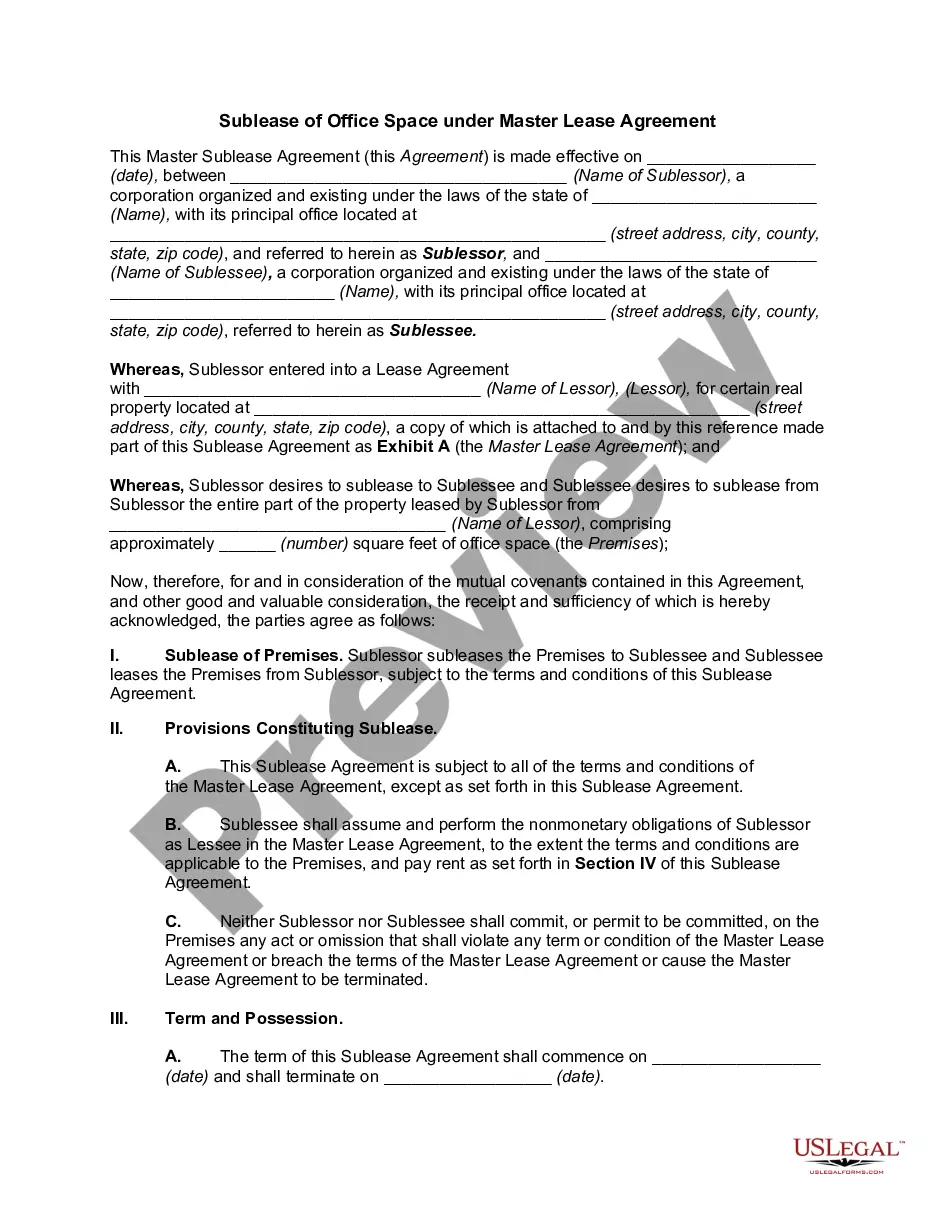
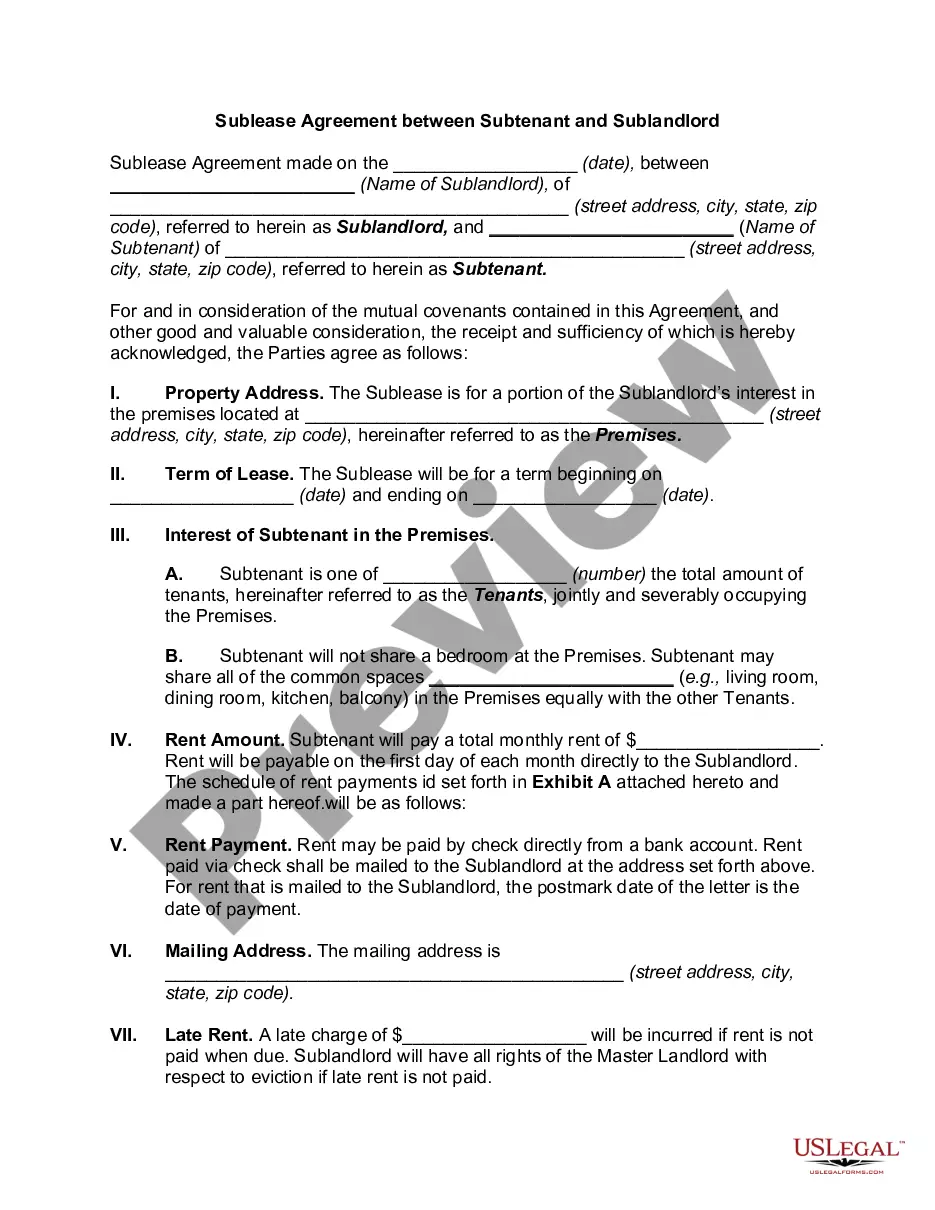
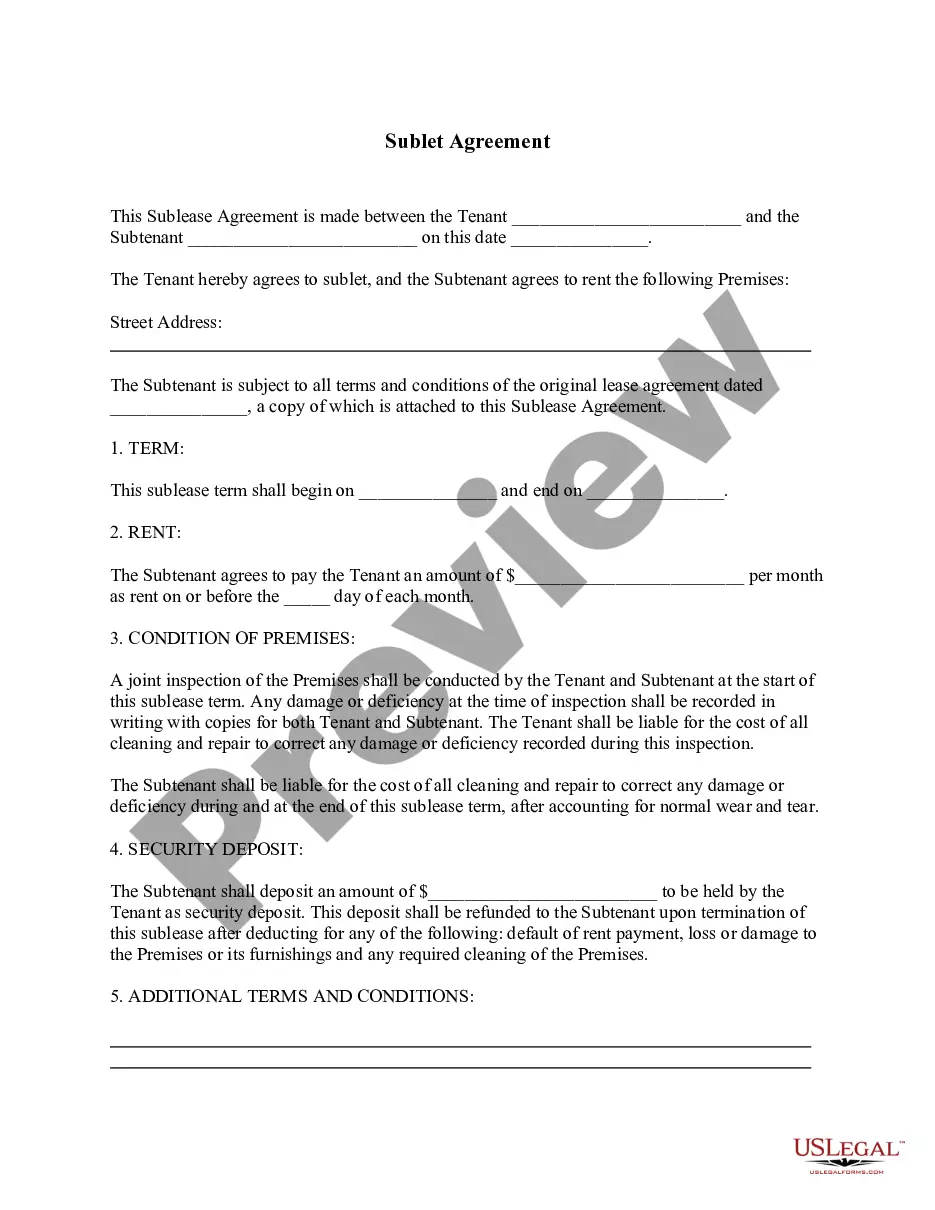
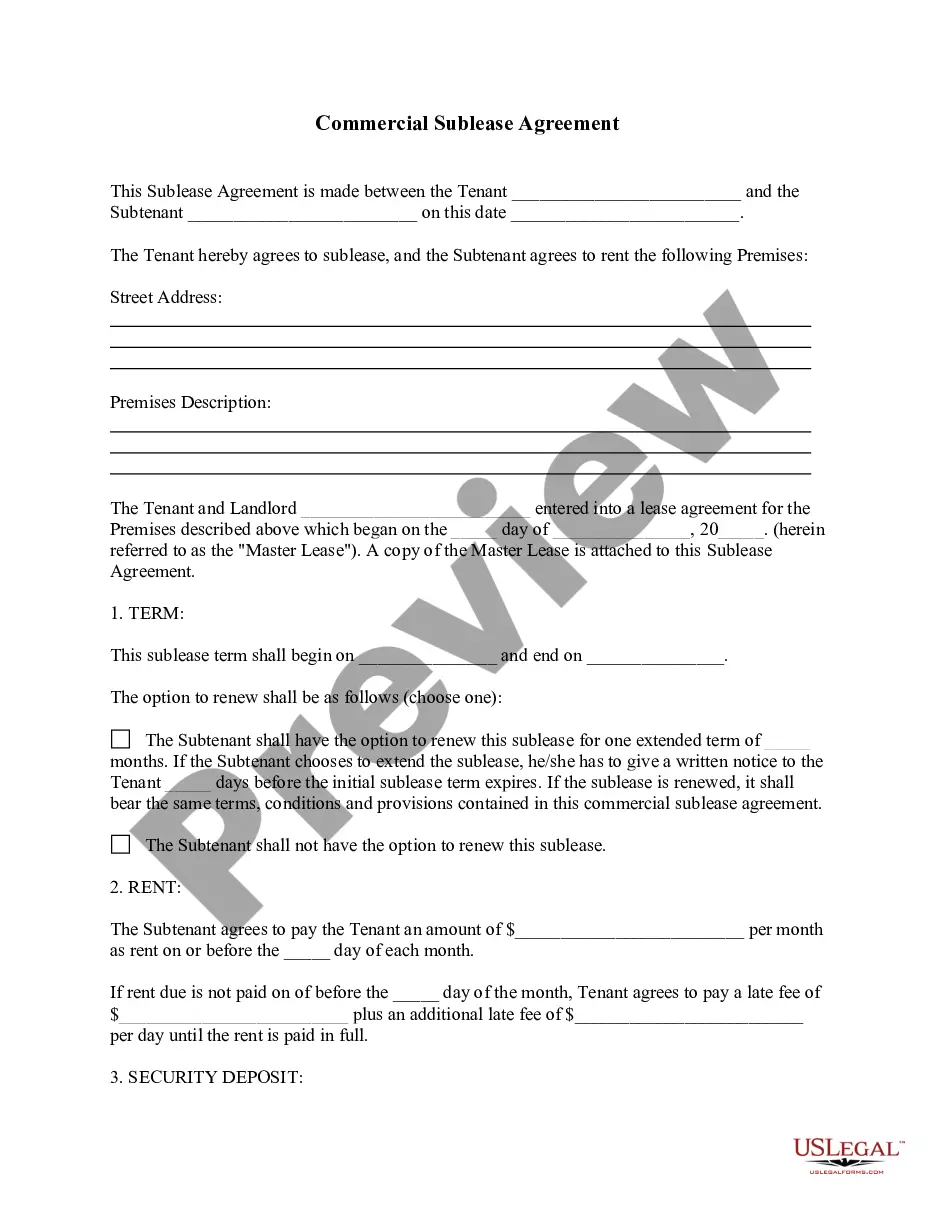
The Indiana Landlord Tenant Sublease Package provides essential legal documents for anyone involved in subleasing a rental property in Indiana. This package is specifically designed to address legal issues that may occur between landlords, tenants, and subtenants during the subleasing process. Unlike general lease agreements, this sublease package includes specific forms needed to navigate the complexities of subleasing, ensuring that all parties are protected legally and their rights are clearly defined.
Forms included in this package
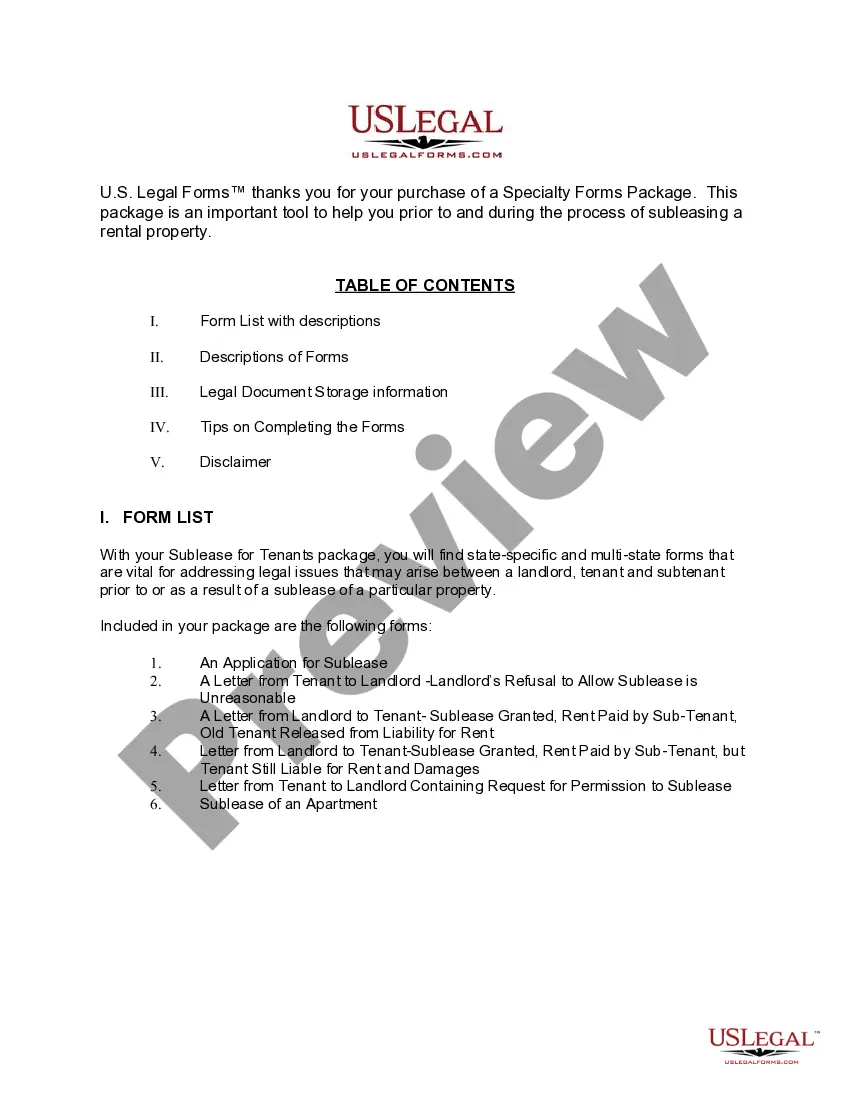
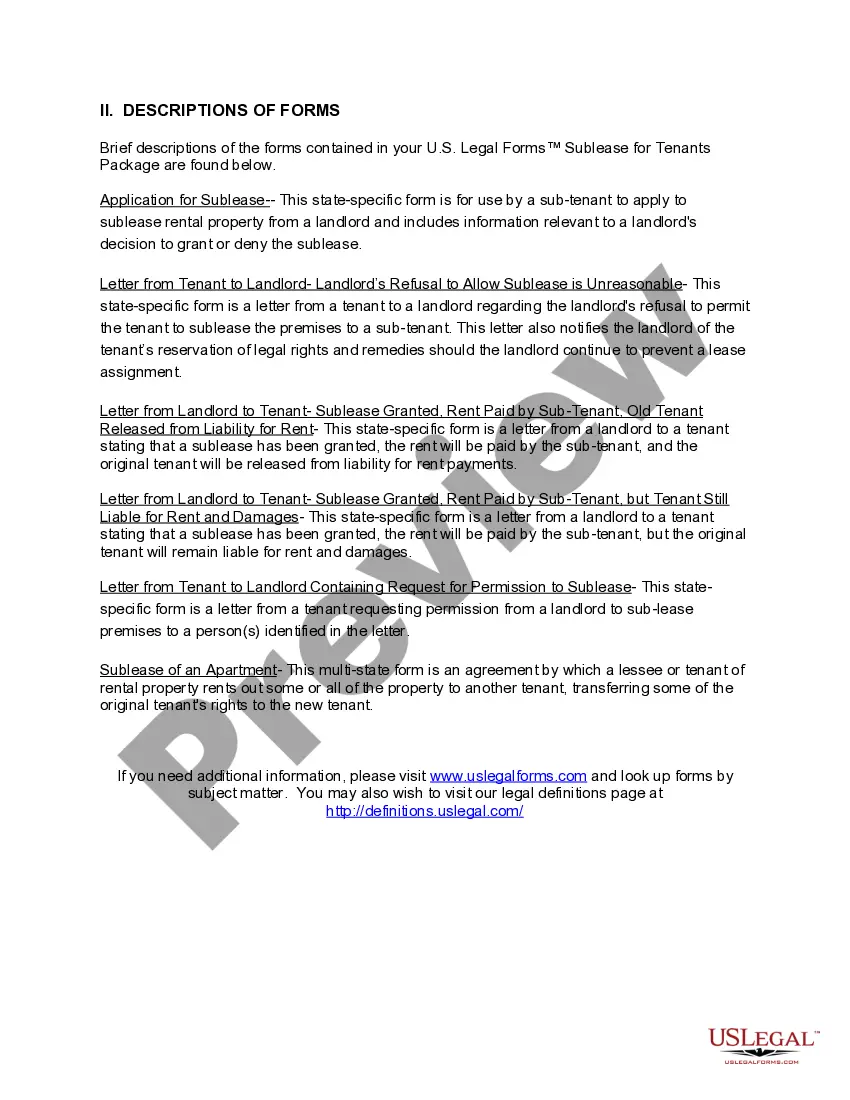
- Letter from Tenant to Landlord containing Request for permission to sublease
- Letter from Landlord to Tenant that Sublease granted - Rent Paid by Subtenant, but Tenant Still Liable for Rent and Damages
- Letter from Landlord to Tenant that Sublease granted - Rent Paid by Subtenant, Old Tenant Released from Liability for Rent
- Letter from Tenant to Landlord about Landlord's refusal to allow sublease is unreasonable
- Application for Sublease
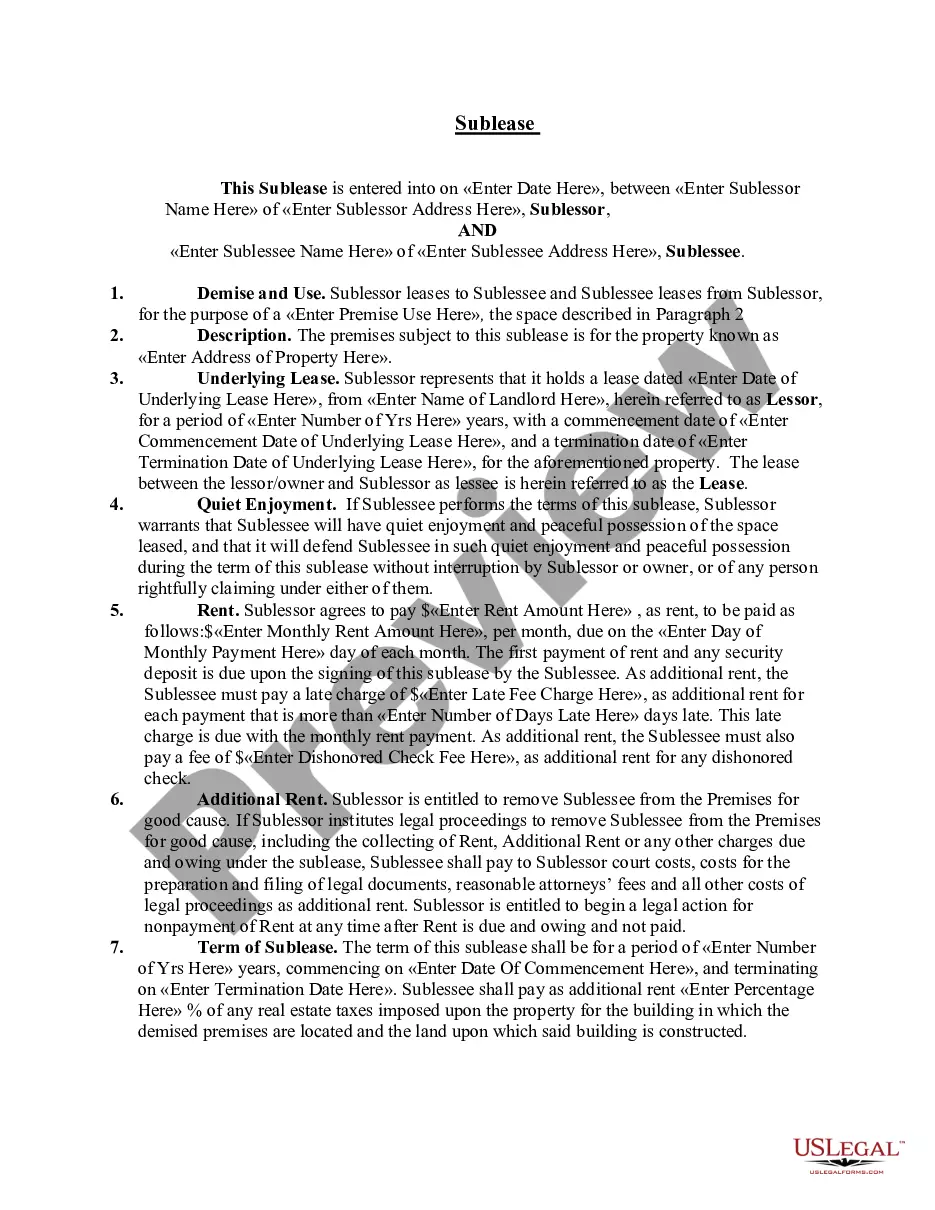
- Sublease of an Apartment - Real Estate Rental
Situations where these forms applies
This form package is useful in several scenarios, including but not limited to:
- When a tenant wishes to sublease their rental property to a new tenant.
- If the landlord has refused a tenant's request to sublease, and the tenant needs to formally dispute this.
- When a landlord grants approval for a sublease but wants to clarify the liability of the original tenant.
- When any party involved requires documentation that clearly outlines the terms of the sublease and rights of each party.
Intended users of this form package
- Tenants looking to sublease their rental property.
- Landlords who need to provide documentation related to subleasing agreements.
- Subtenants who want to understand their rights and obligations in the subleasing arrangement.
- Property managers overseeing rental agreements that may involve subletting.
Steps to complete these forms
- Review all included forms to understand each document's purpose.
- Identify the parties involved: original tenant, landlord, and subtenant.
- Complete the Application for Sublease with relevant details.
- Draft the necessary letters to communicate with the landlord, based on the required authorization or disputes.
- Finalize the Sublease of an Apartment to clearly outline terms and conditions for the subtenant.
- Keep signed copies of the forms for your records and ensure all parties have access to a copy.
Notarization details for included forms
Forms in this package typically do not require notarization. However, certain states or document types may still need it. US Legal Forms provides online notarization powered by Notarize, available 24/7 for your convenience.
Get your form ready online
Our built-in tools help you complete, sign, share, and store your documents in one place.
Make edits, fill in missing information, and update formatting in US Legal Forms—just like you would in MS Word.
Download a copy, print it, send it by email, or mail it via USPS—whatever works best for your next step.
Sign and collect signatures with our SignNow integration. Send to multiple recipients, set reminders, and more. Go Premium to unlock E-Sign.
If this form requires notarization, complete it online through a secure video call—no need to meet a notary in person or wait for an appointment.
We protect your documents and personal data by following strict security and privacy standards.
Make edits, fill in missing information, and update formatting in US Legal Forms—just like you would in MS Word.
Download a copy, print it, send it by email, or mail it via USPS—whatever works best for your next step.
Sign and collect signatures with our SignNow integration. Send to multiple recipients, set reminders, and more. Go Premium to unlock E-Sign.
If this form requires notarization, complete it online through a secure video call—no need to meet a notary in person or wait for an appointment.
We protect your documents and personal data by following strict security and privacy standards.
Common mistakes to avoid
- Failing to secure landlord's written permission before subleasing.
- Not clearly defining responsibilities and liabilities in the sublease agreement.
- Neglecting to notify all parties of subleasing arrangements.
- Using outdated or incorrect forms that do not comply with Indiana law.
Benefits of completing this package online
- Convenience of accessing and downloading forms from anywhere at any time.
- Editability allows you to fill out forms digitally, reducing errors.
- Reliability as the forms are drafted by licensed attorneys to ensure legal compliance.
Key takeaways
- The Indiana Landlord Tenant Sublease Package includes essential documents for managing subleases.
- It is important for tenants, landlords, and subtenants to understand their rights and responsibilities.
- Following the steps to complete the forms correctly can help prevent legal issues.
Looking for another form?

Form popularity
FAQ
California isn't the most tenant-friendly state when it comes to subletting. According to California law you must receive written consent from your landlord prior to subletting, and if your lease says no subletting, then that really means no subletting.
In short, subletting allows a new renter to take over the lease directly with the landlord, while subleasing involves renting all or part of the space to another renter through the original renter.
Most landlord insurance policies do not cover subletting. Therefore if your property gets damaged in some way you probably will not be covered by your landlord insurance.
On your sublease agreement, include a list of various areas of the property (including the subtenant's room, hardwood floors, walls, exterior, etc.) and note its condition. And since you and your subtenant will need to abide by the original lease that you signed, it's important to include this with your sublease.
If a court finds you guilty of the first offence of unlawful subletting, you can be fined in the magistrates' court.At the magistrates' court, you can get up to six months in prison or a fine, or both. At the Crown Court the maximum penalty is imprisonment for two years or a fine, or both.
A lease is a rental contract between a property owner and a tenant; a sublease is a contract between a tenant and a third party who lives in the rental property during part of the tenant's lease term.
Subleasing a Rental Property When a tenant whose name is on the lease rents a room, a portion of the property, or all of the property to another, it is referred to as subleasing (or subletting).So, if the subtenant owes back rent, the landlord has the option of suing the original tenant.
If a tenant is subletting without consent, it's likely they will have broken terms in their tenancy agreement. This breach of contract means that the landlord can take action to evict them from their home. Possession proceedings can be started quickly, but it's important to follow the correct legal process.
A sublease is the re-renting of property by an existing tenant to a new third party for a portion of the tenant's existing lease contract.Even if a sublease is permitted, the original tenant is still liable for the obligations stated in the lease agreement, such as the payment of rent each month.