Indiana Warning of Default on Commercial Lease
Overview of this form
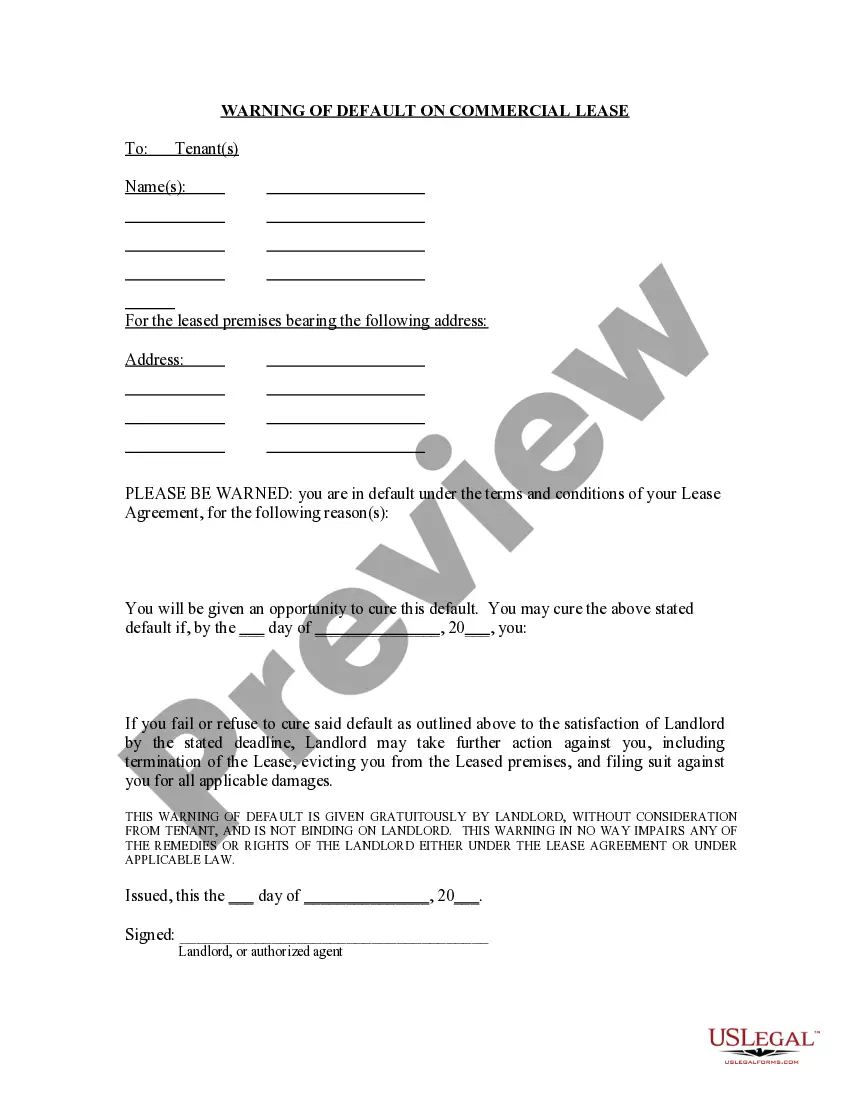
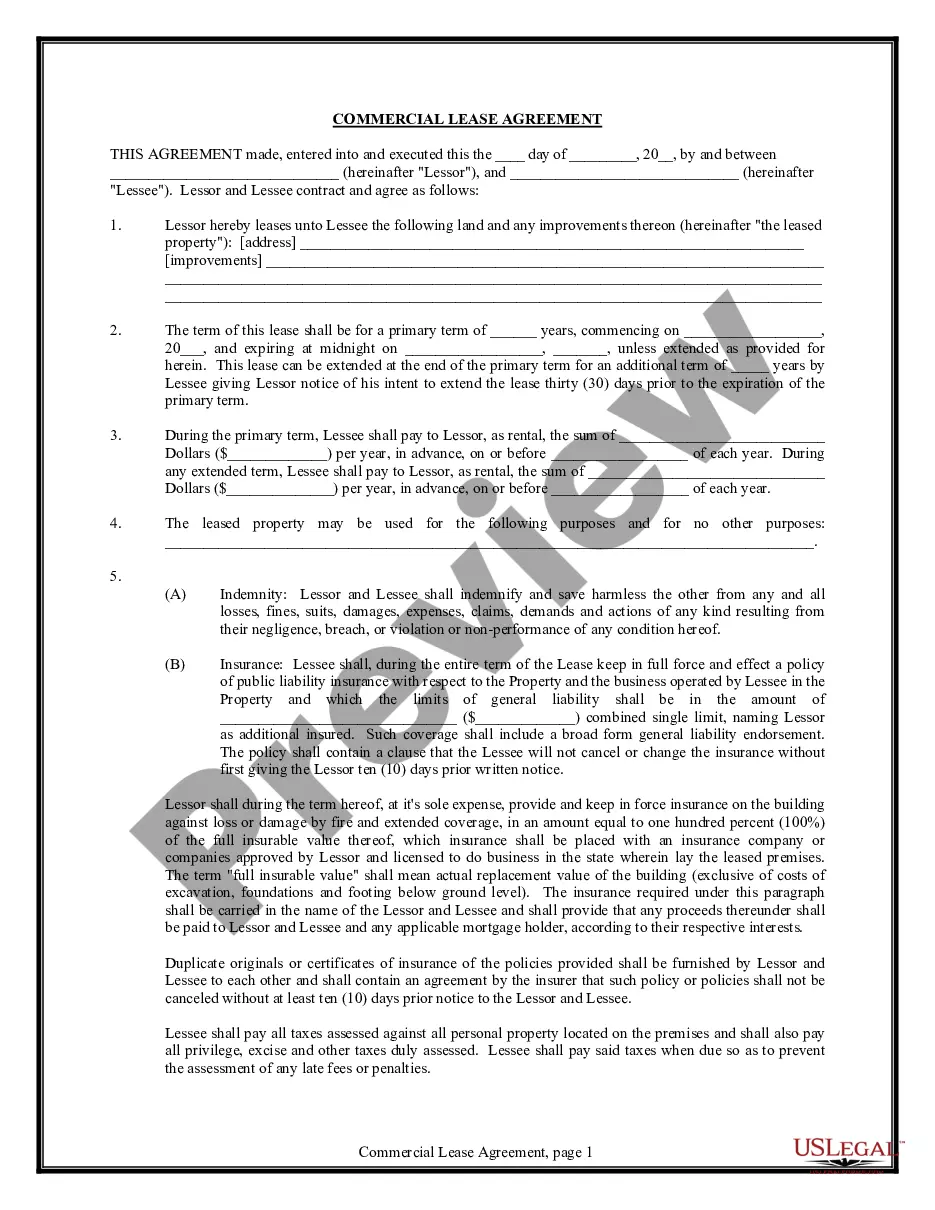
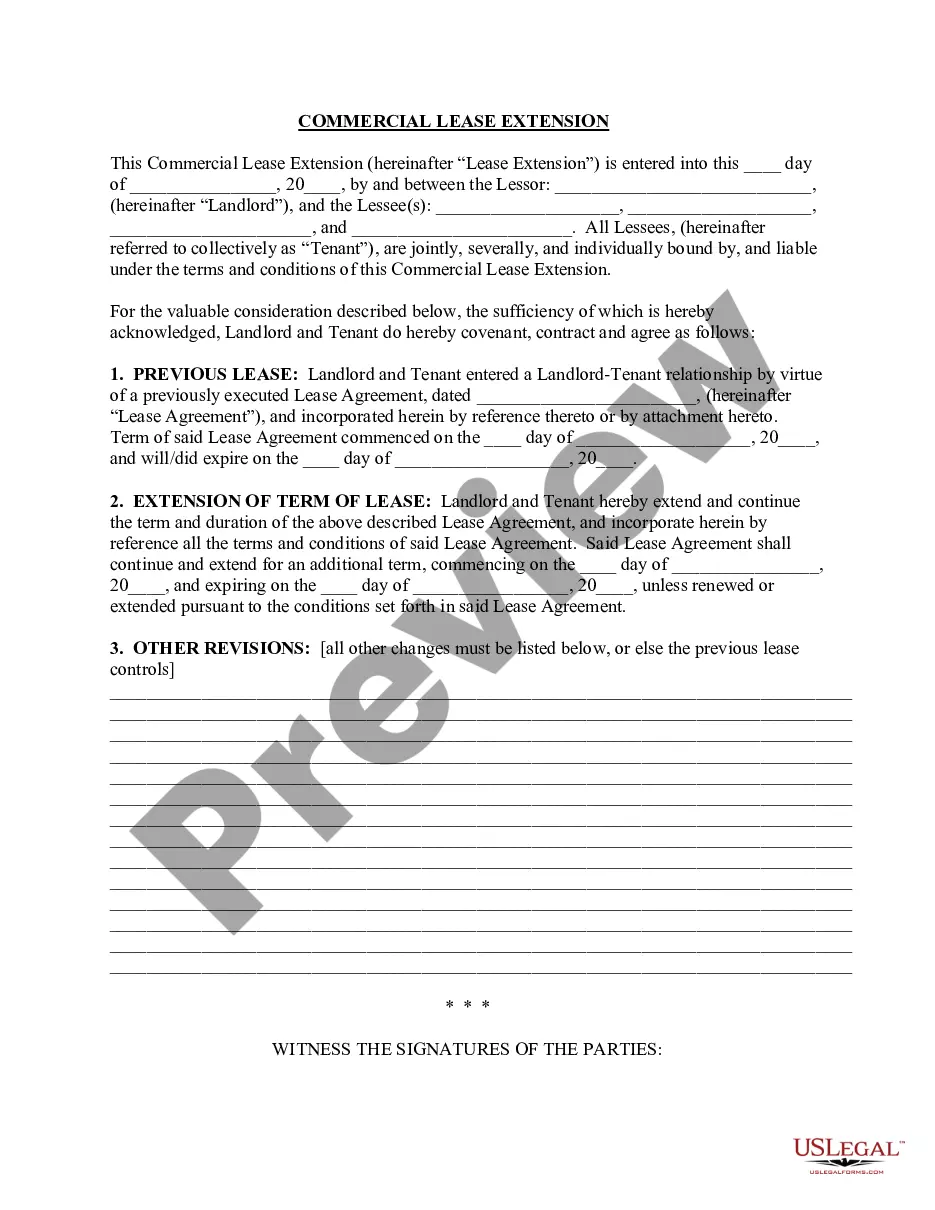
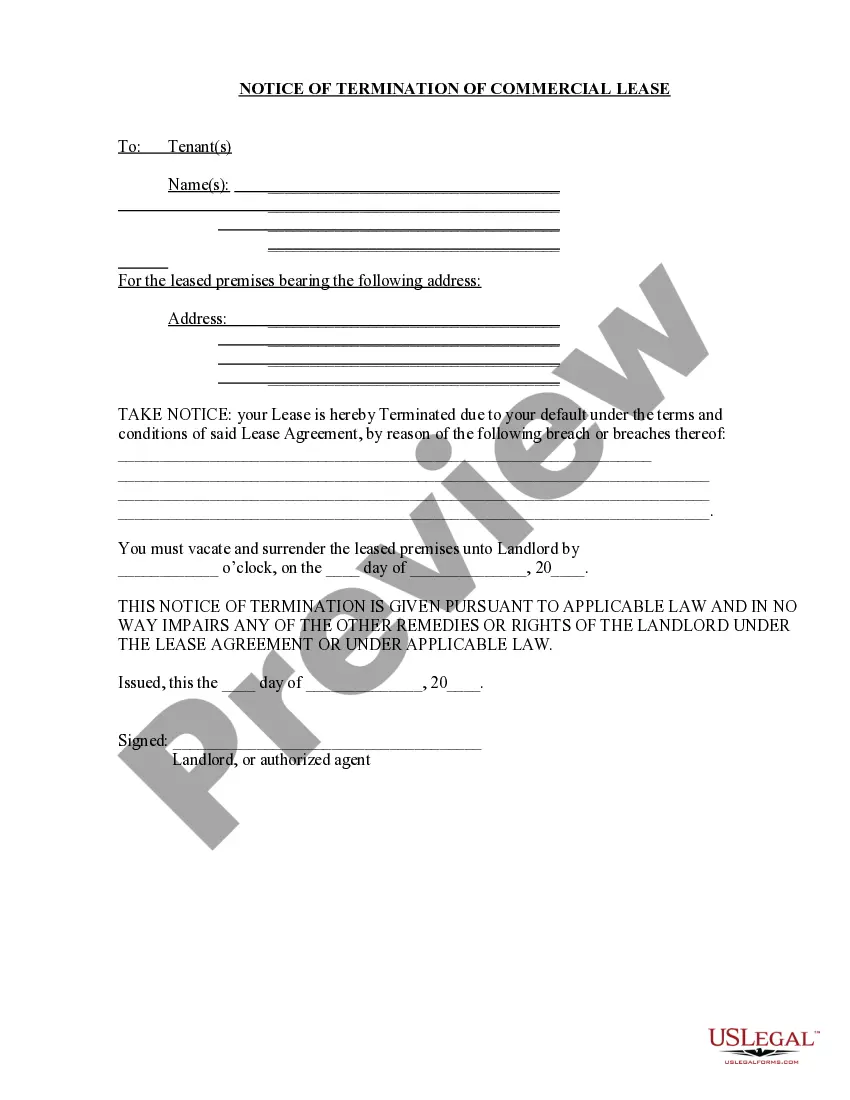
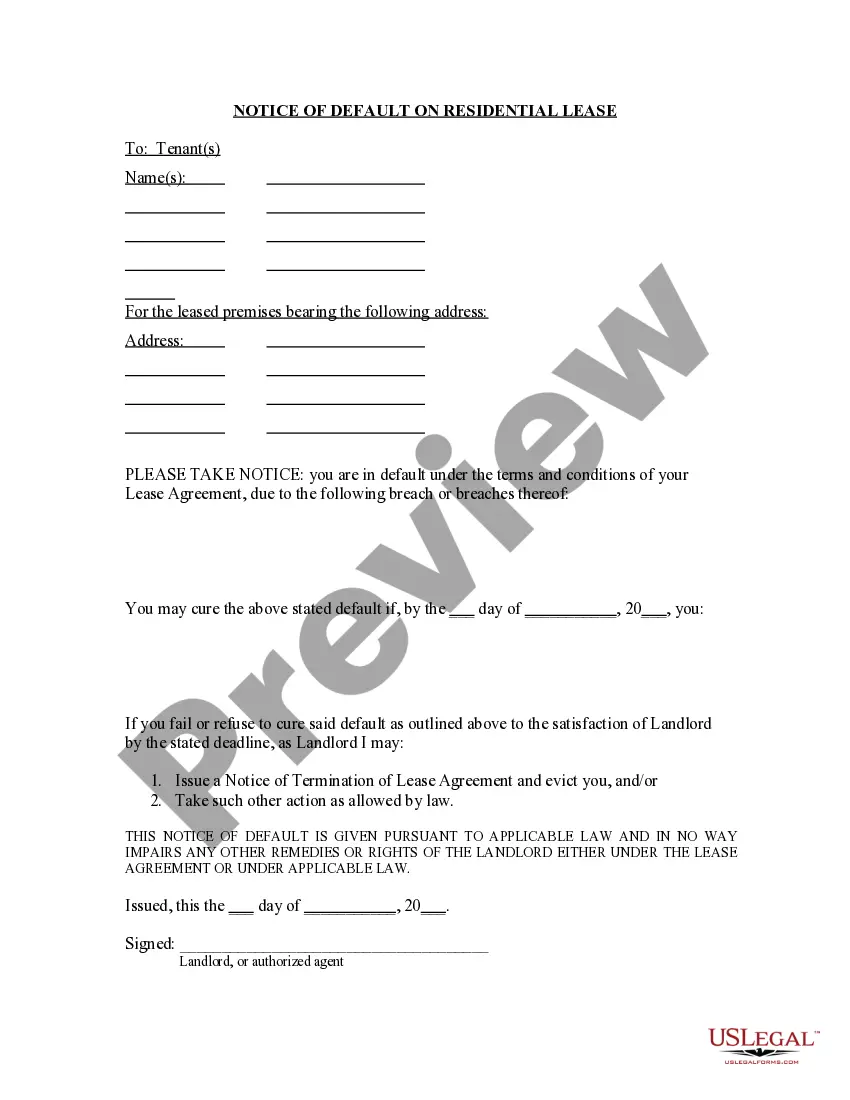
The Warning of Default on Commercial Lease is a legal document that landlords use to formally notify tenants of potential lease violations. This form specifically highlights concerns that, if not addressed, the tenant may be considered in default under the lease agreement. Unlike eviction notices, this form serves as an initial warning, allowing tenants an opportunity to remedy the situation before further action is taken. It is crucial for both landlord and tenant to be aware of their rights and obligations within commercial lease agreements.
Key components of this form
- Date of the warning issuance
- Landlord's signature or authorized agent's signature
- Statement regarding the form being given gratuitously
- Notice that the warning does not limit the landlord's legal rights
Situations where this form applies
This form should be used when a landlord has concerns that a tenant may be failing to meet their obligations under a commercial lease. Common situations include late rent payments, property maintenance issues, or other lease violations. Issuing this warning gives the tenant a chance to correct the default before the landlord considers more severe actions like eviction or using the security deposit for overdue payments.
Who should use this form
- Landlords of commercial properties
- Property managers acting on behalf of landlords
- Tenants who receive a notice of default and need clarity on their rights
Steps to complete this form
- Identify the date of issuance for the notice.
- Enter the name of the landlord or authorized agent.
- Specify the details of the tenant and the default situation.
- Sign the form to indicate acknowledgment of the warning.
Notarization requirements for this form
This form does not typically require notarization unless specified by local law. Always check local regulations to confirm requirements.
Get your form ready online
Our built-in tools help you complete, sign, share, and store your documents in one place.
Make edits, fill in missing information, and update formatting in US Legal Forms—just like you would in MS Word.
Download a copy, print it, send it by email, or mail it via USPS—whatever works best for your next step.
Sign and collect signatures with our SignNow integration. Send to multiple recipients, set reminders, and more. Go Premium to unlock E-Sign.
If this form requires notarization, complete it online through a secure video call—no need to meet a notary in person or wait for an appointment.
We protect your documents and personal data by following strict security and privacy standards.

Make edits, fill in missing information, and update formatting in US Legal Forms—just like you would in MS Word.

Download a copy, print it, send it by email, or mail it via USPS—whatever works best for your next step.

Sign and collect signatures with our SignNow integration. Send to multiple recipients, set reminders, and more. Go Premium to unlock E-Sign.

If this form requires notarization, complete it online through a secure video call—no need to meet a notary in person or wait for an appointment.

We protect your documents and personal data by following strict security and privacy standards.
Avoid these common issues
- Not providing sufficient details about the default issue.
- Failing to enter correct dates, which can affect legal timelines.
- Omitting the signature of the landlord or authorized agent.
- Not sending the warning through proper channels.
Benefits of completing this form online
- Convenient access to legally sound templates prepared by attorneys.
- Easy editing to customize for specific situations.
- Immediate availability, allowing landlords to act quickly.
- Cost-effective alternative to hiring legal counsel for simple forms.
Legal use & context
- This form serves as a prelude to potential eviction proceedings, ensuring the tenant is aware of lease violations.
- It functions as a critical communication tool to allow tenants a chance to rectify defaults before actions are taken against them.
Summary of main points
- The Warning of Default is a vital tool for landlords addressing lease violations.
- Clear communication of defaults is essential to comply with legal requirements.
- The form provides an opportunity for tenants to correct issues before eviction is considered.
Looking for another form?
Form popularity
FAQ
CALGARY -- The province says commercial landlords will no longer be allowed to evict business tenants without first applying for rental relief from the government.
A break-early fee is a lump sum payment. The amount of the break-early fee will vary greatly depending upon the commercial tenant's specific circumstances. In exchange for the break-early fee, the landlord will agree to release the commercial tenant from all of its obligations under the commercial lease.
The CARES Act provides no direct relief for such tenants. Several executive orders issued by governors and mayors have purported to impose moratoria on evictions that would extend to commercial tenants.
A lease is automatically void when it is against the law, such as a lease for an illegal purpose. In other circumstances, like fraud or duress, a lease can be declared void at the request of one party but not the other.
Commercial tenants may have the protection of the Landlord and Tenant Act 1954. The Act grants Security of Tenure to tenants who occupy premises for business purposes. The tenancy will continue after the contractual termination date until it is ended in one of the ways specified by the Act.
For example, the lease may provide that in case of default, the landlord can recover late fees and interest. If the lease is a net lease, it may provide for the landlord to recover such things as property taxes, insurance, utilities, maintenance and repairs.
One option for getting out of your commercial lease early is to approach your landlord and request to surrender the lease. A surrender of lease is when both you and the landlord agree to end the lease.However, if the landlord agrees to surrender your lease, you will often have to pay their legal costs.
Anyone renting a building, whether for commercial or personal use, has the right to privacy. You are entitled to do anything on the property that you wish, so long as whatever you are doing is legal. The landlord cannot prevent you from operating your business nor from allowing guests or patrons on the property.
Paying the remainder of the rent still owed on the lease in full; Paying a specified amount of liquidated damages as outlined in the contract terms; Paying an additional amount of punitive damages, dependent on local state laws; and/or.