Indiana Warranty Deed from two Individuals to LLC
About this form
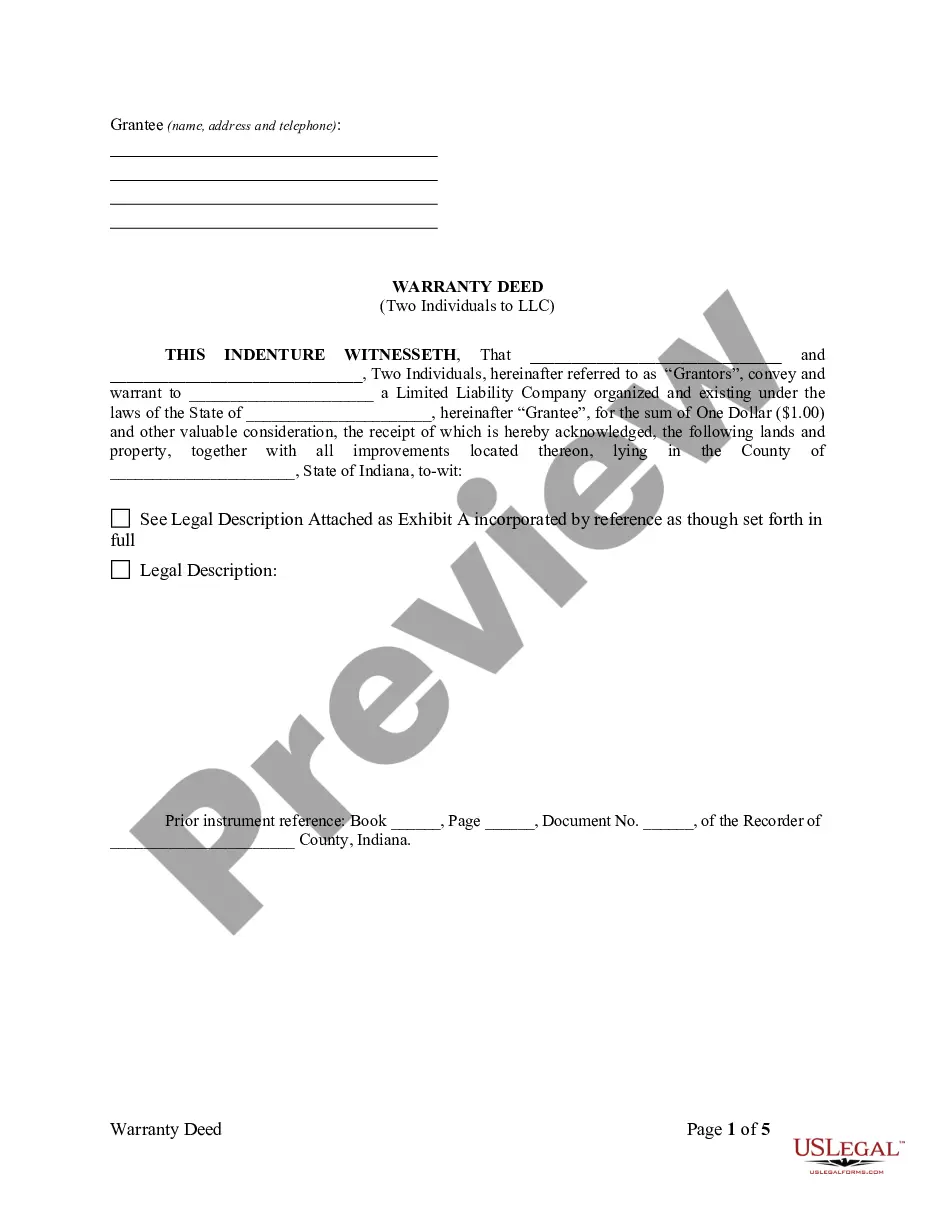
The Warranty Deed from two Individuals to LLC is a legal document that facilitates the transfer of property ownership from two unmarried individuals (the grantors) to a limited liability company (the grantee). This form provides legal assurances about the ownership and condition of the property, distinguishing it from other types of deeds by offering a guarantee against any future claims on the title. It is essential for a clear and enforceable property transfer, ensuring that the LLC receives the property free from encumbrances, unless otherwise noted.
Main sections of this form
- Grantors Information: Identifies the two individuals transferring ownership.
- Grantee Information: Specifies the limited liability company receiving the property.
- Property Description: Detailed description of the property being transferred.
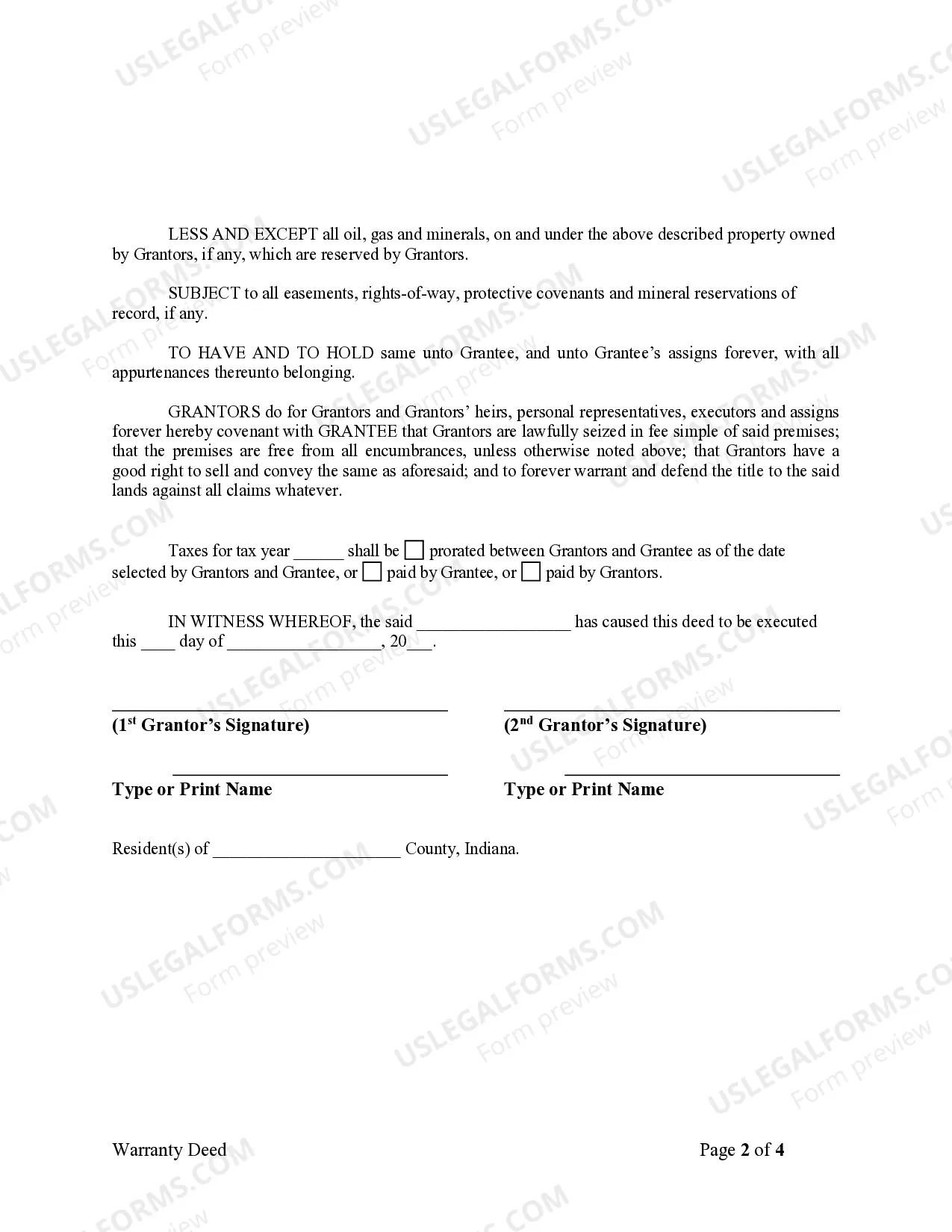
- Covenants: Legal promises made by the grantors regarding their right to transfer the property and defend the title.
- Tax Proration Clause: Details the agreement on how taxes for the property will be managed between the parties.
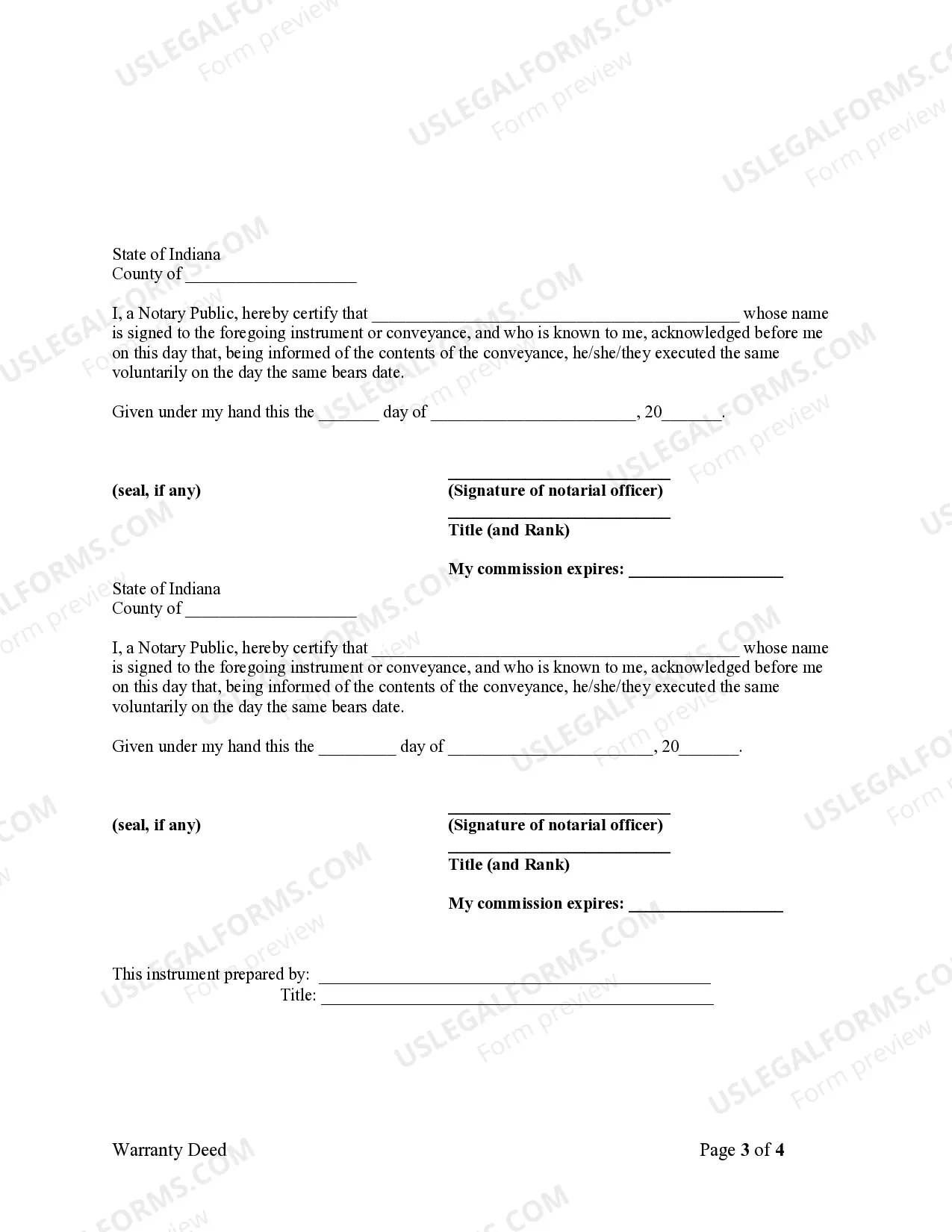
- Notary Section: Includes space for the notary public's signature and seal, certifying the authenticity of the document.




Situations where this form applies
This form is typically used when two unmarried individuals wish to transfer ownership of real property to a limited liability company. It is suitable for situations such as marital separation, where one party may be transferring their interest in the property, or when individuals are streamlining property ownership under a business structure. Utilizing a warranty deed provides peace of mind that the title is clear and protected against legal claims.
Who needs this form
- Two unmarried individuals who own property together and wish to transfer their ownership to an LLC.
- Property owners seeking to protect their rights and ensure a clear title when transferring property.
- Members of an LLC looking to formalize the acquisition of real estate owned by individuals.
Instructions for completing this form
- Identify the grantors and enter their full names as they appear on the title.
- Specify the full legal name of the limited liability company receiving the property.
- Describe the property being transferred, including legal description and address.
- Fill in the provisions regarding taxes, specifying how they will be divided or paid.
- Sign the document in the presence of a notary public, who will then notarize the form.
- Ensure the executed form is filed according to local property record requirements.
Does this form need to be notarized?
This form must be notarized to be legally valid. US Legal Forms provides secure online notarization powered by Notarize, allowing you to complete the process through a verified video call.
Get your form ready online
Our built-in tools help you complete, sign, share, and store your documents in one place.
Make edits, fill in missing information, and update formatting in US Legal Forms—just like you would in MS Word.
Download a copy, print it, send it by email, or mail it via USPS—whatever works best for your next step.
Sign and collect signatures with our SignNow integration. Send to multiple recipients, set reminders, and more. Go Premium to unlock E-Sign.
If this form requires notarization, complete it online through a secure video call—no need to meet a notary in person or wait for an appointment.
We protect your documents and personal data by following strict security and privacy standards.

Make edits, fill in missing information, and update formatting in US Legal Forms—just like you would in MS Word.

Download a copy, print it, send it by email, or mail it via USPS—whatever works best for your next step.

Sign and collect signatures with our SignNow integration. Send to multiple recipients, set reminders, and more. Go Premium to unlock E-Sign.

If this form requires notarization, complete it online through a secure video call—no need to meet a notary in person or wait for an appointment.

We protect your documents and personal data by following strict security and privacy standards.
Typical mistakes to avoid
- Failing to define the property accurately.
- Not providing complete names or signatures of grantors.
- Overlooking the notary requirements, leading to an invalid deed.
- Neglecting to clarify tax arrangements, potentially causing disputes.
Advantages of online completion
- Convenience of immediate access to legal documents for property transfers.
- Editability allows users to fill in specific details easily.
- Reliability of professionally drafted templates ensuring legal compliance.
Looking for another form?
Form popularity
FAQ
Retrieve your original deed. Get the appropriate deed form. Draft the deed. Sign the deed before a notary. Record the deed with the county recorder. Obtain the new original deed.
Step 1: Find your IN quitclaim deed form. Step 2: Gather the information you need. Step 3: Enter the information about the parties. Step 4: Enter the legal description of the property. Step 5: Have the grantor sign the document in the presence of a Notary Public.
The general way to convey real property in Indiana is through a warranty deed. In certain cases, you may also use a quitclaim deed, a deed of trust or a grant deed. Most deeds require the name of the grantor who is the current owner; the grantee (the new owner) as well as the legal property description.
Discuss the terms of the deed with the new owners. Hire a real estate attorney to prepare the deed. Review the deed. Sign the deed in front of a notary public, with witnesses present. File the deed on public record.
Locate the prior deed to the property. Create the new deed. Sign the new deed. Record the original deed.
An Indiana quitclaim deed is a legally binding document that allows a property's owner to sell or transfer the real estate to another party, a buyer, without any promise about the title.
Signing (§ 32-21-2-3) All deed must be executed by one of the following: judge, clerk of a court of record, county auditor, county recorder, notary public, mayor of a city in Indiana or any other state, commissioner appointed in a state other than Indiana by the governor of Indiana, clerk of the city county council
The mortgage company usually prepares this deed as part of the loan package and delivers it to the title company for you to sign at closing. The title company is commonly the trustee to the deed and holds legal title to the property until the loan gets fully repaid.