Indiana Quitclaim Deed - Individual Grantor acting through an attorney in fact to Husband and Wife or Two Individuals as Grantees.
About this form
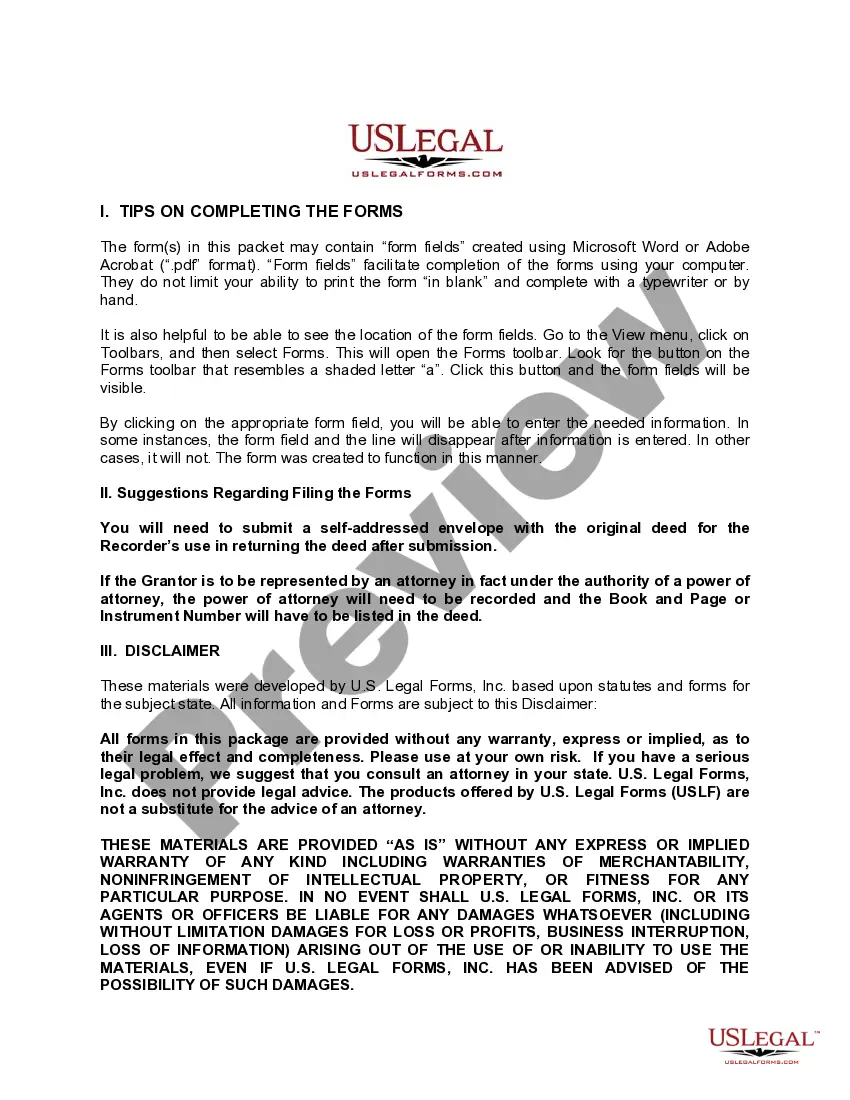
The Quitclaim Deed is a legal document that allows an individual, acting through an attorney in fact, to transfer real property to two individuals or a married couple as grantees. Unlike warranty deeds, this deed does not guarantee that the grantor holds clear title to the property, making it a simpler and quicker method of property transfer. This form complies with state statutory laws and is essential for property transactions involving a grantor who may not be directly handling the conveyance.
Main sections of this form
- Identification of the Grantor and attorney in fact.
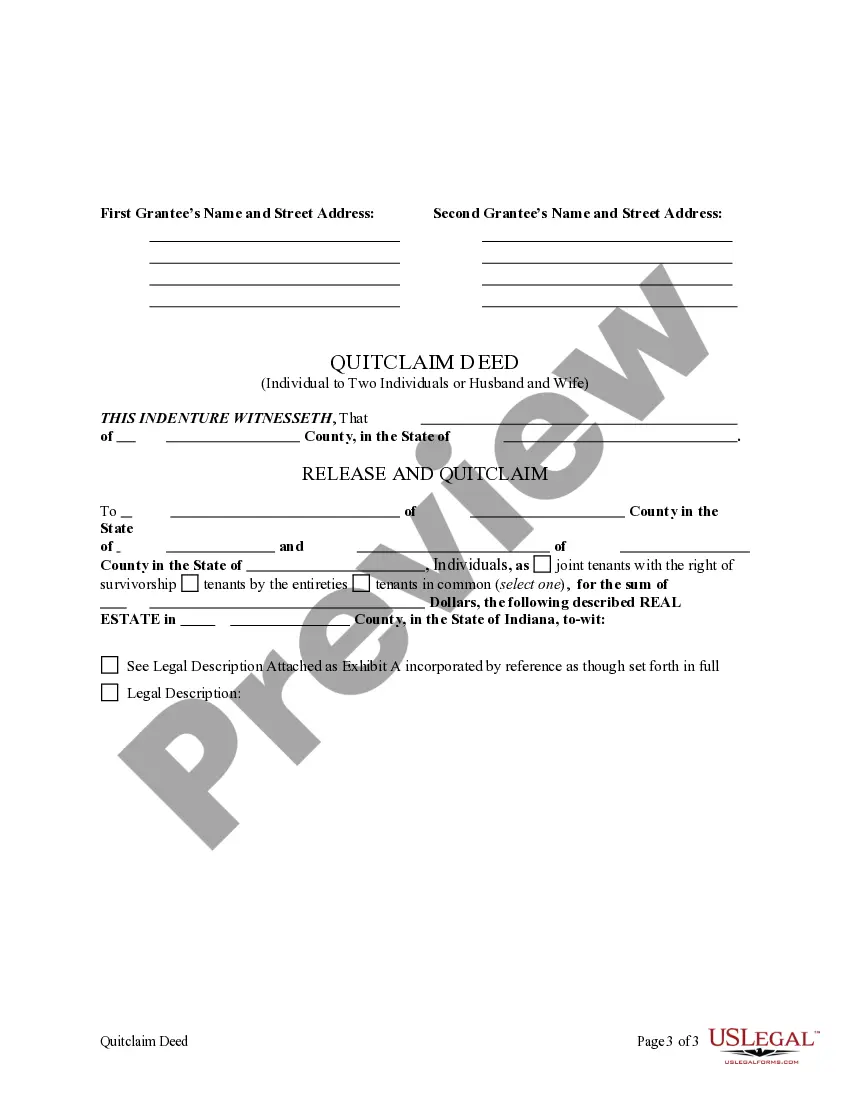
- Details of the Grantees, who may be a husband and wife or two individuals.
- Description of the property being conveyed.
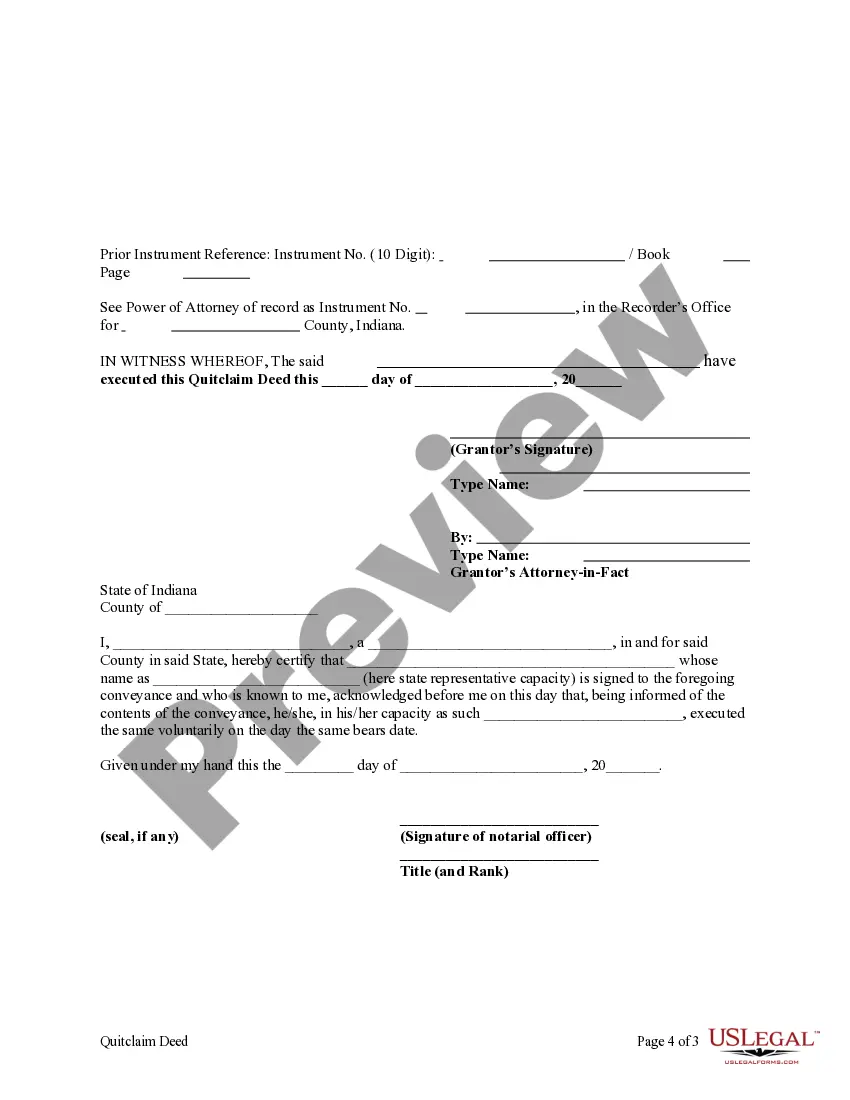
- Reference to the recorded power of attorney used by the Grantor.
- Signature space for the Grantor or their attorney in fact.
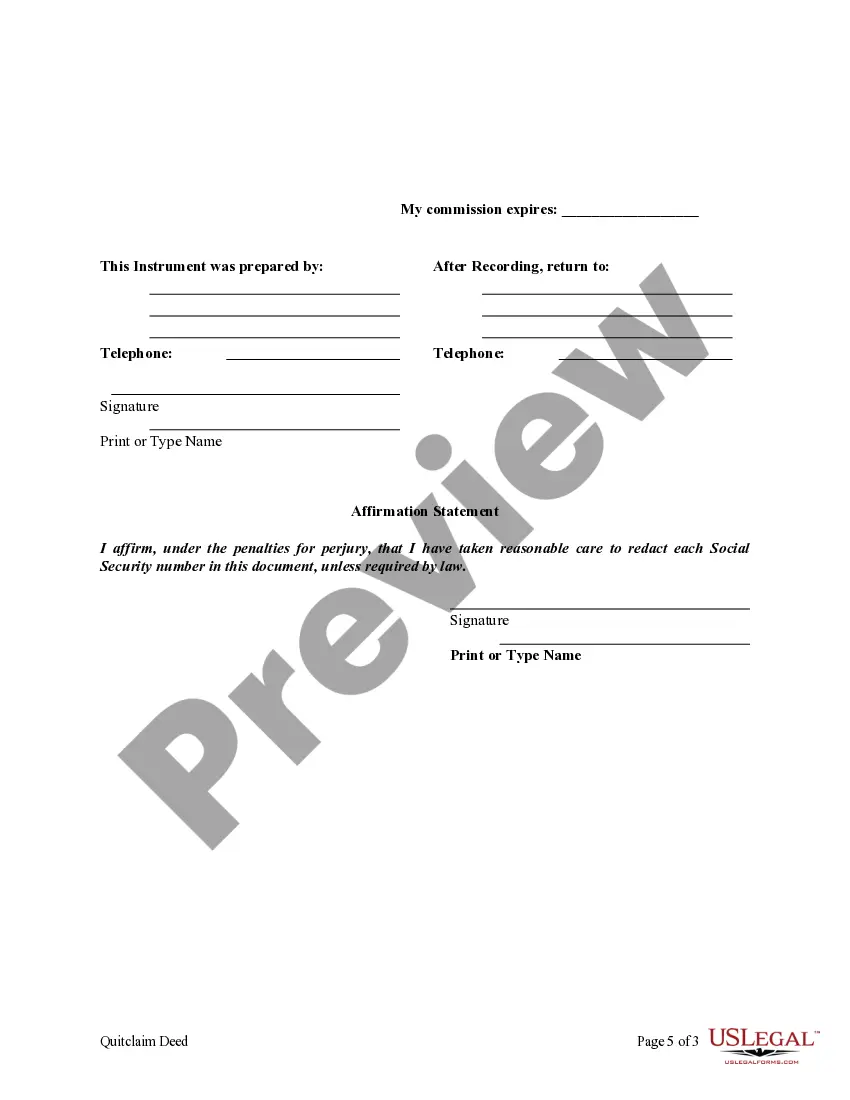
- Notarization section, if applicable, to validate the transfer.



Situations where this form applies
This form is necessary when an individual wishes to transfer real estate ownership to a husband and wife or two individuals, especially when the grantor is not present to complete the transaction themselves and is using an attorney in fact. Common situations include family property transfers, estate planning, or when one spouse wishes to convey their interest in property solely owned by them.
Intended users of this form
- Individuals who want to transfer property ownership but are unable to do so personally.
- Attorneys in fact acting on behalf of a property owner through a valid power of attorney.
- Husbands and wives receiving property as grantees in the transaction.
- Anyone needing a simplified method to convey property without warranty of title.
Instructions for completing this form
- Identify the Grantor and ensure their attorney in fact is correctly listed.
- Enter the names of the Grantees, either as husband and wife or two individuals.
- Provide a detailed description of the property, including legal description.
- Reference the power of attorney by including the recorded Book and Page or Instrument Number.
- Sign and date where indicated, ensuring all signatures are obtained.
- Prepare an envelope for the recorder's use to return the deed after submission.
Notarization guidance
This document requires notarization to meet legal standards. US Legal Forms provides secure online notarization powered by Notarize, allowing you to complete the process through a verified video call, available 24/7.
Get your form ready online
Our built-in tools help you complete, sign, share, and store your documents in one place.
Make edits, fill in missing information, and update formatting in US Legal Forms—just like you would in MS Word.
Download a copy, print it, send it by email, or mail it via USPS—whatever works best for your next step.
Sign and collect signatures with our SignNow integration. Send to multiple recipients, set reminders, and more. Go Premium to unlock E-Sign.
If this form requires notarization, complete it online through a secure video call—no need to meet a notary in person or wait for an appointment.
We protect your documents and personal data by following strict security and privacy standards.

Make edits, fill in missing information, and update formatting in US Legal Forms—just like you would in MS Word.

Download a copy, print it, send it by email, or mail it via USPS—whatever works best for your next step.

Sign and collect signatures with our SignNow integration. Send to multiple recipients, set reminders, and more. Go Premium to unlock E-Sign.

If this form requires notarization, complete it online through a secure video call—no need to meet a notary in person or wait for an appointment.

We protect your documents and personal data by following strict security and privacy standards.
Avoid these common issues
- Failing to properly fill in the details of the property being conveyed.
- Not recording the power of attorney, which is required when using an attorney in fact.
- Omitting the necessary signatures or failing to have the document notarized if required.
- Providing incomplete or inaccurate information about the parties involved.
Why complete this form online
- Convenience of completing the form anytime from your computer or mobile device.
- Editability allows you to correct any errors easily before finalizing the document.
- Reliable templates created by licensed attorneys to ensure legal compliance.
Looking for another form?

Form popularity
FAQ
The purpose of a quitclaim deed in Indiana is to facilitate the transfer of property ownership with clarity and efficiency. This legal document allows an individual grantor to convey their rights to a husband and wife or two individuals as grantees without guaranteeing that they hold clear title. Using a quitclaim deed can simplify transactions, especially in familial situations, making it an essential tool in real estate dealings.
Write the Deed Fill out the quit claim deed form, which can be obtained online, or write your own using the form as a guide. The person giving up the interest in the property is the grantor, and the person receiving the interest is the grantee.
Documents must be notarized. Documents executed or acknowledged in Indiana must include a statement that includes: The names of all those signing or serving as a witness on the document must be identical throughout the document and must be printed or typewritten under each signature.
Adding someone to your house deed requires the filing of a legal form known as a quitclaim deed. When executed and notarized, the quitclaim deed legally overrides the current deed to your home. By filing the quitclaim deed, you can add someone to the title of your home, in effect transferring a share of ownership.
The Quit Claim Deed form uses the terms of Grantor (Seller or Owner of said property) and Grantee (Buyer of said property) for the two parties involved. First, the parties must fill in the date. Then, write in the name of the county and state in which the property is located.
A PoA is not an instrument of transfer in regard to any right, title or interest in an immovable property, a three-judge bench, headed by justice RV Raveendran, said, adding that property can legally be transferred only through a registered sale deed.
Another thing to remember when consider is that if you don't have your name on the mortgage or on the deeds of the property then your partner could kick you out of the house and you have no legal rights here.If you are an unmarried partner whose name is not on the mortgage then your rights will be very limited.
It is possible to be named on the title deed of a home without being on the mortgage. However, doing so assumes risks of ownership because the title is not free and clear of liens and possible other encumbrances.If a mortgage exists, it's best to work with the lender to make sure everyone on the title is protected.
A power of attorney enables an agent (also called the attorney-in-fact) to conduct transactions on another person's behalf.If so, a spouse, relative or friend with POA can sign a deed or other real estate documents.
Step 1: Find your IN quitclaim deed form. Step 2: Gather the information you need. Step 3: Enter the information about the parties. Step 4: Enter the legal description of the property. Step 5: Have the grantor sign the document in the presence of a Notary Public.