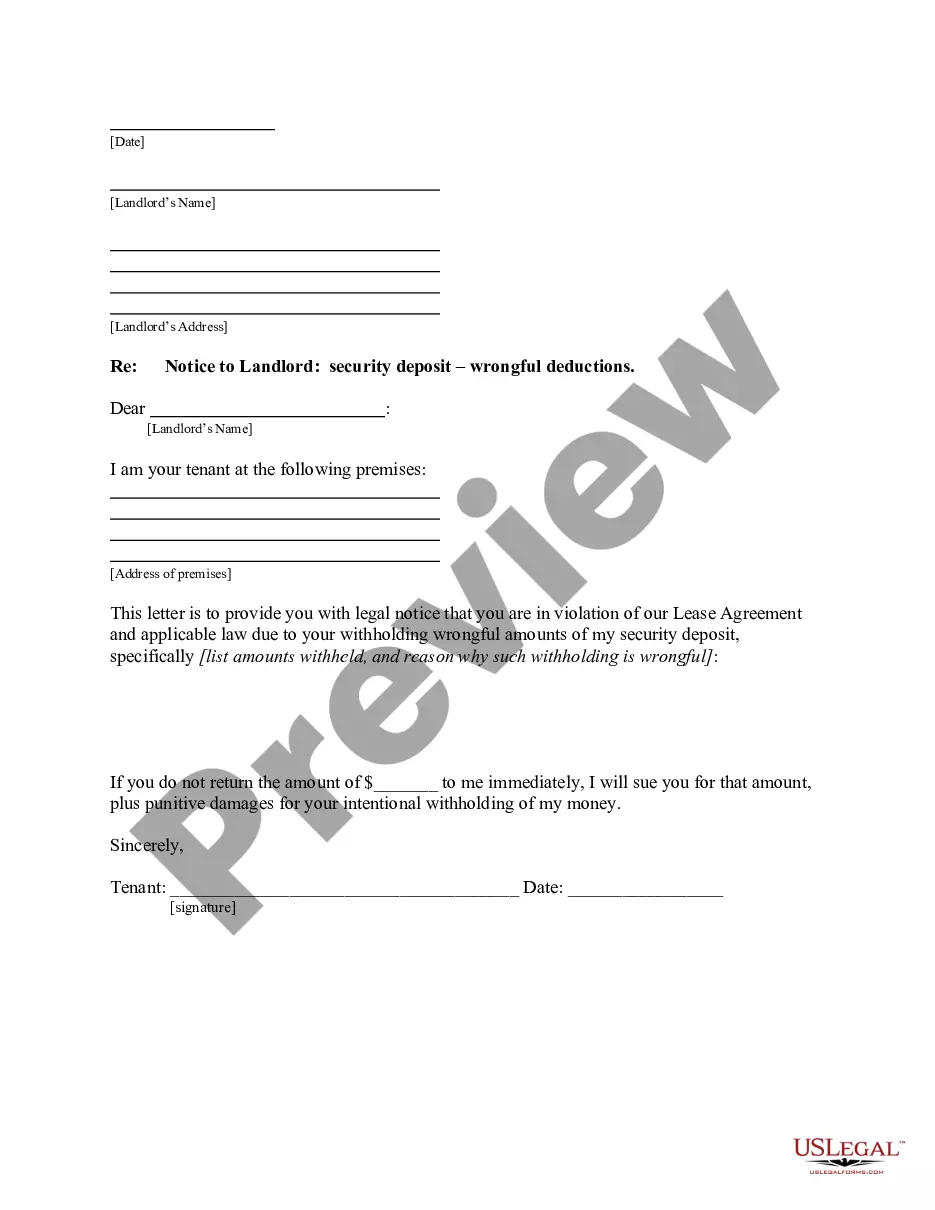
Indiana Warranty Deed - Two Individuals to One Individual
What is this form?
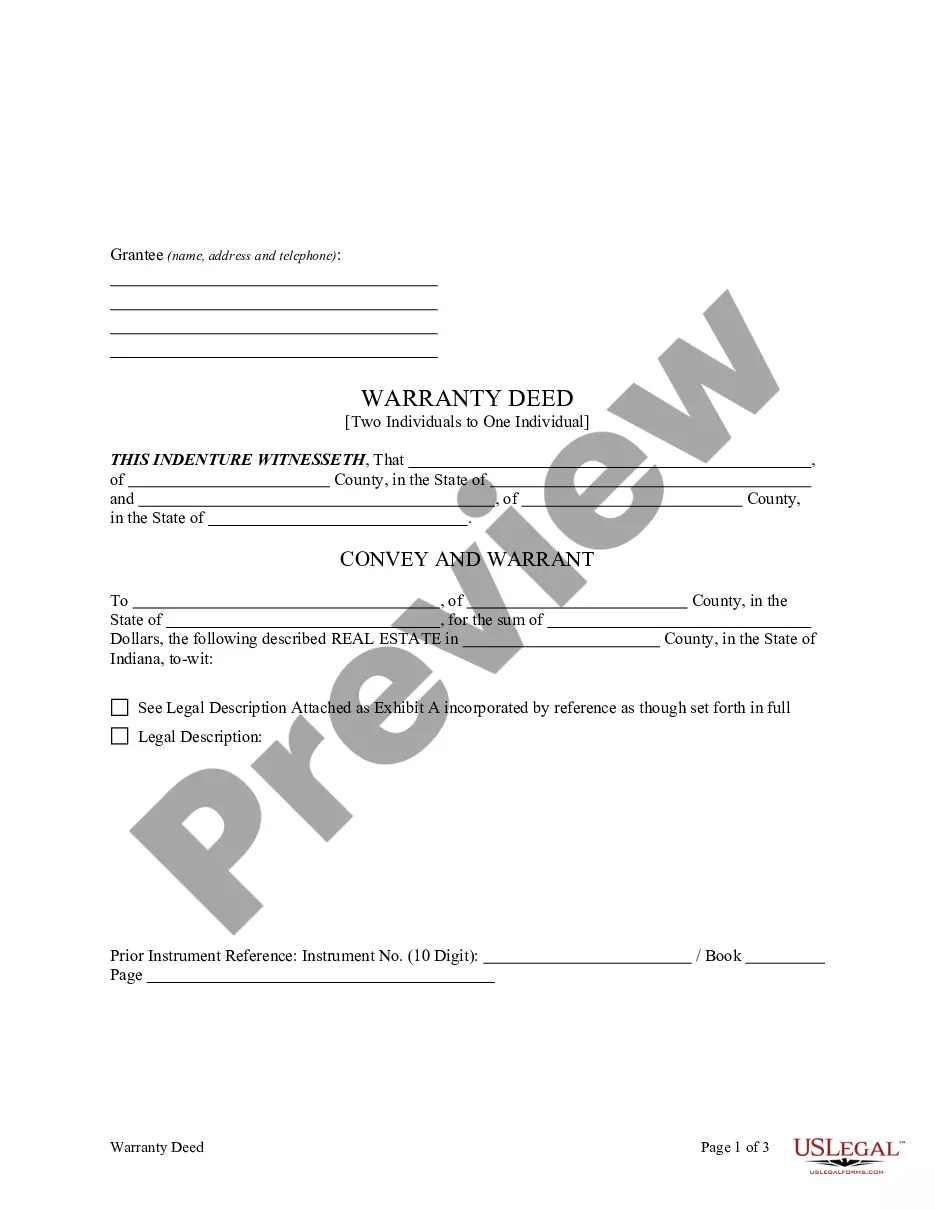
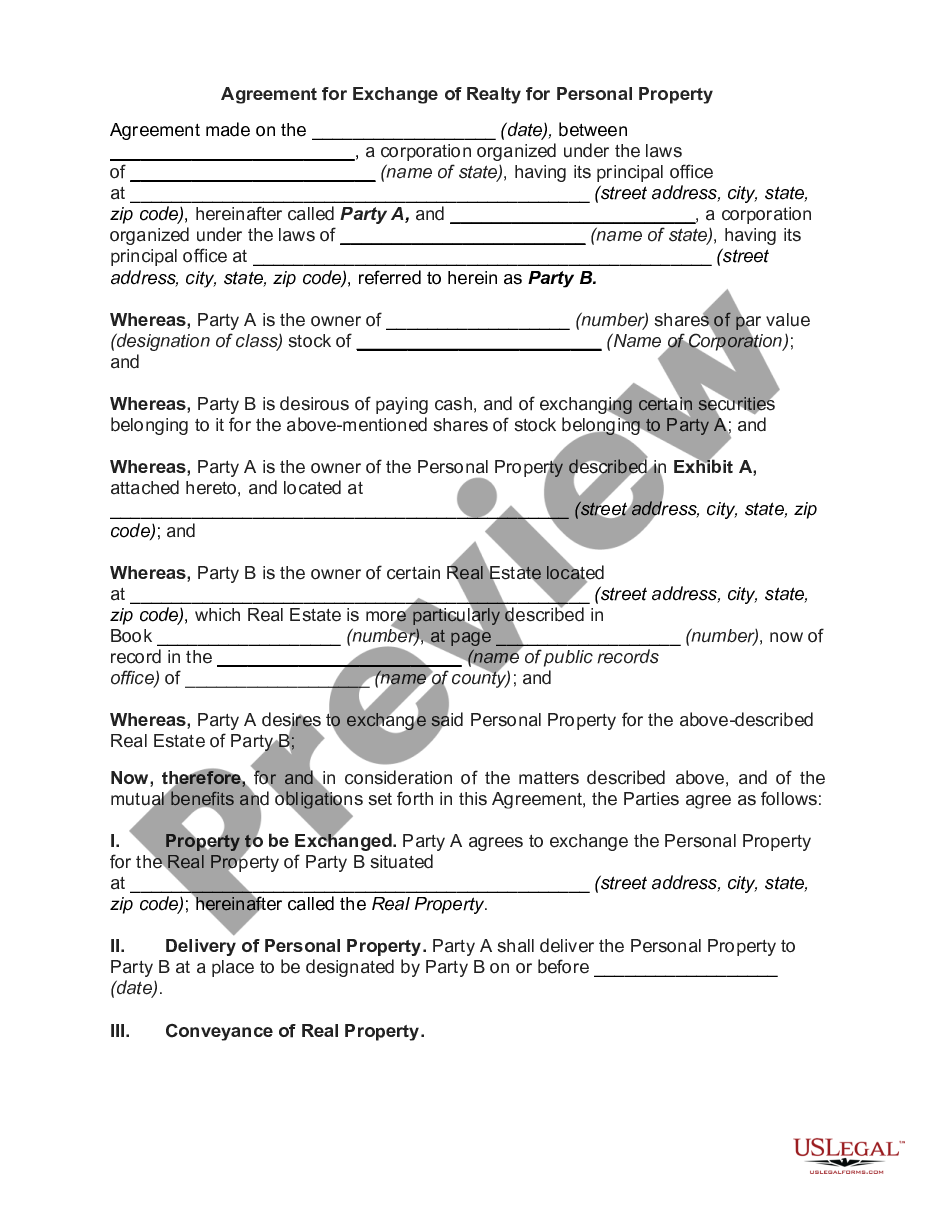
A Warranty Deed - Two Individuals to One Individual is a legal document where two grantors transfer property ownership to a single grantee. This form serves to convey and warrant the described property, ensuring that the grantee receives clear title. It is different from other deed types, such as quitclaim deeds, due to its guarantees against future claims on the property.
Key components of this form
- Identification of grantors and grantee
- Description of the property being transferred
- Warranties and covenants provided by the grantors
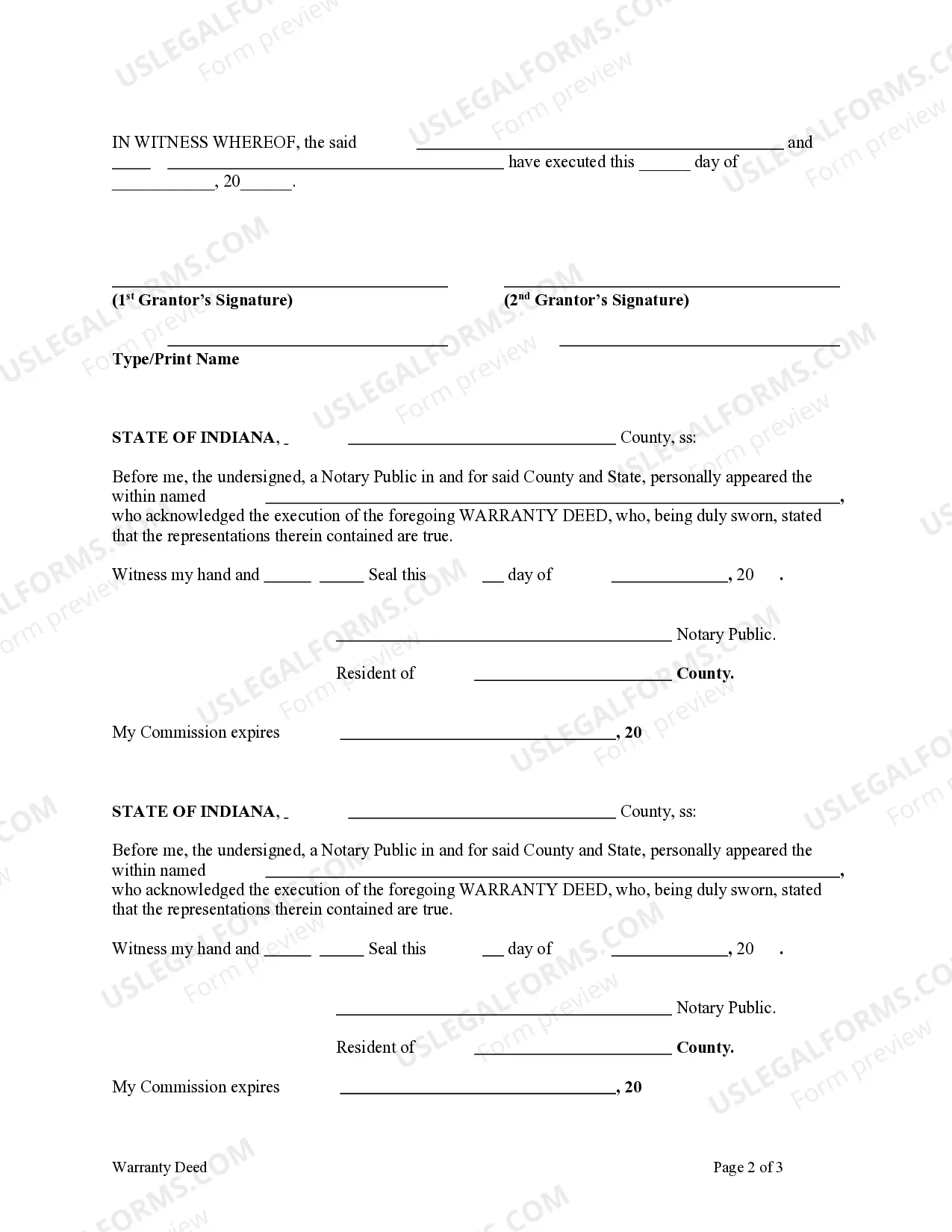
- Signatures of both grantors and acknowledgment by a notary (if applicable)
- Date of transfer






Common use cases
This form is necessary when two individuals wish to legally transfer property they own to another individual. It is commonly used in situations such as family property transfers, divorce settlements, or joint ownership dissolution where one party wishes to take full ownership of the property.
Who this form is for
This form is intended for:
- Two owners of property wanting to convey their interest to one recipient
- Individuals needing to ensure clear title transfer for legal or financial reasons
- Anyone involved in an estate settlement or divorce where property ownership is changing
How to prepare this document
To complete this Warranty Deed, follow these steps:
- Identify all parties involved: the two grantors and the single grantee.
- Clearly describe the property being transferred, including legal descriptions if necessary.
- Specify the covenants and warranties being made by the grantors.
- Both grantors must sign the deed in the presence of a notary (if required in your state).
- Fill in the date of the transfer.
Notarization requirements for this form
This form does not typically require notarization unless specified by local law. However, having the deed notarized can help ensure its legal validity and facilitate smooth property transfer processes.
Get your form ready online
Our built-in tools help you complete, sign, share, and store your documents in one place.
Make edits, fill in missing information, and update formatting in US Legal Forms—just like you would in MS Word.
Download a copy, print it, send it by email, or mail it via USPS—whatever works best for your next step.
Sign and collect signatures with our SignNow integration. Send to multiple recipients, set reminders, and more. Go Premium to unlock E-Sign.
If this form requires notarization, complete it online through a secure video call—no need to meet a notary in person or wait for an appointment.
We protect your documents and personal data by following strict security and privacy standards.

Make edits, fill in missing information, and update formatting in US Legal Forms—just like you would in MS Word.

Download a copy, print it, send it by email, or mail it via USPS—whatever works best for your next step.

Sign and collect signatures with our SignNow integration. Send to multiple recipients, set reminders, and more. Go Premium to unlock E-Sign.

If this form requires notarization, complete it online through a secure video call—no need to meet a notary in person or wait for an appointment.

We protect your documents and personal data by following strict security and privacy standards.
Mistakes to watch out for
- Failing to provide a clear legal description of the property.
- Not having the document notarized when required.
- Omitting signatures from either grantor.
- Using incorrect names that do not match official documents.
Why complete this form online
- Convenient online access to legal form templates created by licensed attorneys.
- Editable forms allow users to tailor the document to their specific needs.
- Immediate download for quick usage without waiting for physical delivery.
- Access to a library of legal resources for additional guidance.
Legal use & context
- This deed serves to protect the rights of the grantee and is enforceable under state law.
- Limitations may arise if there are outstanding liens or encumbrances not disclosed in the deed.
Main things to remember
- A Warranty Deed is used to transfer property ownership from two individuals to one.
- Clear legal descriptions and proper signatures are essential for validity.
- Online access to this form simplifies the process of legal document creation.
- Consider local regulations regarding notarization requirements.
Looking for another form?
Form popularity
FAQ
It usually takes four to six weeks to complete the legal processes involved in the transfer of title.
Discuss property ownership interests. Access a copy of your title deed. Complete, review and sign the quitclaim or warranty form. Submit the quitclaim or warranty form. Request a certified copy of your quitclaim or warranty deed.
A quitclaim deed will remove the out-spouse (or departing spouse) from the title to the property, effectively relinquishing their equity or ownership in the home. The execution of a quitclaim deed is typically a requirement of a divorce settlement in order to complete the division of assets.
Special warranties allow the transfer of property title between seller and buyer. The purchase of title insurance can mitigate the risk of prior claims to the special warranty deed.
The only way to forcibly change the ownership status is through a legal action and the resultant court order. However, if an owner chooses to be removed from the deed, it is simply a matter of preparing a new deed transferring that owner's interest in the property.
In most states you can file a disclaimer or deed of disclaimer that says specifically you were placed in title without your knowledge or consent and disclaim the deed.
Adding someone to your house deed requires the filing of a legal form known as a quitclaim deed. When executed and notarized, the quitclaim deed legally overrides the current deed to your home. By filing the quitclaim deed, you can add someone to the title of your home, in effect transferring a share of ownership.
It will depend what state the property is in. For example, the minimum fee payable when changing the title to have someone removed from a property title in NSW is $133.48. This fee must be paid to the NSW Government Land & Property Information Department.