Indiana Discovery Interrogatories from Defendant to Plaintiff with Production Requests
Understanding this form
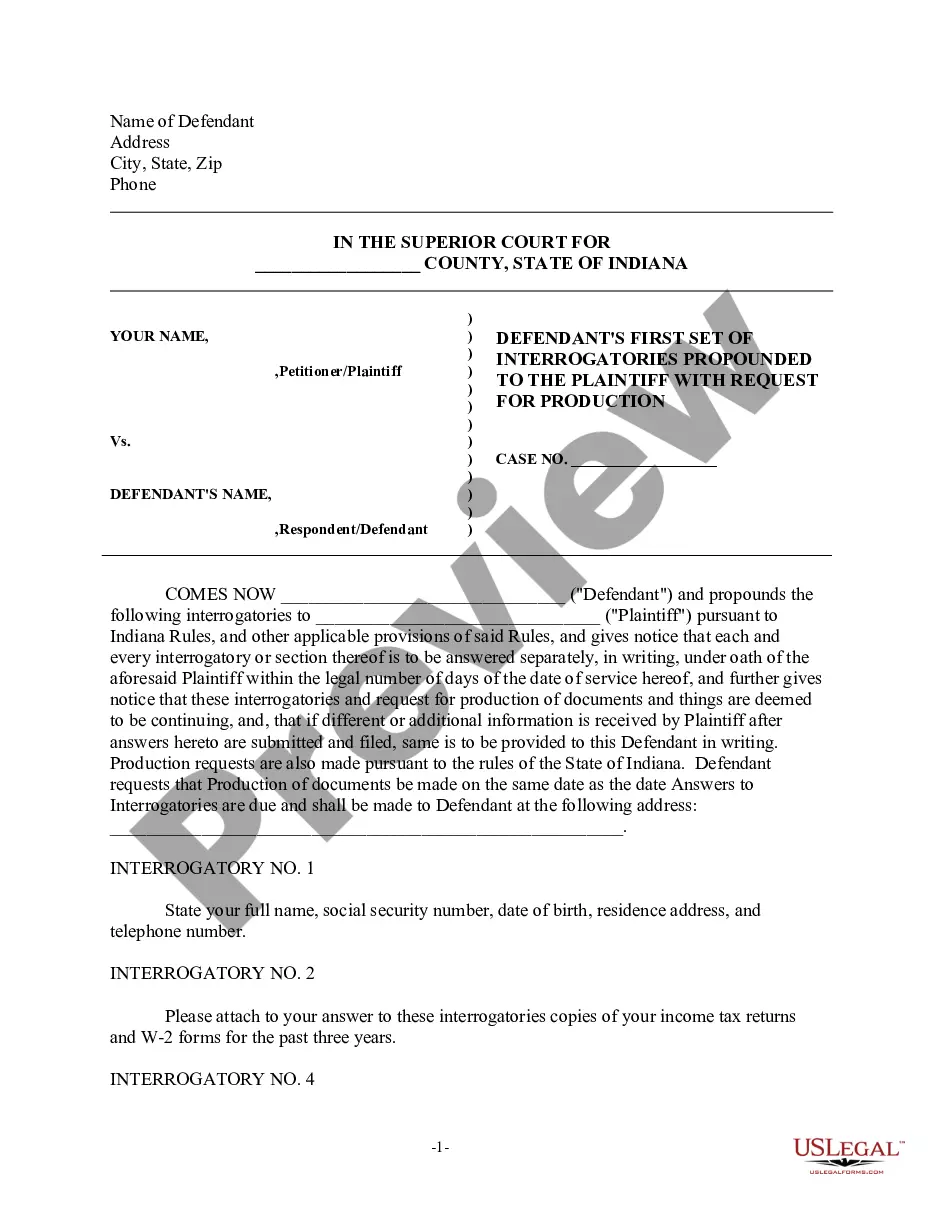
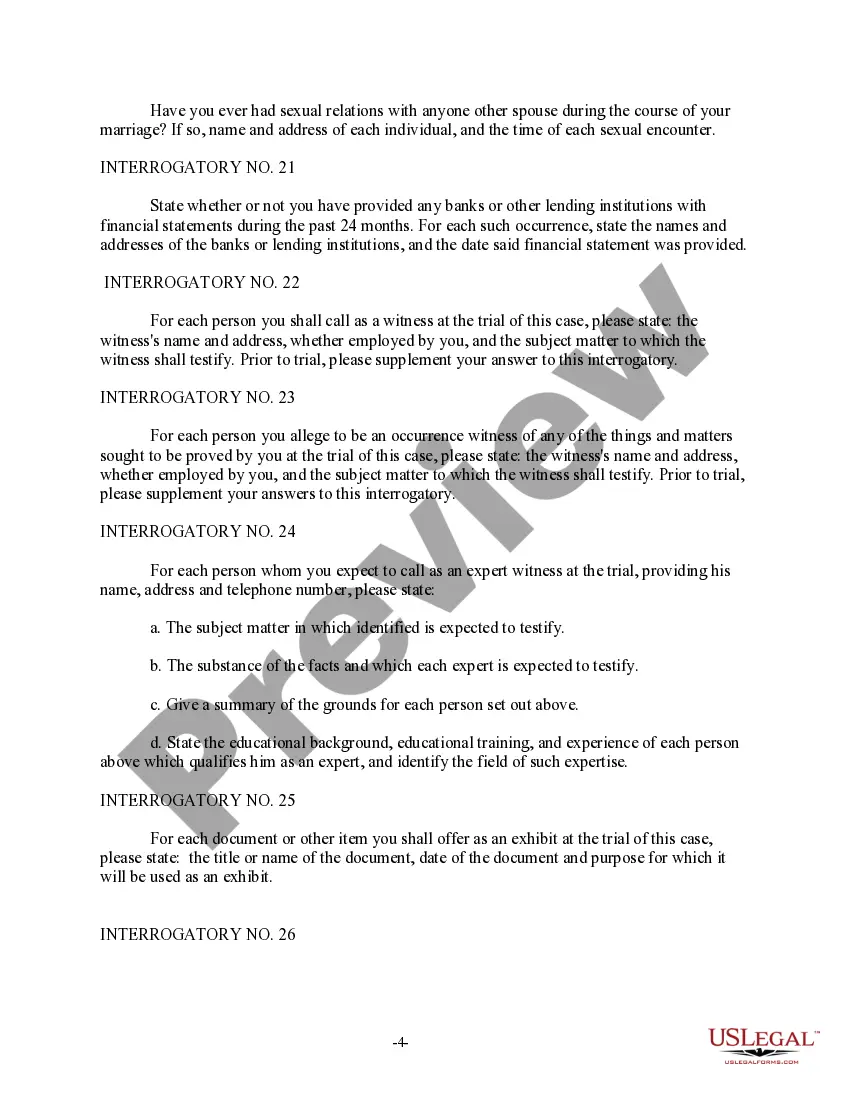
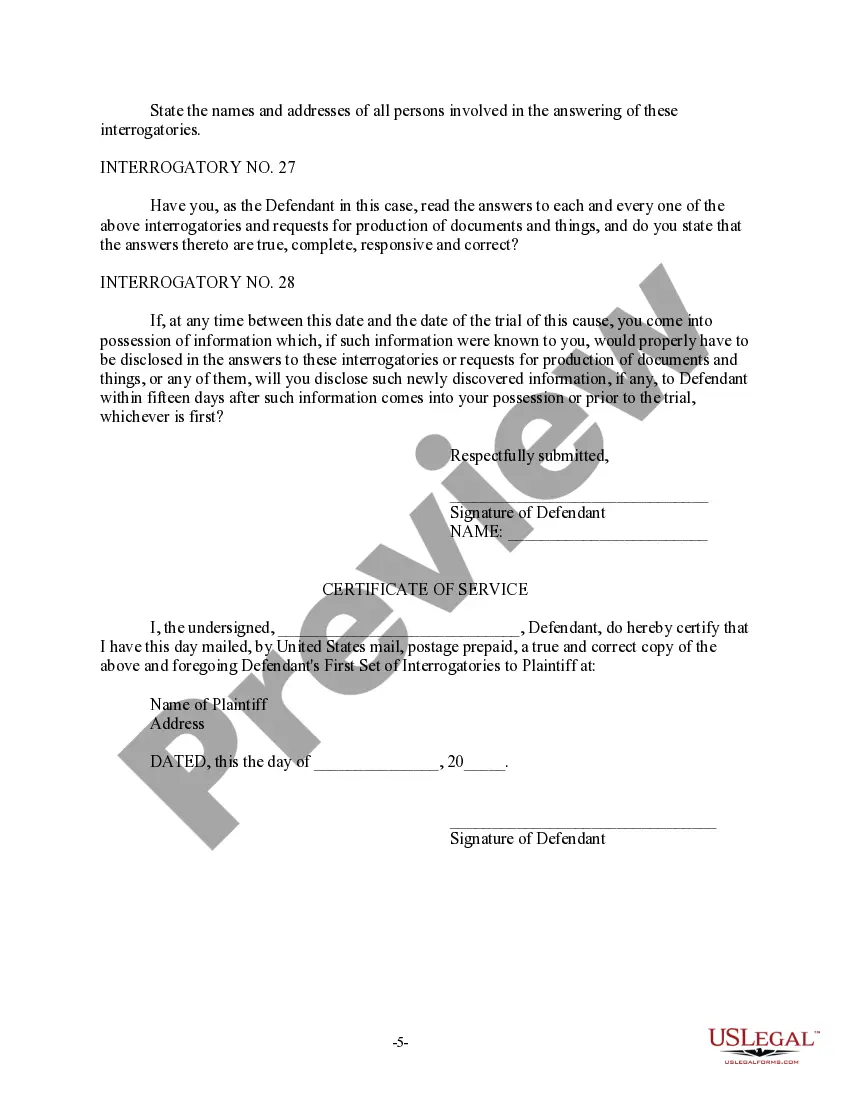
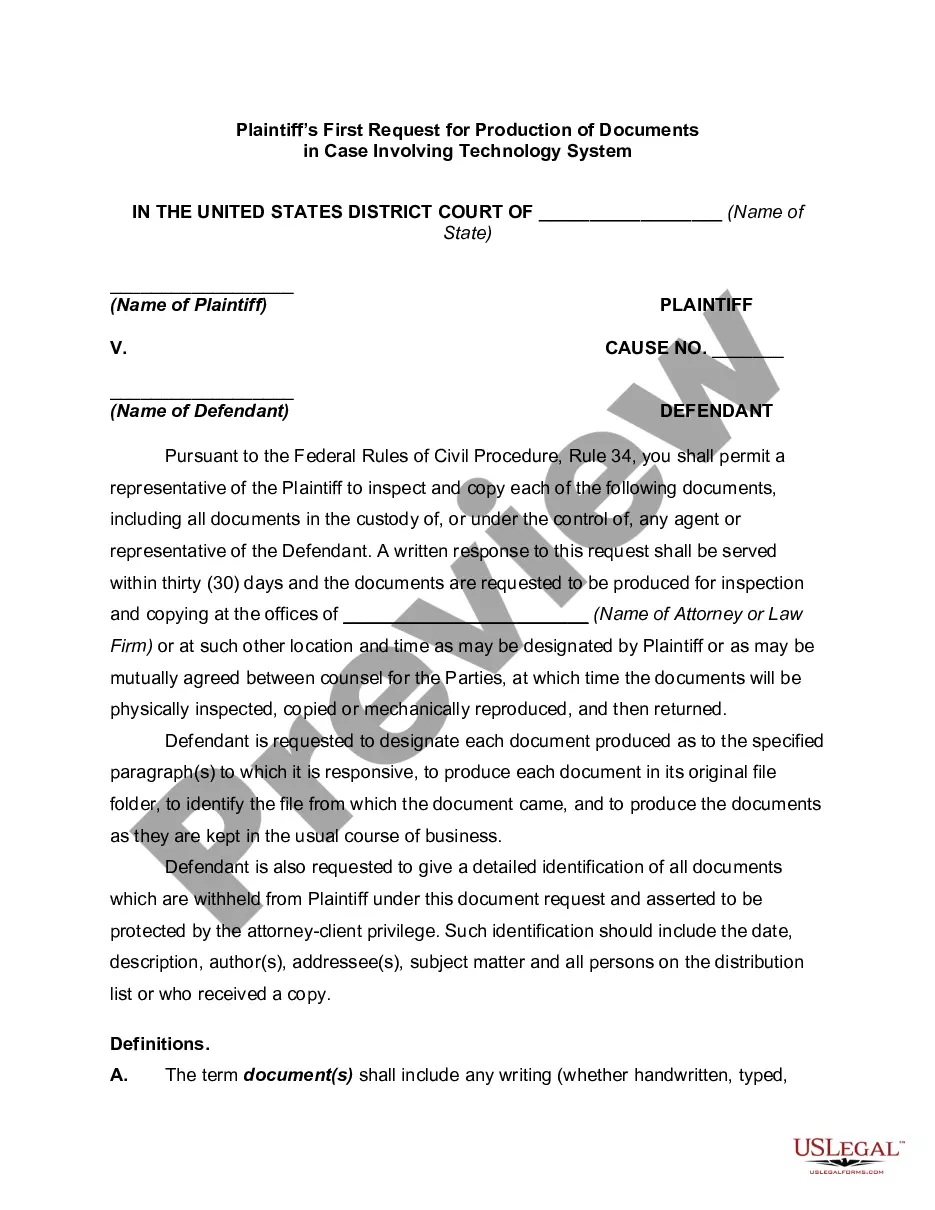
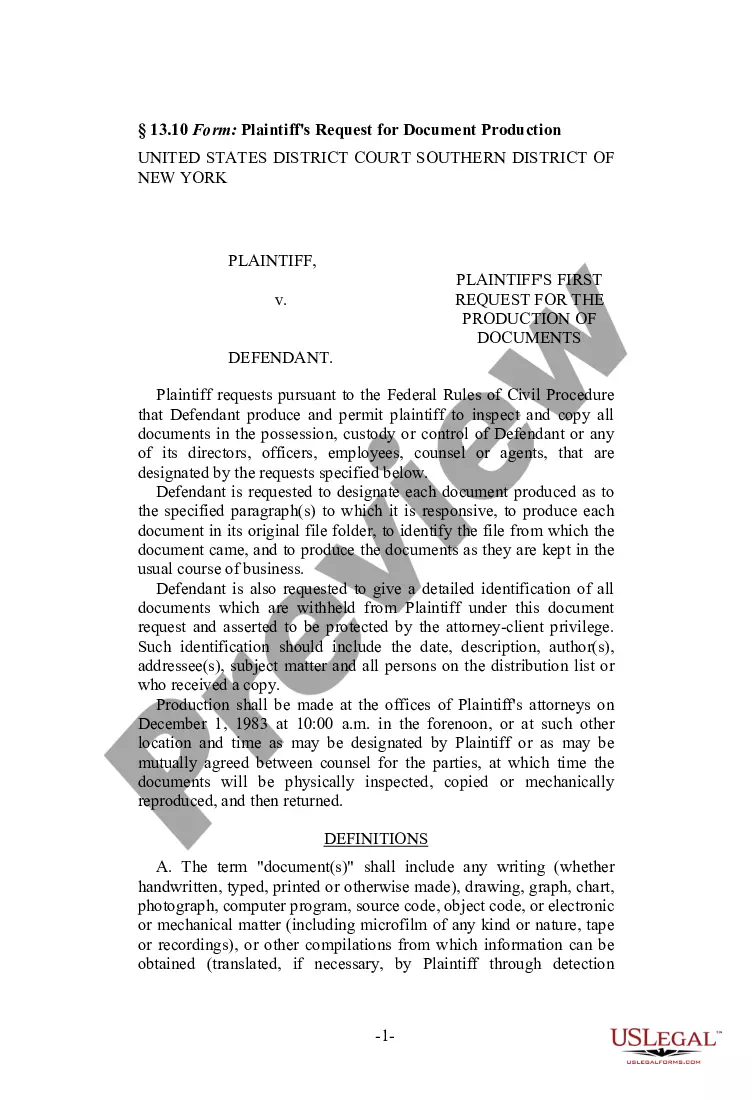
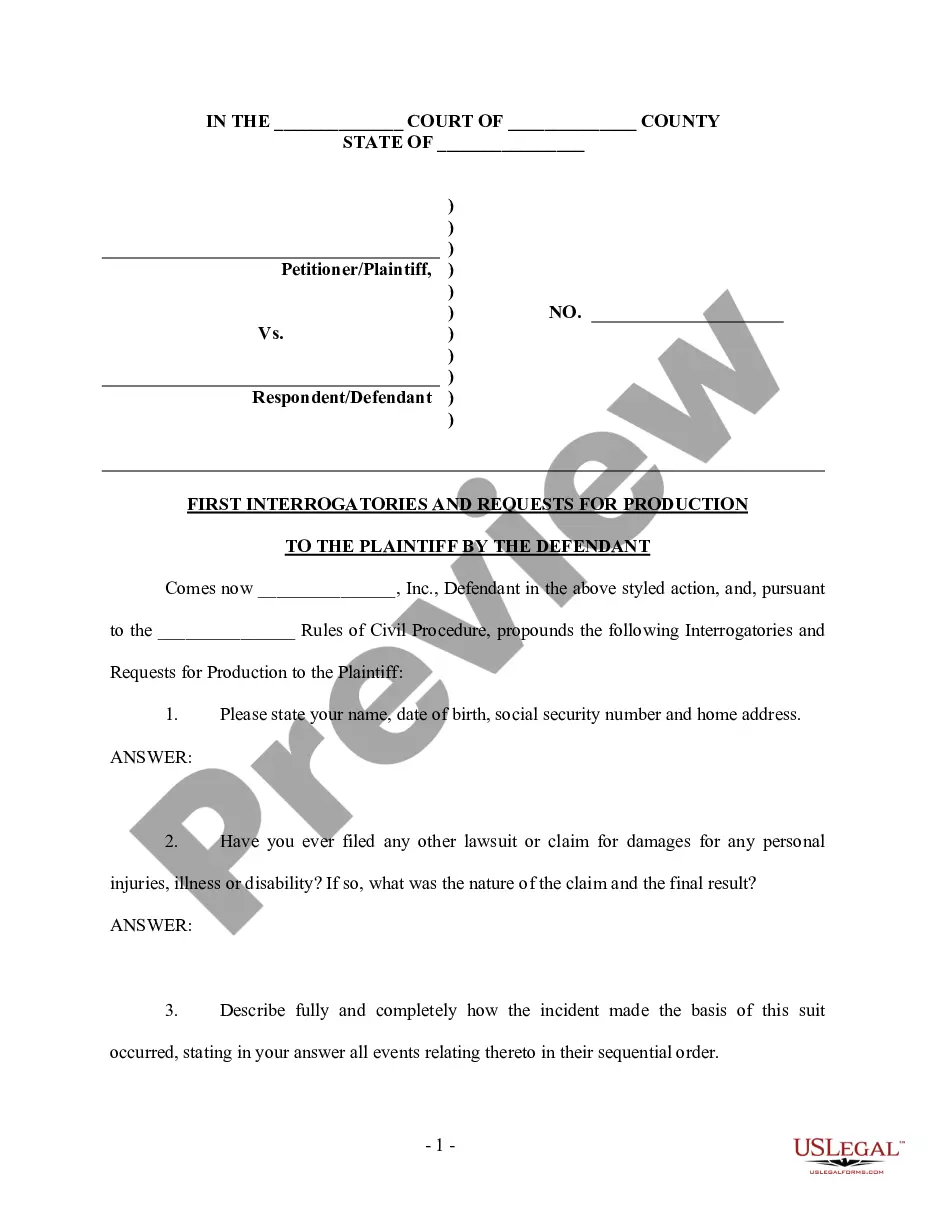
This Discovery Interrogatories from Defendant to Plaintiff with Production Requests form is designed for the defendant in a divorce action to gather crucial information from the plaintiff. This legal document includes a series of questions (interrogatories) and requests for the production of documents, allowing the defendant to clarify facts and obtain evidence necessary for the case. Unlike other legal forms, this document specifically targets discovery in divorce proceedings under Indiana law, enabling both parties to present their respective positions effectively.
Key parts of this document
- Identification of parties involved, including petitioner and respondent.
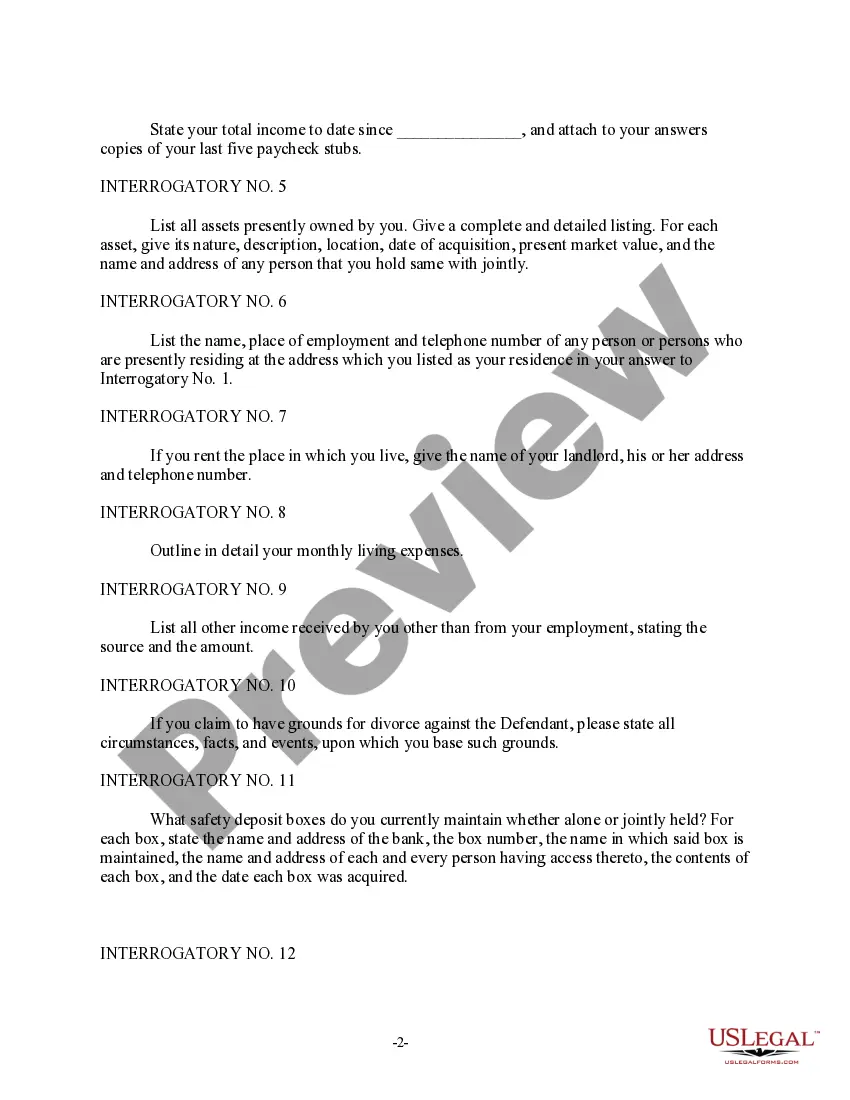
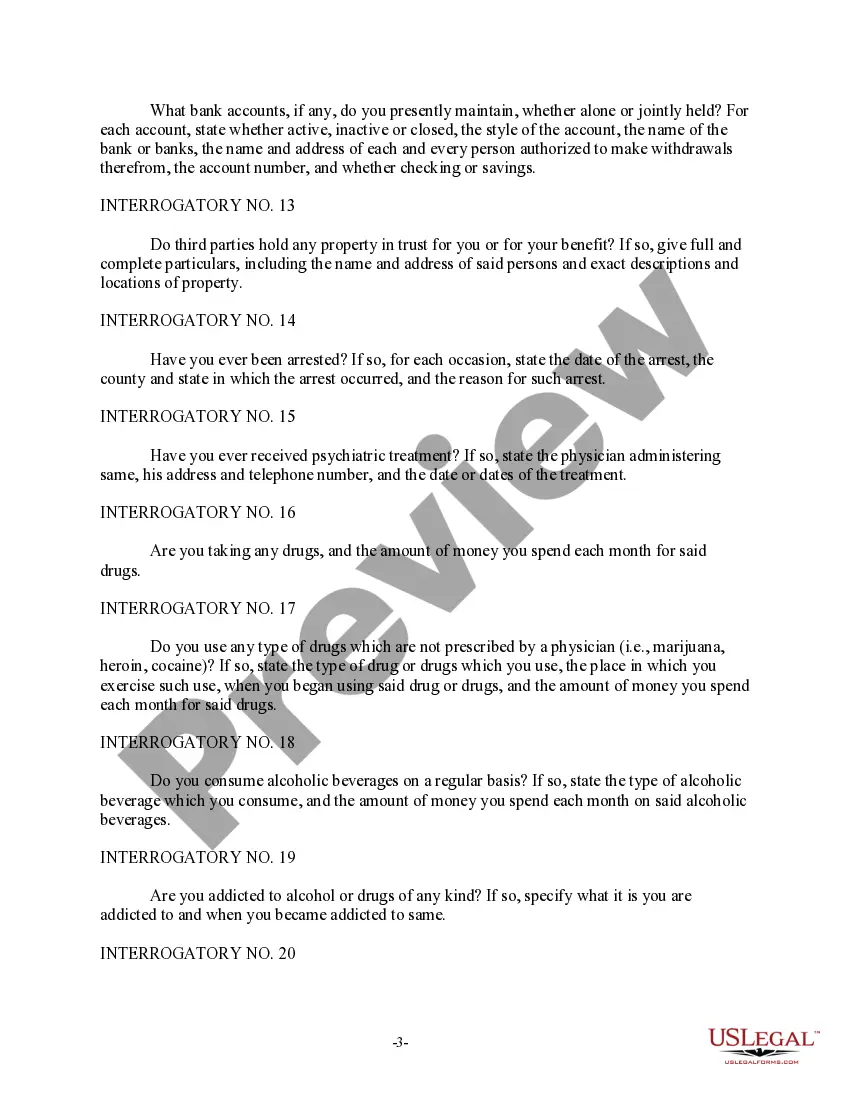
- A series of interrogatories requiring detailed written responses under oath.
- Requests for the production of relevant documents and financial information.
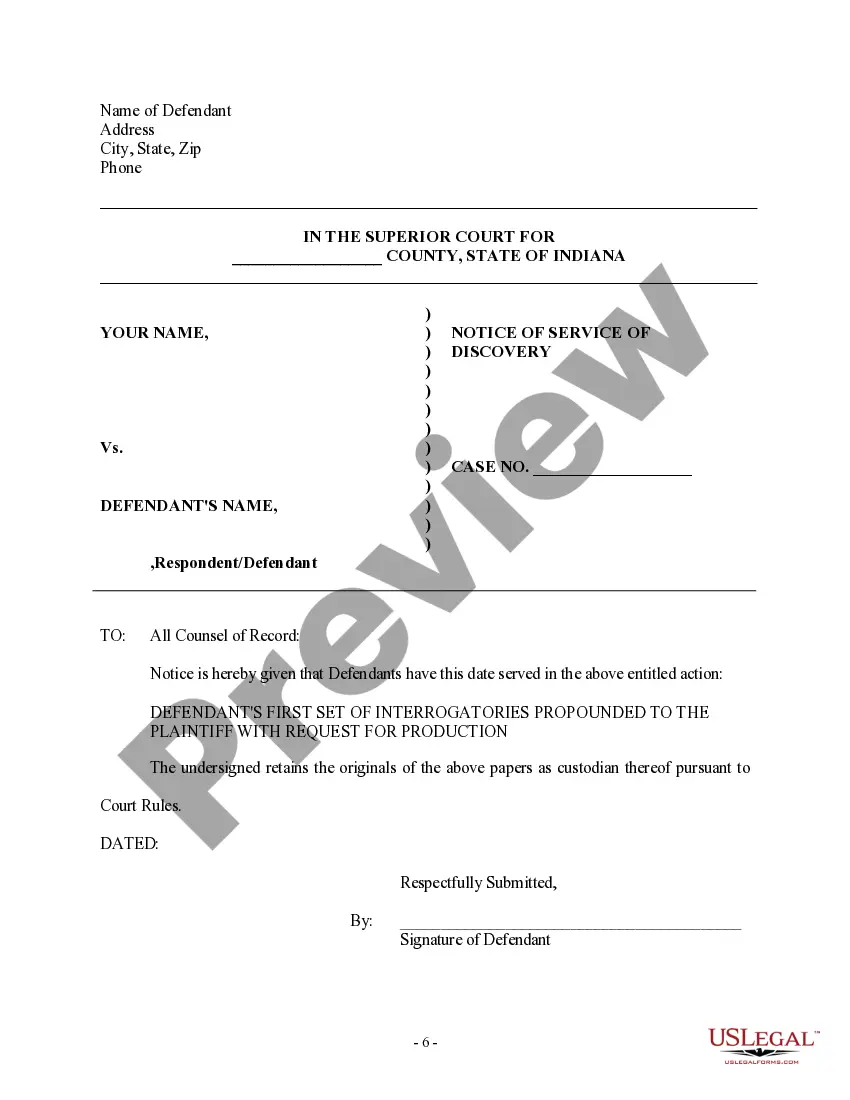
- Notice of filing and service to ensure all parties are properly informed.
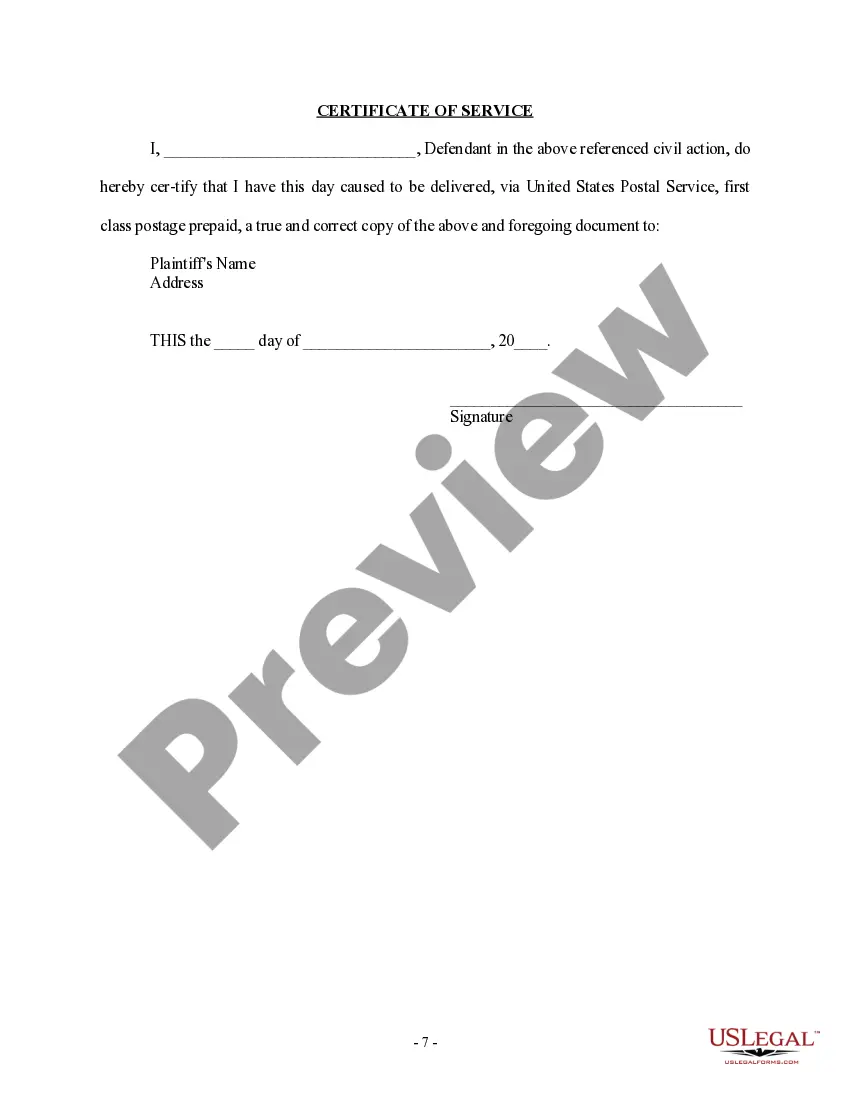
- Certificate of service for documentation of compliance with legal requirements.

When to use this document
This form is applicable in divorce cases where the defendant needs to request critical information from the plaintiff. It can be used when the defendant is preparing for court proceedings and requires documentation related to the plaintiff's finances, assets, living situation, and any grounds for the divorce. Utilizing this form can help clarify issues in dispute and gather evidence to support legal arguments during the divorce process.
Who can use this document
- Defendants in divorce proceedings seeking information from plaintiffs.
- Individuals who have legal representation or are proceeding pro se (representing themselves).
- Parties who need to establish transparency and document facts related to the divorce case.
Instructions for completing this form
- Enter the names and addresses of both parties involved in the divorce case.
- Respond to each interrogatory with complete and accurate information, ensuring all responses are under oath.
- Attach relevant documents requested in the production request, such as financial statements or tax returns.
- Provide the address to where the documents can be sent.
- Sign the form and include a certificate of service to confirm that the completed form has been properly delivered to the plaintiff.
Is notarization required?
Notarization is generally not required for this form. However, certain states or situations might demand it. You can complete notarization online through US Legal Forms, powered by Notarize, using a verified video call available anytime.
Get your form ready online
Our built-in tools help you complete, sign, share, and store your documents in one place.
Make edits, fill in missing information, and update formatting in US Legal Forms—just like you would in MS Word.
Download a copy, print it, send it by email, or mail it via USPS—whatever works best for your next step.
Sign and collect signatures with our SignNow integration. Send to multiple recipients, set reminders, and more. Go Premium to unlock E-Sign.
If this form requires notarization, complete it online through a secure video call—no need to meet a notary in person or wait for an appointment.
We protect your documents and personal data by following strict security and privacy standards.

Make edits, fill in missing information, and update formatting in US Legal Forms—just like you would in MS Word.

Download a copy, print it, send it by email, or mail it via USPS—whatever works best for your next step.

Sign and collect signatures with our SignNow integration. Send to multiple recipients, set reminders, and more. Go Premium to unlock E-Sign.

If this form requires notarization, complete it online through a secure video call—no need to meet a notary in person or wait for an appointment.

We protect your documents and personal data by following strict security and privacy standards.
Common mistakes to avoid
- Failing to answer all interrogatories completely.
- Not attaching requested documents or providing insufficient documentation.
- Missing deadlines for submitting responses to interrogatories.
- Not keeping copies of submitted forms for personal records.
Why use this form online
- Convenience of accessing and completing the form from home.
- Editability allows for personalization based on unique case details.
- Instant availability of professionally drafted legal content.
- Access to updates and legal guidance to ensure compliance.
Legal use & context
This form serves as an important tool in divorce proceedings, ensuring that both parties can gather necessary information and evidence. It is legally binding and must be completed accurately to be enforceable in court. Proper use of this form supports fair disclosure and helps prevent any party from withholding relevant information.
Key takeaways
- This form is vital for defendants in a divorce case to obtain necessary disclosure from the plaintiff.
- Timely and accurate responses ensure compliance with Indiana's discovery rules.
- Inadequacies in answering or delivering this form can adversely impact legal proceedings.
Looking for another form?
Form popularity
FAQ
Indiana Discovery Interrogatories From Defendant To Plaintiff With Production Requests is a discovery tool used in divorce actions that lets the defendant obtain sworn written answers to interrogatories and demand the production of documents from the plaintiff. It helps uncover finances, assets, living situation, and grounds for the divorce, and is used when preparing for court, filing, and serving the request under Indiana rules.
Interrogatories are written questions that require sworn written answers; requests for production ask for documents or tangible items. This form combines both, so a defendant in an Indiana divorce case can obtain facts and supporting records in a single discovery instrument.
Respondents provide detailed written answers under oath to each interrogatory and assemble the documents requested for production. The form requires proper notice of filing and service and a certificate of service to show compliance. Keep responses clear, complete, and organized, and preserve copies for your records.
Yes. In Indiana, requests for production are part of written discovery and ask for documents or tangible items. This form includes production requests alongside interrogatories, with responses provided in writing to help establish the record in the divorce case.
No; requests for production are separate discovery instruments that ask for documents, while interrogatories are questions seeking information. This form uses both tools together in Indiana divorce discovery, so parties respond to questions and provide the requested documents.
It combines sworn interrogatories with formal requests for production of documents in a single instrument tailored for Indiana divorce discovery. The form also includes party identification, a production-request section, and the required notice of filing, service, and a certificate of service to document compliance.