Idaho Notice to Beneficiaries of being Named in Will
Overview of this form
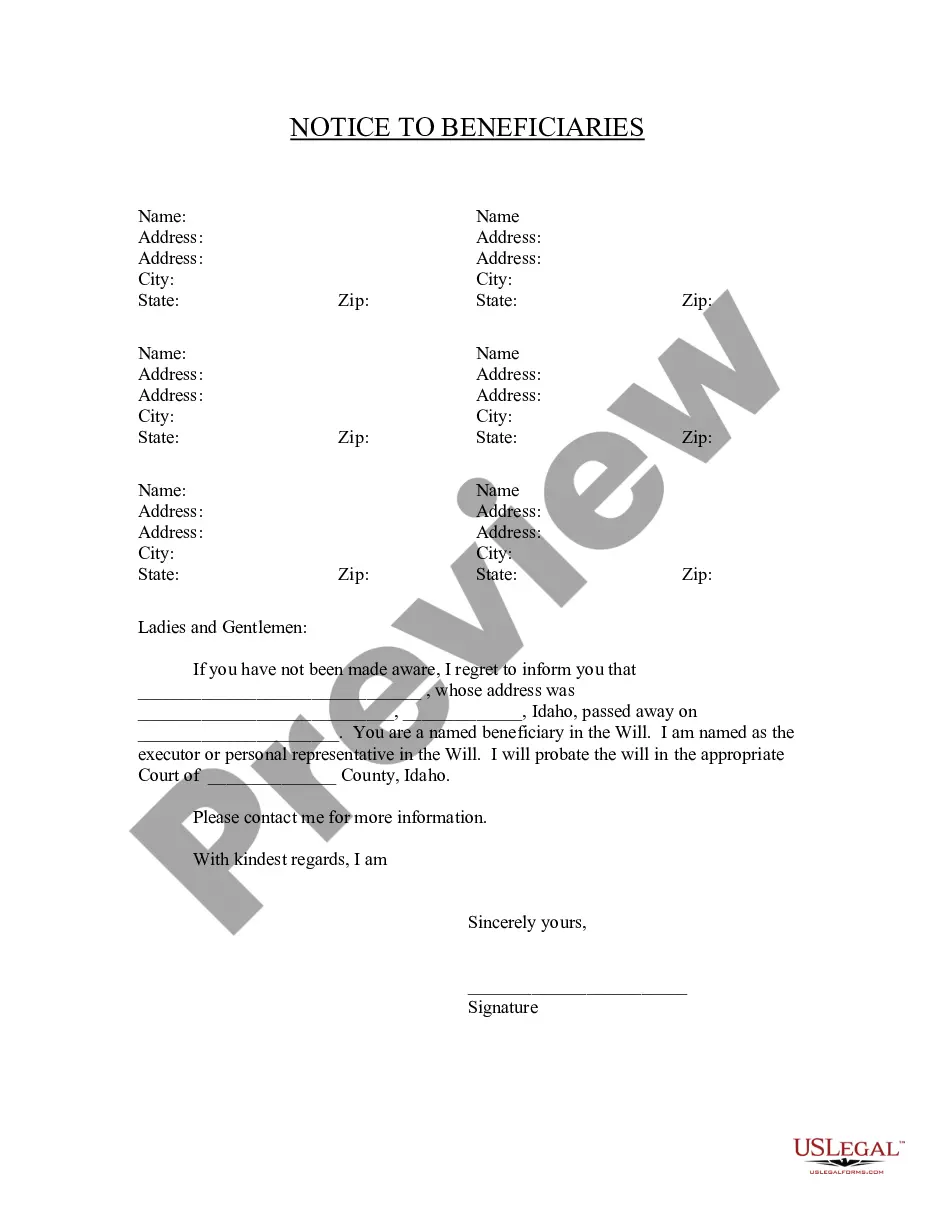
The Notice to Beneficiaries of being Named in Will form is a legal document that allows the executor or personal representative of a deceased person's estate to inform named beneficiaries of their inclusion in the Last Will and Testament. This form is essential for ensuring that beneficiaries are aware of their status and the probate process, distinguishing it from other notifications that might lack this specific information regarding their inheritance rights.
Main sections of this form
- Executor's or personal representative's name and contact information
- Details of the deceased, including name and address
- Date of the deceased's death
- Information regarding the probate court and county
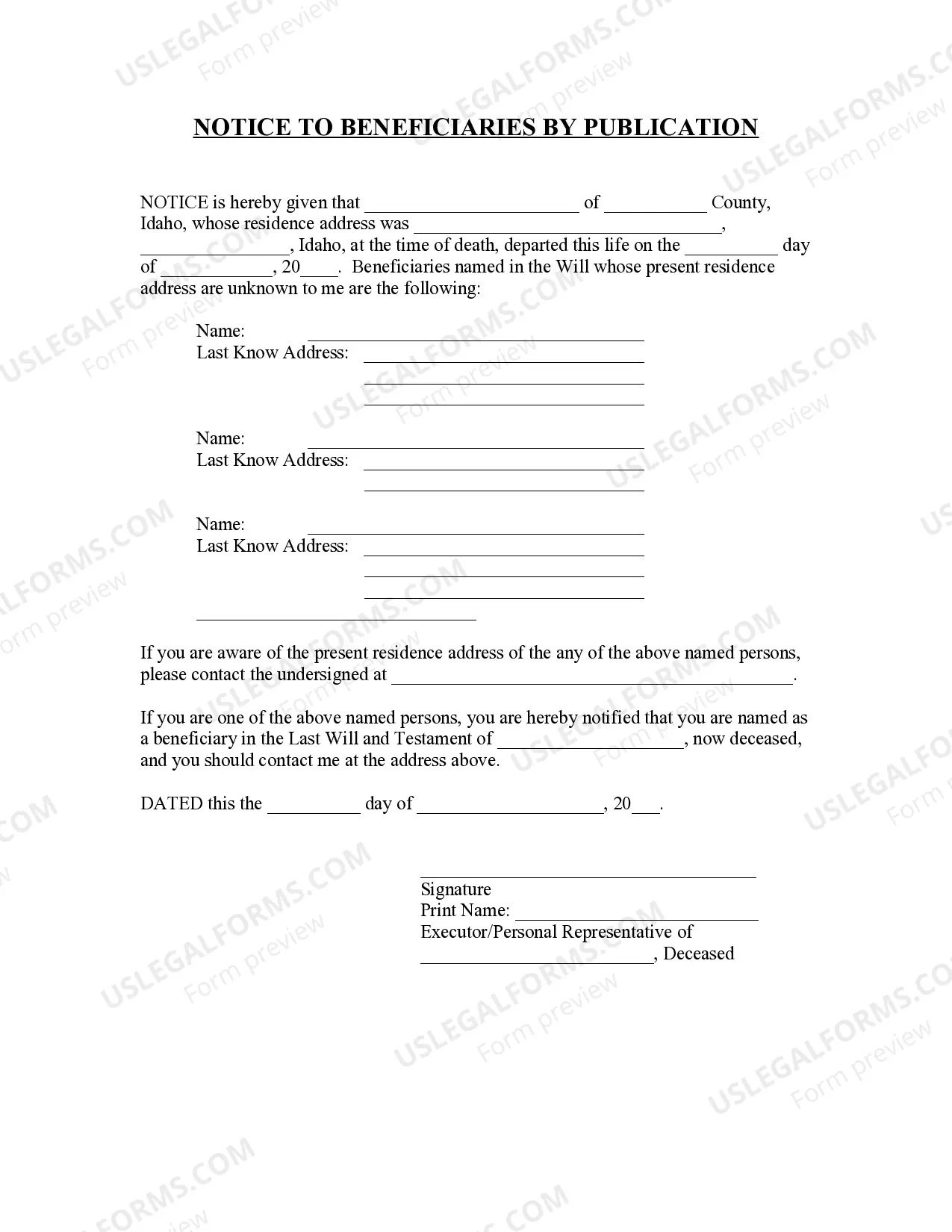
- Public notice section for beneficiaries whose addresses are unknown
Common use cases
This form should be used when an executor or personal representative needs to officially notify the beneficiaries named in a will about their inheritance. It is particularly important when the executor is required to inform individuals who may not be aware of their beneficiary status or their rights to the estate. Additionally, it also serves to notify any beneficiaries whose addresses are unknown through a public notice.
Who can use this document
This form is intended for:
- Executors and personal representatives of an estate
- Legal heirs or beneficiaries named in a will
- Attorneys assisting clients in the probate process
Steps to complete this form
- Fill in the name and address of the deceased.
- Provide the date of the deceased's passing.
- List the beneficiaries and their known addresses, if applicable.
- Enter the appropriate court information where probate will take place.
- Sign the form as the executor or personal representative.
Notarization guidance
Notarization is generally not required for this form. However, certain states or situations might demand it. You can complete notarization online through US Legal Forms, powered by Notarize, using a verified video call available anytime.
Get your form ready online
Our built-in tools help you complete, sign, share, and store your documents in one place.
Make edits, fill in missing information, and update formatting in US Legal Forms—just like you would in MS Word.
Download a copy, print it, send it by email, or mail it via USPS—whatever works best for your next step.
Sign and collect signatures with our SignNow integration. Send to multiple recipients, set reminders, and more. Go Premium to unlock E-Sign.
If this form requires notarization, complete it online through a secure video call—no need to meet a notary in person or wait for an appointment.
We protect your documents and personal data by following strict security and privacy standards.

Make edits, fill in missing information, and update formatting in US Legal Forms—just like you would in MS Word.

Download a copy, print it, send it by email, or mail it via USPS—whatever works best for your next step.

Sign and collect signatures with our SignNow integration. Send to multiple recipients, set reminders, and more. Go Premium to unlock E-Sign.

If this form requires notarization, complete it online through a secure video call—no need to meet a notary in person or wait for an appointment.

We protect your documents and personal data by following strict security and privacy standards.
Common mistakes to avoid
- Failing to provide complete and accurate addresses for beneficiaries.
- Neglecting to sign the form before submission.
- Inaccurately stating the date of death or other vital details.
- Not verifying that the information complies with local laws.
Why complete this form online
- Convenient access to legal documents from anywhere.
- Editable forms allow for easy customization to fit individual circumstances.
- Reliable templates drafted by licensed attorneys to ensure legal compliance.
Looking for another form?
Form popularity
FAQ
Probate is the legal process through which property is transferred after a property owner's death. Generally speaking, probate calls for the gathering of all assets, paying off debts and distributing any remaining assets in accordance with an estate plan and the law.
If you are named in someone's will as an executor, you may have to apply for probate. This is a legal document which gives you the authority to share out the estate of the person who has died according to the instructions in the will. You do not always need probate to be able to deal with the estate.
Probate may be required when a person has passed away and leaves behind certain kinds of assets. For example, if there is money in a bank account and the deceased was the sole account holder, the financial institution may ask for a grant of probate before they will release the funds to the executor.
Probate is a legal process that takes place after someone dies.proving in court that a deceased person's will is valid (usually a routine matter) identifying and inventorying the deceased person's property. having the property appraised. paying debts and taxes, and.