Iowa Interrogatories to Plaintiff for Motor Vehicle Occurrence
About this form
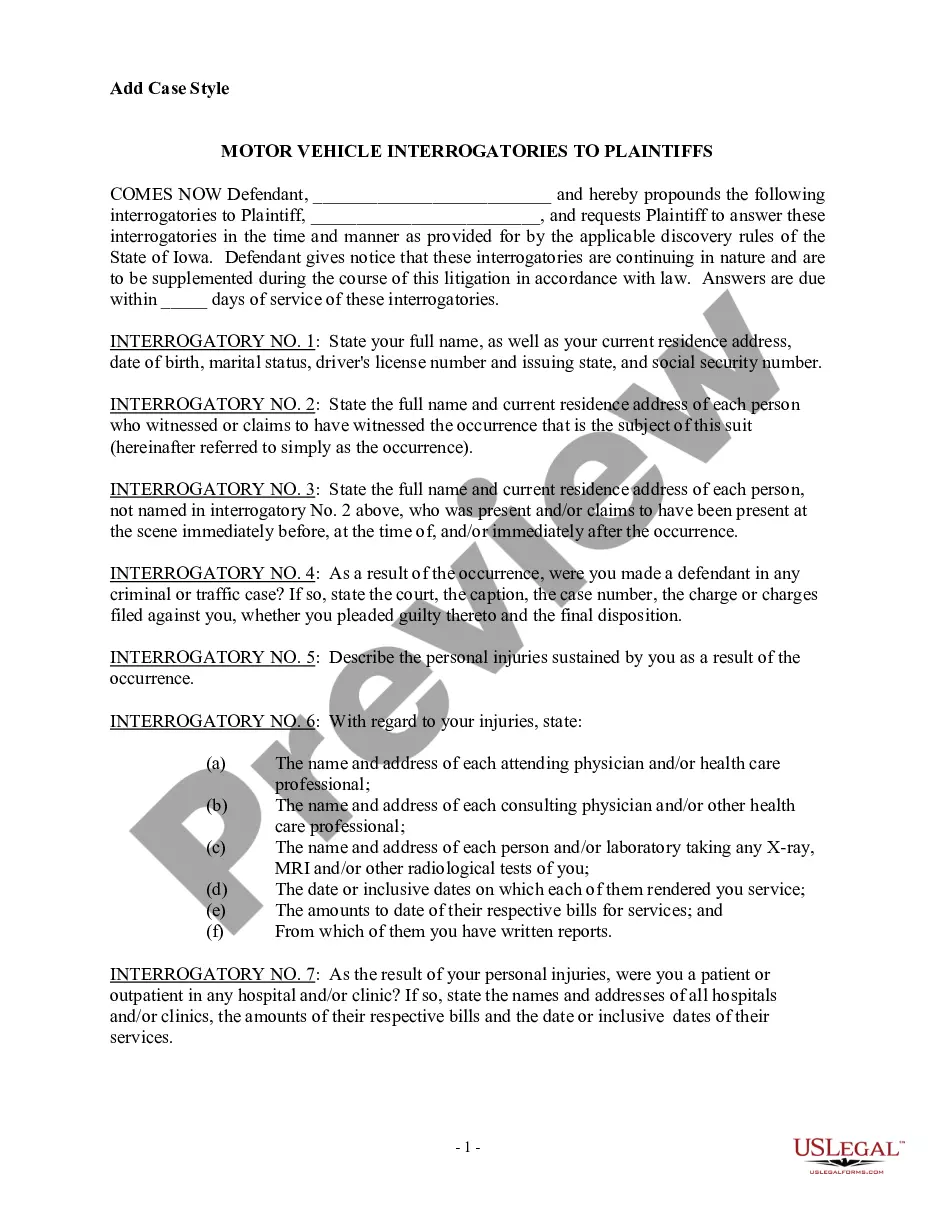
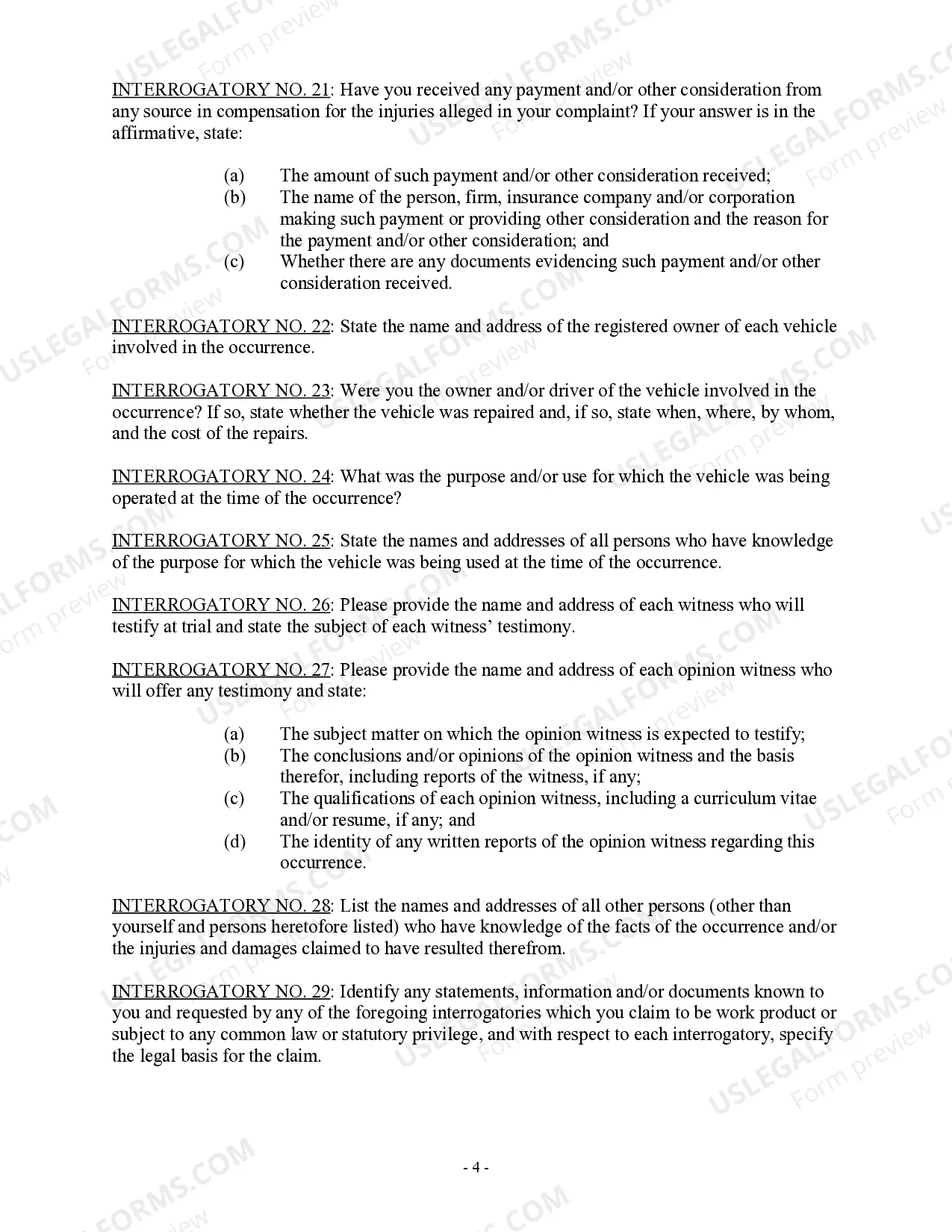
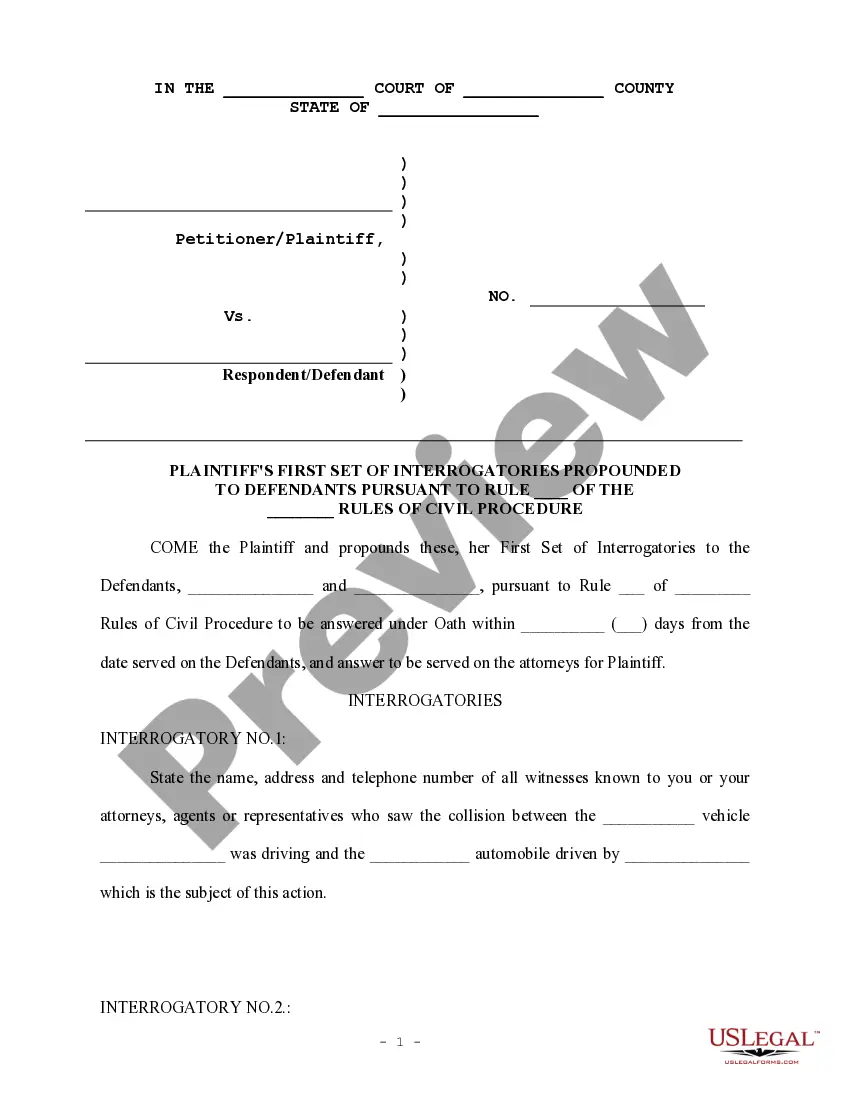
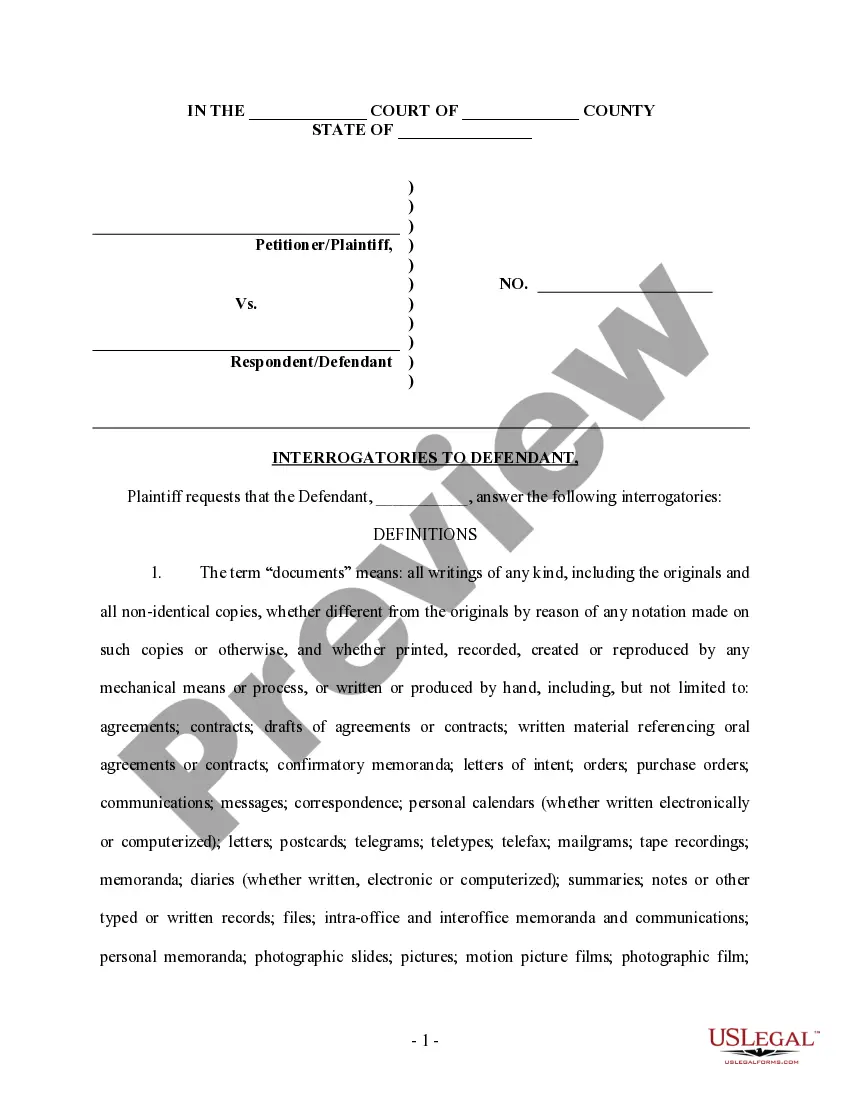
The Interrogatories to Plaintiff for Motor Vehicle Occurrence is a legal document used by defendants in connection with vehicle incidents, such as automobile accidents. This form contains a series of questions designed to gather essential information from the plaintiff regarding the incident, their injuries, and other relevant details. It is specifically tailored for scenarios involving legal disputes arising from motor vehicle occurrences. Unlike other forms, this document is uniquely structured to facilitate thorough interrogations that are crucial for building a case in court.
What’s included in this form
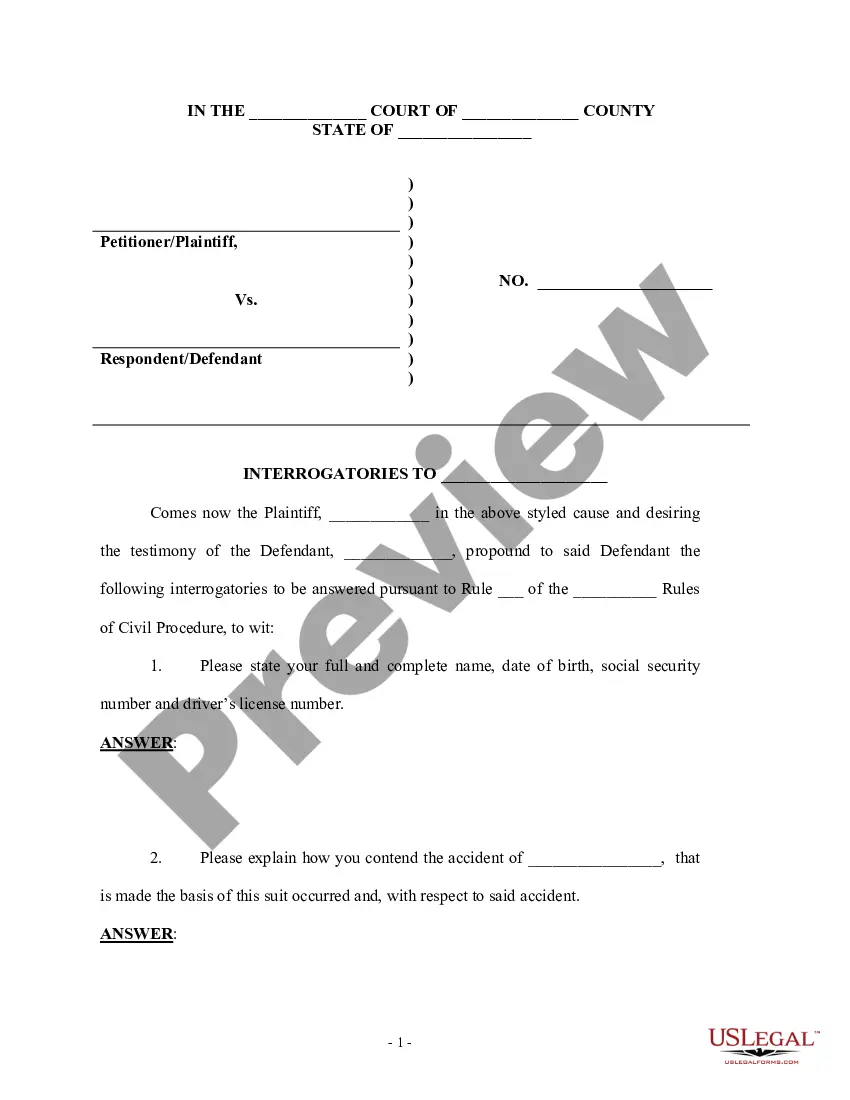
- Defendant's request for plaintiff's personal information, including name, address, and driver's license number.
- Inquiry about witnesses to the vehicle occurrence and their contact details.
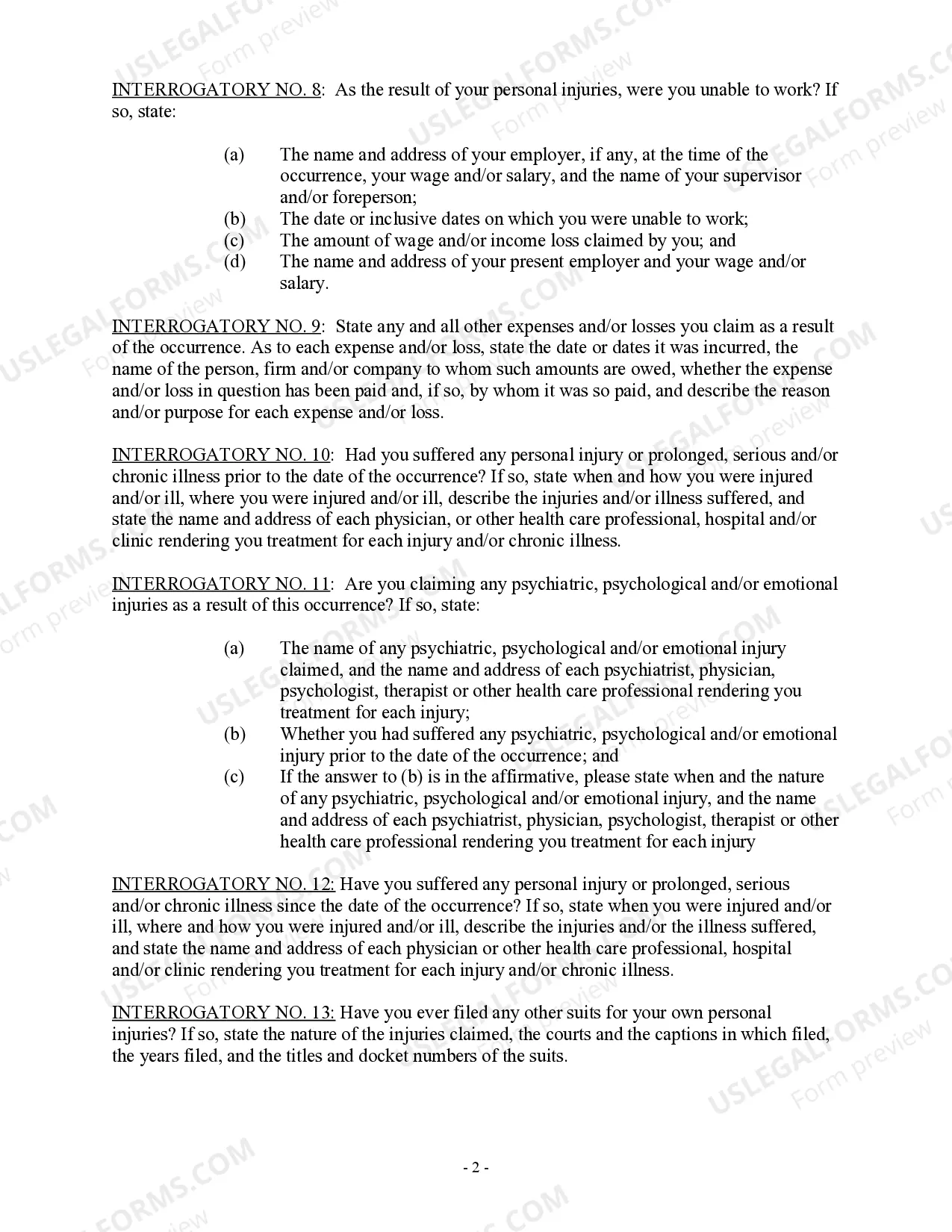
- Details surrounding any injuries sustained and medical treatment received.
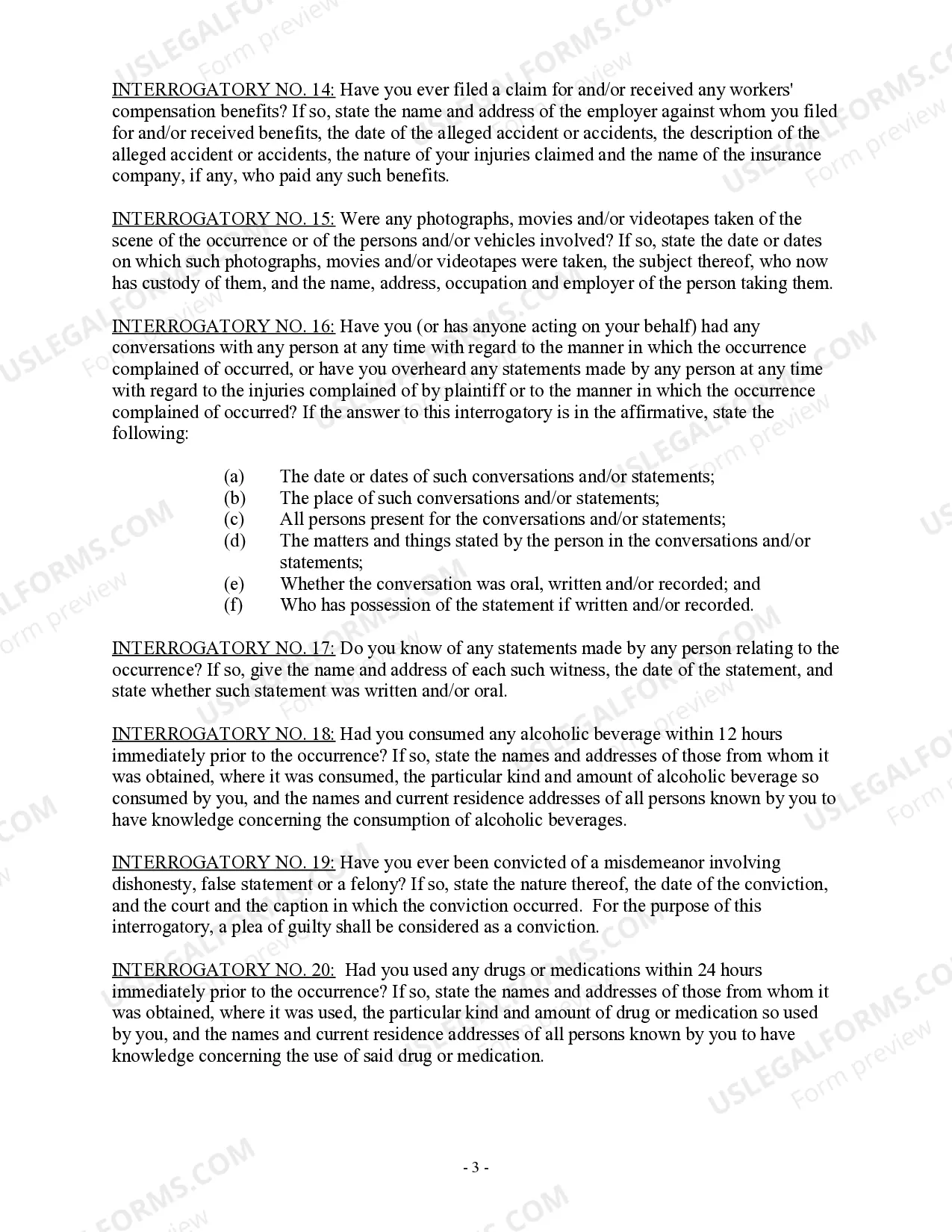
- Questions regarding prior injuries or other legal claims made by the plaintiff.
- Information on expenses incurred as a result of the accident.
- Disclosure of any statements regarding the occurrence and related conversations.
Common use cases
This form should be used when a defendant in a motor vehicle incident seeks detailed information from the plaintiff to prepare their case. It is crucial in situations where the defendant needs to understand the plaintiff's claims, gather evidence, and potentially uncover any inconsistencies in the plaintiff's statements. Utilizing this form can be significant for establishing facts during discovery before trial.
Who should use this form
- Defense attorneys representing clients in motor vehicle accident cases.
- Individuals acting as defendants in a personal injury lawsuit related to a vehicle incident.
- Legal representatives seeking structured information from plaintiffs for a case.
Instructions for completing this form
- Identify the parties involved by entering the names and addresses of the defendant and plaintiff at the beginning of the form.
- Answer each interrogatory completely and truthfully, providing necessary details as requested in the questions.
- Ensure you provide information regarding any witnesses and medical professionals associated with your injuries.
- Document any related expenses, legal claims, or prior injuries that are relevant to the current incident.
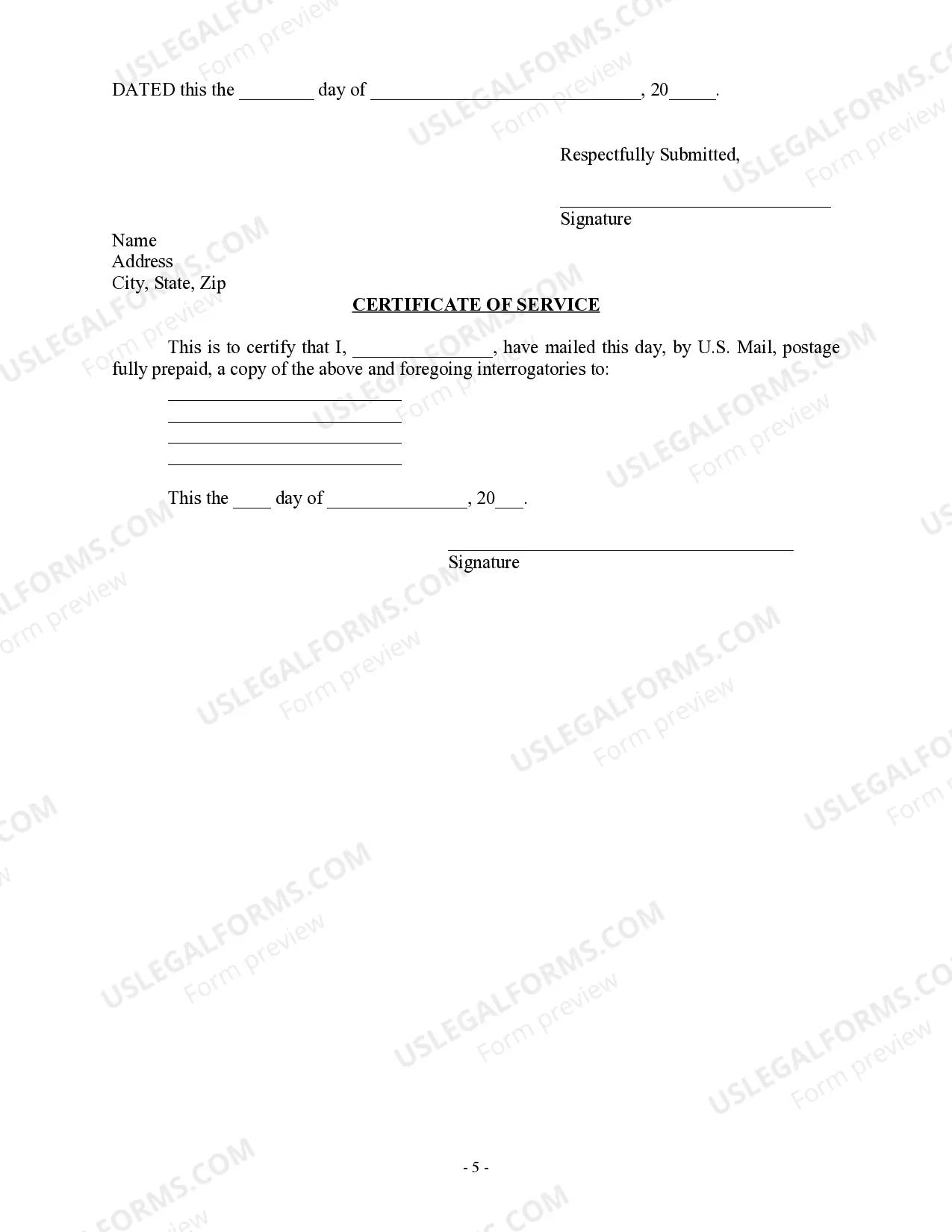
- Sign and date the form before submitting it as required.
Notarization guidance
In most cases, this form does not require notarization. However, some jurisdictions or signing circumstances might. US Legal Forms offers online notarization powered by Notarize, accessible 24/7 for a quick, remote process.
Get your form ready online
Our built-in tools help you complete, sign, share, and store your documents in one place.
Make edits, fill in missing information, and update formatting in US Legal Forms—just like you would in MS Word.
Download a copy, print it, send it by email, or mail it via USPS—whatever works best for your next step.
Sign and collect signatures with our SignNow integration. Send to multiple recipients, set reminders, and more. Go Premium to unlock E-Sign.
If this form requires notarization, complete it online through a secure video call—no need to meet a notary in person or wait for an appointment.
We protect your documents and personal data by following strict security and privacy standards.
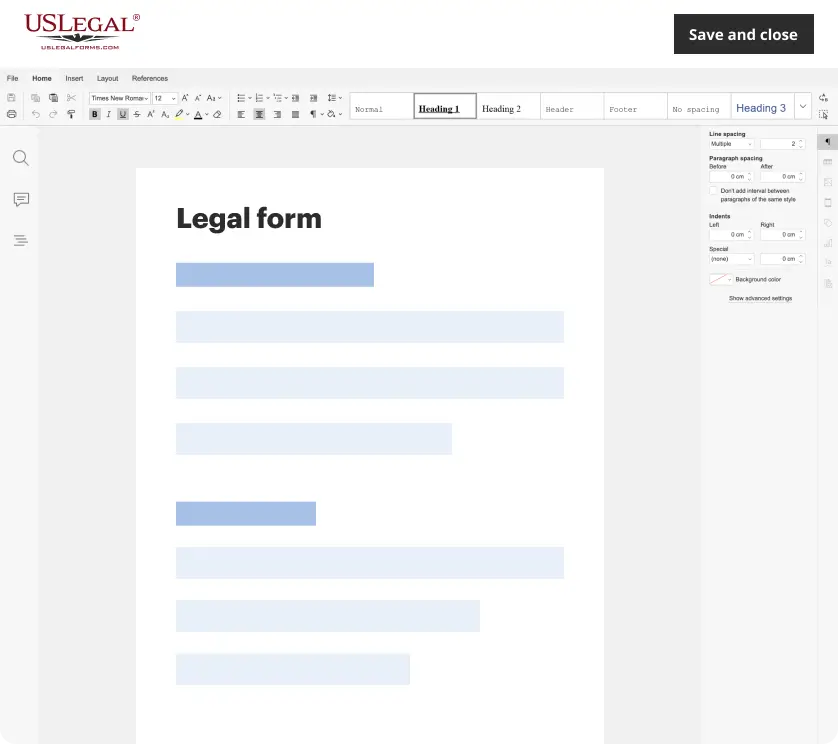
Make edits, fill in missing information, and update formatting in US Legal Forms—just like you would in MS Word.
Download a copy, print it, send it by email, or mail it via USPS—whatever works best for your next step.
Sign and collect signatures with our SignNow integration. Send to multiple recipients, set reminders, and more. Go Premium to unlock E-Sign.

If this form requires notarization, complete it online through a secure video call—no need to meet a notary in person or wait for an appointment.
We protect your documents and personal data by following strict security and privacy standards.
Avoid these common issues
- Failing to provide complete answers to the interrogatories, which can hinder the case.
- Neglecting to include all relevant witnesses and their contact information.
- Missing deadlines for submitting answers as defined by local rules.
- Omitting any previous injuries or claims related to the current case.
Why complete this form online
- Immediate access to professionally drafted interrogatory templates.
- The ability to download and customize the form according to the specific details of your case.
- Convenience of completing the form from any location at any time.
- Ensures compliance with legal standards by using attorney-drafted templates.
Legal use & context
- This form is part of the discovery process in litigation, allowing defendants to gather necessary information.
- Responses are legally required, and improper or incomplete responses may adversely affect the case.
Summary of main points
- The Interrogatories to Plaintiff for Motor Vehicle Occurrence is crucial for gathering evidence in vehicle accident litigation.
- This form helps clarify the details of the incident and the injuries sustained by the plaintiff.
- Proper completion of this form can significantly impact the outcome of the litigation process.
Looking for another form?
Form popularity
FAQ
Rule 1.808 in Iowa outlines the procedures for completing discovery requests, including setting timelines for responses. This rule plays a pivotal role in managing the exchange of information between parties. For those navigating Iowa Interrogatories to Plaintiff for Motor Vehicle Occurrence, knowledge of Rule 1.808 aids in meeting submission deadlines effectively.
The 1.904 Rule in Iowa deals with the requirement of making findings and conclusions of law in certain situations. This rule aims to provide clarity in judicial decisions and enhance transparency in legal outcomes. When handling Iowa Interrogatories to Plaintiff for Motor Vehicle Occurrence, understanding this rule can enrich your case strategy.
Rule 1.707 5 in Iowa governs the discovery process, including interrogatories and the production of documents. This rule helps to define what information is discoverable and ensures a fair process for all parties involved. It is especially relevant for those utilizing Iowa Interrogatories to Plaintiff for Motor Vehicle Occurrence.
Rule 1.943 in Iowa pertains to the requirements for written responses to interrogatories. This rule mandates that parties must respond within a specific timeframe and detail the information requested. Engaging in Iowa Interrogatories to Plaintiff for Motor Vehicle Occurrence requires adherence to this rule to ensure effective communication.
The home rule law in Iowa allows local governments to govern themselves independently within certain limits. This law empowers cities and counties to tailor regulations to meet their unique needs. When exploring Iowa Interrogatories to Plaintiff for Motor Vehicle Occurrence, understanding local rules can significantly impact your case.
Rule 1.701 in Iowa outlines the procedural requirements for written interrogatories in civil cases. This rule helps ensure that information exchanges are fair and comprehensive. Familiarizing yourself with Rule 1.701 is beneficial when using Iowa Interrogatories to Plaintiff for Motor Vehicle Occurrence.
In Iowa, contempt of court can lead to various penalties, including fines, attorney fees, or even jail time. The specific consequences depend on the severity of the contempt and the court's discretion. Knowing about these ramifications is crucial, especially when involved in legal proceedings like Iowa Interrogatories to Plaintiff for Motor Vehicle Occurrence.
Code 808.7 in Iowa addresses specific legal procedures regarding interrogatories in civil cases. It sets forth guidelines for how interrogatories must be crafted and the expectations for parties when responding to them. When you engage with Iowa Interrogatories to Plaintiff for Motor Vehicle Occurrence, understanding this code can clarify your legal obligations.
An improper interrogatory typically requests information that is not relevant, seeks privileged information, or is excessively broad. In the context of Iowa Interrogatories to Plaintiff for Motor Vehicle Occurrence, ensuring your interrogatories adhere to legal standards is crucial. Improper interrogatories may lead to legal challenges and delays in your case. US Legal Forms can help you create precise and compliant interrogatories to avoid these pitfalls.
Valid objections to interrogatories can include claims of privilege, irrelevance, or the request being overly burdensome. It’s essential to understand the limits when crafting Iowa Interrogatories to Plaintiff for Motor Vehicle Occurrence. A well-founded objection can protect your rights during legal proceedings. For guidance on formulating appropriate objections, consider using the resources available through US Legal Forms.