Hawaii Last Will and Testament for Divorced person not Remarried with Minor Children
Understanding this form
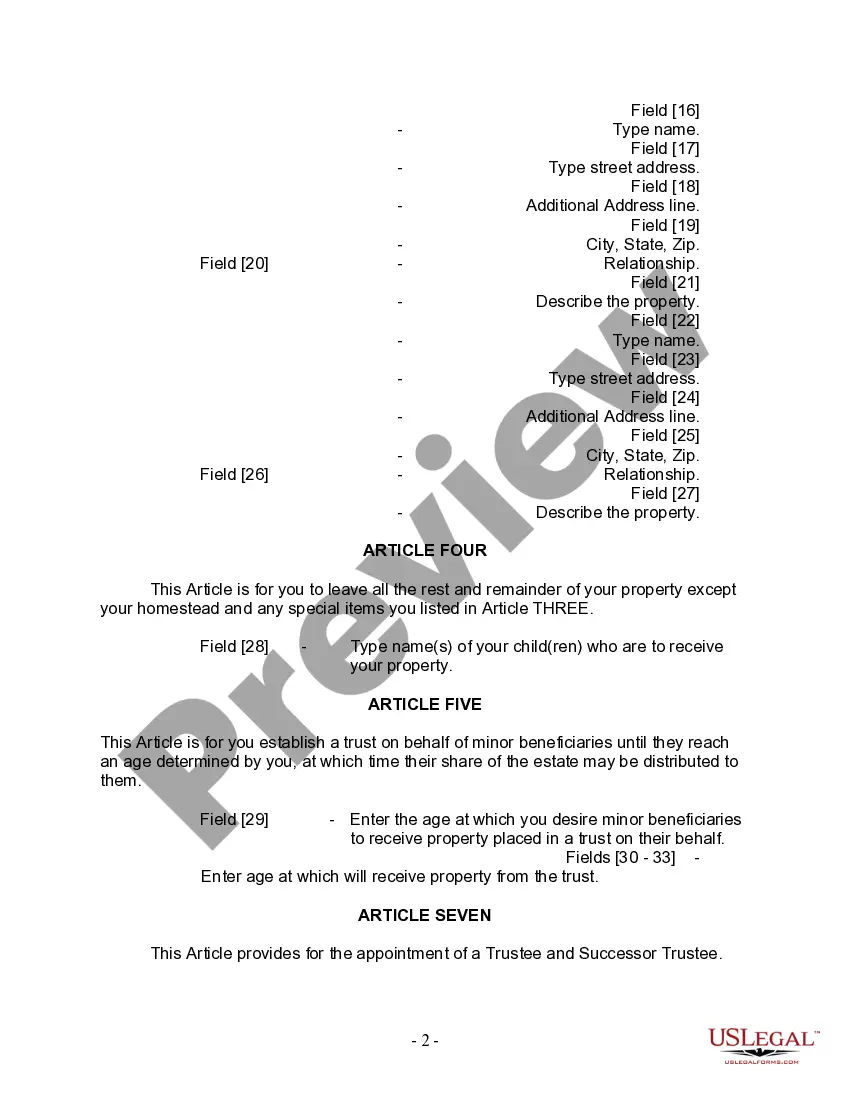
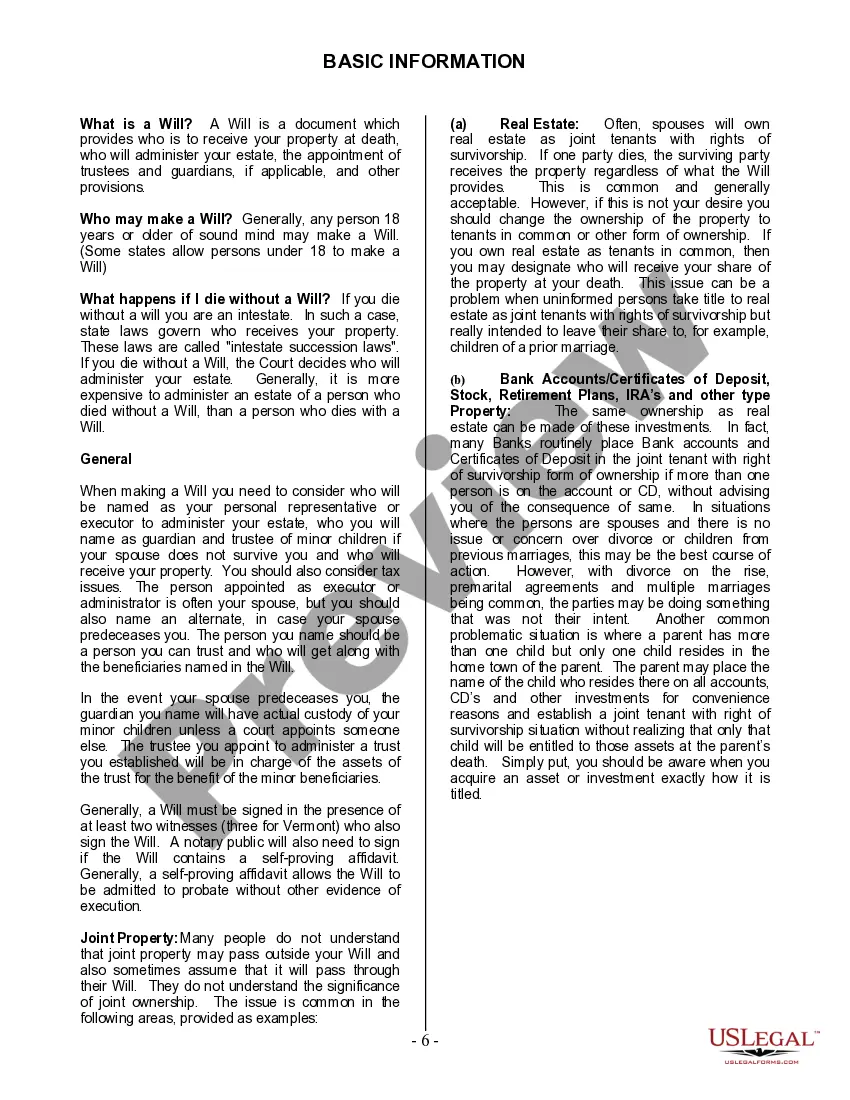
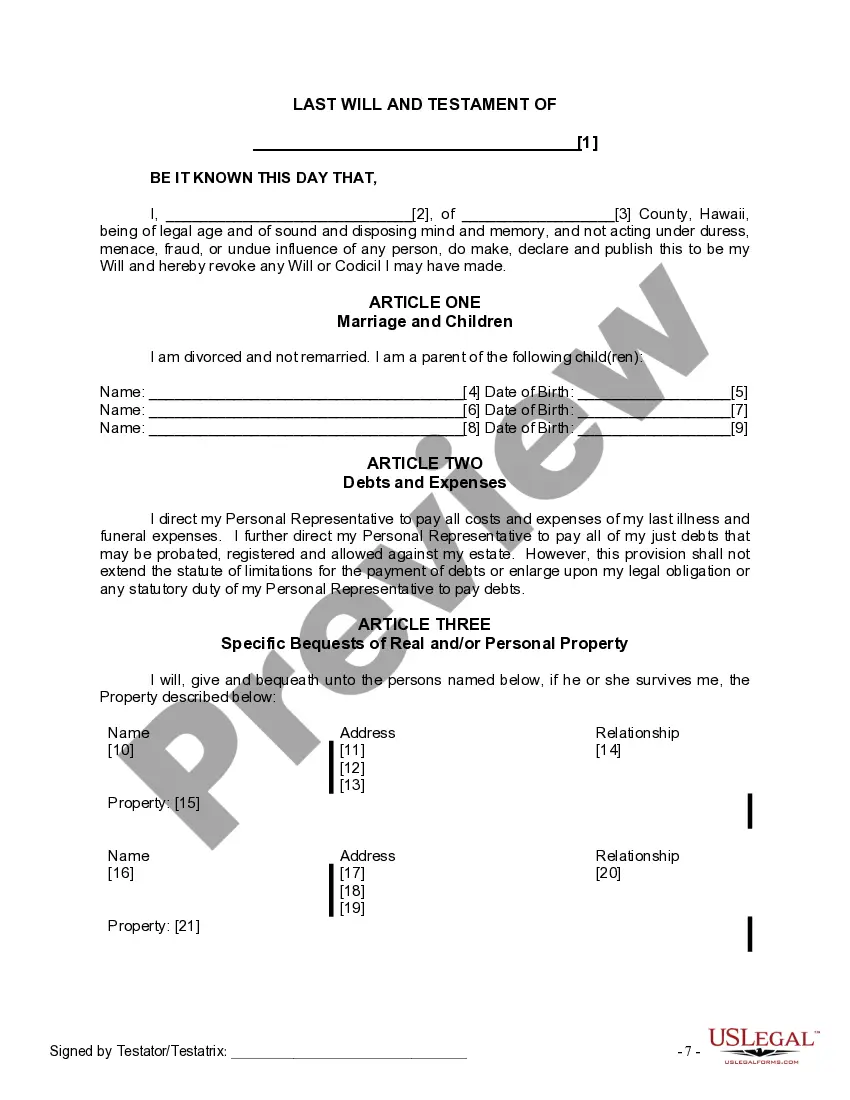
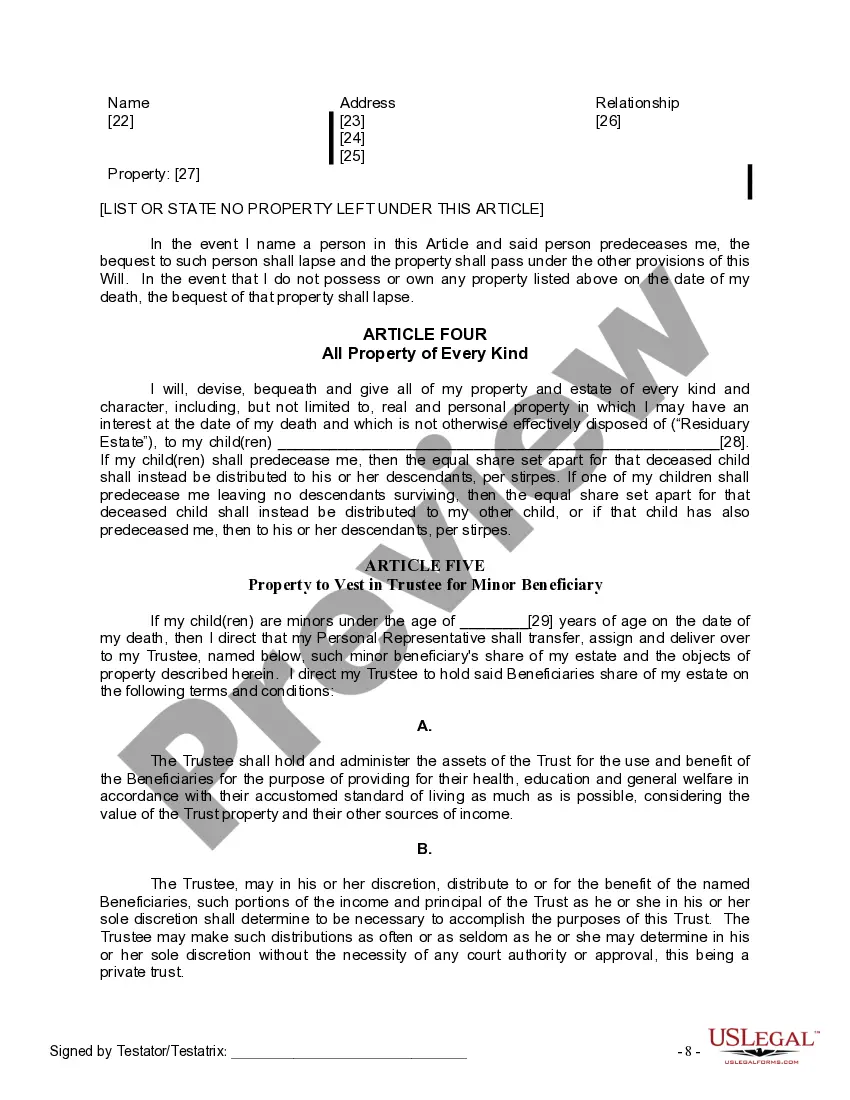
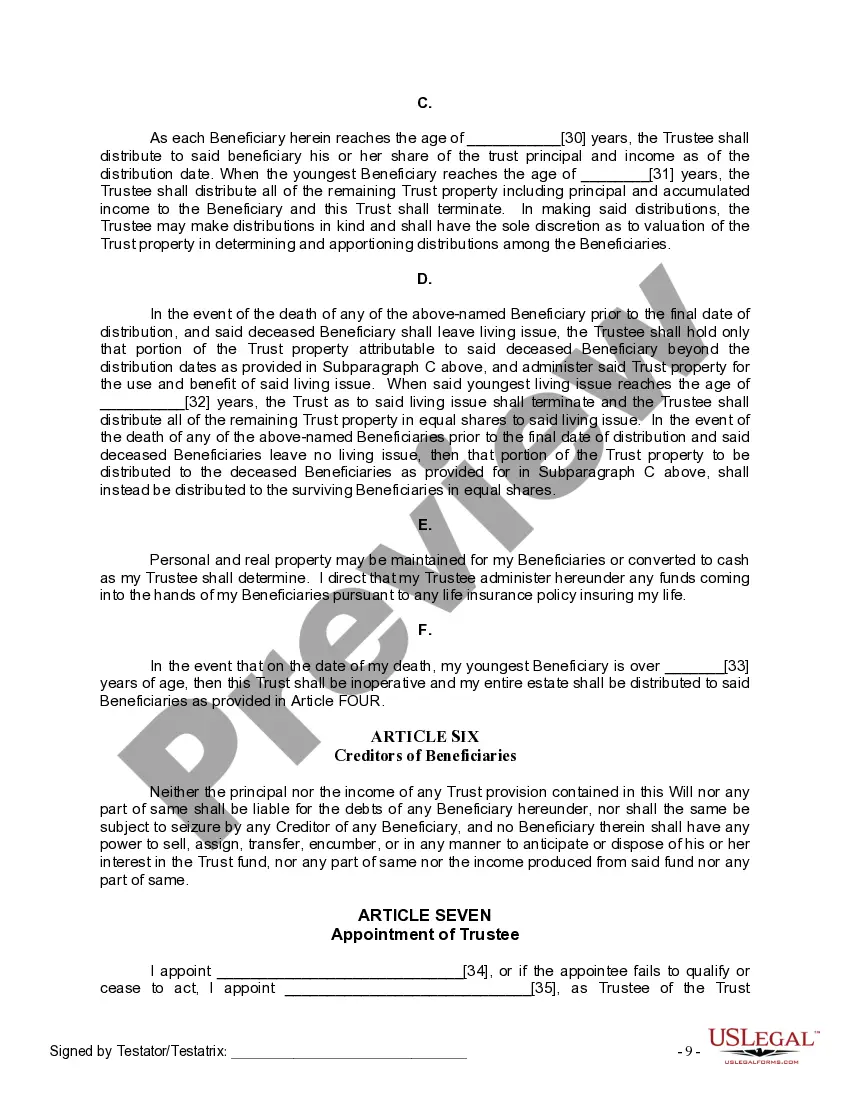
This Last Will and Testament is specifically designed for divorced individuals who have not remarried and have minor children. Unlike other wills, this form addresses unique considerations such as the appointment of guardians for minor children and the establishment of trusts to manage their inheritance until they reach a specified age. It ensures that your wishes regarding the distribution of your property and care of your children are clearly outlined and legally valid.
Key components of this form
- Appointment of a personal representative (executor) to manage your estate.
- Designation of beneficiaries, including minor children.
- Specific bequests for items of significant value.
- Creation of a trust for minor beneficiaries until they reach adulthood.
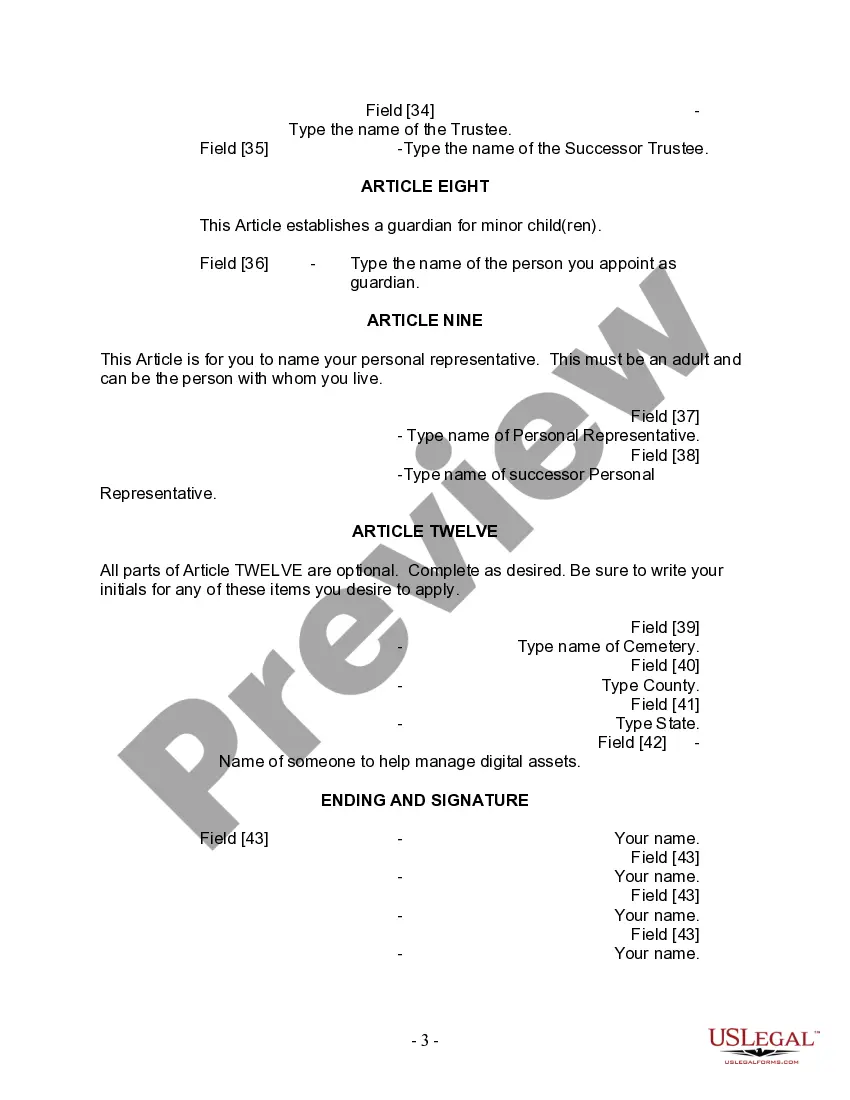
- Appointment of a guardian for minor children.
- Legal declaration revoking any prior wills.




When to use this document
This form should be used when a divorced person with minor children wishes to create a legally binding document to specify how their assets will be distributed upon their death. It is particularly important for individuals who want to ensure that their minor children are cared for in accordance with their wishes and that their assets are managed responsibly until the children are old enough to inherit directly.
Intended users of this form
- Divorced individuals who are not remarried.
- Parents with minor children.
- Anyone wishing to appoint a guardian for their children in the event of their death.
- Persons wanting to state specific wishes regarding the distribution of their property.
Instructions for completing this form
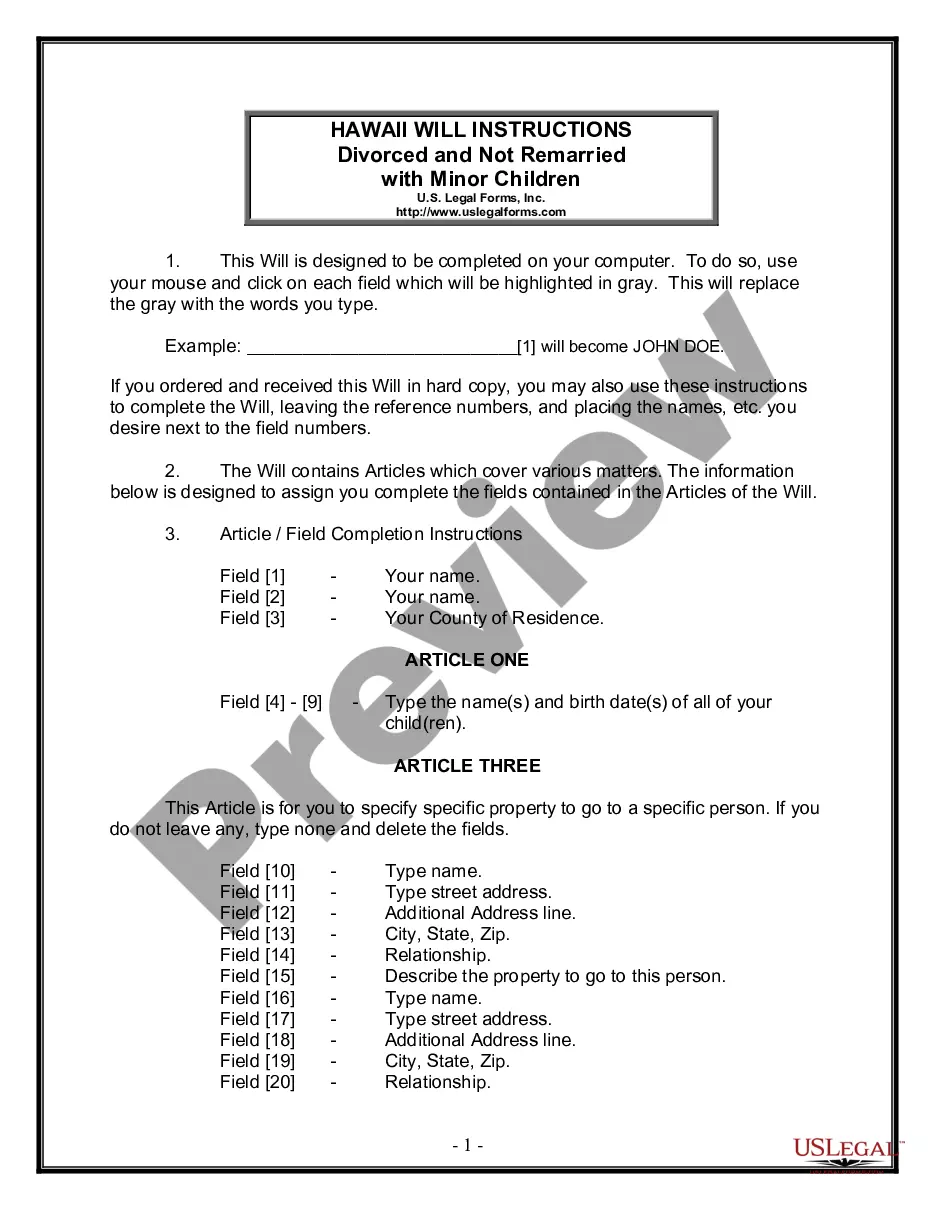
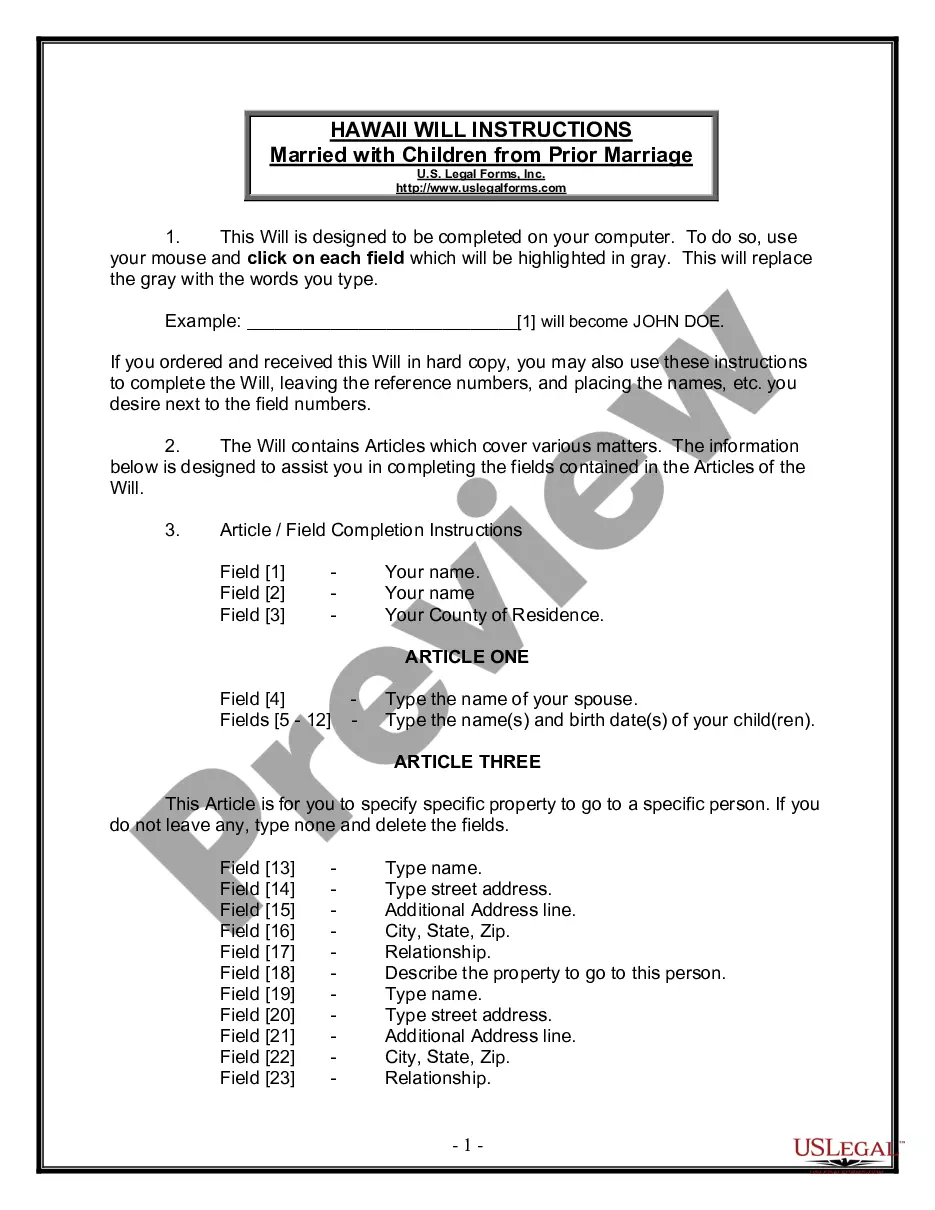
- Enter your name, county of residence, and the names and birth dates of your children in the designated fields.
- Specify any specific bequests of property and indicate the names and addresses of recipients.
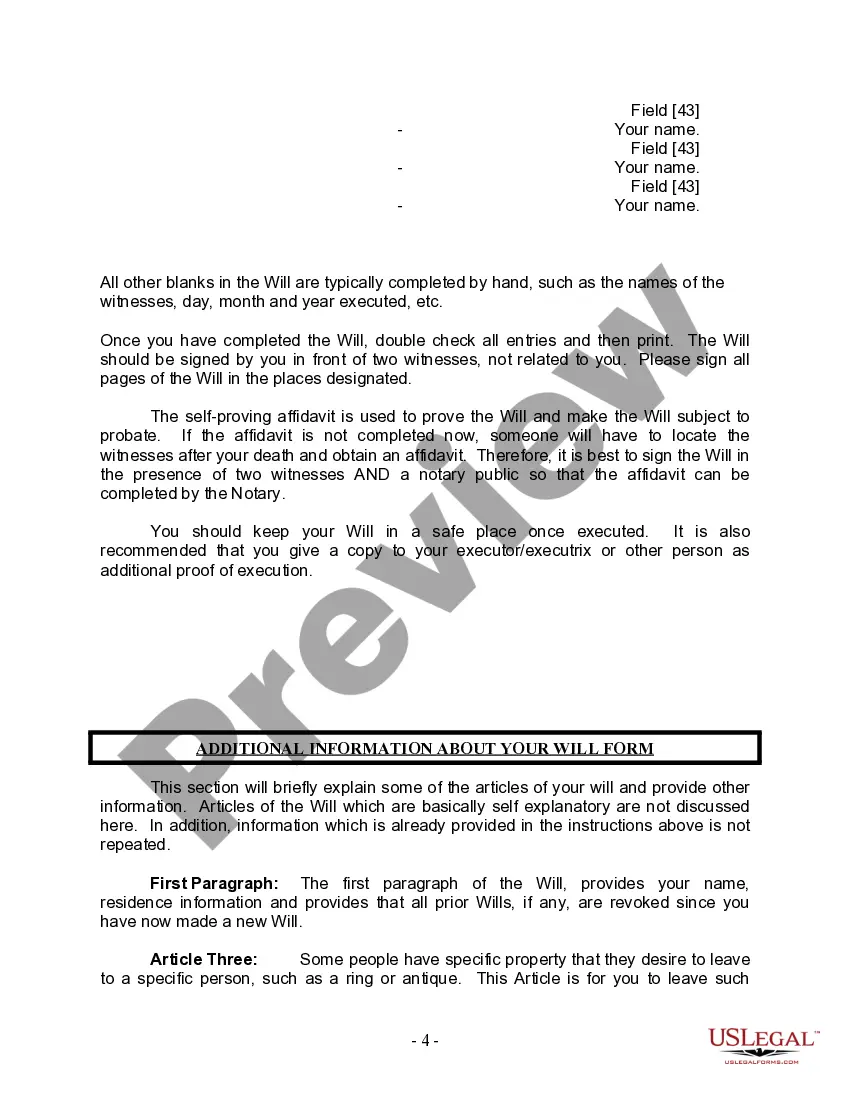
- Designate a personal representative and any successor representatives for your estate.
- Identify a guardian for your minor children, ensuring that the individual is willing to take on this responsibility.
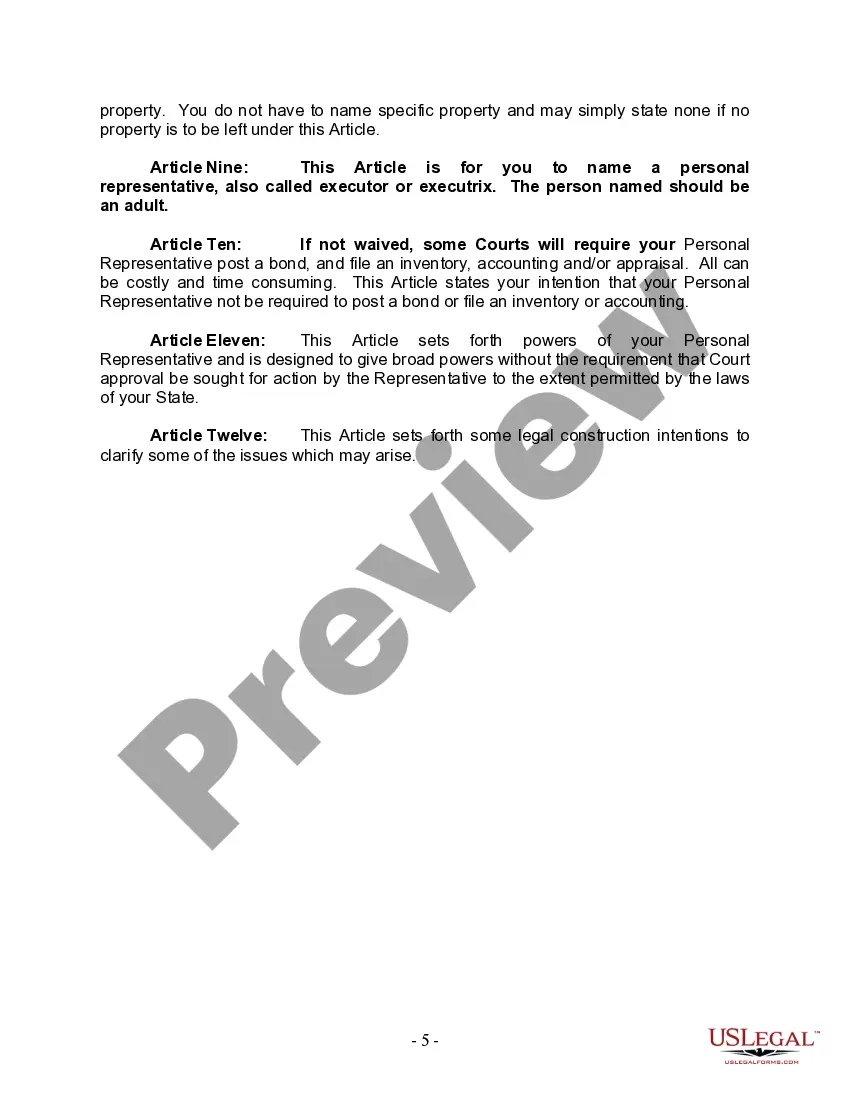
- Sign the will in the presence of two witnesses who are not related to you and who do not stand to inherit.
- If applicable, obtain notarization to complete the self-proving affidavit, making it easier to confirm the will's validity during probate.
Notarization requirements for this form
To make this form legally binding, it must be notarized. Our online notarization service, powered by Notarize, lets you verify and sign documents remotely through an encrypted video session.
Get your form ready online
Our built-in tools help you complete, sign, share, and store your documents in one place.
Make edits, fill in missing information, and update formatting in US Legal Forms—just like you would in MS Word.
Download a copy, print it, send it by email, or mail it via USPS—whatever works best for your next step.
Sign and collect signatures with our SignNow integration. Send to multiple recipients, set reminders, and more. Go Premium to unlock E-Sign.
If this form requires notarization, complete it online through a secure video call—no need to meet a notary in person or wait for an appointment.
We protect your documents and personal data by following strict security and privacy standards.

Make edits, fill in missing information, and update formatting in US Legal Forms—just like you would in MS Word.

Download a copy, print it, send it by email, or mail it via USPS—whatever works best for your next step.

Sign and collect signatures with our SignNow integration. Send to multiple recipients, set reminders, and more. Go Premium to unlock E-Sign.

If this form requires notarization, complete it online through a secure video call—no need to meet a notary in person or wait for an appointment.

We protect your documents and personal data by following strict security and privacy standards.
Common mistakes to avoid
- Not signing the will in front of the required number of witnesses.
- Failing to name a guardian for minor children.
- Not specifying the age at which minors will receive their inheritance.
- Leaving out important details when naming beneficiaries or trustees.
Why complete this form online
- Convenience of filling out and customizing the will from home.
- Immediate access to downloadable forms after completion.
- Guidance throughout the process to ensure all necessary information is captured.
- Potential for added legal validity through integrated online notarization options.
Main things to remember
- This Last Will and Testament is specifically for divorced individuals with minor children.
- Properly documenting guardianship and asset distribution is crucial for protecting your children's future.
- Always ensure the will is signed and witnessed correctly to avoid legal complications during probate.
- Take advantage of online notarization services to meet legal requirements easily.
Looking for another form?





Form popularity
FAQ
Rule 42 focuses on proof of service in probate cases in Hawaii, ensuring that interested parties are properly notified about proceedings. If you have a Hawaii Last Will and Testament for Divorced persons not Remarried with Minor Children, understanding Rule 42 will help safeguard your interests and those of your minor children. Utilizing platforms like US Legal Forms can assist you in correctly serving documents and adhering to all required protocols.
In Hawaii, you generally have three years from the date of death to file for probate. This timeframe is critical for those with a Hawaii Last Will and Testament for Divorced persons not Remarried with Minor Children. Promptly filing for probate not only complies with state regulations but also helps secure your children's inheritance without unnecessary delays.
Rule 50 outlines the procedures for the settlement of an estate in Hawaii, ensuring all claims against the estate are addressed. This rule is essential for anyone navigating a Hawaii Last Will and Testament for Divorced persons not Remarried with Minor Children. Familiarizing yourself with Rule 50 can help ensure that your estate is settled correctly, protecting the interests of your children.
Rule 48 in Hawaii pertains to the probate process, specifically addressing the permissible time for a personal representative to complete certain actions. This can become especially important when considering a Hawaii Last Will and Testament for Divorced persons not Remarried with Minor Children. By understanding Rule 48, you can ensure that your estate is managed efficiently and according to your wishes, ultimately benefiting your minor children.
Yes, you can write a will on a piece of paper, but it is essential to follow the legal requirements for it to be valid. For a Hawaii Last Will and Testament for Divorced person not Remarried with Minor Children, your will must clearly state your intentions for asset distribution and be signed in the presence of witnesses. However, using a structured template from a reliable source, like US Legal Forms, can ensure you include all necessary elements. This approach can help safeguard your children’s future and provide peace of mind.
A last will and testament generally supersedes earlier wishes if properly executed, including any designations of a beneficiary. However, if assets are held in a trust or have designated beneficiaries, those designations often prevail over the will. For a Hawaii Last Will and Testament for Divorced person not Remarried with Minor Children, ensuring clarity in your document is vital. You might consider using platforms like USLegalForms to create a will that addresses these intricacies.
In the context of a Hawaii Last Will and Testament for Divorced person not Remarried with Minor Children, a will does not automatically take precedence over a subsequent marriage. If you remarry, the new spouse may have rights to your estate unless you clearly state otherwise in your will. Therefore, it is crucial to review and possibly revise your will after significant life changes such as marriage or divorce.
A Hawaii Last Will and Testament for Divorced person not Remarried with Minor Children allows you to specify how your assets will be distributed. If you've already named your ex-spouse in your will, it might not automatically pass to them after divorce. Instead, the will’s terms will govern distribution, but you should update it to reflect your current wishes, especially regarding your minor children.
The three basic requirements for a valid will in Hawaii include being written, signed by the testator, and witnessed by at least two individuals. These witnesses must not be beneficiaries to ensure impartiality. Following these requirements helps in drafting a solid Hawaii Last Will and Testament for Divorced persons not Remarried with Minor Children, protecting their interests effectively.
In Hawaii, you do not need to register a will for it to be legally valid; however, filing it with the court can be beneficial after your passing. This action ensures that your intentions are known and can expedite the probate process. Consider creating a Hawaii Last Will and Testament for Divorced persons not Remarried with Minor Children to clearly express your distribution wishes.