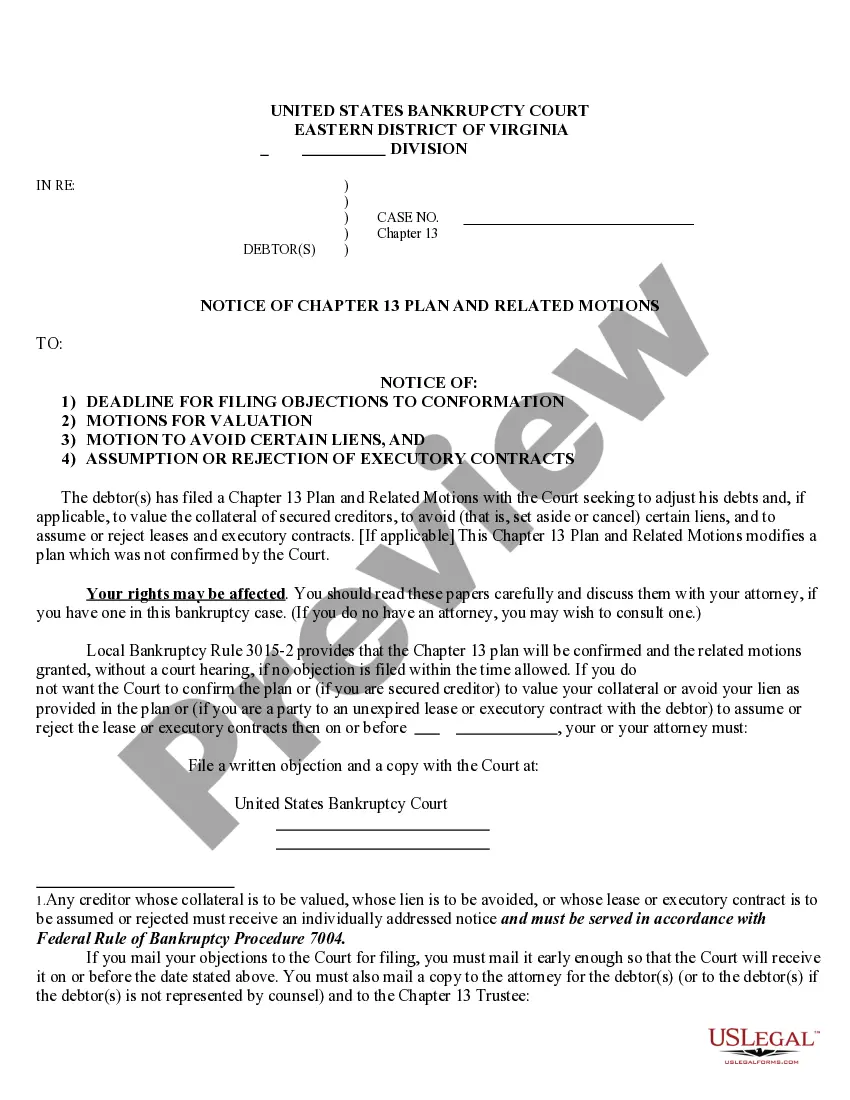
Hawaii Last Will and Testament for Divorced Person Not Remarried with No Children
Understanding this form
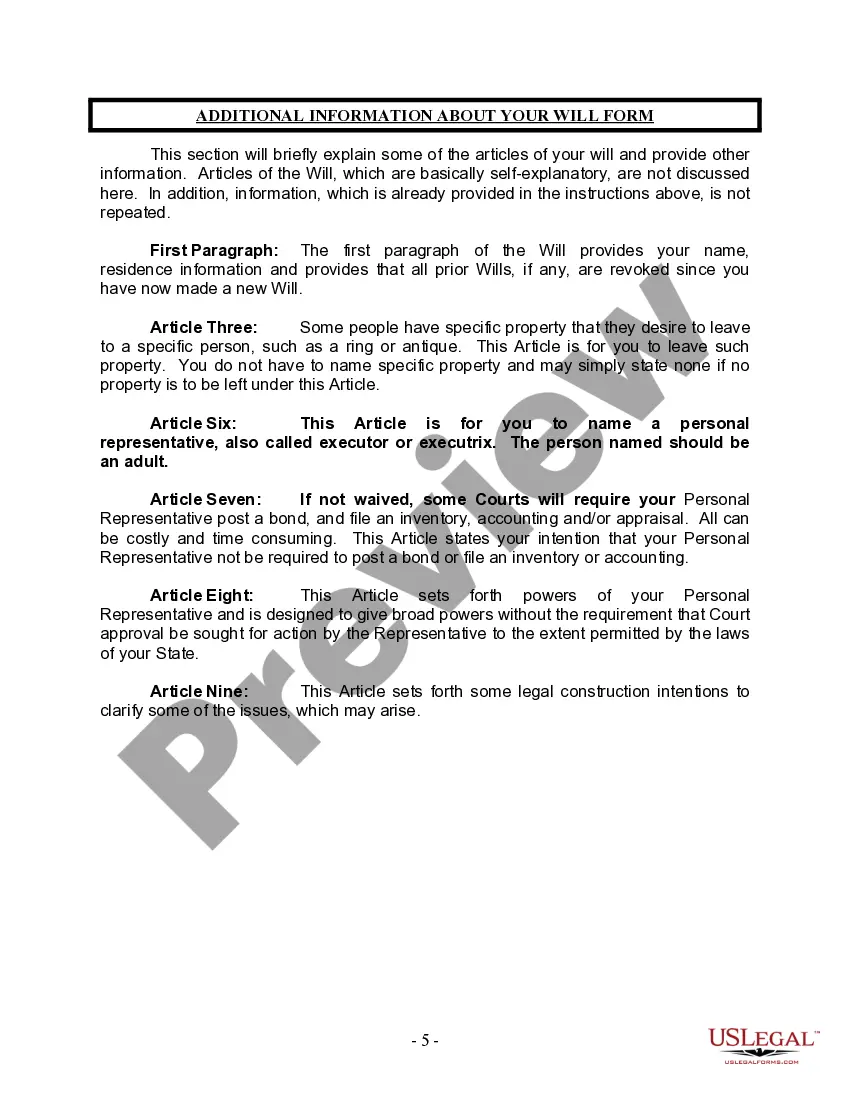
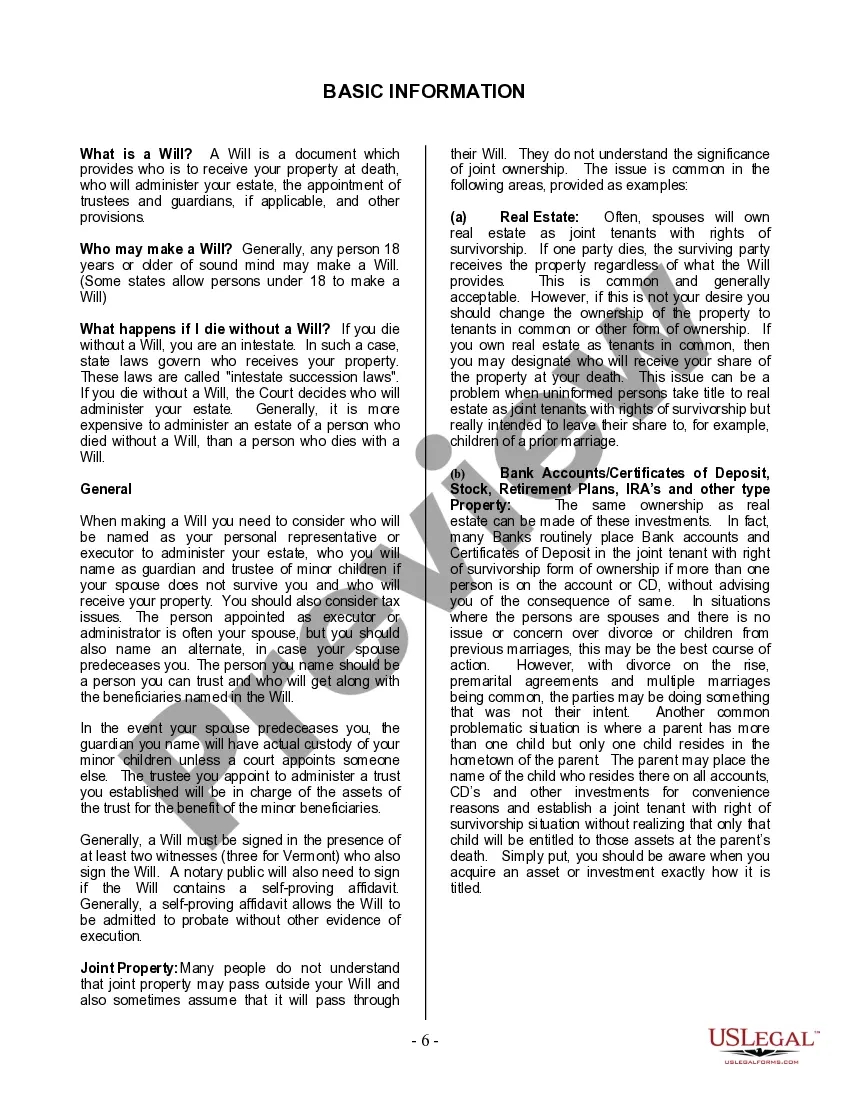
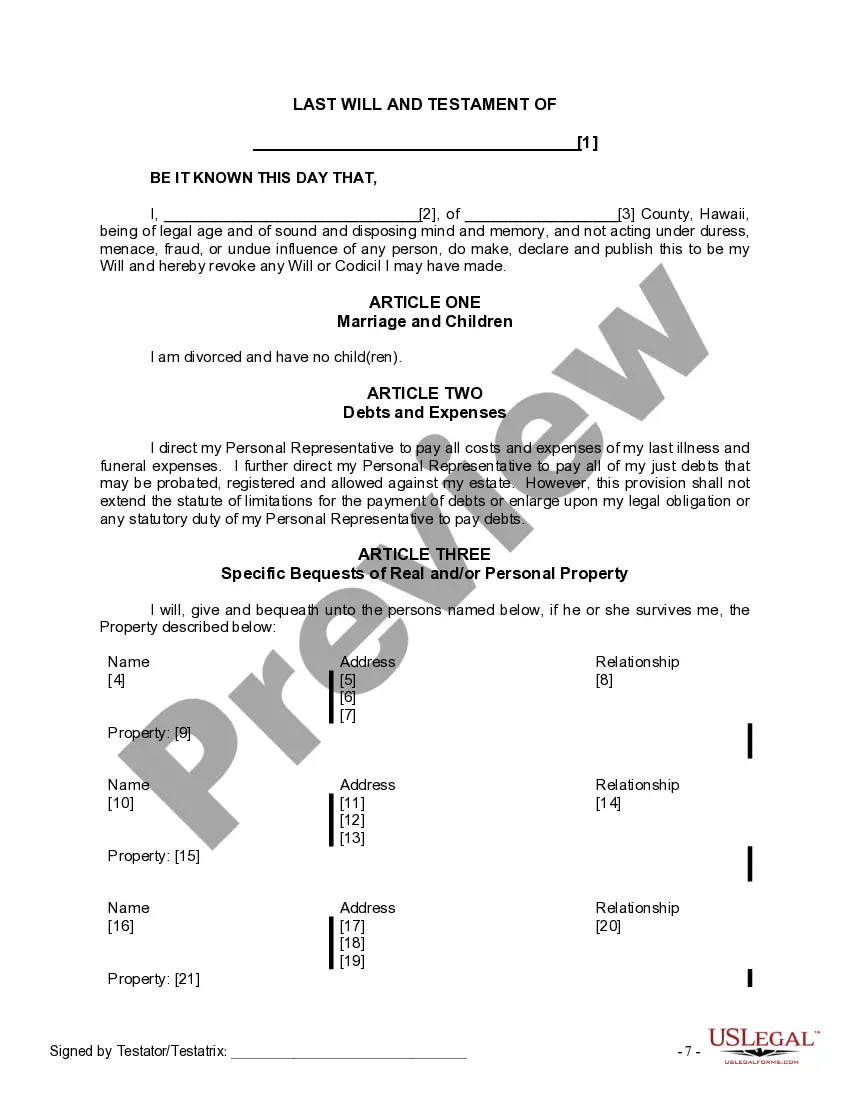
This Last Will and Testament is specifically designed for individuals who are divorced, not remarried, and have no children. It outlines how your property and assets will be distributed after your death, allows you to designate a personal representative or executor, and includes provisions for specific bequests. Unlike general wills, this document accounts for your unique circumstances regarding marital status and offspring.
What’s included in this form
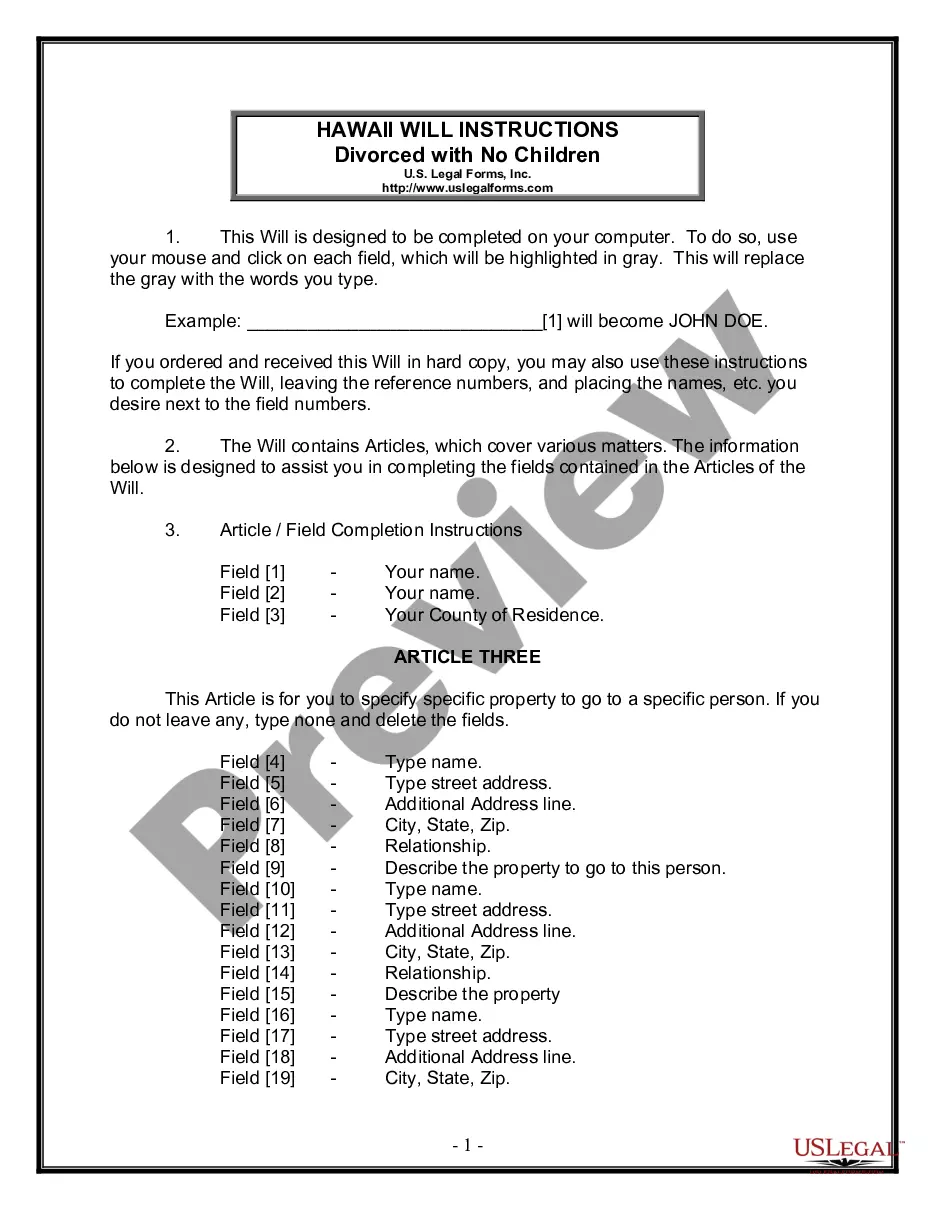
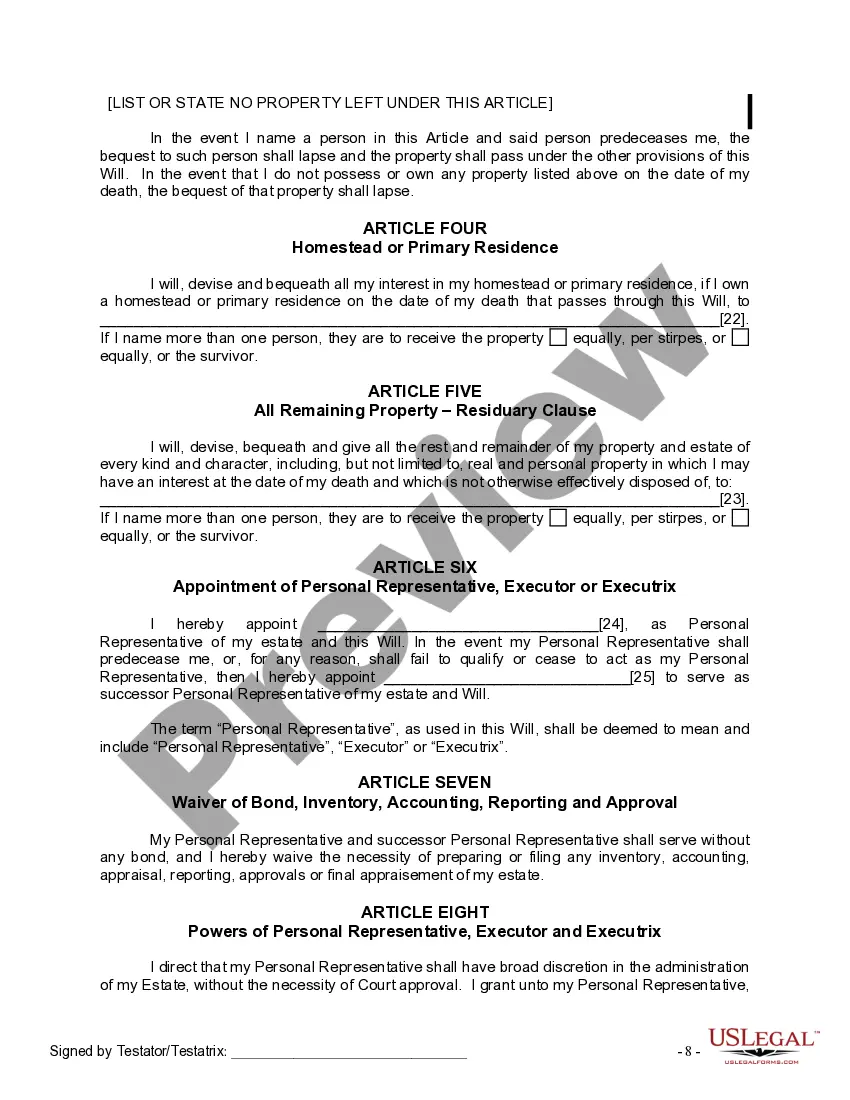
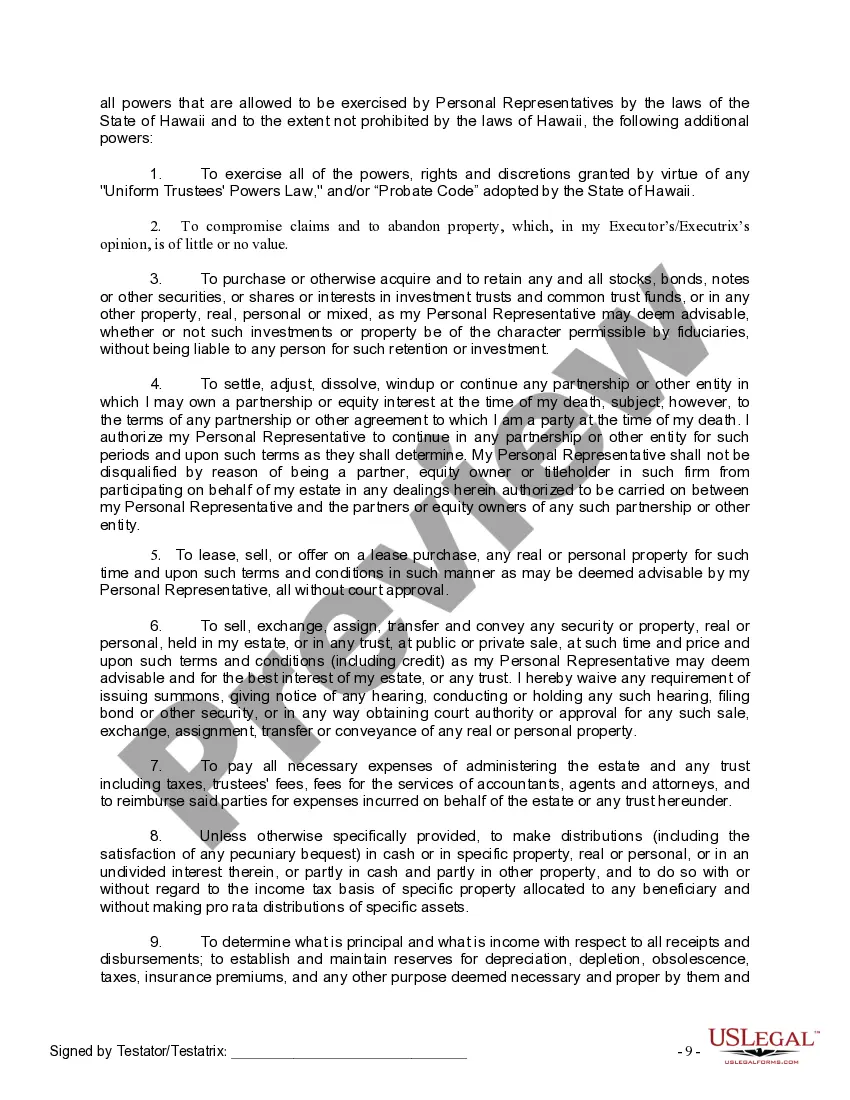
- Appointment of a Personal Representative: Assigns someone to manage your estate's affairs.
- Specific Bequests: Allows you to designate specific assets to specific individuals.
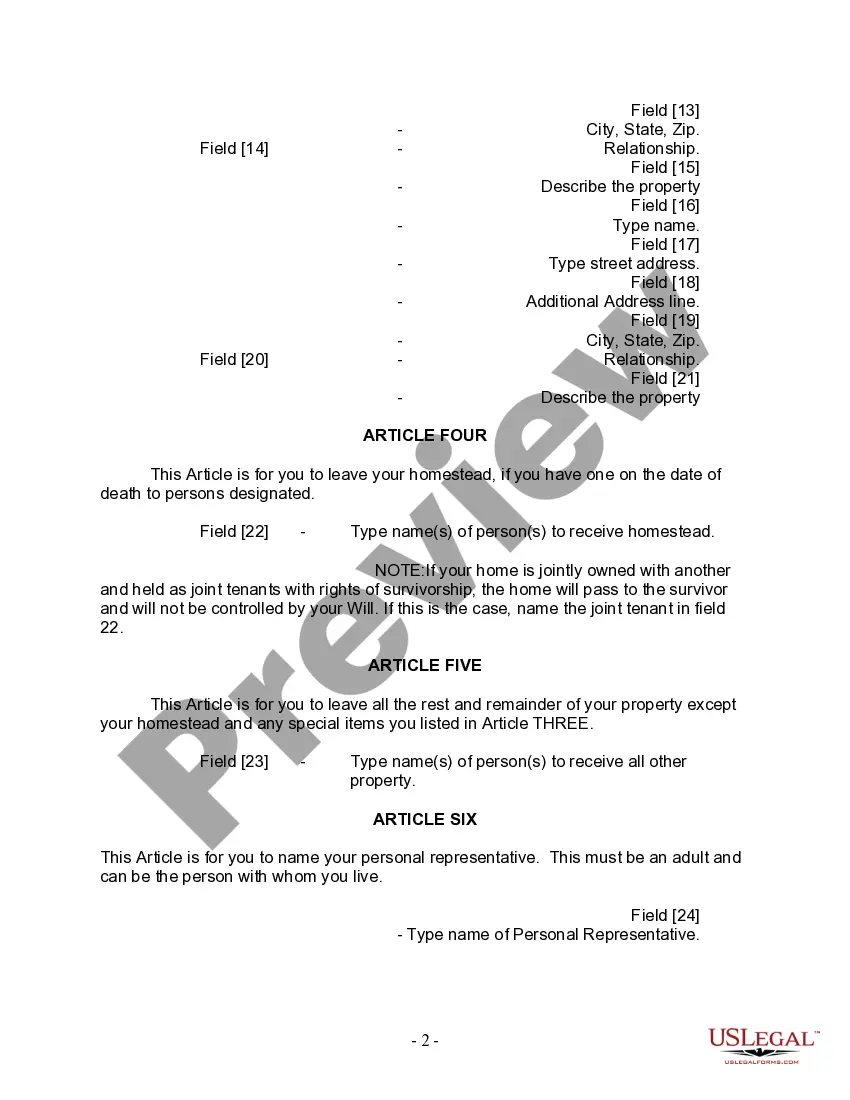
- Homestead Designation: Outlines how your primary residence will be passed on.
- Residuary Clause: Covers all remaining assets not otherwise specified.
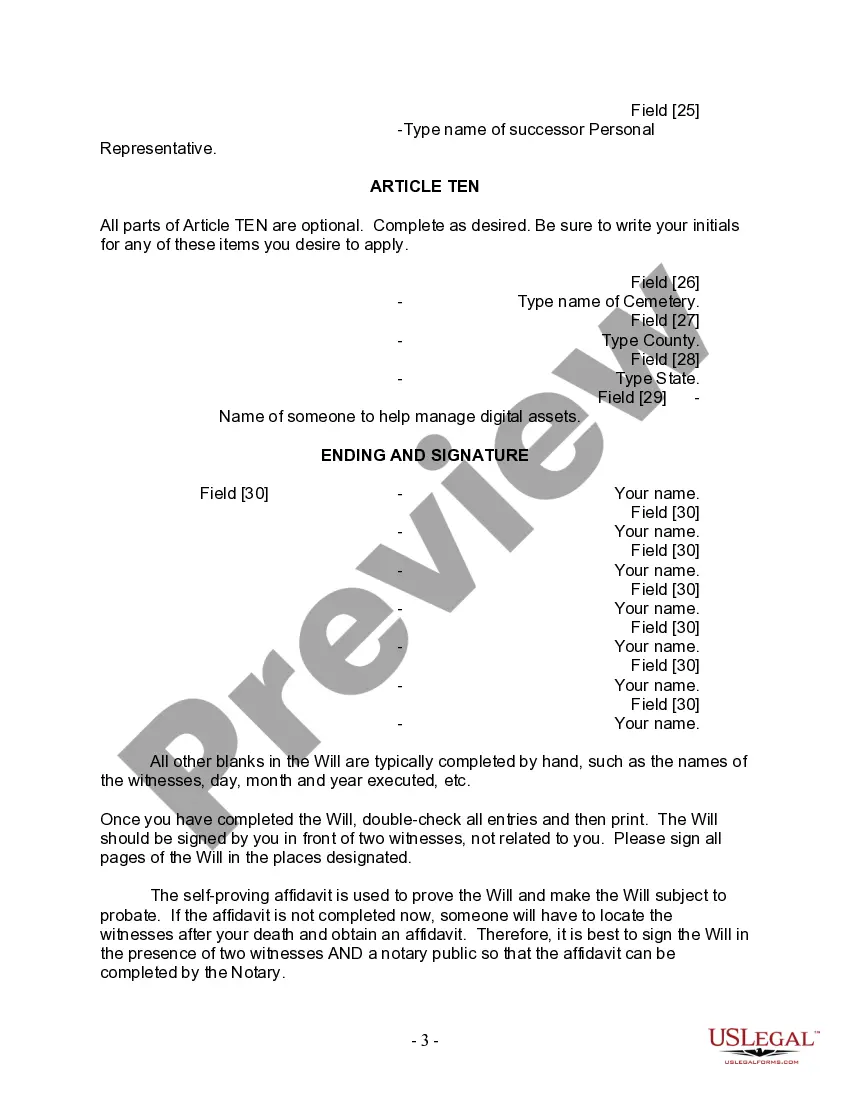
- Signature and Witness Requirements: Details on how to properly execute the will.



When to use this document
This Last Will and Testament should be utilized when a divorced individual without children wishes to outline the distribution of their assets after death. It is appropriate for those seeking to formalize their estate plans and ensure their property is distributed according to their wishes, as well as to appoint a trusted individual to handle their estate matters.
Intended users of this form
- Any divorced individual who has not remarried.
- People without children who wish to make specific bequests.
- Individuals looking to simplify the probate process for their heirs.
- Anyone wanting to ensure their assets are distributed according to their wishes.
Instructions for completing this form
- Start by entering your name and county of residence in the designated fields.
- Specify the names and addresses of individuals who will receive specific property.
- Designate a personal representative and a successor to manage your estate.
- Indicate any specific provisions regarding your homestead or primary residence.
- Sign the document in the presence of two witnesses and ensure their signatures are also present.
Does this document require notarization?
This document requires notarization to meet legal standards. US Legal Forms provides secure online notarization powered by Notarize, allowing you to complete the process through a verified video call, available 24/7.
Get your form ready online
Our built-in tools help you complete, sign, share, and store your documents in one place.
Make edits, fill in missing information, and update formatting in US Legal Forms—just like you would in MS Word.
Download a copy, print it, send it by email, or mail it via USPS—whatever works best for your next step.
Sign and collect signatures with our SignNow integration. Send to multiple recipients, set reminders, and more. Go Premium to unlock E-Sign.
If this form requires notarization, complete it online through a secure video call—no need to meet a notary in person or wait for an appointment.
We protect your documents and personal data by following strict security and privacy standards.

Make edits, fill in missing information, and update formatting in US Legal Forms—just like you would in MS Word.

Download a copy, print it, send it by email, or mail it via USPS—whatever works best for your next step.

Sign and collect signatures with our SignNow integration. Send to multiple recipients, set reminders, and more. Go Premium to unlock E-Sign.

If this form requires notarization, complete it online through a secure video call—no need to meet a notary in person or wait for an appointment.

We protect your documents and personal data by following strict security and privacy standards.
Mistakes to watch out for
- Not having the Will signed in front of the required witnesses.
- Failing to clearly specify assets or beneficiaries.
- Not keeping the Will in a safe but accessible location.
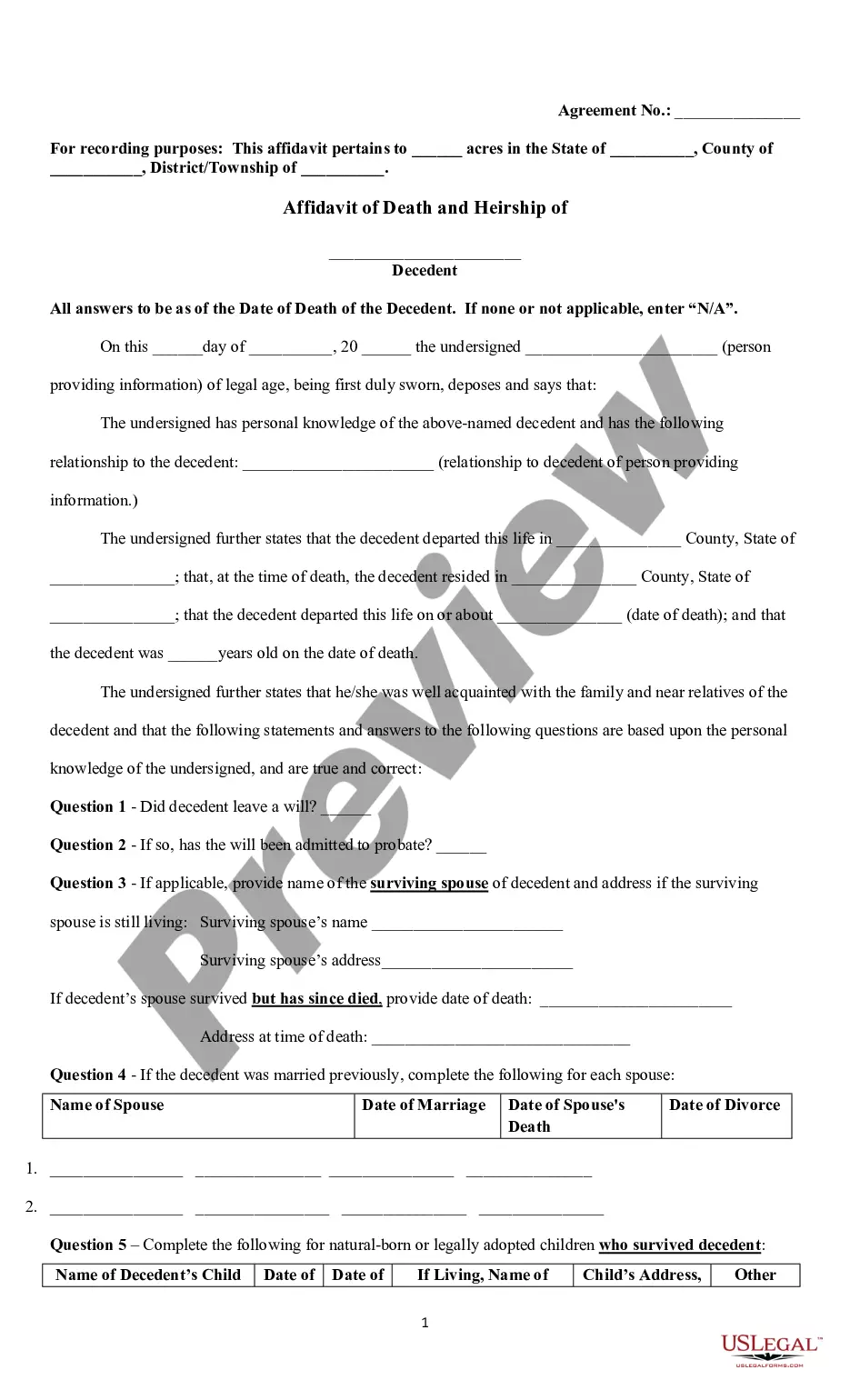
- Overlooking the need for a self-proving affidavit where applicable according to state law.
Benefits of completing this form online
- Convenient access to a legally vetted template tailored to your specific situation.
- Easy to fill out on your computer, allowing for accurate and clear completion.
- Reduces the time and stress associated with estate planning.
- Included instructions guide you through the completion process.
Legal use & context
- This will is valid as long as it meets the execution requirements of your state.
- It is advisable to consult with an attorney if you have complex estate matters.
- Wills created without proper formalities may be contested and could be deemed invalid.
Quick recap
- The Last Will and Testament is essential for ensuring your wishes are honored after your death.
- Proper documentation and execution are critical for the will's enforceability.
- This specific form is tailored for divorced individuals without children for streamlined estate planning.
Looking for another form?


Form popularity
FAQ
When a person in Hawaii has no spouse and no children, next of kin typically includes parents and siblings. If both parents are deceased, then other relatives such as grandparents, aunts, uncles, or cousins may inherit. In the context of a Hawaii Last Will and Testament for Divorced Person Not Remarried with No Children, it is important to specify your next of kin to ensure clear distribution of your assets. Utilizing a reliable platform like US Legal Forms can help you create a legally binding will to reflect your wishes accurately.
Yes, you can write your own will in Hawaii, including a Hawaii Last Will and Testament for Divorced Person Not Remarried with No Children. While it is perfectly legal, you must ensure that it meets all state requirements to be valid. Notarizing your will is not mandatory, but it can add an extra layer of protection and may ease the probate process. With platforms like uslegalforms, you can find guidance and templates to help write a will that suits your specific circumstances.
In Hawaii, you do not need to register a will for it to be valid, including a Hawaii Last Will and Testament for Divorced Person Not Remarried with No Children. As long as the will meets the state's legal requirements, it is effective upon your death. However, keeping the will in a secure place and informing a trusted person about its location can save your loved ones from confusion later. Utilizing platforms like uslegalforms can help you create and store your will securely.
In Hawaii, a divorce does not automatically void a will; however, it can impact the execution of certain provisions. Specifically, if your Honolulu Last Will and Testament for Divorced Person Not Remarried with No Children includes your ex-spouse as a beneficiary, those provisions may be disregarded. It's essential to revise your will after a divorce to make your intentions clear. Regularly updating your will ensures your assets are distributed according to your current wishes.
To be considered a legal document, a Hawaii Last Will and Testament for Divorced Person Not Remarried with No Children must meet specific requirements. It should be in writing, and signed by the testator, ideally in the presence of two witnesses who are at least 18 years old. Additionally, Hawaii law does not require the will to be notarized, but doing so can simplify the probate process. Ensuring these elements are in place helps your will be recognized and honored.
The simplest form of a will is a basic, handwritten document that outlines how you wish to distribute your property after your death. It is essential to include your full name, a clear declaration of your wishes, and your signature. While simplicity is key, clarity is crucial; thus, using a structured template might be beneficial. A Hawaii Last Will and Testament for Divorced Person Not Remarried with No Children can provide a straightforward approach.
In Hawaii, a will must be in writing and signed by the testator. It should also be witnessed by at least two individuals who are not beneficiaries, which helps validate the document. It's important to ensure that the will reflects your true intentions to avoid future disputes. To simplify the process, consider using a Hawaii Last Will and Testament for Divorced Person Not Remarried with No Children template.
A last will and testament does not override a marriage. In fact, in many cases, spouses are provided rights to each other's estates, which can influence how assets are distributed. If you are divorced and have not remarried, your will can specify your wishes regarding who receives your assets. When creating a Hawaii Last Will and Testament for Divorced Person Not Remarried with No Children, ensure your wishes are clearly stated.
To write a will on a piece of paper, start by writing your full name and declaring that this document is your last will. Clearly state how you want your assets distributed after your passing. Lastly, sign and date the document, and consider having it witnessed for added legal assurance. A template for a Hawaii Last Will and Testament for Divorced Person Not Remarried with No Children can guide you in organizing your thoughts.
Yes, you can write a will on a piece of paper, but specific guidelines must be followed for it to be enforceable. You should ensure that it includes your full name, the date, and your signature. Simply writing your intentions is not sufficient; the content must be clear and complete. Using a template for a Hawaii Last Will and Testament for Divorced Person Not Remarried with No Children can simplify this process.