Hawaii Inventory and Condition of Leased Premises for Pre Lease and Post Lease
What this document covers
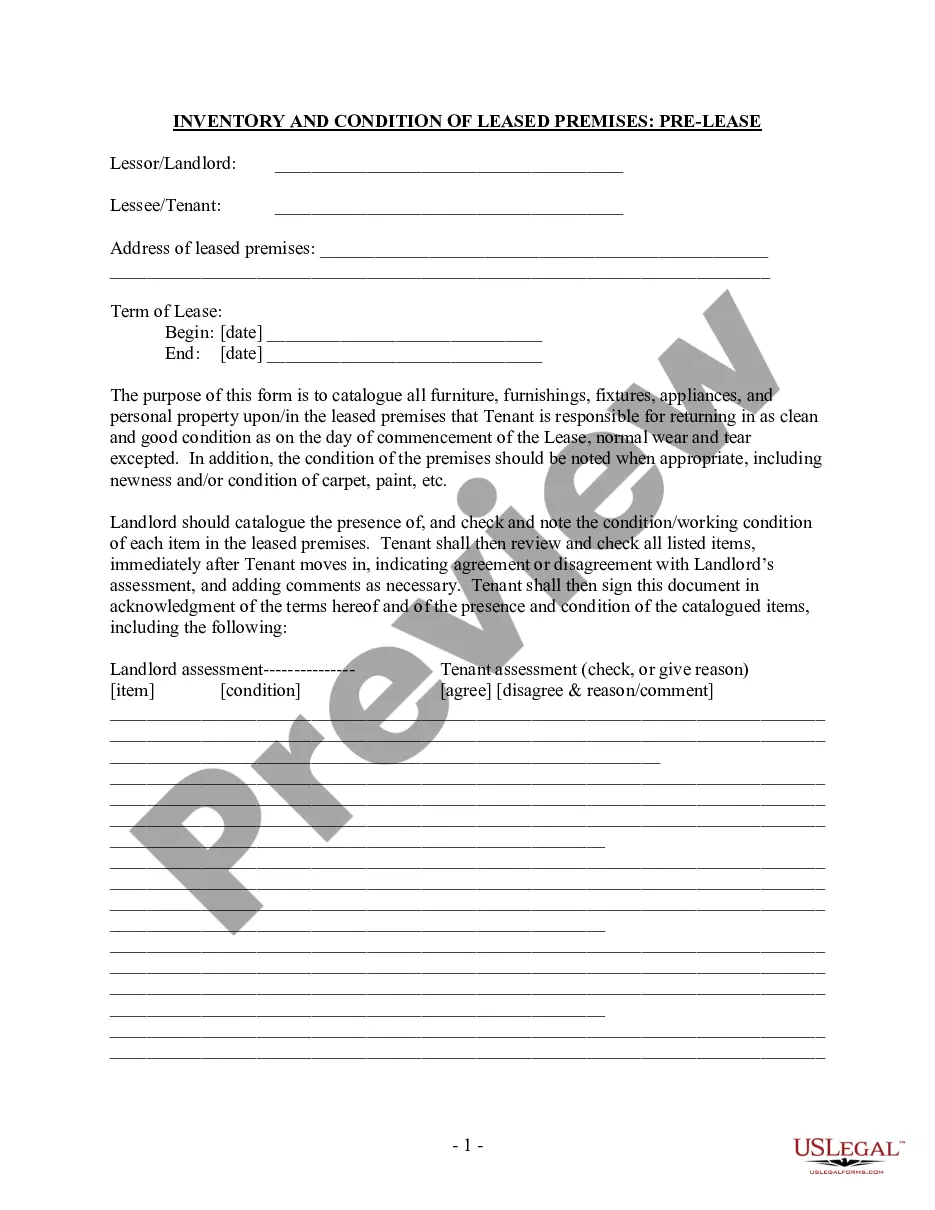
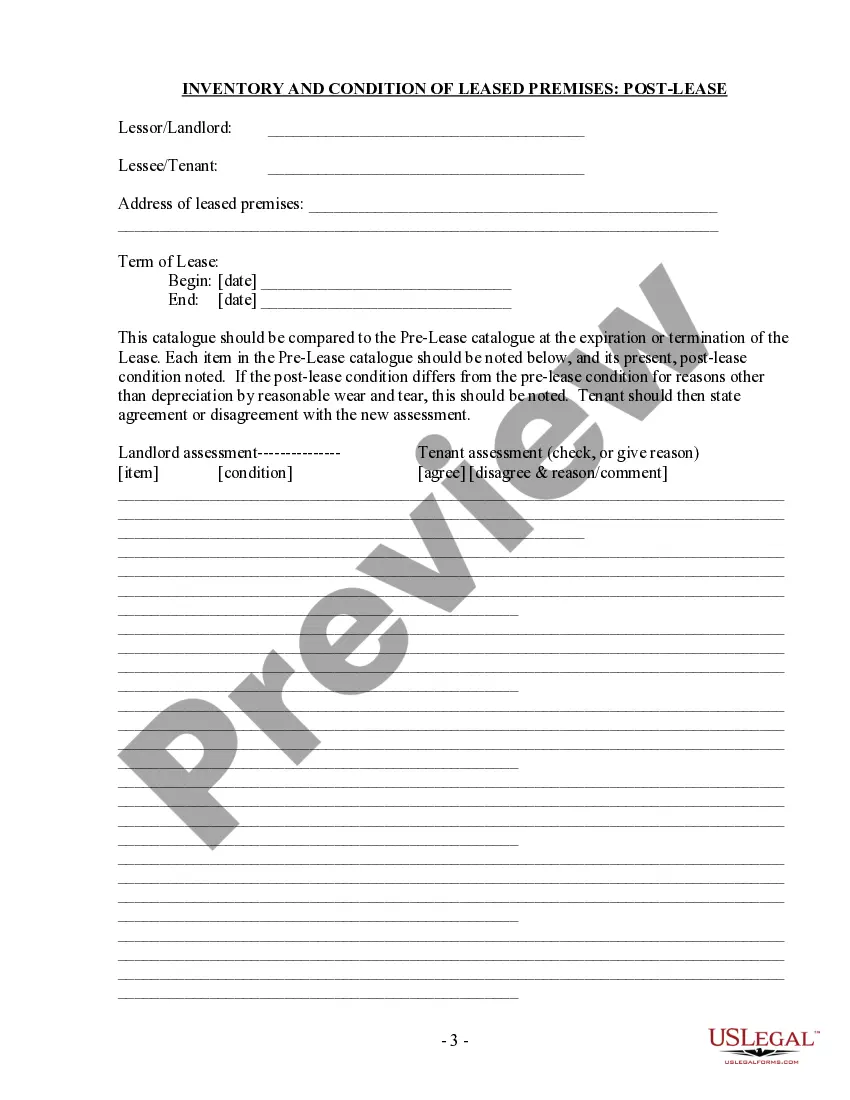
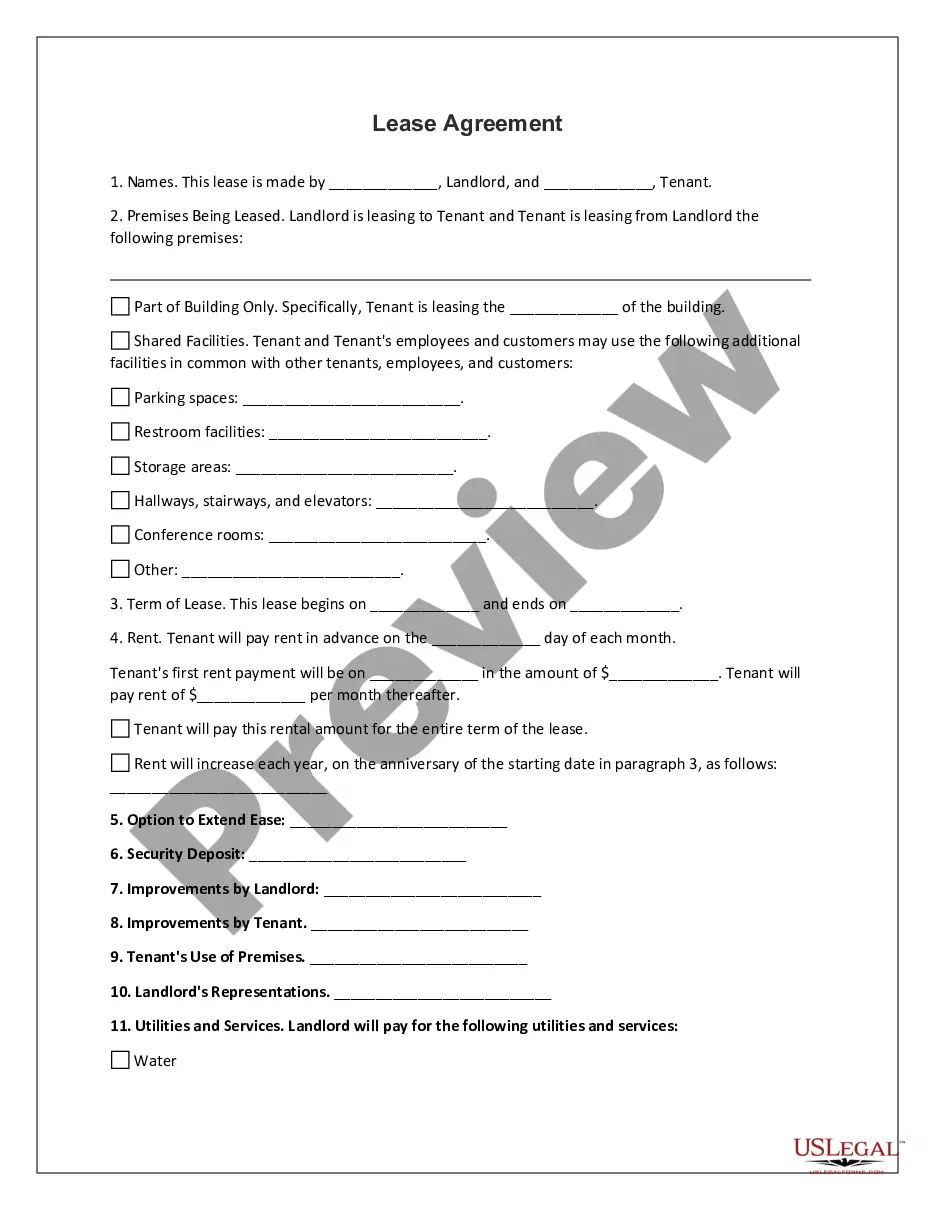
The Inventory and Condition of Leased Premises for Pre Lease and Post Lease is a legal document utilized by tenants and landlords to document the state of a rental property's premises before and after the lease term. This form serves as a key safeguard for both parties, ensuring accountability for any damage or discrepancies in the condition of furniture, fixtures, and appliances in the leased property. By using this inventory form, tenants can protect their security deposit, while landlords can ensure their property is well-maintained.
Key parts of this document
- Identification of the landlord (lessor) and tenant (lessee).
- Address of the leased premises.
- Term of the lease including start and end dates.
- Catalog of items present in the premises with condition assessments.
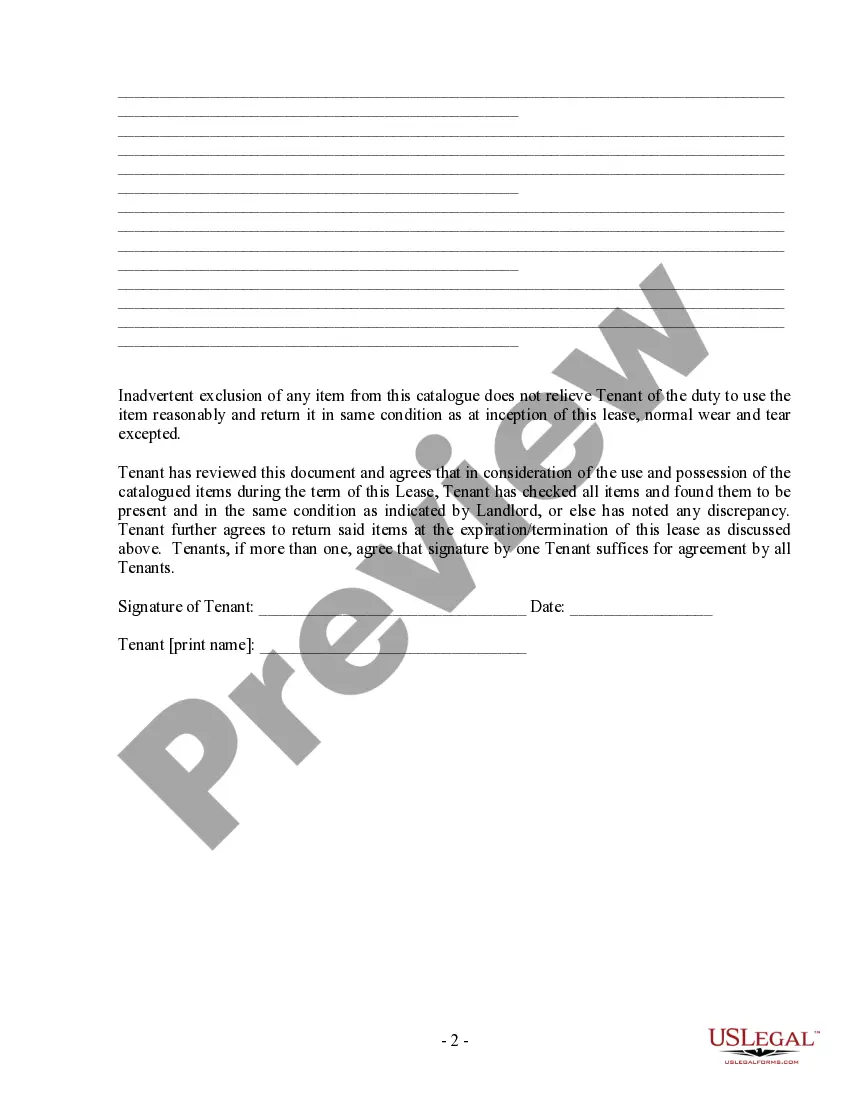
- Agreement or disagreement section for tenant assessments of the listed items.
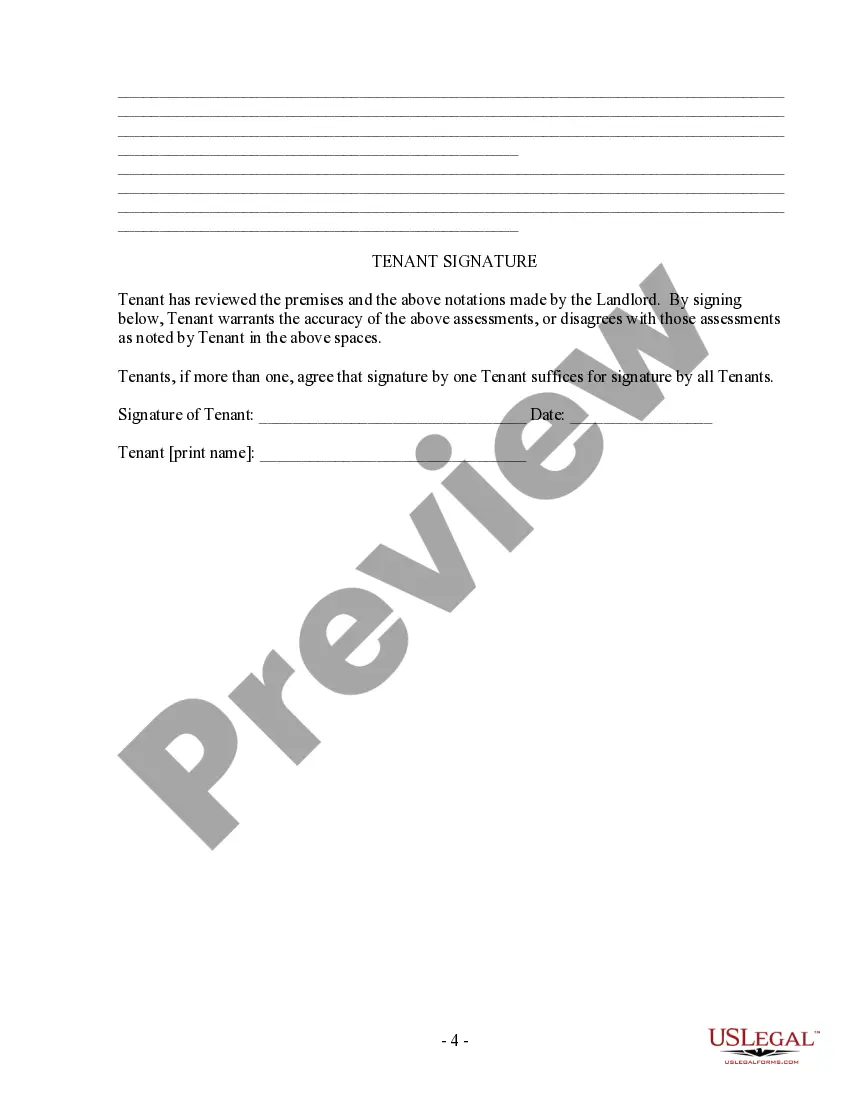
- Signatures of both tenant and landlord for acknowledgment.
When to use this document
This form should be used when entering into a lease agreement for rental property, both before the tenant moves in and after they vacate the premises. It is essential for documenting the state of the property to prevent disputes over damages or missing items. Using this form establishes clear expectations regarding the condition of the property and protects the interests of both the landlord and tenant.
Intended users of this form
- Landlords who want to ensure their rental property is properly maintained and returned in the agreed condition.
- Tenants who wish to protect their security deposit and establish a recorded inventory of the property upon moving in and out.
- Property management companies involved in leasing agreements on behalf of landlords.
How to prepare this document
- Identify the parties involved, including the landlord and tenant names.
- Specify the address of the leased premises.
- Enter the start and end dates of the lease term.
- List all items within the premises and detail their conditions as assessed by the landlord.
- Have the tenant review the inventory and indicate any agreements or disagreements with the assessments.
- Both parties should sign and date the document to acknowledge their agreement to the findings.
Does this form need to be notarized?
In most cases, this form does not require notarization. However, some jurisdictions or signing circumstances might. US Legal Forms offers online notarization powered by Notarize, accessible 24/7 for a quick, remote process.
Get your form ready online
Our built-in tools help you complete, sign, share, and store your documents in one place.
Make edits, fill in missing information, and update formatting in US Legal Forms—just like you would in MS Word.
Download a copy, print it, send it by email, or mail it via USPS—whatever works best for your next step.
Sign and collect signatures with our SignNow integration. Send to multiple recipients, set reminders, and more. Go Premium to unlock E-Sign.
If this form requires notarization, complete it online through a secure video call—no need to meet a notary in person or wait for an appointment.
We protect your documents and personal data by following strict security and privacy standards.

Make edits, fill in missing information, and update formatting in US Legal Forms—just like you would in MS Word.

Download a copy, print it, send it by email, or mail it via USPS—whatever works best for your next step.

Sign and collect signatures with our SignNow integration. Send to multiple recipients, set reminders, and more. Go Premium to unlock E-Sign.

If this form requires notarization, complete it online through a secure video call—no need to meet a notary in person or wait for an appointment.

We protect your documents and personal data by following strict security and privacy standards.
Mistakes to watch out for
- Failing to list all items present in the premises, leading to potential disputes.
- Skipping the tenant's review of the listed items, which can result in misunderstandings later.
- Not keeping a signed copy of the completed form for records.
- Assuming all items will be covered under normal wear and tear without proper documentation.
Benefits of completing this form online
- Convenient access to legally vetted forms from anywhere with an internet connection.
- Easy customization of forms to fit specific tenant and property needs.
- Immediate download options that save time and streamline the leasing process.
- Reliable access to documented legal language, ensuring clarity and compliance.
Legal use & context
- This form is enforceable in court and serves as a documented agreement between landlord and tenant.
- Proper completion and signing of the form can protect both parties from legal disputes over property condition.
- It is important for tenants to keep the form to refer back to during the tenancy and at the lease's conclusion.
Looking for another form?
Form popularity
FAQ
To fill out the residential lease inventory and condition form, begin by carefully inspecting each area of the property and noting existing damages or issues. Use clear descriptions and attach photographs if possible, as these details are vital for the Hawaii Inventory and Condition of Leased Premises for Pre Lease and Post Lease. Forms can be easily completed using user-friendly templates available on the uslegalforms platform, which simplifies the process and offers guidance throughout.
The inventory and record of condition is a comprehensive document that details the state of leased properties before and after a lease agreement. In Hawaii, this record helps both landlords and tenants clearly understand the condition of the premises, ensuring transparency and responsibility. This tool is essential for the Hawaii Inventory and Condition of Leased Premises for Pre Lease and Post Lease processes, as it helps prevent disputes regarding property damage and security deposits.
Avoid making accusations or threats when communicating with your landlord, as it can escalate conflicts unnecessarily. Instead, focus on discussing issues clearly and respectfully. Emphasizing cooperation over confrontation can help you maintain a positive relationship regarding the Hawaii Inventory and Condition of Leased Premises for Pre Lease and Post Lease, which benefits both tenants and landlords.
Landlords in Hawaii are generally required to make necessary repairs within a reasonable period. What constitutes 'reasonable' can depend on the nature and urgency of the repair. Understanding this timeline is vital when discussing the Hawaii Inventory and Condition of Leased Premises for Pre Lease and Post Lease, as it ensures both parties know their responsibilities.
A holdover tenant is someone who remains in a rental property after their lease has expired, without the landlord's consent. In Hawaii, this situation can lead to various legal implications, so it’s important to handle it appropriately. Both tenants and landlords should consider the Hawaii Inventory and Condition of Leased Premises for Pre Lease and Post Lease for clarity on the rights and obligations involved.
Anything beyond reasonable wear and tear is typically referred to as damage. This could include broken windows, large stains on carpets, or holes in walls. Recognizing the difference is key to understanding the Hawaii Inventory and Condition of Leased Premises for Pre Lease and Post Lease, which helps clarify your responsibilities as a tenant or landlord.
Landlords in Hawaii can deduct amounts from a security deposit for damages beyond normal wear and tear, unpaid rent, or cleaning costs necessary to return the property to its original condition. It is crucial for landlords to provide a detailed itemization of any deductions. This practice aligns with the Hawaii Inventory and Condition of Leased Premises for Pre Lease and Post Lease, ensuring fairness and transparency.
Normal wear and tear refers to the natural deterioration that occurs over time with the use of a property. In Hawaii, acceptable signs of wear include faded paint, minor scuffs on walls, or worn carpets. Understanding these distinctions helps both tenants and landlords to assess the Hawaii Inventory and Condition of Leased Premises for Pre Lease and Post Lease accurately.
A pre lease is a legal agreement that can establish certain rights and obligations before the actual lease begins. In Hawaii, it often depends on whether the terms are clearly laid out and mutually agreed upon by both parties. It's essential to understand that a pre lease may hold binding implications, especially concerning the Hawaii Inventory and Condition of Leased Premises for Pre Lease and Post Lease.
To fill out a lease inventory and condition form, start by listing all furnished items provided with the rental property and detailing their condition. Inspect each item thoroughly to ensure accuracy, and note any existing damages to avoid unfair charges later. This form plays a crucial role in the Hawaii Inventory and Condition of Leased Premises for Pre Lease and Post Lease, ensuring you have a clear record of your rental's state at the beginning of your lease.