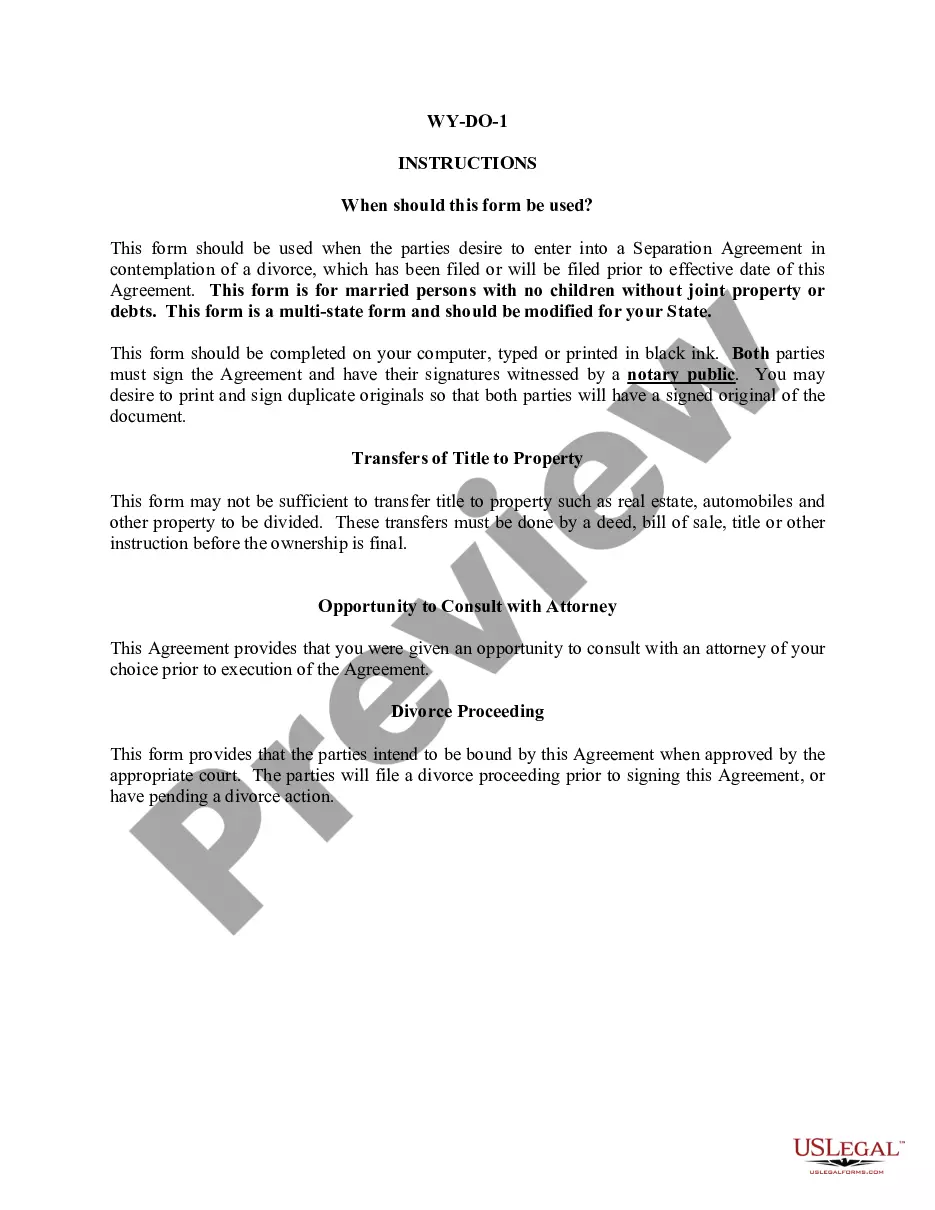
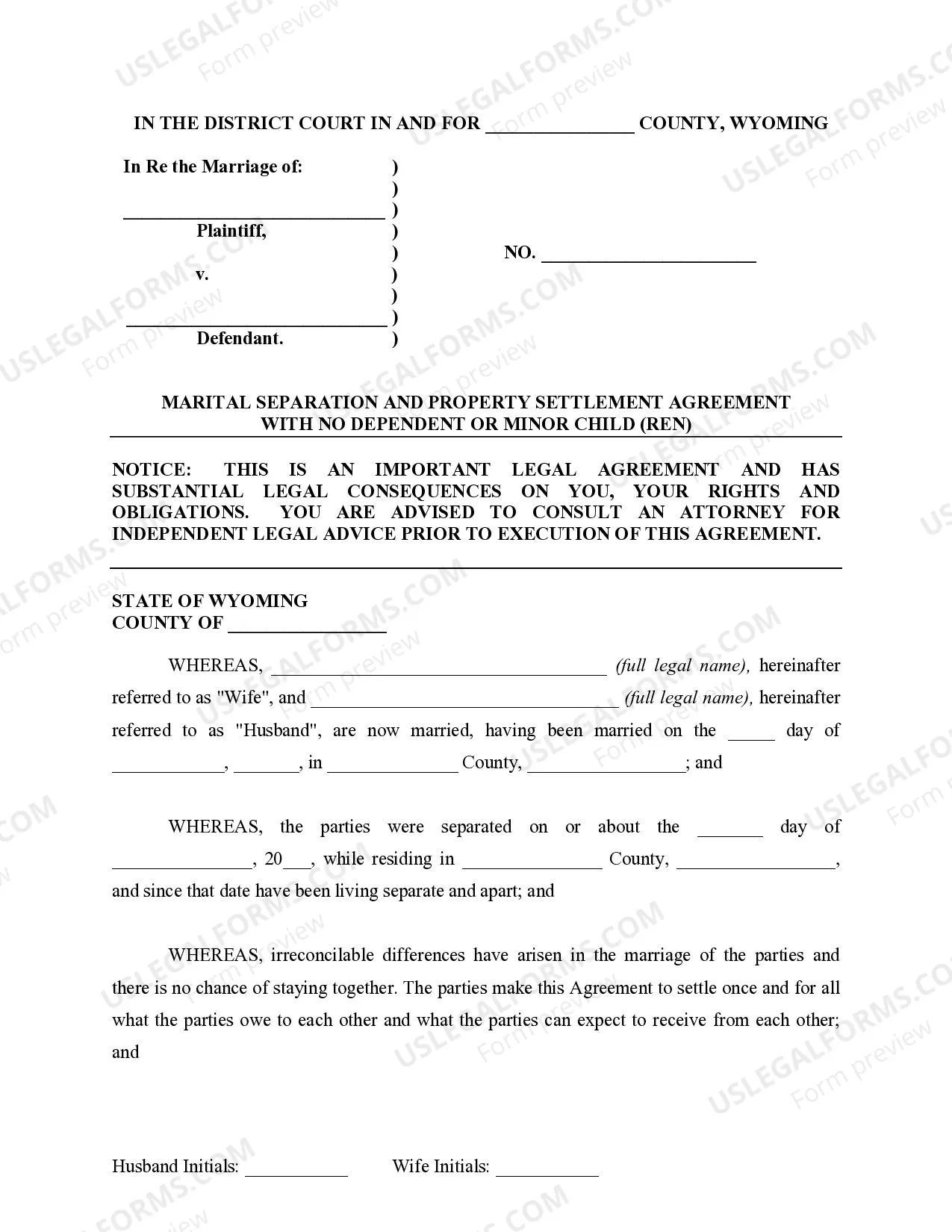
Wyoming Marital Domestic Separation and Property Settlement Agreement for persons with No Children, No Joint Property or Debts where Divorce Action Filed
About this form
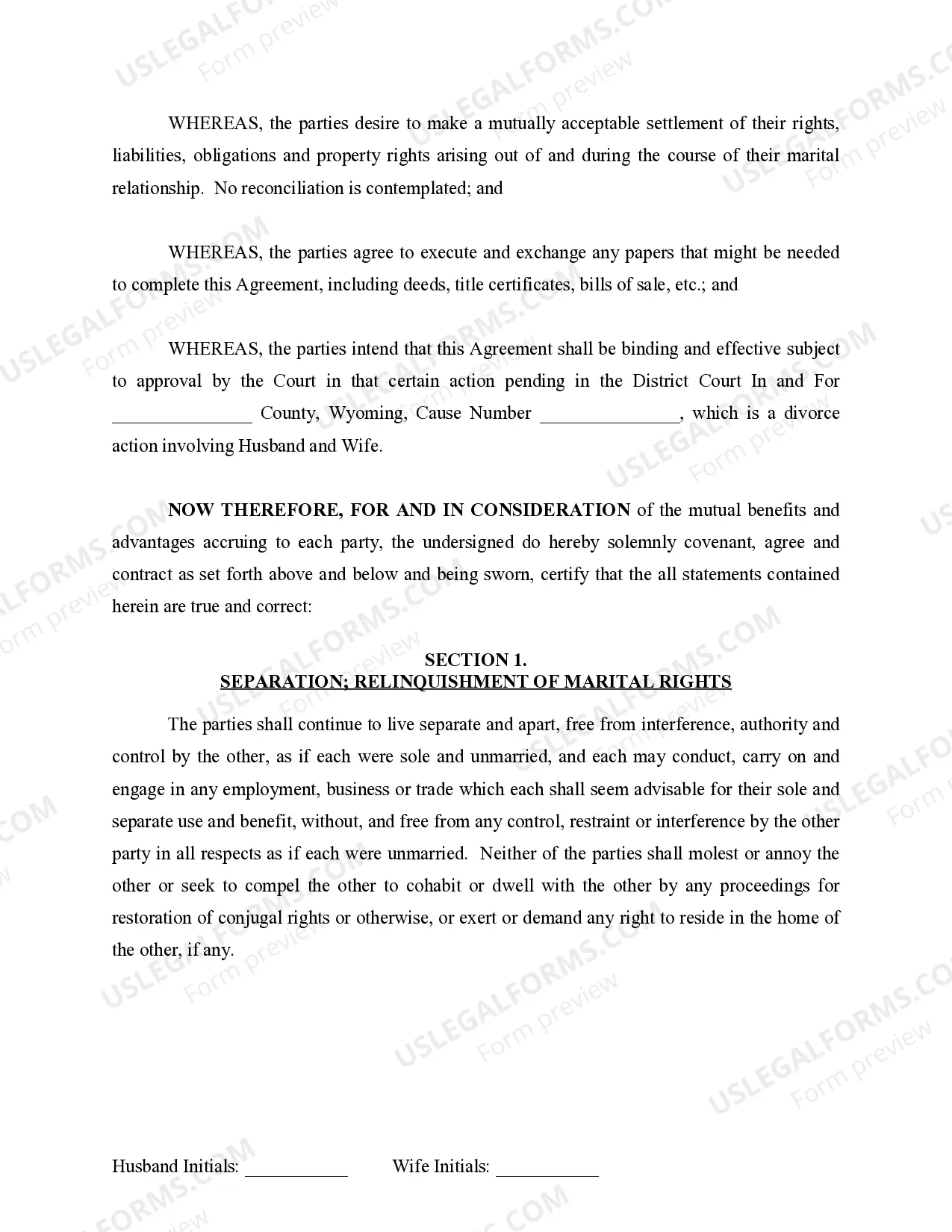
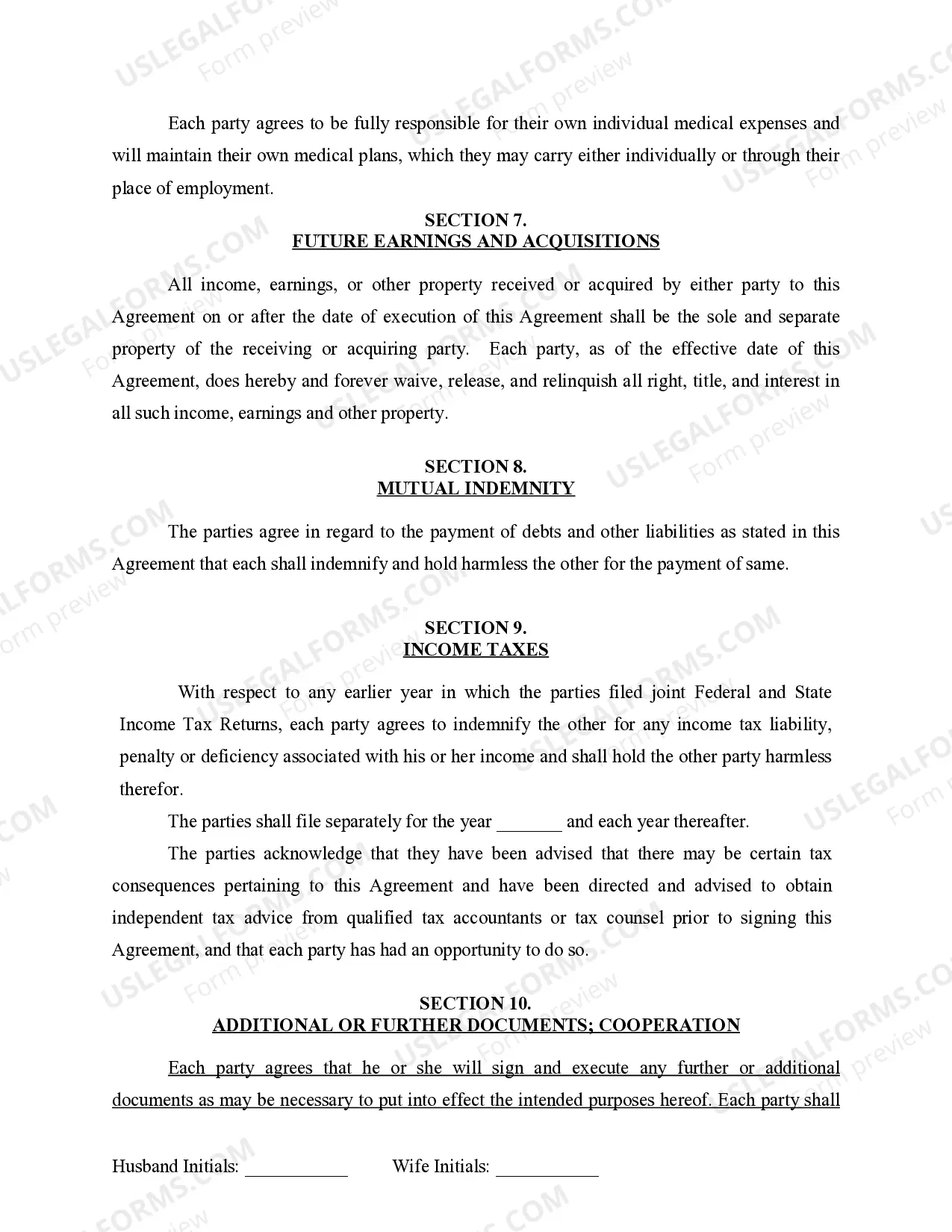
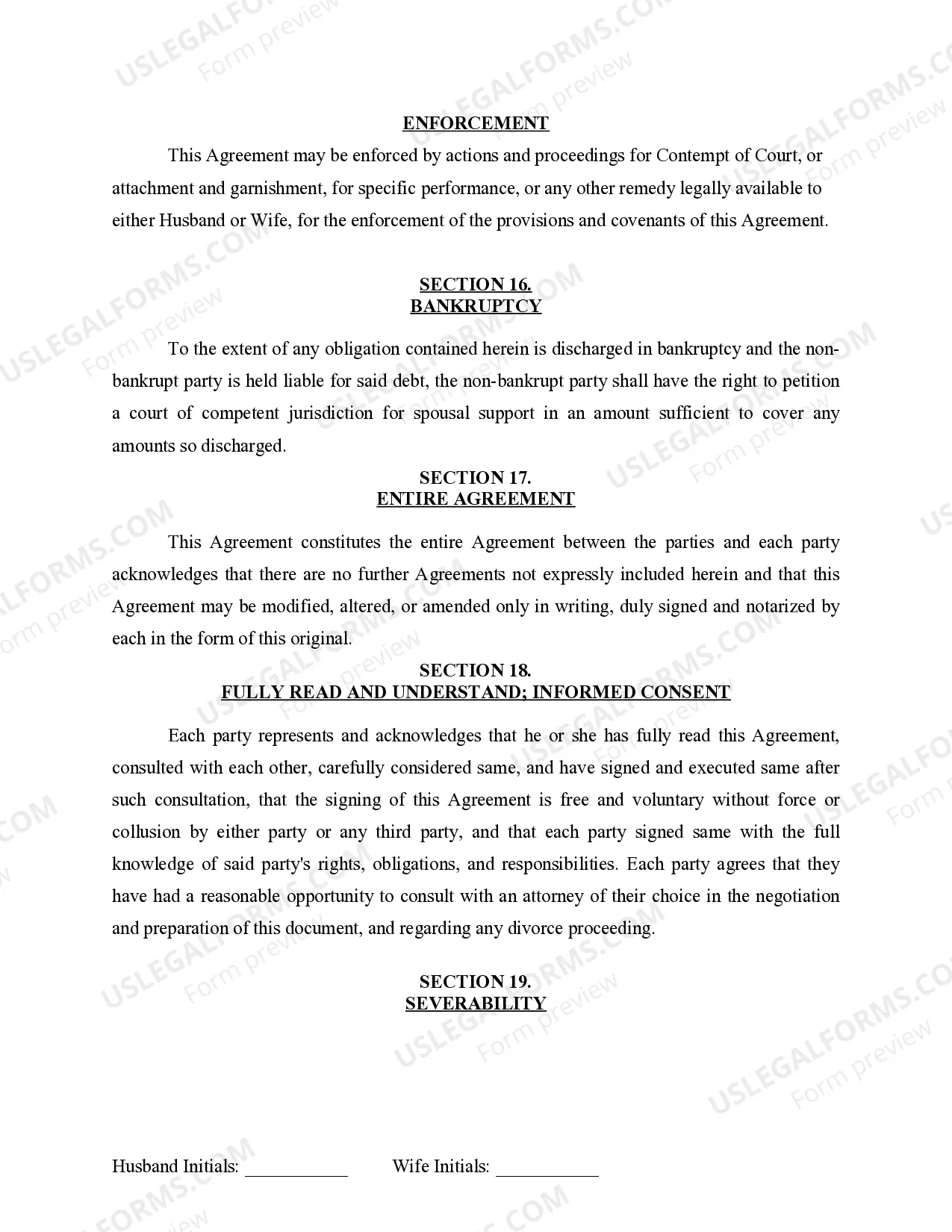
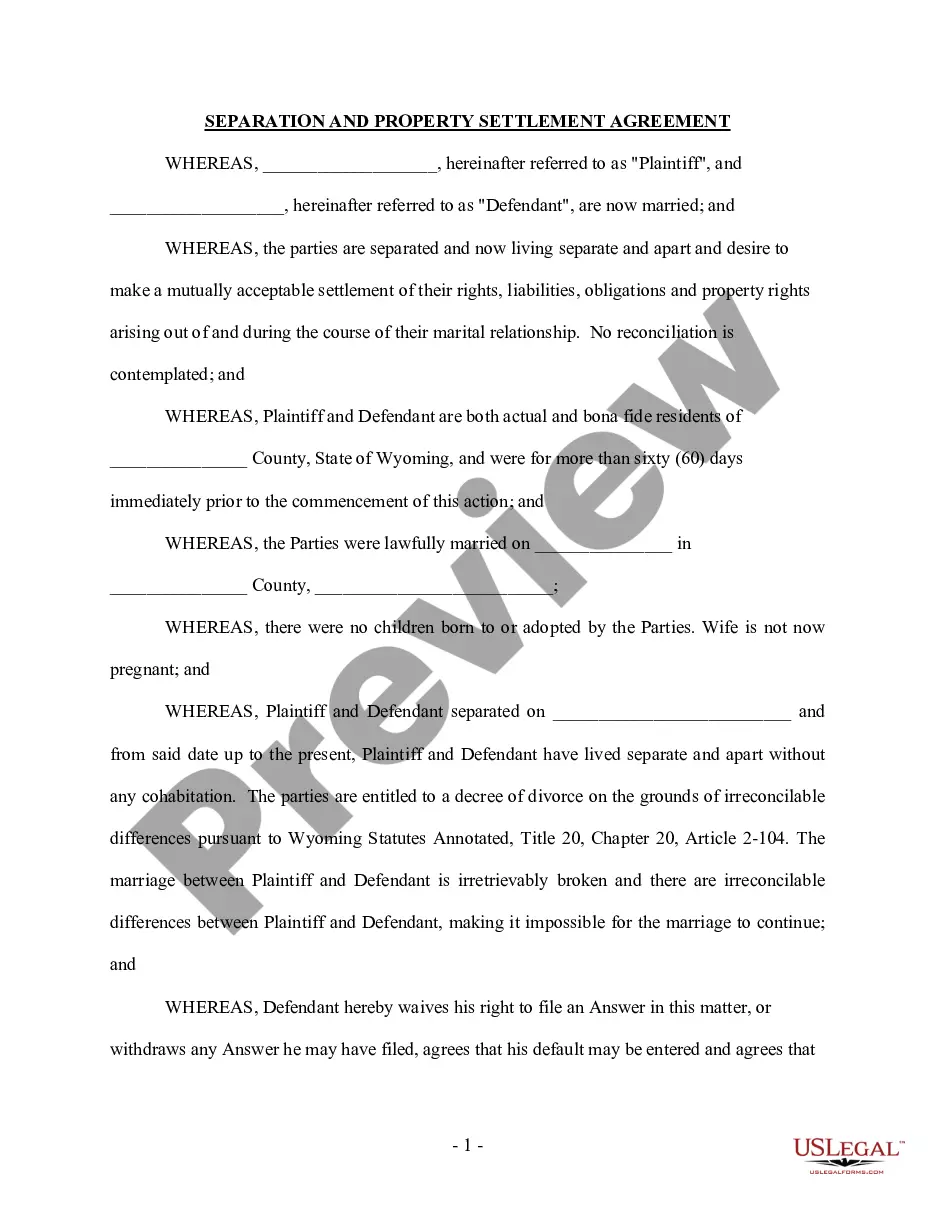
The Marital Domestic Separation and Property Settlement Agreement is a legal document designed for couples who are divorcing without children and without shared property or debts. This form outlines the agreed terms for the separation and division of assets, ensuring both parties understand their rights and obligations as they end their marriage. Unlike other divorce agreements, this document focuses solely on the separation process for couples with no joint responsibilities, streamlining the legal proceedings involved in divorce actions.
Key components of this form
- Identification of the parties involved in the agreement.
- Provisions for separation and relinquishment of marital rights.
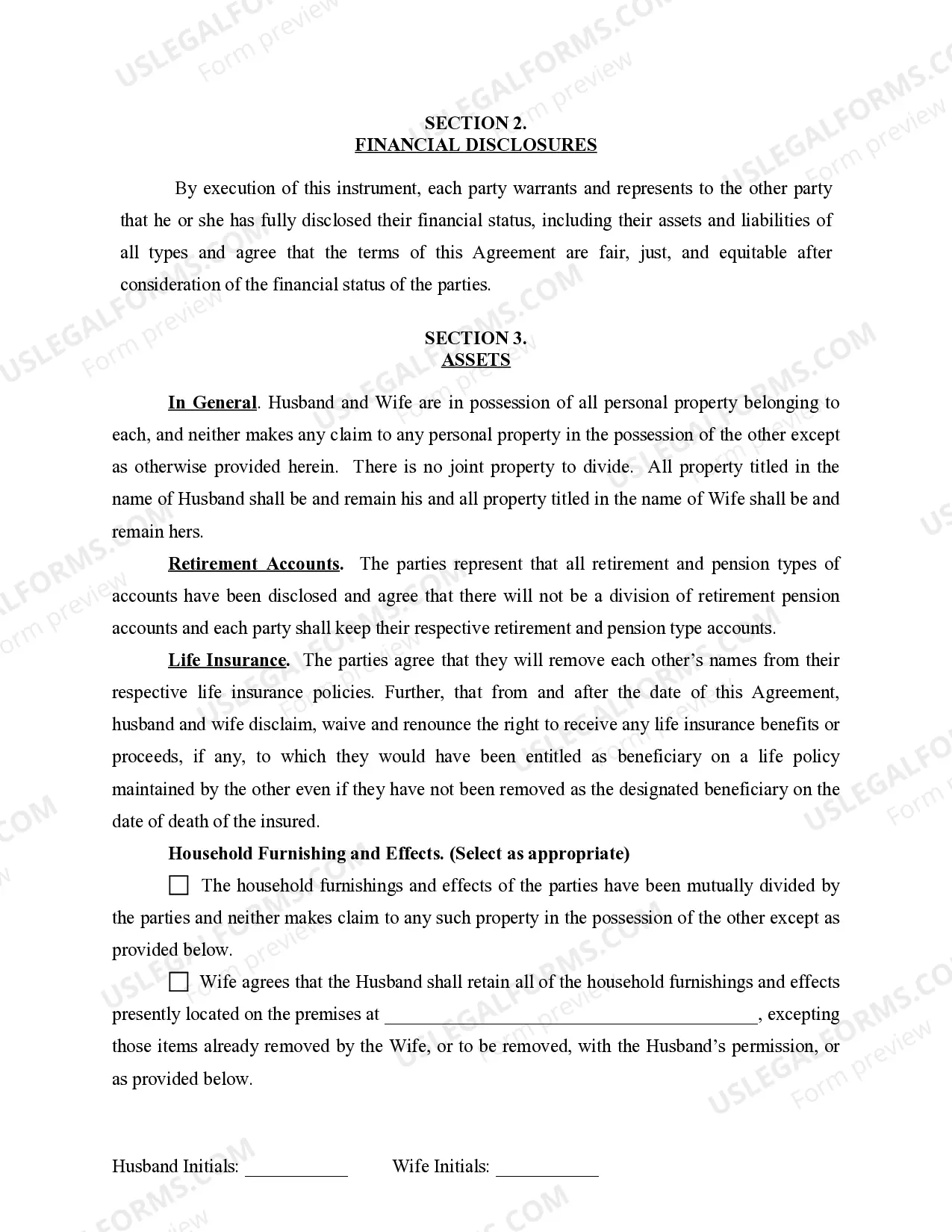
- Detailed disclosures of individual finances, including assets and debts.
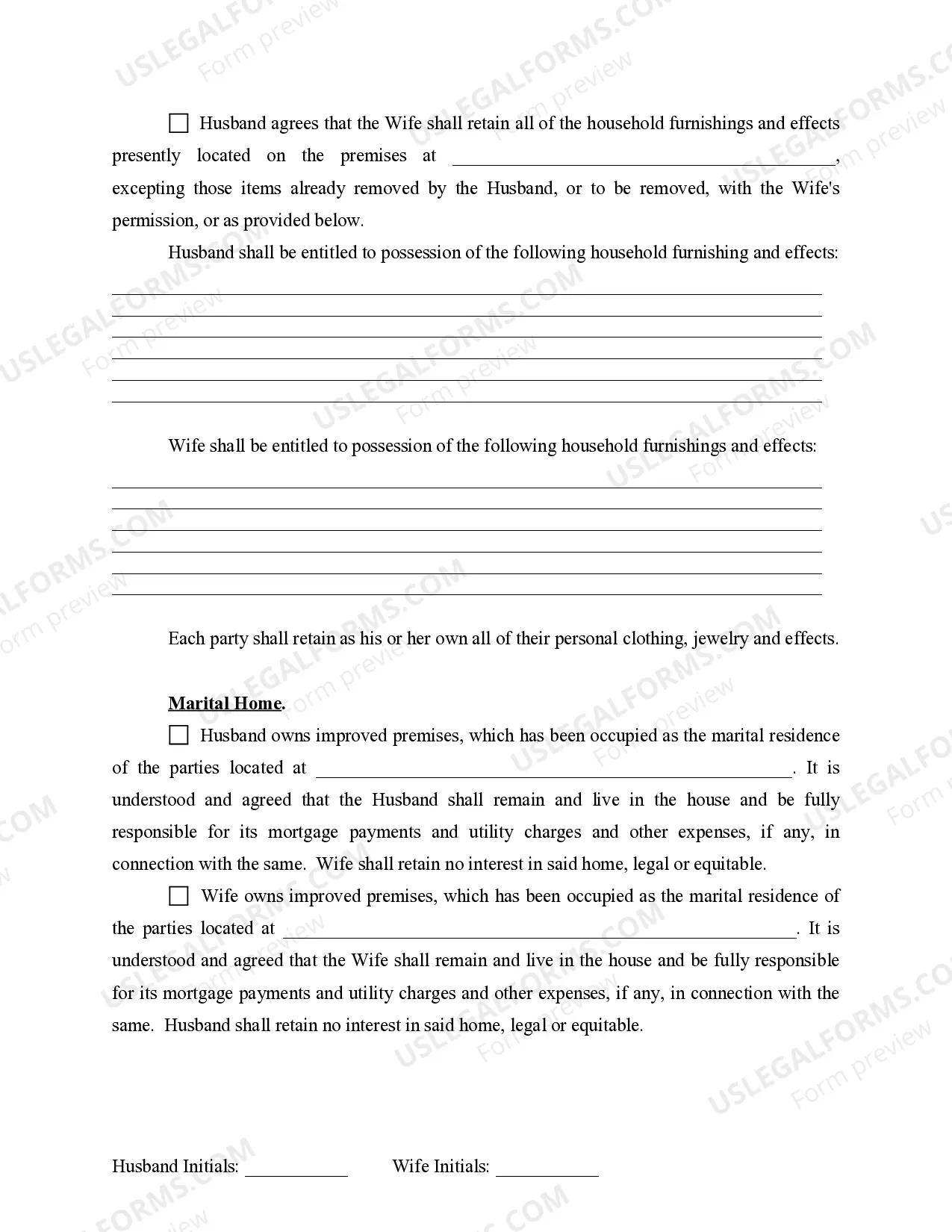
- Terms for the division and possession of personal property.
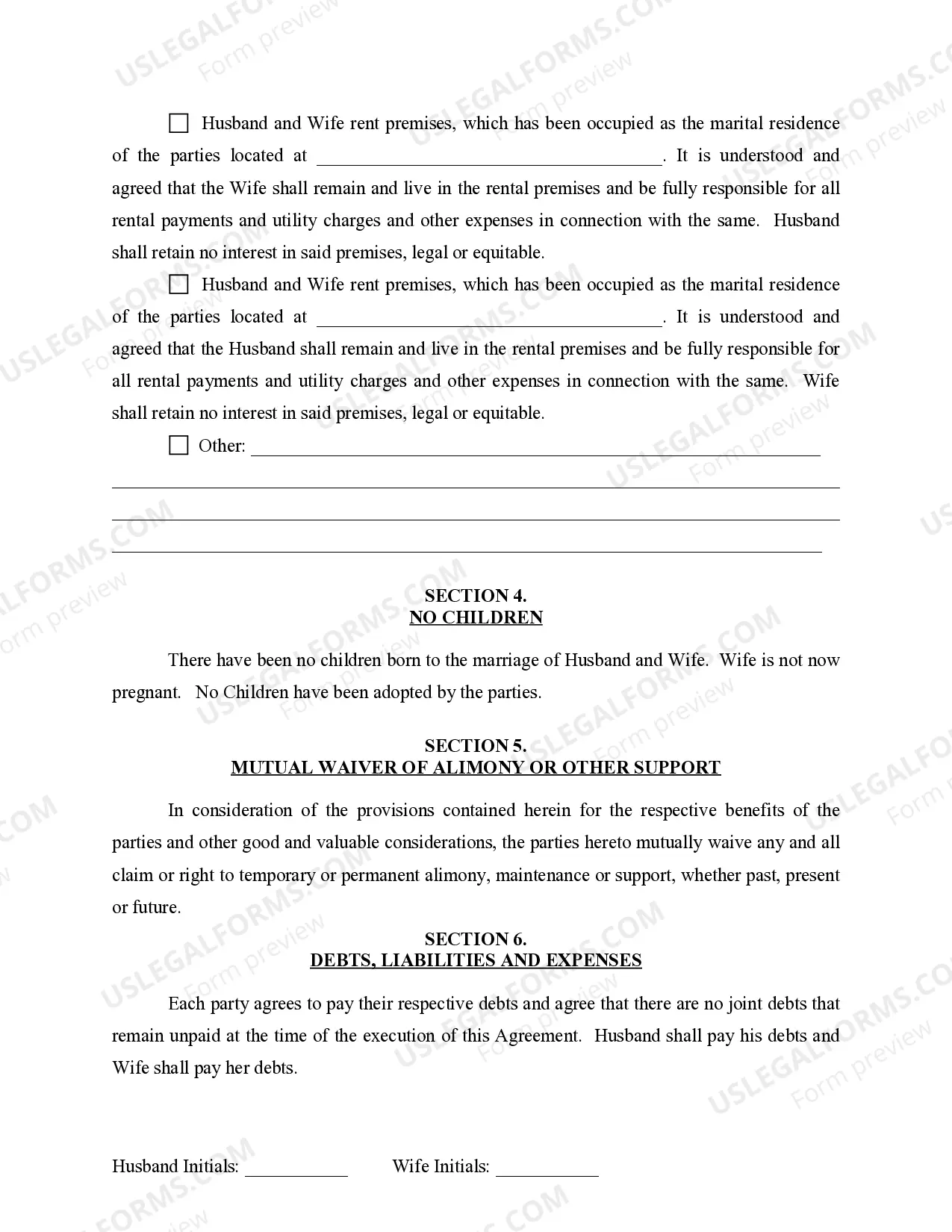
- Waivers of alimony and future support claims.
- Requirements for notary acknowledgment to validate the agreement.



When this form is needed
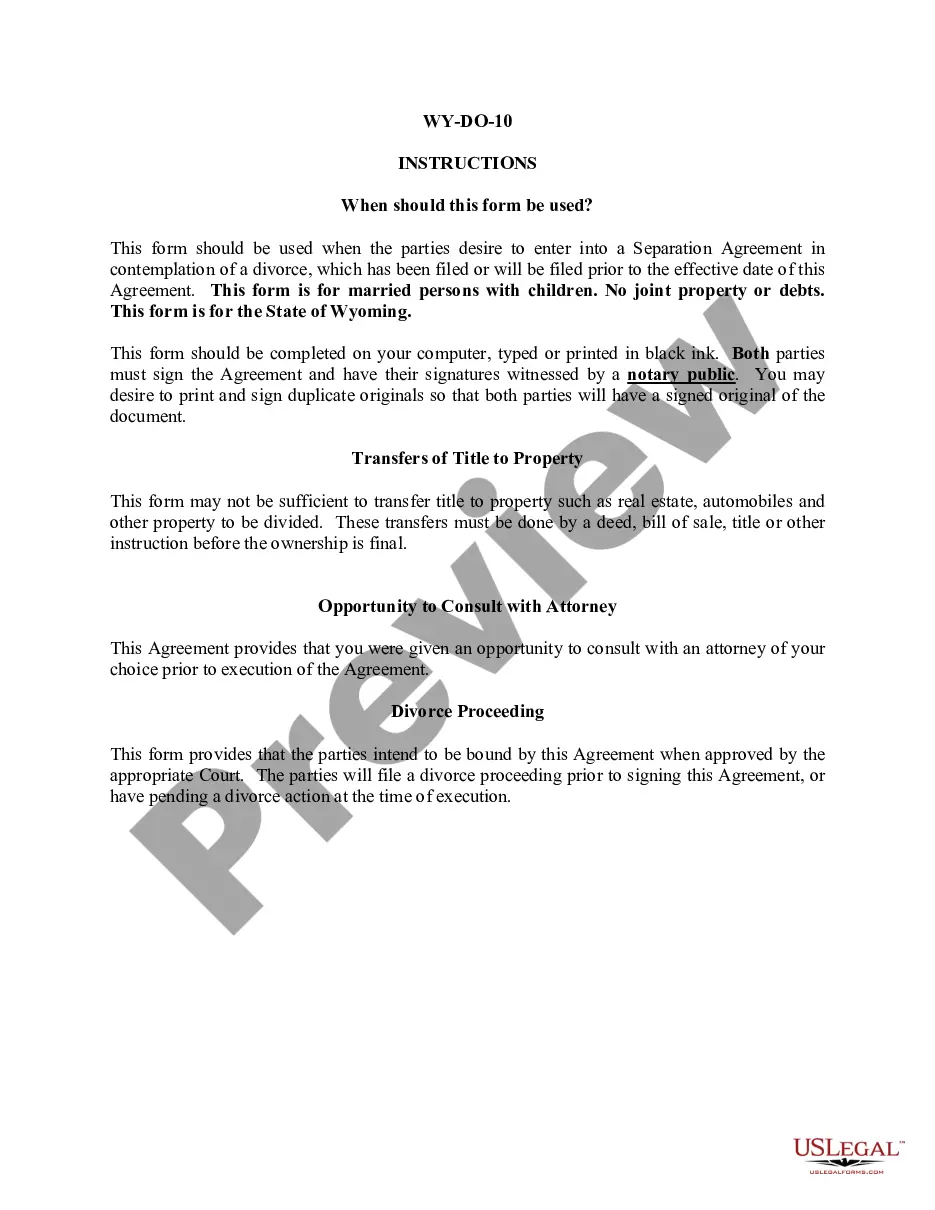
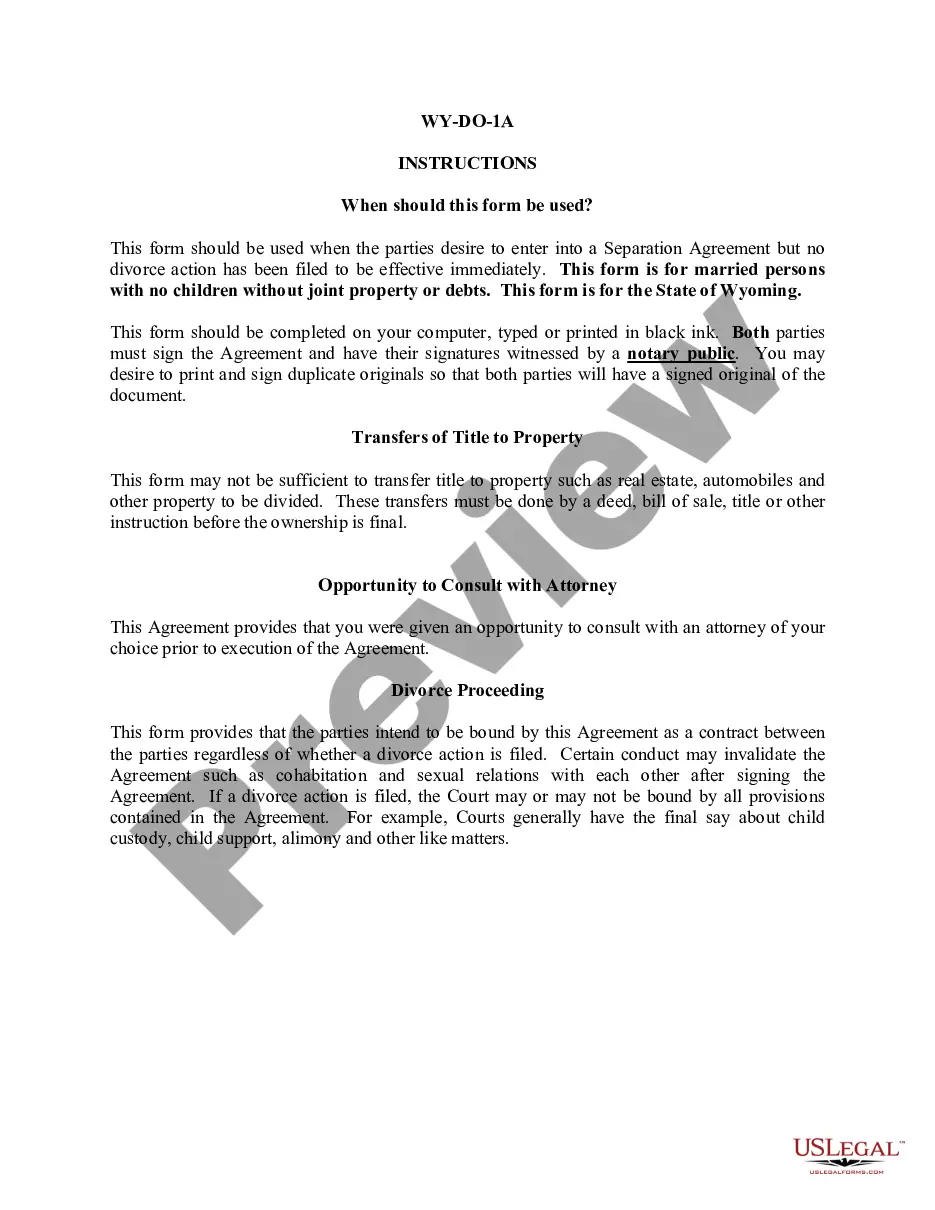
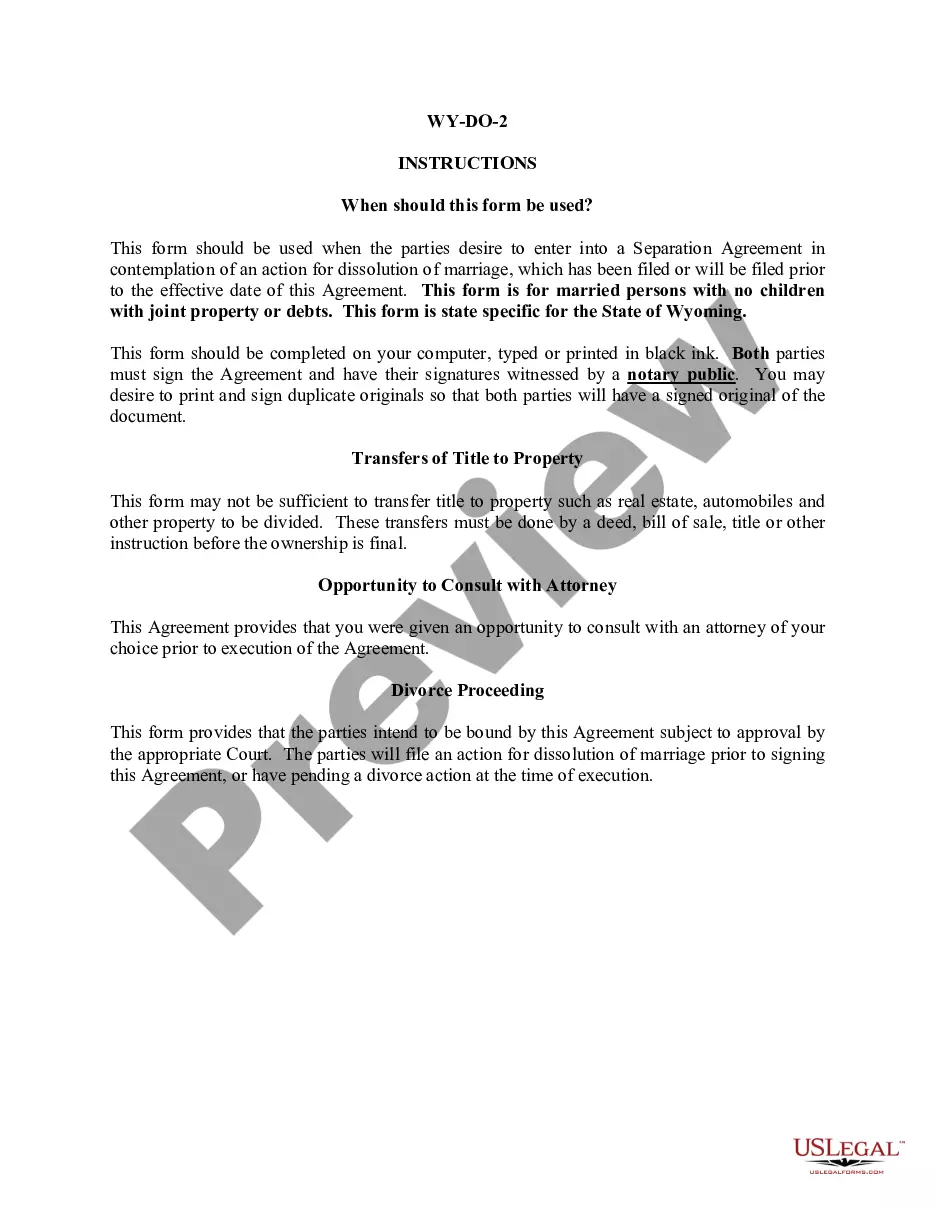
This form should be utilized when both spouses have decided to pursue a separation in anticipation of divorce where no children or shared debts exist. It is particularly relevant in cases where the couple wishes to clearly outline the settlement of their assets and clarify their financial responsibilities before finalizing the divorce process.
Who needs this form
This agreement is intended for:
- Married couples filing for divorce with no children.
- Couples who do not share any joint property or debts.
- Individuals seeking a clear understanding of their financial rights and obligations.
Completing this form step by step
To complete this form, follow these steps:
- Identify both parties and their legal names as well as the date and location of the marriage.
- Clearly disclose all financial assets, debts, and other liabilities of each party.
- Specify the division of household furnishings and any personal property retained by each party.
- Enter the dates for separation and the effective date of the agreement.
- Ensure both parties sign the document in front of a notary public for it to be legally binding.
Notarization guidance
Yes, this form must be notarized to be legally valid. Both parties are required to sign the agreement in the presence of a notary public, which adds an extra layer of authentication to the document. US Legal Forms offers integrated online notarization services, enabling you to complete this process securely via video call at your convenience.
Get your form ready online
Our built-in tools help you complete, sign, share, and store your documents in one place.
Make edits, fill in missing information, and update formatting in US Legal Forms—just like you would in MS Word.
Download a copy, print it, send it by email, or mail it via USPS—whatever works best for your next step.
Sign and collect signatures with our SignNow integration. Send to multiple recipients, set reminders, and more. Go Premium to unlock E-Sign.
If this form requires notarization, complete it online through a secure video call—no need to meet a notary in person or wait for an appointment.
We protect your documents and personal data by following strict security and privacy standards.

Make edits, fill in missing information, and update formatting in US Legal Forms—just like you would in MS Word.

Download a copy, print it, send it by email, or mail it via USPS—whatever works best for your next step.

Sign and collect signatures with our SignNow integration. Send to multiple recipients, set reminders, and more. Go Premium to unlock E-Sign.

If this form requires notarization, complete it online through a secure video call—no need to meet a notary in person or wait for an appointment.

We protect your documents and personal data by following strict security and privacy standards.
Common mistakes
- Failing to fully disclose all financial information can lead to disputes later.
- Not having the agreement notarized, which may impact its enforceability.
- Overlooking the necessary modifications for state-specific requirements.
- Neglecting to keep copies of the signed agreement for future reference.
Benefits of completing this form online
- Convenient online access allows you to complete the form at your own pace.
- Editable content ensures you can personalize the agreement to your circumstances.
- Reliably drafted by licensed attorneys to align with legal standards.
- Eliminates the need for scheduling in-person meetings with legal professionals.
Key takeaways
- This agreement is essential for couples with no children or joint financial obligations who are seeking separation.
- Accurate financial disclosure is crucial for a fair settlement.
- Both parties should consult with an attorney before executing the agreement to understand their rights.
- The agreement requires notarization to ensure its legal enforceability.
Looking for another form?
Form popularity
FAQ
Wyoming family laws provide for spousal support, or alimony, in the event of a divorce. But it is rarely awarded. Spousal support can be requested by either spouse, so long as he or she is in a less favorable position to support him or herself after the divorce.
Wyoming is a just and equitable distribution state, so when the parties reach an impasse when it comes to dividing a marital estate, the court will step in. Just and Equitable does not necessarily mean equal, but what the court decides is fair.
As Pat states, Wyoming does not recognize common law marriage. In other words, living together in Wyoming, no matter for how long, does not make you husband and wife.
If a couple is able to come to an agreement about all the major issues before trial, that is called an uncontested divorce. Conversely, if there are one or more significant matters that the couple cannot agree on themselves, it is a contested divorce.
In Wyoming, a divorce can be completed on average in a minimum of 80 days, with court fees of $70.00. Unlike many states, Wyoming does not have any divorce residency requirements determining how long the appellant must have lived in Wyoming prior to filing for divorce.
Wyoming, however, does not allow fault-based divorce. It's a strictly no-fault state.When it comes to the decision of whether to grant a divorce, Wyoming courts aren't concerned with fault grounds like adultery. But when it comes to decisions about alimony, the courts can and do consider faultand adultery.
An uncontested divorce is a divorce decree that neither party is fighting. When both parties in a married couple agree to divorce, filing for an uncontested divorce can save time and money through streamlined court procedures. The couple must: Not have any financial disputes (such as child custody or alimony)
Wyoming, however, does not allow fault-based divorce. It's a strictly no-fault state.When it comes to the decision of whether to grant a divorce, Wyoming courts aren't concerned with fault grounds like adultery. But when it comes to decisions about alimony, the courts can and do consider faultand adultery.
As a legal concept, marital property refers to all the possessions and interests acquired after a couple gets married.Most states, like Wyoming, have no community property laws on the books, which allows for more flexibility and more uncertainty in property division when a couple gets a divorce.