Georgia Right of Way Easement For Power Lines
What is this form?
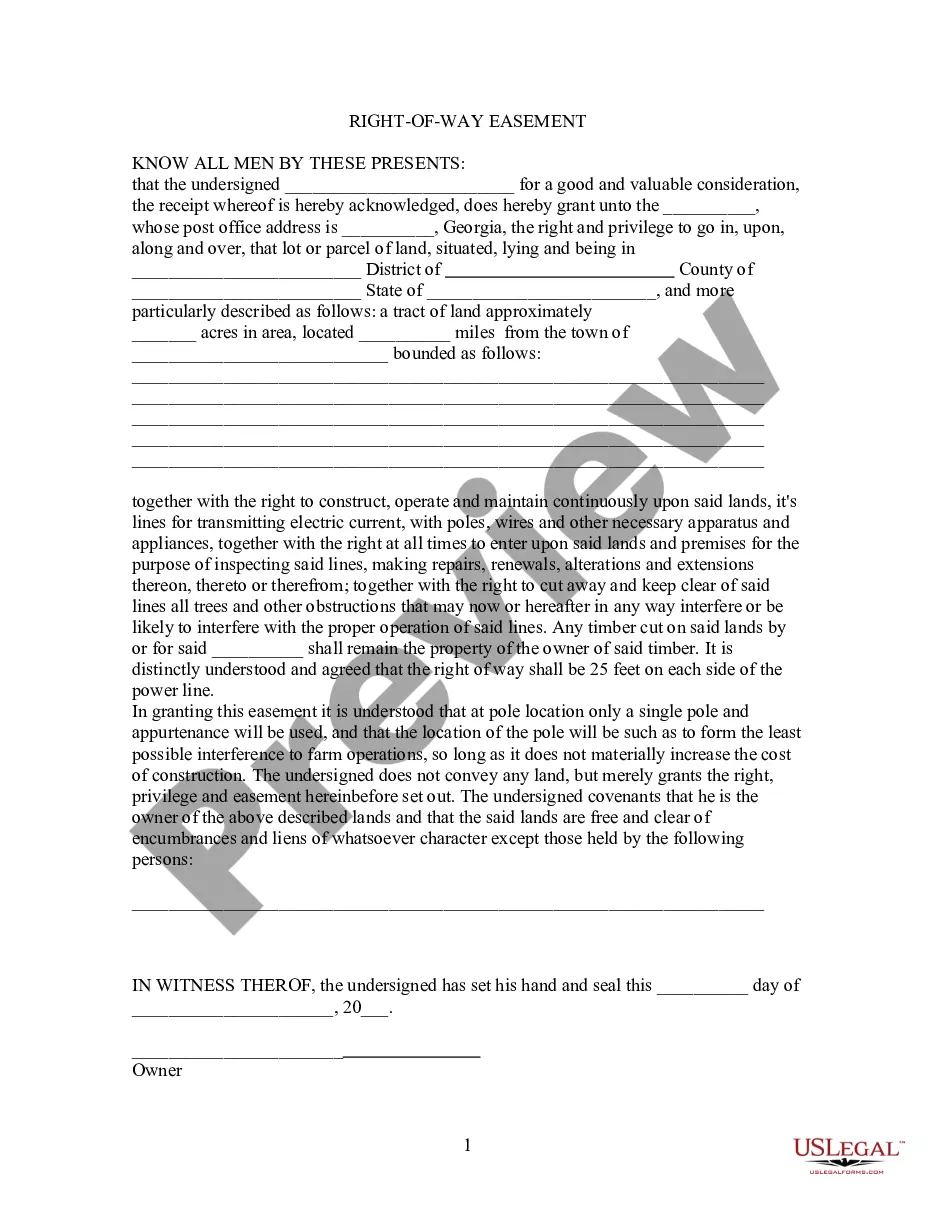
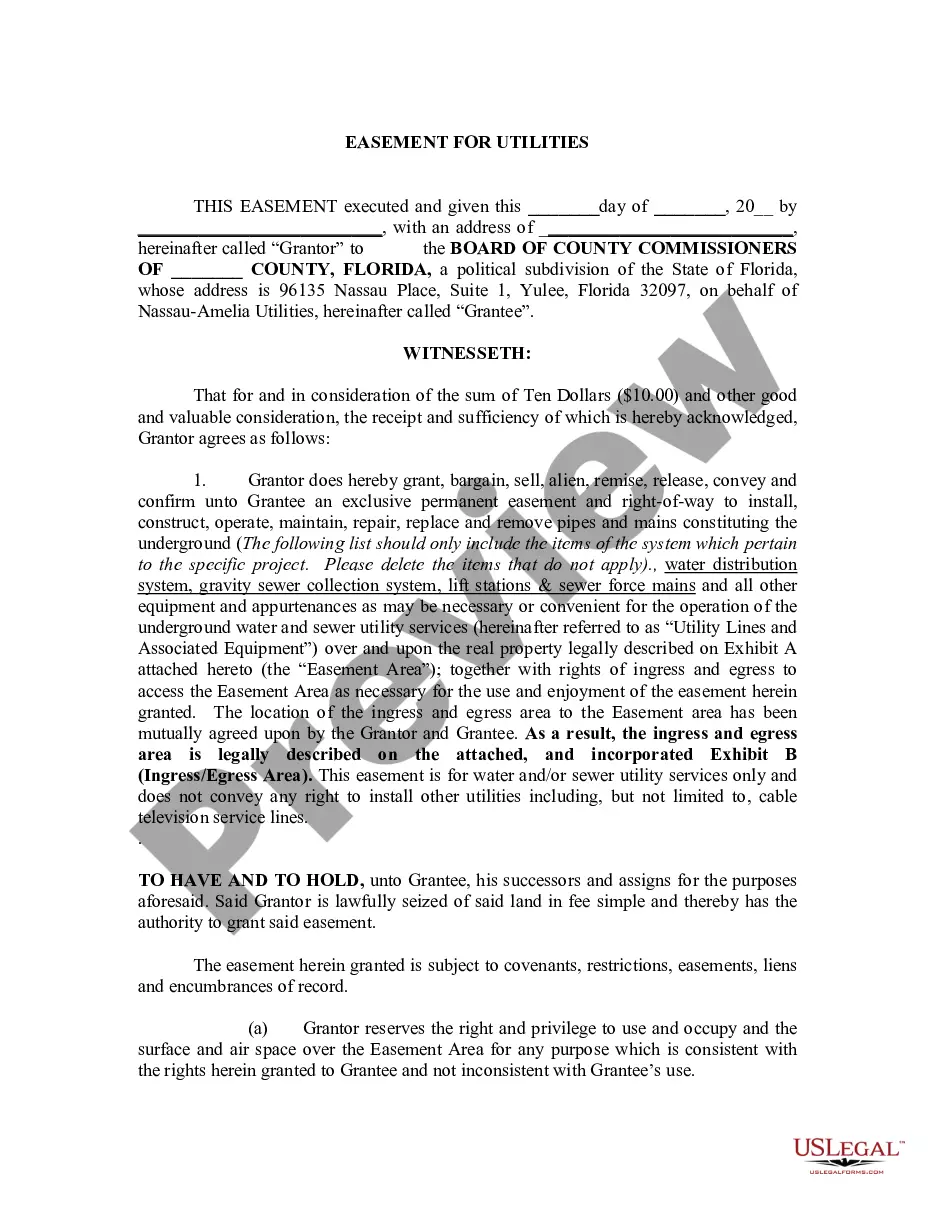
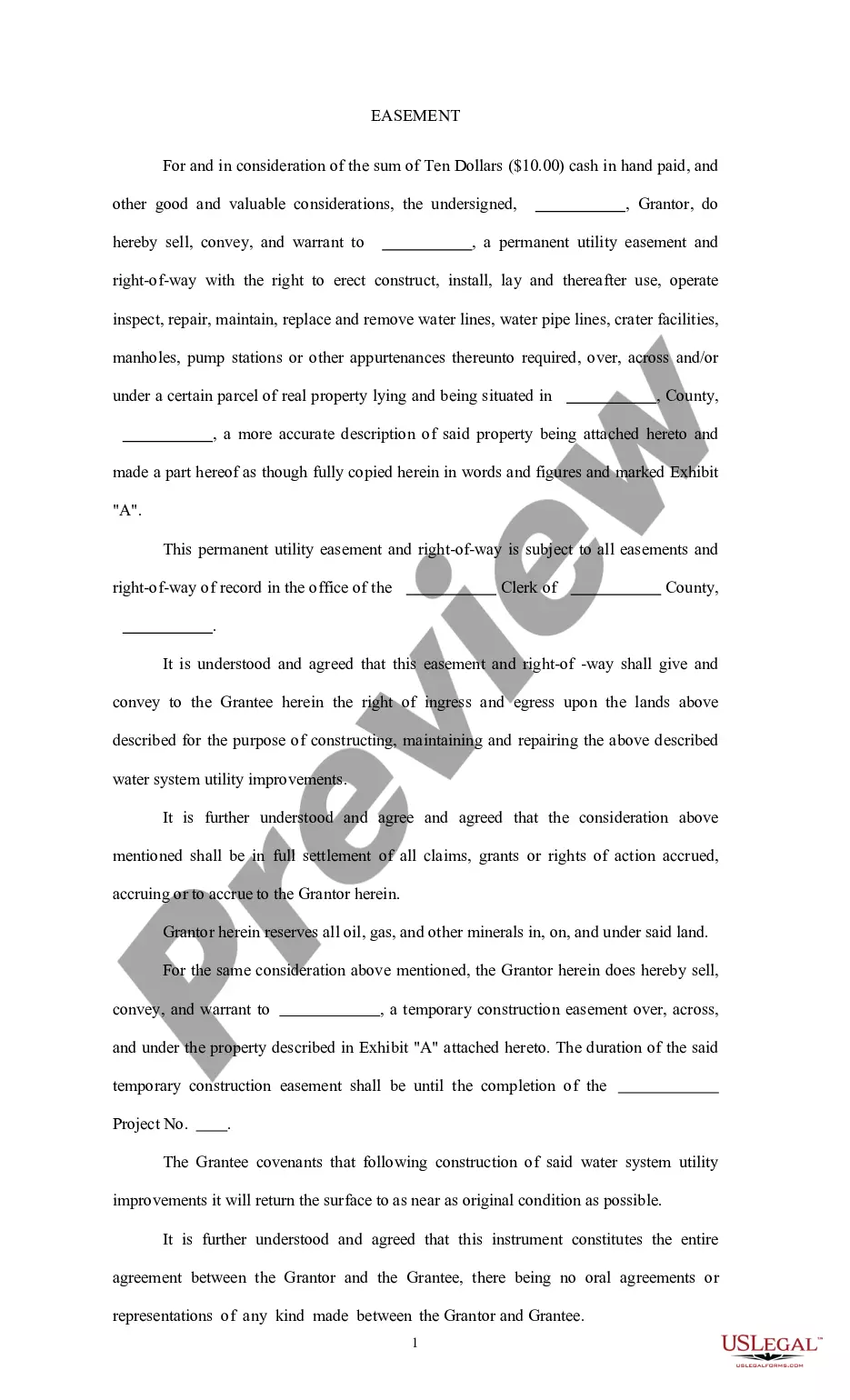
The Right of Way Easement for Power Lines is a legal document that grants utility companies the right to install, operate, and maintain power lines on someone else's property. This easement permits the utility not only to run electricity but also to access the land for repairs and maintenance. Unlike general easements, which might allow multiple uses, this specific easement is tailored for the installation and upkeep of electric transmission lines, making it a crucial tool for utility operations.
Key parts of this document
- Identification of the property where the easement will be established.
- Details about the dimensions of the easement, including a defined width around the power lines.
- Rights granted for construction, operation, and maintenance of power lines, including access for inspection.
- Clause regarding the removal of obstacles that may interfere with the power lines.
- Confirmation that the landowner retains ownership of the land while granting the easement.

When this form is needed
This form should be used when a utility company needs to establish the right to install power lines on private property. It is applicable when property owners agree to allow utilities access to their land for both installation and ongoing maintenance of power lines. This may arise during the development of new residential or commercial areas or when expanding current power infrastructure.
Who this form is for
- Utility companies seeking to establish legal rights to install power lines.
- Property owners who agree to grant the easement to utility providers.
- Anyone involved in land development or planning that requires power line installations.
Steps to complete this form
- Identify the parties involved, including the property owner and the utility company.
- Specify the location and boundaries of the property where the easement will apply.
- Clearly outline the rights granted for the power line construction and maintenance.
- Include any additional statements about tree removal and land ownership rights.
- Obtain the necessary signatures and have the document dated appropriately.
Notarization guidance
This form needs to be notarized to ensure legal validity. US Legal Forms provides secure online notarization powered by Notarize, allowing you to complete the process through a verified video call, available anytime.
Get your form ready online
Our built-in tools help you complete, sign, share, and store your documents in one place.
Make edits, fill in missing information, and update formatting in US Legal Forms—just like you would in MS Word.
Download a copy, print it, send it by email, or mail it via USPS—whatever works best for your next step.
Sign and collect signatures with our SignNow integration. Send to multiple recipients, set reminders, and more. Go Premium to unlock E-Sign.
If this form requires notarization, complete it online through a secure video call—no need to meet a notary in person or wait for an appointment.
We protect your documents and personal data by following strict security and privacy standards.

Make edits, fill in missing information, and update formatting in US Legal Forms—just like you would in MS Word.

Download a copy, print it, send it by email, or mail it via USPS—whatever works best for your next step.

Sign and collect signatures with our SignNow integration. Send to multiple recipients, set reminders, and more. Go Premium to unlock E-Sign.

If this form requires notarization, complete it online through a secure video call—no need to meet a notary in person or wait for an appointment.

We protect your documents and personal data by following strict security and privacy standards.
Avoid these common issues
- Failing to clearly define the boundaries of the easement, which can lead to disputes.
- Not specifying maintenance rights or access for inspection in detail, complicating future repairs.
- Omitting signatures or failing to date the document, making it potentially unenforceable.
- Overlooking local regulations that may affect the validity of the easement.
Advantages of online completion
- Convenient access to legal forms ensures users can complete documents at their own pace.
- Editable templates allow for customized inclusions specific to unique situations.
- Reliable and accurate legal forms drafted by licensed attorneys minimize risk of errors.
Looking for another form?
Form popularity
FAQ
This form is a legal document that grants utility companies the right to install, operate, and maintain power lines on someone else's property, with access for repairs and maintenance. It is used when a utility needs to establish these rights on private land, such as during the development or expansion of power infrastructure, while the landowner retains ownership of the land.
The landowner keeps ownership of the land, while the easement creates a non-possessory interest granting the utility company rights to install, operate, and maintain power lines within a defined area. The easement is tied to the property and can affect future owners, even though the landowner remains the owner of the land.
In Georgia, a right-of-way easement grants a party, typically a utility, the right to access and use a strip of land to install, operate, and maintain infrastructure such as power lines. The Georgia Right of Way Easement For Power Lines is a specialized form that defines the property, width, and rights for construction and maintenance, plus inspection access.
No. This Georgia form creates a private easement on the property, allowing a utility to install and service power lines while the landowner keeps ownership of the land. The easement is a limited interest, not a transfer of public ownership.
This form grants rights for construction, operation, and maintenance of power lines and access for inspection. It does not automatically authorize other utilities unless the document explicitly states so.
It is tailored for electric transmission lines, with specific provisions about the dimensions of the easement, the right to construct, operate, and maintain power lines, and access for inspection. It also confirms landowner ownership and may address obstacle removal if needed.