Utah Quitclaim Deed - Limited Liability Company to Trust
Understanding this form
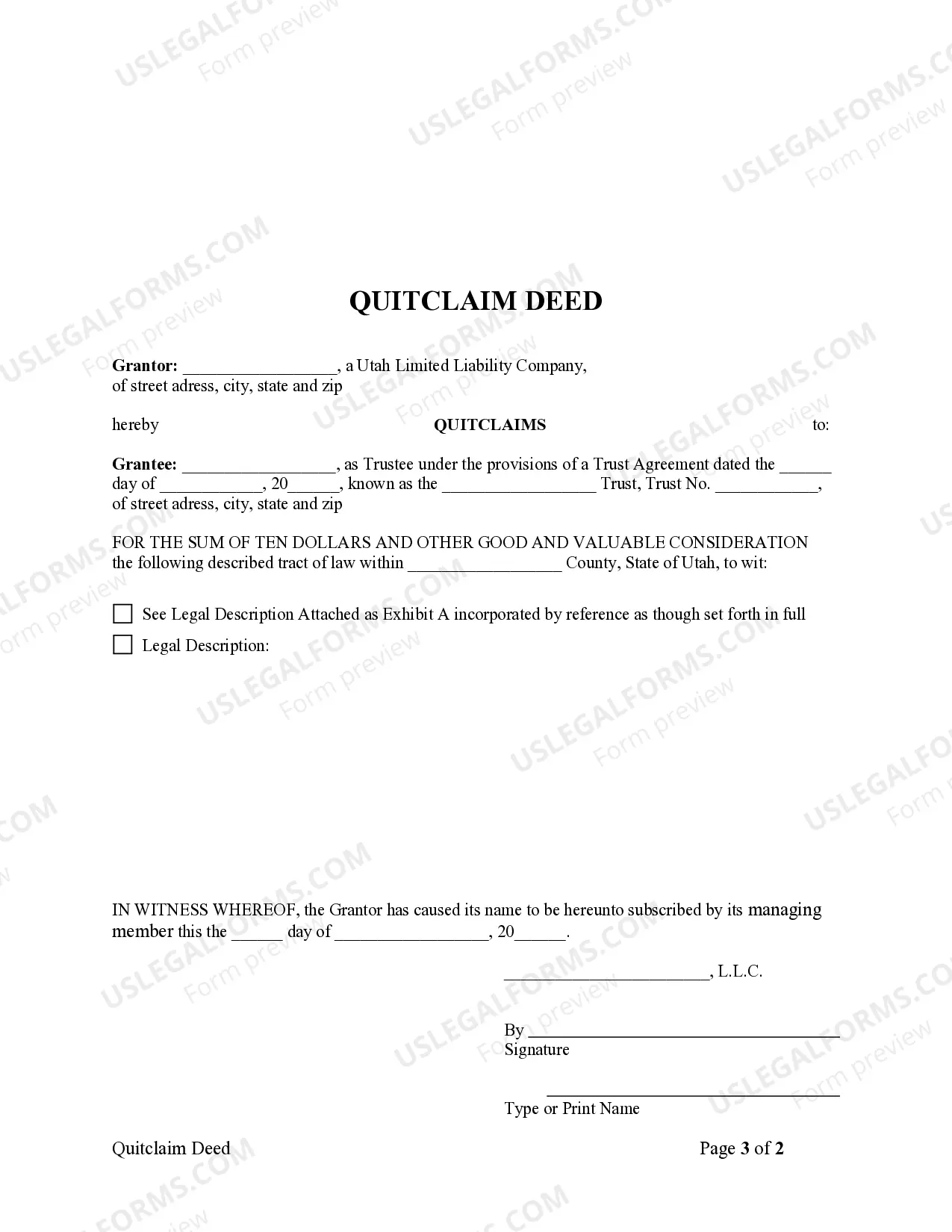
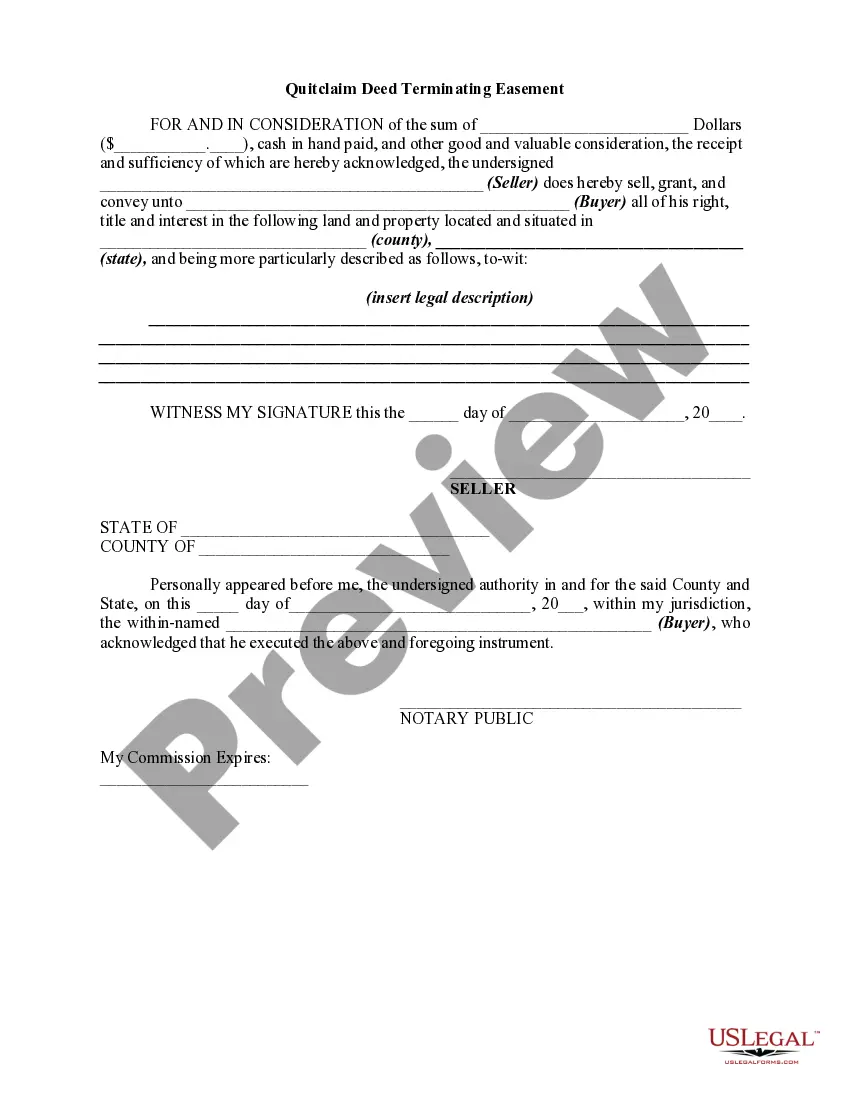
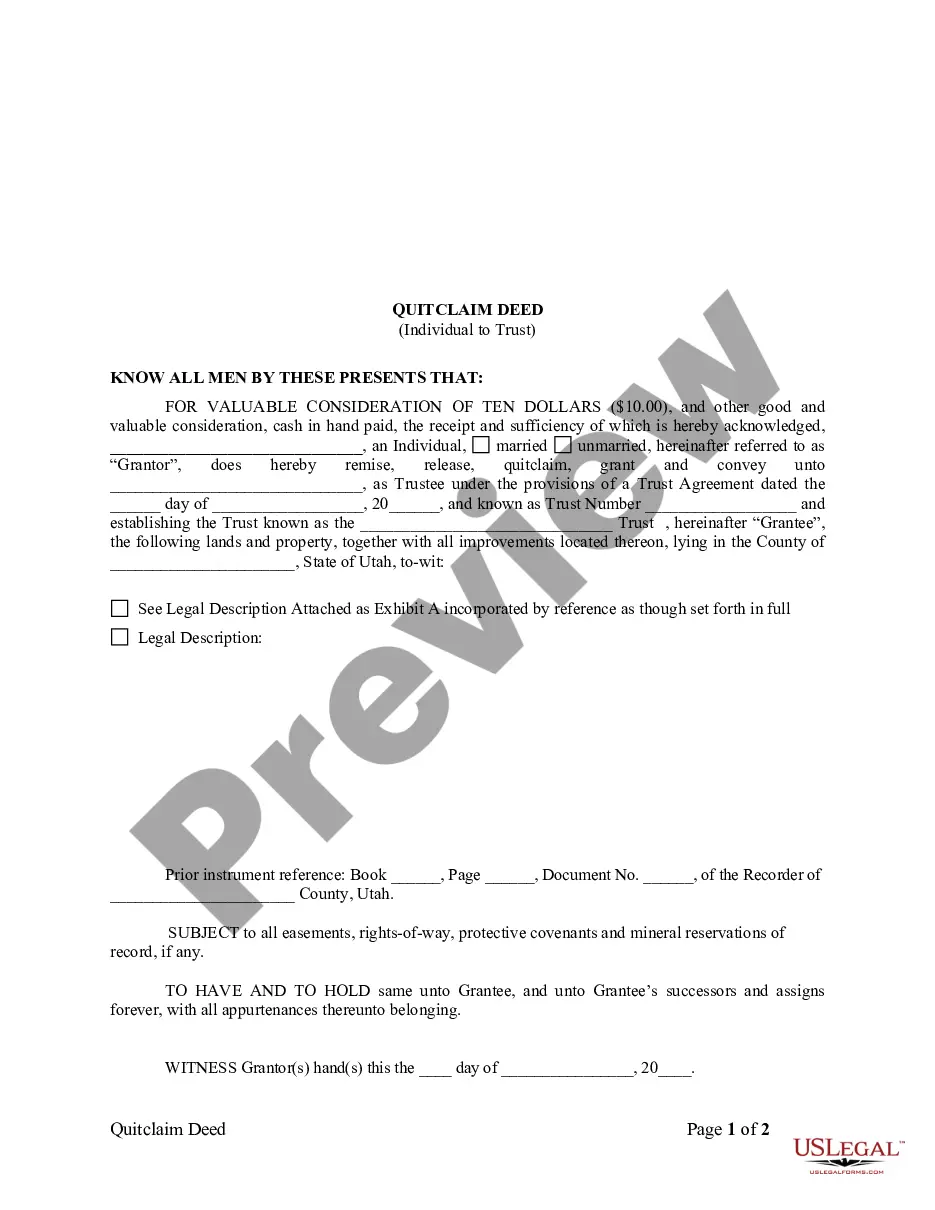
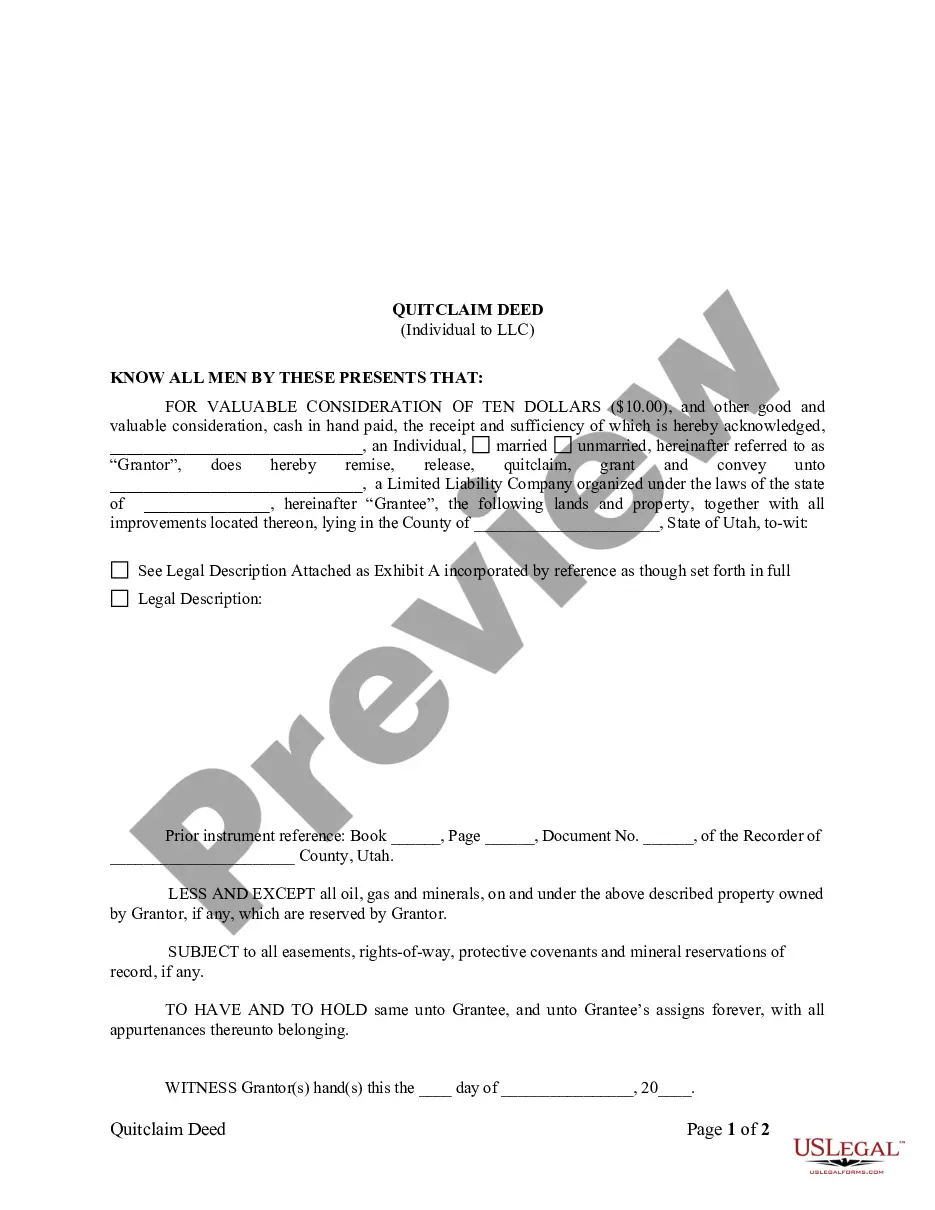
The Quitclaim Deed - Limited Liability Company to Trust is a legal document that allows a limited liability company (LLC), acting as the grantor, to transfer property ownership to a trust, acting as the grantee. This form is used to quitclaim any interest the LLC has in the property to the trust without making any guarantees about the title. Unlike warranty deeds, a quitclaim deed does not provide protection against claims or disputes over the property, making it a simpler and faster option for transferring ownership.
Key parts of this document
- Grantor information, including the name and address of the limited liability company.
- Grantee information, detailing the trust and its trustee's name and address.
- Property description specifying the real estate being transferred.
- Consideration clause stating the exchange involves a nominal amount (e.g., ten dollars).
- Legal description of the property, often included as an exhibit.
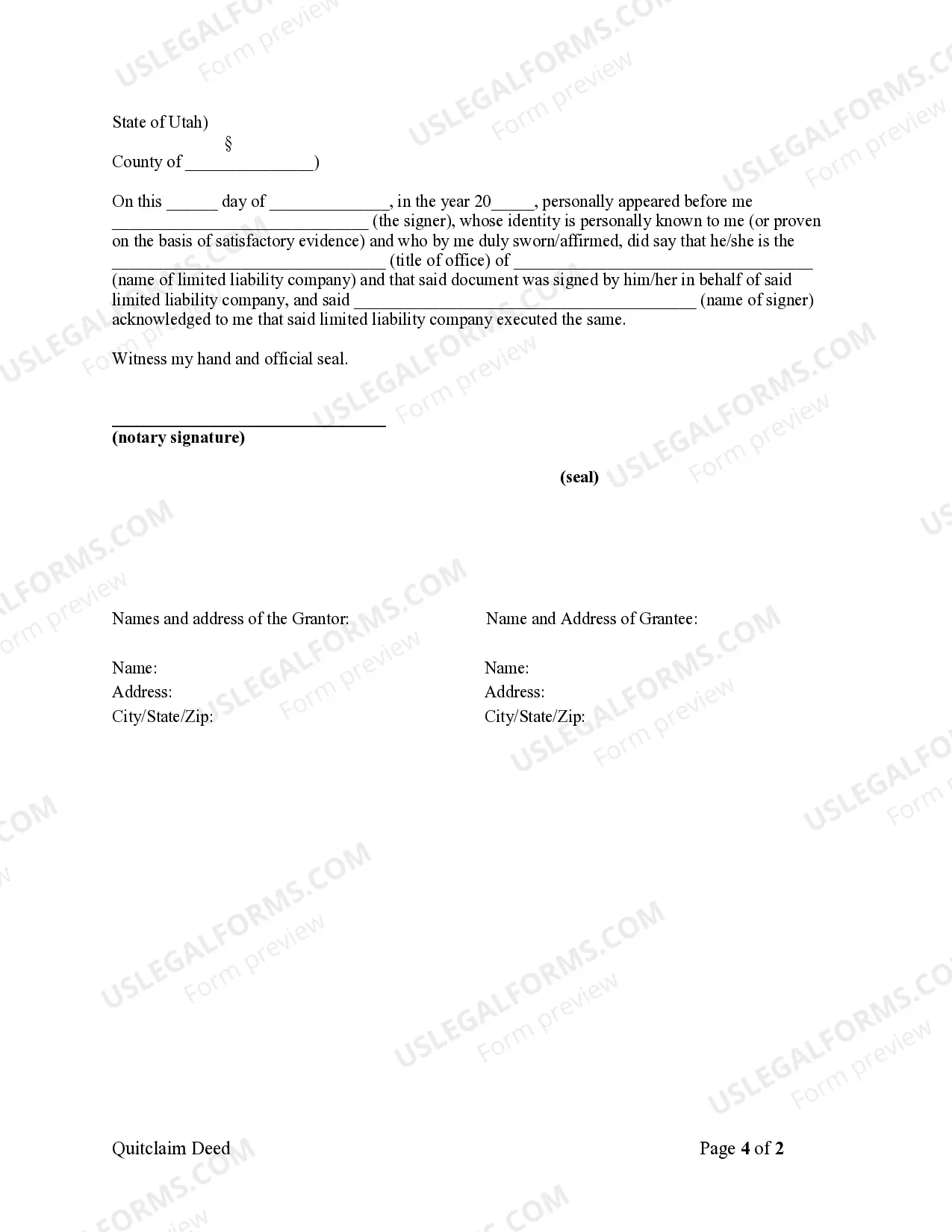
- Signatures from the authorized representatives of the LLC and space for notarization, if needed.


When to use this form
This form is commonly used in situations where the owners of a property wish to transfer their rights to a trust, often for estate planning purposes. It is suitable when the LLC is conveying property to a trust without the need for a warranty deed. Scenarios include transferring property for the benefit of beneficiaries of the trust or simplifying the management of the asset through a trust structure.
Who needs this form
This form is intended for:
- Limited liability companies looking to transfer property ownership to a trust.
- Trustees managing properties within a trust structure.
- Estate planners who are restructuring ownership of property for their clients.
Steps to complete this form
- Identify the grantor by entering the name of the LLC along with its address.
- Specify the grantee by entering the name and details of the trust and its trustee.
- Provide a complete legal description of the property being quitclaimed.
- Enter the date of the trust agreement and the trust number, if applicable.
- Sign the deed on behalf of the LLC, ensuring that the signature is from an authorized member.
Is notarization required?
This document requires notarization to meet legal standards. US Legal Forms provides secure online notarization powered by Notarize, allowing you to complete the process through a verified video call, available 24/7.
Get your form ready online
Our built-in tools help you complete, sign, share, and store your documents in one place.
Make edits, fill in missing information, and update formatting in US Legal Forms—just like you would in MS Word.
Download a copy, print it, send it by email, or mail it via USPS—whatever works best for your next step.
Sign and collect signatures with our SignNow integration. Send to multiple recipients, set reminders, and more. Go Premium to unlock E-Sign.
If this form requires notarization, complete it online through a secure video call—no need to meet a notary in person or wait for an appointment.
We protect your documents and personal data by following strict security and privacy standards.

Make edits, fill in missing information, and update formatting in US Legal Forms—just like you would in MS Word.

Download a copy, print it, send it by email, or mail it via USPS—whatever works best for your next step.

Sign and collect signatures with our SignNow integration. Send to multiple recipients, set reminders, and more. Go Premium to unlock E-Sign.

If this form requires notarization, complete it online through a secure video call—no need to meet a notary in person or wait for an appointment.

We protect your documents and personal data by following strict security and privacy standards.
Common mistakes
- Failing to include the complete legal description of the property.
- Not having the deed signed by an authorized member of the LLC.
- Leaving out necessary information about the trust, leading to ambiguity.
Benefits of using this form online
- Convenience of accessing the form anytime and from anywhere.
- Editability allows you to fill in information easily before printing.
- Reliability of forms drafted by licensed attorneys to ensure legal compliance.
Looking for another form?
Form popularity
FAQ
Determine the Current Title and Vesting to Your Property. Prepare a Deed. Be Aware of Your Lender and Title Insurance. Prepare a Preliminary Change of Ownership Report. Execute Your Deed. Record Your Deed. Wait for the Deed to be Returned. Keep the Property in the Trust.
How To Establish A Trust. You will need to retain an estate attorney to draft and execute your trust document. For a simple revocable or irrevocable trust, it may cost anywhere from $2,000 $5,000.
Retrieve your original deed. Get the appropriate deed form. Draft the deed. Sign the deed before a notary. Record the deed with the county recorder. Obtain the new original deed.
No. And unless the deed identifies the trust as an owner, then father is the owner of an interest. It is a common mistake to set up a trust and then fail to deed property into the trust. However, you cannot force him to make the changes you are...
Locate your current deed. Use the proper deed. Check with your title insurance company and lender. Prepare a new deed. Sign in the presence of a notary. Record the deed in the county clerk's office. Locate the deed that's in trust. Use the proper deed.
No. And unless the deed identifies the trust as an owner, then father is the owner of an interest. It is a common mistake to set up a trust and then fail to deed property into the trust. However, you cannot force him to make the changes you are...
Step 1: Download a free Quit Claim Deed form online or pick up one from your local county recorder's office. Step 2: Completely fill in the names, addresses, and contact information of the seller and the buyer using black ink. Step 3: Include the full legal description of the property.
Yes, a quit claim deed supercedes the trust. The only thing that can be done is to file a suit in court challenging the deed as the product of fraud and undue influence. A court action like that will cost thousands of dollars, but might be worth it if the house was owned free and clear.
The act of transferring a property that is owned by an individual into a trust, will see the trust liable to pay stamp duty on acquisition of the asset. Additionally, the individual who is transferring ownership to the trust, will be liable to pay capital gains tax on the disposal of the asset.