Delaware Letter from Landlord to Tenant as Notice to remove unauthorized inhabitants
What this document covers
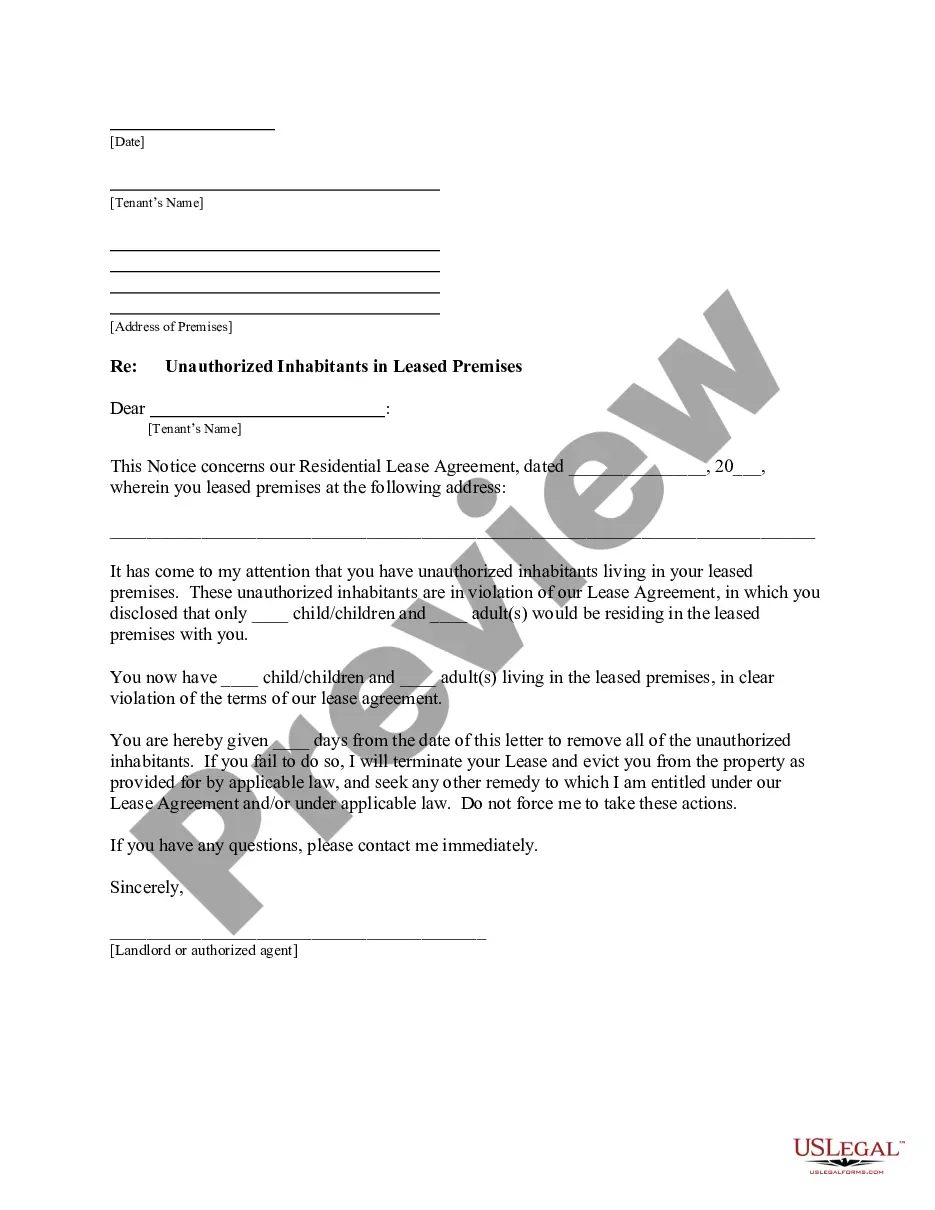
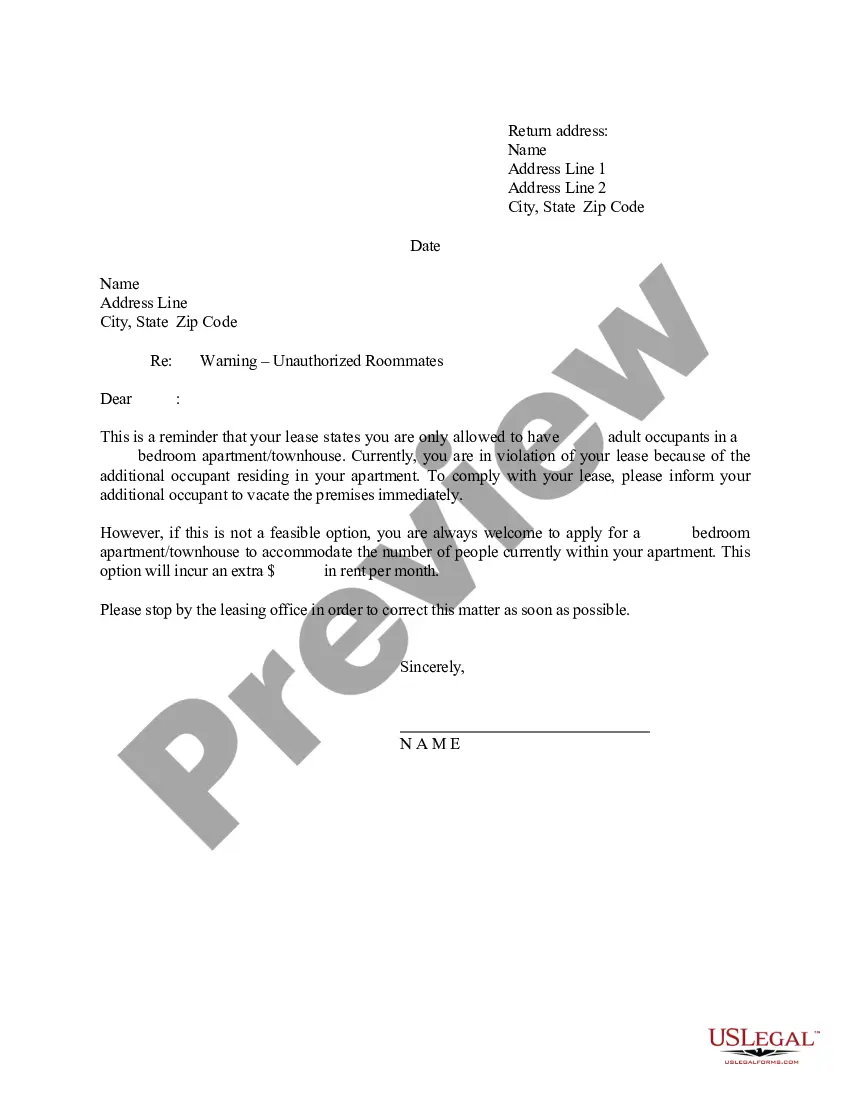
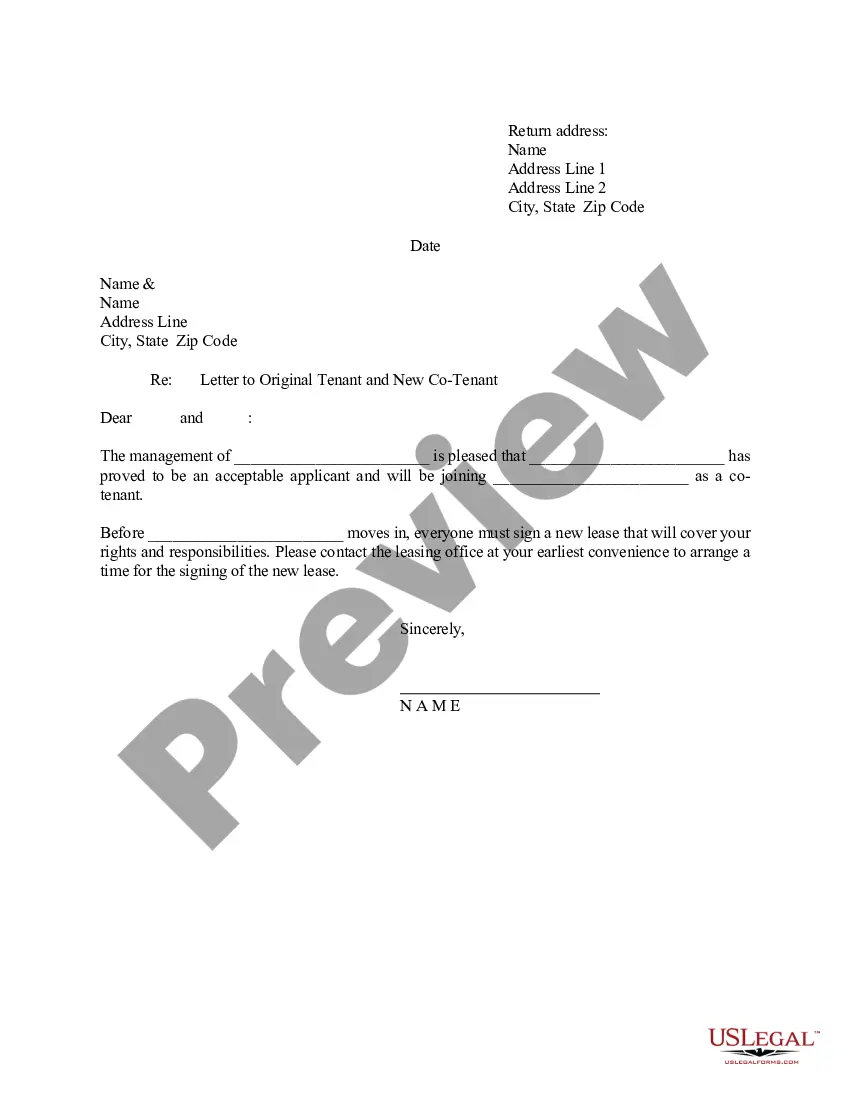
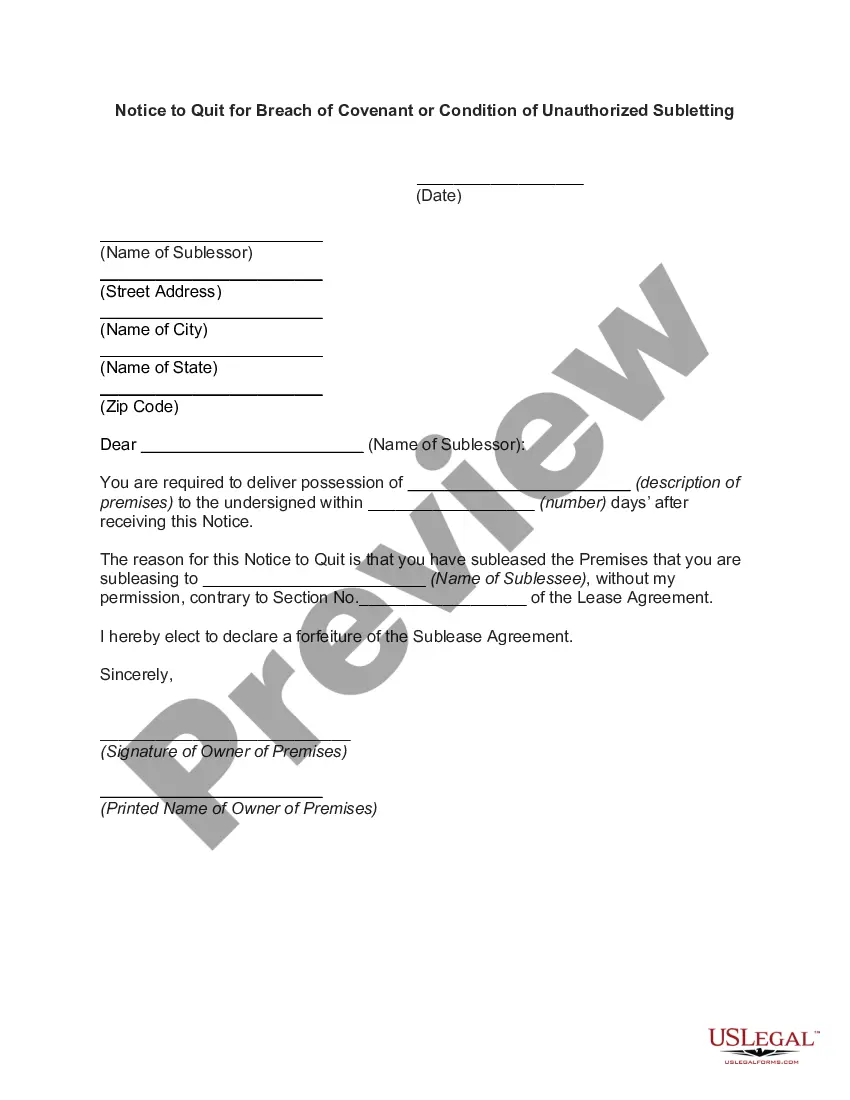
The Letter from Landlord to Tenant as Notice to remove unauthorized inhabitants is a formal communication from a landlord to a tenant. It serves to inform the tenant that they must remove any individuals living in the property who are not authorized under the lease agreement. This form is crucial as it lays out the potential consequences for failing to comply, distinguishing it from other notices related to lease agreements or landlord-tenant disputes.
Main sections of this form
- Details of the lease agreement, including the date and property address.
- Identification of unauthorized inhabitants living in the premises.
- Specific violation of lease terms regarding the number of residents.
- A set timeframe for the tenant to address the issue by removing unauthorized inhabitants.
- Consequences of failing to comply, including termination of the lease and eviction.
- Contact information for the landlord or authorized agent.

When this form is needed
This form should be used when a landlord discovers that a tenant is housing individuals who are not expressly listed in the lease agreement. Situations may include excessive guests staying for an extended period, or individuals living in the property without the landlord's consent. Promptly addressing unauthorized occupants can help avoid future legal complications and potential eviction proceedings.
Who can use this document
- Landlords seeking formal documentation to address unauthorized inhabitants in their rental property.
- Property managers acting on behalf of landlords who need to enforce lease terms.
- Tenants who have previously agreed upon the number of residents in the lease agreement and wish to resolve issues regarding additional occupants.
Steps to complete this form
- Identify the parties involved by filling out the landlord's and tenant's names and addresses.
- Specify the date of the Residential Lease Agreement.
- Detail the address of the leased premises.
- Indicate the number of unauthorized inhabitants as well as those originally disclosed in the lease.
- Fill in the number of days the tenant has to comply with the request.
- Sign the letter and provide your contact information for any further questions.
Does this document require notarization?
In most cases, this form does not require notarization. However, some jurisdictions or signing circumstances might. US Legal Forms offers online notarization powered by Notarize, accessible 24/7 for a quick, remote process.
Get your form ready online
Our built-in tools help you complete, sign, share, and store your documents in one place.
Make edits, fill in missing information, and update formatting in US Legal Forms—just like you would in MS Word.
Download a copy, print it, send it by email, or mail it via USPS—whatever works best for your next step.
Sign and collect signatures with our SignNow integration. Send to multiple recipients, set reminders, and more. Go Premium to unlock E-Sign.
If this form requires notarization, complete it online through a secure video call—no need to meet a notary in person or wait for an appointment.
We protect your documents and personal data by following strict security and privacy standards.

Make edits, fill in missing information, and update formatting in US Legal Forms—just like you would in MS Word.

Download a copy, print it, send it by email, or mail it via USPS—whatever works best for your next step.

Sign and collect signatures with our SignNow integration. Send to multiple recipients, set reminders, and more. Go Premium to unlock E-Sign.

If this form requires notarization, complete it online through a secure video call—no need to meet a notary in person or wait for an appointment.

We protect your documents and personal data by following strict security and privacy standards.
Avoid these common issues
- Failing to include the correct property address or tenant details.
- Not providing a clear deadline for compliance.
- Neglecting to specify the consequences of non-compliance.
Why use this form online
- Convenience of downloading from home without the need for legal assistance.
- Editable templates allow for customization based on individual circumstances.
- Access to forms drafted by licensed attorneys to ensure legal validity.
Legal use & context
- This form is legally recognized as a formal notice and can be used in potential eviction proceedings if necessary.
- It's essential to keep a copy for your records, as evidence of the notice being provided may be required in court.
Key takeaways
- Use this form to formalize compliance requests regarding unauthorized inhabitants.
- Be clear and specific in detailing violations and expectations.
- Ensure adherence to local laws regarding tenant notifications and eviction procedures.
- Utilize this form for a smooth and legal eviction process if required.
Looking for another form?
Form popularity
FAQ
Section 5513 of the Delaware landlord-tenant Code outlines the procedures landlords must follow when dealing with unauthorized inhabitants. It provides guidance on how to appropriately issue a Delaware Letter from Landlord to Tenant as Notice to remove unauthorized inhabitants effectively. Understanding this section is vital for landlords to ensure compliance with state laws and protect their rights when addressing tenant issues. Utilizing resources like USLegalForms can help landlords navigate these legal requirements with clarity.
When someone refuses to leave your property, it is referred to as a tenant holding over or an eviction situation. In these cases, the situation can escalate, leading landlords to consider legal action. Often, a Delaware Letter from Landlord to Tenant as Notice to remove unauthorized inhabitants may be necessary to formally notify the tenant to vacate the premises. This letter plays a crucial role in documenting communication and can support your case if further legal action is required.
To remove someone who is not a tenant, begin by documenting their unauthorized presence. Sending a Delaware Letter from Landlord to Tenant as Notice to remove unauthorized inhabitants is a proactive step to formally notify them. If they refuse to leave, consult with legal professionals to explore your options for eviction.
Getting someone out of your house in Delaware involves following legal procedures. Start by issuing a formal notice, like a Delaware Letter from Landlord to Tenant as Notice to remove unauthorized inhabitants, ensuring you outline reasons clearly. If the person does not leave voluntarily, consider seeking legal assistance to navigate the eviction process.
To write a letter to remove a tenant, address it formally and be direct about the tenancy termination. Include specific details such as the rental property address and the reasons for removal. Incorporating a Delaware Letter from Landlord to Tenant as Notice to remove unauthorized inhabitants provides a framework for legally notifying the tenant and can enhance your position.
Writing a termination letter to a tenant involves clear communication. Start by stating the reason for termination and include the lease details. Use a formal tone and mention a Delaware Letter from Landlord to Tenant as Notice to remove unauthorized inhabitants, as it serves as a vital reference for any legal proceedings.
Yes, a tenant can request an occupant to leave the property. However, the process must comply with state laws. In Delaware, if the occupant is unauthorized, the tenant should issue a Delaware Letter from Landlord to Tenant as Notice to remove unauthorized inhabitants. This written communication helps clarify the situation and can support the tenant's position.
To evict unauthorized tenants in Delaware, you should first inform them of their unauthorized status. This usually involves a formal notice which clarifies their lack of lease agreement. Crafting a Delaware Letter from Landlord to Tenant as Notice to remove unauthorized inhabitants serves as an effective notification that may help expedite the eviction process.
If someone moves in with you who is not on your lease, it can create legal complications. You may be violating your lease terms, which could jeopardize your tenancy. To protect your rights, you may need to send a Delaware Letter from Landlord to Tenant as Notice to remove unauthorized inhabitants to prevent potential issues.
To evict a roommate in Delaware, you first need to check the lease agreement for specific terms regarding eviction. Providing proper notice is essential, often through a written letter that complies with state laws. If your roommate is an unauthorized occupant, issuing a Delaware Letter from Landlord to Tenant as Notice to remove unauthorized inhabitants can be a crucial step.