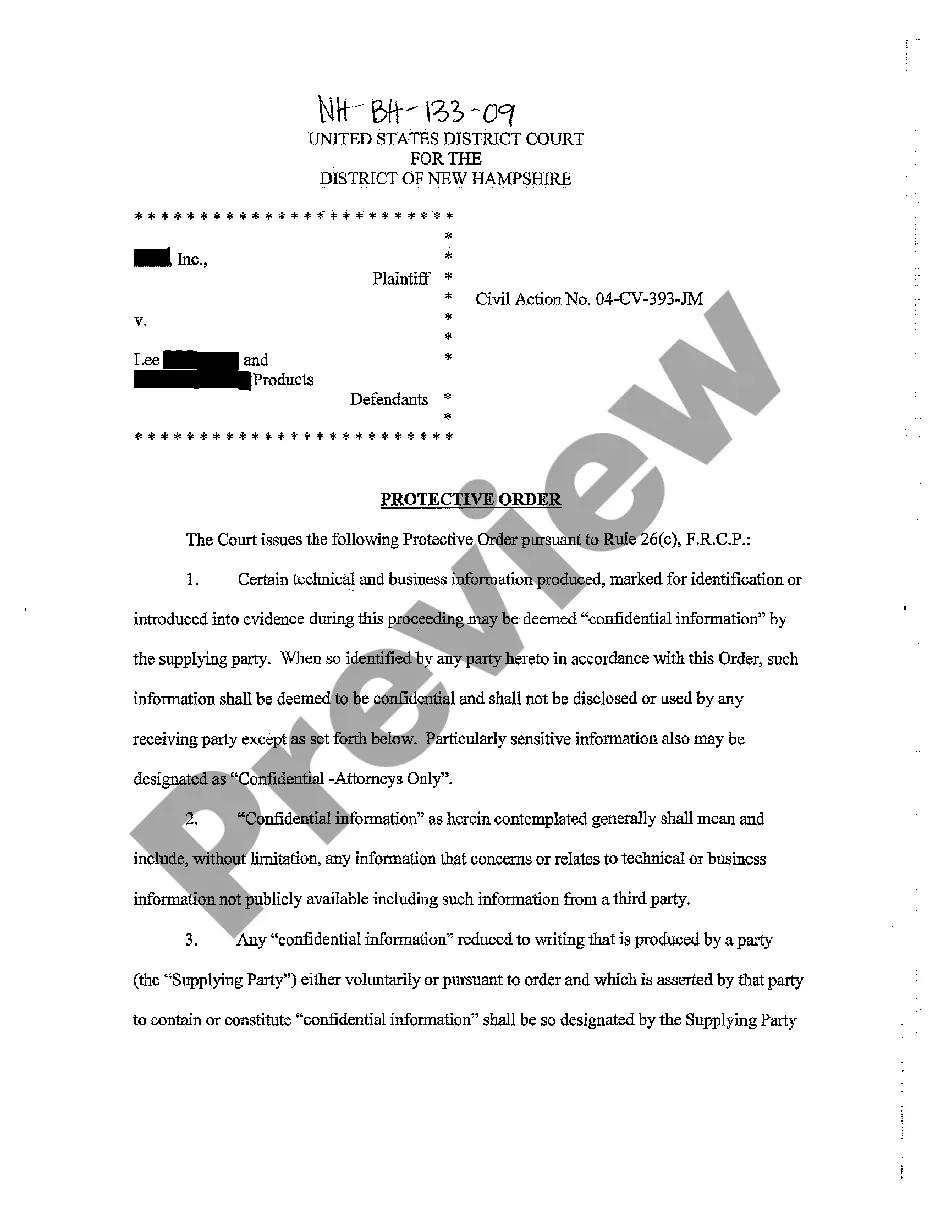
South Carolina Revocable Living Trust for Husband and Wife with No Children
Overview of this form
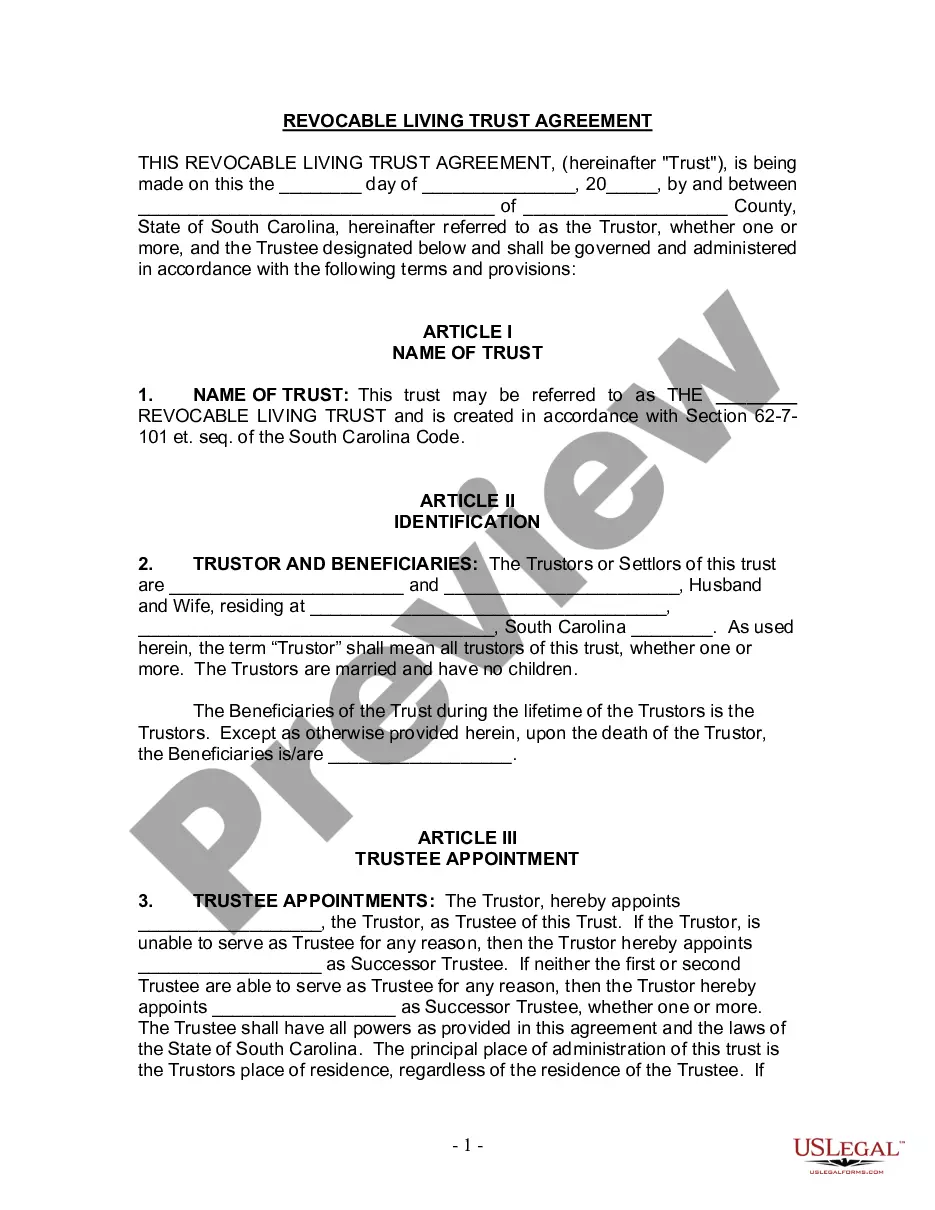
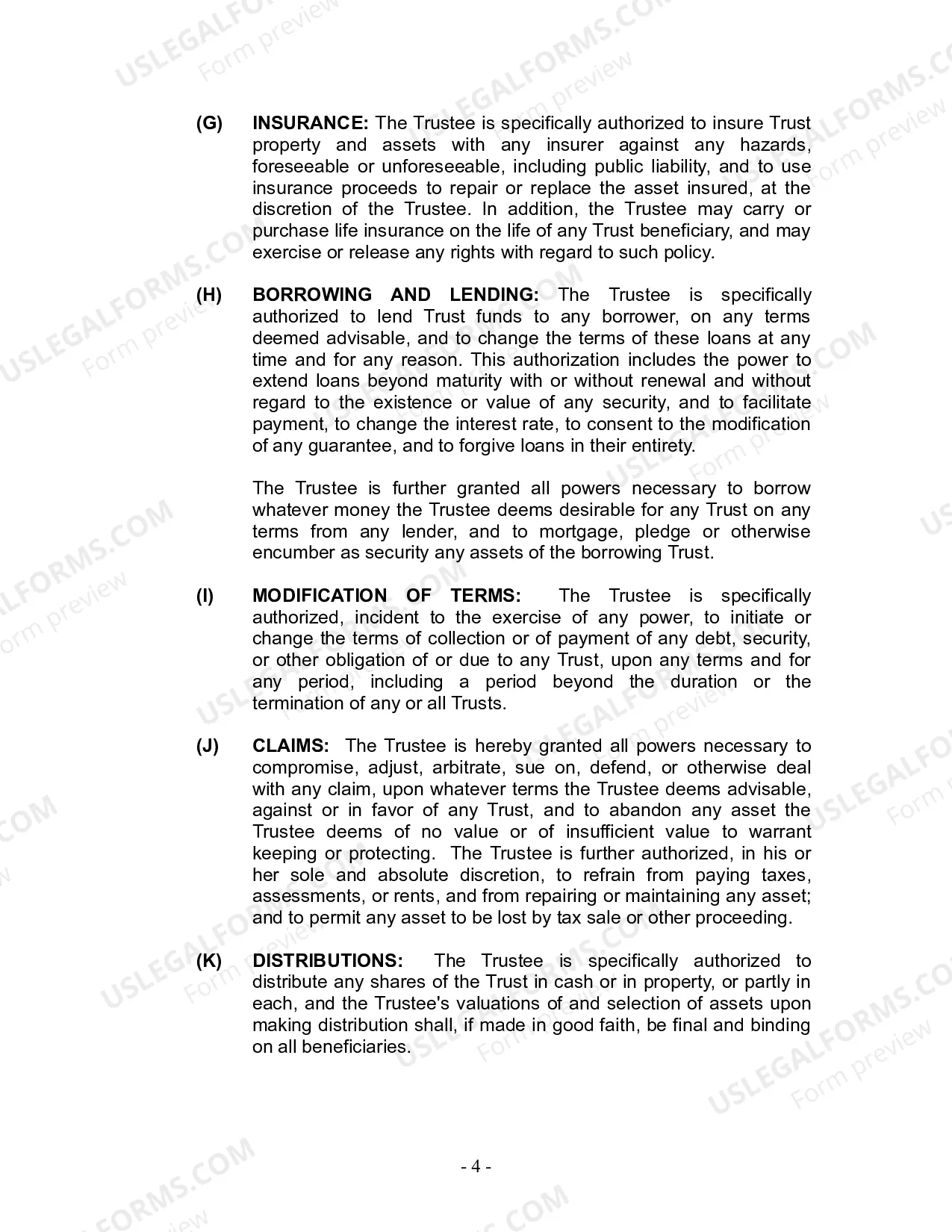
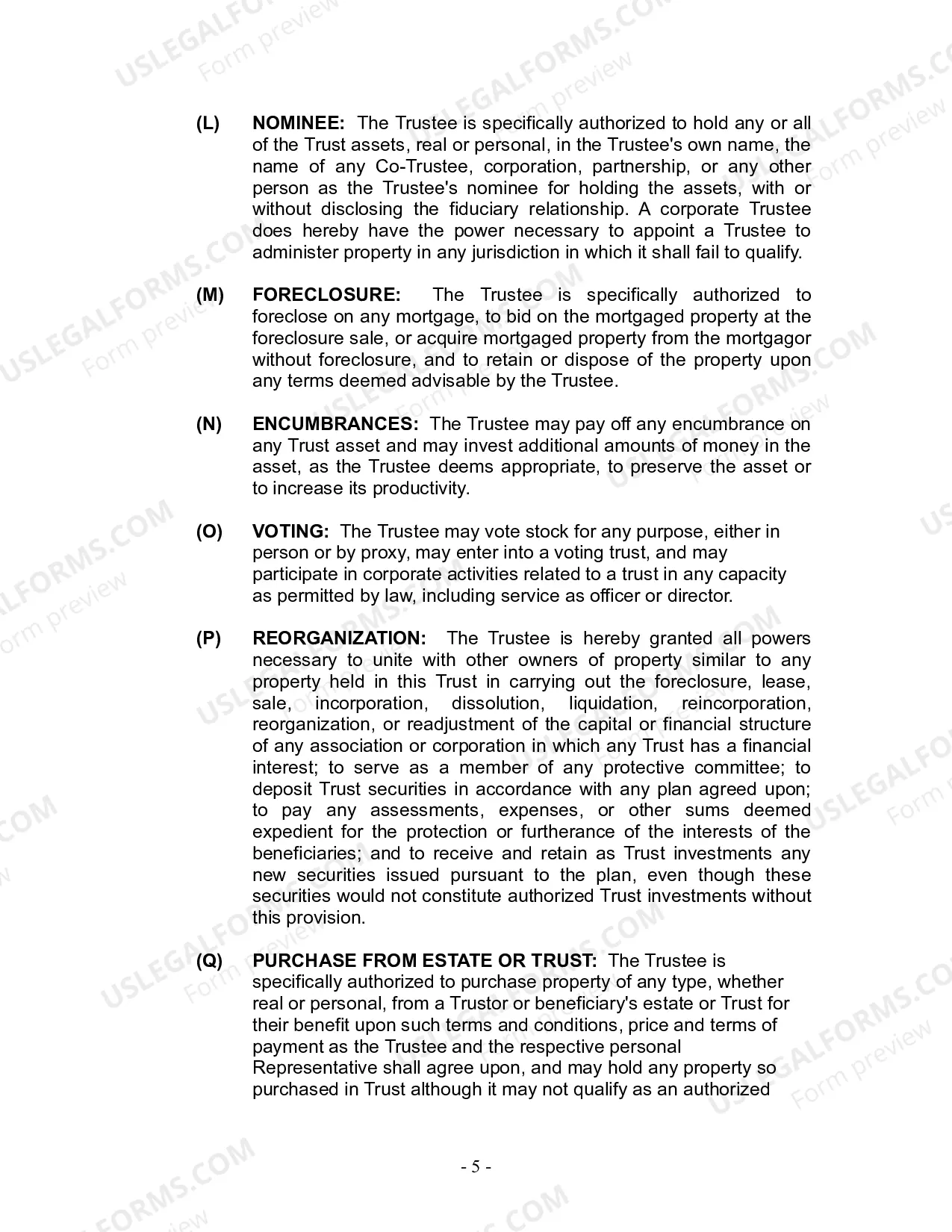
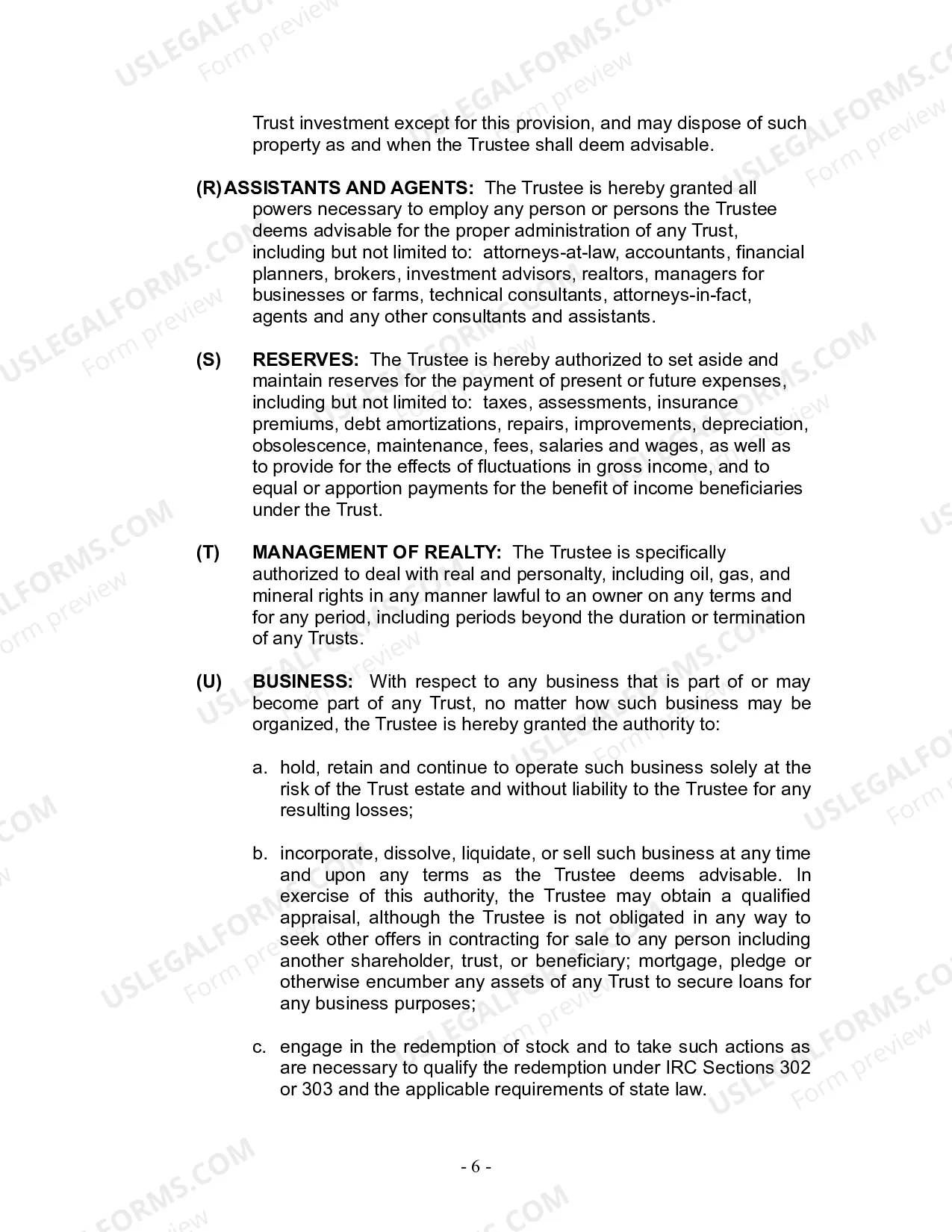
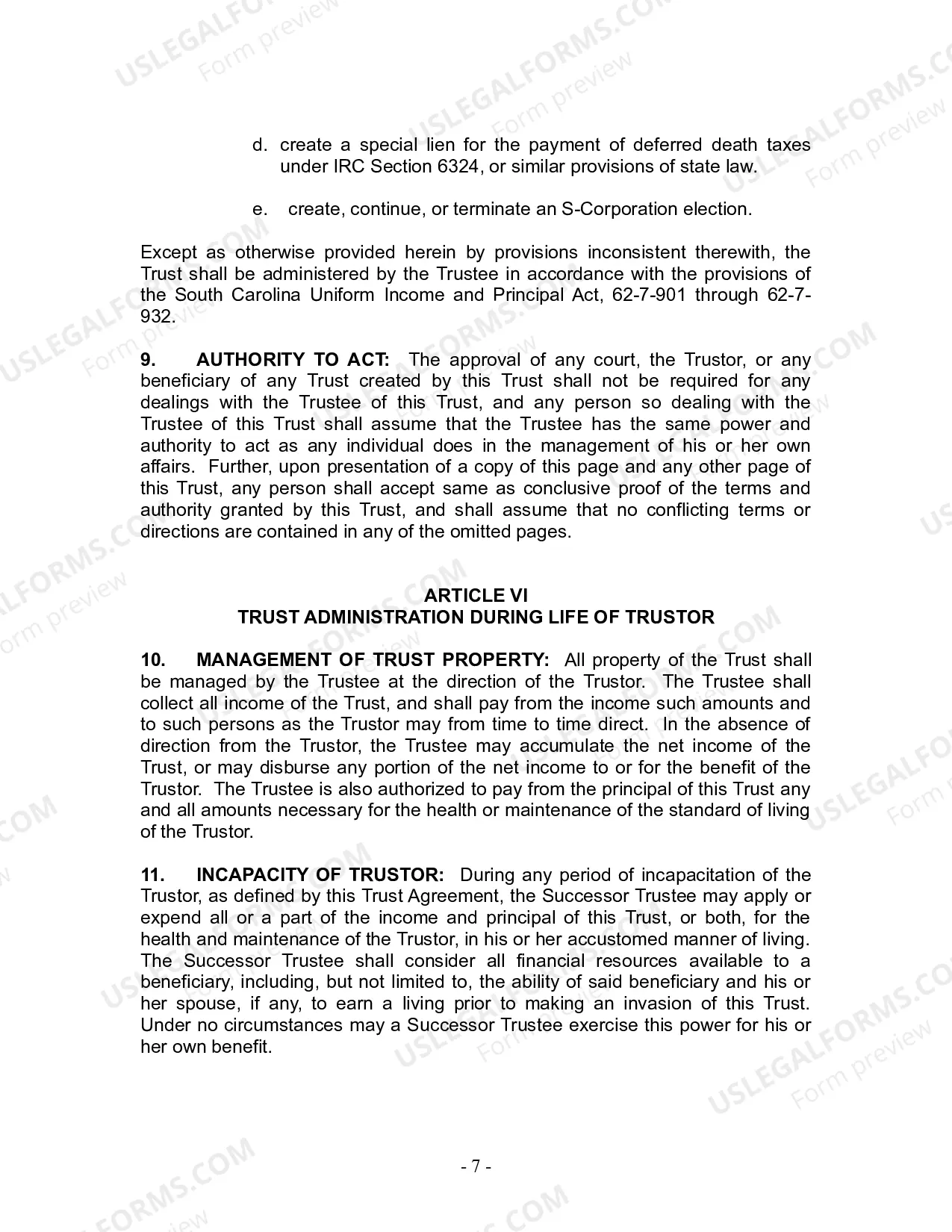
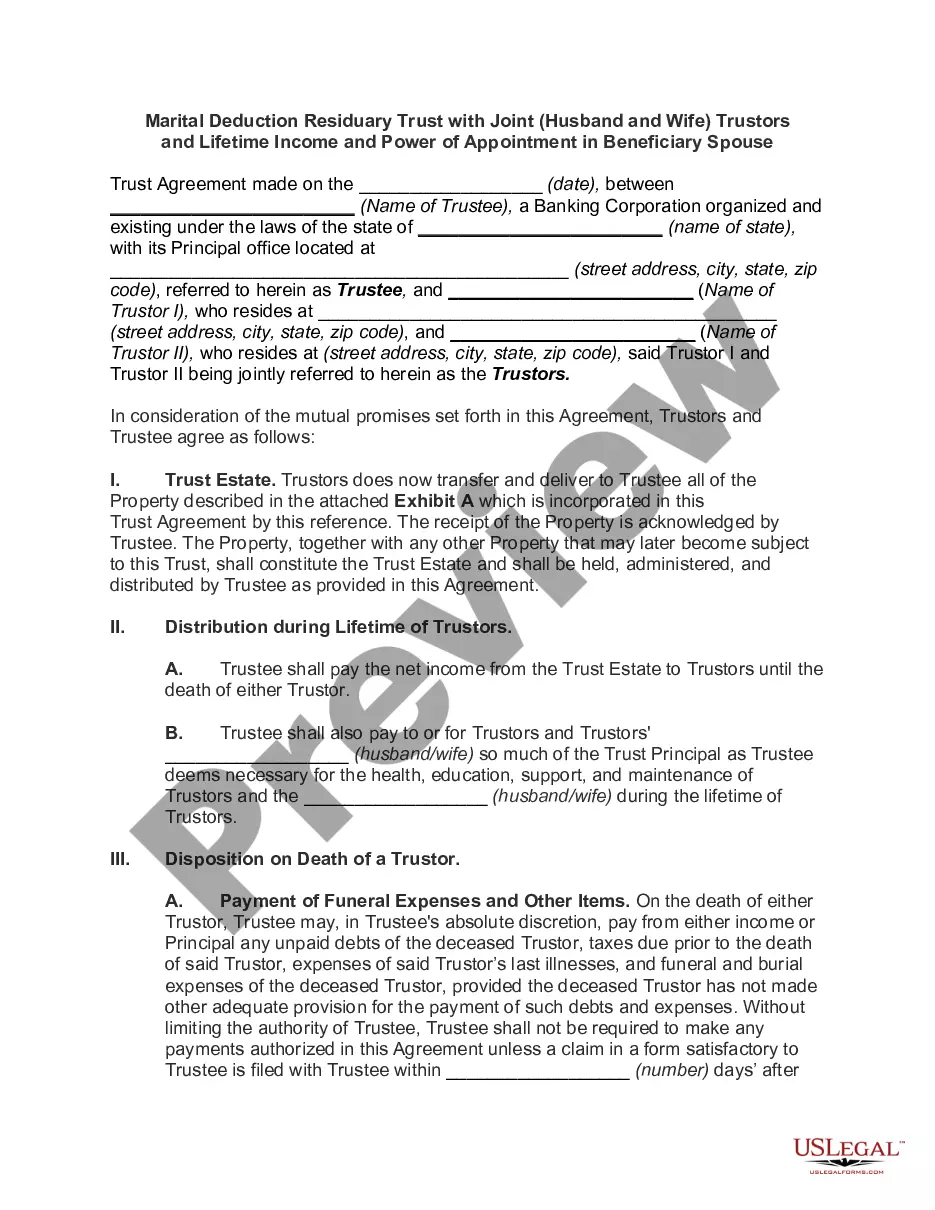
The Revocable Living Trust for Husband and Wife with No Children is a legal document designed to manage the assets of a married couple without children during their lifetimes and after their deaths. This type of trust is established while the trustors are alive, allowing them to retain control over their assets. Unlike a will, a living trust helps avoid probate, enabling a smoother transfer of assets upon death.
Key components of this form
- Name of Trust: Designates the name under which the trust will operate.
- Trustors Identification: Identifies the husband and wife creating the trust and outlines their residency.
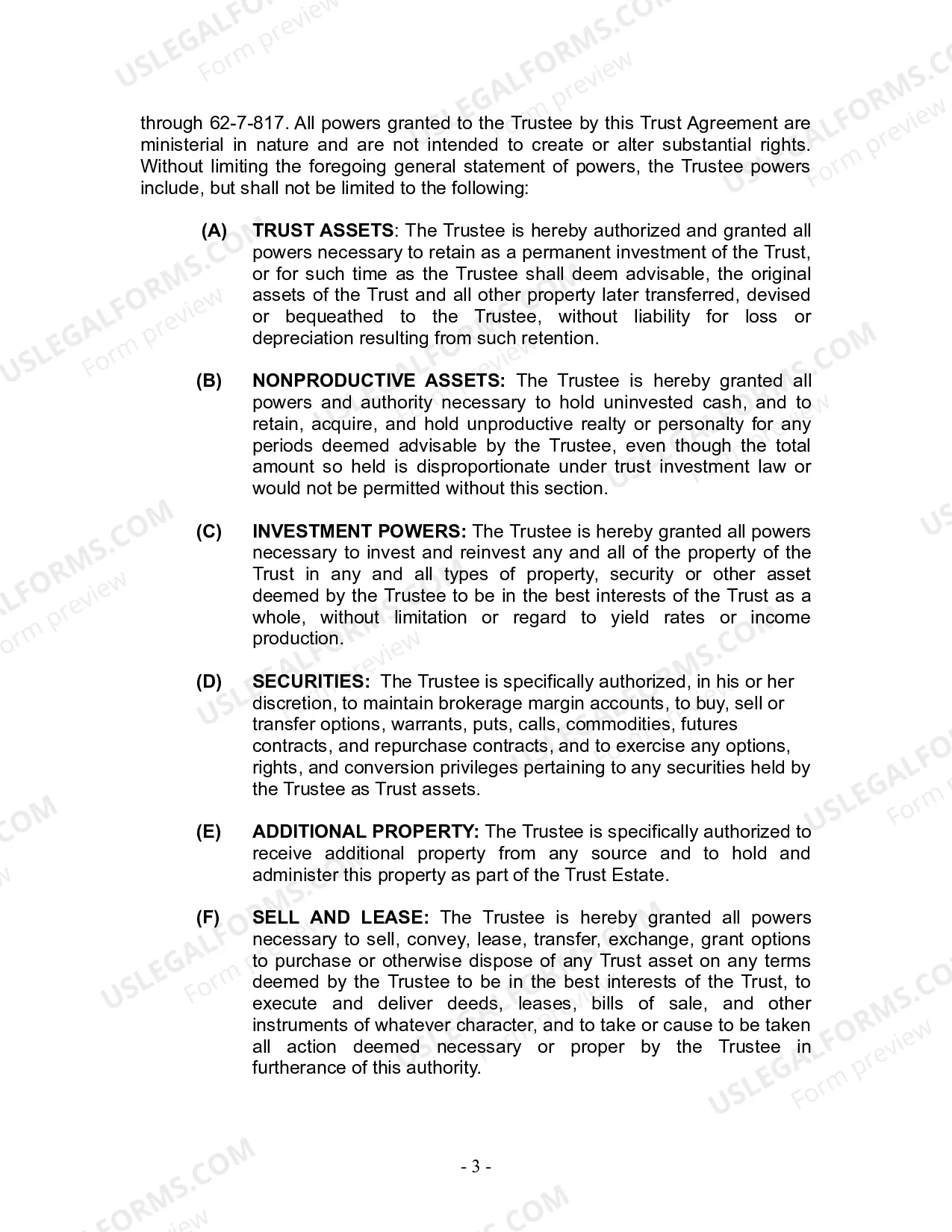
- Trustee Appointment: Specifies who will manage the trust, including provisions for successor trustees.
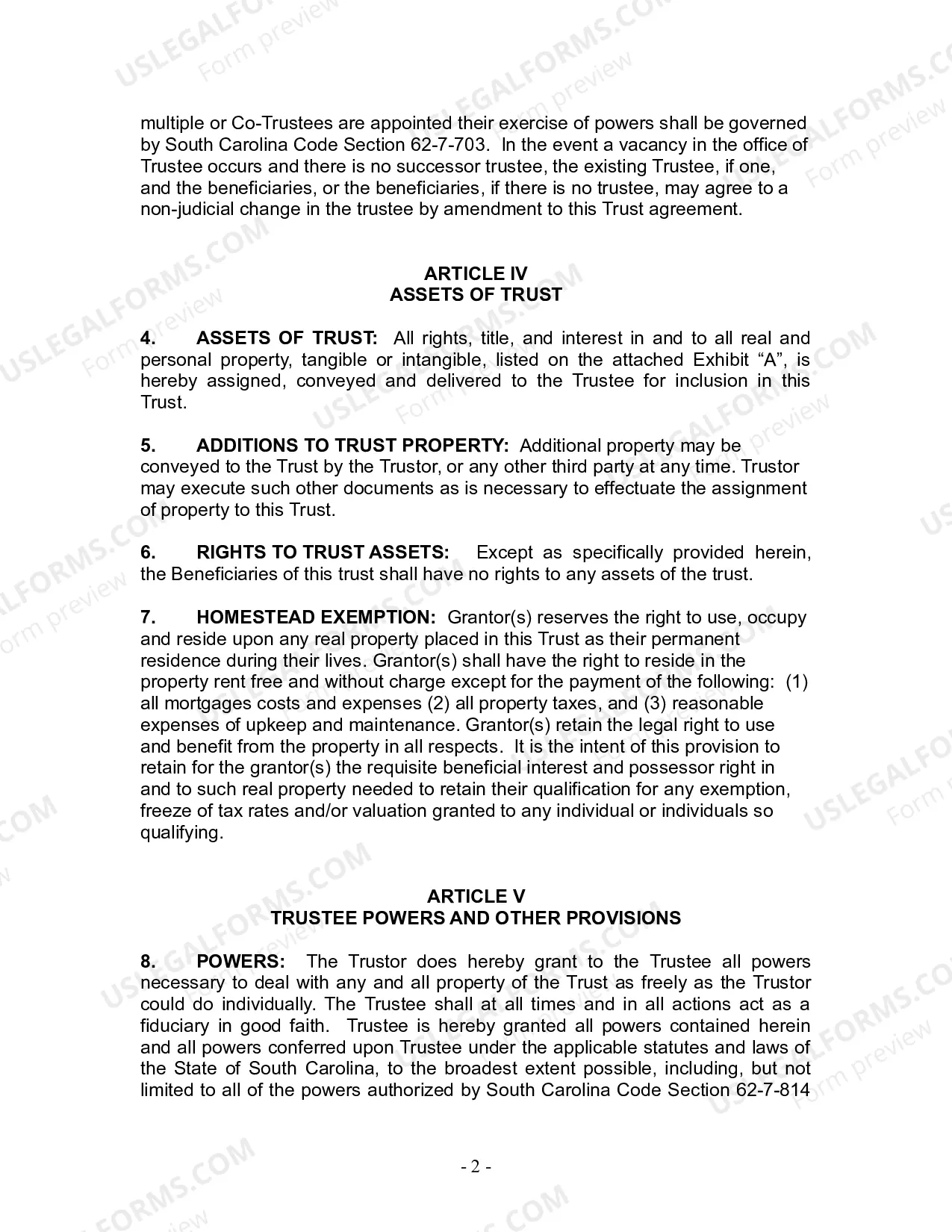
- Assets of Trust: Details the assets being transferred into the trust, along with the rights to use the property.
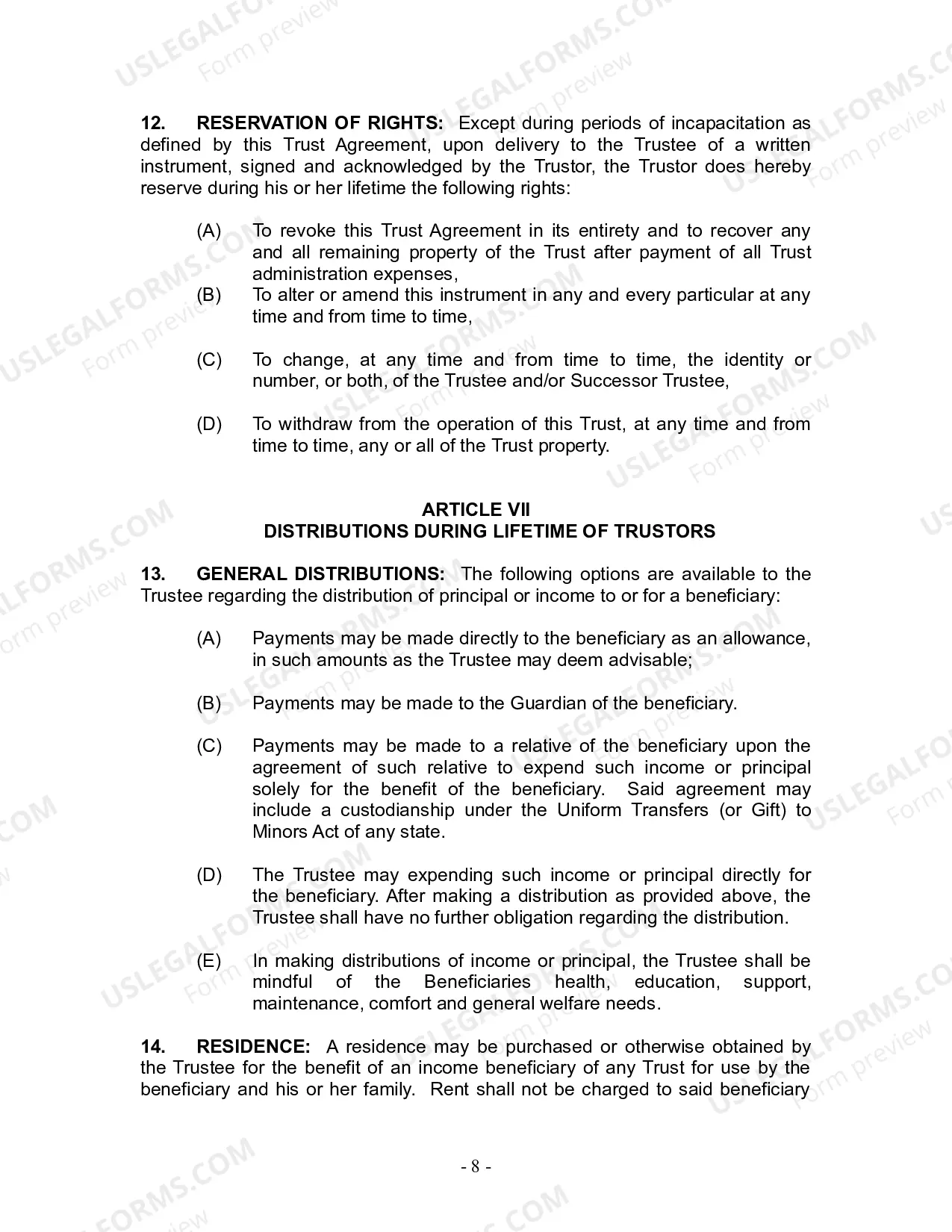
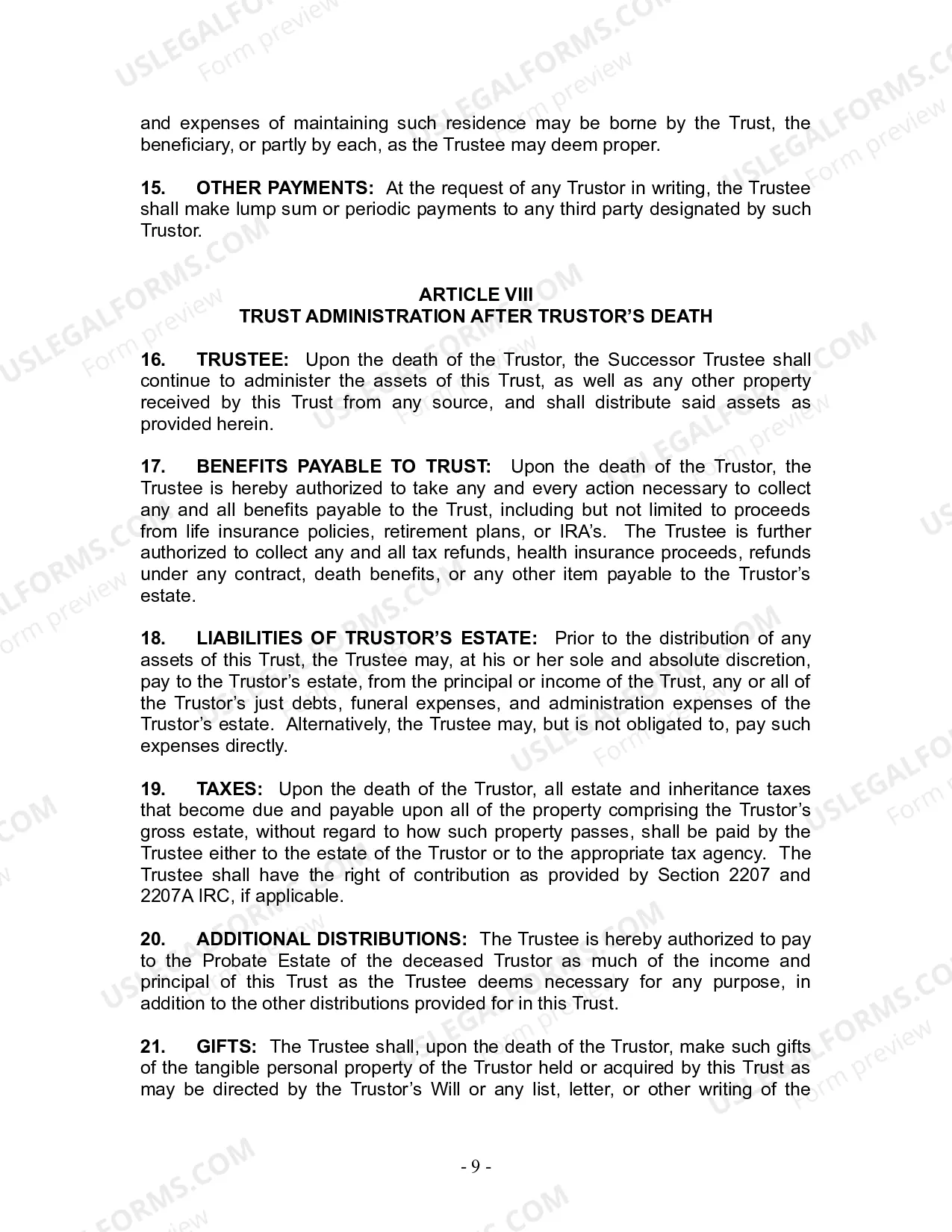
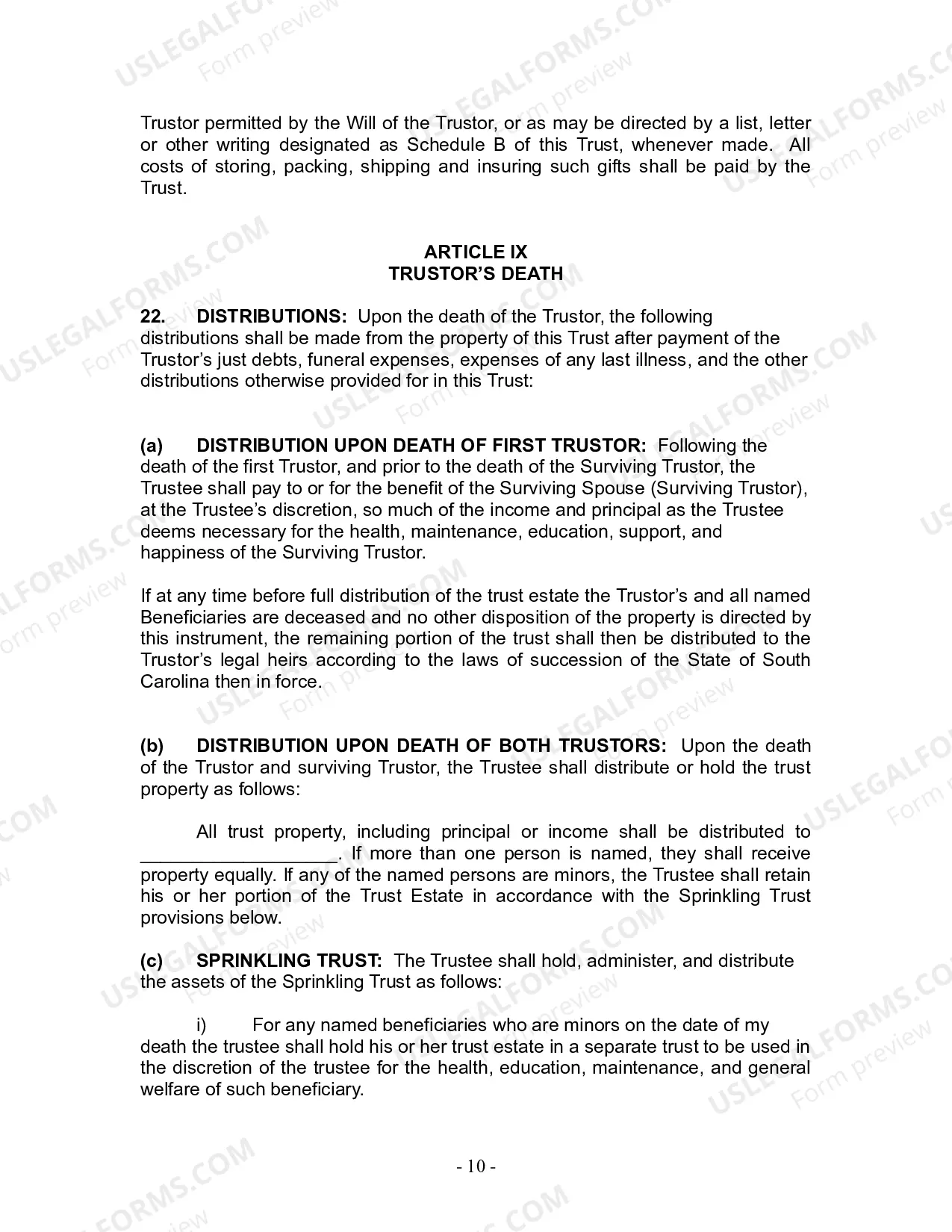
- Distribution Upon Death: Outlines how the trust assets are to be distributed after the death of the trustors.




Situations where this form applies
This form is appropriate for couples who wish to ensure their assets are managed according to their wishes without the burden of probate. It is commonly used when couples do not have children, allowing for flexibility in asset distribution to other beneficiaries or charities upon their passing.
Who should use this form
- Couples who are married and have no children.
- Individuals looking for a way to manage and protect their assets while maintaining control during their lifetime.
- Married couples wanting to simplify the estate planning process and avoid probate.
Steps to complete this form
- Identify the parties involved by entering the names and addresses of the husband and wife.
- Designate a name for the trust and appoint a trustee.
- List the assets being transferred into the trust.
- Outline the terms for asset distribution upon the death of the trustors.
- Sign the document in the presence of a notary public, if required.
Notarization guidance
To make this form legally binding, it must be notarized. Our online notarization service, powered by Notarize, lets you verify and sign documents remotely through an encrypted video session.
Get your form ready online
Our built-in tools help you complete, sign, share, and store your documents in one place.
Make edits, fill in missing information, and update formatting in US Legal Forms—just like you would in MS Word.
Download a copy, print it, send it by email, or mail it via USPS—whatever works best for your next step.
Sign and collect signatures with our SignNow integration. Send to multiple recipients, set reminders, and more. Go Premium to unlock E-Sign.
If this form requires notarization, complete it online through a secure video call—no need to meet a notary in person or wait for an appointment.
We protect your documents and personal data by following strict security and privacy standards.

Make edits, fill in missing information, and update formatting in US Legal Forms—just like you would in MS Word.

Download a copy, print it, send it by email, or mail it via USPS—whatever works best for your next step.

Sign and collect signatures with our SignNow integration. Send to multiple recipients, set reminders, and more. Go Premium to unlock E-Sign.

If this form requires notarization, complete it online through a secure video call—no need to meet a notary in person or wait for an appointment.

We protect your documents and personal data by following strict security and privacy standards.
Common mistakes
- Failing to properly fund the trust with assets.
- Not naming a successor trustee or a clear plan for trustee appointment.
- Leaving out important details about asset distribution after the trustors' death.
Why use this form online
- Convenient download at any time without needing a lawyerâs appointment.
- Edit and customize the form to fit individual needs easily.
- Access to templates created by licensed attorneys, ensuring legal reliability.
Summary of main points
- This Living Trust is specifically designed for married couples without children.
- It allows for asset management during the lifetime of the trustors and avoids probate after death.
- Ensure that all aspects of the trust adhere to South Carolina laws for validity.
Looking for another form?
Form popularity
FAQ
Children - if there is no surviving married or civil partner If there is no surviving partner, the children of a person who has died without leaving a will inherit the whole estate. This applies however much the estate is worth. If there are two or more children, the estate will be divided equally between them.
South Carolina's intestacy law says that if you die without a Will and have children and a spouse, your spouse will receive one-half of your intestate estate and your children will receive the other half. If there are no children, the surviving spouse would receive the entire intestate estate.
Many married couples own most of their assets jointly with the right of survivorship. When one spouse dies, the surviving spouse automatically receives complete ownership of the property. This distribution cannot be changed by Will.
In South Carolina, you can make a living trust to avoid probate for virtually any asset you ownreal estate, bank accounts, vehicles, and so on. You need to create a trust document (it's similar to a will), naming someone to take over as trustee after your death (called a successor trustee).
How Is Next of Kin Determined? To determine next of kin in California, go down the list until someone exists in the category listed.For example, if decedent had no surviving spouse or registered domestic partner, but was survived by adult children, then the adult children would be next of kin.
If someone dies without a will, the money in his or her bank account will still pass to the named beneficiary or POD for the account.The executor has to use the funds in the account to pay any of the estate's creditors and then distributes the money according to local inheritance laws.
When a person dies without leaving a valid will, their property (the estate) must be shared out according to certain rules.A person who dies without leaving a will is called an intestate person. Only married or civil partners and some other close relatives can inherit under the rules of intestacy.
Figure out which type of trust is best for you. Take inventory of your property. Choose your trustee. Create the trust document. Sign the trust in front of a notary public. Fund the trust by transferring your assets into it.
Surviving spouses and domestic partners of intestate individuals will find that they are entitled to a solid portion of their deceased spouse's property, according to California inheritance laws.