District of Columbia Contract for Deed Package
About this form package
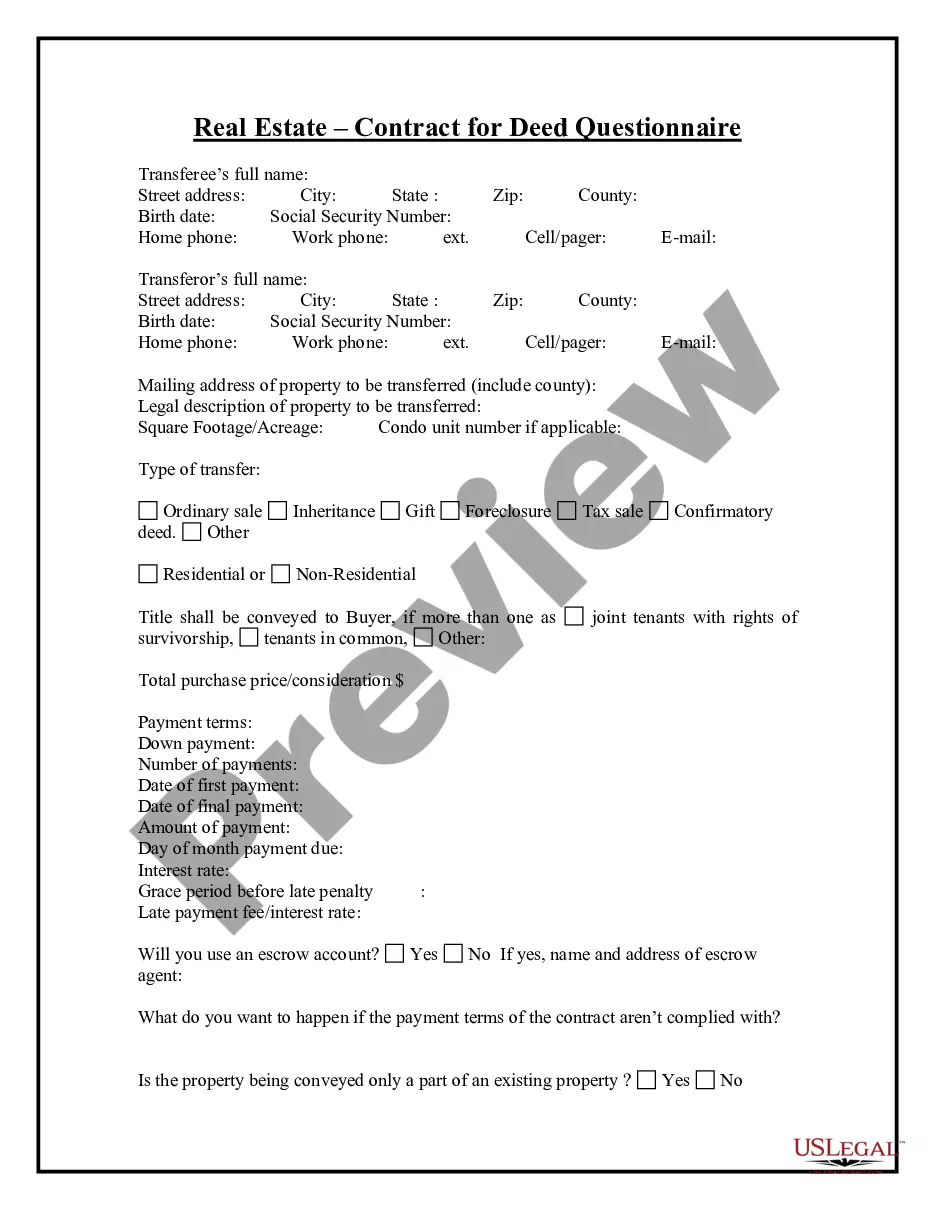
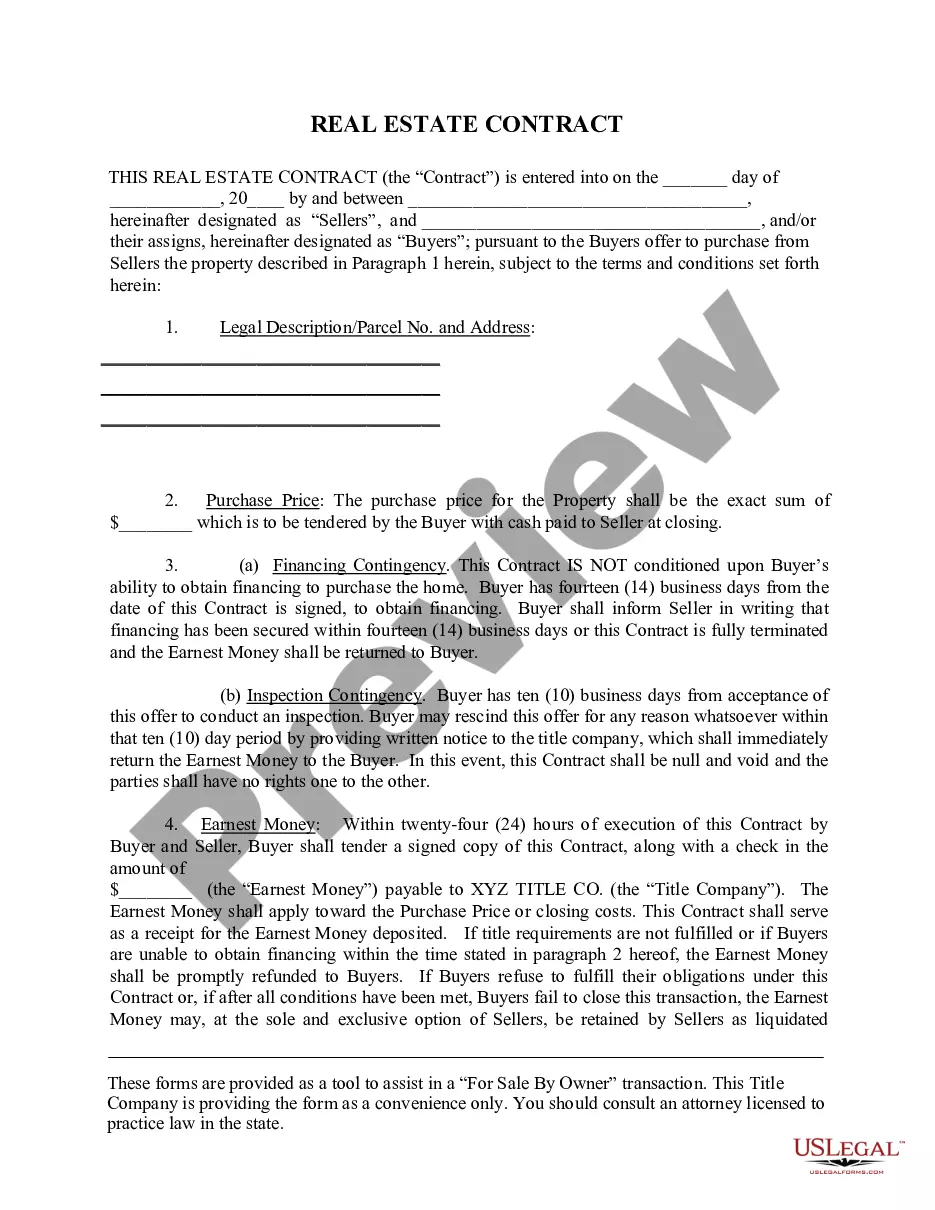
The District of Columbia Contract for Deed Package includes all the necessary legal documents to facilitate owner financing of real estate through a Contract for Deed. This comprehensive package is specifically tailored for Washington, D.C. and provides important protections for both sellers and buyers involved in owner-financed transactions, making it a valuable resource for those looking to structure such agreements.
Forms provided in this package
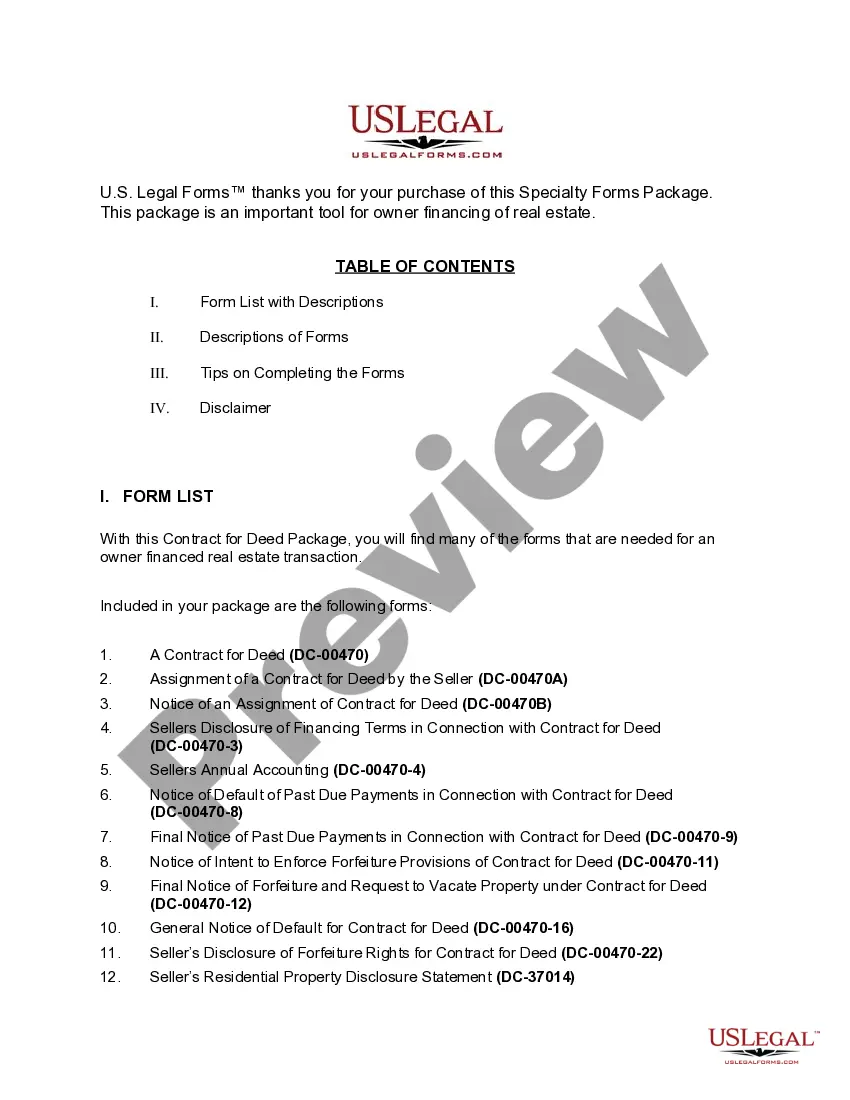
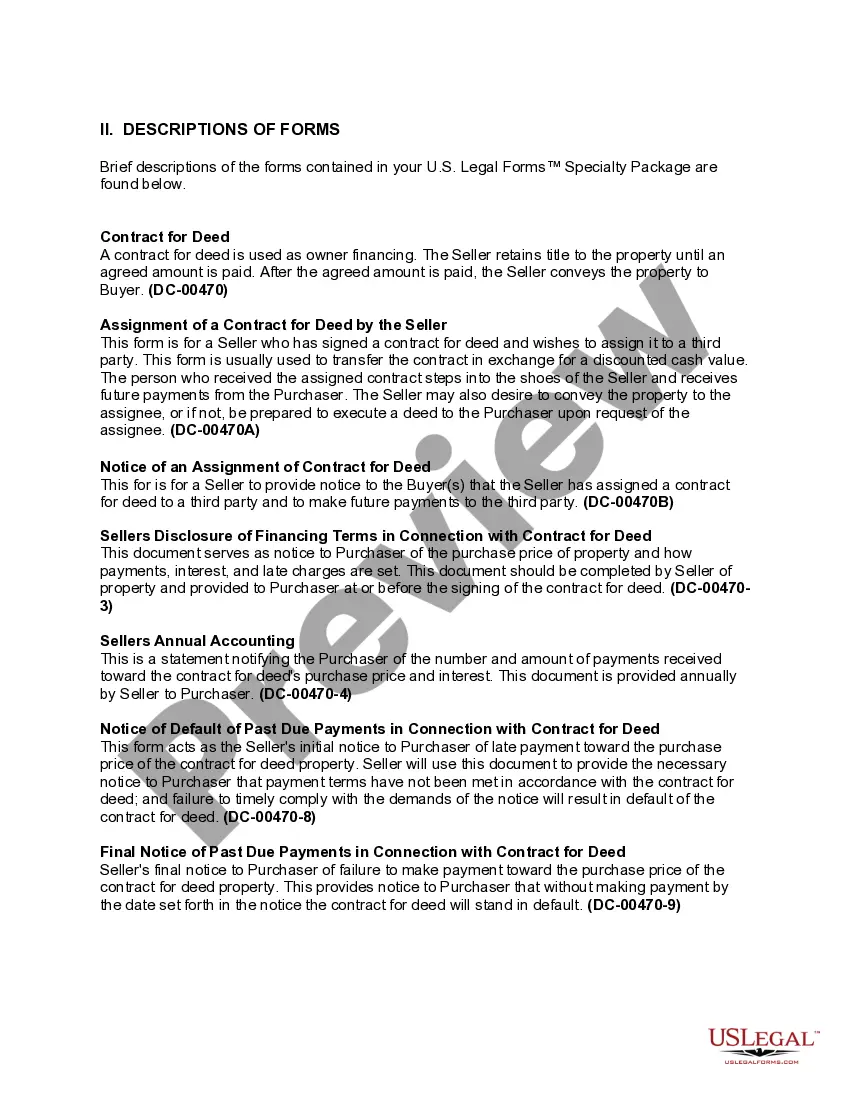
- Agreement or Contract for Deed for Sale and Purchase of Real Estate a/k/a Land or Executory Contract
- Assignment of Contract for Deed by Seller
- Notice of Intent to Enforce Forfeiture Provisions of Contact for Deed
- Final Notice of Forfeiture and Request to Vacate Property under Contract for Deed
- General Notice of Default for Contract for Deed
- Seller's Disclosure of Forfeiture Rights for Contract for Deed
- Seller's Disclosure of Financing Terms for Residential Property in connection with Contract or Agreement for Deed a/k/a Land Contract
- Contract for Deed Seller's Annual Accounting Statement
- Notice of Default for Past Due Payments in connection with Contract for Deed
- Final Notice of Default for Past Due Payments in connection with Contract for Deed
- Notice of Assignment of Contract for Deed
Common use cases
This form package is useful in various situations, including:
- When a seller wants to finance the sale of their property directly to a buyer.
- When buyers prefer to purchase property without traditional bank financing.
- When parties need to document terms and conditions related to payments, defaults, and rights of forfeiture.
- In case of assigning a Contract for Deed to a third party.
Who can use this document
- Individuals selling residential property through owner financing.
- Buyers seeking alternative financing options for real estate purchases.
- Real estate professionals assisting clients in owner-financed transactions.
- Attorneys looking for compliant legal documents for their clients in D.C.
Instructions for completing these forms
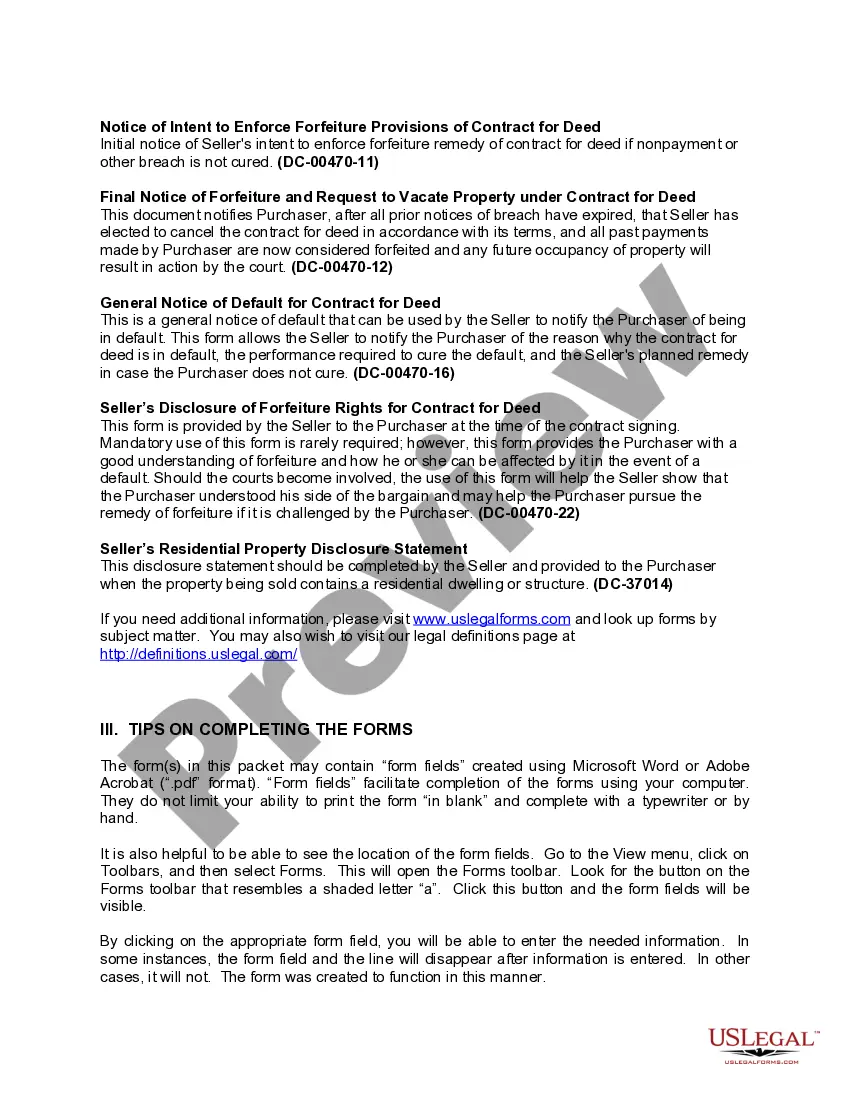
- Review all included forms to understand their purposes and requirements.
- Identify all parties involved in the transaction and ensure they provide accurate information.
- Complete the forms by filling in the necessary details, including dates, amounts, and signatures.
- Ensure that all disclosures and notices required by law are provided.
- Consult with a legal professional if you have any questions about the completion process or specific terms.
Do documents in this package require notarization?
Certain documents in this package must be notarized for legal effectiveness. Our online notarization service, powered by Notarize, lets you verify and sign documents remotely through an encrypted video session, available anytime.
Get your form ready online
Our built-in tools help you complete, sign, share, and store your documents in one place.
Make edits, fill in missing information, and update formatting in US Legal Forms—just like you would in MS Word.
Download a copy, print it, send it by email, or mail it via USPS—whatever works best for your next step.
Sign and collect signatures with our SignNow integration. Send to multiple recipients, set reminders, and more. Go Premium to unlock E-Sign.
If this form requires notarization, complete it online through a secure video call—no need to meet a notary in person or wait for an appointment.
We protect your documents and personal data by following strict security and privacy standards.
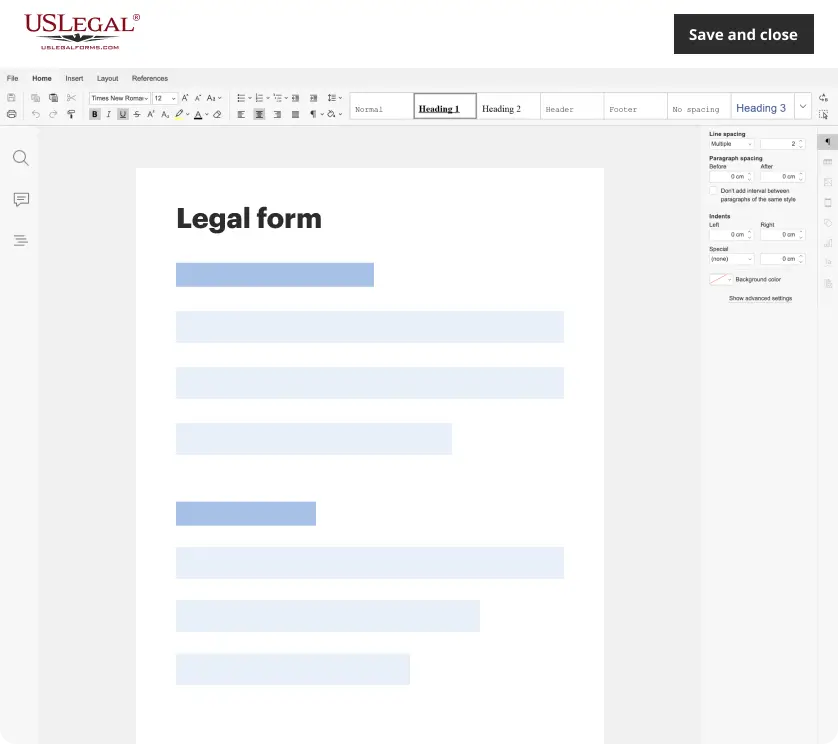
Make edits, fill in missing information, and update formatting in US Legal Forms—just like you would in MS Word.
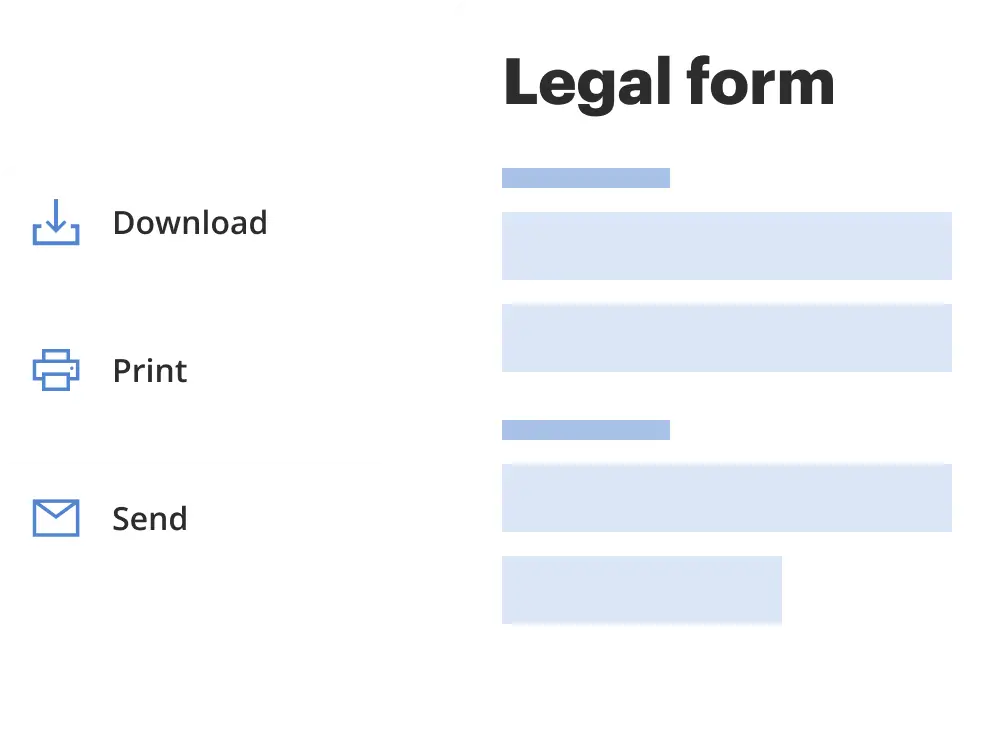
Download a copy, print it, send it by email, or mail it via USPS—whatever works best for your next step.
Sign and collect signatures with our SignNow integration. Send to multiple recipients, set reminders, and more. Go Premium to unlock E-Sign.

If this form requires notarization, complete it online through a secure video call—no need to meet a notary in person or wait for an appointment.
We protect your documents and personal data by following strict security and privacy standards.
Common mistakes to avoid
- Failing to accurately describe financing terms and repayment schedules.
- Not providing required disclosures to the buyer.
- Omitting signatures or dates on key documents.
- Incorrectly completing notices regarding defaults or assignments.
Why complete this package online
- Convenience of downloading and completing forms at your own pace.
- Editability of forms to customize them for your specific transaction needs.
- Access to legal documents drafted by licensed attorneys, ensuring reliability and compliance.
Looking for another form?
Form popularity
FAQ
Deeds generally need to be recorded in the county or district where the property is located. Recording the deed in the right place protects your ownership rights and offers public notice of your property claim. When using the District of Columbia Contract for Deed Package, be sure to check local regulations for proper recording procedures. This step helps avoid future disputes over property ownership.
While it's not mandatory to hire a lawyer to obtain a deed, doing so can provide valuable guidance and help prevent mistakes. A qualified attorney can ensure that all legal requirements are met for your District of Columbia Contract for Deed Package. This knowledge can save you from potential issues down the line, so consider consulting a professional.
In real estate, the three main types of deeds are warranty deeds, quitclaim deeds, and special warranty deeds. Each type serves a different purpose regarding ownership transfer. When using the District of Columbia Contract for Deed Package, understanding which deed to use can help clarify your transaction. Make sure you choose the deed that fits your situation best.
Drafting a property deed involves accurately stating the current owner's information and the legal description of the property. You should also include the buyer's details and any specific terms related to the transfer. Using the District of Columbia Contract for Deed Package can streamline this process, ensuring you meet all legal requirements and complete the transaction smoothly.
Typically, the buyer pays property taxes during the term of a contract for deed. However, it is essential to define this obligation clearly in the District of Columbia Contract for Deed Package to avoid confusion. Explicitly stating tax responsibilities can help both parties feel secure in their financial commitments. Consulting a tax advisor can clarify any additional implications involved in property taxation.
In Washington, D.C., the requirements for a deed include a clear description of the property, the names of both the seller and buyer, and the signature of the seller. Additionally, the deed must be notarized to validate its authenticity. Using a District of Columbia Contract for Deed Package will include these essential components, ensuring compliance with local laws. Properly executed deeds protect all parties involved in the transaction.
Sellers may face disadvantages such as the risk of buyers defaulting on payments, which can lead to lengthy legal proceedings. Additionally, sellers might still be liable for property taxes and other obligations during the contract term unless specified otherwise in the District of Columbia Contract for Deed Package. It’s important for sellers to assess their comfort with these risks before proceeding. Legal guidance can assist in setting appropriate terms to mitigate concerns.
Generally, the buyer pays property taxes under a contract for deed unless the contract specifies otherwise. It's vital to outline these obligations clearly in the District of Columbia Contract for Deed Package to avoid disputes. You may wish to consult with a tax professional to ensure both parties understand their responsibilities. Clear communication helps facilitate a smooth transaction.
One disadvantage of a contract for deed is the potential for default by the buyer, which can lead to complicated foreclosure processes. Another consideration is that sellers may remain responsible for property taxes and liens unless explicitly stated otherwise in the District of Columbia Contract for Deed Package. It’s crucial to carefully review these factors before entering into such an agreement. Always consult legal help to minimize risks.
A contract for deed can be an attractive option for sellers looking for steady income over time. With this arrangement, sellers can retain title until the buyer completes the payments, which provides security. Additionally, using a District of Columbia Contract for Deed Package can help ensure all terms are properly outlined, protecting the seller's interests. However, sellers should weigh their options based on their financial situation and long-term goals.